Tag: Idea Cellular

  • Idea’s ‘Nirvana’ offering has a solution for all its Postpaid customers

    By A Correspondent


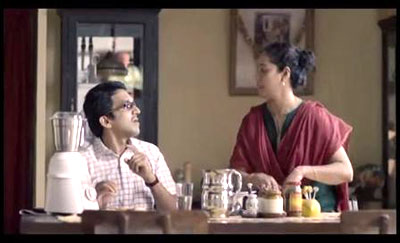
    Idea Cellular has unveiled a new campaign for its new Nirvana range of Postpaid plans.


    Speaking on the campaign, Sashi Shankar, Chief Marketing Officer, Idea Cellular said: “Brand Idea understands consumers’ needs and helps them positively transform their lives through its services. This campaign aims to capture how Idea’s Nirvana Postpaid Plans help transform moments of stress for the consumer into moments of carefree happiness. When a consumer chooses Nirvana plans, everything they need from their mobile service provider is taken care of, and so they can continue to focus on the bigger things that truly matter to them.”


    Developed by BBDO India, the TVC will be amplified through an integrated 360-degree campaign, spanning across television, radio, OOH, digital.


  • Idea Cellular extends partnership with Kings XI Punjab for the second year


    Entering the ninth year of continued brand engagement during IPL, Idea Cellular has partnered with Kings XI Punjab. The company kickstarted the second year of the team sponsorship with the Kings XI Punjab team at its home ground in Indore. VirenderSehwag, EionMorgon and Martin Guptill along with Sashi Shankar, Chief Marketing Officer, Idea Cellular unveiled the official jersey of the team.Idea Cellular is associated as the Principal sponsor with Kings XI Punjab for this season.


    Speaking about the association, Sashi Shankar, Chief Marketing Officer, Idea Cellular said, “Brand Idea has always been committed towards promoting sports and sporting events in the country. Continuing with this legacy, this year too, brand Idea is happy to be associated with the promising Punjab Kings XI team. Our association with the Team will result in Idea customers get a host of benefits, and opportunities to engage with their cricketing heroes. Over 3 Crore Idea subscribers in Punjab and MP will directly benefit from this association and the nearly 20 Crore subscribers nationally will get to be part of the T-20 action.”

  • Idea democratises 4G to make a digitally enabled new India

    By A Correspondent


    Living by its philosophy that ‘An Idea can change your life”, Idea is now suggesting that democratising 4G is the way to build a truly digital India. Its new 4G ad campaign that goes live on television, establishes the fact the mobile internet is not just an urban phenomenon, it is a driver of change for rural India too.


    The campaign – crafted by the MullenLowe Lintas group – underlines an overarching message which says, “Idea 4G se Gaon Gaon Sheher ban jayenge, Toh apne bhi laut ayenge. Naya India Banaenge”, suggesting the idea of ‘Reverse Migration’ made possible with Idea 4G.


    The new ad is set in a village which is plagued with low economic development. A girl who has come back to her home in the village on vacation, sees that majority of the young population has left the village to earn a living and decides to bring back its people. She sets up a small business in the village and promotes it digitally, using Idea 4G that generates employment in turn. Her father returns to the village to take part in the business and that is how the TVC establishes the importance of democratizing 4G to empower lives and drive Reverse Migration.


    Talking about the new campaign, Sashi Shankar, Chief Marketing Officer, Idea Cellular said, “Mobile internet as a category can be seen in various ways. While some decide to focus on the functional aspect of the 4G technology, we at Idea think that 4G has a transformational attribute. It is advanced, it is progressive, it is the window to the world of opportunities and it is affordable too. In the past several years, Idea has worked on apprising Indians about the importance of adopting mobile internet and with 4G there is so much more that can be done.


    With the new TVC, we are bringing people back home. We are promoting 4G as the driver of change that can create opportunities across India. We believe that Idea 4G can bridge the gap between urban and rural India.”


  • Idea takes #TheBiggestSmallChange route for its 4G launch

    By A Correspondent


    Brand Idea is geared up to communicate the experience on 4G LTE and how it can bring about ‘The Biggest Small Change’ in the life of people who live online, through its new campaign. With this campaign, Idea is reaching out to the people who relate with their smartphones like a TV screen where they watch movies in High Definition (HD), use video calling to share special moments with friends, live stream cricket matches or just simply indulge into gaming with online community and they need all that at faster speed and with even superior internet experience.


    The new TVC, which was released on TV and Digital on 3rd June, brings alive an array of benefits through situations where consumers can be seen truly living the 4G experience as it goes on to answer the question that’s on everyone`s mind: `What’s the big deal about 4G?`. The TVC captures the essence and the spirit of today’s youth which lives in the moment and wants to share and capture each and every aspect of their lives.


    Talking about the new campaign, Sashi Shankar, Chief Marketing Officer, Idea Cellular said, “Since we are talking to a digitally savvy audience, the Idea 4G launch campaign will see the brand in a new avatar – a younger, more energetic, hi-tech look and feel. For the first time ever, we have worked with international directors who are known for their work in the area of technology and computer graphics. In terms of treatment, the film has a fast pace, dynamic, international feel and a vibe and energy that the digital natives can identify with.”


    Idea’s 4G LTE services are presently available across 10 telecom circles, thus this national campaign will be further amplified to deliver one constant messaging on positioning the ‘experience’ that a consumer gets on the Idea network across the country.


  • Idea extends Easy Share to support child education

    By A Correspondent


    With its Easy Share campaign, Idea Cellular created a platform to enable mobile internet users to share data for the benefit of children. On the completion of this campaign, Idea handed over 2450 GB worth of mobile internet to the NGOs – ‘Room to Read’ and ‘Society for All Round Development’ (SARD) – pledged by mobile users for the cause of supporting child education.


    Kick-started in November last year, through its Easy Share campaign, Idea propagated the thought of transforming lives with the power of internet and urged mobile users in the country to ‘share internet’ with those in need. Amplifying the core essence of the campaign- ‘You Share, You Care’, Idea acted as an enabler and devised social and digital properties where people could actually become a part of the movement and come together to support the cause to ‘share internet’.


    To create awareness and gain the support in maximum numbers, Idea introduced various properties on digital – like a shareable website and on radio – ‘India sharing Season’ – to catalyze this movement that could make a difference in the lives of several children. Supported by aggressive on-ground activations, word-of-mouth through social and television ads, the movement expanded and channelized with it over 5 crore people who pledged their mobile internet data.


    By the end of a month long activity, a total of 2450 GB of mobile data was pledged through these channels. People made 2.5lakh+ calls on air to show the support and drove social media conversations with, 1.6 million+ likes on Facebook and 36,000+ tweets and 55,000+ visits on shareable website.


    Talking about the campaign, Sashi Shankar, Chief Marketing Officer, Idea Cellular said, “With every new campaign, Brand Idea aims at bringing new opportunities that empowers a society. Whether it is education, general awareness or a thing as simple as the feeling of giving or doing good, Idea has a unique way of depicting and reaching out to a wider audience. We are overwhelmed to receive such a fantastic response for our Easy Share campaign and as promised we are sharing the power of internet with Room to Read and SARD with the aim of supporting child education. It gives us great joy in having this campaign reach such heights with the active support of our audience.”


  • No ‘ullu banaoing’, only strategy


    By A Correspondent


    It’s been India Shining on the strategy front in Asia. Last week, Mullen Lowe Lintas India had a great showing at the recent Warc Prize for Asian Strategy awards. While it picked up the 2015 Grand Prix, the grand prize and a Gold for its Idea Cellular campaign, ‘No Ullu Banoing’, it also got the Local Hero Special Award and a Silver for its Havells’ campaign, ‘A Woman is not a Home Appliance’, and a Bronze for Tata Tea’s ‘From Packaged Good to Packaging Good’.


    The Warc Prize celebrates the best in strategic marketing in Asia, and entries are judged on the quality of strategic thinking and the results they deliver. The Grand Prix comes with a cash prize of $5,000.


    More than 135 campaigns from across the region entered this year’s competition, with half of the 39 shortlisted entries coming from India. They were judged by a panel of senior marketers and agency-side strategy experts, chaired by BV Pradeep, Unilever’s global vice-president of consumer and market insight.


    Apart from the Mullen Lowe Lintas Group, BBDO India also picked up the Asia First Special Award and a Gold for its ‘Touch the Pickle’ spot for Whisper and McCann Worldgroup got a Silver for its Government of India campaign relating to Voluntary Compliance Encouragement Scheme, entitled ‘A Crash Course in Recovering Taxes from Stubborn Defaulters’.


    “Idea Cellular’s campaign was outstanding because it was based on a powerful and universal cultural insight that worked across the whole of India, across urban and rural populations and across socio-economic classes,” Pradeep said in a statement. “The strategy expanded the market, strengthened brand equity and drove growth of sales revenues. To achieve all three deliverables with one campaign was really amazing.”  Other than the five special cash awards, 17 campaigns from across the region picked up gold, silver and bronze awards at the prize event held in Mumbai, at an evening hosted by DDB Mudra Group.


    Idea Cellular: The ‘fool-proof’ internet service

    (Mullen Lowe Lintas Group India / Aditya Birla Group / India)

    Grand Prix


    This case study shows how Idea, an Indian telecom company, made the mobile Internet more popular with a humorous campaign.

    • The mobile internet category in India faces the barriers of price and relevance, with many telecoms attempting to increase usage through discount trial packs, but many users still not seeing mobile data as relevant to their lives.
    • The campaign strategy tapped into the unsavoury, seamier side of the country, where being economical with the truth in order to scam others is popular.
    • Hence the creative execution suggested that using the mobile Internet made people less likely to be ‘made a fool of’.
    • The campaign used TV, print, radio and out of home ads, along with social media.
    • Then the rate of growth of data subscribers for Idea was nearly twice the rate of growth of data subscribers for Airtel, a rival telecom


    Government of People’s Republic of Bangladesh: Anti-urinal campaign ‘language matters’

    (Grey Advertising Bangladesh / Ministry of Religious Affairs Bangladesh / Bangladesh)

    Market Pioneer Special Award


    This case study discusses a campaign from the Bangladeshi government that tackled the problem of public urination by encouraging behavioural change.

    • The challenge was that 20% of the residents of Dhaka, Bangladesh’s capital city, are pedestrian commuters, with many of the men urinating on the way to and from work.
    • The campaign strategy was based on a cultural insight: as people in the Muslim majority nation respected ‘holy’ things the anti-urinal messages, previously written in Bangla, were replaced with Arabic messages with directions to the nearest mosque and public toilet.
    • The campaign purely relied on the outdoor signs and did not use TV or print, however it was covered by both online and print newspapers, earning free PR.
    • Utilisation of public toilets in mosques rose by 50% during the campaign period.


    Visa: Get Lost Challenge

    (BBDO China; Proximity China; OMD China / Visa China / China)

    Research Excellence Special Award


    This case study describes how Visa China appealed to the new generation of Chinese travellers to encourage the use of its credit cards on their trips abroad.

    • Visa faced an uphill struggle, because China UnionPay, the Chinese government-owned payment system, holds 80% market share of outbound transactions by Chinese tourists.
    • First, Visa identified a new target group of travellers who, while abroad, preferred to explore less obvious landmarks away from the big Chinese tourist groups.
    • Then, with its ‘Get Lost Challenge’, the credit card issuer encouraged them to take more chances, but with a Visa card in their pocket.
    • Visa used video, print and online media to spread the message and drive consumers to its website.
    • The Visa Get Lost Challenge reached 9 million people, or about 10% of Chinese overseas travellers, becoming Visa’s most successful China campaign ever.


    MasterCard: The Priceless Engine

    (TBWA\Digital Arts Network, Carat / MasterCard / Singapore)

    Channel Thinking Special Award


    This case study describes how MasterCard, the second largest credit card brand, launched a marketing platform that generated business from social media in Asia Pacific.

    • MasterCard is considered the second largest credit card brand in Asia Pacific after Visa, but Visa outspends MasterCard four-to-one on marketing.
    • MasterCard launched The Priceless Engine: an innovative marketing platform that turns big data into usable data, and provides its partners with deeper insights, allowing them to deliver the right offers and messages to the right people at the right time.
    • The Priceless Engine powered MasterCard’s ‘New Year’s Eve’ campaign, featuring Hugh Jackman, across six markets; it encouraged people to share who they would want to spend their New Year’s Eve with and why, providing MasterCard with valuable data and insights.
    • This campaign resulted in never-before-seen business results for MasterCard, turning social media into an actual business-generating channel.


    Havells: A woman is not a home appliance

    (Mullen Lowe Lintas Group India / Havells India / India)

    Local Hero Special Award


    This case study describes how Havells, one of India’s most respected electrical products companies, launched and executed a communications campaign aimed at Indian (female) homemakers in order to increase consideration and raise sales of its home appliances.

    • The task was made difficult by the buyers’ set shopping habits: buy a reputed brand, and preferably the one they already had a good experience with.
    • In order to break into this market, Havells, a newcomer, ran a campaign on TV and online that broke away with an image of a woman tied to her kitchen and her home appliances so she could take better care of her husband.
    • Havells unequivocally said “the woman is not an appliance” and it will foremost “respect the woman”.
    • The company managed to hit all its objectives, including increased consideration scores and a +150% sales increase six months after the launch of the campaign.


    Content strategy summaries source: Warc.com


  • Idea targets emigrants in new campaign on MNP

    By A Correspondent


    Changing one’s mobile connection; finding the network which has coverage everywhere in the country; hassle-free management of multiple connections and bills – are some of the challenges faced by Indians migrating to different cities in a hope of better living, career, and lifestyle. For those who have hassles in dealing with these issues, they can simply take an Idea connection, as is suggested in the new campaign by Idea.


    One of the new Idea ads on television shows a young man reaching Kochi from Kolkata and soon after landing at the railway station realizes that his phone has no connection. His quest for getting the best network is answered immediately by the locals who suggest, he ‘Get Idea’. The people are then seen swaying to the ‘No Idea, Get Idea’ tune at the platform.


    In another scenario, a young career oriented girl is shown to be shifting base to Delhi from Alwar after landing her dream job. While she is all enthused about making it big in her career, she is faced with the hassle of dealing with multiple bills for her phone, tab and other devices. She has ‘No Idea’ how to get rid of this chore of managing multiple bills, and that’s when her colleagues in the new office suggest her to ‘Get Idea’. The thrill of overcoming this problem gets them all dancing to the catchy ‘No Idea, Get Idea’ tune.


    Elaborating on the new campaign, Sashi Shankar, Chief Marketing Officer, Idea Cellular said, “Brand Idea has always believed in enriching lives of people through fresh, innovative, yet simple ideas to solve their daily problems. The brand’s ability to stay relevant has enabled Idea to become an endearing brand for consumers across all categories and the MNP leadership is a testimony for this attribute. The concept behind this ‘No Idea, Get Idea’ campaign is to help mobile phone users get access to superior service when they switch cities, at a time when NMNP is a reality. The new ads have the signature Idea feel of being youthful, with a catchy music, and conveying the message in a simple manner.”


    Under this new campaign, Idea has come up with a series of TVCs capturing unique situations that interestingly dovetail into a story and further ensures a solution in the form of Idea’s best-in-class network and customer service. Idea has introduced this new campaign under its award-winning campaign line – ‘No Idea, Get Idea’ – that continues to resonate with the core essence of the brand. In its earlier avatar, the campaign had won the ‘Best Brand Campaign Award’ at the World Communication Awards 2011. It had also won EFFIE Gold in the same year.


  • Idea, Gionee as key sponsors of ‘Khatron Ke Khiladi’

    By A Correspondent


    Telecom major Idea Cellular and Gionee Smart phone have associated with the fifth season of ‘Khatron Ke Khiladi - Darr Ka Blockbuster’ as ‘presenting sponsor’ and ‘powered by sponsor’ respectively.

    The new season of  of the Indian version of reality show ‘Fear Factor’ on Colors will see contestants engaging in more daredevilry than its previous seasons, so it is being claimed. To up the ante this year, the channel has roped in noted director and entertainer Rohit Shetty to bring out the best among the celebrity contestants.


    Raj Nayak

    Commenting on the association, Raj Nayak, CEO, Colors, said, “Over the past few years, Khatron Ke Khiladi has created a strong brand value in the minds of the audiences who associate the show with unlimited blockbuster action and entertainment. Through innovative integration and branding opportunities, we are looking forward at creating synergies that will mutually benefit us and our sponsors.”

    Speaking about their association, Sashi Shankar, CMO – Idea Cellular said, “This is the third season of Khatron Ke Khiladi where we are associating with Colors as the Presenting Sponsor. The show has garnered high visibility over the seasons and has helped us in creating high recall amongst our target audience. This time around we are looking forward to engage with our consumers through multiple initiatives that will further our brand proposition.”


    Gionee Smartphones India Head, Arvind. R. Vohra said, “Gionee being a global brand sees Khatron Ke Khiladi as great opportunity to connect with our target audience. This genre is a perfect way to reach out and establish connect with the young and adventurous new generation. Gionee believes in creating a benchmark in innovation with every new offering and KKK is the apt choice to connect with those who too believe in taking greater risks to achieve the best. We have created some very exciting integration in the show and hope that the consumers will enjoy the same”

    Additionally Mahindra Scorpio and Amul Macho have come on board as the Associate Sponsors of the Show.

    The show will be on air next month.


  • MxM Mondays: Why do marketers not spend enough on digital media?


    By Ananya Saha and Robin Thomas


    According to the latest IAMAI-IMRB report on Digital Advertising, as of March 2012, the total advertising spends, including classifieds, was valued at Rs2,850 crore. It is expected that by FY2013 the digital advertisement spends will be Rs4,391 crore.


    Search advertising constitutes about 20 per cent of the total online advertising spend or about Rs570 crore. Display advertisement, which has many components, forms a sizeable portion of advertising spends. Advertisements on portals and vortals form 13 per cent of the overall pie (Rs369 Crores). Advertisements on Social Media, Email and Videos over the Internet form 3 per cent (Rs94 Crores), 5 per cent (Rs144 Crores) and 2 per cent (Rs59 Crores) respectively. Mobile ads form nearly 4 per cent (Rs90 Crores). A major proportion – around 53 per cent of the overall digital advertising spends – are classifieds listings (Rs1,496 Crores).


    These numbers seem impressive, but there has been some concern that marketers are not spending enough on Digital Media. The theme for this week’s MxM Mondays is ‘Why do marketers still not spend enough on digital?’ While marketing spends may be shifting to the digital media globally, in India, television and print still rule. Is it because digital still doesn’t reach the masses, and homemakers, in particular? Or is that the bucks (hence commissions) are still big in TVCs? MxM spoke to some players in the industry to find out:

     

    Ambika Sharma

    Ambika Sharma, MD and CEO, Pulp Strategy

    The shift to digital media is not happening as fast as the industry would like it to be. However, we are witnessing an increase in aptitude and attitude with regards to usage of digital media. Marketers are not using the media aggressively as they prefer to wait-and-watch. Even then, they are aggressive on ‘search marketing’, but not other aspects of digital media.


    There is hardly any youth brand which is currently not on digital platform. Education is one prominent category that has been using digital media. The cents for digital, however, remain restricted. But as the impact of digital media grows, the impact of mobile advertising has seen a decrease as most people now do not prefer to click on banner ads on mobile screens. Some studies show that in the past one-and-a-half-year, the user has been ignoring banner ads.


    The digital spends depend on ROI, search and impressions, which needs robust backend engine. E-commerce websites have been the heavy users of digital advertising to create impressions. But there is little or no response mechanism on impressions and the visibility is highly fragmented. The numbers, like there is TAM for television, are not available for digital media. If a marketer advertisers on three digital platforms, every platform gives their own numbers. So, there is no comprehensive measurable strategy.


    Going forward, digital media will grow, but it will be a long while before it catches up with other media vehicles. Lotof factors such as measurability, reach, people not preferring to buy online are affecting the growth.

     

    Gyan Gupta

    Gyan Gupta, CEO, I Media Corp Limited (IMCL), Dainik Bhaskar

    In the US, the online spend is 29 per cent of the total advertising pie; in UK, it is 26 per cent. Now if you see the figures in India, it is not even 5 per cent. The trend shows that there will be 50 per cent increase.


    But I will not say that marketers in India are spending enough yet. The typical spender (who spends on television) is yet not on-board. Till the main spenders come on-board, the growth will be limited. FMCG’s have a deep share of the pocket, and it is necessary that they spend on digital media. Auto companies, e-commerce companies, financial companies have been heavy spenders on this medium.


    What are the marketers spending on, and how they spend also becomes important. What needs to be analysed is if the cost of acquisition is happening, if the leads are getting generated, how much a brand is spending on digital activation vis-a-vis on brand promotion. Trending is happening. This year will actually showcase the brands spending on digital media.
     

    Harneet Singh Rajpal

    Harneet Singh Rajpal, Vice President-Marketing, Domino’s Pizza India

    The use of digital media is picking up in India. For any marketer present in India, the digital media is beginning to become a part of their media plan. It is on radar for everyone, especially in the categories where youth is the target.


    For Domino’s, digital media has been important ever since we began our online ordering platform. Currently, it helps us drive traction. Hence, our media spends for digital medium have increased over the last two years. For us the return-on-investment is visible for every buck we spend on this media, since it results from direct conversion from inventory to revenue generation.


    We now spend close to 4-5 per cent of our total advertising budget on digital marketing, from almost nothing in the last two years. We work with leading publishers in the domain to create applications for Google search, Facebook and social media. I must say that on Facebook, we have the largest number of fans in the food category, and also followers on Twitter.


    Social Media management needs time and investment. It is important that the brand keeps the target in mind when planning the digital activations. Going forward, marketers will have to evaluate the prospects digital media brings. Of course, that depends on category to category. Digital media is still limited because of its reach, whereas traditional media garners higher reach. Also, the confidence about using the media is not too high among the marketers since there are no hard numbers to prove its success. The penetration of internet and the efficacy of the media will be tested over time.


    Jonathan Bill, Senior Vice President and Business Development, Vodafone India

    Digital Advertising is a growing medium in India. It will be everything we are hoping it to be and that too quicker than we think, so I think the business is starting to get in a healthy shape. The advertisers are starting to embrace digital more openly and they should do so, because India has the third largest internet population on the planet.


    On TV and Print bagging bigger ad share, I think that is a legacy issue among advertisers, but I do get a sense that it is fast changing. In the West, however, TV and Print advertising have declined in favour of online advertising. Print, therefore, has very less revenue share from advertisers as compared to online advertising and now online is beginning to even threaten television as a medium.


    I think we just need to continue on the path we are going. The quality of sales and, to a certain extent, the market needs to be made. The West took nearly two or three years to be made as far as the start of digital advertising market is concerned and in India we are only about a year ready. So, I am very bullish on digital advertising in India, particularly on mobile on three to five years timeline.


    Narayanan SP

    Narayanan SP, Senior Vice President, and Head VAS Mobile Commerce and Long Distance, Idea Cellular

    Compared to the global benchmark, certainly advertisers in India are not spending as much money on digital or mobile, but this is something which will change over a period of time. Marketers are experimenting to see if it makes sense for them to connect digitally for certain set of products/features and whether digital is the right medium to communicate or engage their brands. Thus, lot of experiments are happening.


    On the internet front, we are already seeing a significant traction which may not be as big as the international market because of the low internet penetration in India. So if you are looking at a certain type of product wherein the target audience are already digitally connected, then it makes immense sense to go digital. Digital, I believe, will evolve as more and more customer profiling is done and advertisers are able to target their customers precisely. When advertisers are able to measure the ROI (Return on Investment), then we definitely believe that a lot more investment will come into digital.


    The fact that TV and Print still bag more advertising share will definitely change over a period of time in terms of mobile being one of the vibrant channels. This does not mean print and television advertising disappear but, you will see an increase in spends on digital advertising and mobile advertising in particular over a period of time. This is because mobile is able to give the advertiser not only a more precise profile of the customer which makes it a lot easier for the advertiser to reach out to its consumers effectively, but it also allows the advertiser to interact with customers and measure the results of their campaigns effectively.


    Mobile industry, for instance, has a wealth of data in terms of customer usage, but there has not been much mining of the data which can be heavily leveraged by the advertisers. However over a period of time, you will see a lot more advertisers leveraging this data.

     

    Rakesh Rao

    Rakesh Rao, National Sales Head, Zapak Digital Entertainment

    The digital media has been growing exponentially. The year-on-year growth of this media vehicle is close to Rs2,800 crore, and is supposed to reach close to Rs4,000 crore in a year. So to say that it is not a preferred media would not be the right statement. Of course, it is not a dramatic growth, but given the growth of internet and smart phones, digital media is becoming a part of our daily life. The marketers are also following the trend.


    The ROI, when compared to TV and radio, is much more measurable. Cost per lead and cost per click measure actual conversions. This is the only interactive platform too, while rest of the media only give reach.


    Education, travel, finance are becoming the biggest spenders on digital because of conversion aspect. E-commerce, and categories like travel that look at selling inventory believe in digital media.


    The challenges that this media is encountering is getting TV-centric brands such as FMCG onboard because of reach. It is a given that while TV is cost-effective when it comes to reach, digital media will catch up in some years. About 60 per cent of these brands are on digital, but 40 per cent need coaxing. There is no hindrance apart from the fact that broadband numbers need to grow. Digital media is here to stay and grow.

     

    Sandip Tarkas

    Sandip Tarkas, President (Customer Strategy) and CEO, Future Media and T24

    As far as Future Media is concerned, our advertising spends on digital have been increasing year-on-year. Despite a lot of digital activities done by marketers specifically on social media, it does not reflect in spends. The problem with digital is not a lack of a credible or universal measurement system, but the fact that it is too measurable as people try to measure every little thing. Although there are so many metrics which evaluate the digital medium, I don’t think it is a lack of measurability at all, as in digital we are clearly able to measure our CPM’s (Cost per Thousands) and so on. Digital is something we use for more engagement rather than reach because it does not offer reach.


    We look at advertising based on two things – reach and cost efficiency. And then you look at everything else – whether the medium is interactive and so on. So, it is primarily about reach and cost efficiency. Digital media spend in India is a reflective of India’s internet penetration, whereas in a lot of markets digital penetration is very high. In those markets both print and television advertising have declined and digital advertising has been growing.


    In India too, digital is growing much faster than the traditional media, and the growth of the media certainly shows the growing importance of digital. The current size of the digital advertising pie is reflective of the kind of inroads it has made in the country.


    On digital being a 360-degree medium in itself and the role of online video and social media advertising, the biggest gain happening in digital at present is the fact that it is changing quite rapidly. Since the late 90s when we first started using digital advertising until now, the role of the medium has changed quite drastically.


    Digital today not only offers more opportunities for engaging the consumers, but the vehicles used in digital have also been changing with time. For instance, in the early days television ads would continue for quite a lot of time, but today with more options, even the television channels have begun to announce that the programme will be back in say a minute or two. So as consumers have more choices, the way the medium gets utilized also changes. Digital, I believe, be it in any form – video, social, mobile – if it is not going to be interactive, it will not be very successful.


    For anybody targeting the youth, digital is an inescapable medium. I believe the biggest change in digital advertising will take place through mobile, particularly mobile VAS and the data cost. Growth spurt in digital advertising will also come through the increase in smart phone usage and the lowering of data cost will revolutionize digital advertising.


    This is because India has a very high tele-density and today mobile phones have reached the lower-most strata. I believe digital advertising in India will explode once mobile advertising comes of age but, right now it is still in its infancy.


    Eventually digital advertising will impact television and print ads as marketers will have to allocate their budgets for digital advertising, once it comes of age. It may probably hit print advertising first and then television but for that to happen there is still some time.

     

    Sanjay Tripathi

    Sanjay Tripathy, Executive Vice President – Head Marketing and Direct Channels at HDFC Life

    There is still limited spend on digital due to lack of knowledge about the medium and utilizing it effectively as a part of marketing plan; reach/penetration of the medium; and its ability to create impact in the short term. Digital still reaches about 10 per cent of the Indian population and there hasn’t been much of a development in building infrastructure to support the growth of internet. TV continues to be the mass medium which gets the maximum eyeballs and reach.


    While the ROI variables will drive spends to digital, marketing needs a serious mind shift to look at the additional advantages which digital brings along –  a medium which allows two-way dialogue  and measurability to the last mile.


    Thirty per cent of our budgets are dedicated to digital this year – a big move from the fact that we spent a negligible amount last year. As BFSI marketing and advertising becomes more ROI focused, digital media will play an important role. Digital budgets will have a healthy growth each year and will also account for a significant part of the marketing budget.


    While marketing spends may be shifting to the digital media globally, in India, television and print still rule. This is because reach plays an important role. Penetration of Internet in India is still low compared to international markets. The consumption of non-traditional online media is still low and 360 degree integrated communication planning in India has not evolved to have online as an integral part of marketing plans. Also, online medium do not works in sync with other media.


    While there has been a tremendous amount of growth in the usage of internet among SEC A, SEC B audience, internet is yet to gain as big an audience in tier 2 or tier 3 cities. TV continues to be the mass medium due to lack of digital infrastructure. It is the reach and channel affinity which mainly drives the spending and this is where a traditional channel like TV gets one up over digital. There is also a problem of lack of content on digital. Either the content has not been customized to cater to the audience or often the language becomes a hindrance in consuming the content.


    But digital media will make a huge impact. Level of engagement, interactivity and ROI afforded by the medium means it has big role to play. For brands which don’t engage their users online will tend to lose their relevance. As reach increases, the importance and level of competition will also increase –  YouTube already affords a higher reach compared to most of the TV channels and is increasingly becoming an important part of the traditional media mix.


    Digital offers tremendous potential for business – whether it’s about spreading awareness or generating business even in the face of a slowdown. In fact, as people tighten up their purse strings, they will want to do more research before they arrive at a purchase making decision and internet remains the primary medium of product research.


    I see the spends going up because the whole media pie has been asymmetric- if you look at the reach-frequency formula and compare it to TV, print, radio and then digital. There are more people spending time on digital in comparison to other traditional media touchpoints. I see the digital percentage increasing in the overall pie.


    Youtube and pre-roll videos have become a mainstay when it comes to hosting TVCs on digital and these unique ad formats are as effective in reaching out to audience as a TVC. For print QR codes help bridge the gap between offline and online world.

     

    Saugata Bagchi

    Saugata Bagchi, Senior VP, Tribal DDB India

    The primary challenge is the need of cracking an ROI metric, which is acceptable by advertisers across the board.  The media spends are happening, but is it delivering enough clickthrough rate goes unanswered. Digital media cannot ensure high reach like television, but with 12 per cent penetration among various categories it can definitely give high frequency. Currently, only 25-30 per cent of population is online; hence, the spending on this medium will remain lower than other mediums.


    The point of advantage is that there is a big influx of youth, and they are ready to spend. While the marketers would want to catch the youth online, they (marketers) get no justification in form of numbers to spend much on media. Hence, they prefer doing mall activation to spending on digital platform. The agency and publishing community need to be more forthcoming to speak to the marketers, and in their language.


    Digital media is currently registering 15-18 per cent year-on-year growth, but it is important to note the gap between digital and television media.


    Since the offices of MxMIndia are closed on Monday, August 20, there will be no MxM Mondays next week. We will announce the theme for the next edition on Tuesday, August 21.


  • Awards have no relevance to advtertising: Balki


    By Anil Thakraney


    It’s always fun meeting the big boss of Lowe Lintas. Since we have worked together before and since Balki is always forthright and politically incorrect, one is assured of an exciting but meaningful exchange. Here is he, speaking his mind on various issues. Movies, advertising, the challenges facing the industry, the kind of people he’d like to hire, and yes, about his continuing allergy to advertising awards.


    You have to respect the man for the wonderful work he’s been doing on both, the small and the large screen. And more so for being that rare individual in the ad world who has the balls to stand up for something he believes in.


    Still around in advertising? Shouldn’t you be busy making big films with Big B?

    I am making a movie a day, it’s the same thing. An idea is an idea whether it’s three hours or thirty seconds. The day I stop tripping on getting the high when one gets an idea, that’s the day I will stop. In fact, I haven’t done a film in the last two years, I have been caught up with Lowe Lintas. I do have an idea for a film which I will work on towards the end of this year.


    And it will back to Bachchan, I suppose.

    Not back to, WITH Bachchan. I haven’t gone away from him.


    What’s with the Bachchan fetish?

    When you work with the ultimate guy it becomes difficult to work with somebody else. He’s phenomenal. Such hunger and greed for performing at the age of 70… it’s truly inspirational. I can keep on making films with him for the rest of my life.


    Are you a fan of Abhishek Bachchan too? His career isn’t going anywhere.

    Actually I found his performance in ‘Paa’ the best. It was the most difficult role. I think his problem is more the choice of films rather than the quality of his acting. He’s got his niche, he’s very good at certain things. He’s also a good friend.


    So that’s why you keep using him in the IDEA commercials, often when he’s not even needed.

    He’s a better friend of IDEA than he’s of mine. I didn’t choose him, IDEA chose Abhishek.


    What are the learnings from movies you’ve taken to advertising?

    The biggest thing that happens when you come back from cinema to advertising is that you are even more impatient. Because cinema takes so much time to execute, you want to make the ads even faster. That’s the reason I like making ads. You make them fast and you move on. There’s an idea a day, and that’s an addiction which is difficult to escape.


    Your wife’s directing ‘English Vinglish’. Are you the producer? And what’s it about?

    Rakesh Jhunjhunwala has co-produced it with me, along with another investor. It’s about the insecurities of a middle class woman who doesn’t know English in today’s context. It’s about how she overcomes the fear of English. It’s a very relevant issue to a lot of people in this country. In India, it’s money, fame and (knowledge of) English which determine the class and quality of a person.


    Let’s cut to Lowe. Are you still as hands-on as ever?

    I am. There’s so much of work, yaar. Today, Arun (Iyer) and Amer (Jaleel) have taken on a hell of a lot, they handle 50 percent of the business. My travel has come down but my ideation hasn’t. So yes, I am still involved in major things, I know what’s happening. This is not a profession where internal structures and motivations of the agency can dictate solutions for a client. The client comes to an agency for a solution and we have to get it, by hook or by crook. Gone are the days when creative directors would sit on a revolving chair and give motivational advice to people on how to crack things.


    Piyush Pandey said to me the reason he isn’t making movies is because he’s not bored of advertising.

    It’s about the number of things you can do, it has nothing to do with being bored of advertising. So maybe some people are capable of doing a lot more and some people are not.


    Significant changes you’ve observed in the ad world in recent times.

    It’s the same, in so far as it’s still a problem/solution business. What I find is that the clients today are hungrier for more interesting solutions. I find that clients don’t want to waste an idea. And because of the complexities of the marketing issues, the problem articulation is no longer simple. You can no longer say this is small, this is big or that is cheap. It’s about understanding the complexities and simplifying them. And I find that fewer and fewer people are able to do this. Therefore far more is expected of a creative person today than it ever was. The creative person is now seen as the solutions provider. Planning is now playing a big role in the articulation of the problem. Planners are now working more for the clients than for the agency. This shift is something I don’t quite agree with, but it’s happening. This situation requires more discipline, rigour and understanding from a creative person than ever before.


    And I guess this impacts your hiring policies.

    It impacts that hugely. The three Cannes Gold winners don’t make sense any more. Today a lot of senior creative people have to grow within the current system. So you hire junior people who are clever and intelligent and then groom them into the system of understanding problems. It’s very dangerous hiring very senior people from the outside. We went through a phase in advertising where we said we are losing our respect as an industry. That’s changed. Today the clients respect the advertising agency for providing solutions.


    Both, Prasoon Joshi and Piyush Pandey told me that the industry is losing talent. There seems to be too much pressure from clients, they no longer pamper creative people. And opportunities have opened up for agency personnel in other industries.

    I don’t agree with this. I actually think there’s never been a better time to be in advertising. You are no longer respected for your whacky ideas, being a maverick won’t get you any special respect. The problem isn’t that the industry is losing talent, the problem is it’s not attracting talent. It’s damn difficult to find talent to address today’s problems. In fact, today there are a lot of people in marketing who want to join advertising. Where we are not attracting the right talent is at the junior level. We as an industry haven’t been able to articulate what is the kind of people we want.


    As an old-world creative director, do you find yourself struggling with the new media?

    No. Clients want you do virals in the new media, but it’s still film. The video will never die, though the medium for broadcasting it may have changed. The production methodologies may also have changed. But the idea is the key to it all.


    You are not even on Twitter and Facebook. How will you ever understand the digital world?

    The reason I am not on it is that I don’t want the world to know what the fuck I am doing. That’s a personal choice, it has nothing to do with the new media. In fact, today if I am on Facebook, I am a fuddy duddy cock.


    The problem, Balki, is that all you uncles are obsessed with the TV commercial.

    I approach a problem very simply. There is a solution, and there is an idea. And if the solution demands a certain kind of medium, you use that. Nobody knew how to make films before or how to make a digital programme. So it’s all about expression. And you go into that particular medium and do it. I didn’t know how to shoot a film earlier, so I went to the experts to do it for me. I don’t watch television at all, but that doesn’t mean I am fuddy duddy on television.


    Small shops are springing up. People like Aggie are doing very well. Does that worry you?

    It’s always been happening. What do you think Mohammed Khan and Ravi Gupta did? If Ogilvy and JWT don’t worry me, then why should they? They are all competition. In fact, the more the merrier, it means more people are doing better ads, and that’s fantastic for the ad industry.


    Why are so many creative directors branching out on their own?

    In some cases they believe their talent is far superior to what a large agency can harness. The other reason is there are only so many people who can grow to a point in an agency. So it could be the frustration of not being able to grow beyond a point. They have to start their own thing to be what they want to be. The third thing of course is money. Some people want to be richer than what they are.


    Words of wisdom for young creative people.

    I think if you like sport, you should come to advertising. There is a hurdle to be crossed every day, there is a goal to be scored, there is a wicket to be taken, there are problems that come your way. It is like a game. The moment you start taking it too seriously, it’s very difficult to function in this business. A lot of things don’t make sense out here.


    Shashi Sinha tells me he’s cleaned up the GoaFest judging process. All the scams have been dealt with. But you still won’t take part.

    I believe the advertising industry needs credible awards. But how do you judge advertising? You say, ‘Haha, this is so funny! Oh, what a technique in this one!’ And based on that you award some ads. And two months later the agency loses the business. So obviously it doesn’t work. What the fuck are we doing in advertising? We are supposed to solve a problem interestingly. You are supposed to state the problem and the judges are supposed to ask if that ad could have solved that problem. I judged at Cannes once, and I refused to judge after that. I’ll give you an example of what happens: Those Coke print ads, where someone is sleeping under the shadow of Coca Cola bottles, has been hailed as the greatest piece of creativity. And then you have those great TVCs of Coke with Aamir Khan, which the nation loved, but which they (the Cannes jury) didn’t understand! This kind of judging has no relevance to what the purpose of advertising is. Basically the award show is a game and you play it. So it’s not about cleaning it up, I don’t value what you award.


    And you also have a problem with your peers doing the judging.

    Some of them I respect and some I don’t.


    So what sort of jury will satisfy you?

    Having some respected marketers on the jury would help. And some very good advertising people. Right now they ask anybody who’s free to come and judge, and that’s not the way to do it. You can’t choose people just because you want representation from various agencies. Thing is, before I give you a piece of work to be evaluated, before I give you the right to say if I am good or bad, I need to be assured you are a person who’s capable of telling me that. We need to first judge the judges.


    What disappoints you about the ad world?

    What pains me is the amount we try to market the barometers which decide who’s good and who’s bad in the Indian industry. The Gunn report, the Asian awards, etc, they tom-tom the barometers rather than the advertising itself. And all this has absolutely no relevance to what we do here. It’s time we found a barometer or an evaluation process that tells India which is a good agency. A method through which clients can credibly choose agencies beyond just the surveys and the awards. And this lack of a proper barometer has led to personality driven agencies. This propels a lot of false media management. PR for advertising people happens because of this.


    Why don’t YOU work on that barometer?

    Piyush Pandey and I have had many whiskies discussing this, but we only walk away promising that we should drink some more, and that’s about it. (Laughs.)


    Click here to view all Goafest 2012 stories


  • Imran Khan to endorse MTS in Rs10 crore deal

    By Ratna Bhushan & Gulveen Aulakh


    Telecom service provider MTS India has roped in Bollywood actor Imran Khan as its brand ambassador for two years. The 10-crore deal makes the Delhi Belly star the latest one to join a long list of celebrities, including Shah Rukh Khan, Abhishek Bachchan and MS Dhoni, endorsing telecom service companies. While it’s the first time that Sistema Shyam TeleServices’ brand has taken the celebrity plunge, Imran already endorses Coke and Levi’s jeans.


    MTS India spokesman and celebrity management firm, Kwan Entertainment, which doesn’t manage Khan but helped him striking this deal, declined to comment.


    “Imran will promote MTS through mass media, online and below-the-line promotional activities. He will also be part of Red Energy, a youth-centric online activity for the brand,” an official directly involved with the developments said.


    While the 2G scam has not deterred telecom firms from wooing celebrity endorsers, it has impacted their ad spends. Eight of the country’s top 10 TV advertisers during January-September this year were consumer goods makers. Idea Cellular was the only telecom firm in the ranking, according to the media research firm TAM.


    The telecom sector has been facing tough times with raging controversy on 2G spectrum allocation, rock-bottom tariffs, sliding average revenue per user, thinning margins and falling profits. High interest costs, banks shying away from lending and 3G roaming agreements being disputed by the government add to the sector’s problems.


    Approval and introduction of the new telecom policy that would have allowed liberal merger and acquisition norms and helped in consolidation of the sector, has been pushed back by nearly half a year. This may further add to telcos’ woes.


    Source: The Economic Times

    Copyright © 2011, Bennett, Coleman & Co. Ltd. All Rights Reserved