
Tag: ICICI Bank

  • Should Banks & Payment Platforms collectively address safe transactions?


    By Sanjeev Kotnala


    Sanjeev KotnalaEvery day there is a story of a digital payment scam. One fails to understand how even literate and well-aware people are conned. The fault is not with banks and digital payment platforms, which constantly try to educate consumers on the does and don’ts of digital- online payments.


    One marvels at the agility and innovative schemes the scammers run to trap the gullible public. The fraudsters are fast learners, innovative and agile in redefining their work processes. The scammers have a new technique, a new trap and a new story every day to trap their victims. They know that ten can be potentially trapped for every cautious person they encounter.


    On the other hand, the basic precautions while making a digital-online payment have not changed much. But, it seems that people learn only when they or people near and dear to them are targeted and scammed.


    The banks keep on talking about wanting to create a secure financial network. Still, the onus should be on the users: who needs to be alert while using the platforms to make digital payment and purchases.


    Collective Corroborative Effort Is Needed

    Maybe, there is a need for collective, collaborative, synchronised efforts from all banks and payment gateways. Maybe, the different messaging strategy used by the banks and payment gateway is confusing. These messages need high frequency and cross media utilisation across Radio, Print, TV, Digital and even outdoor. And print and TV can work wonderfully well for the communication.

    Do you agree that a collective simple communication drives like Pulse Polio, where every bank and payment gateway contributes, will lead to better communication effectiveness or should they individually address the problem.


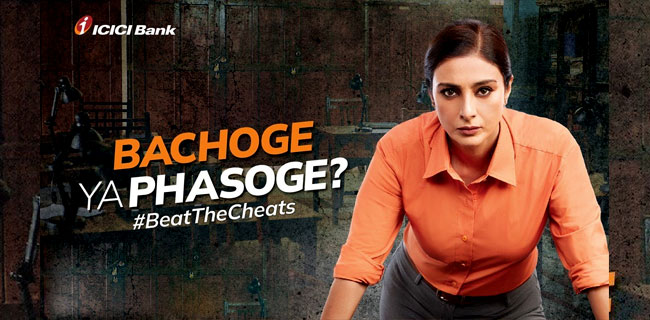
    ICICI BANK #BeatTheCheats

    ICICI Bank and ICICI Foundation have been doing some good work communicating these simple rules. They have treated the scammers as an organised set-up with training and showing how they trap the victim. Think the communication works.

    UPI PIN is only needed for making the payment, not for receiving payment. Never share your UPI PIN with anyone.


    Never scan unknown QR Codes. QR Code is scanned for making payment and not for receiving payment or refund. Beware of fraud lottery scams and messages that tell you – you have won and send you a link for payment. Remember, if it’s too good to be true, it probably is! Never trust calls/SMS claiming you won a lottery. Never click on unknown links. Never share your PIN/OTP with anyone. Let’s #Beatthecheats.


    RBI Bank And Digital Safety

    RBI has been at the forefront of customer digital safety education and communication. It has used various media options and created simple communication series. And its shorts are directly shareable across social media platforms. Like every other bank, it has films pushing digital safety and not sharing banking financial information. And they has used day-to-day situations like a badminton court and a restaurant to further make the point. It even has a Rap Song to propagate the message. The bank has heavily invested on Digital interaction on the subject and used print to communicate the message.


    OTHER BANKS

    HDFC Smartbuy even shares tips on how to get the best out of online shopping and safe Digital Payment. They have a series of ads showing possible Scam schemes like Holiday and how the victim is trapped.


    Axis Bank  plays the same or similar points in their communication on Phone pe Chori. RBL bank also shows the scamming process, including the KYC update scam, and how an alert customer can be safe.


    THE SCAM STORIES.

    There are many stories that scammers weave to trap their victims. For example- pre-payment advance for buying an item on sale by the victim, including a deal on platforms like OLX. Lottery win information and need for the pre=conditional registration fee. Hacking into customers’ WhatsApp or Facebook accounts and sending messages to the contacts, asking for money. Using Facebook hack of open account visuals and then using them as sextortion. Massage parlour booking sextortion case. Selling consumer durables or properties at a very attractive price. Multiple bookings at Airbnb or Homestays or even low-cost, out-of-the-world priced holidays and many more.


    HELPLINE 1930

    As per the Ministry of Home Affairs (MHA), more than 1,40,000 UPI fraudulent activities were reported on the National Cybercrime Reporting Portal (NCRP) during Q1 and Q2 2022. RBI says that UPI transactions increased by 1200% in the fiscal year ending September 2022. This massive increase has also made UPI fraud account for a reasonably high number of cyber frauds in the country.


    There is a definitive need to educate the public on Cyber Crime Helpline – 1930 and the site www.cybercrime.gov.in. They must be told – what to do when they fall for the scam. What information is needed to pursue the case, and what they should do.


    NET-NET

    There is much more that banks and digital payment platforms need to do regarding customer awareness and safety tips for financial transactions. And the onus for safety should also be on the customers. One has to be aware of and follow the safety tips that banks and payment platforms regularly share. Maybe, they should contribute funds, and a collective communication drive should be strategised and implemented for better effectiveness and efficiency.


    ~ ~


    How To Ensure Safe Digital Payment Transaction. ( Source SBI and ICICI Bank)

    • ATM/Debit/Credit Card is the key to your bank. Do not hand over your card to anyone else for use.

    • Never write the PIN anywhere.

    • Never share your financial information when requested over the phone or by e-mail.

    • Do not seek help from strangers in ATM/ Branch; instead, approach any bank official.

    • While withdrawing cash from an ATM or entering it during any transaction, like shops and airport lounges- make sure nobody is standing behind you. Always cover the keypad with your fingers.

    • No bank will use e-mail or call you to ask for your PIN, password or other confidential account information.

    • Do not give your phone to strangers to send SMS or make calls. If they are in an emergency, send the SMS yourself or dial the number yourself.

    • Try using unique and complex passwords and change passwords frequently. Strong passwords/ Biometric permission should be enabled on your phones/laptops/tablets.

    • Try using biometric authentication wherever feasible.

    • Do not download any unknown app suggested by strangers.

    • Try keeping your Mobile PIN and UPI PIN different and random.

    • Do not respond to any unknown UPI requests. Report suspicious requests

    • Never disclose, store or write down your user ID, passwords or PIN

    • Disable the ‘Auto Save’ or ‘Remember’ function in your device to avoid storing the user ID and passwords.

    • Always remember that a PIN is needed only for transferring amounts, not for receiving.

    • Instantly disable UPI service on your account if any transaction has happened without you doing it.

    • On the internet- Always look for “https” in the address bar of the bank’s website.

    • Avoid performing online banking transactions in public places using open Wi-Fi networks. Always log out and close the browser when you finish your work.

    • Do not share your personal/financial information on any social media platform.

    • Manage your debit card transactions through Online Banking.

    • Set a limit for card transactions at e-commerce platforms, POS and ATM both for domestic and international transactions

    • Always download apps through official stores. Monitor permission is given for critical apps on mobile and keep track of unnecessary and unused apps

     

  • TCS is India’s Most Valuable Brand


    By Our Staff


    Tata Consultancy Services (US$45.5 billion) is the new number one most valuable Indian brand, claiming the top spot from HDFC Bank (no.2, $32.7bn) which had held the position since the first ranking was unveiled in 2014. TCS’s brand value has been accelerated by global demand for automation and digital transformation following the pandemic.


    The Top 10 Most Valuable Indian Brands together contribute just over half of the ranking’s total value. There has been significant movement at the top, in addition to the two most valuable brands switching positions. There are two new entrants – Infosys ($29.2bn) which has rocketed up to no.3 from 12th position, and ICICI Bank ($11bn) which has climbed two places to no.9. State Bank of India ($13.6bn) has also risen four places to no.6.


    There are brands from 23 different categories in the 2022 Indian Top 75. There are a total of 14 newcomers , from 11 categories – including online gaming, education, apparel and real estate, reflecting the diversity and dynamism of the Indian economy.


    India’s strongest brands have bounced back from the pandemic to increase their brand value by a massive 35% CAGR since 2020, when COVID-19 hit the country. India’s top 75 brands are worth a combined $393 billion, equivalent to 11% of India’s national GDP.


    Technology and Banking brands account for over half of the total value. Six B2B Tech brands and 11 Consumer Tech brands contribute 35% to the total value of the ranking, reflecting the rise of Tech India. Overall, B2B brands (tech, payments) are on average almost three times as valuable as B2C brands, reflecting the fact that many of the B2B brands play on the global stage while B2C are more focused on the domestic market. Six banking brands deliver 19% of the total value. Also notable for their performance are Insurance brands, which have performed well as the pandemic increased consumers’ focus on protection of life and health and Telecom Providers, led by Airtel (No.4; $17.4bn) and Jio (No.10; $10.7bn), which took full advantage of growth opportunities as everything moved online, from education to work to parties.


    Key newcomers to the ranking include Vi (No.15; $6.5bn); formed from a merger between Vodafone and Idea, Byju’s (No.19: $5.5bn), the educational technology brand that has become India’s most valuable education brand, and Adani Gas (No.21; $4,5bn).


    Said Deepender Rana, Executive Managing Director- South Asia, Insights Division, Kantar: “India’s leading brands have grown at an exceptional rate, despite global economic headwinds, putting the disruption from COVID-19 behind them. Indeed, they have both driven and benefited from the transformation in consumer and business behaviour as a result of COVID-19, especially where it relates to the use of technology. The challenge now is to sustain momentum as inflation bites worldwide and consumers and businesses adjust to the new normal. Brand owners will need to work harder to identify and build on what makes worth paying for and ensure ROI on their marketing expenditure to avoid a margins squeeze.”


    Kantar BrandZ has identified Four Fundamentals responsible for powering brand growth: Function, Convenience, Experience and Exposure. India differs from other markets around the world, however, in that a brand’s sustainability credentials and purpose matter more.


    Overall, 65% of Indians feel anxious about climate change, and 64% believe businesses must play their part. The highest-ranking brands in the Top 75 are clear on purpose and have a relevant sustainability agenda. These include services platform Zomato (No.30; $3.1bn), which offsets the carbon footprint of its deliveries and packaging. Swiggy (No.20; $4.8bn) elevates consumers’ quality of life with speedy delivery of meals, groceries and healthy items, as does Flipkart (No.12; $8.9bn), while also helping smaller local brands to connect with consumers via its platform.


    Added Soumya Mohanty, Managing Director, Insights Division, Kantar: “Purposeful and sustainable brands are rewarded. Indian consumers look further than the brand attributes that affect them personally – they want brands to improve people’s lives and have a positive impact on wider society. They vote with their wallets, choosing brands they see as ‘doing the right thing’. Indian brands should have a clear view of their purpose, connect strongly with it by embedding it in their culture, talk about it in creative and powerful ways, and deliver on it – without fail.”


    Salience – the ability of brands to spring quickly to mind when a consumer has a need – is also vitally important. India’s Top 10 brands are far more salient than their counterparts in most other countries. However, for growth to be supercharged, brands must also have strong meaning as well. They should have functional meaning – doing a good job of fulfilling a need – but also a layer of emotional meaning. The Kantar BrandZ India Top 75 far exceed other Indian brands on all these of these vital predictors of success.


    Other key highlights from the analysis include:

    :: 57 of the brands in the 2022 Top 75 have been in the ranking since 2018, while 19 have moved up the league table.

    :: The share prices of companies behind strong brands are protected in a ‘bear’ market and recover more quickly. Between August 2014 and June 2022, the SENSEX India Index gained 63.8%, while a portfolio of the most valuable Indian brands rose 81.8%.


    There are eleven consumer tech brands in the Top 75, reflecting the increasingly digital way Indian consumers live, which is 11% of the total brand value. The four most valuable brands in this category are Flipkart (No. 12; $8.9bn), Byju’s (No. 19; $5.5 bn), Swiggy (No. 20; $4.8bn) and Nykaa (No. 25; $3.7bn).


  • iProspect launches initiative to empower women

    By  A Correspondent


    iProspect India, which recently saw a senior employee shamed in a me-too expose, has announced an initiative for its women employees. A part of Women@DAN, the initiative, will focus on three essential parameters – safety, gender diversity and leadership. The initiative, a regular feature every quarter, will be led by iProspect India’s CEO Rubeena Singh.


    Talking about the initiative, Singh said: “iProspect has always believed in enriching and helping its employees grow. Through this initiative we want to empower diversity as well as help women reach senior roles with much more confidence. It is sad to see that while women form almost half of India’s population, their representation at workforce is very little and it further shrinks at senior levels. At iProspect, we want to change that.”


    The first session, held on December 10, saw ICICI Bank’s Deputy General Manager – Marketing and Communications, Azmat Habibulla, share her story. “It is a great initiative undertaken by iProspect and I believe we need such initiatives across boards to help women rise to become leaders of tomorrow. At ICICI too have various initiatives to help women employees overcome challenges that many of them face at certain life stages.”


  • Ogilvy promotes iMobile in new campaign

    By A Correspondent


    ICICI Bank has unveiled its latest campaign for iMobile that takes a light-hearted humour approach. The ad has been launched on the digital platform.


    Said Zenobia Pithawalla, Senior Executive Creative Director, Ogilvy: “The communication created for the digital medium, shows people just how many banking needs can be fulfilled without having to go to the bank. Thanks to the ICICI Bank’s iMobile app. However, what we have done differently is that we have shown inanimate objects with human desires, and aspirations. And we show how each of these objects achieve their aspirations without ever entering a bank.”


    Added Walter Noronha, Senior Vice President, Ogilvy: “The new age millennials are born in a world where technology and access to the net is the new normal. They live in the present and demand things now. They can’t wait for things to happen, they make it happen. We took this simple insight for our creative approach. We showed how our technology platform at ICICI Bank makes our everyday banking needs simple and convenient. The light tonality was added to fuel affinity and engagement among the TG.”


  • ICICI Bank rolls out a multimedia campaign

    By A Correspondent


    One of the key concerns of ICICI Bank’s customers has been whether their bank and deposits are in safe hands. With a late corrective action in the form of the change of leadership, some attempts are made to mend the image, the bank has unveiled a multimedia campaign addressing some of the key concerns of customers who use credit cards. The campaign, a set of three TVCs, launches the ‘Manage Cards’ feature which has been newly introduced to the Bank’s mobile banking platform – iMobile.


    Speaking on the campaign, Sujit Ganguli, Senior General Manager & Head – Corporate Brand and Communications Group, ICICI Bank said: “We at ICICI Bank believe that customer convenience is at the core of our services. The results yielded by the research that we conducted gave us significant insights into the fears pertaining to cards based payments that predominantly exist in people’s mind. This campaign aims to address the barriers that keep people from proactively using cards, through a clutter-breaking messaging during the ongoing festive season. The campaign is our effort to re-assure our customers that the safety of their transactions is paramount by showcasing the key new security controls that the bank has added to its mobile banking platform – iMobile. We believe that the humorous yet gripping content will motivate our customers to adapt to the cashless way of utilising their hard-earned money without fearing about the security of their transactions.“


    Now if only ICICI Bank can also assure its constituents that the bank and the hard-earned savings of its depositors is in safe hands, it could do the Bank (and the sector) a world of good.


  • ICICI Bank makes banking easier via iMobile app

    By A Correspondent


    ICICI Bank has launched an iMobile app that offers a full-service bank over the phone. Ogilvy has brought this proposition alive with a campaign titled, ‘Ek App mein poora bank’ / ‘Your bank in an App’.


    Said Zenobia Pithawalla, Senior Executive Creative Director, Ogilvy: “ICICI Bank’s every attempt is to make banking a pleasurable experience for its customers. Its iMobile app offers the customer the experience of ‘Ek App mein poora bank’. That is the creative idea. The two protagonists in the films bring alive the ease of use, convenience and effortlessness of this product in a light hearted and humorous manner. Reiterating the joy of banking with ICICI Bank.”


    Added Walter Noronha, Senior Vice President, Ogilvy: “Our aim was to communicate all products and services in one app, with a view to cross sell the multitude of offerings by the bank and drive the brand experience further.”


  • O&M unveils campaign highlighting terror threat during festival season

    By A Correspondent


    Like any big festival, the terror threat lurks close and heavy during Ganesh Chaturthi. The city needs every citizen to be alert. The Mumbai Police along with Ogilvy & Mather and ICICI Bank have come together to alert citizens of the threat.


    A film has been launched as a result of an on-the-spot competition was launched. The film had suspicious objects that could be used for terror threats, placed cleverly in the film. The viewers had to spot these objects, count the number and sms their answer. The incentive for correct answer was a gold coin. In this era of gaming, we designed an engaging game that the entire city could play.


    Harshad Rajadhyaksha, Executive Creative Director, Ogilvy & Mather Mumbai said, “We are using the medium of film to train the city to be alert during the festival. We are playing on the mindset of the people that they would readily extend their efforts to win a prize. In the end we gently nudge their conscience into doing the same for their safety.”


    Kainaz Karmakar, Executive Creative Director, Ogilvy & Mather Mumbai shared, “We needed a lot of like-minded partners to pull off something on this scale. That is where E Suresh came in and he added his enthusiasm and his full support to pull this off. ICICI Bank backed us by agreeing to provide the gold coins.”


    The contest is playing across the theatres of Mumbai.


  • Whose Loyalty is it anyway?


    By G Seetharaman


    It could well have been just yesterday when you walked into your friendly neighbourhood kirana store and muttered to the shopkeeper the by-now-familiar line: “Kuch toh discount dijiye, main toh har baar idhar hi aata hoon.” The guy behind the counter perhaps wouldn’t be amused – particularly if he’s never seen you before – but he isn’t likely to show his irritation; instead he may well decide to reward you for your apparent loyalty by shaving a few rupees off your bill.


    Consumers love a bargain – and marketers love to show that they’re giving one. There’s a fair bit of role-playing with the shopper trying hard to show her loyalty and the marketer trying even harder to reward it. Those efforts manifest themselves in wallets swelling with loyalty cards of retailers, airlines and hotels. But are the points that consumers stockpile in the hope of encashing them one fine day juicy enough carrots to keep them coming back for more? Perhaps not.


    C Prabhakar, a Chennai-based company secretary, does not set much store by points-based loyalty programmes. “Rather than waiting for a really long time to earn enough points to redeem them for something I like, it makes more sense to just go ahead and buy it,” he says. Two years back, Mr Prabhakar became a member of the loyalty programme of the Landmark group, which has retail chains like Lifestyle and Home Centre. “Just because I have the loyalty card does not mean I’m going to go there again and again. If I happen to go there, I will use the card, that’s it,” he adds.


    Customers like Mr Prabhakar are a marketer’s nightmare and defy what companies are trying to achieve through loyalty programmes. Siddharth S Singh, associate professor of marketing at the Indian School of Business (ISB) who has researched loyalty management in the US and India, is not surprised. “Companies here have tried to imitate the West. Sometimes loyalty management firms that devise programmes for companies are not experts. They are just IT vendors,” he says.


    Not Very Loyal

    While some retailers in India handle their own loyalty programmes, most of them hire loyalty management companies to do it for them. The loyalty programme market in India is pegged at about Rs 5,000 crore; retail accounts for two-thirds of that, and travel and financial services for 10% each. The rest comes from other sectors including hospitality and also channel loyalty initiatives.


    Loyalty marketing research firm Colloquy estimates the number of loyalty programme members in India to be over 35 million. The points earned in a loyalty programme can be redeemed for discounts or other rewards like movie tickets, accessories and consumer durables. MS Ashok, chief operating officer of Accentiv India, a loyalty management company, says cost is a huge factor in the very limited nature of loyalty programmes.


    “Companies are not able to move their marketing budgets from ATL [above the line] to BTL [below the line]. Loyalty programmes should be a big part of any company’s marketing budget,” he notes. While advertising falls under ATL activities, loyalty programmes are under BTL.


    Bijaei Jayaraj, founder and chief executive of Accentiv’s peer Loylty Rewardz, says even globally loyalty programmes are not very evolved. “Loyalty programmes are much more than points. There are some associated things which companies do not do very well, like suggesting purchases based on a customer’s transaction history,” he notes.


    Loylty Rewardz runs programmes for banks like Punjab National Bank, Bank of India and the State Bank group. Vijay Bobba, managing director and CEO, Payback India, says a good points-based loyalty programme should see a redemption of at least 50% of the points: “There are very few such loyalty programmes here and no programme crosses 70%.”


    Not all brands need a loyalty programme. Those that are either truly aspirational or those that anyways provide total value for money for sure don’t. Mr Bobba gives the examples of Apple (aspirational) and Walmart (value-for money) that can afford to not have a loyalty programme.


    “Apple provides the most premium customer experience and has a huge following. Walmart sells at the lowest price possible.” For others who fall between these two ends of the positioning spectrum, loyalty cards are a great way to identify customers, adds Mr Bobba. Payback India runs a unified loyalty programme for several brands including Future Group, ICICI Bank and travel portal MakeMyTrip.


    Know Your Customer

    Srikanth Chunduri, co-founder of Emart Solutions India, which devises loyalty programmes for companies, says the problem lies in not understanding customers. “It took the guy at the coffee shop I visit regularly six visits to know me. My kirana store owner knows me better. He doesn’t give me discounts for being a loyal customer but gives me convenience of free home delivery,” he observes.


    Vinay Bhatia, vice-president, marketing and loyalty, Shoppers Stop, believes a piece of plastic does not create loyalty: “Points are just the transactional part of the programme. You have to go significantly beyond points.”


    He also says it is better to charge customers for a loyalty card than to dole out freebies. “When a customer pays, he takes interest and asks so many questions about the rewards. That’s what we want,” he adds.


    Shoppers Stop charges Rs 300 for a ‘First Citizen’ card. First Citizen along with Jet Airways’ ‘Jet Privilege’ is among the best known loyalty programmes in the country.


    Over 70% of Shoppers Stop’s revenues come from its 2.8 million First Citizen customers. Marketing professional Tanaz Makujina concurs with Mr Bhatia on the benefits of retailers charging customers for loyalty cards. A First Citizen member, she used to redeem her points but now does not visit Shoppers Stop because she does not like their collection. “I’m not brand-loyal when it comes to retail stores. As I’m not one of those people who will go to a particular shop just to earn points, I won’t pay for a loyalty card again,” says Ms Makujina who owns eight loyalty cards.


    Talking of the points she earns on her ICICI Bank debit card, she says that since she has to visit the Payback site to find out what her points will get her, she does not bother. According to a 2011 Cross-Cultural Loyalty Study by Colloquy, only 42% of shoppers surveyed in India belonged to a loyalty programme compared to 74% of Americans surveyed. Companies, expectedly, say points-based loyalty programmes are effective. “I don’t think there is disenchantment with the points system among customers. It works when you give significant value to your customers,” says Anil Ramachandran, who heads the credit cards business at IndusInd Bank.


    Devendra Chawla, president of Future Group’s Food Bazaar, says the group’s Payback programme has 1.1 million members. “One loyalty card across formats and different merchant establishments certainly works better for customers as they get points on almost every item they buy, and more points get accumulated,” he adds. Parag Rao, business head, card payment products, HDFC Bank, claims the bank’s credit cardholders have displayed the “highest rewards redemption behaviour in the industry”.


    HDFC Bank is the largest credit card issuer in the country, accounting for a third of the total outstanding cards. Kaushal Satam, head, Jet Privilege, says the relationship between accrual and redemption of points is a symbiotic one: “The ability to redeem points is as important as the opportunities to earn those and success in one area determines success in the other.”


    Points are Not Everything

    While marketers emphasise the need for points, they have also realised they have to think beyond points to get their customers to stick with them. Shoppers Stop, for instance, decided to expand its Durga Puja offers outside West Bengal last year and mined its First Citizen database for Bengalis in New Delhi, Mumbai and Bangalore and notified them about the offers.


    “We saw an incremental turnover of Rs 1 crore,” says Mr Bhatia. Apparel brand Louis Philippe also offers sweeteners beyond points to its “Upper Crest” members. “Events like theatre, golf tournament invites and red carpet invites to stores for wine and cheese evenings with Louis Philippe designers and marketing teams have been very well received by members,” says Jacob John, brand head, Louis Philippe India.


    Manisha Lath Gupta, chief marketing officer, Axis Bank, says points are a currency which should be used intelligently. She adds: “There should be different incentives for different customers. For instance, I could give people who have never swiped their debit card bonus points to get them to use their cards.” Axis Bank recently revamped its loyalty programme to make it a pan-bank loyalty programme which means customers can earn points not just on debit and credit cards but also on their savings accounts, internet and mobile banking. “Earlier, redemption of points was in lower single digits but now it is has gone up to 16-17%,” she says.


    Mr Chunduri of Emart Solutions feels companies should think of innovative ways to reward customers. “An online bookstore could send out invites to a book reading,” he says. Companies in India do not know how to leverage their database, according to ISB’s Singh. “That’s what Tesco and BestBuy have done. They focus on their most valuable customers,” he notes.


    Tesco and BestBuy are American and British multinational retailers respectively. Their loyalty programmes, along with that of Amazon’s, are considered among the best. With increasing options for customers for almost every product and service, retaining them is no walk in the park for companies. But such a scenario also provides them with an opportunity to make their loyalty programme stand out from their peers’. Only a handful have done that so far.


    Source:The Economic Times

    Copyright © 2013, Bennett, Coleman & Co. Ltd. All Rights Reserved

    Licensed to republish


  • ICICI Prudential Life launches mobile-specific website

    By A Correspondent


    ICICI Prudential Life Insurance Company Ltd (ICICI Prudential Life) on Wednesday announced the launch of ‘ICICI Pru Mobile Website’ that provides innovative service options to customers through their mobile phones.


    The launch of this mobile website is another milestone in the company’s endeavour to implement technology-centric initiatives to ensure increased convenience and provide the highest quality of service to its customers.


    This mobile website can be accessed by any individual by simply typing in www.iciciprulife.com on the mobile browser.


    With the launch of the mobile website, the company has successfully enabled customers, prospects and its distribution network to avail various service facilities via their mobile phones.


    Speaking on the occasion of the mobile website going live, Madhivanan Balakrishnan, Executive Director, ICICI Prudential Life Insurance said, “Our endeavour has been to introduce technological innovations across our various processes as well as engagements with our customers to ensure increased convenience and efficiency. We closely monitor the changing preferences of an increasingly technology-savvy audience and its need to transact ‘on the go’. The ICICI Pru Mobile website will enable customers to access information regarding their policies as well as enable premium payment through the mobile phones. We are confident that this innovation will be of value to our customers as well as partners.”


    ICICI Prudential Life Insurance Company is a joint venture between ICICI Bank and Prudential plc.


  • Nokia, Reckitt etc outsource @Twitter to woo consumers

    By Shelley Singh


    Abhishek Roy, a 25-year-old commerce graduate from Delhi University and a diehard believer in social media, has more than 100 followers to his Twitter account. But that’s not the only account the heavy-metal addict operates on the social networking and micro-blogging service. Mr Roy also tweets for a living.


    As an employee of Bloggers Mind, a social media-focused start-up that promises to ‘multiply your brand buzz’, Mr Roy spends his working day putting out tweets that typically promote products and services of companies. One of the companies that keeps Mr Roy busy is Nokia, which has outsourced its Twitter handle to Bloggers Mind.


    “A great app to become an amazing cook! bit.ly/zo6bvd. Here’s a review of the app from @mynokiablog,” is just one of Mr Roy’s tweets that go out to some 15,000 followers of Nokia India.


    In Mumbai, 26-year-old Upasana Sanyal’s typical day is no different. Ms Sanyal, who joined technology services provider Mahindra Satyam six months ago, sends out 300-400 tweets a month. A recent one was on the company’s quarterly results.


    Q3, Re dip gains mixed; volatility high,” was the cryptic but crisp message to the twitterati following the company. “Tweets spike around results time or key announcements. It’s a good deviation from the mundane,” said Ms Sanyal, a consultant with Mahindra Satyam.


    At Dell India, Suyesh Shankar, 39, a marketing manager for consumer and small- and mid-sized businesses, spearheads the US firm’s social media agenda, which comprises a Twitter team that sits out of the company’s Bangalore-based Social Media Command Centre.


    Roy, Sanyal and Shankar are the communicators with the mandate to capture consumer attention in 140 characters. While Mr Roy is with a specialist social media services provider, the latter two are key members of in-house Twitter teams.


    Across India Inc, Twitter has fast transformed from an individual tool into a key platform to create and sustain brand buzz. The communications range from customer feedback and new jobs announcements to customer grievances and no-holds barred promotional blitzes.


    While companies such as Nokia India, Kotak Securities, Reliance Digital, Reckitt Benckiser and TripAdvisor outsource their Twitter handles, others such as ICICI Bank, Dell, IBM and Flipkart manage it in-house. Other agencies, such as Bloggers Mind, that provide third-party tweets include Convonix, Interactive Avenues and OgilvyOne.


    Twitter for most corporates is one link in an integrated marketing chain. “Our Twitter team is an extension of our ‘khayaal aapka’ effort and brings to life our commitment to be where our customers are,” said Anita Pai, senior general manager, ICICI Bank. In a typical month, ICICI Bank monitors 200,000 social media mentions, out of which 70,000 are tweets.


    Handset major Nokia India manages between 400 and 700 tweets a month via Bloggers Mind. “We use Twitter to engage with consumers on a real-time basis, share tips, information and address feedback or queries,” said Viral Oza, director (marketing), Nokia India. Bloggers Mind has a nine-member team for Nokia and four for Reckitt Benckiser.


    Aditya Vaidyanathan, account director for Nokia at Bloggers Mind, said: “We have a weekly planner with clients as to what messages to send out and how to address queries.” This includes promotional trivia such as: “Did you know that 360,500 text messages are sent out from Nokia phones every second”; or answering queries like: “How do I add new dictionary words to Nokia Lumia?”