Tag: IBM

  • WPP and IBM team up on AI

    WPP and IBM have announced the launch of a new business-to-business (B2B) solution powered by ’s AI and data platform Watsonx designed to reinvent how B2B marketers identify and engage clients and prospects across the buying journey.

    Alan Webber, Program Vice President – Digital Platform Ecosystems at analyst firm IDC believes “this product and partnership have the potential to be an exponential force multiplier for the Fortune 1000.” Said Stephan Pretorius, Chief Technology Officer at WPP: “Our clients want to get in front of the right people, at the right time, on the right channels, with the right message. However, most solutions in the market today are designed for consumer marketing, targeted at sole decision-makers at a single point of purchase. WPP Open for B2B, and our collaboration with IBM and LinkedIn, will help solve some incredibly complex challenges in the B2B marketing space, using the best of WPP and IBM technology and expertise.”

    Added Jonathan Adashek, Senior Vice President of Marketing and Communications at IBM:“B2B marketers have been focused on creating truly personalized, relevant and consistent experiences for buying groups at scale for years. Our collaboration with WPP and LinkedIn provides real-time, actionable insights that are based on trusted data. We are excited to create and use these new, powerful and trusted AI solutions to deliver a force multiplier for B2B marketing.”

  • Are tech majors better at creative?


    By Ravi Balakrishnan & Amit Bapna


    The year started with a flurry of acquisitions. Within a week, three agencies, two German (ecx.io and Aperto) and one American (Resource/Ammirati) became part of a giant conglomerate. They had an impressive roster of clients: Victoria’s Secret, P&G, Airbus, Australian Airlines, Volkswagen and Siemens. But the real draw was each of these shops being at the vanguard of digital.


    A specialisation of great interest to the entity that acquired them — not one of the usual suspects like WPP or Publicis, but IBM. Over the last couple of years Big Blue has built Interactive Experience, widely reported to be the world’s largest digital agency. According to Ad Age it clocked revenues of a $1.9 billion in 2015. Global rivals Deloitte with Deloitte Digital and Accenture with Accenture Interactive are also vying for a slice of the marketing pie, venturing into spaces that were previously the exclusive preserve of marketing communication companies. Sapient started life as an IT services company, and was among the first to make marketing muscle a priority, buying The Nitro Group for $50 million in 2009. It was in turn acquired by Publicis in 2015, pursuing its stated objective of becoming digitally driven.


    So, why is this happening? To paraphrase Georges Clemeancu, has marketing and advertising become too serious a matter to entrust to marketers and ad men? Are the tech giants here to fulfil WPP CEO Sir Martin Sorrell’s prophecy: “the future of advertising and marketing services belongs as much to Maths Men (and women) as it does to Mad Men”?


    It’s a bit of everything. Rajdeep Endow, managing director, Sapient believes it’s inspired by the shift of advertising from communication to experience: “The time between consumption of a brand story (through mass media) to experiencing the brand (through website, ecommerce, social media, etc) has shrunk to a single click. There’s tremendous pressure to create experiences consistent with brand promise.” And therefore the opportunities for erstwhile system integrators to augment capabilities and get into the CMO conversation, he says. It’s also because these firms are trying to upsell. While they may host and collect data, true value lies in analysis and insights. Professor Jagmohan Raju, author and professor of marketing at Wharton observes, “These companies are pretty good at, for instance, guiding CEOs in developing new products and services. They are applying the same level of sophistication to marketing decisions. They already have C-suite access.”


    Access gets them a foot in the door, skills get them all the way in. Realising the limitations of insights based purely on advanced analytics, IBM’s trying to crack brand mentions in unconventional spaces: unstructured data online and on social media which could be text, video or voice.


    Says Rajesh Nambiar, general manager, IBM Services Integration, “The traditional way of computing can’t make sense of this. To decipher it in a big data world you need cognition and intelligence built into systems.”


    Which gives tech driven firms a rock solid proposition. The ability to do things that are still on the wishlist of many agency CEOs: being true partners to marketers, creating solutions that impact business. Nambiar says, “We formulate the problem, see if there’s a better way and then build and deliver. An agency can build and go away but we have no choice but to show results.” It’s an area few agencies dare to tread. Especially in India, in spite of a lot of chatter, the epic quest to “move beyond TV” often ends a few metaphoric blocks down the road, in the adjacent spaces of films on YouTube or 5 second clips on Vine.


    Agencies have a history of partnerships with marketers, a legacy of work that’s worked and creative chops. But tech firms are catching up. Sapient brought on board ad veteran KV Sridhar as chief creative officer of its digital offering SapientNitro. The buzz in IBM is that it’s moved from hiring from e-schools and b-schools (engineers and MBAs) to include d-schools — designers. In universities like Wharton, according to Raju, marketing students prefer tech companies to traditional ones.


    IBM is upping the ante on creative. Not via importing talent but taking employees through training modules on design thinking. Says Suparna Menon, associate partner & practice leader -Interactive Experience at IBM “Our engineering teams don’t see this as fuzzy, lofty stuff. They see it becoming real business requirements that they design systems around.” The key, simply put, is to restate a problem: for instance, designing a system to have flowers around a house as opposed to designing a vase.


    A lot of this upends many ad agency creatives’ pet theories on how good advertising is made: flashes of intuition and insights derived from a life well lived. Menon says, “When you lose to the competition, you realise that relying just on intuition which is art led and not science led does not drive business outcomes.”


    Depending on who you talk to, this shift has either caught agencies unawares or is the wakeup call they need. Rajesh Kumar, head of marketing -Indian Subcontinent, SAP observes, “I wouldn’t call the death of large agencies just yet but there is certainly a death of the large agency thinking.” Some Indian shops have seen the writing on the wall. They are hiring people with analytic skill sets, acquiring digitally driven shops and, in a few cases, urging marketers to look further afield when it comes to solutions. Poran Malani, president, Ogilvy South, and head of Ogilvy’s global hub based in Bengaluru says of the conflict, “Do we have the ability to assimilate knowledge and use it to inform our creative? Or do these companies have the clout now to add that creative component?”


    At least for the moment, the jury is out. Rishi Dogra, formerly with PepsiCo and current CMO, babajob.com, believes, “At a marketing ops level, we need a singular partner who deeply understands the consumer journey across all touch points. This is the opportunity as no single entity can hold their own across the physical and digital universe — from wall paintings to app store marketing.”


    If agencies are constrained by their reputation for being TV guys, the tech giants are held back by lack of top of mind recall. They are not yet the first port of call for a marketing solution. While powerhouses in the digital space globally, Deloitte and Accenture declined to comment on this story. Even IBM is reluctant to reveal the strength of its local Interactive Experience operation. What it’s confident about though is the opportunity it represents. Ask Nambiar and he says, “In my mind, it’s as big as the industry itself.”


    Source:The Economic Times

    Copyright © 2016, Bennett, Coleman & Co. Ltd. All Rights Reserved

    Licensed to republish


  • SC ruling on homosexuality: Steps by India Inc to end discrimination may be hit

    By Shreya Roy & Saumya Bhattacharya


    A slew of measures rolled out by leading companies such as IBM, Google, Infosys, etc, to ensure that employees with an alternate sexual orientation are not disrespected, harassed or discriminated against, may be undone by the Supreme Court ruling on Wednesday, HR, legal experts and gay rights activists say.


    The top court pronounced that gay sex is illegal, overturning a 2009 Delhi High Court judgement that had decriminalised homosexuality.


    5-10% of India Inc’s workforce

    “With Section 377 being upheld, companies will find it even more difficult to have the tough conversations that are required in order to be fully inclusive,” said Saundarya Rajesh, founder-president, Avtar Career Creators & Flexi Careers India.


    “This gives leeway to discriminate against colleagues from the LGBT community, and more room for taunts, and harassment,” Anjali Gopalan, founder, Naz India Foundation added. “In the minds of people, this criminalises the homosexual individual and sets back years of work companies have done for inclusion.”


    “The focus at Infosys has been to ensure employees have a safe and harassmentfree workplace irrespective of their sexual orientation or gender identity,” an Infosys spokesperson said via email. “We do not foresee any changes to the policies that we have.” Infosys Gay Lesbian employees and You (IGLU) aims to create a safe and respectful work environment for employees from the LGBT community.


    It conducts awareness programs and exclusive events to create awareness and foster inclusion. “We are reviewing the situation and will want to understand the full legal implication of the ruling,” a Google spokesperson said. The company set up it Gayglers network aimed at creating an inclusive work environment by sensitising staff and increasing awareness on LGBT issues in India in 2010.


    The LGBT community makes up about 5-10% of India Inc’s workforce, according to a LGBT Resource Guide created by Google, IBM, Goldman Sachs and Community Business last year. Nearly a third of 455 LGBT employees reported facing harassment in the workplace, according to ‘Out’ number in India, LGBT Workplace Diversity and Inclusion Survey 2011-2012, conducted by Mingle (Mission for Indian Gay and Lesbian Empowerment).


    As many as 80% report hearing homophobic comments, jokes or anti-gay rhetoric at their workplace.


  • Digital is the way to go, but…


    By Robin Thomas


    Consumers in India are evolving rapidly from print and radio to television and now digital. Just when you thought that digital was all about display advertising, bulk SMS, search, email advertising and online classifieds, in came the social media, video advertising, smart phones, tablets, apps, mobile advertising and so on.


    According to industry estimates there are 120 million internet users in India today, of which almost 30 per cent are from small towns. While India’s broadband internet penetration is still low, it is believed that the next phase of growth in internet will come from mobile users which are estimated to be over 800 million.


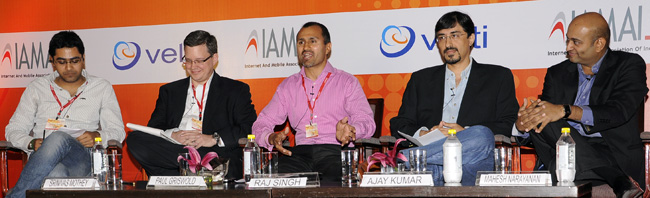
    As more and more youngsters gain access to various digital platforms, there is a greater need for marketers to not only engage the young consumers, but they must also be able to give them a unique experience across the digital platforms. The IAMAI (Internet And Mobile Association of India), which held its 8th Marketing Conclave, 2012 – ‘Digital Marketing 3.0’ on April 13 in Mumbai, extensively discussed the role of social media, video advertising and mobile advertising in the near future.


    Using Social Media:

    Today most companies have multiple social networking sites – Facebook, Twiter, LinkedIn and others. There are separate teams handling social media marketing for the company, but, are brands listening to their consumers? Do they interact and respond to queries and complaints? Do marketers understand the social media and know how to monetize it? Or are brands simply satisfied with the number of ‘Likes’ and views they generate on their social networking sites?


    Karthik Nagarajan, National Director, Social and Insights, Group M was of the view that unless one is not ready and mature enough as an organisation for the medium, the organization must stay away from social media.


    According to Usha Sangwan, Executive Director, LIC India, what brands lack today is the courage to be transparent, they don’t respond to negative feedback and fail to turn the customer as an advocate of their product. “Brands must not see social media as a mere marketing tool and limit to generating numbers alone, but social media must be used mainly for connecting with the TG and co-creating the product. Brands must try and understand their TG and become a part of their customer’s day to day life.”


    Virginia Sharma, Chief Marketing Officer, IBM India hit the nail on the head by stating that brands must have the ability to admit their mistake and apologise to the customer. She admitted that while there is a certain amount of fear among brands to apologise for a mistake committed because it may lead to negative public opinion, but felt it is always better to apologise and rectify the mistake which could lead customers to becoming an advocate of the brand.


    Vinay Bhatia, Customer Care Associate and Vice President Marketing and Loyalty, Shoppers Stop added that it a company’s reputation is harmed only when it fails to act responsibly to a complaint made, and not when it apologises for a mistake and tries to rectify it. “The problem with the companies today is that they make policies as if the consumer is a criminal. Accepting a feedback and acting upon it will not harm the brand but, if one chooses to remain silent about a complaint, that’s the worst one can do to his brand.”


    Leveraging Mobile Advertising:

    Besides the social media, mobile advertising is another challenge faced by marketers who have more or less failed to leverage the small screen. Sadly, mobile advertising is largely limited to only SMSes. Marketers are said to often mistake mobile as an extension of broadband internet and as a result they fail to give their consumers a unique experience on mobile.


    Speaking from a marketer’s point of view, Ajay Kakar, CMO, Financial Services, Aditya Birla Group stated that although the potential for mobile advertising is high, there is still a section of people who have not seen the mobile as an opportunity. He added that mobile industry must follow the ‘Jo dikhta hain, wahi bikhta hain’ policy and evangalise the benefits of mobile advertising. “Content is very important, don’t tells me about your brand, but tell me what’s in it for me? Give me the case study of successful mobile advertising. What I want to know is how much money mobile advertising is making for my brand and for my business? What you must do is to stop saying ‘buy me, buy me’ but, instead tell me ‘why me, why me’?”


    With the introduction of 3G and now 4G services, mobile internet is expected to be faster and with high quality content, better mobile applications, much better video and much more. In addition to these, smart phones and tablets are also said to play important roles in the growth of mobile internet in India.


    Mahesh Narayanan, Country Head-Mobile, GoogleIndiasaid that there is not only lack of understanding about mobile advertising, but also lack of discussion about mobile as a medium in board room meetings. “The consumer shift is already happening from traditional media to mobile; however, great amount of content for mobile is yet to be created. People are looking for your brand on their mobile phones but, ironically brands are absent on mobile.”


    While mobile subscribers will continue to grow and more people will access internet through their mobile phones, the challenge lies in monetizing the medium and to find newer ways to reach out to consumers besides SMS advertising.


    Paul Griswold, Director Product Management, Mobile Marketing, Velti was of the view that mobile is not treated as an integrated part of marketing strategy, but is seen as an extension to online. “There has been a failure to take the advantage of the one on one interactivity mobile offers and just sending SMS is definitely not the way.”


    The participants outlined not only the problems but also possible solutions. According to Srinivas Mothey, Head Mobile Marketing and Advertising, One97, the first step is to educate advertisers and agencies about the benefits of mobile advertising. Although every advertiser may have a different view about the medium, nevertheless they need to be encouraged to invest in mobile. “We are also encouraging advertisers to create mobile assets and not just mobile apps. We are beginning to see the positive results but, in order to see more results, it may take some more, but the first step needs to be taken.”


    Video Marketing:

    Video advertising/ marketing is not a new phenomenon for marketers. Traditionally, marketers are said to be comfortable with video and we have been seeing that on television, and will probably see the same, and in a much bigger way, online and on mobile in the near future.


    According to Debadutta Upadhyaya, Vice President, Vdopia Media, there has been over 50 per cent growth in video consumption in the last one year alone, the fourth largest globally. “Unlike other countries,Indiahas made the leap from web to email to social media and now video. There is still a long way to go on the creative aspect because the primary advertising medium of a creative agency has always been television, so creativity in video advertising is bound to take some time.”


    As India’s broadband penetration and mobile internet accessibility increases, it would be just a matter of time when video marketing would explode inIndia. Besides online, with 3G and 4G services, video consumption on mobile should be an altogether different experience for users and marketers.


    But Shubhranshu Singh, Marketing Director-IndiaandSouth Asia, Visa cautioned: “There is a difference between video on web and video on mobile, and the difference between the two is galloping ahead in terms of content. Perhaps the youngest audience in our country today will watch television online for the first time which could be an opportunity or a threat if we are not ready for it.”


    Digital marketing in itself has become 360 degree for marketers. It has gone beyond display and banner advertising, to becoming more interactive and innovative to reach out to consumers. Digital marketing, as the industry players pointed out, is in a transition phase from web, to email and now brands are trying to reach out to their customers through social media, mobile and video.


    Marketers must stop considering mobile internet as an extension to online and, therefore, give mobile users unique experience of mobile advertising. Social media must not be seen as a mere marketing but, a medium to interact with their consumers, know their behavior and be a part of their day to day life.


    Brands must be receptive to both positive and negative feedback of customers, admit to their mistakes, apologise to the customer and rectify the fault. Digital marketing will undoubtedly grow but, marketers must first be evangalised not only about the benefits of the medium but, also ways and means to leverage it.

    Imaging: Rafiq

     

  • Nokia, Reckitt etc outsource @Twitter to woo consumers

    By Shelley Singh


    Abhishek Roy, a 25-year-old commerce graduate from Delhi University and a diehard believer in social media, has more than 100 followers to his Twitter account. But that’s not the only account the heavy-metal addict operates on the social networking and micro-blogging service. Mr Roy also tweets for a living.


    As an employee of Bloggers Mind, a social media-focused start-up that promises to ‘multiply your brand buzz’, Mr Roy spends his working day putting out tweets that typically promote products and services of companies. One of the companies that keeps Mr Roy busy is Nokia, which has outsourced its Twitter handle to Bloggers Mind.


    “A great app to become an amazing cook! bit.ly/zo6bvd. Here’s a review of the app from @mynokiablog,” is just one of Mr Roy’s tweets that go out to some 15,000 followers of Nokia India.


    In Mumbai, 26-year-old Upasana Sanyal’s typical day is no different. Ms Sanyal, who joined technology services provider Mahindra Satyam six months ago, sends out 300-400 tweets a month. A recent one was on the company’s quarterly results.


    Q3, Re dip gains mixed; volatility high,” was the cryptic but crisp message to the twitterati following the company. “Tweets spike around results time or key announcements. It’s a good deviation from the mundane,” said Ms Sanyal, a consultant with Mahindra Satyam.


    At Dell India, Suyesh Shankar, 39, a marketing manager for consumer and small- and mid-sized businesses, spearheads the US firm’s social media agenda, which comprises a Twitter team that sits out of the company’s Bangalore-based Social Media Command Centre.


    Roy, Sanyal and Shankar are the communicators with the mandate to capture consumer attention in 140 characters. While Mr Roy is with a specialist social media services provider, the latter two are key members of in-house Twitter teams.


    Across India Inc, Twitter has fast transformed from an individual tool into a key platform to create and sustain brand buzz. The communications range from customer feedback and new jobs announcements to customer grievances and no-holds barred promotional blitzes.


    While companies such as Nokia India, Kotak Securities, Reliance Digital, Reckitt Benckiser and TripAdvisor outsource their Twitter handles, others such as ICICI Bank, Dell, IBM and Flipkart manage it in-house. Other agencies, such as Bloggers Mind, that provide third-party tweets include Convonix, Interactive Avenues and OgilvyOne.


    Twitter for most corporates is one link in an integrated marketing chain. “Our Twitter team is an extension of our ‘khayaal aapka’ effort and brings to life our commitment to be where our customers are,” said Anita Pai, senior general manager, ICICI Bank. In a typical month, ICICI Bank monitors 200,000 social media mentions, out of which 70,000 are tweets.


    Handset major Nokia India manages between 400 and 700 tweets a month via Bloggers Mind. “We use Twitter to engage with consumers on a real-time basis, share tips, information and address feedback or queries,” said Viral Oza, director (marketing), Nokia India. Bloggers Mind has a nine-member team for Nokia and four for Reckitt Benckiser.


    Aditya Vaidyanathan, account director for Nokia at Bloggers Mind, said: “We have a weekly planner with clients as to what messages to send out and how to address queries.” This includes promotional trivia such as: “Did you know that 360,500 text messages are sent out from Nokia phones every second”; or answering queries like: “How do I add new dictionary words to Nokia Lumia?”