Tag: IBF

  • Uday Shankar re-elected President of IBF

    By A Correspondent


    Uday Shankar

    Star India CEO Uday Shankar will once again be President of the Indian Broadcasting Federation (IBF), the apex body of television broadcasters in India. At the 15th Annual General Meeting (AGM) IBF held in New Delhi on Wednesday, and the Board of Directors meeting thereafter, Mr Shankar was elected President.


    The IBF Board also elected Punit Goenka as Vice President – Measurement, N P Singh as Vice President – Distribution, Rajat Sharma as Vice President – Strategic Affairs and Rahul Johri as Treasurer.


    Commenting on the development, Uday Shankar said: “I am privileged to be trusted by the members of IBF to lead the industry body at a critical juncture when the industry needs to leap to the next level by working collaboratively with the Government and other stake holders.”


    The move is seen to be significant as the all-important television viewership measurement system of joint industry body BARC is scheduled to be functional in the next few quarters.


  • We can’t be without a measurement system: Hemant Bakshi, ISA Chair & ED, HUL


    What appeared to be a quiet start of the year emerged as an action-packed one as the ghost of the TV measurement scare emerged yet again with the Union Cabinet approving guidelines on television audience measurement issued by the TRAI.  Hemant Bakshi, Executive Director – Home & Personal Care of Hindustan Unilever (HUL) and Chairman, Indian Society of Advertisers (ISA) spoke with Shobhana Nair on how no measurement system is no good for the ecosystem, and the television sector in particular. The ISA, it may be remembered, had opposed the stand of several broadcasters who had unsubscribed from TAM last year. Excerpts from an interview with Mr Bakshi


    The danger of no measurement system hangs on the industry again though the reason is different this time around. How have you thought of handling it as the ISA Chairman?

    Firstly, it has just been announced and we need to get clarification on exactly how it is going to be amended. We are trying to figure that out right now. Meanwhile, ISA’s position on this remains the same that we do need a robust measurement system and I think the guidelines will help us get that. In the short term, we can’t be without a measurement system because ratings are the currency with which we buy television and the absence of the currency will affect the industry. We want to avoid that scenario at any cost.


    Have you discussed the situation with other members of ISA and what is a possible solution that has come out?

    I think we will come to conclusions but, as I said, right now we need to understand the details of the guidelines on how things will pan out, etc. And we are working on it.


    What are your thoughts on the guidelines by TRAI for TV Rating Agencies? Do you think it is a good attempt to create a manipulation-free environment?

    I haven’t seen the guidelines fully, so I don’t want to comment on it.


    BARC has many months before it becomes operational, what is on your agenda to speed up things there?

    BARC has already been working quite well and the progress has been outstanding. We need to keep in mind that to create something of this nature takes time and can’t be done overnight. Having said that, the work on BARC is at a good pace.


    After everyone came to an agreement last year on the need for a television audience measurement, we still have many  sections in the industry against TAM…

    I think we should look ahead and not look back. Going forward, the three bodies (IBF, ISA & AAAI) are working together through BARC to create a ratings system which will be acceptable to everyone. I think we should put all our energies in that.


  • IBF, AAAI, ISA and TAM reach a consensus. Finally

    By A Correspondent


    Representatives of advertisers, media agencies, broadcasters and TAM have finally been able to iron out their differences and agreed to agree on an agreement.
    The media and public will now get to know television viewership in thousands, colloquially referred to as TVT. TVT captures and reflects growth in TV audiences in the country in terms of absolute numbers. TVT will be the sole currency in the public domain.

    In addition four-week TVT rolling average will be provided every week. The rolling average is statistically more stable data on viewership, especially for smaller audiences in niche channels, regional languages, English language programs and news.

    For internal evaluation including planning and buying, %TVR weekly will be available to advertisers and advertising agencies.

    The three constituents have also agreed that TAM will make all future audience measurement changes based on inputs from the joint-industry BARC Technical Committee.

    Commenting on the changes IBF President Man Jit Singh said: “We are delighted to have reached this agreement. We believe it is important for the industry, and from the perspective of our social responsibility, we must reflect both the growing television audience and the data in a more stable and useful manner. We want to thank AAAI and ISA in collaborating and working out a solution acceptable to all constituents”.

    “As three concerned constituents, who believe in working together, we have decided to refer all future currency related changes to the BARC technical committee. I’m glad that now we will have an effective guide and monitor for ratings in the country,” said Hemant Bakshi, Chairman of Media Committee and Managing Committee of the Indian Society of Advertiser.

    “Getting weekly TVR% is important for media planners and buyers to effectively plan and buy TV  and do mid- plan course corrections and post analysis. We are glad that we have been able to agree that the agencies and advertisers will have access to this data as in the past. From tomorrow, we look forward to being able to focus back on our clients businesses and effective planning and buying for their brands,” said Arvind Sharma, President of the Advertising Agencies Association of India.

    A TAM spokesperson has also issued a statement saying: “TAM is happy to receive a common brief from the three Industry Stakeholders (IBF, ISA and AAAI) and will work very closely with them to ensure its smooth roll out.”

  • IBF, AAAI, ISA and TAM reach a consensus. Finally!


    By A Correspondent

    Representatives of advertisers, media agencies, broadcasters and TAM have finally been able to iron out their differences and agreed to agree on an agreement.

    The media and public will now get to know television viewership in thousands, colloquially referred to as TVT. TVT captures and reflects growth in TV audiences in the country in terms of absolute numbers. TVT will be the sole currency in the public domain.

    In addition four-week TVT rolling average will be provided every week. The rolling average is statistically more stable data on viewership, especially for smaller audiences in niche channels, regional languages, English language programs and news.

    For internal evaluation including planning and buying, %TVR weekly will be available to advertisers and advertising agencies.

    The three constituents have also agreed that TAM will make all future audience measurement changes based on inputs from the joint-industry BARC Technical Committee.

    Commenting on the changes IBF President Man Jit Singh said: “We are delighted to have reached this agreement. We believe it is important for the industry, and from the perspective of our social responsibility, we must reflect both the growing television audience and the data in a more stable and useful manner. We want to thank AAAI and ISA in collaborating and working out a solution acceptable to all constituents”.

    “As three concerned constituents, who believe in working together, we have decided to refer all future currency related changes to the BARC technical committee. I’m glad that now we will have an effective guide and monitor for ratings in the country,” said Hemant Bakshi, Chairman of Media Committee and Managing Committee of the Indian Society of Advertiser.

    “Getting weekly TVR% is important for media planners and buyers to effectively plan and buy TV and do mid- plan course corrections and post analysis. We are glad that we have been able to agree that the agencies and advertisers will have access to this data as in the past. From tomorrow, we look forward to being able to focus back on our clients businesses and effective planning and buying for their brands,” said Arvind Sharma, President of the Advertising Agencies Association of India.

    A TAM spokesperson has also issued a statement saying: “TAM is happy to receive a common brief from the three Industry Stakeholders (IBF, ISA and AAAI) and will work very closely with them to ensure its smooth roll out.”

  • Digitization reaches 67% in Phase II cities: MIB

    By A Correspondent


    Fresh data from the Ministry of Information and Broadcasting states that 67 percent of the digitization target has been achieved in the 38 cities which are set for digitization by March 31. According to DTH operators and MSOs, a total of 108 lakh Set Top Boxes (STBs) have already been installed in Phase-II cities against the target of 1.60 crore, registering overall achievement of over 67 percent digitization.


    Hyderabad, Amritsar, Chandigarh and Allahabad have achieved nearly 100 percent digitization, according to the MIB, and 75 percent digitization has been achieved in eight cities – Jodhpur, Thane, Aurangabad, Jaipur, Pune, Faridabad, Nashik, and Ghaziabad.


    Analysis of the data further reveals that out of 38 cities to be digitized in Phase II, 28 cities have achieved more than 50 percent digitization individually.


    The ministry has also stepped up the public awareness campaign to sensitize consumers on the benefits of digitization, through print and electronic media. Both All India Radio and private FM broadcasters are airing radio jingles, the ministry has brought out a print advertisement in all 38 cities in the respective regional languages, SMS campaign is under way, and television channels have been frequently running video spots, blackout advertisements and scrolls.


    Meanwhile, the Indian Broadcasting Foundation (IBF) has reiterated its commitment to television broadcasting digitization. As mandated by the Ministry of Information & Broadcasting under the Cable Television Network Amendment Ordinance 2011, for the 38 cities notified in the Phase II sequence of the digitization roll out, television broadcasters will comprehensively switch off all analogue signals from midnight Sunday, March 31.


    The IBF board has stressed that such a move is necessary to smoothen the transition from analogue to digital cable TV. IBF members have been running regular awareness campaigns to educate consumers on the various benefits of digitization. Some of these benefits include better picture and sound quality, enhanced services such as high definition, video on demand content and eventually, higher quality content. In addition, digitization will also enable viewers to choose and pay for only those channels they want, rather than pick from packages with fixed prices. Digitization will also bring about greater transparency between broadcasters, cable operators and consumers.


    Man Jit Singh

    IBF President Man Jit Singh said, “IBF and its members are committed to the successful implementation of digitization in India. Our awareness campaign has received very good response. We are confident that the successful implementation of DAS-II will tremendously improve the quality of television content and consequent viewership in the country.”


  • IBF appoints Shailesh Shah as secretary general

    By A Correspondent


    Indian Broadcasting Foundation (IBF) has announced the appointment of Shailesh Shah as its secretary general. With over 28 years of experience in a variety of industries, Mr Shah will augment IBF’s efforts in building a robust and profitable broadcasting industry in India.


    In a career spanning three decades, Mr Shah has worked with The Hay Group, PriceWaterHouse Coopers, Watson Wyatt, Satyam Computers and the JSW Group.


    He was also involved with organizations such as The World Economic Forum, The Economic Development Board of Singapore and NASSCOM. He is a mechanical engineer, has a master in Operations Research and an MBA in Finance and has read at Bangalore University, Syracuse University, Drexel University and the Wharton School at the University of Pennsylvania.


    Man Jit Sigh

    IBF President Man Jit Singh said, “His wide experience in delving into industry fundamentals to drive value creation will be of immense value to the foundation. I, along with the rest of the members, welcome Shailesh to IBF.”


  • Let the (ratings) games re-begin!


    By A Correspondent


    After a brief two-month hiatus, the broadcast industry will be waiting with bated breath to lay their hands on the viewership data that will be released by TAM tomorrow – that is, December 19 2012. The day will be of utmost importance in the broadcasting fraternity as it marks the release of data post the digitization drive that transpired across four major metros and also for the fact that the industry expects new trends to emerge, something that was amiss when the analog world was largely in operation until October 31, 2012.


    Just to recap, TAM had stopped issuing ratings to the industry citing deferment. In wake of the phase-wise DAS implementation that was scheduled to take place across the four metros, the custodians of TAM Media Research – Advertisers (ISA), Media Agencies (AAAI) and TV Broadcasters (IBF) – had arrived at a joint consensus on the need to temporarily defer TAM TV Viewing data release for the All India market for a period of 9 Weeks starting Week 41 (October 7, 2012, Sunday) and ending Week 49 (December 8, 2012). This deferred data will now be released on December 19, 2012 along with data for Week 50 (December 9-15, 2012).

     

    LV Krishnan

    At a press conference last week, LV Krishnan, CEO, TAM Media, highlighted the progress that had been made so far post the switch to digitization by the four metros and what were the immediate trends that were showing up in the new universe. What was heartening to note was that most analog homes in Mumbai and Delhi had made the imperative switch to digital with Mumbai recording a 93 per cent conversion rate compared to Delhi that recorded an impressive 97 per cent. On the other hand, Kolkata witnessed only 70 per cent conversion from C&S homes to digital while Chennai recorded more abysmal figure of just 26 per cent homes that had moved on to digital.


    Emphasising on the new rating mechanism, Krishnan said that as per the advice of the CIC committee, TAM will not report homes in the DAS area that are not digital. This will lead to the universe also shrinking correspondingly. Thus while analogue data from Mumbai, Delhi and Kolkata will not be released, an exception will be made for Chennai where it will continue to report analogue data given the low conversion rate observed there. Krishnan added here that the Urban Agglomeration or non-municipal corporation areas in Mumbai that consist of Navi Mumbai, Thane, Dombivli, Kalyan etc will continue to release analog data as they would be liable for conversion when the second phase kicks in. Thus, going forward, the data that would be released will be reported at breaks of C&S 4+, NCS (Terrestrial), C&S Digital 4+ and C&S Analogue 4+ (for non-DAS areas).


    Among the few trends that were observed as a result of the digitization drive, Krishnan pointed out the move had been a boon for niche genres like English and kids entertainment that witnessed a spike in viewership (time spent) during this phase. He noted that about 60 percent of channels with a pre-DAS share between 0 and 0.5% gain in share had witnessed a 4 percent net share gain post digitization. This was not the case for larger market share channels that witnessed a slight reduction in the net share gain.


    In order to facilitate the ever-expanding universe size, TAM has said that it would be increasing its sample size by about 400 peoplemeter boxes in the Mumbai and Delhi markets starting from the first quarter of 2013. It has also decided to add another 250 peoplemeter boxes to centres such as Chennai, Hyderabad, Bangalore and Kolkata.


    While all systems are set for the December 19, 2012 release Krishnan stated that with digitization having set in it was important to be cautious when analysing data in this phase like for example taking averages, looking at trends, not cutting data too fine such as a particular half hour on a particular day, ensuring that sample sizes are sufficient etc. Asserting his gameplan for the future, Krishnan said that for Phase 2, TAM seeks to carry-forward the learnings and continue working with the committee to make it conducive and resourceful for the broadcast environment.


    MxMIndia spoke to a few members from the broadcast fraternity to see if not having data for two months made any difference to their survival and what would be their expectations from the new ratings that get released from December 19, 2012.


    Ajay Bhalwankar, Head- Content – Hindi GECs, ZEE

    “There is a myth about every Wednesday morning being a scary one….You won’t find us running helter-skelter every Wednesday. Ratings tell you what has been liked and what has not been liked but not what has to be done! So they are just a reference point. We have an internal meter which we follow to check whether our shows are creating magic or not. Initiatives on digital and social media brought us closer to our audiences. This internal judgement is important. I started my career in the ’90s and we had no ratings then for nearly eight years. So, ratings do not bother me.”

     

    Anand Chakravarthy, Business Head, BIG CBS Networks

    “Our issue with TAM has always been that the English entertainment genre has never been well represented. The fact is that the English entertainment speaking audiences are never fairly represented in the sample, due to which the data released is not quite comprehensive. As a network, we have never depended on numbers to sell; we’ve always talked about the quality of content and the quality of our offering which has been our strength. In fact we have always maintained that TAM data is not a yardstick for niche channels like the English entertainment channels because the sample size of TAM does not represent this audience well.


    Even with digitization happening, the question, is how well will the new sample represent households that watch English entertainment channels? There could be some amount of movement of market shares between genres as we know that some parts of metros are still not disconnected completely. Therefore the universe size may reduce in some markets that will lead to change in ratings from the larger genres to possibly the smaller genres. But the fundamental issue, does the TAM ratings represent the English entertainment genre well enough and does it have the right sample size and profile of people, the answer to that is no. It will continue to be a problem unless it is addressed very clearly and head-on. That’s an issue that needs to be addressed very quickly. We are working with TAM to see how we can better evolve the system so that the English entertainment space is represented well enough.”

     

    Nina Elavia Jaipuria, EVP & Biz Head – Sonic & Nickelodeon India

    “What happened was for the good of the industry because it was required that everybody come to a consensus and see that the data is sanitised thanks to the changing environment and that it would give us a better understanding of phase 2. So while life was disrupted for about 8 weeks, it was all for a good cause. But having said that, I also believe that TAM is the only currency that exists in this industry and therefore we did miss its release to some extent. But it was a minor hurdle and nothing major so as to change our lives drastically.


    As for the release of data once again from tomorrow, we have to see what the new TAM has in store for the industry. They must be having their hands full as of now but then there is a committee which is looking to sanitize data that gets released. With the digitization numbers already pouring in, we are eager to see the kind of trends that the kids entertainment genre has managed to throw up. I see content and marketing playing important roles as they will drive viewership to the genre. So I would wait to see what TAM has to offer and take that lesson to phase 2 of digitization. I am sure that TAM will keep themselves abreast of the sample size and formation based on the manner in which digitization gains acceptance. So the universe will also move accordingly and I am sure that TAM would have taken into account that factor. Whether it is SEC fragmentation or it is the universe movement, TAM surely would have taken all these things into account. Also, digitization will only help the industry in terms of it becoming more transparent and more measurable and the fact that the niche genres will have a better chance to survive.


    Also, it will become an environment where the reliance on ad-sales will witness a drop. It will not vanish completely but we will see more reliance on subscription, which will be a good thing. All this won’t happen overnight as only 4 metros have been included in phase 1, which will move to 38 other cities in phase 2 that will take another 4-6 months. But in the end the country will be digitized for good.


    From a qualitative perspective, we would like to see different slicing of data especially from a demographic and psychographic perspective in the kids’ genre. Traditionally we have been doing 4-14 yrs which is sliced 4-9 and 10-14 yrs and the more we look at kids today and the fact that they are becoming more dynamic today, there is a need to relook at the slicing by TAM.


    Ajay Trigunayat, CEO, English Entertainment Channels, Times Television Network

    We are of the view that it’s difficult to capture rapid macro-transitional changes:


    1. Analog >> Digital migration

    2. Panel Updation

    3. Change in SEC definition


    We certainly understand it’s a challenge to condense this transitional period but we are hopeful TAM will accurately reflect these changes soon.

     

  • Stakeholder view of one month of digitization


    By Ananya Saha


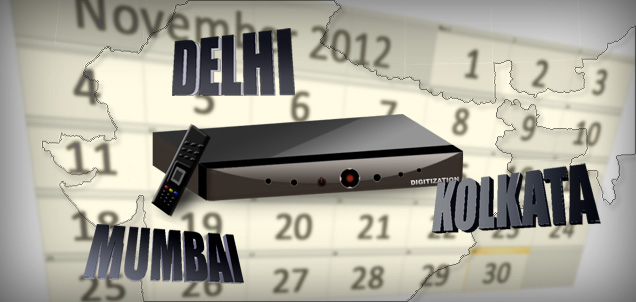
    It has been a month of mandatory digitization in the three metros of Mumbai, Delhi and Kolkata. Even though government officials may make us believe that the metros are completely digitized, , the ground reality appears to be different. Analogue signals continue to be available, and not all stakeholders are happy with the way things are shaping up. Meanwhile, in Chennai, the digitzation hearing has been postponed by four weeks. It is likely to happen only by December 31, though given a cloud over whether the government will be allowed to run a cable service (in Arasu Cable),  will be allowed to be


    Man Jit singh

    Calling the Phase I a tremendous success for industry, Man Jit Singh, President of the Indian Broadcasting Federation (IBF) and CEO, Multi Screen Media said, “Digitization has been a huge success. The kinds of effort that was done to get digitized, no where in the world have we seen this kind of achievement has been done. Kolkata has not reached 100% digitization yet, but I think it will get there.” He also acknowledged that fact that there are few illegal signals in Delhi and Mumbai but assured that the IBF is working with other stakeholders to have these illegal signals completely switched off.


    Roop Sharma

    On the other hand, Roop Sharma, President, Cable Operators Federation of India (COFI) highlighted how none of the promises made on digitization by MIB have been achieved so far. She said, said, “During Parliament discussion on the Cable TV Act Amendment Bill last November, the then I&B Minister Ambika Soni said digitization will provide choice of channels to consumers-through a-la-carte selection, provide high quality service, controlled pricing of pay channels and thus lowered billing to consumers, and that consumer to pay only for what they wish to watch. Consumers were to get internet video-on-demand and value added services through set-top-boxes, and she had said that small cable operators will not be rendered unemployed, there will be transparency and correct accounting of channel viewership, govt will get tax on all connections as no under-declaration will exist, and that there will be no ambiguity in TRP ratings. Now, with one month of digitisation over, has this been achieved?” She is of the view that nothing that I&B Minister had promised the Parliament has been achieved yet and still, the Ministry has announced successful completion of phase I and started roll out of phase II.


    The figures

    Swapan Chowdhury

    Currently, according to various stakeholders, over 95% digitization has been achieved in Delhi and Mumbai even as Kolkata trails behind with quite a less percentage. Swapan Chowdhury, General Secretary, Cable & Broadband Operators’ Welfare Association, Kolkata, however, estimated, “Mumbai achieved 75% digitization and 70% in Delhi while digitization in Kolkata is only about 40-45%.”


    Mr Chowdhury also said that the actual activation of set-top boxes in November for Kolkata has been than a lakh. Arvind Prabhoo, Owner, Orbit Television Network, Mumbai said that the actual reason behind high numbers from Mumbai is because of stopping of analogue signals. “Most of the networks have reported 90-95% switchover in Mumbai. This figure has happened after the stoppage of analogue signals. We were hardly touching 60-65% before the analogue signals were not switched off. Even then, at least 35-40% people have not taken to digitisation voluntarily.” Though the piracy is still an issue in some pockets of Mumbai, over 8-9 lakh STBs were installed this month alone.


    Certainties and Uncertainties

    “There are certain distributors who have not made their pricing policy clear yet. There us a lot of confusion over revenue-sharing. One of the major issue is Entertainment Tax. If the govt charges Rs 45 per STB connection, does that mean every house that has two television sets, pays Rs 90 entertainment tax,” voiced Mr Prabhoo.


    Ms Sharma said that broadcasters are making lumpsum deals with MSOs for pay channels and not based on the number of consumers opting for those channels. “Hence, there are no accurate figures. Discrimination is rampant. Rates of pay channels are not based on market demand but whims of the large content aggregators, vertical monopoy business houses/ companies like MediaPro who enjoy monopoly in pay TV content distribution,” she remarked.


    Ashok Mansukhani

    Although, the DTH operators this writer reached were unavailable for comment, there have been mixed reports on its success rate. While one report says it has done well in the Capital where the availability of analogue signals has been low, MSO Alliance chief Ashok Mansukhani has another view. “DTH is surprised at its poor performance. They need to take a call on what they are upto: have they grown in the last six months,” he asked. “According to statistics, it’s 70:30 in favour of cable and that is not going to change soon. Where did cable have the capacity to retain 70% of cable base? For DTH, there is enormous churn which is as much as 33% of the total amount claimed. And how come the government doesn’t take the churn into account,” asks Mr Mansukhani.


    While Ms Sharma and Mr Prabhoo said that the issue of carriage fees has not been sorted out yet either, Mr Man Jit Singh sounded optimistic, “We expect there will be decrease in carriage fees as digitization rolls out for simple reason that the capacity constraint of analogue system will go away. However, carriage fees is not going away completely and it will take time. Both broadcasters and MSOs are working together to make a gradual transition to reach a stage economically in the short run so that it sorts itself out in the long run. We feel that carriage fees is moving in the right direction.”


    Phase II: Lessons from Phase I

    Phase I was not a smooth ride. And Phase II will be even tougher since it will be rolled out in 38 cities simultaneously. Apart from stronger communication aimed at the end consumer, the stakeholders need to tighten their belt for doing their bits too.


    Mr Mansukhani said that in the second phase, more attention should be given to the consumers and less to the broadcaster. “Awareness creation by all stakeholders is necessary since once people are aware, they are open to change. In the phase I, we were not communicated on the need of digitization and we still do not know why digitisation is happening,” said Mr Prabhoo.


    Ms Sharma said insisted that for the next phase transparency is required on each level: between broadcasters and channel aggregators; between channel aggregators and MSOs; between MSOs and LCOs and between LCOs and consumers. “Digital Cable System is new and is not tried and tested. Lots of teething problems, application hazards are poping up which needs to be addressed. Redressal of all such issues should be considered on practical ground and not on any task force or ministrial meeting. The first phase of digitization is practically incomplete. Supply of STB in the first phase is inadequate, the pressure of second phase will push the process into much more complication. Authority is not accepting the time for settling down for supply of STB and the technology,”said Mr Chowdhury.


    Mr Singh concluded, “The early seeding of boxes and getting the message out to consumers that they need to get their boxes early is one key message. IBF’s campaign to build public awareness was extremely effective and we should continue with that campaign for phase II. The ministry’s effort to coordinate with all stakeholders was in excellent trend that should continue. If anything, I think MIB  is going to take even more proactive stance of monitoring the actual implementation of the roll out of boxes city by city. So I think a lot of the learning from phase 1 will apply to Phase 2 and it is very positive.”


  • It’s incorrect to blame us on BARC delay, say ISA & AAAI


    By A Correspondent


    With news network NDTV suing television measurement body TAM Media Research and its principals, it’s become critical that stakeholders of the proposed Broadcast Audience Research Council (BARC) get their act together to provide an adequate framework for research and ratings.


    For, if industry bodies do not act speedily, the government could well step in. It was hence interesting to read IBF president Uday Shankar’s assertion that the apex bodies of advertisers (ISA) and ad agencies (AAAI) have been speedbreakers in the setting up of BARC.


    Nagesh Alai

    This statement of not showing enough urgency has not gone down too well with the Advertising Association of India and Indian Society of Advertisers. Said Nagesh Alai, former AAAI president and current ex-officio member: “It is unfortunate that such a comment has been passed. At the end of the day, who are the constituents of the industry? The advertisers, broadcasters and advertising agencies and each of them have a role to play. When all of these are stakeholders, how is it possible that ISA and AAAI will be uninterested in moving BARC forward? The fact remains that we have been engaging with them regularly and have come to an agreement on what the constitution of the shareholding would be; what should be the constitution of the board of governance and what should be the operating principles. All these have been captured in the draft of Memorandum and Articles of BARC, which is with the IBF.”


    He added: “We’ve met and agreed in principle on the key issues and have put down those things in the document as it is very necessary to start off. It is lying with them now. As I see it, it is work in progress. There is no question of us not being interested or not wanting to take this forward – how can it be? It is just not a rational statement. Just to recall, three years ago, AAAI was one of the prime movers on BARC – it was our idea.”


    On the current status of the draft, Mr Alai said: “As of now, the Memorandum and Article document that needs to be signed by all stakeholders is with IBF. All the recommendations in the draft have been taken jointly by the three member bodies. It is just the question of whatever is there in the draft is seen and accepted by them and we sign and move on from there. As I see it, it would take another one or two months for the signing process to take place; it all depends on how soon IBF responds now. But let me tell you that we will continue to work in partnership so that we are able to come up with a system that is robust and liked by all.”


    Meanwhile, when asked for its standpoint on the issue, the ISA reverted with the following statement: “The Indian Society of Advertisers, who initiated the formation of BARC based on the World Federation of Advertisers’ best practice of forming a Joint Industry Body (JIB) for television audience measurement, would like BARC to start tomorrow. We would not like to join the blamegame, as a joint industry body BARC is necessary for robust and transparent TRPs. As for NDTV versus TAM issue, we cannot comment on it as the case is still sub judice.”


    Bharat Patel

    When contacted, Bharat Patel, past chairman of Procter & Gamble and chairman of ISA admitted to BARC facing some tough times but said that it will be back on track soon. “There have been ups and downs but you must understand that this is a new baby and it is bound to take a long time. Also, there are huge investments involved. But then it should happen soon,” he said.


    On the IBF president’s statement holding the ISA and AAAI responsible for the slow progression, Mr Patel said: “It is incorrect. It’s got nothing to do with the AAAI or the ISA. As I said, these things take some time. We have reached a stage where we are finalising the articles and once that is done it should move fast.”


    “One must also realise that people have their own job/business to cater to,” Mr Patel added. “One has to have enough time on hand as people who are involved in BARC have their own jobs to look at too. For me, the real issue is that people are not finding the time to get together. I cannot give a timeframe at this stage as I cannot speak on behalf of other people but then it will happen soon. In fact, ISA wants to get started with it from tomorrow itself as we were the ones who initiated the global best practice JIB by the name of WFA. But you will see it happening soon.”


    While the statements from AAAI and ISA reiterate the commitment to the cause of setting up a credible measurement metric, it’s critical for the trio of IBF, ISA and AAAI to put aside differences and work amicably to safeguard the future of the industry. The ball for now is in the industry’s court. If it doesn’t act fast enough, the government could also be an active participant.


  • IBF welcomes Tariff Order, seeks clarity on Carriage

    By A Correspondent


    The Indian Broadcasting Foundation (IBF) has welcomed the initiatives taken by the I & B Ministry and TRAI in bringing about much needed reforms in the cable sector.


    The Tariff amendments and the new Interconnect regulations for Digital Addressable Cable brought about by the Telecom Regulatory Authority of India (TRAI) will inject necessary transparency across the value chain. With a slew of consumer friendly measures – namely choice of packages and introduction of Basic Service Tier, TRAI has ensured that all subscribers of varied socio economic background are duly taken care of and provided for. IBF also welcomes the mandate to enhance the channel carrying capacity to a minimum of 200 channels wef July 1, 2012 and 500 channels wef January 1, 2013.


    The new interconnect regulations have brought within its wake the much awaited specifications for digital addressability while at the same time laying down the eligibility criteria for availing signals. The reporting requirements will help the government in plugging leakages while the provisions on disconnection of signals will ensure that all stakeholders are aware of their rights and obligations.


    Overall the Tariff Order and the Interconnect Regulations read with the amended Cable TV Act and Rules are steps in the right direction and will help the country to make the digital transition.


    However, a big area of concern for Broadcasters is Carriage Fee. The Broadcasters have taken up this issue in various discussions with the TRAI and the Government in the past. Carriage Fee has crippled various broadcasters, especially the smaller sized companies, and it has restricted a broadcaster’s ability to invest in content and other activities of a channel. Therefore, there is an urgent need to revisit this issue and IBF will seek clarity on this matter from TRAI.


    India is on the threshold of a digital makeover and IBF trusts that this will, over a period of time, make way for more freedom to stakeholders as digitalization acquires critical mass and the country gains more confidence in bridging the digital divide.


  • MxMIndia Comment: Let market forces decide ad duration

    By Pradyuman Maheshwari


    There is no denying that the Telecom Regulatory Authority of India (TRAI) has done some splendid work in the world of telecom. It’s also done its homework well on the recommendations for digitized delivery of broadcast signals. The sunset dates (especially for the four metros) are very ambitious, but TRAI is determined to cleanse the system, and this could well help do that.


    However, there are some areas where TRAI has failed, and come up with outlandish recommendations. For instance, its advisory that only All India Radio news feeds be used on FM private radios. It’s bizarre. When all and sundry players are allowed to air news on television – via satellite and cable, why not have news on radio? I believe that radiowallahs are also to blame for this delay and somewhere the fact that most of them are also in television and print is impacting pushing this agenda.


    Then there’s the issue of cross-ownership. I am aware of the problems that owning various media has, but just following what was implemented in developed nations eons ago is not right. Also, strategic tie-ups between media groups can happen to ensure that they further their collective agenda. An example being of Star and Zee getting together to set up distribution arm MediaPro.


    The newest in TRAI’s proposals which has now asked stakeholders to present views is on the duration and display of ads on channels. Surely we knew that the TRAI was working on it, but the timing was interesting. It’s happening at the end of a tough fiscal, but more importantly, the industry bodies have matured in their outlook and are taking necessary steps to get their acts together (like they did on self-regulation). So why not ask the IBF and NBA to get together and deliberate?


    [youtube width=”350″ height=”200″]http://www.youtube.com/watch?v=8QGcFHfF6kE[/youtube]

    But the issue here is different, should the government really get into the act of regulating ad durations and displays? Let market forces decide (see video alongside where Sunil Lulla, Times TV Network CEO and VP, IBF and NBA board member, advocates the same to my colleague Shruti Pushkarna on the sidelines of the CASBAA convention yesterday). We have already had several instances when broadcasters have dropped ads to up viewership and ratings. Ad breaks on films have been tweaked much to achieve this. I am sure all sports channels know that they can’t play around with the amount of screenspace ads take because it impacts the viewer experiences. News channels go without a break for hours whenever they are pursuing a huge story.


    More than regulations, market forces will help decide all of this. The government must have as much, say, in the matter of ad duration as it has in, say, a Hindustan Lever’s pricing of Dove soap. Tracking the policies in other countries makes for good reading, but is not necessarily a good idea. Broadcasters have appointed top marketing and research talent to think through this. Let them do their jobs… they know what’s good for their channels and their viewers.


    The problem is that the Indian public doesn’t like to pay for content. They wouldn’t mind paying a few hundred rupees per head on going to the cinema for the movies, but will hesitate to pay even 1/10th that for a month’s subscription of a pay movie channel. Broadcasters are largely to blame for this, but that doesn’t mean that they need to pay so heavily for their mistakes.


    The damage is not done yet. I am certain that all stakeholders will damn the proposals and ensure that these regressive policies don’t come in to being.


    MxMIndia opposes them, and recommends a liberal broadcast regime. Let market forces rule.


  • @FICCI-Frames 2012: TV influences life: IBF study

    By A Correspondent


    The Indian Broadcasting Foundation (IBF) has released an in-depth report on the Socio-Economic Impact of Television at FICCI Frames 2012. The IBF has conducted an extensive research in 3 phases to measure the impact of Television on Indian viewers. In the first phase, qualitative research was conducted across 20 focus groups to identify various forms in which television impacts the audience. This information was used to design the questionnaire for the second phase of the research, in which 5400 respondents were interviewed in the 7-60 years age group across 18 cities. They opined on 54 different attributes that encompassed the impact of television on their lives. The third phase of the research was a set of 25 in-depth interviews that amplified the learnings of the previous two phases. This enormous study spanned across 6 months. The research was facilitated by Ormax Media.


    The research findings are published in a formal documentthat is aptly named ‘Posi-TV-ity’. This in-depth report bears testimony to the overwhelmingly positive impact of television on audiences across the country.


    Uday Shankar, President, IBF emphasized, “Posi-TV-ity showcases the wide-ranging impact of Television beyond its conventionally understood & accepted role of being an entertainment destination. Today, television has moved ahead to offer more… a lot more. It in fact impacts the way India thinks and lives. Its impact on the socio-economic fabric of our country is indelible”.


    Today, television gone beyond entertainment and has become a medium that influences public opinion and stirs up sentiments. Everything that one sees on television has an impact and to measure that impact, this extensive study has been conducted by IBF. In this process of understanding the impact, the study has shattered several myths associated with television that were created due to stereotypes associated with it.


    In particular, Posi-TV-ity identifies 7 key roles that television plays in the life of a viewer. The study validates and substantiates these roles and impact of television in the country:


    Education – Respondents agreed that TV has helped them take more informed career decisions, financial decision and also learn new things that they could apply to their jobs.


    Personality Development – Viewers agreed that TV boosted their confidence, helped them become all-rounders and also widened their thinking.


    Social Interaction -Audience today feel that TV has helped them in having a better relationship with in-laws, keeping families together in today’s changing world, and strike a balance between Indian culture & westernization.


    Exposure – Viewers feel TV keeps them updated on the latest fashion & trends, latest products and also aids their purchase decisions. TV also keeps them informed about health related issues.


    Awakening – Respondents felt TV increases awareness of women’s rights, social issues, and rights as a citizen of India as well.


    Opportunity -It is widely believed that TV also gives opportunities to people from all over the country to showcase their talent, makes viewers feel closer to celebrities!


    Rejuvenation – Many viewers feel that TV makes sure that there is not a single boring or dull moment in their lives.


    Shailesh Kapoor, CEO, Ormax Media Pvt Ltd added, “The role television plays in the life of the Indian viewer is grossly underrated. This research identifies seven distinct roles of television, beyond entertainment. Each of these roles have a deep socio-economic or psychological connect with the viewers’ life. The research offers a new way of looking at the medium, in context of today’s India.”