Tag: IAMAI Marketing Conclave

  • Day 2 of IAMAI Marketing Conclave: The Digital story continues


    By Anuka Roy


    It was the twelfth edition of the Internet & Mobile Association of India (IAMAI)’s annual marketing conclave. And as the proceedings concluded on Thursday, some of the takeaways from the two-day event were: focus on context and content, understand your target group, utilise social media tools properly and mobile marketing will be the next big thing.


    The digital storytelling journey continued on Day 2 of the Conclave. Saurabh Varma, Chief Executive Officer- South Asia, Leo Burnett Group, carried forward the topic of ‘Art of Storytelling with Digital Marketing’, which was touched upon a little on Day 1. In his presentation, Varma emphasised on the point that organisations need to find a purpose and once they find that everything falls in to place. He also cautioned that in the process of getting the act and purpose right, brands sometimes become too noisy while implementing their plan, which should be avoided. “We need more human brands, especially in digital,” stated Varma. He focused on the need for the right content and context, which eventually helps a brand to be successful. This was explained through two videos, one by Gatorade which paid tribute to a retiring baseball player and the other was Bajaj V, which showed motorcycles being made from the metal of, now dismantled, INS Vikrant. By giving examples of these two videos, he tried to reason that if the context and content of the brand are in proper place, everything gets going for a brand. Varma also spoke about ‘Functional integration’, something which is followed in his company and it pushes agencies to focus more seriously on client needs. He also pointed out that Social tools need to be used more efficiently.


    In a marketing conclave which has been mostly dominated by discussions about digital marketing, how can a discussion focused on social media not take place? Karthik Nagarajan, National Director- Content and Social Media, GroupM moderated the discussion on ‘Social Media- Marketing through Videos’, with Sameer Pitalwalla, Chief Executive Officer, Culture Machine, Malay Dikshit, Chief Communications Officer, Tata Sky, Vijay Nair, Chief Executive Officer, Only Much Louder and Shreyas Rao, Senior Vice President, #fame as his panelists. Before the discussion, each panelist made a short presentation on the same topic. Pitalwalla presented the case study of ‘Being Indian’- a brand which they are associated with. Through the case study he showed how this brand expanded using different social media platforms. Taking the unconventional route, just like the videos that Nair’s company makes, he chose to just talk about the topic rather than showing a PowerPoint presentation. Jain stated, “Creators are going to be the agencies themselves and content marketing should not be confused with advertising.” Dixit’s presentation highlighted the fact that very soon traditional media platforms will merge with internet. The presentation ‘Video is the new text’ by Rao showed how just through videos and live video streaming his company made an impact within one year of its launch. The panelists agreed to the attention required for correct content and context, just like Saurabh Varma did in his session. Another very important change in today’s scenario that surfaced in the discussion was that due to the plethora of digital platforms, consumers give their feedback almost immediately and they can be brutal. So, brands need to be very careful about what they are offering. This pre-lunch discussion definitely gave the audience some great food for thought.


    The session on ‘Programmatic Marketing- Make the best out of it’ was moderated by Nadeesh Ramachandran, Vice President- Sales and Strategy, Vserv. The panelists of the session were Ashish Sahni, Head- Digital Marketing (Passenger Vehicle Bussiness Unit), Tata Motors, Manish Kalra, Chief Business Officer, Craftsville.com, Hitesh Malhotra, Chief Marketing Officer, Nykaa and Henry Stokes, Vice President of Client Development- APAC, Xaxis. When the moderator asked the panelists to define programmatic marketing, Kalra was quick to reply, “It is a jargon and basically, the use of technology that enables marketers to target right people at the right time.” The discussion was mostly about how advertisers should know their audience and should be clear about the target group. This discussion was carried forward by Stokes, who made a presentation about the same topic immediately after the discussion, explaining the concept of ‘Programmatic Marketing’ more extensively. “Take control, by defining and managing your own target audience,” he said in conclusion.


    From programmatic, the discussion moved to ‘Performance Marketing- pay for outcomes only’. The post-lunch session moderated by Siddharth Puri, Chief Executive Officer, Tyroo with panelists Sevantika Bhandhari, SVP- Marketing and Head Products, DHFL, Shivani Dhanda, Director Marketing, eBay, Nikhil Rungta, Chief Executive Officer, Housing.com, Venkatesh C R, Chief Executive Officer, Adatha, Atit Mehta, VP and Head of Media, Sequoia Capital and Vivek Singh, Sr VP- Marketing and Analytics, Firstcry, made sure the audience was attentive through their insightful discussions. Dhanda and Singh had contradictory opinions on the definition of Performance Marketing, as the former said: “From eBay perspective, performance marketing is when you are paying for a click or the end transaction that takes place, while negotiating with a vendor, the performance metrics come in to play” while the latter opined: “Performance marketing is the process in any kind of marketing. It is about having an end goal while using any form of performance marketing.” The discussion concluded with each panelist giving their view on what they will be discussing about in a year from now, the common consensus was “about integrated marketing devices.”


    The last panel discussion was quite a fiery one, with quite a few contradicting views on the topic ‘Using mobile marketing to build healthy brands’. The session was moderated by Chandranshu Mishra, Consultant, Tata Strategic Management Group and the panelists included Ritza Trivedi, Director- Marketing India and South Asia, Visa, Uday Sodhi, Executive Vice President and Head- Digital Business, Sony Pictures Network, Anuj Kumar, Co-founder and MD, Affle, Martin Nygate, Founder and Chief Executive Officer, Gentay Communications and Lavin Punjabi, President, Affinity. While discussing about mobile advertising, Nygate said that his company conducted a survey which should people are annoyed by mobile advertising. “We believe the industry is in crisis,” he said. Kumar disagreed and said, “I do not buy the survey. The data consumption aspect in terms of mobile ads is overrated. This platform is giving free content.” Punjabi was quick to ask in reply to the statement, “Are viewers ever going to be ready to pay for content?” But everyone agreed to the fact that the future of mobile advertising is brand and eventually the obstacles of this platform will go away. “Mobile content is getting very exciting now. It allows you to communicate to the individual directly. It is the fastest growing space in the advertising ecosystem.”


    Day 2 also had three case study sessions taking place parallel to the panel and individual sessions. The case study session on ‘Building a brand on digital’ was taken by Anindita Chatterjee, Senior GM Marketing, Spaces and Ajit Nair, Region Head, Quasar. ‘SME Advertising Market- Big opportunity, bigger challenge’- case study session was taken by Samir Chaudhary, Co- Founder, The Media Ant and another session was taken by Priya Jayaraman, Co-founder and Business Director.
     

  • Hail the consumer @ IAMAI Marketing Conclave


    ‘Untangling Marketing Convolutions’ is the tagline for the 12th Marketing Conclave presented by the Internet And Mobile Association of India (IAMAI).  And ‘Untangling’ it was from the word go. Day 1 of the two-day event started with a welcome address by Tushar Vyas, Managing Partner- South Asia, GroupM and a special address by D Shivakumar, Chaiman and CEO, PepsiCo India. The day was predominantly centered on digital marketing, better way of utilising the platform and the digital future of India.


    A chat about ‘Global Marketing’ was conducted by Virginia Sharma, Director- Marketing Solutions, LinkedIn India with Sameer Desai, Head of Consumer Healthcare, Mundipharma and VP Asia Pacific, World Federation of Advertisers. At the start of the conversation, Sharma announced that 58 per cent of LinkedIn consumers access the network through mobile, which began the conversations on what are the learnings from emerging and global markets. Desai shared his own experience and challenges that he faced when he entered the pharma sector and about global marketing. He said: “The challenge was to consumerise the pharma model.” Desai also said that it is very important to understand the internal organisational culture while going global. “Working together and maintaining coordination within each department is the key,” he said when asked to give some tips for being a business leader. Sharma and Desai both praised the way e-commerce has fared in India and suggested that instead of looking West, we should be focusing within the country. In conclusion, Desai said research is an important part but it should not dominate decision making, the moment that happens, people stop being marketers.


    Moving from global marketing to marketing technologies, the first panel discussion moderated by Sourabh Gupta, Engagement Manager, Tata Strategic Management Group started. ‘The age of marketing technologists’ was the topic and panelists included Manav Sethi, Group Head- Marketing and Digital Platforms, Head- Classifieds and Deals, AskMe Group India and Malaysia, Gunjan Soni, Chief Marketing Officer, Myntra, Pallavi Chopra, Head Marketing, redBus.in, Mohan Menon, Head Marketing, Max Healthcare and Sanjay Tripathy, Senior Executive Vice President- Head Marketing, Analytics, Digital and E-Commerce, HDFC Life. The discussion was divided in to four parts: the cultural change in companies due to digitisation, KPIs beyond sales and marketing, the changes in roles within the organisation and leveraging digital marketing dashboard. In the context of digitization, Soni said: “It has impacted quality and speed of decision making” and was quick to add that digital is a way of living for Myntra. The panelists agreed that the widespread digitisation has helped in breaking the hierarchies within a company. Consumer engagement and creating a consumer centric product were some of the major talking points in this discussion. Chopra shared that his company has developed a unique algorithm bus code to understand the consumer demands better and so that the bus operators start taking the consumers seriously. A case study session was being taken in parallel by Theodore Hayes, AVP Analytics, iProspect Communicate 2.


    Next was a presentation followed by a discussion session with the presenters. The presenters included Apurva Chamaria, Vice President and Head Corporate Marketing, HCL, Virat Khullar, Head Marketing, Renault India, Karthik Jain, EVP Head Marketing and Customer Analytics, HDFC Bank and Raja Hussain, Chief Executive Officer, Airloyal, who also moderated the discussion. The topic was ‘ Maketing Automation: Golden opportunity for marketers’. Chamaria was the first presenter, he discussed the transition from MarCom (Marketing Communication) to MarTech (Marketing Technology) and now, MarOp (Marketing Operations). He said there is a need for agile marketing strategies in MarTech through personalisation , geo-based targeting, programmatic SEO strategy etc. The next presenter, Khullar shared how Renault launched its new car Kwid in the digital platform and developed an exclusive app for it. He emphasised on the effective usage of social media for marketing automation. Jain, named his presentation ‘Sharper Marketing’ and he said that it is very important to be customer centric. He also advised that the Analytics and Campaigning teams have to work closely to succeed. Last but not the least, Hussain focused on how feedback is the life blood of marketing and it can be used to make a bigger impact. The discussion that was followed mainly highlighted the personal experiences and the challenges that each panelist faced in their respective fields. The common consensus of the discussion was that it is important to understand the consumer psyche and change the mindset about digital, that is digital should be looked as a priority.


    Parallel case study sessions were held by Deepak Kumar, Vice President- Ambient OOH, Posterscope India Group and Martin Nygate, Founder and Chief Executive Officer, Gentay Communications, who took the session on ‘Mobile advertising is killing your brand. What if we could make it powerful?’


    After an insightful discussion on various techniques of marketing, Tushar Vyasconducted a one-on-one with Prasant Peres, Director- Marketing (Chocolates), Mondelez India. They discussed about ‘The old-new age curve of brands: how new age brand’s marketing techniques are different than old age brands and vice versa’. The chat started with a quick volley of questions thrown at Peres, from which it was concluded that: the ad character Lalitaji is still stuck with him and he is a Kishore Kumar and Shahrukh Khan admirer. After the fun beginning, Vyas was back to the topic of discussion. He asked Peres to describe the evolution of marketing. “Marketing evolved not in the last 10 years but in the last five years, which was quite dramatic. Digital is a big change and we have become a mobile nation”, was Peres’s reply. He also added that he was awestruck by the transformation in mobile. “Engagement has become a core point of marketing,” Peres said. Another interesting point that was raised by Peres was that family TV viewing might become nostalgia as the current scenario demands focus on individual demands. He also said the success and failures in digital should be treated similarly as in traditional mediums.


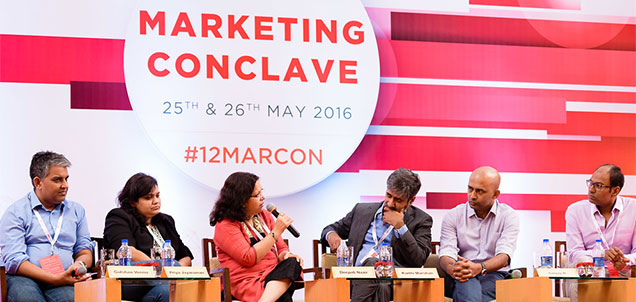
    The post-lunch panel discussion was moderated by Deepali Naair, Advisor, IAMAI and the topic was ‘Beyond numbers: The art of digital marketing’. Karthi Marshan, Head Marketing, Kotak Mahindra Bank, Gulshan Verma, Chief Revenue Officer, Times Internet, Priya Jayaraman, Cofounder and Business Director, Propaganda India, Gyan Gupta, Chief Executive Officer, DB Digital and Sanjay R, Marketing and Network Head, Flipkart ads were the panelists. ‘Brand building’ and ‘brand engagement’ dominated most of the discussion. With everyone agreeing that digital offers ample opportunities for brand building and should be used to its potential. A workshop on ‘Out of stock in 24 hours- Marketing Exclusively on Digital’ was being conducted simultaneously by Anthony Padayachi, Associate Creative Director, BC Web Wise and SiddharthPednekar, Business Director, BC Web Wise.


    This was followed by a session on ‘Mobile Storytelling’ by Vishal Rupani, Business Head, M-Canvas, Affinity. The highlight of his presentation was he drew analogies between the immensely popular HBO series ‘Game of Thrones’ and the mobile storytelling. He demonstrated a few examples on how advertising can be made interactive and engaging for the audience. “Seduce your consumers through beautiful story telling through brands” was his tip to every marketer.


    The last panel discussion was moderated by Milind Pathak, Chief Operating Officer, Madhouse and the panelists were Dhruv Chopra, Chief Marketing Officer, Carwale, PrakashSikaria, Business Head, Flipkart ads, Gaurav Gandhi, Chief Operating Officer, Viacom 18 Digital Ventures (Voot) and Vishal Rupani.  The topic was ‘Mobile: Is it minor screen or the major screen?’ “Digital marketing is equal to mobile marketing” said Pathak at the start and set the tone of the discussion. There was a unanimous agreement that mobile should be given more importance and content for mobile should also be given thought about seriously. “Mobiles should be the only screen looked at,” said Chopra in answer to the topic. “We believe that over time data price will neutralise and you will have opportunity to charge for content as well. The future looks very good of online video per say and eventually every screen will be connected.” said Gandhi, when MxM asked him about consumers not being ready to pay for content.


  • Fear of Being Offline & other digi-facts


    By Dyanne Coelho


    The first Indian Facebook employee, Kirthiga Reddy, now Managing Director, Facebook India left quite an impression on the audience with her talk entitled ‘Winning in a mobile first world’ at the 11th Marketing Conclave organised by the Internet and Mobile Association of India (IAMAI). FOBO or the Fear of Being Offline is a new term that is picking up in this day and age, she said. On Mother’s Day, India had the second highest ranking in terms of interactions with 1.8 billion interactions on the network. The older generation did exactly the same things we do, she explained, the only difference is that they did it in a different way.


    63 percent of young people would prefer to give up TV rather than their phone, she said of a study. 62 percent of young people feel lost if they are not connected to social media. An IAMAI-BCG report estimates that by 2020, a whopping 500 million people will be connected to the internet. Back in the day, your kirana shop owner knew exactly what you needed when you walked into his store. That personalisation is missing today with the advent of the mass media, Reddy explained.


    Satyan Gajwani, Chief Executive Officer, Times Internet, backed her up saying, “Technology allows the platform of digital advertising to enhance and create advertisements targeted at certain consumers. Hence we are seeing the growth of native advertisement, which breaks clutter and stops disruptive ads.”


    “Facebook is constantly and consistently integrating virtual reality. Innovations on the creative side of the real estate industry has provided enormous boost to virtual reality concept. Brands are focusing on reaching out to consumers in a personalised and creative manner. And the digital platform provides the best solution,” Reddy said. Out of 1.44 billion people who are on Facebook, 1.2 billion connect to it on a mobile device; she informed highlighting the genesis of a mobile-first world. There is also a growing trend of visual communication, Reddy added. First it started with text, then photos and now the world of video is expanding. Reddy cited the example of Facebook’s feature that allows a user to watch videos without sound on the mobile phone. The feature that is one of the latest, plays a video without sound as the user scrolls through his newsfeed. This will allow users to watch videos on their phones even during a seminar or meeting at work, she joked. Marketers ought to strive to drive awareness and retarget their audience, she said. The ‘cookie’ the dominant web metric used to track customer behaviour online will soon be ditched as it doesn’t correctly evaluate business results, she explained. This is the mobile first world and if we don’t adapt, we will be left far behind, she said.


    There are 150 million smartphones users today, and that number is expected to go up to 500 million by 2018. Digital is the new advertising paradigm, Gajwani explained. The internet is driven by smartphones and the amount of digital content being created is skyrocketing. “The 300×250 size banner doesn’t have the same impact today, spots don’t have the same impact either,” Gajwani said. Smart and targeted advertising and marketing with precise solutions is what will drive the numbers, he added. We ought to be enablers and educators of what’s working and what is not. “The opportunity to get creative is here and is bigger than ever before,” he concluded.


  • Getting set for the mobile as the first screen

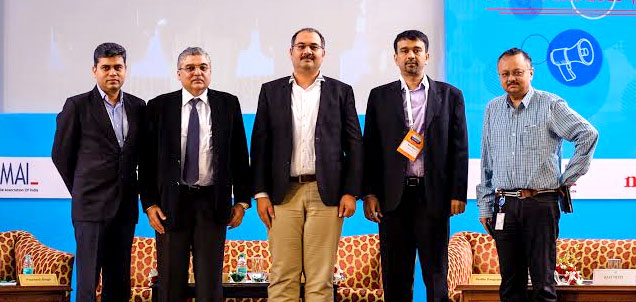
    L to R: ​​Prashant Singh, MD, Nielsen, Ashish Bhasin, Chairman and CEO, Dentsu Aegis Network ( South Asia), Tushar Vyas, Chief Strategy Officer – South Asia, GroupM, Ravi Dixit, Head – Market Insights, Google and Partho Dasgupta, CEO, BARC India.​


    By Dyanne Coelho


    The eleventh edition of the Marketing Conclave organised by the Internet and Mobile Association of India (IAMAI) saw industry stalwarts from across platforms highlight key trends in the marketing world from the digital evolution, the changing role of the CMO, cross-platform marketing and the dawn of the mobile as the ‘first’ screen.


    Day One kickstarted with a keynote address by Tushar Vyas, Chief Strategy Officer, South Asia, GroupM. “Today’s consumer doesn’t believe in the values of yesterday,” he began talking about how the mobile has taken over the internet and created a complexity in advertising.Rajesh Jain, Founder and Managing Director, netCORE Solutions emphasised that the trend of tracking consumer behaviour has grown mainly in the digital era. There is little or no data tracked in an offline world, like what a consumer goes and picks up in a grocery store, he said. “We ought to start thinking customer journeys,” Jain added. CVL Srinivas, CEO, GroupM South Asia delved into the challenges of marketing in the digital age.“There’s so much talk about digital, we forget that at the end of the day we’re in an ideas business,” he said, talking about how at times we get so overwhelmed with data that we lose focus of our core competency. “We ought to be able to change mindsets, not just technologies,” Srinivas added.


    A panel discussion on the expanding roles of the CMO highlighted a study which said that by 2020, the CMO will be spending more on IT than the CIO. The speed at which the CMO needs to react is increasing, the panelists discussed.The argument of whether digital is being effectively integrated with other marketing media, or is just an extension, was the next hot topic of discussion. The panelists concluded that though the digital medium has taken the marketing world by storm, at the end of the day, it all boils down to how well you know and recognise your consumer and give them what they want, when they want it. The final session for Day One discussed whether we are ready for the transition from ‘mobile first’ to a ‘mobile only’ era. High value products like airplane tickets and high value electronic devices are likely to be purchased on the desktop rather than the mobile phone, the panelists discussed. Anurag Singh, Co-founder and ED – India (Ads Platform), Affle concluded by saying that there is no wrong and right, you have to decide what’s best for your consumer depending on what your product and service is.


    Day Two saw industry captains like Kirthiga Reddy, MD Facebook, Satyan Gajwani, CEO Times Internet, Ashish Sahni, Head Digital Marketing Tata Motors, Ashish Bhasin, Chairman and CEO, Dentsu Aegis Network, Partho Dasgupta, CEO, BARC, among others. The bias of the internet towards the English language was discussed in depth, with panelists arguing that an increasing number of regional languages, especially Hindi are picking up and the internet needs to adapt, lest consumers feel choked by the pressure of being force fed English language content online. With availability of cheaper smartphones and accessibility to internet, vernacular content is going to drive growth in digital marketing. Gyan Gupta, COO, DB Digital said, “Hindi as a language is witnessing 40 percent penetration in the online space. With non-metros witnessing steady growth in internet penetration, the vernacular language is certainly the flavor of the day.”


    Ways and means of tracking consumer behaviour without being ‘creepy’ was the key point of discussion in the session entitled ‘Digital Footprints’ Data and Automation in Marketing: The modern marketers’ success mantra.’ How much is too much, was much talked about in the context of following consumer footprints in the digital space.


    “The first thing advertisers ought to do if they want to undertake programmatic marketing is allocate 25 percent of the total marketing budget to it,” Reem Saied, Business Head, Cadreon India said while discussing ways and means of optimizing marketing efforts for an enhanced performance. The quality of talent that marketers need to hire have changed, Apurva Chamaria, AVP and Head of Global Brand and Digital Marketing, HCL Technologies said. “We now hire statisticians, technology experts and bring them into the marketing team. The pool we hire from has changed,” he explained.


    “This is the age of technology where you can get hold of a specialised doctor on an app,” Rathin Lahiri, CMO, Meru Cabs said speaking at the session titled ‘Simplifying the Mobile Marketing Ecosystem’. The panelists discussed the advent of the digital evolution especially in the mobile space. Madan Mohapatra, Head Customer Strategy, Future Group, said, “If we are to look at the global advertising market, the industry around US $600 billion, with mobile advertising pegged at around US $100 billion. In India, mobile advertising is a fraction of global spends. The time has is ripe to increase mobile ad spend as growing captive consumers are found mobile.”The mobile screen has forced the marketing ecosystem to evolve. “Digital is not something you can ignore. If you don’t speak for yourself, your consumers will take you down,” Akshay Sharma, Head – Marketing, Eros Digital exclaimed.


    Kirthiga Reddy, Managing Director, Facebook India, highlighted how Facebook is attempting to innovate. “We are constantly and consistently integrating virtual reality. Innovations on the creative side of the real estate industry has provided enormous boost to virtual reality concept.” Talking about Digital Marketing, Satyan Gajwani, Chief Executive Officer, Times Internet, said, “Technology allows the platform of digital advertising to enhance and create advertisements targeted at certain consumers. Hence we are seeing the growth of native advertisement, which tears through the clutter.


    Having an absolute, standard method for measurement of the attributes of all digital platforms is the need of the hour the panelists discussed at the session entitled ‘Establishing a common digital standard’. “Cross media measurement has been talked about for a while. We keep measuring the media, we forget to measure the consumer,” Ashish Bhasin, Chairman and CEO, Dentsu Aegis Network (South Asia) stressed. India is still far behind in trying to understand the consumers’ buying behavior, Prashant Singh, Managing Director; Nielsen said adding that the next step is for BARC to look at digital. BARC CEO Partho Dasgupta said it may not be correct keep citing examples of progress of digital in the US and the UK because “they may not be the best one can have”. “95 per cent of videos are still consumed on television sets in the UK,” he added.


    Thoughts, ideas, statistics and case studies made the two-day conclave an insightful and informative event. The programme brought together some of the brightest minds in the marketing fraternity together on one platform and thus enabled an educative exchange of thoughts and ideas to light the path forward for marketing in India.