Tag: IAA Webinar

  • IAA hosts ‘World Goes Digital’ webinar with Sanjay Mehta & Hareesh Tibrewala

    By A Correspondent


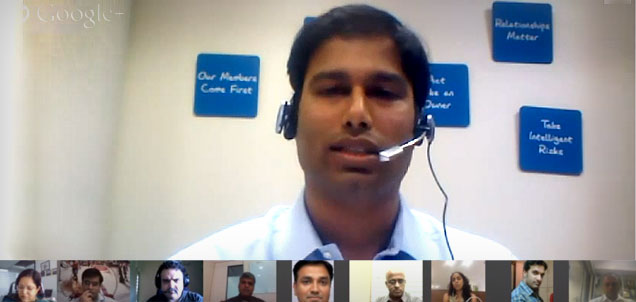
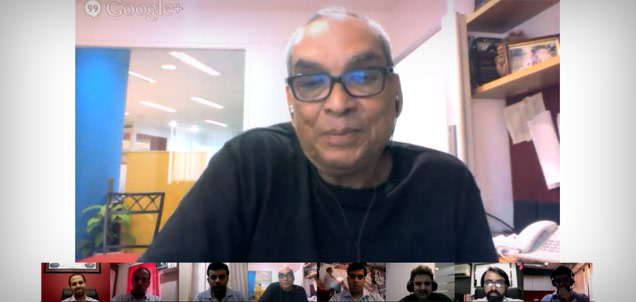
    The International Advertising Association (IAA) India Chapter hosted Sanjay Mehta and Hareesh Tibrewala, veteran digital media specialist and Founders and Joint CEOs of Social Wavelength for its webinar conducted as part of the ‘World Goes Digital’ series.


    While evangelising the digital media, the duo spoke about the growing acceptance of the digital media by marketers and industry as a whole. “There has been a significant change over the years,” said Mehta. Added Tibrewala: “Digital Media should not be looked at by the ad spends, but also the way they can drive business activity.”


    Srinivasan K Swamy
    Abhishek Karnani

    “The industry – especially young professionals – gained much from the first-hand experiences that Sanjay Mehta and Hareesh Tibrewala shared at the IAA webinar,” said Srinivasan K Swamy, President IAA India Chapter & Vice President, Development Asia Pacific, IAA.


    “We are very thankful to Sanjay Mehta and Hareesh Tibrewala to have answered several queries and doubts that young marketers and advertising professionals have as they are embark on a digital foray,” said Abhishek Karnani, Director, Free Press Journal, who along with Manish Advani, Head – Marketing and Public Relations, Mahindra Special Services Group, is co-chair of the IAA Webinar series.


    The webinar that was viewed live by over 1250 students from different Management Colleges can now be viewed on the IAA YouTube channel –www.youtube.com /iaaindiachapter.


  • Tushar Vyas to discuss digital at IAA Webinar on Dec 19

    By A Correspondent


    Tushar Vyas

    The International Advertising Association (IAA) India Chapter, has organised its next webinar on ‘World Goes Digital’ which will be addressed by Tushar Vyas, veteran digital media specialist and Managing Partner, GroupM South Asia, on Friday, December 19, 2014 at 4pm.


    Tushar Vyas is part of the GroupM South Asia ExCo and leads the digital media practice for GroupM South Asia. He is also responsible for investment and corporate business development.


    He had launched Digital Media business unit (Interaction) for GroupM India and built up a 300+ member team and expanded services in areas like content, search and programmatic buying, mobile, digital activation, social, insight and digital analytics. The GroupM Digital Media practice is today the largest digital media solution provider with more than 200 active clients.


    Srinivasan K Swamy

    “We are delighted to have Tushar Vyas to address the IAA Webinar. I am sure brand managers and digital media practitioners would use this opportunity to interact with him,” said Srinivasan K Swamy, IAA India Chapter & Vice President, Development Asia/ Pacific Region of IAA.


    Abhishek Karnani, Director, Free Press Journal and Manish Advani, Head – Marketing and Public Relations, Mahindra Special Services Group, are co-chairing the IAA Webinar series.


    The Webinar will be aired live on the IAA YouTube channel –www.youtube.com/iaaindiachapter on December 19, 2014 from 4pm onwards.


  • mCordis’ Paul Barney to speak at IAA webinar series today

    Paul Barney

    International Advertising Association (IAA) India Chapter has invited Paul Berney, Co-Founder & Managing Partner EMEA of mCordis for its webinar on 22nd  May 2014 at 4:00 pm. Mr. Barney has over 25 years experience in a wide variety of sales, marketing, business development and commercial roles spanning several different industries and market sectors including automotive, printing, internet development and management consultancy. He was recently invited to join the editorial Board of the IDM and was voted one of the Top 50 influencers in mobile marketing in the UK by The Drum magazine 2013.


    Abhishek Karnani, Director, Free Press Journal and Manish Advani, Head – Marketing and Public Relations, Mahindra Special Services Group, are co-chairing the IAA Webinar series.


    Questions for Paul Berney could be submitted through the IAA India Chapter facebook page – www.facebook.com/IAAIndiaChapter.


    The hangout will be broadcast live on our YouTube channel – www.youtube.com /iaaindiachapter on 22nd May, 4pm IST.


    International Advertising Association (IAA) India Chapter has recently hosted speakers like Sajeev Kapoor, CMO, Citi (India); Ashish Hemrajani, Founder and CEO, Bookmyshow.com; Rajan Anandan, MD, Google (India); Nishant Rao MD, Linkedin (India); Ajit Balakrishnan, Founder, Rediff.com; Julie Roehm, Chief Story Teller, SAP and Neeraj Roy, MD and CEO of Hungama Digital Media Entertainment Pvt. Ltd.


  • IAA webinar to host Rob Norman, Chief Digital Officer, GroupM at 5 pm today

    Rob Norman

    By A Correspondent [updated]


    The India Chapter of International Advertising Association (IAA) has announced its next webinar with Rob Norman, Chief Digital Officer, Group M (Global) today (Thursday, November 28) at 5 pm.


    Mr Norman is also a Director of WPP Digital and Wild Tangent and a non-Executive Director of BBC Global News Ltd.  He is on the board of the Center for the Digital Future at USC, a member of the Facebook Client Council and an advisor to venture capital funds – Greycroft and GGV.


    Said Srinivasan Swamy, President IAA India Chapter & Vice President, Development Asia/Pacific region of IAA said ” I am really happy to see that this is our 7th webinar and our initiative to provide this seamless learning platform is paying off. We now have participants from across Asia. Our speakers are coming from various geographies too. It’s all working well!”


    Abhishek Karnani, Director, Free Press Journal and Manish Advani, Head – Marketing and Public Relations, Mahindra Special Services Group, are co-chairing the IAA Webinar series.


    “We are very excited to host Rob in our forthcoming IAA Webinar; it sets a very powerful example to what IAA seeks to do for the fraternity. He will give us a global perspective on future of Digital with specific to Indian environment”, said Mr  Karnani.


    “I am confident Mr Norman will inspire thousands of young digital aspirants in their digital journey by sharing some great examples of success based on his Digital Journey”, added Mr Advani.


    Over the last seven months, International Advertising Association (IAA) India Chapter has hosted speakers like Sanjeev Kapur CMO & Head of Customer Franchise Management Citi (India), Ashish Hemrajani, Founder and CEO Bookmyshow.com, Rajan Anandan, MD Google India, Nishant Rao MD Linkedin, Ajit Balakrishnan Founder Rediff.com and Julie Roehm, Chief Story Teller, SAP, USA.


    Questions for Rob Norman through the IAA India Chapter Facebook page at www.facebook.com /IAA.IndiaChapter. The hangout will be aired live on IAA (India)’s YouTube channel – www.youtube.com/iaaindiachapter on November 28 at 5pm.


  • IAA webinar with Bookmyshow CEO Ashish Hemrajani on Sept 26

    By A Correspondent


    The International Advertising Association, India Chapter (IAA-IC) is hosting its fifth Mentorship Webinar with Ashish Hemrajani, Founder and CEO, BookmyShow.com on Thursday, September 26 at 3pm.*See Disclaimer


    The IAA-IC ‘World Goes Digital’ platform is for professionals to learn and equip themselves with what’s happening in the digital domain, notes a communique. Said Manish Advani, Co-Chair IAA-IC webinar series: “IAA is happy to host yet another good speaker whose journey of building the Bookmyshow brand will add great value to understanding the strategy behind a very successful portal.


    IAA-IC  has recently hosted speakers like Rajan Anandan, MD, Google India, Ajit Balakrishnan, Founder, Rediff.com, Nishant Rao, Country Head, Linkedin and Julie Roehm, Chief Story Teller, SAP.


    Questions for Mr Hemrajani can be sent via the IAA India Chapter Facebook page - www.facebook.com /IAA.IndiaChapter.


    The hangout will be broadcast live on the IAA YouTube channel - www.youtube.com/iaaindiachapter on September 26 at 3pm.


    *MxMIndia has partnered the IAA-IC webinar series


  • IAA Webinar with Julie Roehm, Chief Storyteller, SAP


    The International Advertising Association (India Chapter) hosted its fourth webinar under the ‘World Goes Digital’ series. Julie Roehm, Chief Storyteller, SAP was the guest who joined in from New York.


    The IAA Webinar series is spearheaded by Abhishek Karnani and director, Free Press Journal group and Manish Advani, head – marketing and public relations, Mahindra Special Services Group as co-chairs. *


    The panellists included:  Ashish Mehra (Mahindra Holidays), Abhishek Karnani (Free Press Journal group), Manish Advani, (Mahindra Special Services Group), Gaurav Mendiratta (Sociosquare), Pradyuman Maheshwari, Editor-in-chief and CEO, MxMIndia moderated the discussion:


    We know that storytelling is all about emotions and while you are an organization that’s essentially into technology, one doesn’t really need emotions because there’s technology that does it for you, right? How do you get the two to work for you?

    I think it’s interesting you said that because you know where my background is concerned I have been with SAP for 20 months and before coming here I had my own consulting business and had worked with companies like Wal-Mart, Chrysler, Ford…and as you may have gathered none of that resume included big technology software companies. I came here because Bill McDermott – who is going to be our CEO starting May of next year – had found me by reading something about me at some point of time and we had a dialogue for multiple years and he had asked me to come to work for SAP doing what I really like doing. I think to your point he also is a man who obviously has an interest in the success of SAP and has also been a technology executive himself. So he saw the need to bridge the fact that we are a technology company but sometimes big technology companies are seen as cold and very process oriented and therefore to try and be more human in approach. So when we came one of the big terms that we track and we try to fulfill is to humanize the brand because we believe that with this world the technology, maybe unlike 20 years ago, wasn’t something like a cool and slick kind of thing and nice to have in the background. Technology is pervasive in all our lives whether you work in a technology company or whether you are housewife you use technology everyday; you count on it and it is a part of the fabric of our lives. So to not to be able to connect that human element even in the big business scale that’s what technology enables companies to do. For example, we think about procurement and how it helps them to source products better. Okay, there is not a lot of humanization in that but if you go deeper then maybe there is because if you care about where you source your product from and who is it on the other end that is making that product then there might be a human story there and may make you think more about how technology improves the lives of employees every day. I mean think about the technology in the cloud that we are deploying all over the world where for example, you think of an HR person who is using it to help with the talent recruitment… So we know all, particularly the fact that you are all sitting in India with brilliant minds and the fact that we are very short of having bright strategic technologists to work in these high-tech companies. So the war on talent is big. Certainly money is the big thing but it’s not the only thing and technology can help us do that. So there is a lot of emotion that is available to us to connect and I’ve always believed that people who are trained in technologies and they always like to talk about that but everybody has a greater kinship and a feeling of connection; when you can connect something to a story or something that touches them personally. Those are the kinds of stories I think that will help us use this humanizing idea and get us to that next level by opening the doors maybe to the other industries and even to other types of businesses. People who have used our technology in the past understand that we actually do have solutions that’s going to help them in their positions too.


    What we have been trying to do essentially is look at storytelling by way of soaking in experiences as shared by the users. From the surveys that we conduct, we found out that customers were calling our call centres to share their experiences about the holidays and similar such sentiments. It was an incredible feeling because I’ve never heard customers actually talk to a tele-marketing executive or customer service representative that our holiday was fantastic; all they spoke about was individual moments during their holiday that made them elated. My question to you is whether you can share experiences on similar lines from your end and reference it against what we have experienced till date.

    Yes most certainly, I am not surprised at all. We see this all the time. It’s probably more expected in the travel & lodging and the entertainment world where one expects to hear great stories because if you go on a holiday you hope there is a good story that comes out of it and the fact that there isn’t always a place to communicate that unless people are tweeting or putting pictures on social platforms. We see the same thing in our business and maybe our challenge is even greater than what you are speaking of and that’s why we try to talk less about the actual technology itself and more about the experience and the impact. There are a couple of things that we have done and also that we are about to do – ideas that would be useful to you to think about. We’ve created an app for iPad that is called Customer Journey. It opens up on a series of stories. The reason we call it a customer journey is because it is the voice of our customer and in your case the traveler, but maybe it’s an opportunity for you to put across various entities or hotels or whatever to be able to capture some of the stories that people tell them and put them on here so that people like a little bit of trip advice or any of that third-party apps that are out there. One of the things we are in progress of doing is we are trying to create a movement, which I know is a very lofty goal, but it’s a movement around the idea that I mentioned about our first app which is to make the world better and improve people’s lives. Well, to run better means a lot to a lot of different people so what we are trying to do now is looking at creating our own social space through “Run better”. For instance in New York the fashion week is coming soon and we are thinking of capturing people talking about how fashion impacts their lives. Now you would be thinking what does it have to do with SAP? Well for Levi’s, especially for women who walk away with low self esteem because a certain pair didn’t fit in right, we have created a technology that helps them to image a women and tell which Levi’s jeans is gonna be best for them. We are talking about filming two girls chatting outside the dressing room where you can tell that they are trying to un-jean themselves by looking under their feet, under the curtain and then they come out and their faces are glowing because they’ve found this great pair of jeans and they feel so good about themselves. So when people feel so good about themselves they have energy or an aura that is very contagious to the people who they run into. So if we can capture that in other people’s movement by saying what does “run better” world look like to you it may have nothing to do with us in the long run but we can be associated with making the world better.


    I think today the social aspect is probably our most powerful tool and I would say it’s the same for you in the entertainment and the travel industry as well where it is about creating places where you empower not only your customer to be able to put their stories up but also your employees in all those hotels, restaurants etc. And I think the more angles you can have at a story out of personal experiences the more impactful it will be.


    How do you develop a talent pool of people with a right skill for storytelling? And in the era of ROI, how do you convince management and owners to invest in storytelling?

    From a talent perspective and something which I find interesting is that the team which started on customer storytelling was new – it’s not that people weren’t telling stories but to have an organization focus on that was new. What was interesting in that was what comes out from the woodwork of people who have a passion for telling stories whether it’s through writing or verbally or creating video or you know whatever method they use…it’s actually easier to find talent than you think. That said, once people get the notion that this is an option for them and that there is a commitment to this you will find a lot of people who actually have more of a talent face for it than you might have thought existed especially in a technology-oriented company. Secondarily, we set up storytelling training last year in as simple a way as possible. I did a five-step approach to storytelling which we did through a presentation. It is always easy to do five steps because to train people has to be a story in itself so it was like who was the customer, tell me a little bit about what they do, what is the problem or opportunity that they have…then the third step is how can technology help them either tackle their problem or realize their vision. Four, what kind of an impact does it have or they are hoping it has on their company and five, what is the impact it has on their customers? So if you can give a very prescribed list that is very simple, very logical to anybody out there to be able to capture that. What I did then is when we started to actually roll out these stories and when I was teaching my own team, I would have them follow that and then they would come back and read it to me. So I would say okay, if I am reading it or you are reading it to me and when I read it it reads like a Harvard Business case to me. Nothing wrong with the Harvard Business school mention, but it’s not necessarily highly consumable for everybody. It feels like I am in class and I got to read for school versus it’s a piece that I am reading in my favorite magazine or website that I am enjoying. So there a way to write and I really teach my team how to be more casual in language in writing these kinds of stories because otherwise it would become very professional. So that training has been super successful and was started last year; this year we mandated for all of our Marketing team. So there are 1600 people in Marketing at SAP so all those people are going to be trained in it. It’s a simple training just 30 minutes but when we know our marketing force understands what it means to tell a story or capture a story we know that we definitely are making a difference.


    How do you ensure all customer-facing departments within SAP walk their talk presented through storytelling to all their stake-holders?

    Well, it’s like 365,000 people so I am not magic but I think the best way to be able to do it is through word of mouth. First of all, none of this would event successful if our CEO at the time wasn’t committed to this. I mean he wanted to do this and in fact now he is pushing me very hard to give him stories from customer’s perspective. So instead of filming the CEO, COO you have Suzy who uses this out on the street and you need to have commitment from the top for anything like this to work. Secondarily, the training that we have implemented is like one group at a time and what we has also done is we ork closely with our head of Sales, Rob Enslin who also believes in capturing these stories. It’s like being introduced to a whole new way of doing things. So being able to talk to my customers about a handful of other customers who are in a like industry or a like situation and wow that’s really impactful and I really need to get more of that. So when we talk to our head of sales we share what we are trying to do and they were able to input tons of things that were helpful     to them when they are meeting with customers. More importantly, they also give us feedback that allows us to constantly grow and optimize what we are delivering. I think they are finding that now that they have tried it out it’s a much easier way to be able to talk about what we do.


    How does the art of storytelling change with demographics and culture?

    When we get pushed back in terms of whether our customers are willing to share their stories or be video-taped, it’s usually less because of cultural issue and more because of the fear that if they talk about what they do it somehow gives away their intellectual property. But from a cultural standpoint, you certainly have to take that into consideration but with the social world, even though people don’t want to have a picture of themselves there are other pictures that they can put to express themselves…to express who they are without actually having a image of them. So I think, more the choice that you give people to be creative on their own the more you can overcome some of the cultural barriers. Sometimes it’s cultural – country culture and sometimes its personal culture. Some people just don’t feel comfortable in any walk of life; it doesn’t matter where they live. They are just more introvert but if you give them an outlet to express themselves in a way that’s more comfortable to them I think what you will find is they do it so. So for me the moniker is choice…you have to give them choice…you know film yourself, take images, words whatever it is. We need to create interesting platforms where people can engage. There are lots of ways to generate engagement and I think the engagement component is lot more important even if not everybody is willing to jump on and create something for themselves.


    Very broadly, are there any other industries where storytelling works very well and where it doesn’t?

    Well you are talking to a purist so I don’t think there isn’t a place where it doesn’t work. I think the only time it doesn’t work is when it hasn’t been tried or done well so that would be my answer to that. When I give a talk on storytelling there are two examples that are relatively modern that I use. One is Google. You think about Google and you say well, it’s search. You may probably think I use Google all the time but it’s interesting to storytell. There is a beautiful video on youtube that is basically shot from a perspective of a father whom you cannot see but what you see is him putting something on search and then finding images and you hear him talking where he is writing an email to his daughter who is young. It basically chronicles her key moments in life like her first house using Google maps…then the day when she lost a tooth and such things…It’s all kinds of things using different Google tools but it never feels like a Google commercial because you are so involved with this man writing this touching email to his daughter that he is preserving for her. I find that it is great and I am really impressed with their storytelling because they have done a really nice job of telling their story from their perspective.


    Do you think that the government in India can use this technique to talk about what they are doing and communicate with the masses? For instance, do you think President Obama could have adopted the storytelling approach in the election year in the US?

    Yes I think he did that. I think how Obama uses it is to some extent to tell their personal story. I just find that at least in the US the political actions are so scripted that it lacks true feeling and I think that’s why people run towards Michelle Obama or the kid because they come across to us as being more authentic because when they speak as long as you are not behind the podium they are not typically as scripted as Barack Obama is. He has got lot of things that people have to say but Michelle to some extent comes across as much more national figure. When she goes on TV shows and when she talks about the clothes and the like it creates a very human personal connection and she does it better than he does it not because he can’t but I think “the handlers” believe it’s too great a risk because they put themselves out to be attacked on whatever personal things that they would share. So yes, I do think it would be a much better opportunity but I have low expectations that they will do it.


  • IAA webinar with SAP’s Chief Storyteller Julie Roehm today

    By A Correspondent


    The International Advertising Association (IAA) India Chapter has announced its next webinar on ‘World goes Digital’. Ms. Julie Roehm, Chief Story Teller, SAP, will be the speaker at this webinar using the Google Hangout platform. The Google Hangout session will be held at 5.30pm today (Wednesday, July 24, 2013).*


    Srinivasan Swamy

    Said Srinivasan Swamy, president, IAA India chapter, “We began with Rajan Anandan in April, followed it with Ajit Balakrishnan in May and Nishant Rao in June. We are seeing increased participation, and are glad that this knowledge sharing platform by IAA is allowing us to get some of the high profile speakers from across the world who could make a big difference in people’s digital journey.”


    Abhishek Karnani, director, Free Press Journal and Manish Advani, head – marketing and public relations, Mahindra Special Services Group, are co-chairing the IAA webinar series.


    Abhishek Karnani

    “Looking at the way digital is growing, customers in the future will buy products or services based on the stories or experiences of existing users,” said Mr Karnani.


    “Being in the consulting business what we sell is a concept which is difficult to sell the way other products and services are sold, the only method which has worked well for us is Story telling which makes our customers experience what they could expect if they engage us on an assignment,” said Mr Advani.


    *MxMIndia is a partner of the IAA webinar series


  • Linking In with Nishant Rao @ IAA Webinar


    The International Association of Advertisers (India Chapter) conducted its third webinar on Thursday, June 27 with Nishant Rao, Country Manager, Linked In India.. The IAA Webinar series with the theme ‘World Goes Digital’ is spearheaded by Abhishek Karnani and director, Free Press Journal group and Manish Advani, head – marketing and public relations, Mahindra Special Services Group as co-chairs. *


    The panellists included:  Manish Advani, (Mahindra Special Services Group), Gaurav Mendiratta (Sociosquare), Deepali Naair (L&T General Insurance), Sheran Mehra (Mahindra Holidays), Vinay Krishna (JigServ), Ramakrishnan Laxman (MCCS, ABPNews group) and Suraj Lokare (Xanadu Consulting).  Pradyuman Maheshwari, Editor-in-chief and CEO, MxmIndia moderated the event. Other than the panellists, some questions that came in from the public in response to our announcements on social networks were also posed to Mr Rao.


    Excerpts from the Q&A:

    Opening Remarks by Nishant Rao:

    As consumers, we’re getting tonnes of information at our disposal and what avenues like Social are creating is a way to have a voice and participate in that and create our own information. So as this information floats what becomes super important is its relevance to us. What LinkedIn is trying to solve is help each professional to be more productive and successful. And we are trying to do that by ensuring those relevance because we know who you are based on your industry, your function and the sort of things you have mentioned on your profile we can try and make sure that there are insights that are relevant to you. So that’s a big part of our consumer-value proposition in addition to having a critical mass of professionals that we can collaborate and communicate with. With so much information being created we see an opportunity for companies and brands to play a part in making our members more productive and successful. The way we are doing that is by tapping into a lot of insights that are being shared by consumers on LinkedIn whether it is their opinion on news or opportunities etc we are using those signals to help understand what their unique needs are and allowing brands and companies to play a part in getting them their relevant information and content so that they help these professionals in whatever way they can. So fundamentally, what the internet has enables is because of this explosion of information it is changing not only how we collaborate and communicate but also how companies can play their part in making us more productive and successful in this hyper-competitive and super-charged environment.


    In the last few years, news seems to have become an important focus area especially for portals like LinkedIn. Could you share what’s the percentage that news as a domain contribute to the overall traffic on your website. Also, most content on your website in US-based, are we going to see content being updated from India as well?

    Nishant Rao: As we analysed as to what kind of information helps make the consumer more productive news is definitely one of those things that all of us professionals look to update ourselves with because it is so important. The broader vision is for LinkedIn to become a professional publishing platform for individuals and part of that is generating insights that are relevant to a news article or content piece…but overall this is a shift in direction to make sure that we move away from being just a static profile to being a more holistic representation of who you and I are as members. So the starting point is to have some content so that people can share their opinions. Where news is concerned, we are making it a point to have more integrated channels with it. For example, a leadership channel which could come from some influencer content or some news content or from some individual writing a post. So that’s an overall direction that LinkedIn is taking.


    As for the question on percentage share, we do not report site metrics at that level but what I can say is that LinkedIn is catapulted to becoming the largest source of a lot of news sites. So we respect the IPs of the news sites out there and so when we find a news article and click on that it’s actually a page view that gets generated and because of that we have become one of the largest routers of traffic of different sites and that gives you a sense of impact that LinkedIn is having in this space. As for content, we are trying to take the approach where be it a global influencer or somebody else they will offer views and insights from an overall perspective and gradually we will be having more local news and local influencers having local relevance. So we are in the process of making that happen.


    Personal networking platforms have really taken off in India and if one were to compare LinkedIn to these websites, it is slightly on the backfoot and the fact that Twitter stopped the feed to you didn’t help at all. From a consumer behaviour perspective, if one wants to attract the B2C customers, could you help us understand what LinkedIn does on that front apart from using your platform to update their profiles?

    Nishant Rao: We started our business about a decade ago and around that time we were more of a profile-update or looking-out-for-jobs offering. What we seen in the US about 3-4 years ago and which we are starting to see in India also is that people have stopped updating their profile just when they are looking for jobs and that is really when what’s enabled a lot of magic to happen. People are realising that their profiles are kind of their conduit to other factors. If you think about the three types of content that consumers are saying they want from the sites are information on connections and opportunities, looking for updates on brands that help make them more productive and successful and they are looking for information which is relevant to current affairs. What people are also realising is that the more you fill your profiles and keep it fresh the more the opportunities that are presented. In fact according to a research that we conducted, jobs was the No 5 out of top 5…so that’s the kind of shift that we have experienced especially in markets like US and are now seeing it in India as well. Eventually we believe that the more information you give us the more we can make it more relevant.


    As for the demographics, we think of our site as being for ‘prosumers’ – professional consumers. These TG are skewed towards being an educated, affluent audience in comparison to other larger sites that are there around. That just comes from the bias that LinkedIn has on the professional context. It’s a self-selection mechanism; we do not aspire to be a site where one comes for entertainment reasons or just to hang out. TNS did this survey for us which helped us codify the difference between a personal networking platform and a professional networking platform. The genesis of what they found is that people go to personal networks to spend time and they go to professional networks to invest time. So each consumer can have these different personas and as a result these different sites give you a manifestation of this. I use FB, Twitter, LinkedIn but I am a different person across each of these platforms. So the professional context has really helped us in terms of not playing the same game as the other networks; we want professionals to come and not have diluted conversation but aspirational and productive comments on the site. The numbers are a manifestation of that and I would say even in India where we have more than 20 million users the ratio of number of users on LinkedIn versus the personal networks is closing fast and that gives you a sense of the value that people see on our site.


    One has to come up with new ideas and strategies on a daily basis and when one talks of strategies on LinkedIn one feels very restricted because it has been a kind of a closed network when it comes to APIs in building applications. While it is kind of opening up now, is there a conscious decision behind what you decide to do?

    Nishant Rao: As a company, part of our hesitation to completely open up APIs is making sure that the member experience is not compromised as a result of that. We are constantly straddling the line between making sure that we are fostering innovation as well as making sure that our members have a good experience on our network. We have seen a tremendous increase in the number of members using our APIs and are realising the power of our APIs that are available. So we do have a large set of APIs for people to use and I think part of our philosophy of taking care of our members’ concern has helped us keep our context to a professional level. Also, we are helping marketers leverage some of these APIs in a more creative way. Sometimes there is a disconnect between the creative ideas that one has and which APIs do you use. So sometimes it becomes more of an educational exercise than anything else. It’s not like we are trying to make a monetisation play on building up those APIs as propriety to us… but we are helping give them that mindshare or the education needed to harness the full power of LinkedIn.


    Big Data seems to be the buzzword these days. How much of it is LinkedIn leveraging in India?

    Nishant Rao: I agree with you that Big Data has become one of those buzzwords that everyone wants to do something with it but I came across an observation where it was revealed that about 68 per cent of the companies have some sort of a data warehousing BI solutions but only 8 per cent used it. So that gives you a sense of disconnect that exists. This is something that LinkedIn had to take into consideration seriously because of the volume of data that is seen. The way we use it is that we are moving on to having unstructured information using technologies like Hive etc. We’ve also taken it further to use those insights and pull it back into our product processes. For example, when we launched our iPad application it was a single mirror image of our website but we observed a spike in the usage at coffee time in the morning between 7-9am and again in the evening called as the couch time where people were catching up on what they missed out. So that insight we used to get another reiteration out so we integrated a calendar for the morning time where people get sort out their agendas and meetings and for the evening we added the news element where people could catch up on what they missed the whole day. So that was an example where we used Big Data to funnel back into product.


    LinkedIn charges vendors to reach out to candidates, is there a way this accessibility that can made more user friendly?

    Nishant Rao: If you compare LinkedIn to some of the other talent firms they take a different approach by publishing phone numbers and email addresses and stuff like that. But it’s our philosophies to not such things as we do not like doing it because we value our members first. One can even message a person if he is not in connection and it is up to that person to realise that it is important to him and thus respond to the message or to the connection. So the power rests with the members to make those decisions rather than in some sense bastardize the concept of a connection.


    How can small and midsize businesses (SMBs) leverage best from a platform like LinkedIn both from a hiring and outreach perspective?

    Nishant Rao: For us at LinkedIn, we see enterprises playing a big role in enriching the lives of our members. So we are looking at transforming the way companies hire, market and sell by making it more relevant. If there is a relevant job for the member it is better for the member as well as the company because you are moving on from quantity-based to quality-based processes. So for SMBs in particular, we are seeing in particular that LinkedIn is a platform rather than a one-off point solution. LinkedIn provides SMBs to provide your TG in a manner that you want to target them. We even have an option for SMBs to display ads to the relevant TG that they wish to online.


    Hs LinkedIn thought about using Verified Accounts?

    Nishant Rao: We haven’t announced anything on those lines as yet and our belief is that verification may not be unique to any given person. We’d like to think about verification as the network verifying for you though we already have tools out there that are free and for public use. Also, we always encourage our customers when they are making a hiring decision to tap into the fact that a person is not a single person but there is a network around him and more likely than not there could be a lot of common factors between the two.


    As for the question of verification, we haven’t picked up any noise as yet about profiles being inaccurate or factually wrong. Maybe that’s the reason why it hasn’t bubbled up to the top list of priorities that we have. But we have seen a lot of traction in these other more dispirit verification sources.


    How can regional players look at integrating with what LinkedIn has to offer to its members?

    Nishant Rao: What we’ve realised is that consumers can wield a lot of power from our network. It goes back to what is the business problem that one is trying to solve. If it’s a business problem then we do have consumer-based solutions or enterprise-based products that can drive there. As we’re able to get local relevance from that content they can use it as their traffic source and use it to build awareness about his products. They can even use it to solve talent solutions. So it all depends on the problems that regional players are looking to solve.


    Would we see a comeback of LinkedIn Events online?

    Nishant Rao: We used to have LinkedIn Events and we are in the process of sun-setting a lot of things that were individual features into a larger amalgamation. I wouldn’t be able to tell on what’s the immediate future on that and fundamentally that’s because we have so many features running on our site. We are always looking to see where our members are seeing for traction.


    LinkedIn is trying to make a paradigm shift in Sales as well. We have a Sales Navigator as a premium subscription product that’s there where the premise is that of we can take cold calls and convert them into warm prospects it is a win-win for everybody. We are always looking at opportunities for making the lives of our members productive and successful.


    *Disclosure: MxMIndia has partnered the IAA (India chapter) Webinar series


  • LinkedIn’s Nishant Rao in IAA webinar on June 27

    By A Correspondent


    The International Advertising Association (IAA) – India Chapter has announced its next webinar with Nishant Rao, Country Manager, LinkedIn, as speaker. The webinar will be held on the Google Hangout platform on Thursday, June 27 at 3pm. MxMIndia is partnering this initiative.


    Srinivasan Swamy, President, IAA, India Chapter, said, “We began with Rajan Anandan in April and followed it with Ajit Balakrishnan in May. We are seeing increased participation, and are glad that this knowledge sharing platform by IAA about the Digital medium is gaining traction.”


    Abhishek Karnani, Director, Free Press Journal and Manish Advani, Head – Marketing & Public Relations, Mahindra Special Services Group, are co-chairing this IAA webinar series.


    “It’s an honour to be presenting Nishant Rao in our next Webinar. This ‘World Goes Digital’ webinar series is aimed at helping professionals across age groups understand digital trends and nuances,” said Mr Karnani.


    “When I landed in India after a long stint in Canada, I didn’t know anyone in India, but through LinkedIn I was able to expand my network at a rapid pace. Network led to Net worth for my organization. I am glad through IAA many youngsters in India will learn more about LinkedIn that too from a leader of LinkedIn,” said Mr Advani.


    The inaugural webinar with Rajan Anandan, MD, Google India, was held in April and with Ajit Balakrishnan, Founder and CEO, Rediff.com in May. Over the last few months, the IAA (India Chapter) has conducted a series of activities – the IAA Leadership Awards, a Gender Sensitization Seminar, and the IAA Olive Crown Awards. Every month, the IAA also conducts IAA Debates in different cities, on topical issues concerning the industry.


  • Video’s the way to go: Ajit Balakrishan @ IAA Webinar


    The International Association of Advertisers (India Chapter) conducted its second webinar on Thursday, May 23 with Ajit Balakrishnan, Founder and CEO, Rediff.com. The IAA Webinar series with the theme ‘World Goes Digital’ is spearheaded by Abhishek Karnani, co-chair and director, Free Press Journal group and Manish Advani, head – marketing and public relations, Mahindra Special Services Group. *


    The panellists included: Abhishek Karnani, Co-chair, Director, Free Press Journal; Ajay Pandey, founder and CEO, Badhai; Gaurav Mendiratta, CEO, Sociosquare; Aditya Kuber, CEO, Media Sphere Communications and K Narssimhan, CEO, Commit. Pradyuman Maheshwari, Editor-in-chief and CEO, MxmIndia moderated the event. Other than the panellists, some questions that came in from the public in response to our announcements on social networks were also posed to Mr Balakrishnan.


    Excerpts from the Q&A:

    Opening Remarks by Ajit Balakrishnan, CEO, Rediff.com

    There is little doubt that the internet has come a long way since all of us started messing around with it around 18 years ago. The way I look at it is that it has often been a surprise to me that the web technology and internet happened first in the media world and my suspicion is that very soon we are going to see internet and web-based thinking in trade areas like education, healthcare etc what I call as the less-frivolous parts of human endeavours. I for one, am looking forward to that.


    Q. With a large number of players venturing into the digital space, how according to you can brands fight with the larger players and continue to make a mark in the digital media space?

    Ajit Balakrishnan: Let me say that every giant killer started off by being small. I remember Google when it started in 2000 was a tiny company with revenues to the tune of US $35-40 million. I think the successful ones that we have seen throughout the world tend to offer some consumer promise in a new technological way, which they manage to deliver. If you manage to do that at all times then you have a chance to upstage the big players. I have no doubt about that whatsoever; the field is wide open at all times.


    Q. You have been a pioneer in the industry and have seen the industry grow from nothing to what it is today. Have you seen any change in the customer behaviour and expectations on the medium as yet, and, what is the change you foresee in the next 3-5 years?

    Ajit Balakrishnan: My guess is that India is at a very early stage of revolution of the internet and the number of users in India who have unconstrained access to high-speed internet on mobile as well as PC is very small. So what has happened so far is that about 12-15 million users in India have so far access to high-speed internet which in relation to about 300 million middle class Indians is a very small number. So it’s a relatively English-speaking, mostly westernised group of people who tend to follow latest trends and what is going on latest in the US and whose brand values are built around the internet. I think that when this number rises from 12-15 million users to around 200 million users in the next 3-5 years by that time you will see more typical Indians landing up on the internet. The first likelihood is that people at that juncture may not necessarily be coming from an English background and secondly, what they do on the internet will also be different – doing more of social. Some of you will remember that in the mid-80s on television there were only a handful English channels that was ruled largely by Star. Then, a pioneer in Subhash Chandra stepped in and broke the rules of the game. Today, English-language television is a very small proportion of the total. So one will see such kind of initiatives taking place in the near future. But, it is still early days and things like email or social messaging will take precedence. In the early stage of all that is happening, technology is very important. I think technology-oriented pace will continue for another 3-5 years. Post that there will be a blending of mediums like content, applications that will be blended with technology…it will become more media applications oriented.


    When you started Rediff, what did you expect in terms of users or economic outcome…?

    Ajit Balakrishnan: I did not start hoping for any financial outcome from entrepreneurship. I saw an interesting idea at that time and was fascinated by the possibilities that the internet had to offer. I was fascinated by the possibilities of the internet by watching Compuserve and AOL experiment with the medium. So I told Arun that I am going to take a room somewhere in Fort, South Mumbai and figure out where this has to go. So I didn’t have the faintest idea where this would go to but yes, even today it is very unclear to me where the internet is headed next. I personally think that the technological tricks dominated the trade are going to pass in a year or two. In fact among the top 100 companies, everybody uses the same technology; there is nothing unique one can do. The problem in India is that early adopters of sophisticated technology are very small but all that will change soon.


    The same could be said of Rediff as well which has undergone a change in the way it now presents itself on the online space. Is that an indication of the changing times…

    Ajit Balakrishnan: We essentially took a ‘tight look’ as one would like to call it. Web is increasingly becoming a visual medium today. That is different from 10-15 years ago where it used to imitate the newspaper paradigm. But it is now moving to be a visual metaphor. There is a big swing being observed towards video as well but as yet nobody in the world knows how video on internet will play out. But one part of it is where pirated video is played out more and the second part of it is bloopers. Nobody knows what will be the grammar of the 2-3 minute video but I am sure it will arrive soon. In the early days of television there were not much popular sitcoms, people played movies. But then the sitcoms arrived with 2-3 slots for ads, so something like that will happen for 2-3 minute videos as well.


    What according to you will be the low hanging fruit that will make the fence-sitters start using this second screen to complement television, newspapers etc?

    Ajit Balakrishnan: I feel the reason why digital ad agencies are not as big as the others is because they tend to be conservative. I have been on that side so I know how it happens. Their best clients are typically the ones that are very large and that make products for mass media conservative audiences. Be it a Colgate or the others, the main market for such clients is outside the sophisticated audience. The internet doesn’t make as much sense to them because their growth comes from smaller towns and rural India. So, big ad agencies tend to be full of such clients. But there are clients in the financial services sector for example, who love to have a sophisticated audience. I’d say do not give up, wait for 2-3 more years and you will see big bucks coming to the sector.


    What problems do you face in online shopping for Rediff where you have many big players in the space?

    Ajit Balakrishnan: As a group, there are lot of things that are going good for Indian online e-commerce sites like us. First is that private equity has more or less withdrawn from organised retail. So if you are based in some Tier 2 town and you cannot find a good phone in a retail shop you can rush online and shop for your product from there. There has been a sudden explosion in 2011-12 in the range of $ 600mn that has been pumped in the Indian e-commerce sector across say 50 companies. That has woken up the e-commerce industry in India. This injection of capital and excitement has made a player like us grow by 100 per cent year-on-year. While that is good news, the bad news is that infrastructure around e-commerce has not yet developed. For example, if you have a credit card you can shop easily but the failure rates with debit cards on the internet tends to be in the range of 40-50 per cent. The reason for that is that for debit cards to work well through banks it has to be communicated well through an internet high speed line and that kind of telecom service will be tougher to achieve in smaller towns and cities. So while there are 100 million debit card users there are only about 8 million credit card users. But this problem is being looked into. Once this problem is sorted the debit card e-commerce will jump up.


    The other thing is that the cost for courier companies is high in relation to margins. So the courier companies need to be much more efficient and make money in no more than Rs 10 per delivery. This is the reason why some players have their own delivery people to capture the imagination of the public. But there are some who are doing a good job compared to Blue Dart and the others that follow a hub-and-spoke model. But like all things in India, these things take some time but when it happens it happens very well. E-commerce is about 2-3 years away from a gigantic boom in India.


    How big a role do you see for video playing on the internet in India?

    Ajit Balakrishnan: The thing about video is that it jumps over the language barrier. The fact is that Indian language-based internet has not taken off at all but with video, you leapfrog that barrier. So video is indeed terrific. In fact the sales people keep telling me that the ad agencies have woken up from their slumber on the internet and they love video because that is something they understand well. So video is destined to be successful.


    The problem that small companies face is talent who get lured away by MNCs after working for a year or two with us. How did you confront a challenge such as this?

    Ajit Balakrishnan: This is not a new problem that any new enterprise faces in Mumbai or elsewhere. There are plenty of jobs and lots of talented people mingling together. This problem will continue to happen at any stage in your professional career. When you grow a little older, things like stock options are technical ways of holding things back but I think that there is a pattern among people you recruit. Some who love the idea of doing innovative work, some who love security, some who like the thrill of changing jobs every year. There are guys my age who have changed some 20-odd jobs. So there are things that you cannot control but try and build an anchor group of 5-6 people whom you feel will be critical to the success of a business. The risk with that again is that those who are among your core group today may not be with you tomorrow. While we had the stock option scheme for us it does not work in every industry. But I can promise you that hiring and retaining talent will remain a 24-hour job and will be so at all stages of your life and not just the start-up.


    How do you mass-produce content that is creative and engaging enough?

    Ajit Balakrishnan: We don’t need to mass-produce content, we should see how we can cost-produce content especially for a 2-3 minute video. I think at most it costs just 5 lakhs but the idea is much more important there than the grand production. I think with television it has come to a point where the ads costs at least 1-2 crore behind an idea which is laughable. I think they have bought this upon themselves. But nobody knows what kind of an idea would work. We are in a situation which Charles Dickens was or the book publishing industry was in the 1830s. Charles came in and showed with ‘Great Expectations’ how we can write a book and we all know that there were more than hundreds of imitators after that. We need such kind of creative geniuses.


    In India, most ad revenues go to global top 5 websites that works up roughly to about 75 per cent. What is left for everyone else is a small pie. What do you foresee of this trend?

    Ajit Balakrishnan: Advertising has such a trend where the winner takes it all; it is not just a web phenomenon. Take the newspaper industry for example, whoever is No 1 takes about 60 per cent of the revenues while the No 2 takes in another 20 per cent. So from No 3 to 10 barely mange to hang in while all the others hang in for prestige reasons. A similar thing is observed with channels as well where the top 2-3 players take in 70 per cent of the ad pie. So media is akin to ‘winner takes it all’ situation partly because audiences tend to gravitate towards what is most popular. The internet space also such a practice but that will change as the industry evolves. People who mix technology and creativity platform will emerge winners. When things begin to change there is an opportunity to move in. I have seen many creative companies that have created successes especially from Korea. I think it is possible in India too. First we have to get the audience then the revenues will follow.


    As an industry, we still hover around the 4-5 per cent ad pie. At Rediff, have you taken any initiatives to increase the pie at a faster pace?

    Ajit Balakrishnan: Where ad spends is concerned, my sense is that big agencies should control about 90 per cent of spends in India. I think they are looking for ideas. If each one is able to produce one success story for brands, overnight the pie could increase significantly.


    With the youth taking to the web in a big way for content consumption, do you foresee the beginning of the end of live television in 5 years time from now? Do you think there will be convergence of internet with television for content consumption?

    Ajit Balakrishnan: I think it is a trend of time-shifting today. It started with the VCD/VCR device that enabled us to record and watch content at leisure. The youth of today are similarly doing time-shifting and watching it whenever they please. The television audience is so large that there are lots of audiences who have nothing to do most of the time. These families will prefer the social family programmes and watch it with friends and family. I think these trends will co-exist.


    Do you see independent publishers including bloggers becoming financially independent in India?

    Ajit Balakrishnan: I am a great proponent about blogging and I think the innocence about the internet was blogging. Individuals who had ideas could go and publish it without the consent of publishers and editors…that is the touching thing about the internet. Unfortunately, the business model has not yet developed but I am sure that it will develop soon. For example, if you see the NY Times paper, you will want to read the columnists first. I keep wondering what if somebody decides to have his own blog; what are they going to do? Many of us will go directly to the blogs. So in a way the magazines and newspapers ought to be threatened. So why is blogging not economically sustainable in India is because of the scale. If there are 300 million users and if even 4-5 million users come to your blog the ratio would be about $2 per user per year. You will end up being a blogger with about $ 3-400,000 a year. That is much more than what you would get if you work for somebody. So we are waiting for scale to come about but blogging will be about text and video in the future.


    If you were to invest $ 1 million in digital in the next two years what would be the three ideas that you would chase?

    Ajit Balakrishnan: It’s a tough one but let me give it a try. I think one will be where there is a language application which does not depend on English or anything; probably more voice-based in approach. The other would be something that will be big for professionals like lawyers and doctors because their business models are local in nature. The web will allow them to practice across more places. So an idea that will enable them to expand their business models further. The third would be doing something in education but I am not sure what. These three are likely to be models that will be successful. And all these will also be highly successful on the mobile platform.


    • MxMIndia was a partner to the IAA Webinar
     

  • Rediff’s Ajit Balakrishnan on IAA webinar on May 23

    Ajit Balakrishnan

    By A Correspondent


    Close on the heels of the successful inaugural webinar, the International Association of Advertisers (India Chapter) has announced its next webinar on ‘World goes Digital’. Ajit Balakrishnan, Founder and CEO, Rediff.com, will be the speaker at this webinar, being held on Google Hangout. The webinar with Mr Balakrishnan will happen on Thursday, May 23 at 3pm *(see Disclosure).


    Srinivasan K Swamy

    Srinivasan Swamy, President, IAA India Chapter, said, “IAA’s first webinar with Rajan Anandan, in April, was an impressive success. We had nearly 200 people participating and more than 1000 people seeing it on our YouTube channel later. Going by that, I am confident that this second webinar will have at least twice the number. A small service, that IAA is providing, for young professionals and others to learn more about the digital medium.”


    Abhishek Karnani

    Abhishek Karnani, Director, Free Press Journal and Manish Advani, Head – Marketing & Public Relations, Mahindra Special Services Group, are co-chairing this IAA webinar series.


    * Disclosure: MxMIndia is partnering IAA’s webinar initiative