
Tag: Hyundai

  • Sony Sports unveils campaign for 19th Asian Games

    By Our Staff


    Sony Sports Network launches a campaign to mark the 19th Asian Games Hangzhou 2022.


    Recognizing the power of collective ambition, the campaign shines a spotlight on the unsung heroes of Indian sports.


    Said Rajesh Kaul, Chief Revenue Officer – Distribution & International Business and Head – Sports Business, Sony Pictures Networks India: “The Asian Games is one of the grandest stages in the sporting world of Asia and the Indian contingent is training hard to add to our medal count. It’s a moment of national pride as we have stalwarts from every walk of life joining us for the campaign to rally behind our Indian athletes making this the grandest campaign ever for the Asian Games. Adding to that, we have also received great support from our sponsors who will surely benefit from the strategic partnership with Sony Sports Network for the Asian Games.”


    Sandeep Mehrotra, Head Ad Sales, Network Channels, Sony Pictures Networks India added:  “Over the years, multi sporting events have attracted significant viewer interest and we have done well to tap into the immense potential of non-cricket sports in India. Brands want to associate with content that is not only culturally relevant but also inspirational and evokes national pride. The 19th Asian Games on Sony Sports Network will provide advertisers the ideal platform to communicate their message to a wide demographic of receptive viewers from across the country through innovative advertising solutions. We are thrilled to witness a tremendous response for the upcoming 19th Asian Games with advertiser interest from across categories like Automobiles, BFSI, Beverage, consumer durables and others.”


    Virat Khullar, AVP & Head of Marketing, Hyundai Motor India Ltd. said: “Hyundai’s partnership with Sony Sports Network for the Asian Games signifies a strategic commitment that extends beyond the world of sports in India. Sport serves as a formidable catalyst, fostering performance, personal growth, teamwork, and discipline among our youth. By investing in events like the Asian Games, Hyundai not only promotes youth participation but also ignites their aspirations, encouraging them to dream big and realize their full potential. This initiative is one of many in Hyundai’s sports portfolio, aligned with our overarching mission of enriching vibrant and healthy communities.”


  • Agony & Ecstasy…


    With apologies to none at all

    By Vikas Mehta


    Vikas MehtaThe Fifa World Cup is now reaching its crescendo. My social media feed is full of comments on football and I can see lot of angst as the traditional superpowers like Germany, Spain, Netherlands and Brazil have been eliminated. Teams like Morocco or Croatia do not have the same universal appeal and at best are seen as outsiders. But football fans in India have one more angst. The patchy and glitchy coverage of the event in India on the Jio Cinema OTT channel.


    I am surprised at the criticism as I was watching the matches on the Sports18 TV channel and the coverage seemed pretty good. But what really got me puzzled was why were most of the people I know, watching the matches on the OTT channel and why not on the traditional DTH channel?


    Subscribing for a month or even a quarter was very cheap and no connectivity or downloading speed issues to tackle. Turns out from my limited friend circle that not many knew about the TV option and the addiction to OTT is so great that many have actually given up on DTH TV. The reality had hit home.


    Now that I am travelling, I too have started watching the matches on OTT, mobile screen. And to me all seems fine. The glitches about buffering etc have not affected me even though I am in the interiors of Tamil Nadu with some Mandous-related weather issues.


    My biggest disappointment with the Football World Cup, as indeed it was with the T20 World Cup is the lack of interesting World Cup-related commercials. On a global scale, Nike, Coke, Pepsi have launched some interesting commercials. Pepsi has brilliantly used its global stars like Messi Ronaldinho, Pogba etc and weaved in the lingo and feel of the Gen Z with slang like nutmugged etc. It also has a flashes of irreverence, chutzpah and of course football. Living upto the expectations of what Pepsi calls “Generation Thirsty”, the ad is about being thirsty for more. The commercial has got a strong backlash too as it seems to have adopted a lot of Moroccan locales and cultural icons which could be interpreted as Qatari. But I guess with the Moroccans having knocked out Spain and now Portugal and having advanced to the semi finals, this anomaly will be overlooked. Watch the Pepsi World cup ad.


    Expectedly, Coke, which is the official sponsor of World Cup, has come out with a simple yet strong film which stays true to Coke’s global sign-off of ‘Believing is Magic’. Depicting a young girl swept away in a carnivalesque celebration of football, the film stays true to the brand personality of Coke. Watch it here: Coke World Cup


    But Coke has been breaking new grounds of late and it tries to go beyond just advertising. I was therefore not surprised to come across a whole digital campaign which captures a wide range of fans’ devotion for their beloved teams. The ads show the outlandish promises many fans would make if their team could win the World Cup; from getting a tattoo, to shaving their head, to running to work every day—while inviting viewers to share their own promises for possible inclusion in Coca-Cola packaging, digital content or outdoor creative. And Coke is also issuing NFT’s associated with this world cup. Digital Memories that will be for the buyers to own. Watch this: Coke World Cup promise


    The piece de resistance for me was definitely the Nike Multiverse campaign. It has a simple global insight of fans’, in this case two scientists in a lab, debating the greatness of their favourite player, across different eras. And then the whole campaign turns into a science induced multiverse universe where players Mbappe and Ronalidinho (he seems to be getting into an advertising renaissance), are zapped into a multiverse universe to have them play against each other. Soon other employees at the lab weigh in with their favourites, present and past, like the Brazilian Ronaldo, Ronaldo CR7, Alex Morgan, Kevin De Bryun, Virgil Van Dijik etc and the film gets into some crazy football shots with a nice touch of technology. Nike has again outdone itself. Watch the ad. World Cup Nike


    All this makes me wonder why brands like Coke or Pepsi who have a strong presence in India and who splurge a lot on advertising, not show any world cup related ad. Coke is a global sponsor of the World Cup and yet it has no presence in either the TV or the OTT telecast. I understand the winter months low soft drink consumption issue but seriously, the world cup is a brand building exercise, not just an increase in sales time. The winters in Europe are much more severe. I also believe that initiatives like the outlandish promises, will work very well in India. Just yesterday I saw a post from a Bengali friend, who, while moaning the exit of Brazil was also depressed that he will have to go non vegetarian till the end of the world cup. Some outlandish promise or wager, is my guess. So why total silence by the brand during world cup football is beyond my comprehension.


    I did see a Pepsi ad on TV during the matches but it was a rerun of an old “more fizz” ad featuring the more older Salman Khan. Nothing to do with football.


    Byju’s has hired Messi as a brand ambassador for its social cause of education for all. Hyundai is one of the official sponsor of the world cup. Visa is another global sponsor. And Amul is the regional sponsor (whatever that means) of Argentina and Portugal teams. So, let’s look what these brands, who have a strong presence in India, are doing around the world cup in India.


    Byju’s had an ad which I saw a month or so ago which announced the partnership with Messi along with Byju’s being an official sponsor of the world cup. A very forgettable and predictable piece of ad which featured some stock footage of Messi and a few supers announcing from India to the world (whatever that means, again) and Byju’s sponsorship. Shoddy, poor quality and unimaginative. There is a separate long video which uses Messi to talk about the importance of choosing the right coach not just in football but in education too. Interestingly done but it’s a long video which is expected to go viral and not being telecast during the matches. Byju’s Messi Ad


    Amul has gone the same tacky route. Some stock shots of players of each team with a milk splash effect added on. Mind you, these are still shots, not even video footage. There is a bit of a generic milk benefit lyrics added on which rhyme with the name of the team. Sample this. Go go Portugal. Doodh se mile bal. Tasty har pal. Daud aur uchal. Or this one. Amul Khana peena tasty aur proteina. Cheer Argentina. Some really corny stuff with absolutely no production values. It has an interesting thought in its tagline of being the original energy drink. But it has been relegated to just a tagline. Amul had a budget for sponsoring the teams. Amul has a budget for buying media time. But Amul kept hardly any production budget. Go figure. Amul Argentina Regional sponsor


    The auto brand, Hyundai, has followed a global diktat. They are using a global film which is very high on tech with a message of “Beyond Mobility”. The ad is more manufacturer speak rather than consumer benefit or language. Leaves one cold. Watch here. Hyundai beyond mobility


    And Visa is re-unning some old ads which showcase the advantage over paying cash by using Visa cards. Tap to pay with Visa. A network that’s fast, secure and convenient. Seriously? In a world dominated by UPI payment that’s Visa’s competitive advantage? Watch here. Visa India


    Definitely the World Cup ads in India are a huge disappointment. Rather, these are a case of missed opportunity. The brands have missed out on a chance to use the world cup in a creative and engaging way. The plethora of similar looking automobile ads or RBI ads or Mutual Funds sahi hai ads featuring cricketers and film stars are just using world cup as another event where the brands are throwing good money but not creating any impact. It’s just an item ticked off. And that’s really a pity.


    P.S: Ok, I now understand the furore about the Jio Cinema glitches during live telecast. While writing this, I am watching the Morocco vs Portugal match and at half-time for two-three minutes there was nothing happening. Just some shots of the stadiums and some graphics. No commentary, no explanation. And then after 2-3 minutes the match centre came on with a half time report. Very shoddy and unprofessional indeed.


  • MTV India partners with Hyundai

    By Our Staff


    Viacom 18’s youth entertainment brand MTV along with Hyundai is set to launch a social media poll-led adventure travel-series. Called ‘Hyundai x MTV What’s Your Venue’, the series will decide the journey of each influencer duo as they set out to explore cities with their travel companion the new Hyundai Venue.


    Commenting on the collaboration, Anshul Ailawadi, Head – Youth, Music and English Entertainment, Viacom18, said: “Through ‘Hyundai x MTV What’s Your Venue’, our audiences will decide the influencers’ adventures via social media polls. As a youth entertainment brand, we are redefining entertainment by putting our audience in the driver’s seat and making them a crucial part of the show.”


    Added Tarun Garg, Director (Sales, Marketing & Service), Hyundai Motor India: “As a progressive and youth-oriented brand, we are glad to collaborate with MTV India for this new travel & lifestyle adventure series set in motion for the young Millennials and Gen Z to experience the new Hyundai Venue… We strongly believe that the young audience of MTV will enjoy the series and experience of travel.”


  • #Shocker: When Hyundai went anti-India & offered a lameduck regret


    By Sanjeev Kotnala


    Sanjeev KotnalaToday, international borders mean nothing and everything. Communications by global brands with a presence across warring neighbours are full of possibilities and pitfalls. Many a time, taking the brand by surprise, it seems Hyundai is one such case.

    There is no doubt that the brands must stay clear of sensitive subjects. They should avoid regionalism, religionism, politics, gender bias, racism and geo-political comments.


    Mistakes Are Part Of Life

    Mistakes happen, and some rogue content gets into the public domain. The uproar is usually contained when brands take timely constructive demonstrative actions. Usually, half-measures are no response and are not acceptable.

    Most brand errors are an attempt at target group alignment and appeasement. The brand wants to be seen as purpose-led and progressively woke in its approach without understanding the situation’s sensitivity. But why don’t they fail to evaluate their content on possibilities and the SMEAR index?


    Reaction Guaranteed.

    When messages touch patriotic emotions, reactions are bound to be hostile. The country of origin of the content does not matter. Hiding behind free speech is a waste, and the brand must bear the repercussions.

    Multinational brands operating in multiple zones must be extra-sensitive. They need tighter control, guidelines, and sensitivity to political and national sentiments. Surprised Hyundai does not seem to have one; otherwise, how would you explain this gross error of misjudgment.


    Hyundai’s Kashmir Act

    Hyundai is not the first or the last case. Many brands have faltered in their understanding of the situation and possible damage. Let us face it, every brand communication is an open-eyed, conscious decision for potential gain. This one by Hyundai was no different.

    However, even if the Pakistan Hyundai dealer’s ‘Solidarity with Kashmir’ was suitable for its audience, the multinational should have known better.

    The post read: ‘Let us remember the sacrifice of our Kashmir brothers and stand in support as they struggle for freedom’.

    Most of the reaction to #BoycottHyundai centred around the need for brands to be sensitive on geopolitical issues. And stand with the population and the country they operate in. It is unfathomable how it happened. How did Hyundai, with far larger sales in India than in Pakistan, allow it to happen and could not react before it triggered the reaction. And even if it happened, how badly they managed the crisis. Maybe the brand was confident and did not consider it a crisis situation. I thought the digital-savvy company’s listening post should have picked up the sentiments and reacted fast.

    Possible Sales Impact.

    The reaction on whether it will impact sales were divided, and rightly so.

    People happily shouted for the boycott. Many marketers, including me, believe the impact will not be immediate or massive. The car-buying decision is not impulsive or a spur-of-the-moment decision. The cost-value-technology issues are involved, aspirations and dreams are built around it.

    Rightly so, the protesters did not deflate Hyundai cars, and Hyundai owners did not cover Hyundai insignia. The dealerships were not threatened. Anyway, violent protests are not the way to react, and I at least don’t endorse it.

    It was primarily silly armchair activists calling for a boycott at the start. Intent to cancel and cancelling orders are two different things. However, when the reactions started coming up on social platforms, it seemed the intent was converting into action.


    Expectations From Hyundai.

    Geopolitical issues are never simple. And Kashmir is a complex issue always primed up with high nationalistic emotions. On a richer scale, it is a 13-point tsunami-causing earthquake with an epicentre in Pakistan. Hyundai India needed to do something demonstrative, clearly disassociating it from the silly post. Hyundai India is under fire, They needed to act fast, and they were late by any standard.


    The Real Experience.

    The reaction of Hyundai India blocking social media handles questioning the brand was hardly the right way. It in no way was going to help manage or curtail the emotions. Patriotic feelings are a different level of emotive tectonic pressure. They needed more than the lame apology served by Hyundai India. The citizens of India rightly demanded a far more constructive corrective public reaction from Hyundai India.


    Hyundai India Lame Apology.

    Quote from Hyundai India post masquerading as an apology.

    Hyundai Motor India has been committed to the Indian market for more than 25 years now, and we stand firmly for our strong ethos of respecting nationalism.

    The unsolicited social media post linking Hyundai Motor India is offending our unparallel commitment and service to this great country. India is second home to Hyundai brand and we have zero-tolerance policy towards insensitive communication and we strongly condemn any such view.

    As part of our commitment to India, we will continue our efforts toward the betterment of the country as well as its citizen.

    Quote Close.

    Hyundai India clearly failed to identify and rightly call the offending post. What do they mean by ‘ethos of respecting nationalism’, and which country were they referring to? Was the zero-tolerance policy about blocking people who ask questions? What is the ‘betterment’ of the country and its citizen’ all about? It was clearly one of the lamest apologies that were not coming from the heart and definitely not from the emotive blame. Here, the brand needed to be equally offended to be making any association or connection with the hurt citizens of the country.


    Silence- The Hyundai India Houdini Act

    Hyundai India was and is within its right not to act decisively. The brand must know the difference between expectation and experience creates dissonance leading to long-term damage. The citizens of India rightly expect a lot more, a lot better reaction than the lame apology that said nothing.


    The Reason Behind Hyundai Initial Misplaced Confidence.

    My dear friend and brand consultant, Mr Verma, believes Hyundai confidence comes from the past reaction of the Indian public to such errors of judgment. Hyundai must have been banking on the quality of their products, brand goodwill and short-term memory of the audience.

    Moreover, they ignore what seems to be restricted social media-centric complaints by armchair activists. The ground level was not really simmering but definitely could explode.

    Till then, ‘Silene’ seems a perfect justified escape route. It was the Hyundai Houdini act, and it could have worked in other times. Such issues in the past have fizzled out without real damage. Remember the Chinese product boycott, films boycott, the fiasco around the use of the national flag and deities, the jewellery brand boycott or mutation of a ritual by a clothing brand. Though most of them are not as severe as the Hyundai Kashmir post. Their refusal to clearly dissociate and condemn the act was surprising. An immediate reaction would have easily appeased the sentiments and may have added to the brand’s goodwill.

    And it is another thing if the multinational Hyundai India chapter may not want to topple the sentiments and sales of its cars in Pakistan.


    Hyundai Had Past Reference To Learn.

    How did Hyundai India forget we are living in a different time. Here is a government that does not hesitate when national pride and sentiments are called. In the recent past, Late Sushma Swaraj, as Minister of External affairs, directly threatened to cancel Amazon employees’ visas and ban the e-commerce giant. The cause- doormats with Indian National Flag were being sold on the platform.

    Sushma Swaraj tweet of 2017 read: “Amazon must tender unconditional apology. They must withdraw all products insulting our national flag immediately. If this is not done forthwith, we will not grant Indian visas to any Amazon official. We will also rescind the Visas issued earlier”.

    We all know how the e-commerce giant reacted. The product was immediately stopped featuring on the site.

    How come Hyundai thought that the same government would not step in or react to this post? Why the advisors did not advise the brand to respond immediately. Very little was needed initially to blow out the fire.


    Hyundai Blinked With One Eye Open.

    The government no longer could remain a silent observer. True to the country’s expectations, the government raised the subject with South Korea. The parent company released yet another cleverly-worded statement. It would be wrong to consider and call it an apology. It is a lollipop.


    Quoting The Hyundai Second Lollipop. And everyone must read it.

    As a business policy, Hyundai Motor Company does not comment on political or religious issues in any specific region. Therefore, it is clearly against Hyundai Motor’s policy that the independently-owned distributor in Pakistan made unauthorised Kashmir – related social media post from their own account.

    Once the situation was brought to our attention, we made the distributor acutely aware of the inappropriateness of the action. We have since taken measures t to ensure the distributor, which misused the Hyundai Brand Identity, has removed the social media post and we have put in place processes to prevent a future recurrence. Our subsidiary, Hyundai Motor India, is not associated with the distributor in Pakistan, and we strongly reject the distributor’s unauthorised non-business related social media activity.

    Hyundai Motor Company has been investing in India for many decades and remain strongly committed to Indian customers. We deeply regret any offence caused to the people of India by this unofficial social media activity.


    Quote Close.


    Hyundai Lollipop Has More Questions To Answer.

    No one knows why the handle was Hyundai Pakistan? Why did it take so long for them to know? Don’t they know that good news should travel, but bad news must travel faster? How come the digitally savvy company’s social listening post failed to alert it of the negative sentiments riding the issue? Were they informed early but allowed the empowered Hyundai India to tackle it till the government stepped in? Made the dealer aware of the inappropriateness of the action? Now the process is being implemented- Jab Chidiya Chug Gayi Khet.  Calling it just an unauthorised social media activity is Jaale Pe Namak Chidakna.

    Sincerely, this will not do enough for Damage control.


    Not The Last Time A Brand Will Give You Reason To Boycott.

    I feel that this issue, too, will die its natural death. The lifecycle of a social platform rebellion is short. We will find another error by some other rogue brand to boycott. This is why brands refuse to take the citizens of this country, their patriotic, nationalistic emotions and call for a boycott seriously.

    Hyundai Kashmir post has flared up. The sentiments are stronger than in the past. The lame apology and the parent company Lollipop is not sufficient.

    KFC, too, is under fire because of last year social post. Pizza Hut Pakistan and Kia Motors Pakistan (Hyundai’s sister corporate) have also posted solidarity with Kashmir messages. Does that not sound odd?

    ‘Kashmir Solidarity Day’ – 5th February- has been a national holiday in Pakistan since 2004. It is observed to show Pakistan’s support and unity with the people of Jammu and Kashmir and Kashmiri separatist’s efforts to secede from India.

    Don’t be surprised that it keeps on happening. But, thanks to the Indian government for acting promptly and the people not reacting violently. Violence is clearly not the answer.


    Personally Speaking.

    Personally, I believe that Indian companies may not have anything to do with these social media posts from Pakistan. I hope I am correct. It is a foolish attempt at Moment Marketing in the era of information democracy and sharing. I am also not satisfied with the lame apology and international lollipop.

    Yes, one brother should not be punished for another brother’s crime. Still, the brother has to publicly disown the errant brother and, clearly speaking, of the reason. Speak from the heart and demonstrate with intent and action. However, if the brother does not act, behave, and demonstrate, Bhagwan hi Malik and the country’s citizens cannot be blamed. 


    Sanjeev Kotnala is a senior business strategist and educator. He writes on MxMIndia every Wednesday. His views here are personal
     

  • Customer satisfaction dips for Indian brands


    By Our Staff


    Havas CX, the Havas Group’s global customer experience network, has launched the X Index Report 2022. The report indicates that trust, inclusivity, always being of service, and going above and beyond are now major factors in creating the most meaningful customer experience.


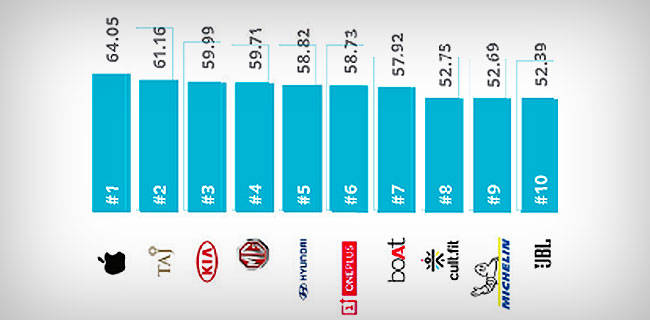
    According to the X Index India report parameters, the #1 brand is Apple followed by Taj Hotels, KIA, MG, Hyundai, OnePlus, Boat, Cult.fit, Michelin and JBL.


    Fifty leading brands across 13 categories including retail, fashion, financial services, automotive, entertainment, hospitality, beauty, health, and more were studied from India for the recent study. What’s interesting is that among the six countries also surveyed a year earlier, only India registered a lower overall score in 2021 compared with 2020. The higher scores in the other five markets (China, France, Portugal, UK, and the US) point to rising satisfaction with the customer experience. What this means is that while most geographies were able to leverage the new normal to cement their CX and deliver on consumers’ rising expectations, Indian brands were not as agile to keep up with the rising expectations. This makes it even more critical for Indian brands to now recognise that customer experience is synonymous with brand experience.


    For the second consecutive year, brand image has emerged as the strongest competitor to the X Index, representing 46% of India’s score. This hints at the fact that while ecosystems and the touchpoints were expanded during this new normal, brands also need to maintain continuous engagement to reinforce their image while also making it part of their CX.


    Despite heavy customer experience investments by brands, there’s still room for improvement with only a global average of 40% of consumers thinking the brands they interact with are “cantered on their needs as a customer.” This year’s research reveals that increased consumer expectations around trust, sustainability, and inclusivity are now impacting the evaluation of customer experience, with brands being assessed on the concrete actions they deliver to create a welcoming experience for all – shifting the traditional idea of customer experience to citizen experience.


    Said Prashant Tekwani, EVP & Business Head, Havas CX India & Havas Worldwide, West: “The pandemic has brought about a sea-change in consumer shopping behaviour. Brands now need to evolve their thinking from customer experience to citizen experience by making seamlessness and inclusivity their priority. According to the latest X Index report, India is the only country to register a lower overall score in 2021 in comparison to 2020. There is a gap that needs addressing for brands in India to score high in the CX journey. This shows how the understanding of the evolving expectation of the consumers is critical to maintaining the health of CX, growth and brand imagery. While meeting functional criteria around seamlessness, simplicity, and efficient customer service, brands must also go the extra mile to make a lasting impression in their customers’ minds.”


    Added Sumeer Mathur, National Strategy Head & Managing Partner, Havas Worldwide India: “Interestingly, out of all the parameters that we measure to arrive at a final score, the Brand image has emerged as the strongest contributor to the X Index, representing 46% of India’s score. This hints at the fact that while ecosystems and the touchpoints were expanded during this new normal, brands also need to maintain continuous engagement to reinforce their image while also making it part of their CX. Conversely, it could also mean that Indian brands are under leveraging other parameters and relying too heavily on the brand image alone to determine the customer experience.”


    The X Index identified four key principles to create a best-in-class citizen experience:


    Trust comes first: Brand trust is the most powerful denominator around the globe in the customer journey. Brands build trust by keeping their commitments to customers and being there in times of crisis. For example, brands that optimized their shopping experience during the COVID-19 pandemic saw better results; these optimizations included moving many traditionally in-person services online (consultations, etc.), and taking advantage of new platforms to integrate community building and social components. Brands also build trust with transparent business practices and by making commitments to social causes.


    Build an all-inclusive experience: For customer experience to become a citizen experience, brands must be inclusive. According to the X Index, consumers evaluate brands at every step of the journey, including the way they treat their frontline employees, foster inclusivity and break taboos in representation and marketing. Inclusivity also means enabling customers to participate in a community, with some brands introducing forums, clubs, and apps for customers to connect and interact with each other.


    Always be of service: Customer service is now defined by the speed of reaction to customer demands. It is one of the key discriminating factors. In addition, when it comes to staff and salespeople, consumers not only expect them to be efficient but also knowledgeable.


    Provide for the age of extra: When it comes to satisfying customers, going the extra mile is of paramount importance for brands. A key part of going above and beyond in making sure the experience feels extra personal.


  • Patrika refreshes brand identity

    By A Correspondent


    The Rajasthan Patrika group has gone in for a brand refresh, and along with a logo that is sync with its values. Said Siddhartha Kothari, Additional Managing Director, Rajasthan Patrika: “We were looking for a new image and identity which would be more reflective of the new energies and new mindset with which we run Patrika. We strongly feel that brand is about good practices and the conviction with which the team carries the values in their day to day life, because ultimately it is the application of a value system and delivery of the promise that create a brand. Patrika brand is built on journalistic value system and the imagery is only to reflect the same.


    Notes a communique: “The design of the logo is built to reflect the core values and the essence of Patrika. Shri Karpur Chand Kulish the founder of Patrika found himself best expressed in his acquired title “Kulish” and adopted it for life. The word ‘Kulish” having a very powerful and deep significance. Kulish means a vajra the most powerful of all weapons ordained and blessed to restore dharma and rightful life. Kulish finds its refrences in Puranas, Geeta, Ramayan and most other scriptures and represents the very function that Patrika as newspaper has been playing in society as a revolutionary change maker. It looks absolutely the right choice of expression of intent and soul of the brand. Kulish is engrained in Indian ethos, as the first ever flag of freedom suggested by Sister Nivedita disciple of Swami Vivekananda also displayed a picture of Kulish.”


    The response to the new identity has elicited a positive response, we are told. Said Shashank Srivastava, Executive Director (Marketing & Sales), Maruti Suzuki India Ltd: “I believe that Kulish is an ideal choice to reflect the ethos of Rajasthan Patrika . It symbolises the power and purity of intent and has a deep meaning even in contemporary India. It is a perfect connect from our rich past and heritage to the present. Patrika has been playing a very constructive and powerful role in the media and the society at large. The Kulish is a very good symbol of that aspect as well. I wish the Patrika group all the best for the future.”


    Added Pallavi Singh, Marketing Head, BMW: “It’s great to see the new narrative with new energy” Said Sandip Ghose, Chief Operating Officer, MP Birla Cements: “In today’s fast-changing world the mantra is Reinvent, Re-engineer and Rediscover to stay relevant and ahead of the times. Even the most popular brands need to refresh its identity and reaffirm its purpose and character. A Lion too needs to roar occasionally to remind the world of its nature and stature. Glad that Rajasthan Patrika despite being the market leader by far-has undertaken this re-branding exercise.”


    Said Puneet Anand, Group Head Marketing, Hyundai: I congratulate Patrika Group on adorning a new Bold and Dynamic vision which is very amalgamated in the new brand identity. With the changing World, it will herald a new Era of Leadership for Patrika Group. Wishing All the Best”


    Said Amit Jain, CEO and Co-Founder, Girnar Software Pvt. Ltd.(Car Dekho): “A brand that is always refreshing with time… As news takes up a new form for its audience through the internet and the digital era, Kulish will help the masses identify with Patrika as a household name. I am confident that this new identity will resend the message of trust, purity and positivity all the way. The Lion symbolises strength and power and of what I have known of Patrika group, personally, this reflects very well with its values and ethos of the management and team, equally. Wishing the Patrika Group all the success as they carve the path to empowering change! ”


    Said Hanish Batra, GM Marketing TPG Wholesale : “A very powerful transformation, Groups commitment in empowering change in this phase of our country is very crucial.”


  • Saavn launches new ad platform

    By A Correspondent


    Indian music service Saavn has announced the launch of its new advertisement platform, Impact. This platform enables brands to identify, connect and engage with its 10.5 million users in India and across the globe.

     

    Impact is an innovative approach to digital and mobile advertising that gives brands 100 percent share-of-voice. Using Impact, brands get complete and exclusive access to all advertisement units on the Saavn web site and mobile apps for a set time period. These include Custom Skin, Web Display, Web Audio, Mobile Spotlight, Mobile Display, and Mobile Audio. Impact is a powerful model that allows brands to build positive associations with their products and services through music. The model has proven to create strong brand awareness, shape brand preferences and increase purchase consideration through undivided mindshare of listeners of Saavn across platforms.


    “In India, we all know that music plays an integral and meaningful part in every individual’s life. Impact is a powerful solution that enables the advertisers to build an emotional connection with their target audience during a passionate, social and engaging musical experience,” Vinodh Bhat, co-founder and CEO of Saavn, said. “The Saavn Impact model is based around engagement, curation and social sharing rather than the archaic click-through. Brands are able to measure ROI in meaningful ways, such as increases in perception, awareness, recall and purchase intent. The byproduct of our strong focus on the consumer experience is helping brands grow their businesses.”


    Some of the major brands utilizing Saavn to reach million of engaged users in India include: Samsung, Lay’s, Pantene, Pepsi, Nokia, Vodafone, Airtel, Hyundai, Domino’s Pizza, 7Up, Nielsen, MakeMyTrip, Max NewYork Life, Google Plus, Nokia, Vanish, Groupon, Intel and several others.


    Saavn delivers a comprehensive catalogue of Bollywood, Indian and regional South Asian music, licensed from more than 200 content providers. Saavn users can search, browse, and play a catalog of more than 1 million tracks; create and save their own playlists; and share their music tastes seamlessly via Facebook.


  • Innocean devises ‘Moments of Brilliance’ for Hyundai

    By A Correspondent


    Hyundai Motor India has recently launched the second phase of its corporate campaign under the umbrella concept of ‘Live Brilliant’. To add an experiential edge this campaign uses digital media innovatively via new cross-media digital activation and engagement titled ‘Moments of Brilliance’.

     

    Live Brilliant is Hyundai’s global corporate campaign theme and highlights the inextricable nature of the brand with the happiness and brilliance in its consumers’ lives. This activation brings to life this strategic premise that true moments of brilliance in one’s life can happen anytime anywhere and deserve to be shared with one’s loved-ones and friends. So, Hyundai’s communications agency Innocean Worldwide India decided to engage their audience by devising a mobile phone app.


    The application enables the user to scan the messages across media -print, dealer posters, outdoor or even on social media using his smart phone which serves the Live Brilliant TVC followed by the contest page.


    Using this application, the user can share their own moment of brilliance on-the-go, whenever and wherever they experience it. They can submit freshly clicked images using their camera-phones or share a previous image from their phone gallery. Shankar Narayan Head of Digital practice at Innocean Worldwide, said, “It’s a first-of-its-kind; on-the-move contest enabled using a Mobile AR application. It brings the tacit imagery of the brand in the real world through real people.”


    Elaborating further, B Sridhar, Group Director Media & Digital Services at Innocean Worldwide India said, “This initiative underlines the importance of digital technology and media in amplifying the brand ideas in a user friendly manner. Moreover the relevance and delight factor is ensured all along. We see in this instance a clear force multiplier to our media efforts and brand outreach.”


    For the audience not using smartphones, this engagement devised by Innocean for Hyundai Motor India has an application on their official Facebook page to enable online entries for the contest. Along with the contest, this innovative application gives a remarkably personalized experience to its user by showcasing the Live Brilliant concept video via a collage of the user’s own images which are dynamically picked in real-time from the user’s Facebook album. The intent is to make the user feel related to the brand and the Live Brilliant motto. Users can even download this video collage and share it with friends. To reward and delight the consumers, from the total entries received, across platforms, 50 lucky winners will be chosen to win exciting prizes courtesy Hyundai Motor India.


    Vivek Srivastava, Joint MD, Innocean Worldwide India, said, “This campaign is a living testimony to the agency’s strong digital capabilities and their leverage for client’s benefit. In times to come it will imperative for brands operating in high consumer involvement space to offer memorable and relevant experience to their patrons using the Digital medium. Moreover with this initiative our valued client Hyundai Motor India has proved yet again that its campaigns are more about relevantly designed consumer-centric experiences and not mere taglines.”


  • The Anchor: Suman Srivastava on 5 Reasons why Marketing is a Creative Business

    By Suman Srivastava


    1. The marketer has to define the category he is in:

    Marketers should define their category by the way their customers see it, rather than the way the industry sees it wrote Theodore Levitt in Marketing Myopia. This is true even today. One can argue that a discount airline and a full service airline operate in different categories, even though they both fly planes.


    2. Pricing has become an art and not an accountancy exercise:

    Cost plus pricing is dead. Today consumers live in a “free” economy. Musicians give away their music for free from their websites and then make money on the concerts and the merchandize. Printers in the USA cost less than a full set of cartridges in them. Go figure.


    3. Marketers increasingly sell augmented products:

    You never just buy the car. You buy the car and the service and the resale value. As products become more commoditized, the pressure is on the marketer to differentiate the product in some other way. Hyundai offered to buy back cars from people who lost their jobs in America. That ensured that it increased its market share in a declining market.


    4. In India, creative distribution ideas can truly disrupt markets:

    Cavin Kare changed the rules of the game by launching shampoos in sachets. They started a revolution that has extended from personal care products to telecom (prepaid cards). Sachets could be placed in the smallest of stores and be within reach of the poorest of customers.


    5. Advertising doesn’t work as well as it did before, so marketers need to think of unique brand experiences:

    Smirnoff is not allowed to advertise, so it created a series of events where consumers were taught to make cocktails. These were fun events where the consumers left after not just having a few drinks, but also learning the right way to make and serve cocktails. Beats a 30 sec TVC any day.


    Suman Srivastava is Founder & Innovation Artist at Marketing Unplugged, a firm that helps firms create marketing innovations


  • Internet influences over 50% car buyers: Google

    By A Correspondent


    If you are planning to buy a car, who will you go to for advice? The Internet…family… a car expert? Various people choose various options, but according to a study done by Google India, with over 120 million Indian Internet users, the Internet plays an important role in influencing the decision-making process of India’s growing number of car buyers.


    The offline study conducted by Nielsen on behalf of Google India at car showrooms in eight metros (NCR, Mumbai, Pune, Chennai, Bangalore, Kolkata, Ahmedabad and Kochi) revealed that one in two car buyers conducted research online before arriving at the dealership. The survey also revealed that of those who had researched about their purchase options online, over 50 per cent changed their choice of car brands after uncovering new information on the web.


    Speaking about the study, Rajan Anandan, vice president & managing director, Google India, said: “This offline study substantiates the growing number of auto-related searches we’ve seen on Google Search inIndia. Auto is among the fastest growing vertical in terms of query volumes on Google. Most OEMs have not yet tapped the full potential of the digital medium and we hope this study will help them to understand and engage the Indian consumer online.”


    Respondents reported that they used the web to research and compare prices, watch online videos, find images, do competitive analysis, find dealer contacts and read both expert and user reviews. Most car buyers also rated OEMs website as the most important and trustworthy source of information. Of the 50 per cent respondents who went online, 42 per cent said they used search engine as the first source of information, just behind the opinions of friends and relatives’ (47 per cent).


    However, the auto-makers aren’t affected by the study. Abhishek Gupta, former brand manager at Maruti Suzuki India Limited and business head – North at RPS consulting said that  people might go online for research but final decision depends on what family and friends recommend. “One goes online to get a basic understanding. He might read blogs, reviews or comments to get others point of view but will buy a car which he aspires to purchase or what people close to him tell him to.”


    Voicing the same opinion, a marketing head at the leading Japanese car manufacturer, said: “Maybe Google is correct or maybe they are not. But it’s a fact that one needs to go to a showroom to get a feel and look of the various cars s/he has shortlisted before zeroing in on one.”


    The research was conducted outside the car showrooms of India’s leading OEMs namely: Maruti, Tata Motors, Ford, Chevrolet, Hyundai, Honda & VW. The total sample size for the research was 2,791 respondents. Out of which 93 per cent were males, with 75 per cent of the respondents in the age group of 25-44.


  • Is Brand SRK losing sheen due to controversies?

    By Samidha Sharma


    He was, arguably, the biggest Bollywood superstar not long ago but with a few unsuccessful releases, a night club brawl and now a scuffle with officials at a Mumbai cricket stadium to his credit, Shah Rukh Khan’s brand is losing sheen.


    In the last couple of years the actor has not signed any big brand endorsement deals, although his portfolio still boasts of more than a dozen brands. People in the endorsement industry say that SRK’s image has suffered in the last couple of years not only due to the controversies that have surrounded him but also because he is an ageing celebrity.


    “Controversy does not make for good brand endorsers and any marketer will keep away from a celebrity like that. Besides the controversies that have courted him recently, what is a bigger concern is that he is ageing and that does not bode well for multiple brands in India that want a youth connect,” said Manish Porwal, MD, Alchemist, a talent management agency.


    Cola major PepsiCo, for which SRK was a brand ambassador for a long period, dropped him in 2009. In a move that was veering towards the youth, the cola major got on board Ranbir Kapoor. Later, telecom major Airtel did not renew its contract with SRK, although, they have not officially announced their disassociation with him.


    LOST IN TRANSITION?

    Endorsements: Tag Heuer, Hyundai, Belmonte, V-jon, Navratna, Dabur sona chandi, Lux Cozi, Linc pens


    SRK’s endorsement rates haven’t come down though as he charges around Rs 1.5 crore per day. But it’s 50 per cent less than what Aamir Khan commands.

    Today, his roster of more than a dozen of brand endorsements include Belmonte, V-jon, Navratna, Dabur sona chandi, Lux Cozi, Linc pens, besides a few marquee names such as Tag Heuer and Hyundai. SRK’s endorsement rates haven’t come down though as he charges around Rs1.5 crore per day.


    However, it’s 50 per cent less than what his contemporary Aamir Khan commands, but the latter has largely been off the endorsement market of late, say industry people.


    “What you are seeing is something that a lot of stars have gone through. It’s a transitional phase which all celebrities go through; while some bow out gracefully, some do not. It is an inevitable shift of power and it has not been a smooth ride for him,” said Santosh Desai, CEO at Future Brands.


    However, some of the brands that he endorses are sticking with him. DTH player Dish TV, which has him as a brand ambassador for over five years, says these incidents have had no rub-off as far as his brand appeal among masses goes. “There is no dent that has been made on Brand SRK, we will continue to have our association with him,” said Salil Kapoor, COO, Dish TV.


    Source:The Economic Times

    Copyright © 2012, Bennett, Coleman & Co. Ltd. All Rights Reserved


  • IPL 5: Online ticket sales picking up pace

    By Ameya Chumbhale


    If ticket sales of the fifth edition of the Indian Premier League are anything to go by, India is certainly not cricket fatigued.


    Mumbai Indians, which began its online sales on March 1, claims to have sold close to a third of its tickets already. Some of these tickets are priced as high as Rs40,000 – the most expensive among all teams.


    Pune Warriors (PWI) and IPL winners Chennai Super Kings (CSK), as well as Delhi Daredevils are also doing good business, said bookmyshow’s chief executive officer Ashish Hemrajani. Bookmyshow is the online agent for five IPL teams, including Mumbai Indians (MI).


    Online sales are critical to the success of the IPL as stadium sales usually commence only a few days before the match. “Last year, we sold close to 60per cent of our ticket inventory online through thermal printing which enables us not to have restriction on quota for online sales. This means the system allows us to print tickets similar to international practices and also allows the Mumbai Indians fans to choose their own seats,” said an MI spokesperson.


    Hemrajani says bookmyshow has already sold 50,000 tickets this year. “Mumbai and Pune are doing really well, while ticket sales of Rajasthan Royals and Kings XI Punjab have picked up over the last two days,” he added.


    The inaugural match on April 4, between the CSK and MI in Chennai, is sold out. Chandrabhan, general manager, marketing at Chennai SuperKings said online tickets for the second and third matches are also sold out. CSK has kept 60 per cent tickets for on-ground sales as “Chennai is known for fans queuing up to buy (movie and cricket match) tickets,” he added.


    Since the first IPL season, on-ground ticket sales and television viewership have moved in tandem, say media planners. “Both went up for the first three years of IPL, and both came down last year. The link is very strong between the two,” said Ajit Varghese, managing director (South Asia), media agency Maxus and Motivator.


    Multi Screen Media, the company that operates Sony Max, which broadcasts IPL matches, has signed six sponsors till date. Among them are Vodafone, Pepsi, Hyundai, Idea and Tata Photon. It had nine sponsors last year. MSM, according to sources who did not want to be named, has sold only about 50-60 per cent of the ad inventory until now as against 75-80 per cent around the same time in 2011.


    According to industry sources, MSM is charging around Rs5 lakh per 10 seconds and they expect it to rise if television viewership goes up in the first seven to eight matches.

    MSM president Rohit Gupta confirmed that the company had signed six to seven sponsors and some of them have come on board for deals valued at over Rs40 crore.

    “We have sold nearly 70 per cent of the ad inventory and expect it to reach 80 per cent before going into the tournament,” said Mr Gupta who is confident of filling up the ad spots, as it will take only a sponsor or two more to do so.

    Generally, associate sponsors get a certain percentage of the ad inventory as a part of the deal.


    Source: The Economic Times

    Copyright © 2012, Bennett, Coleman & Co. Ltd. All Rights Reserved