Tag: Hinterland

  • From Hinterland to the fore


    By Ritu Midha


    Till India attained its freedom, the Hindi Hinterland was at the forefront putting up a fight to claim freedom for its people. However, things did not really go right for them post-Independence. Though they kept delivering politicians of repute, they lagged behind in the race to strong economic growth.


    But that’s history now and the scales have tilted in favour of the Hinterland states that are on path to rapid growth and development. They are no longer destinations of the future; they are destinations of today for marketers, brands and retail outlets. Much of the credit for the good showing goes to improving infrastructure and increasing literacy levels on one side and the explosion of media on the other.


    The consumer there has evolved and s/he is much more aware and informed, and is willing to spend. FMCGs always knew the importance of this consumer and have been targeting them with high-end goods such as mobile phones, consumer electronics, computers and automobiles. Each of the states in focus in this edition — Uttar Pradesh, Bihar, Madhya Pradesh and Jharkhand – is growing individually as well. There is real opportunity in this wonderful, fast-moving universe.


    India as a growth story took many by surprise but as the years passed by, the picture became clearer. The country, now, is in no mood to be pushed to the background again as it is an emerging force and the progression continues. The same holds true of the Hindi Hinterland as well – these are our true-blue emerging markets. Discerning marketers are already there while the rest are on their way.


    In the pages of this volume, we have tried to capture the spirit of these states by providing a bird’s eye view of their culture, heritage, cuisine, tourist attractions and more. We have also endeavoured to capture nuances of the changing consumer in these states. The attempt is also to explode the myths surrounding these markets.


  • Opportunities Unlimited!


    By A Correspondent


    Uttar Pradesh, or UP as it is commonly called, is the land of culture and creative excellence, of historical and religious importance, of music and dance, and of vast cities and developing villages – a state that assimilates outsiders without any grudges. And to top it all, the state seems to have changed gears as far as economic growth is concerned and is moving ahead full throttle.


    With an area of 93,933 sq mi, it is a little bigger than England. This despite the Himalayan portion of the state, being formed into a new state ‘Uttaranchal’ (now Uttarakhand) in the year 2000. It, also, is the most populous state in India, with a population of 199,581,477 million people as of 1 March 2011. Though a large part of this population, still resides in villages, the urban population of the state is 44.4 million – the second largest (11.8%), after Maharashtra. And as for the economic potential, it is the second largest state-economy in India, contributing 8.34 percent of India’s total GDP in the year 2010. During the 11th fiveyear plan the state registered a 7.28 percent GDP growth rate against a target of 6.10 percent – it was one of five states exceeding their targets. (As per September 2011 data) And this is not a flash in the pond – but a definite sign of times to come.


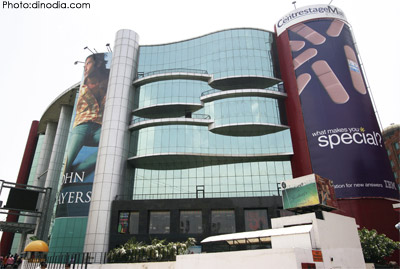
    Another interesting paradigm shift is in the shopping pattern. The number of shopping malls mushrooming in the state are a clear indication that consumer here is evolved, and comfortable shopping in malls. Interestingly, it is not only Lucknow, Kanpur and Noida that is seeing mall culture – malls are present in the cities like Moradabad, Bareilly, Meerut, Mathura Varanasi, Bijnour and Ghaziabad as well. Though Hindi and Urdu are the official languages of the state, it has a vast linguistic diversity in terms of dialects used – Awadhi, Bundeli, Braj Bhasha, Kannauji Bhojpuri and Bagheli are the major native languages.


    A Brief History:


    From the prehistoric times it has been at the forefront of the Indian history, and imprints of the same can be witnessed in its culture and heritage.


    A few highlights from its glorious history include:


    • As per mythology, the setting of the Mahabharata is around Hastinapur, now in Western UP; Ramayana is set in and around Ayodhya, the birthplace of Rama and Krishna is said to be born in Mathura and brought up in nearby Vrindavan.
    • Sometime between the 6th and 4th centuries bc, Gautam Buddha delivered his first sermon at Sarnath, near Varanasi. He is said to have attained nirvana at Kushinagar in eastern Uttar Pradesh.
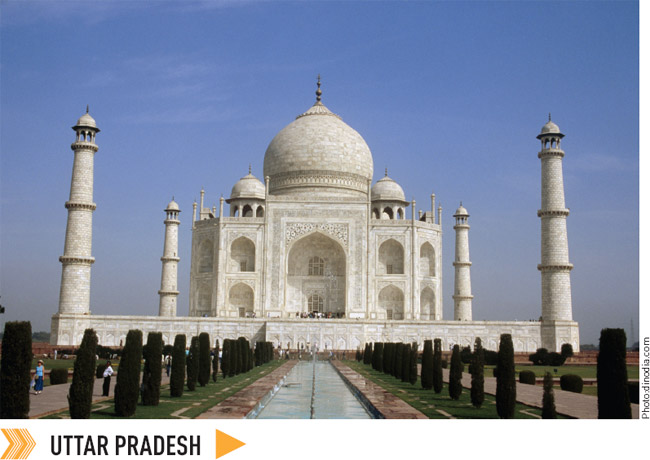
    • Moving to the Mogul period, Akbar constructed a grand new capital, Fatehpur Sikri, near Agra. And later, Shah Jahan built Taj Mahal at Agra.
    • Interestingly the state has been called UP (United Provinces of Agra and Oudh (later shortened to the United Provinces)) since 1902, when British captured the area.
    • The Indian Mutiny 1857, was sparked by a mutiny of soldiers at Meerut.
    • The state gave India many of the most important nationalist political leaders, such as Motilal Nehru, Pandit Madan Mohan Malaviya, Jawaharlal Nehru, and Purushottam Das Tandon.
    • Since independence, the state has given the country several prime ministers, including Jawaharlal Nehru, Indira Gandhi, and Atal Bihari Vajpayee.


    Culture:

    Uttar Pradesh has always been one of the cultural hubs of India. Indo-Islamic syncretised culture of the medieval period also blossomed here. The tehzeeb of Lucknow is attributed to Muslim Nawabs of Awadh. Music, dance, literature, poetry, arts and crafts flourished under royal patronage.


    Many a well known writers, poets, ghazal singers were born and flourished here. To name just a few: Munshi Premchand, Mahadevi Verma, Suryakant Tripathi ‘Nirala’, Harivanshrai Bacchan, Sumitra Nandan Pant, Mahavir Prasad Dwiwedi Ustad Bismillah Khan, Birju Maharaj, Pt. Ravi Shankar Begum Akhtar and Rasoolan Bai,


    Dance and music:

    The rich cultural heritage of the state has translated itself into an amazing variety of dance and music – a variety of classical, semi classical and folk genres.


    Classical:

    Kathak, a beautiful classical dance genre originated here. It was traditionally performed in temple confines. However, it was later given patronage by the rulers of Awadh and blossomed. Today it is one of the most popular classical dance formats in the country. Khayal is a semi-classical genre of singing that originated from the royal Awadh courts. Khayal got this name as it is based on a lover’s imagination of his/her beloved. Ghazal is the music of choice in Awadh. The melody of ghazal and the abundance of feelings and emotions in them – have made the genre popular across the country now.


    Thumari, another popular genre of semi classical Indian music, was confined to royal courts for many years. However, when it reached the masses it became extremely popular. The themes of Thumri usually revolve around a girl’s love for Lord Krishna. Qauwwali, or the poems of Sufis, has a pan-world presence. It is mostly sung on the tombs of Sufi saints and has a loud vocal that culminates to Trance at its crescendo.


    Folk:

    Rasiya, especially popular in Braj-Mathura, Nandgaon, Barsane, Vrindavan and Govardhan), celebrates the divine love of Radha and Shri Krishna. Rasiya is the folk music of choice in this region on Holi. Birha, with its origins in eastern Uttar Pradesh is a mood-based genre, origins of which possibly lie in incidents where men from small villages used to migrate to cities in search of livelihood often leaving their new brides behind in the village.


    Chaiti, meanwhile is a month specific genre that is primarily sung in the month of Chait (the season of harvest) according to the Hindu calendar. The core theme of these songs is the amorous fight of a beloved with his lover. Kajari is also a season specific song genre, mostly sung in monsoon. Theme, here too, is pain of separation but less sensuous as compared to Birha. Marsiya, popular among the Shia Muslims in Uttar Pradesh, are the poetic description of the martyrdom of Imam Hussein, the grandson of Prophet Muhammad, and his comrades.


    Naqal is a play performed through crispy conservation – and is usually satirical in nature. The Naqal group comprises of dancers, singers, clowns and musicians, led by an Ustad. Nautanki has a simple language with mass appeal. It consists of folklore, mythological and historical stories presented through folk songs and dances. Rasa lila is a popular dance form of Brij region – it depicts Krishna’s dance with Radha and her sakhis. This dance form is usually performed on Janmashtmi and Holi. Ramlila is enactment of entire Ramayana – which usually takes place on nine days of navratra, culminating in Ravan’s end of the day of Dussera. Ramlila of Varanasi is very famous and draws tourists from far and near.


    Art & Craft:

    The heavy and elaborate embroidery work of Zardozi comes in a number of attractive varieties. Use of gold threads, spangles and beads makes this art form even more attractive. The delicate Chikankari Embroidery of Lucknow is today world famous. It received great impetus during the Nawabi period – when it became an intrinsic part of Nawabi culture. The Chikankari tradition gradually filtered down the masses and has become an important part of Lucknow’s economy.


    Uttar Pradesh is the largest Brass and Copper products making state – Moradabad is famous for art metalware – Coloured enamelling and intricate engravings being its hallmarks. This craft too got a shot in the arm during Mughal rule. Varanasi besides being a holy place also has the distinction of being a world famous center of hand-made textiles. Exquisite Banarasi sarees woven here find a place of pride in many a rich wardrobes. The design motifs of these brocades are mostly intricate floral and foliage patterns.


    Carpet weaving is an intricate craft – and today 90 per cent of the carpets are created in Uttar Pradesh. The main centers are Mirzapur, Bhadohi, Khamaria and the villages around them. Basket and other articles are made from bamboo, cane and raffia in many places in Uttar Pradesh. Allahabad, Bareilly, and Varanasi have concentration of specialised raffia products both in variety and artistic merit. In addition to these, Agra is well known for Pietra Dura, (inlay technique of using cut and fitted, highly-polished coloured stones to create images), Aligarh for its locks and Firozabad for beautiful bangles and glass accessories.


    Architecture:

    Unlike most other states, architectural legacy of the state is not indicative of one specific era, but tells the story from across the centuries. Religious places are mostly very old structures – rebuilt and touched up many a time. Striking monuments constructed by medieval rulers likes forts, palaces, temples, mosques and mausoleums still tell the story of those years. Many official buildings and railway stations, even today, are an excellent display of British architecture.


    Cuisine:

    UP’ites are proud of their culinary skills as well as are the connoisseurs of good food. Though, most people in the state prefer a meal of daal chawal, roti and sabji on a daily basis – many of the specialities of the state are non-vegetarian. In Awadh, Kababs, Nihari and Biryani are extremely popular dishes. Outstanding feature of Awadhi tradition of cooking is the the ‘Dum Pukht’ process – food is sealed in large pots called handi and cooked over slow fire, allowing the ingredients to be cooked in their own juices for nearly three days. These dishes are not only delicious to it, but their aroma too is rich and inviting.


    Western Uttar Pradesh is famous for its Rampuri Rohu and Zamindoz, two fish dishes. Pasanda kabab Shab Deg, and Paneer Pasanda too are much relished. Tahri (a delicious rice preparation), Murg Musallam and Reshmi Kababs come from eastern Uttar Pradesh. Alu Pooris and Daal kachoris are all time vegetarian favourites and relished on special occasions. To top it all, the state offer endless variety of sweets – with their exquisite tastes – ‘Malai Ki Gilori’ from Lucknow, Khurchan and Peda of Mathura, Gajjak and rewadi of Meerut. Petha of Agra, Gujia, Sheer Qorma are just some of the sweet delicacies. Two things without which the cuisine of UP would be incomplete is sumptuous chaat (from Lucknow and Faizabad – best in the country) and Banarasi Paan.


    Fairs & Festivals:

    The state boasts of people from vivid caste, creed, culture and religious backgrounds. Therefore it is but natural that the state is home to a number of fairs and festivals. Though quite a few of festivals are celebrated nationally like Holi, Diwali, Dussere and Iid, there are some that are unique to the state. An otherwise sleepy town, Bateshwar (about 70 km from Agra), comes to life in the month of November (Kartik month of Hindu calendar) courtesy massive annual cattle fair held at the banks of Yamuna.


    The Ganga Mahotasava is a five day festival held on the banks of river Ganges in Varanasi and centres around classical music and dance. It coincides with the Dev-Deepavali, the famous festival of lights of Varanasi and seeks to promote Varanasi as the Culture capital of India. Janmashtmi is celebrated all over Uttar Pradesh, and across the country, but it’s celebrations in the Mathura and Vrindavan has a special significance as these are believed to be Krishna’s birth place and the place where he grew up. The Kumbh Mela is generally held every three years in rotation at Allahabad, Haridwar, Ujjain and Nasik. It is organized in the month of Magh according to the traditional calendar (Feb-March). The most important among these is the one celebrated at Allahabad. Due to the rotation system, the Kumbha Mela comes to Allahabad every 12 Years.


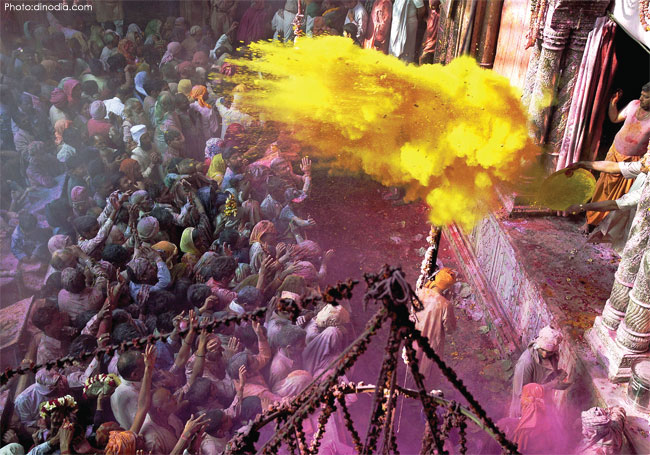
    Sardhana Christian Fair, Meerut is held every year on the 1st Sunday of November – it is a large feast held in honour of Mother Mary – a Carnival in fact. Hundreds of devotees gather to participate and admire the beauty of the shrine and the palaces built around the church by Begum Samru. Latthmar Holi of Mathura is named so because women beat the men with a bamboo stick and men try to save themselves from them. The Rang Gulal Festival is celebrated for a week with exuberant processions, songs and music. Taj Mahotsava, organised by UP tourism is a spell binding display of the Arts, Crafts, Culture and Cuisine of the region.


    Lucknow Mahotsava too is organized by UP tourism between 25th November and 5th December. It is a beautiful event that show cases the state’s legacy, its cultural heritage and finesse in performing arts. Another festival organized by UP tourism, is the Ganga water rally in Allahabad – a water sports festival with adventure sports like canoeing, kayaking and other water sports.


    Places to see:

    Uttar Pradesh is one of the top tourist destinations in India. Agra circuit and the Hindu pilgrimage circuit are the most popular tourist destinations. Three World Heritage Sites: Taj Mahal, Agra Fort, and the nearby Fatehpur Sikri are part of Agra circuit. Akbar’s mausoleum and Dayal Bagh are two other major attractions. Taj Mahal mausoleum built by Mughal Emperor Shah Jahan in memory of his wife, Mumtaz Mahal, is cited as ‘one of the universally admired masterpieces of the world’s heritage’.


    The pilgrimage circuit includes holy cities largely on the banks of holy rivers Ganges and the Yamuna: Varanasi (widely considered to be one of the oldest cities in the world), Ayodhya (birth place of Lord Rama), Mathura (Lord Krishna’s birth place), Vrindavan (the village where Lord Krishna spent his childhood), and Allahabad (the confluence or ‘holysangam’ of Ganges-Yamuna. The historically important towns of Sarnath (where Gautam Buddha gave his first sermon) and Kushinagar (where he attained Nirvana) are located not far from Varanasi. Also at Sarnath are the Pillars of Ashoka and the Lion Capital of Ashoka, both important archaeological artefacts with national significance.


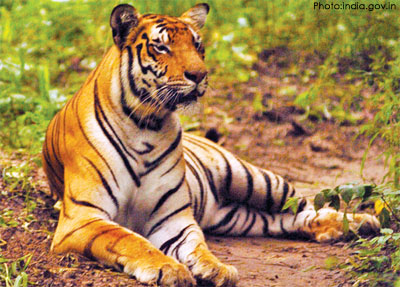
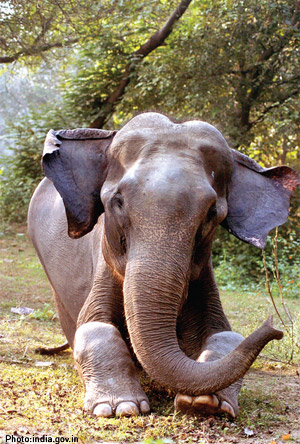
    Lucknow, the capital of Uttar Pradesh, has several beautiful historical monuments such as Bara Imambara, Chhota Imambara and Residency. The city is envied for its beautiful evenings, excellent cuisine and Its hospitality. Bithoor, Chitrakoot and Jhansi are other historically significant destinations that attract tourists. There are a number of wild life sanctuaries in the state – among them – Dudhwa National Park is one of the best tiger reserves in the country. With more than 50 feet tall Sal trees, it is one of the tallest and thickest forests in India. Tigers, elephants, bear and deer are the main habitants of Dudhwa. Barasingha (swamp deer) can be spotted in herds of hundreds here.


    Pilibhit Tiger Reserve has nearly 36 tigers. It is a part of Terai forests and it is said that together with grasslands it is the habitat of over 127 animals, 556 bird species and 2,100 flowering plants. Sandi Bird Sanctuary in Hardoi district of Uttar Pradesh houses about 20,000 migratory birds annually. Katarniaghat Wildlife Sanctuary is spread over an area of 400 sq. kms near the Nepal border in Bahraich district. Habitants of the sanctuary include tiger, leopard, swamp deer, blackbuck, chital, barking deer, sambar, nilgai and bear.


  • Hindi Hinterland: India’s own emerging markets


    By Ritu Midha


    The four key Hindi Hinterland states – Uttar Pradesh, Madhya Pradesh, Bihar and Jharkhand, till less than a decade ago were considered to be sluggish in their outlook. That’s because consumers there were not really top-of-mind for marketers and if at all they became part of a media plan, especially television, it was done so by default, as Hindi television that catered to metros was available in the hinterlands too, and there was not much effort made to engage  consumers there. If one looks at a broader picture, a similar tale rang true for most states across India, perhaps a decade-and-a-half ago.


    Cut to the present day, where India is the second-fastest growing market in the world, its middle class is the favoured target group of most marketers (both national and multinational), and in most global consumer surveys Indian consumers emerge to be the most gung-ho among the lot. Of the several states showing signs of speedy growth, the four states that are set for a big leap include:


    • Bihar, which is the second fastest growing economy in the country
    • Uttar Pradesh, which is the second largest contributor to the country’s GDP and also has the second largest urban populace in the country
    • Madhya Pradesh, which is touted as being an upcoming economic power centre and a major tourist destination
    • Jharkhand, which has always been an industrial hub One often reads of Indians leaving their cushy jobs overseas and returning to their roots to contribute to, and be a part of, the India growth story. In fact, stories of residents of  Hindi Hinterland moving back home from metros too are not uncommon.


    Evolution of the Hindi Hinterland consumer

    Consumers in these states are evolving rapidly and much of the credit for their evolution could be attributed to access to information and awareness boom. Mayank Shah, Group Product Manager, Parle Products reflects on the consumer psyche: “If you look at aspirations, there is no significant difference in Hindi Hinterland and metros. However, the urge to excel is far greater as they come from a modest background and the readiness to put in effort is definitely there. Even in semi-urban and rural areas, aspirations have grown – they are ready to consume CPG (consumer packaged groups), which is similar to their urban counterparts.”


    The increased awareness and steady GSDP enhancement has made the consumer ‘consumerist’, whereby it’s not only lowticket items that are catching the consumer’s attention, the high-ticket ones are doing it in a big way too.


    Kamal Nandi, VP – Marketing & Sales, Godrej Appliances asserts: “Hindi hinterland is becoming an important market for consumption of durable goods. Consumer affordability has gone up, leading to a shift in lifestyle and consumers becoming more urban in their approach. Also, their top priorities are convenience and comfort.”


    Sushil Bajpai, President, Ghari detergent, too, is of the view that it is no longer the market to be targeted sometime in future. For Bajpai, the time is now: “There is excellent scope for marketers. Industries too are finding it attractive now. Consumerism is growing at a fast pace, and urban markets in Hindi heartland are no different from metros. The need right now is to understand the consumer mindset.”


    While the big cities in the region are getting ready to rub shoulders with metros, the semi-urban and rural areas too are getting out of dark areas. States Krishna Mohan, CEO, Sales, Emami Limited: “The great ruralurban divide in household consumption patterns has reduced drastically. Bharat is indeed keeping pace with India when it comes to spending on most fast-moving consumer goods. Rural sales contribute more than 40-50 per cent of total sales in various categories for Emami. We have increased emphasis on engaging rural consumers. The market is huge with a lot of potential.”


    Youth – Change drivers

    The change, as is expected, is being driven by the youth who are more adaptable and are akin to the youth from the metro – at least in urban areas. Having said that, awareness and information in semi-urban and rural areas is also growing and so are the aspirations.


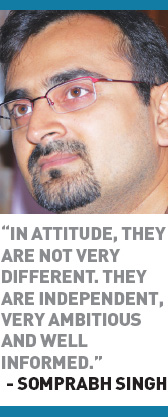
    States Somprabh Singh, Head Marketing, Titan: “In attitude, they are not very different. They are independent, very ambitious and well informed. The only difference is that their exposure to many international brands is lower but that’s the function of the retail environment, which will change in sometime.” And, true to his vision, a change is currently underway across these cities.


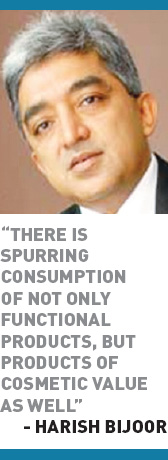
    Harish Bijoor, CEO, Harish Bijoor Consults, believes that the booming Hindi Hinterland is the right place for marketers to be, more so for those catering to the youth. He exhorts: “The robust growth numbers in the education sector is proof enough. Add to it the entertainment market, the market for mobile phones, gadgets of every kind, clothes and accessories, cosmetics, shoes, exercise oriented products, and you have a solid market of the future emerging. There is spurring consumption of not only functional products, but products of cosmetic value as well. Products that relate to health, well-being and proactive health care, rather than just reactive care, are being craved for as well.”


    As per Bijoor, there is a definite opportunity waiting, especially for brands meant for the youth, and the marketers need to make the most of it. He asserts: “The youth in these towns have a far bigger hunger quotient than the privileged youth in the bigger cities. I would segment this territory into urban, rurban and rural. The hunger deepens as you go from urban to rurban to rural. The opportunity for marketers, therefore, deepens as one penetrates down this strata.”


    Interestingly, while the debate between urban and rural might take some time to die down, it is the semi-urban areas that are attracting a lot of attention. Interestingly, the leap is expected to be bigger there, as they are keen to catch up with their urban counterparts, who themselves are always in a moving state.


    States Lloyd Mathias, the marketing honcho with experience around industries: “Youth in the urban areas of these states are quite close to metros in their awareness and aspirations, more so in case of bigger cities like Indore, Lucknow, Bhopal, Patna and Ranchi. Though the semi-urban youth might be a little behind, they are catching up, what with the inroads being made by social media. Moreover, the influencers are the same, which are rapidly dissolving the differences.”


    Consumption pattern

    While rising aspirations is one part of the story, these regions are seeing an increase in activity by discerning marketers who are becoming more conscious of the finer nuances of the region, and are staying away from the one-size-fits-all approach.


    Explaining the phenomenon, Nandi says: “While we have seen growth in double door refrigerator model in urban markets, in semi-urban markets it is the single door model that works.” However, it has not stopped Godrej from providing the entry-level consumer best value for money. He adds: “Even an entry-level consumer looks for high-end product features. A few years back, toughened glass shelves were there only in high-end model, today they are there in entry-level models as well. Brands have to seek to fulfil aspirations.” The company has also developed a refrigerator with a ‘Stay cool’ feature – powering cooling at the same temperature for 24 hours even after a power-cut.


    Coming back to the India analogy, the Indian consumer is perhaps one of the most price-conscious in the world. For him, value for money seems to be the mantra, but the consumers’ buying capacity is no longer questioned – the global marketers are tailoring India specific strategies, and the same is true of Hindi Heartland as well. Affirms Mayank Shah: “Instances and opportunities of buying premium products might still be less but they buy if the right quality is delivered at the right price. For example, premium biscuits like Hide and Seek cookies were rare in Hindi heartland, apart from cities like Lucknow, Bhopal and Allahabad. However, now it has changed; we made it available in smaller packs, which has definitely led to sales enhancement.”


    The growth is not being noticed in purchase of a few specific product categories but across the board – a clear indication that the consumer is not seeking to fill just the need gaps, but is also looking for comfort, convenience and a bit of pampering.


    States Lloyd Mathias: “There is dramatic growth in categories like wireless broadband, consumer soft goods, mobiles and more; the consumption pattern is similar to other parts of the country. It is the sheer numbers that make it more lucrative.” He adds: “There is a homogeneity in these markets – the same is not true of any other part of the country, be it South, West or East.”


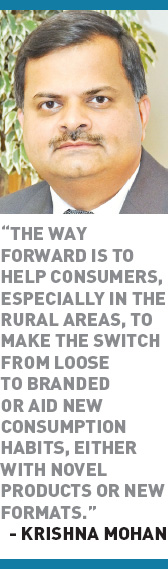
    Krishna Mohan suggests that marketers look at a closer interaction with the consumer to understand him, and also to make him understand the brand. He asserts: “The way forward is to help consumers, especially in the rural areas, to make the switch from loose to branded or aid new consumption habits, either with novel products or new formats. For us, the categories of cool oil, cool talcs and fairness creams are doing extremely well with double-digit growth.”


    At this juncture, the Ghari Detergent success story can be an inspiration for many. With its origins in Kanpur, it is the largest selling detergent brand in the country today. And a major focus on Hindi Hinterland has definitely propelled growth for the brand. Sushil Bajpai states: “Hindi hinterland is the biggest market for us; the brand name on our packs is prominently written in Hindi, and then in regional language. RoI in Hindi Hinterland is not lesser than other parts of the country; the key is to convey the right message accurately.”


    Key challenges

    Having assessed the scope that these markets present, one can safely assert that Hindi Hinterlands have come of age. And the marketers, of course, are in no mood to miss the bus. Thus, as per Somprabh Singh, it is important to “Act fast and act now, else be left behind. This is in terms of creating exciting products and new channels that will help reach them.” As per Nandi, it is not just about being there; the key is to be relevant and to belong. He says: “You have a winning story in hand if you are able to provide relevant technology and play a role in them (consumers) fulfilling their aspirations.” Bijoor agrees that relevance and marketspecific approach is mandatory to be successful in these markets: “Marketers need to tailor-make themselves to the market, rather than take their tailor-made solutions to the market. Bottom-up marketing is the mantra to adopt.”


    Emerging markets indeed

    So while there exists an array of roducts that are being tailored to these markets, there is keen interest in interacting with the consumer there and understanding him and there definitely is an increase in the consumer spends. Are these markets ready for all the attention they are getting or would it be a case of yet another opportunity going bust?


    Laughing off the suggestion, Bijoor states: “Hindi heartland is the new market that is just about emerging. What was derogatorily called the “cow belt” and the”Bimaru states” in the past, is a market that is coming to roost in the future. These states have become very progressive in their development indices. They boast of a GDP growth rate that is, at times, even more robust than the national numbers. This clearly means that these markets will see faster consumer growth in terms of demand and in terms of volumes, value and innovation.”


    Interestingly, the consumers staying in these markets are a very large demography, accounting for 20 per cent of the country’s population. And there has been a dramatic improvement in the standard of living in these states too. As these markets poise for the next big leap, it’s time the true potential of these markets is understood, and the consumer is serviced to the optimum.


  • Marching ahead: from adversity to prosperity


    By A Correspondent


    One has heard stories of people overcoming difficulties and embracing freedom, but when a similar feeling is drawn to an entire state it is something that appears to be fairy tale-like in sentiment. Bihar, the second fastest growing state in India, however, is a real life story of march from adversity to prosperity.


    The economy of the state has grown at an annual rate of 11.36% between 2004-05 and 2010-11. In the year 2010-11, it grew at a rate of 14.8%. Key focus areas are Infrastructure, Healthcare and Education – the necessary pegs to make growth more inclusive. To add more teeth to the growth tiger, the state is seeing an enhanced anti-corruption drive being bought in by its babus. Surprising as it may sound, Bihar was identified as the “least corrupt state” in a study by economists Bibek Debroy and Laveesh Bhandari in the year 2011.


    The impact of this growth is not seen only on selected pockets, but on the day to day life of people. The increasing consumerism can be gauged by the face that small towns like Motihari and Betiah today have outlets of branded companies like Allen Solly, Cotton County, Reebok, Koutons, Ant, Palm Treee, Lilliput, Allen Cooper, Peter England, Belmonte, Charlie Outlaw, Cantabil, Duke, Priknit, and more.


    A very interesting fact about Bihar is that Almost 58% of Biharis are below 25 years of age – the highest in India. Bihar, in times immemorial was the land of learning, culture and prosperity. In fact, the name Bihar is derived from the Sanskrit and Pali word Vihara – Buddhist vihara (abodes) dotted the region in the ancient and medieval periods.


    It was about a hundred years back that Britishers separated Bihar from Bengal (March 22, 1912), and 2012 is being celebrated as ‘Bihar Shatabadi celebration Utsav’. Hindi, Urdu and Maithli are the official languages of the state. The commonly spoken Bihari languages are Maithili, Angika, Magadhi and Bhojpuri, most of which are dialects of Hindi.


    History:
    Bihar has a glorious history and many a monument in the state are testimonials of the same. A few quick mentions here:


    • Four of five “The Greats” from India, belonged to Magadh – a region of Bihar: Chandragupta Maurya, Ashoka, Samudragupta and Vikramaditya.
    • Its capital Patna, earlier known as Pataliputra, was an important centre of Indian civilization.
    • Nalanda and Vikramshila were centres of learning established in the 5th and 8th century respectively.
    • Gautama Buddha attained enlightenment on the bank of river Falgu in Bodh Gaya, Bihar.
    • The great Pathan of Bihar, Sher Shah Suri, became the ruler of North-India in 1540. Economic transformations, infrastructural improvement, highways, discovery of Rupiya, establishment of modern post offices and policing concept are just a few of his achievements.
    • Babu Kunwar Singh of Jagdishpur and his army contributed to the India’s First War of Independence (1857).
    • Mahatma Gandhi launched his civil-disobedience movement, Champaran Satyagraha from Bihar.
    • Bihar’s contribution to the Freedom Struggle, with outstanding leaders like Brajkishore Prasad, Dr. Rajendra Prasad, Jayaprakash Narayan and others is noteworthy.
    • The state of Jharkhand was carved out of Bihar in the year 2000.


    Culture: Imprints of the glorious history of Bihar can easily be seen on its culture, performing arts and craft.


    Performing arts:

    Bihar has contributed to the Hindustani classical music, and has produced musicians like Ustad Bismillah Khan, Dhrupad singers like the Malliks (Darbhanga Gharana) and the Mishras (Bettiah Gharana), and many more. Tappa and Thumri are other popular classical music streams In Bihar. Pandit Govardhan Mishra is perhaps the most versatile living exponent of Tappa singing in the country today.


    Folk forms of Bihar music too are extremely popular. The beat and rhythm of Bihari folk music is delightful to even the ears unfamiliar with the language. Sohar is an extremely popular folk form, sung at the time of a child’s birth in the family. Extremely soothing, it is performed by a group of women in chorus with a lead singer. Sumangali is a wedding song, performed by groups of women to celebrate the steps of a marriage ceremony in Bihar.


    Ropnigeet is a work song sung at the time of sowing paddy seeds. Paddy sowing is associated with hope, rejuvenation and the beginning of a new working season. Katnigeet of Bihar is a folk music form that is associated with the harvesting of paddy in the state. Chaita or fagua is the beautiful folk music performed specially during the festival Holi. Usually naughty and humorous, they add to the spirit of festival.


    Dance:

    Dance forms of Bihar are yet another expression of its rich culture. Chhau dance, originally a tribal war dance, was earlier performed in order to perfect fighting techniques. It has, over the years, evolved into a narrative ballet, full of energetic rhythm and vigour.


    Jat-Jatin is performed by the Harijans, mostly in Mithila region. One person performs the role of Jat (husband) and Jatin (wife) wearing masks and goes through the story of their life.


    Theatre too is a popular form of expression. Bidesia, Reshma- Chuharmal, Bihula-Bisahari, Bahura-Gorin, Raja Salhesh, Sama Chakeva, and Dom Kach are some of the interesting theatre forms.


    Arts and crafts:

    Madhubani style of painting from Mithila region, with its origins in the age of Ramayana, is among the better known Indian painting styles. Powdered rice is coloured and stuck to create intricate paintings with themes revolving around Hindu deities. Manjusha Kala or Angika Art, also known as snake painting, is a popular art form of Anga region.


    As for crafts flourishing in the state, they are all about creating attractive and useful articles using materials available in the region. For instance, villages around Bodhgaya create fascinating bamboo and cane articles, leather works, statues of white metal and wooden toys. Bhagalpur is famous for its tusser silk industry, and is one of the best in manufacturing silk yarn and weaving lovely products out of it. Cotton dhurries and curtains produced by artisans in central Bihar, particularly in the Patna and Bihar-Sharif areas too are beautiful – and add to the decor of any house.


    Other crafts of Bihar include sujni embroidery, lac bangle making, and creation of decorative and utility items of a local dried grass – seenki.


    Cuisine:

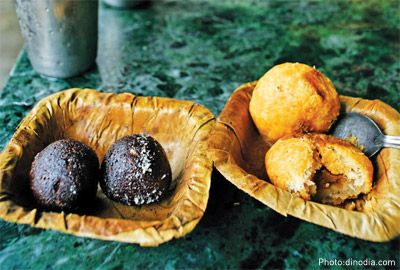
    Bihari cuisine, usually cooked in mustard oil, is a gastronomic delight. Litti-chokha is a popular Bihari preparation. Litti, made up of dough stuffed with sattu, is first boiled and then shallow fried in oil. A more delicious version is Litti grilled on red hot coal – and then dipped in ghee. Chokha, the accompaniment, is made of mashed potatoes or brinjal, fried onions, salt, cilantro, and carrom seeds. This meal is usually served with coriander chatni.


    Kichdi with its Chaar yaars is yet another temptation. Khichdi, commonly treated as sick people’s food is cooked and served in style in Bihar -Chaar Yaar means “four friends”. Sumptuous Bihari Kichdi is usually served with its four friends i.e. Raita, Papad, ghee and Pickle!! Kadhi bari, very similar to Punjabi Kadi is a popular favourite and consists of fried soft dumplings made of besan (gram flour) that are cooked in a spicy gravy of yogurt and besan. And then there are Chitba and Pitthow, two rice preparations of the Anga region.


    Bihar also offers a number of sweet delicacies: Anarasa (tastes amazing when hot & fresh), Belgrami, Chena Murki (chill it to enjoy it more), Motichoor ke Laddoo, Kala Jamun, Kesaria Peda, Khaja, Khurma, Pua & Mal Pua, Thekua, and Tilkut. Non-vegetarian cuisine dished out in Bihar is equally sumptuous. Tash, a very popular non-vegetarian dish is made by frying marinated mutton and eaten with Chewra. Fish Curry cooked in mustard paste with Rice (maaach-bhaat) is also a popular dish.


    Impact of Islamic culture and cuisine too can be seen on Bihar – Bihari Kababs made with Beef strips or Lamb strips are tempting. Meat is marinated with a rich mix of spices overnight and grilled. It is served with green salad. Shami Kabab, Nargisi Kufte, Shabdeg, Yakhnee Biryanee, Motton Biryani, Shaljum Gosht, Baqer Khani, too are very popular. The daily meal in most household comprises of boiled rice, daal and sabzi in lunch. Roti is usually served for dinner. And the best breakfast favorites are Chura – Dahi and Poori – Aloo dum.


    Cinema:

    Bihar has robust Bhojpuri cinema. First Bhojpuri film was Ganga Jamuna released in 1961. In the 1980s, enough Bhojpuri films were produced to tentatively make up an industry. Films such as Mai and Hamar Bhauji continued to do well. However, in 1990s, it saw an all time low.


    The industry took off again in 2001 with the super hit Saiyyan Hamar. Panditji Batai Na Biyah Kab Hoi and Sasura Bada Paisa Wala other hits came in close succession. The industry now supports an awards show and a trade magazine.


    Fairs & Festivals of Bihar:

    Festivals:

    Chhath, also called Dala Chhath – a prominent festival in Bihar is celebrated twice a year: Chaiti Chhath is celebrated in summers, and Kartik Chhath, a week after Deepawali. Chhath is the worship of the Sun God. The worshipper is segregated from the household for two days before Chhath. Rendition of regional folk songs, for a number of days at the time of the festival brings the festival to life. Naag Panchami falls in the rainy month of Sravana when there is danger of death from snake bite. People offer the snake god milk to please him. Rajgir is the prime centre of naga worship. As per Mahabharata this is an abode of serpents and excavations here have shown many objects used in serpent cult. Teej and Chitragupta Puja are other major festivals of Bihar. In addition to it, Holi, Diwali, Dussera, Iid, Christmas and other festivals are also celebrated with joy and enthusiasm.


    A number of fairs take place in Bihar in the course of a year: The Sonepur cattle fair, held on the banks of Gandak river is nearly a month-long event starting approximately half a month after Deepawali. It is considered to be the largest cattle fair in Asia. In addition to a number of animals on sale, a number of folk take place here – attracting people from far and near. The month-long Shravani Mela (organised in July – August), held along a 108-kilometre route linking the towns of Sultanganj and Deoghar (now in Jharkhand state), is of great ritual significance. Pilgrims, known as Kanwarias, clad in saffron coloured clothes, walk the stretch to Deogar to bathe a sacred Shiva-Linga. Around September Gaya is visited by people from all over the country. They come here for the famous Pitrapaksha mela or the ancestor worship. The vedic Sraddha ceremonies (pind daan) is perfomed for the soul of the dead. Its history is traced back to the time of Buddha, who performed the first pindan here.


    Places to see:

    National parks:

    Bihar has 21 wildlife sanctuaries and two national parks. These sanctuaries not only house a number of wild animals – but also rich flora. The Palamau Tiger Reserve is spread across Netarhat knoll. Mahua, Sal, Palas and Bamboo trees make it an idealhabitat for tigers, leopards, cheetal, Sambhar, Bison, elephants, wolf, Nilgai and other wild animals. Small hillocks and majestic water-falls enhance its beauty multiple times.


    The Valmiki National Park is located in the western outskirts of Champaran. This national park stands at the fourth spot in India as far as the number of tigers is concerned. The rivulet called Gandak and the grandeur of Mount Everest on the western side create a spellbinding picture. The chief attractions at the Valmiki National Park in Bihar are Tiger, sloth Bear, Wolf, Deer, Leopard, Python, Peafowl, singlehorned Rhinoceros and many other majestic animals. The other prominent names in the list of Bihar Wildlife Sanctuaries are Rajgir Wildlife Sanctuary, Hazaribagh Wildlife Sanctuary, Bhimbandh Sanctuary, Udhwa Lake Bird Sanctuary, Topchanchi Wildlife sanctuary, and Lawalong Wildlife Sanctuary.


    Historical places:

    Gaya, as per a puranik legend, is one of the holiest spots in the world. As per this legend the Gods felt threatened by the power of an Asura, named Gaya, and thought of eliminating him. The Asura put a precondition to his death that he should be buried in the holiest spot of the world. This place is Gaya. The central point of the Hindu pilgrimage in Gaya is the Vishnupada temple built by Rani Ahilyabai of Indore in 1787. The spot where it is built is said to be the same where Vishnu killed Gaya.


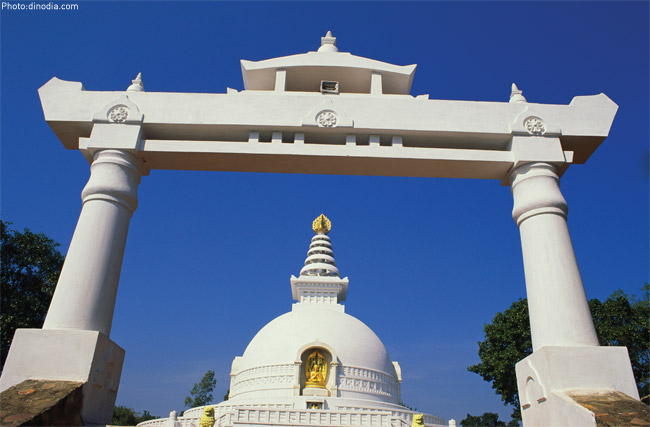
    Bodh Gaya, the place of the Buddha’s Enlightenment, is regarded as the spiritual home of Buhddhists. Situated near the Niranjana river, it is one of the holiest Buddhist pilgrimage centres. A number of believers from across the world throng here every year. Mahabodhi Temple, a Buddhist shrine and UNESCO World Heritage Site is also situated here. Nalanda, was home to the world’s first university for higher learning. This university initially was a Buddhist monastery. It is stated that Lord Buddha stayed at Nalanda several times. Lord Mahavir too is believed to have attained ‘moksha’ at Pawapuri, located in Nalanda. As per one sect of Jainism, he was born in the nearby village of Kundalpur.


    Rajagriha is sacred to the Hindus, Buddhists, Jains and Muslims. It was the capital of the powerful kingdom of Magadh. As per to the Ramayana, it was founded by King Vasuand was called Vasumati. Rajagriha name was attributed to it during Buddha’s time due to many palaces around it. Lord Mahavir gave his first sermon on Vipula Hill. Each hill of Rajgiris associated with various Tirthankars. There are Jain temples on all the hills of Rajagriha There is a natural pond on Vipula Hill known as Makhdum Kund after Muslim saint Makhdum Saheb, who spent 12 years in the jungles of Rajagriha in 13th century AD.


    Kesariya too is a Buddhist pilgrimage place. In the time of the Buddha, it was known as Kessaputta. It was here that the Buddha delivered His famous Kalama Sutta to the Kalama people. Vaishali was a center of religious renaissance in ancient times. Puranas as well as the Ramayana refer to Vaishali as a separate kingdom. In addition to its association with the Hindu mythology, it also figures prominently both in the Jain and Buddhist literatures. It was in Vaishali itself that Lord Buddha announced his approaching Nirvana and also preached his last sermon. Interestingly, Vaishali was also seat of the ‘Vajji Republic’, which was the world’s first republic with a duly elected assembly of representatives and efficient administration.


  • Aspiration of the middle rung consumers in Hindi heartland are evolving rapidly: Draft FCB Ulka Study

    A Draft FCB Ulka Advertising study throws light on the ‘Rising aspiration of the Hindi heartland woman’. The agency conducted a survey of Hindi Magazine editorials, first in 2008 and then in 2011. In each round, around 24 issues of the top-selling six magazines were surveyed. These magazines primarily enjoy Sec B and C young housewives and R1, R2 student readership. The editorial content showed the following trends:


    1. In both the rounds, beauty and grooming related articles made up more than 20 per cent of the more than 400 articles surveyed in each round.


    2. After beauty, stories related to movies, husband, food and children, work and success were the most popular subjects, way ahead of ‘relationship with inlaws’, ‘travel’, ‘interior decoration’ or other subjects.


    3. After work and success stories, came articles on ‘sex’. There was, on the average, at least one article on this subject in each issue, e.g. Yoga for sex or foods that spoil sex.


    4. The health and wellness stories made surge from a lowly 2-3 per cent in 2008 to more than 10 per cent in 2011.


    5.Semiotics analysis of the pictures in the issues indicated a dramatic change from ‘woman in subordinate positions’ in 2008 to ‘playful, equal, woman in the lead (taking initiative in playful interaction)’ pictures in 2011.


    6.The grooming pictures showed a change from only Indian fashion in 2008 to western – Indian fusion themes in 2011.


    7. There was no coverage of current affairs in 2008. In 2011, current affairs made an entry into the topics covered by the magazines.


    8. Beauty and grooming articles covered modern means to beauty such as lasers or plastic surgery.


    The magazines included in the survey were Grihashobha, Meri Saheli, Sarita, Vanita and the like. The reader is unlikely to pay the substantial cover price of these magazines unless they resonate well with her life-view. These findings help in appreciating the rapidly evolving aspiration of the middle rung consumers in Hindi heartland.


    (As shared by Vidyadhar Wabgaonkar, Sr. Vice President – Strategic Planning, Draftfcb + Ulka to Ritu Midha)


  • Fostering a new growth wave


    By A Correspondent


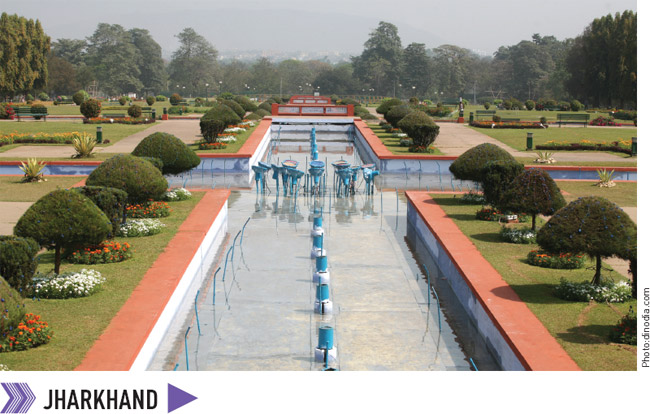
    Jharkhand means “The Land of Forests”, and true to its name a large percentage of the state’s land is covered with rich forest. Interestingly, a large chunk of the non-forested land is a major industrial hub occupied by cities such as Ranchi, Jamshedpur, Dhanbad, Bokaro and Hazaribagh. The state is also the second largest producer of mineral wealth in the country after Chattisgarh. Iron ore, coal, copper ore, mica, bauxite and uranium are among the minerals found in the state. Add to it, the forest produce of the state – and the picture is more or less complete.


    Jharkhand, a part of Bihar since 1912 – before which Bihar itself was a part of Bengal presidency – came into being on 15 November 2000. Fascinatingly, history tells us that Jharkhand indeed was a separate entity several centuries ago as well. Jharkhand is also a major educational centre that possesses institutes such as XLRI, NIT Jamshedpur and ISM Dhanbad. Another interesting fact deserving a mention is Jharkhand is observing 2012 as Bitiya Varsh – as is obvious focus is on schemes for the girl child’s wellbeing and education. Although Hindi is the state language, the people of Jharkhand speak a number of languages like Santhali, Mundari, Bengali, Odia, Kosali, Maithili, Nagpuri Oraon (Kurukh), Korwa, and Paharia (Malto).


    History:

    Gautam Kumar Bera, the wellknown historian states Jharkhand (perhaps not in its current avatar) was a distinct geo-political, cultural entity even before the days of Magadha Empire. The tribal rulers were known as Munda Rajas – some of whom continue to thrive till today. During the Mughal period, the Jharkhand area was known as Kukara. Post 1765, it became part of British Empire and its name changed to Jharkhand. The state relentlessly contributed to freedom struggle. Nearly a hundred years before Rebellion of 1857, tribals of Jharkhand had begun a series of revolts against the British colonial rule.


    Culture:

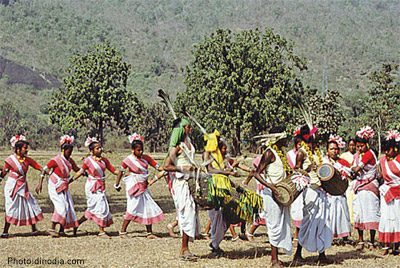
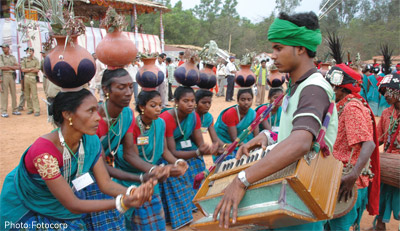
    Nature is given utmost importance in every sphere of life & culture – perhaps due to abundance of forests and other natural resources – and dependence on them. Nature is worshipped – Karma Puja, Jitia Puja, Sarhul are a few examples. Folk spirit defines the unique features of the culture of Jharkhand. Songs and dances of Adivasis are joyous and usually specific to one festival or the other. The unique musical instruments and the traditional tribal costumes and jewellery make the dances even prettier. Paika is a dance form of Munda community. It is a stylized representation of the rituals connected with the preparations of war. Dancers in fact perform a stylised worship of arms. The dancers display their skills in handling the sword and shield as they dance. Dhol, Nagara, Shehnai and Ranbheri are the musical accompaniments of this dance form.


    Hunta Dance is the hunting dance of Santhals. A very mesmerising dance form, it shows the act of hunting with bow and arrow – from preparation to execution. Performed only by male dancers, it has distinctive features like mime, slow strong stepping and measured movements. Mundari Dance, a popular dance of the Mundaris, is generally performed to celebrate the newlyweds. It is a group dance, performed with expressive mudras or gestural language. Barao Dance of the Oraon community is an extremely rich dance form. It is performed on almost all happy occasions, however songs and dances vary according to occasions and seasons. Jitia Karam, Jenana Jhumur, Mardani Jhumur, Jhitka and Danga are among the other popular dance forms.


    Art & craft:

    It’s not only its performing arts that make Jharkhand unique in its offerings, but also the crafts practiced here. Sample this: Toy Making: Unusual and interesting wooden toys are made at Toupadana near Ranchi. These are pieces of wood painted to look like human figures with angular. All the limbs are indicated only by painting lines on the body. Wood Craft: Various household articles made of wood are another speciality of Jharkhand. These articles are beautifully designed, without ignoring the utility part.


    Bamboo Art: The bamboos found in the Jharkhand forest are thin but flexible and strong. The artisans of Jharkhand make different artefacts, baskets, and even fishing equipment from bamboo. Bamboo found in Jharkhand is thin but strong and flexible, and can be moulded in beautiful shapes. The Paitkar paintings in Jharkhand are also popularly known as the scroll paintings. The paintings that belong to this school have a common subject of what happens to human life post death.


    Cuisine:

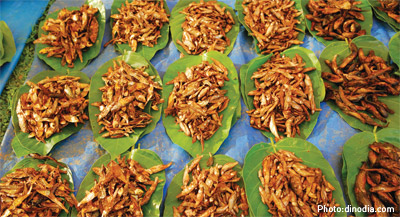
    Jharkhandi food preparations, by and large, are very light on the stomach and easy to digest. Sumptuous recipes of Jharkhand are made extra special by the distinct style of cooking. Mustard oil is the cooking medium of choice in the state. The mouth-watering nonvegetarian cuisine of the state bears a faint touch of the Mughals. Chhonkna (stir fry spices before adding them to a dish), liberal use of Sattu (gram powder – used not only in dishes but also cooling drinks) and Panchforan (a blend of five exotic and aromatic seeds, namely ajwain, sarson, saunf, methi and mangraila) make the food aromatic and sumptuous. Jharkhandis use different types of flowers, drum-stick, August and Jhirool as vegtables. “Maad Jhor” which a nutritious substitute for Daal is prepared by boiling leafy green vegetables in starch left after cooking rice. To make it taste even better, Garlic fried in mustard oil (chhonkana) is added to it.


    Dhuska is a popular preparation cooked with mashed rice and pulses. It is served with either aaloo dum or mutton curry; Charpa prepared by frying mashed rice mixed with spicy vegetable preparations is another well liked dish. Kera-dudhauri is a sweet delicacy prepared with milk, rice, ghee and gur. Some of the other popular dishes of Jharkhand are Khichdi, Aloo Chokha, Chana daal ki kachree, Gatteki sabzi, Kala- Chana Ghoomni, Jhingni ki sabzi, Pittha and Litti. Thekua, Mitha Khaja, Pua, and Til Barfi (best in the world) are for the ones for people with a sweet tooth. Rice beer, originally known as Handiya, and Mahu, made from fruit/ flowers of the Mahua tree are the popular alcoholic drinks of the state.


    Fairs & Festivals:

    Jharkhand’s rich culture is depicted in celebrations in form of festivals and fairs round the year. Kunda Mela in Pratappur is one of the biggest fairs in the state and popular among locals as well as the tourists. The primary objective of fair is the promotion of various breeds of cattle among existing and new clients. What makes the fair really interesting is the folk songs and dances that take place at the venue. The Lawalong Mela is another interesting one. As per the folkfore it is being held every year on the occasion of Aghan Purina since 1880. It is the biggest and one of the most popular cattle fairs in the state today.


    There are a number of other large cattle fairs held in the state, three of them in Chatra: Chatra mela during Durga Puja, Kundri Mela on Kartik purnima and Kolhaiya Mela. Kolhua mela in Hunterganj known for its fun and frolic takes place twice in a year – on the occasion of Ram Navami and Basant Panchmi. It is not only the going-ons at the festival but the ambience with the backdrop of Kolhua hill, and a soothing breeze that add to the charm of the fair. A shrine dedicated to Goddess Kali (known as Kuleshwari Devi) is at the centre of this festival and attracts devotees from across the country. The Bhadli Fair takes place in Itkhori on the day of Makarskranti. An ancient temple of Goddess Kali and Lord Shiva is at the centre of this fair.


    Festivals in Jharkhand:

    Sarhul, celebrated in spring season, is one of the important festivals of tribals in Jharkhand. This festival is celebrated on Chaitra Shukla Tritiya, as the beginning of New Year by worshiping trees. Sarhul literally means ‘Worship of Sal’ – on the occasion, trees and other objects of nature are worshipped. It also marks the beginning of sowing seeds and indulging in festivities. The celebrations continue for a number of days – the main attraction of the festival is Sarhul dance. Santhals celebrate the same festival as Baha – the festival of flowers. In addition to Sal, they use mahua flowers are also for performing rituals. Sohrai and Dansi are two other important Santhal festivals. Dansi, largely a dance festival, coincides with Durga Puja, and does not have any elaborate rituals. Sohra, meanwhile is indicative of care of domestic animals like cows and buffaloes. It is celebrated on the day following Diwali. Earthen lamps are lighted in the evening to mark the occasion. Following day, the cattle are washed, vermilion mixed with oil is applied on the cattle and they are even garlanded.


    Karma is one of the most popular festivals of Jharkhand it is celebrated by Adivasis as well as Hindus. It falls in the month of August / September. The name Karma is drawn from the name of a Karam tree. A branch of this tree is worshipped, and passed among karma dancers as they sing and dance through the night. The branch is washed with milk and Handia (rice beer) and raised in the middle of the dancing arena. Bandana Parab is one of the most popular festivals of the state, celebrated during Kartik Aamavashya. This festival too is a symbol of animal worship. On this day farmers decorate and ornate their animals. They also sing songs dedicated to their animals – these songs are known as Ohira. Tusu Parab, Hal Punhya and Rohin are other important festivals. All festivals of Bihar, Durga Puja and Kali Puja too are celebrated with aplomb.


    Tourism:

    Baidyanath Temple: There is an interesting mythological story behind this temple – Pleased with Ravana’s worship, Lord Shiva gave him a Jyotirlinga and asked him to take it to his land, without keeping it anywhere in the way – or it would remain fixed on that spot forever. The gods were unhappy, and planned a strategy. The god of water, Varuna entered Ravana’s body and urged him to relieve himself. As Ravana came down to earth, Vishnu, in the garb of an old Brahmin, appeared before Ravana and began to talk with him. Ravana requested him to hold the Jyotirlinga for a few minutes so that he could relieve himself. Lord Vishnu took the Jyotirlinga from Ravana, and as soon as he turned his back to relieve himself, he left the Jyotirlinga on the spot and vanished. That place is now Baidyanath temple.


    Parasnath Temple is situated atop Parasnath hill which is the highest mountain south of the Himalayas. It is considered to be one of the most important holy places of the Jains. As per the Jain tradition, 23 out of 24 Tirthankaras (including Parsvanatha) attained salvation here. Amidst these hills lie the spellbinding waterfall, where the Ushri River gushes down from a height of 40 feet high and splits into three separate streams. Rajrappa Temple: Rajrappa, about 80 kms from Ranchi is a Shakti Pith situated on the confluence of two rivers known as Damodar and Bhairvi. It is regularly frequented pilgrim resort for the Hindu devotees mainly from Jharkhand, Bihar and West Bengal. Netarhat: Netarhat is an exotic and exquisite hill station about 156 kms away from Ranchi. Its beauty attracts tourists not only from India but from other parts of the world as well. Sunset here is something poetry is made of.


    Betla National Park: Betla National Park is the main tourist destination in Jharkhand. It is stretched over an area of 232 square kilometers. This wildlife sanctuary forms the main region of the Palamou sanctuary, which is spread over an area of 979 kms in the district of Daltonganj. It has a wide variety of wild animals. Some of the most important animals found in this park are panthers, elephants, wild boars, leopards, sloth bears, tigers and gaurs. Jaivik Udyan, located at a distance of 16 kms from the state capital is another amazing wild life sanctuary. It houses a wide variety of vegetation. The sanctuary largely visited for of its quite unique collection of a variety of mammals, also houses a wide variety of vegetation. Hazaribagh National Park, located at a height of about 615 meters on a low-altitude hilly region, is one of the most significant wildlife sanctuaries in the country. The wide range of animal life here is impressive and includes sambar, the wild boar, the chital and the nilgai among others.


    Its magnificence is enhanced by its topography, which spans from low-lying regions to high hills and rolling regions. Hundru Falls: Ranchi is a beautiful city adorned with falls and streams. Hundru falls is a scenic beauty about 28 kms away from Ranchi. Here the Swarnarekha river falls from a height of 320 feet and crates an awesome impact. Other major attractions for the nature lovers are Kanke Dam, Ranchi Hill, Tagore Hill, Hatia Dam, Dasham Falls, Jagannath mandir, and Jonah Falls. In Gudri Bazar Mohalla of Chatra there is a Sangat of Udasi Panth of Sikh doctrine where there is an old script of the Holy Gurugranth Saheb. Sikhs and Hindus both visit this Sangat with respect and devotion. Barura Sharif is a well known shrine situated on the bank of Sat Bahini river in Pratappur. As per the belief, the sufi saint came here in the latter half of the 18th century. Muslims as well Hindus gather here to pay respect on his Mazaar. Rabda Sharif is the shrine of Data Faham Khyal Shah. The annual fair of the saint is celebrated grandly, and is attended by a large populace.


  • A force to reckon with by 2020


    By Ritu Midha


    Madhya Pradesh Government’s tourism radio ad proudly states that it is the heart of India. Well, in that case India has a magnanimous, eye-catching and an affectionate heart. Located in the geographic heart of India, Madhya Pradesh has nature’s bounty on one side, and a rich culture and heritage on the other. It is spread on both sides of Narmada River, flowing between the Vindhya and Satpura ranges.


    It is the second largest state in the country and is spread over an area of 118,975 sq mi, and is the sixth largest with a population of 75 mn (Provisional – 2011 census). What is more exciting is the attention the state’s economic potential is drawing now. As per Global Dun and Bradstreet report released in August 2011, Madhya Pradesh is poised to emerge as a major economic force in the country by the year 2020. A sign of the same can be seen in the growth rate of the state (GSDP) – which has shown a marked growth of 9 per cent in 2010- 11 as against 3 per cent in 2004-05.


    The consumer in the state is more aware and informed today – courtesy media and retail boom. Mall culture is in – and they are mushrooming in all the cities – catering not only to the local populace, but also to the large number of tourists visiting the state.


    Flourishing textile mills at Ujjain, Nagda, Indore and Gwalior, PSUs including the Bhilai Steel plant, and the Heavy Electrical, the Nepa Newsprint Mills and Diesel engines manufactured at Indore, are just a few of the factors contributing to the state’s forward march. Hindi is the official language of the state. Several regional variants of Hindi, like Malvi Nimadi Bundeli, and Bagheli too are spoken.


    Historical facts:

    Here are a few glimpses of Madhya Pradesh’s glorious past:

    • Madhya Pradesh came into being as an Indian state on 1st November 1956. During the British rule, this region was a part of the Central Provinces.
    • Rulers from various dynasties have ruled here. Mughals, Guptas, Satavahanas and Mauryans ruled here in descending order. Each dynasty has left an imprint on the culture and architecture of the state.
    • The main rulers, regionally known as the Kalchuri kings are credited for constructing a number of temples. However, the areas they were influential in now fall under Chhattisgarh.
    • Tansen, one of Akbar’s nine jewels was born in the state, and as per a few scholars, so was Kalidasa, the poet beyond compare who authored Abhigyan Shakuntalam.


    Culture:

    Madhya Pradesh has a vibrant and colourful culture. It is home to a number of tribes, whose influence can be seen on the state culture. All the tribal and non-tribal communities have their own socio-cultural space, and hence there is a wide variety of performing arts, as well as art and craft.


    Music:

    Richness of the state’s classical and Folk music is respected and appreciated.


    Classical Music:

    The Gwalior Gharana, which roseto fame during emperor Akbar’s reign, is one the most respected genres of Indian classical music. Tansen, the renowned singer in Akbar’s court, sang in this style. In the Gwalior Gharana emphasis is on the use of the raga instead of using melodic phrases. Tansen Festival, celebrated at the tomb of Tansen, in Gwalior every year is well attended by classical music aficionados. Dhrupad, music for the soul, seeks to have a calming effect on the listeners. In this devotional music with its roots in the ancient text of Sam Veda, emphasis is on maintaining purity of ragas and Swaras. And hence even today it is performed the way it was more that 500 years ago in the royal courts.


    Folk music:

    Faga, Bhartahari, Sanja geet, Alha, Pandwani gayan, Garba Garbi Govalan are some of the popular forms of folk songs. What makes these songs even more mesmerising are the musical instruments that support them. Most amazing of these are wind instruments with extremely melodious sounds. The singha, made of the horn of a dead animal- with its tip being sawn off, could well be the first aero phonic instrument invented by man. Then there is binnoor, a richly ornamented brass trumpet used by Marias. Another interesting instrument is Mohuri – a cylindrical bamboo flute with seven holes that produces shrill, piercing notes.


    Dances:

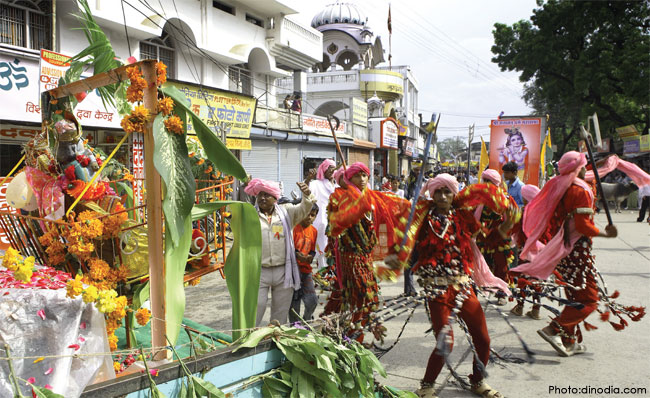
    Tribal dances of Madhya Pradesh performed on foot tapping music are all about grace and balance. Here is a look at some of them… Karma, belonging to the Gond and Oraon tribe is performed on the onset of spring by colourfully dressed tribals. Musical instruments like thumki, payri, challa and jhumki accompany the various tribal songs on which it is performed. Jawara, a dance of prosperity, is performed by people of Budelkhand region, after the reaping of a good harvest. Performed by both men and women, the real beauty of this dance form is women balancing baskets full of jawara, on their head while dancing.


    Tertali, a folk dance of the Kamar tribe, is usually initiated by two or three women of the tribe sitting on the ground. Holding a small sword between their teeth and balancing a pot on their heads, they rhythmically follow the beat striking the cymbals in their hands. Lehangi, performed in monsoons is dance of the Banjara and Kanjar tribe. Young men rhythmically beating the sticks while dancing also incorporate various acrobatic tricks, making it even more dramatic.


    Ahiri dance is a trademark of the cattle herders of Gwalior. The dance also has religious overtones, as the various communities of Gwalior who perform this dance, are considered to be the descendants of Lord Krishna. Baredi, an important folk dance of the Gwalior district is performed from Diwali, till the day of ‘Karthik Purnima’. Musical instruments like dholak, jhanz, manjira, mridang and daphli create the melody, to which the dancers clad in dhotis and accessorized with peacock feathers perform.


    Gaur, the spectacular marriage dance of Maria Gonds of Bastar is rhythmic and energetic. The head dress for this dance is unique and is made of bison horn, raw silk and feathers – it is usually passed from generation to generation. The Maach of Madhya Pradesh is a folk theatre form. It is largely presented through traditional song and dances. Theme for this is either historical or taken from folk lore. All the characters in it are played by men. Other interesting dances of the tribals of Madhya Pradesh are the Phag (a sword dance), Mandri (a drum dance) and Lota (women dance with full pitchers of water on their heads).


    Art & Craft:

    Madhya Pradesh has an amazing reservoir of art and craft – with every region having its own specialities: Traditional floor coverings of Madhya Pradesh include durries and carpets. While durries usually have bold patterns incorporating geometric traditional motifs and human and animal figures, carpets are woven with floral and geometric designs. Beautiful folk paintings of the state largely include wall paintings of Bundelkhand, Gondwana, Nimar and Malwa. Splendid examples of folk painting can be seen in Mandana wall and floor paintings, Lipai paintings and Pithora paintings.


    The craftsmen of Gond, Muria, Dhruva and Bhatra communities mould iron ore found in the state mines in beautiful shapes. Iron craft from the state finds place of pride in many fancy homes. Metal craft is practiced by Gadhavs, Gonds, Murias, Bhatras and the Dhruva tribal communities. Innovative designs are carved into metals and shaped into beautiful figurine and boxes. Jute is abundantly used in the tradition craft of the state. Creative potential and cost effectiveness makes it suitable for weaving items like lamps, hammocks, wall coverings, baskets, bags and footwear.


    Jute handicrafts are mainly produced in Bhopal, Raipur, Indore and Gwalior. Folk jewellery of MP made from gold, silver, bronze and other metals are amazing examples of excellent craftsmenship. Papier Mache is an ancient art form practiced in regions like Ujjain, Gwalior, Bhopal and Ratlam. Ornate items like birds, animals, statues and vases are made out of Papier mache. Craftsmen from Ujjain are well known for creating immaculate replica of living birds. Chanderi sarees: Chanderi, a small town in the hills of North central Madhya Pradesh, has been famous for its sophisticated and artistic handlooms since the reign of the Scindia royal family. It takes two people eight days to weave one sari – sarees with intricate designs take even longer


    Cuisine:

    Madhya Pradesh has a rich cuisine – free use of spices, oil and seasoning make food sumptuous and aromatic. The vast geography of the state is responsible for the diverse cuisine – it varies from region to region. While the north and west prefer wheat-and-meat based meal, the wetter south and east favour rice and fish. One of the exceptional dishes from Madhya Pradesh is Bafla (wheat cakes) dipped in pure ghee and served with daal. ‘Bhutte ki kees’ made of corn and milk, and Chakki ki shaak made up of steames wheat dough and used with curd are two other mouth watering dishes of the state.
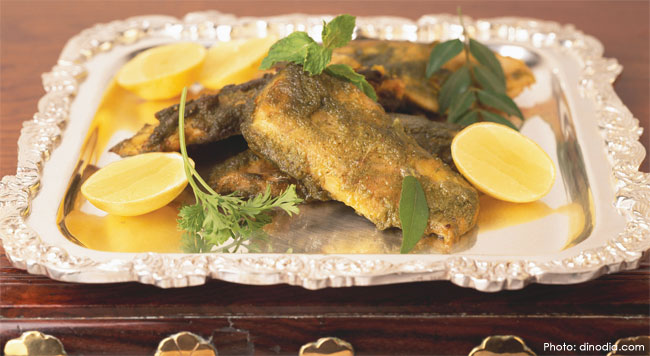


    There are quite a few delicious options for non vegetarians as well: spicy rogan josh, korma, seekh kebab and shami kebab to name a few. While the main course is tonguetingling spicy, they are followed by finger-licking desserts. Mawa-bati, shreekhand, khoprapak ‘malpua’, and Kusli (the cashew-based barfi) are very popular.
    As for drinks, all time favourites are buttermilk and sugarcane juice.An excellent beer and fine rum produced from the cane is also popular. And then there is the local liquor distilled from the flowers of the mahua tree called sulfi and date palm toddy.


    Festivals & fairs:

    The colourful culture of Madhya Pradesh is well depicted in its festivals. The Madai festival, mainly celebrated by the Gonds in the honour of mother goddess, falls in the third or fourth week of February. While the day is spent in meeting people and doing annual shopping, the night is spent in merry making. Bhagoriya, the colourful festival of the Bhils and Bhilalas, is actually a marriage market held before the Holi festival. During this festival, young men go on applying ‘gulal’ to the girls they like. If the girl applies gulal in return, it indicates reciprocation of feelings.


    Karma is a festival of Korba tribes. Devotees observe the religious rites and fast for 24 hours. Various songs and dances are performed during the night around a branch from the Karam tree planted in the middle of an open ground. In addition to it, all the Hindu festivals are celebrated with great aplomb. During Navaratri, the entire region of Ujjain comes alive with multitude of colours in the air. Thousands of people come to Ujjain on the occasion to take a dip in the sacred Shipra River. Shivratri too is a big festival. Held in the months of February/March this festival is attended by lakhs of devotees of Lord Shiva. And then there are Rang Panchmi and Holi which are the festivals of colour, and fall at a gap of five days. Diwali, Dussera and Iid too are celebrated with much zeal and enthusiasm. There are a number of fair in MP. The popular ones occur mostly in the months of Phalguna, Chaitra, Bhadra, Asvina and Kartika. During Phalguna many fairs coincide with the Holi and Shivaratri. The Tansen Urs also falls at Gwalior during this season.


    Sankranti Melas held at various places draw crowds. Melas held around Basant Panchami are also important. Baldeviji Ka Mela(Panna), Rajim Mela and the fairs held in Bilaspur district are worth notice. In the Chaitra, fair held at Biaora (Malwa), the Dhup Dehi ka Mela of Hirapur (Rewa Division), the Ram Navami fair of Naya Gaon and the Bhilat Baba ka Mela of Seoni are worth mention. In the months of Asadha and Bhadra, at Deotalab (Rewa) the Somnath Sankarji ka Mela and Tejaji fair draw thousands of people. The Kumbha Mela is held after every twelve years at Ujjain.


    Places to see:

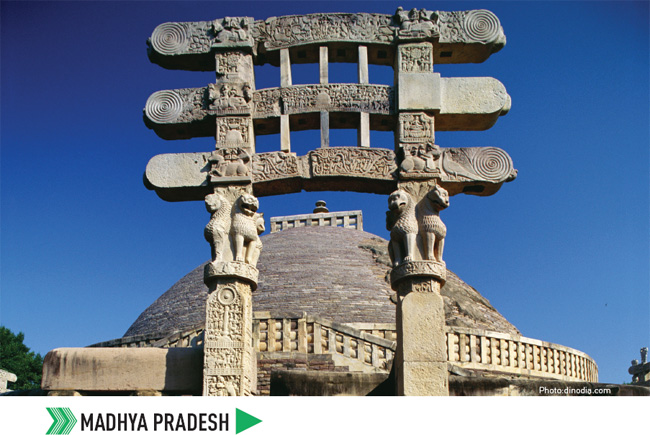
    Madhya Pradesh is a state of architectural grandeur as well as natural bliss. Three sites in Madhya Pradesh have been declared World Heritage Sites by UNESCO: the Khajuraho Group of Monuments, REWA, Buddhist Monuments at Sanchi and the Rock Shelters of Bhimbetka (2003).


    Caves:

    Ancient caves of the state are a major tourist attraction. Bhimbetka caves of Madhya Pradesh, located 46 km south of Bhopal are considered to be the largest treasure house of prehistoric art in the country, and are enlisted as a UNESCO World Heritage Site. Bagh caves, situated on the road from Indore to Vadodara are counted amongst the finest specimens of Buddhist art and architecture in India. Pandav caves, an important andmark in Panchmani get their name from Pandavas, who as per the local legends, spent a part of their exile here along with their wife ‘Draupadi’. Other majestic caves in the state are Bharatrihari and Udaigiri caves.
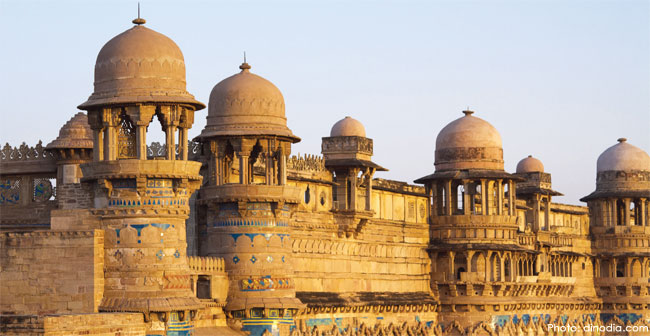


    Forts:

    Ancient exquisite forts appear frozen in time and are a major tourist attraction. Asirgarh Fort, situated in the Burhanpur district, is located atop the Satpura mountainous ranges at a height of 850 ft above sea level. Built by Asa Ahir (an Ahir prince), it has Shiva temple and the Jami Masjid within its confines. Chanderi Fort is located at Chanderi in Ashoknagar district. This Mughal fort stands on a hillock – 71 metres above the town. Its main gate is called the ‘Khooni Darwaza’ (Gate of Blood). The reason as per the legend is, that it was witness to execution of many notorious criminals.


    The exquisite Gwalior Fort was built by Raja Man Singh Tomar in the 15th century. Its three sq. km area houses three temples and six palaces among other things. About 2000 year old Bandhavgarh fort is located atop the Bandhavgarh hill in the centre of Bandhavgarh National Park. It is a breathtaking example of architectural magnificence and scenic beauty blending together. Jhansi, Narwar , Gohad and Mandu Fort too tell the stories of a golden past and attract a number of tourists.


    Temples:

    Khajuraho temples, spread over eight square miles, entwine spiritualism and eroticism. Located in Khajuraho village, these temples have been declared as a World Heritage Site by UNESCO. Created between the 9th to 12th century, temples of Khajuraho are the evidences of the architectural geniuses during the times of Chandela dynasty. Temples at Narmada Kund – Amarkantak and Omkar Mandhata temple are also very renowned – and worshippers visit them in large numbers.


    Sanchi Stupas:

    Sanchi is a well known seat of Buddhism. Enlisted as UNESCO World Heritage Site, the Buddhist monuments of Sanchi, have a meticulous architecture. These stupas date back to the early Mauryan Empire (3rd century BC to 12th century AD). Besides stupas & monasteries, there are also chaityas, gateways and temples in Sanchi.


    Palaces:

    Besides these there are many artistic and beautiful palaces in the state. For instance, Rajwada Palace is an exquisite fusion of French, Mughal & Maratha architectural style and is a legacy of the Holkar rulers in Indore. Lal Bagh Palace with its classic architecture, complemented by sprawling lawns, is a remarkable sight. Today, a part of the building is converted into a museum.


    A gleaming white sandstone palace, Jai Vilas Palace of Gwalior was built by Sir Michael Filose. Its edifice magnificently synthesizes Italian Tuscan and Corinthian architecture. Today, 35 of its many rooms form the Jai Vilas Museum. Jahaz Mahal, built in the 15th century, by Sultan Ghiyas-ud-din- Khilji to maintain his large harem, simulates a floating ship. Lying on a narrow strip of land between the two lakes, Munj Talao and Kapur Talao, the double-storied pleasure palace presents a hypnotic picture.
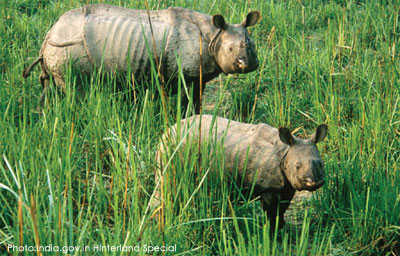
     

    Wild Life Sanctuaries:

    Madhya Pradesh’s natural abundance is as exquisite as its architectural magnificence. Bandhavgarh National Park is a habitat to tigers, wolves and reptiles among other animals – and is famous for tiger sightings. Trek to the Bandhavgarh Fort is also full of surprises, and very popular. Panna National Park has an amazing landscape and vegetation. Tigers, wolves, deer, sloth bears and crocodiles are the major attractions of this park. Kanha National Park and Satpura National Park too have tigers, leopards, sloth bears, deer and migratory birds. Satpura, in fact, is the first park in India where one is allowed to walk into the forest.


    Waterfalls:

    Though there are a number of waterfalls in the state, two without which the article would be incomplete are Rajat Prapat at Panchmani and Dhuandar falls at Bedaghat. At both the places one is awestruck by sheer natural beauty that intimidates as it enthrals.
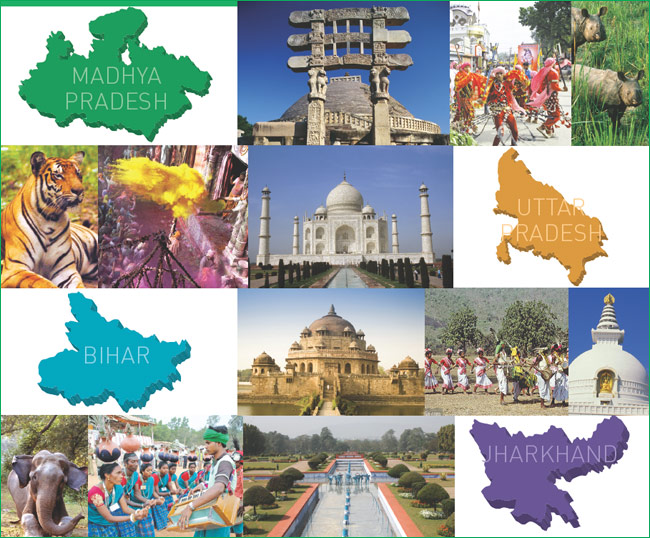
     

  • The new reality

    By Premjeet Sodhi


    The change in society is expressed in three key dimensions which are Attitude, Affluence and Ambience. Of course, there is certainly an interaction between each of these as they are not independent of each other. And, in the past few years each of these have significantly changed for the Hindi Hinterland.


    The Ambience, which is the infrastructure around, has made progress by leaps and bounds. One can always say that there is a lot to be done for amenities like roads, electricity, healthcare, communication, education, governance, commerce, but all these areas have seen improvement. Government initiatives as well as private enterprise have contributed to this change.


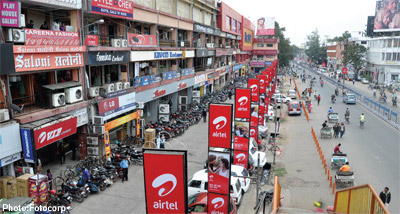
    Affluence is on the rise. The average monthly household income has improved (as measured by the IRS database). The access to durables has improved and in most categories not only does this market constitute a large share of sales but is also a high growth market for the future. Automobiles, Entertainment Electronics, Household & Kitchen Durables are all expanding into these markets. For FMCGs, these markets were always an important geography, though only for the essentials, but now the market is also growing for the premium segments. Services, which focused only on metros a decade ago, are all vying for the masses in the Hindi Hinterland today.


    The change in Attitude of the consumers is of utmost importance. Increased urbanization, higher exposure to urban lifestyles and high aspirations are fuelling consumer demand. The attitude towards social equality, gender issues, education, personal lifestyles, technology adoption, and so on are all tending to match up with consumers in the other geographies. For Telecom, the Hindi Hinterland is a gold mine. The growth rates in these markets are enormous and cell phones are changing the very basics of media reach.


    Illiteracy has decreased by 15 per cent and 18 per cent in the rural and urban areas respectively in the last 5 years. The readership of publications (mostly dailies) has grown manifold in the last decade and continues to be an area of growth in the future.


    Television ownership has grown at a CAGR of 10.3 per cent over the past 5 years and viewership is increasing exponentially. Hindi news channels, Hindi movies and GECs are fast growing; regional content on TV too has seen significant growth. The DTH growth story has started from these markets and now is making its presence felt in the larger cities. Despite, the growth in media reach over the past decade, it is still a challenge to do justice to these markets in the current media context.


    Hence, the key challenges are:


    • TG Isolation: To manage sufficient reach, most often the largest reach media needs to be utilized and that reaches across target groups. There is, therefore, a lot of spillover resulting in wastage of media monies.
    • Geographical Isolation: As soon as one uses the national Hindi media beyond the regional media the spillover into national markets is inevitable.
    • Message Localization: Most campaigns use the creative made for large urban markets which has a challenge to connect with the consumer in the Hindi Hinterland.
    • Cost per Reach: As local media becomes important for coverage in the market; the comparative cost of reach is a challenge.
      Overcoming any of the above challenges is not easy as most of these are issues are related to the structure of the markets and the media industry. However, the following best practices can help the custodians of communication for these markets:
    • Do not look at each media in isolation. Use a multi-media approach to target specific market and TG. This will help in controlling spillover.
    • Take advantage of localization and extension of campaigns in partnership with the media. Integrate the creative into local contact opportunities and even activation.
    • Make extensive use of local representatives to understand the media preferences.


    – The writer is COO, Lintas Media Group


  • Hindi ‘Hinterland’ is a pressure cooker close to boil

    By Ruby Bana


    Hindi Hinterland has always been known as the most remote part of India. But let’s not forget the latent ambition and grit that exists here, in addition to lagging in affordability and access. It’s a pressure cooker close to boiling point.


    This is where the most visible transformations will happen and pent-up demand will explode. Even in psychological terms, it’s not just about IAS/IPS as road to success but enterprise, showbiz (look at the talent shows), technology careers, and so on.


    The first, and the most important, change that has happened is ACCESS. Access to communication (mobile and internet), ambition (talent and confidence) and Retail (access through retail boom as well as e-retail – dream it, buy it…). This consumer will skip a decade and join the metro counterpart sooner than we think; especially the youth, who move faster than the others. Let’s remember: we are a “young” country and we adopt change much faster than most others.


    I don’t think the discussion will be anymore about: will 70 per cent of middle FMCG products markets come from hinterland consumers, but it’s now moving to how 70 per cent of Durable and Lifestyle consumers will come from upcountry markets.


    Computer/laptop manufacturers, smartphone manufacturers and others will be looking at the 70 per cent market from Hinterland/middle India in the next five years. I feel it’s not going to be so much a challenge of reach going forward as technology will change things sooner but it’s a challenge of conversion. The brands that succeeded in the metros may not be the exact same ones that garner the larger share of the hinterland market and I don’t mean just affordability here.


    This consumer will be more “information/evaluation” based purchaser rather than the fad based consumer of metro India. They will also be responsible consumers. Brands will have to reflect the same by demonstrating solid commitment to their core values. They will have be enablers of change, and have meaningful roles in their eco-systems. Some brands have already started this process a decade back, these will benefit the most. The rest that get in early now will reap disproportionate gains from the next wave. We wait at our own risk


    – The writer is Chief Strategy & Insights Officer, Madison India