Tag: Hindustan Unilever Ltd

  • MRSI AGM elects officebearers

    By Our Staff


    Market Research Society of India (MRSI), the industry-led market research body, has announced the formation of the Managing Committee for the tenure of 2022-2024. Manish Makhijani, Global Insights Director of Hindustan Unilever Ltd. was elected as the new President and takes over from Sandeep Arora, Executive Vice President and Global Head – Research & Analytics Solutions, Datamatics Global Services.


    Additionally, Paru Minocha and Saurin Shah were elected as Vice-Presidents, Prashant Kolleri as the Secretary, and Nitin Kamat as the Treasurer for MRSI. The election of the new Managing Committee members was held at MRSI’s 34th Annual General Meeting on July 7 in Mumbai.


    On being elected as MRSI’s President for the next two years, Manish Makhijani, Global Insights Director, Hindustan Unilever Ltd. said: “I am incredibly privileged to carry forward the legacy of so many stalwarts in the industry. Our industry has come a long way and sits at the intersection of changing consumer behaviour, technology, and marketing solutions. It is now up to us to really bring out the contribution of insights into the growth of the business in this complex and evolving world.”


    MRSI’s Managing Committee Member for the term of 2022-2024

    Sr No Name Organisation
    1 Arora Sandeep Datamatics Global Services
    2 Bhattacharya Arindam Lucid Holdings India Pvt. Ltd.
    3 Banerjee Shuvadip ITC Ltd
    4 Chakraborty Parijat Ipsos Research Private Limited
    5 Chanana Dixit Toluna India Private Limited
    6 Gautam Mukul Purple Audacity
    7 Gray Derrick BARC
    8 Grover Sameer Crownit
    9 Kamat Nitin TAM Media Research Pvt Ltd.
    10 Kolleri Prashant NielsenIQ (India) Pvt Ltd
    11 Makhijani Manish Hindustan Unilever Ltd
    12 Malhotra Vivek TV Today Network Ltd
    13 Mishra Amitabh Dr.Reddy’s Laboratories
    14 Minocha Paru Kantar
    15 Namakkal Sathyamurthy DDB Mudra Group
    16 Nijhara Praveen Hansa Research Group
    17 Samuel Stephen Kantar Analytics Practice
    18 Shah Saurin Godrej Consumer Products Ltd.
    19 Upadhyay Girish Axis My India


  • HUL rolls out initiative for waste segregation

    By Our Staff


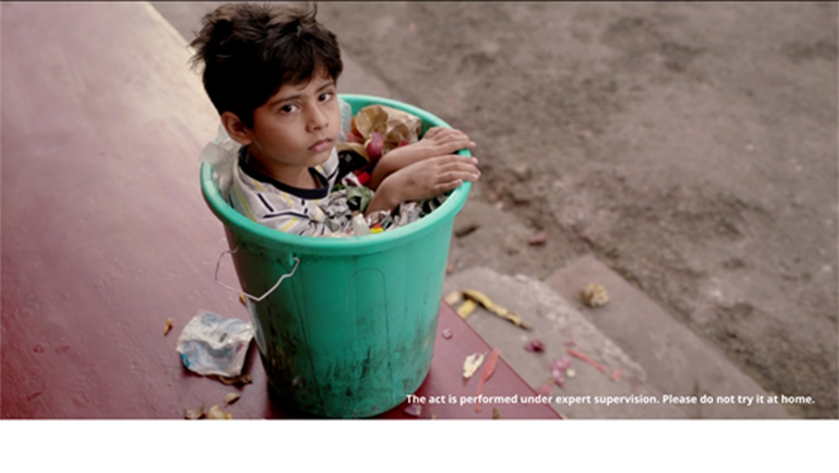
    Hindustan Unilever Ltd (HUL) has launched a campaign that looks to inspire individuals to segregate household waste at source and ensure that waste stays out of the environment and in the circular economy. The ‘Bin Boy’ campaign through its child protagonist ‘Appu,’ aims to drive behaviour change among citizens and urge them to segregate waste at homes and residential societies. Through an engaging narrative and thought-provoking dialogue, the campaign draws attention to the seriousness of mixed waste disposal and need for immediate action.


    Speaking on the campaign Sanjiv Mehta, Chairman and Managing Director, Hindustan Unilever Ltd said: “The need for urgent action on the issue of waste segregation has never been greater. At HUL, we recognize our role in this context and have been working with leading agencies in the space and the Government to drive what is a simple, positive action that each of us could do. We work towards empowering communities to reach the goal of swachhata and a zero-waste circular economy. Children are the strongest advocates of change in society and are also the strongest drivers. We believe that our latest campaign with a child protagonist will inspire and unite citizens to create a waste-free, greener tomorrow.’’


  • Amit Jain appointed chairman of MMA Board

    By Our Staff

    MMA, formerly Mobile Marketing Association, has announced the appointment of Amit Jain, Managing Director, L’Oréal India as Chairperson of its India Board of Directors. Jain will be responsible for steering MMA’s endeavours to innovate and transform modern marketing in India and help marketers adopt and accelerate best practices in it. He succeeds Priya Nair, Executive Director, Beauty and Personal Care, Hindustan Unilever Ltd. Nair will move into a new role as Chair Emeritus of MMA India.

    Amit Jain
    Amit Jain

    Said Jain: “MMA has been doing stellar work in helping marketers use insights and tools to harness the convergence of marketing and technology to drive personalised and customised engagement, in line with evolving consumer needs and purchase behaviour. I am delighted to take on this role and lead MMA’s commitment to shape the future of marketing today by bringing brands closer to consumers through connected consumer journeys.’’

    Added Nair: “It’s been a pleasure for me to lead the MMA India board and add to building the industry ecosystem. I am excited to welcome Amit as MMA India Chair to lead the imperative for marketing change by empowering, enlightening, and enabling marketers to shape the future of modern marketing and propelling business growth.”

    Said Moneka Khurana, Country Head, MMA India: “Amit Jain’s business leadership, progressive outlook and experience in managing credible boards will help in shaping the future of Modern Marketing for MMA India at a time when it’s central to all marketers to drive business ROI, customer engagement & innovations.”

    Added Rohit Dadwal, Managing Director of MMA Asia Pacific: “Amit Jain’s deep knowledge of digital marketing in the 21st century will prove invaluable to the furthering of MMA’s mission in advancing modern marketing in India. I look forward to working with Amit and would like to thank Priya for her invaluable contribution and for paving the way forward.”


  • Pond’s urges Indian women to overcome their inner hesitations

    By A Correspondent


    Pond’s has launched its latest ad film with the aim of bringing the issue of inner voices into the spotlight thereby enabling women to understand how commonplace inner voices are, and help them overcome the internal barriers these present.


    Said Prabha Narasimhan, Vice President, Skincare and Colours, Hindustan Unilever Ltd: “Pond’s is an iconic brand in India with great heritage and equity. It gives us great pride to give it a new take that encourages women to never hold back and ‘See What Happens’.


    Added Kainaz Karmakar and Harshad Rajashyaksha, Chief Creative Officers, Ogilvy India (West): “We are really excited about launching the new world of Pond’s. It’s a world that is asking young girls to go ahead and say what is on their minds and do what is in their hearts. Society is ready for their bold moves. The time has come to go ahead and #SeeWhatHappens. The story that launches this belief is about a young girl who has the strength to take on the blows of boxing, and yet she has not gathered the strength to break the news to her mom. Bob (Shashanka Chaturvedi) has done a great job of translating the story into a powerful film.”


  • Ponds’ latest ad film encourages youth on benefits of a simple hug

    By A Correspondent


    Pond’s Cold Cream is reaching out to the youth of today through its latest ad film. The ‘Jhappi Van’ social experiment conducted by Ponds is to gently nudge young people to go over and hug those they love.


    On the occasion of International Hugs Day celebrated every year on the January 21, these films, born out of an experiment, are a warm way of reminding people that nothing really compares to the warmth and love in a real hug.


    Said Zenobia Pithawalla, Senior Executive Creative Director, Ogilvy Mumbai: “Pond’s ki jhappi’ embodies the warmth, love and care that Pond’s Cold Cream gives to your skin. We decided what better way to build brand love, than by spreading the joy of a real hug. So, we came up with the Pond’s Jhappi van. This ‘hugs’ van gave you the opportunity of returning the love and care you got from those who showered you with theirs. Bringing alive all the attributes and emotions that Pond’s Cold Cream stands for.”


    Added Prabha Narasimhan, Vice President, Skincare and Colours, Hindustan Unilever Ltd: “With the launch of #PondsKiJhappi in 2017, we were looking at ways to take it forward and build on the same thought. Interesting consumer insights helped us understand that it’s relationships even beyond the mother-daughter bond (which is what we’ve shown in our TVC) that hold value when it comes to ‘care’ – which is what led to the idea of the ‘Pond’s Jhappi Van’. Our new set of digital films talk about different relationship dynamics and how a ‘jhappi’ is a great way to show that you love and care.”


  • It’s Hindustan like never before for HUL


    By Kala Vijayraghavan & Sagar Malviya


    In February 2014, a manager of Hindustan Unilever Ltd (HUL) doing his rounds in Medaram village in Warangal district of Andhra Pradesh (now Telangana) stumbled into Sammakka Sarakka Jatara, a biannual tribal religious congregation. Some 10 million people had gathered at the festival that year. The manager was quick to alert the head office of the potential of the four-day festival. It fitted well with a new initiative that Sanjiv Mehta, CEO since 2013, was planning to kick off at the home & personal care giant. Called ‘Winning in Many Indias’, or WIMI, its objective was to transform HUL from a four-branch structure at the front end into 14 distinct consumer clusters.


    The new structure will see many HUL managers spending more time out of their cubicles to cover smaller markets across India. The hope is that this will make Unilever’s India subsidiary nimbler and more proactive in responding to insights from the market, and to competition, particularly of the regional variety.


    The Jatara in Warangal was perhaps the first experiment with the WIMI initiative: HUL undertook a sampling exercise at the festival for Rs 5 packs of Fair and Lovely that are meant for rural markets. The stall activation, sampling and sales, say HUL officials, resulted in an instant bump in the franchise’s numbers (the company won’t share exact figures). By the fourth quarter of 2014-15 (January-March), WIMI – along with 2,000-odd HUL managers – was on its way.


    The 14 clusters are based out of seven physical locations and five sales branches; a new fifth branch for the central region has been carved out from the Hindi heartland of central Uttar Pradesh, Madhya Pradesh, Rajasthan, Bihar and Chhattisgarh, comprising over 500 million people. The first step for WIMI was a pilot that was done in the south branch by creating separate consumer clusters TAP (Tamil Nadu and Andhra Pradesh) and KK (Karnataka and Kerala).


    The HUL mangers mobilised for the initiative began to move quickly. For instance, two of them on field duty in Punjab fed an insight about a significant mass market for tea in the ‘Punjab and Hills’ cluster. HUL was quick to respond, re-launching the Taaza brand after changing the blend to suit the local taste, and communicating aggressively on radio and in local media. This, claim HUL marketers, led to a spike in Taaza volume growth.


    Similarly, Pepsodent clove oil and salt toothpaste was launched in south India; small packs of tea and unique sampling trade deals were offered in coastal Andhra Pradesh; variable price points were created in the laundry segment to shift consumers from local brands to Rin in Uttar Pradesh; and detergent brand Wheel, which was competing with a local label brand in the mass powders segment in Telangana, was relaunched with an improved formulation, pricing and communication customised for the new state.


    “The numbers (of the June-ended quarter, in which total income grew by 5 per cent, in line with analysts’ expectations) reflects that the strategy is working in terms of volume growth and share,” says Mehta, who is keen to encourage a startup culture at the marketing behemoth and get young managers to keep their ears to the ground across India’s diverse markets. “It is imperative to win in all parts of our business and across all channels and geographies, in order to win decisively. We want to have the soul of a small company where speed is the currency, bias for action is the norm, where people are empowered on the frontline,” adds Mehta. “WIMI has helped us understand finer nuances about local consumers and provide us a more granular understanding of the market.” The cluster strategy is also leading to better productivity and accountability of managers across branches.


    At a time when rural markets – which bring in roughly a third of HUL’s top line – are experiencing a slowdown, HUL claims WIMI helped 90 per cent of the portfolio gain market share last year, much of it from regional brands. The marketer now has six brands that have crossed Rs 2,000 crore in sales, five brands that are over Rs 1,000 crore and six that have hit Rs 500 crore.


    Long-time HUL watchers who have seen CEOs come and go don’t rule this out as yet another ‘do, delete, redo’ strategy of a new CEO. For instance, if MS Banga (CEO between 2000 and 2005) had his ‘power brands’ strategy, his predecessor Keki Dadiseth almost single-handedly pursued acquisition-led growth. “Every new CEO brings in a new style of functioning, but I guess so long as the long term results are positive, it is good for all stakeholders,” is how an HUL veteran puts it.


    Mehta for his part is clear that he wants his managerial team to represent the whole of India. “Our internal population represents the different clusters of the country and we don’t just have talent from urban India but people who represent the whole ethos and fabric of the country. Insights from these young managers are being taken right into the boardroom to ensure that our execution reflects such understandings.”


    The 14 clusters have resulted in the creation of 14 new leadership positions to empower talent within the system. Typically, a young manager (in his 30s) leads each cluster. His mandate: to understand the local demand and competition and drive growth in non-metro geographies.


    “Mehta ought to be credited for understanding that focus shoots up when you break geographies into smaller markets. Managers on the ground and in touch with consumers in a diverse market such as India can throw up huge opportunities for HUL,” says Amin Babwani, a former HUL marketer who now consults consumer companies.


    Nitin Mathur, research analyst who covers consumer companies in emerging markets for Société Générale, says HUL has laid out a clear strategy to counter regional competition. “With 14 clusters, the focus is to increase the quality of distribution and increase bespoke products and strategies to counter local competition.” A recent JM Financial report said the central India cluster accounts for 40 per cent of the country’s population but has only 22 per cent share of the country’s GDP, which offers it (HUL) a much higher opportunity for growth relative to the rest of the country.” Small wonder then that that Mehta says he wants HUL to be “future-ready” to tap that opportunity.


    Source:The Economic Times

    Copyright © 2015, Bennett, Coleman & Co. Ltd. All Rights Reserved

    Licensed to republish


  • Lowe Lintas + Partners crowned APAC’s ‘Most Effective Creative Agency’

    By a correspondent


    Lowe Lintas + Partners emerged victorious yet again in the ‘Effectiveness’ category as it was bestowed the Special Award: Effectiveness Creative Agency of the Year’ at Tambuli Awards. The agency was also the recipient of the coveted Grand Prix award for its work on ‘Help a Child Reach 5’ under the Insights and Strategic Thinking category for its client Hindustan Unilever Ltd. The awards were held last week in Philippines.


    Along with the two wins, Lowe Lintas + Partners also won 2 Silvers for ‘Help a Child Reach 5’ under the Established Brand category and for ‘Mobile – From a Wall to a Bridge’ under the Integrated Mobile-Led Program category. Both the awards were for campaigns done for Hindustan Unilever Ltd.


    Sharing his excitement on winning the big awards at Tambuli, Joseph George, CEO, Lowe Lintas + Partners said, “I am absolutely thrilled that we are carrying on in 2014, where we left off in 2013. We were declared Most Effective Agency in India in 2013 and now, the most Effective Agency in Asia Pacific. This is testimony yet again to the shared philosophy and belief in the type of work we and our clients believe in.”


    Apart from the above recognition, the agency also won 3 Bronze metals for work on ‘Help a Child Reach 5’ under the Creative Effectiveness category, ‘100% Natural. Seeded.’ under the Small Budget Brand category and ‘100% Natural. Seeded.’ under the Integrated Promo and Activation-Led Program category.


    Vikas Mehta, CMO, Lowe Lintas + Partners added, “Tambuli is a special award, because it recognizes, not just effectiveness, but also the social impact brands create. At Lowe Lintas +Partners, we see brands as agents of positive social change. Winning the top honour at Tambuli is a great reinforcement of our philosophy. We are thankful to our clients for their support and the University of Asia & Pacific for these awards.”


    The accolades at APAC Tambuli Awards come on the back of a series of wins that Lowe Lintas + Partners won at the Asian Marketing Effectiveness & Strategy Awards, held in Singapore recently. The agency had won the Platinum award for work on ‘Lifebuoy – Help a Child Reach 5’ for its client Hindustan Unilever Ltd. along with three more medals at the prestigious award show.


  • FMCG biggies HUL, Godrej, Dabur report higher sales growth numbers than estimated by Nielsen

    By Sagar Malviya & Ratna Bhushan


    Market research firm Nielsen and India’s consumer goods companies are in sharp disagreement over growth rates in the sector. In the April-June quarter of 2012, sales growth in value terms of some of India’s biggest fast-moving consumer goods companies is higher than Nielsen’s growth estimate for the overall FMCG market, raising concerns over the world’s largest research firm’s accuracy in India.


    Seven listed domestic companies, which control over 70 per cent of the FMCG market, have posted an average value sales growth of 19.28 per cent in the first quarter of fiscal 2013. A Nielsen spokesperson says their figure for this period is 17.6 per cent. Even in categories such as soaps, juices, oral care and hair oils, leading players, which contribute between 60 per cent and 75 per cent to each segment, have posted much higher volume growth than what Nielsen’s data suggests. When contacted, Nielsen did not validate the numbers that ET has obtained from the research firm’s FMCG clients.


    For instance, Godrej Consumer Products Ltd saw a 24 per cent spurt in soap volumes even as Nielsen estimates growth for the overall segment at a sombre 5 per cent in the April-June quarter. “There is a bit of under-reporting by Nielsen. The issue lies with its statistical method,” said Adi Godrej, chairman of Godrej Group.


    “We generally use Nielsen’s data for market share as there isn’t any other option for us. However, for category growth, we rely on our sales numbers and listed companies’ performance,” said Vineet Agrawal, president at Wipro Consumer Care & Lighting, which saw a 15 per cent jump in volume growth in soaps in the first quarter of the fiscal year.


    It’s a similar story in toothpastes, a category that grew 9 per cent in volumes according to Nielsen; however, this doesn’t tally with internal sales data of Colgate and Hindustan Unilever Ltd (HUL), which together command roughly 80 per cent of the market. Colgate saw a 13 per cent rise in volume growth. For HUL also it was higher, said CFO R Sridhar at a recent financial results’ presentation.


    In packaged juices, Nielsen says the category grew 18-19 per cent in the April-June quarter in value terms and that Dabur grew 24 per cent. But Dabur’s quarterly sales numbers show its juice business grew 34 per cent. Dabur leads the packaged juices market with the Real brand, which accounts for more than half of all juices sold.


    Dabur CEO Sunil Duggal said: “Our quarterly growth numbers are generally ahead of what Nielsen reports. So we prefer to study Nielsen numbers as a longer-term trend – over a 12-month period – because that evens out errors.”


    Nielsen counters that the retail audit cannot be compared with sales numbers that companies report. A Nielsen spokesperson said: “The retail audit is focused on sales offtake through a sample of retail stores that tracks sales to the end consumer. It is technically incorrect to compare it to the financial results of companies, which report sales to distribution channels.” The research firm also said sales reported by companies may include those beyond retail stores from institutions such as army canteens, restaurants and transport hubs, which are outside the scope of its retail audit.


    An FMCG analyst points out on condition of anonymity that ignoring the Canteen Services Department (CSD), which caters to the Indian defence services, may be one explanation for the discrepancies.


    After all, CSD can easily qualify as India’s largest retailer with some 3,500 outlets across the country. Nielsen is no stranger to controversy on the market share front. In May 2009, HUL disputed the researcher’s data that showed a steady fall in the company’s market share across segments, saying it contradicted internal estimates as well as data from household research firm IMRB. The issue snowballed into a crisis when Dabur, Godrej and Marico echoed similar doubts over Nielsen data. Dabur and Perfetti Van Melle even went so far as to cancel Nielsen’s subscriptions in categories such as hair oils, juices, candies and confectionery.


    A year ago, Unilever CEO Paul Polman questioned the accuracy of Nielsen’s data for India, underlining that the country’s largest consumer product maker was still unhappy with the market researcher two years after first raising the issue. “I know you all like to write about it. But they (Nielsen) are not very accurate with what their numbers are,” Mr Polman had said while commenting on the performance of Unilever’s Indian arm.


    Nielsen has increased its sampling size to 22,000 outlets from 16,000 over the past three years, included more modern trade outlets and uncovered channels in rural markets, prompting some companies to be optimistic about the research firm’s data. “We are worried, but the fact remains that at least it is not deteriorating. They have been changing panels and we have to pick up points where there are issues and work with them on it,” said Saugata Gupta, CEO of Marico, which saw its hair oil business grow over 15 per cent in volumes while Nielsen’s data shows a growth of 4.7 per cent for the category.


    Also, companies are now slightly at ease after Nielsen decided not to share data with market analysts and investors who depend on the data to track the performance of consumer product companies and rate the stock accordingly. “While we are glad that analysts can’t access the data easily, even we have stopped taking the research seriously and rely on it just for trends. Nielsen’s numbers is not a bible to us,” said a CEO of a leading homegrown consumer firm who didn’t wish to be identified.


    Source: The Economic Times

    Copyright © 2012, Bennett, Coleman & Co. Ltd. All Rights Reserved


  • HUL on a roll with Nitin Paranjpe at wheel

    By Kala Vijayraghavan & Sagar Malviya


    When Nitin Paranjpe took over at the helm of Hindustan Unilever Ltd (HUL) in April 2008 at 44, he became the youngest chief executive to head the Anglo-Dutch consumer products giant’s Indian operations. Now Mr Paranjpe has another one for the record books – he is the only CEO in the past two decades to be recommended by the board for a second stint.


    The man, who joined HUL way back in 1987 as a management trainee, has been reappointed managing director & CEO for another five years beginning April 2013. The longest serving head of HUL was Ashok Ganguly, who was chairman from 1980-1990.


    Of course, there is little guarantee that Mr Paranjpe would continue as CEO till 2018, what with previous CEOs – from Keki Dadiseth to MS Banga – going on to assume larger responsibilities at the parent company, during their stints.


    Paranjpe’s imminent second stint is just what the doctor – Unilever CEO Paul Polman – ordered. In 2010, Mr Polman, the first outsider to head the $40-billion consumer goods giant, mandated longer tenures for the top and middle management. Polman’s directive was to ensure greater organisational stability while tackling increasing competition and business volatility. The CEO’s view was that management stability would ensure quicker decision-making and accountability.


    That’s certainly been the case at HUL; and those benefits have translated in creation of shareholder value. When Mr Paranjpe took charge in 2008, the HUL stock was quoting around 230 levels. Today it is 87per cent higher at a little over 430; the benchmark Sensex has fallen 2.8per cent during the same period.


    Over the past two years, Mr Paranjpe added some 4,500 crore – quite literally the size of some mid-sized rivals – to its top line by increasing sales from Rs17,873 crore in fiscal 2010 to Rs22,394 in fiscal 2012 – a compounded annual growth of 12 per cent. “We want to set goals that are so audacious that, even if they are missed, the performance is still heroic,” Mr Paranjpe told ET.


    “There is an obsessive focus on the consumer that goes beyond just slogans and ensures execution. We are now gearing the organisation to future-proof the business through innovation, improving product quality, dramatically raising execution capability and ruthlessly focusing on costs,” he added. And then there’s the supply chain where the CEO says he “wants to be the best at both ends of the market, the top and bottom. There will be no compromises at any end.”


    The relentless consumer focus – the shareholder cannot be ahead of the consumer, avers Paranjpe – manifests itself in initiatives like Mission Bush Fire, an employee-led market execution and customer interaction exercise initiated in 2010 to get the home & personal care giant to connect with the market place. HUL CEO Nitin Paranjpe and every member of the company’s management committee participate in this project to get direct feedback on how HUL brands are faring.


    “Bush Fire has resulted in a 40 per cent spike in sales in stores wherever the initiative has been implemented, according to internal company estimates. And HUL managers say Paranjpe has led from the front. “There is nothing he expects us to do that he has not done himself. Nitin is out on the road making customer visits almost 15 days a month,” said a senior company official.


    Analysts are calling it a dream run. Abneesh Roy, associate director, institutional equities, research, Edelweiss Securities said: “HUL is in a growth phase with Paranjpe leading from the front with vigour and stability. His reappointment is a move by Unilever to reward his performance and execution capabilities as CEO.”


    HUL’s sales have been growing not just by value over the past several quarters, but also consistently recorded volume growth that is ahead of the market. Despite a spurt in input costs and aggressive spends in ramping up distribution, HUL has maintained its 2008 operating margin at 14.1 per cent during the last fiscal year.


    Company watchers say Mr Polman too deserves credit for HUL’s outperformance as it was the global CEO who injected a sense of aggression and put in place a performance culture across Unilever globally by linking rewards to results. For instance, it was Mr Polman’s decision to hike variable pay to as much as 50 per cent of total salary from 30 per cent as this would lead to hefty bonuses for those who deliver and penalise those who don’t. “We want to strengthen our performance culture and be intolerant of incompetence. Consumer centricity must be a non-negotiable in business and so we have put a lot of pressure internally so that we delight externally,” said Mr Paranjpe.


    Source: The Economic Times
    Copyright © 2012, Bennett, Coleman & Co. Ltd. All Rights Reserved