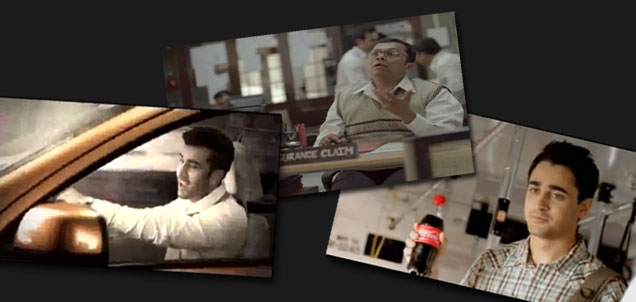
Tag: Hemant Kenkre

  • Such an Enduring Endorser!


    By Hemant Kenkre


    It’s a no-brainer to identify the one name that ploughs through the diversity of India and gets the nation together – cutting the various barriers of religion, caste, creed and socio-economic backgrounds. Twenty-four years after making his international debut, Sachin Tendulkar still gets top billing as he says his final hurrah at Mumbai’s Wankhede Stadium today.


    Having known him and having watched him closely both on and off the field – I had the privilege of leading him, for the Cricket Club of India, in his first year in senior cricket tournaments in Bombay – one has seen his brand grow to an unmatched level from 1989 till date.


    One has only to read any newspaper, surf a website or switch on the television or radio to understand the impact that this shy man has had on a country bereft of ‘real’ heroes. Sachin mania has been rocking India from the day that he announced his intention to retire from all forms of cricket.


    What takes the best of Indian and international brands to invest in brand Sachin Tendulkar? Why do organizations pour millions of dollars on a 5-foot, 4-inch stocky man with a squeaky voice who came from a middle-class back ground? Why do parents lug their son’s cricket kitbags on the many maidans of India beseeching greedy coaches to make their ward the next Sachin? Brand Sachin connects across all demographics – from nine to ninety.


    There is something about Sachin that endears the heart and builds an emotional bond with people that follow him. India always had sporting heroes like Dhyan Chand, Milkha Singh, Vijay Amritraj, Prakash Padukone apart from cricket legends Sunil Gavaskar and Kapil Dev. The latter two had many endorsement deals but not at the maniacal level that is happening with Sachin – with brands sticking to their mascot in spite of him retiring from the game.


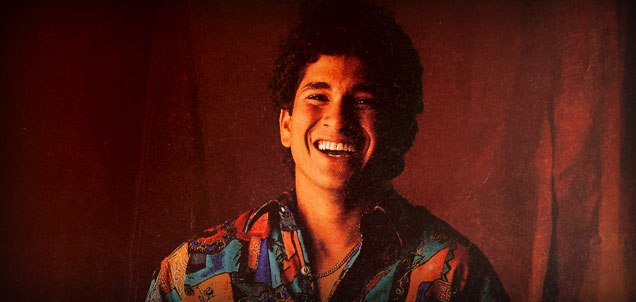
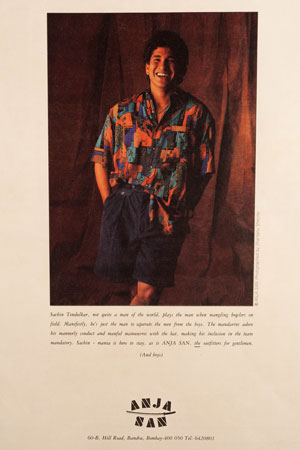
    In 1989-90, I was associated with an advertising campaign that featured Sachin. The brand, Anja San, a bespoke tailoring outfit had featured legendary ghazal maestro Jagjit Singh and table wizard Zakir Hussain as their models. The late Varsha Bhosle, the brains behind the campaign, had identified Sachin as the next model and it was my job to get him to endorse the brand. Sachin had not completed even a year in international cricket and had not even played an international match in India. When queried why she had shortlisted him, Varsha said: “Wait and watch; you will see why I want him to endorse the product. There are cricketers and there is Sachin…”


    The print campaign, one of Sachin’s first, was shot by noted photographer and ad-film maker Shantanu Sheorey who made me stand behind the camera and speak to Sachin so that he would be relaxed while facing the camera. The campaign created a stir when it was released in 1990 – after Sachin had scored his first century against England in Test cricket.


    When Coca-Cola re-entered the Indian market in 1995 their biggest threat was Sachin Tendulkar endorsing rival brand Pepsi and not some rabble-rousing organisation gunning after MNC’s in India. Sachin’s “Boost is the secret of my energy,” was the successor to Kapil Dev’s “Palmolive da jawab nahi,” and precursor to the “Sehwag ki Maa” campaign. All being rustic, honest and completely believable.


    Why have marketers preferred to bank on Sachin from 1990 till date? One remembers an incident that took place when the Indian selection committee sat down to pick the team for the Pakistan Tour in 1989. The panel knew Sachin was supremely talented and were worried to pick the 16-year old as he was bound to face baptism by fire with thunderbolts thrown at him by Imran Khan, Wasim Akram and Waqar Younis. “What if he fails?” was the question doing the rounds when the late Naren Tamhane, former India wicket keeper and part of the committee said: “Sachin never fails!” Wise words that marketers and brand managers believe in to date. 23-years on, one realises what Varsha meant…there are cricketers and there is Sachin!


    P. S. Sachin did not charge any fees for the Anja San campaign


    Hemant Kenkre, former cricketer, commentator and cricket-writer and communications practitioner, has captained Sachin Tendulkar for the Cricket Club of India (CCI).


  • Is Cricket a big hit in Hindi? Time for Tamil, Telugu, Bangla…?

    By Johnson Napier


    After a brilliant display of form in the just-concluded Champions Trophy, the men in blue have made it clear where they intend to be at the moment. And that’s at the top. Having won the confidence of their fans in a big way, their success is now being consumed in a language with an even wider scope – Hindi.

    After sampling preferences over the past few seasons, broadcasters have now taken the plunge by relaying cricket feed in Hindi, which has matched up to its English counterpart and attracted its set of fans too. MxMIndia speaks to a cross-section of experts to analyze how Hindi cricket commentary has fared in the recent past in India (in alphabetical order of their last names).


    P Balakrishna, COO - Allied Media

    I am sure that there has been a positive impact that has been created by broadcasting commentary in Hindi. Let’s not forget that Hindi is the language which has the biggest and largest penetration as far as the pan-India market is concerned. All it has done is brought the game closer to the viewer. At the end of the day, while English commentary has its own charm but in terms or reach and understanding of the language, Hindi is of course the language that can connect with all HSM markets. While I am not sure on the numbers, I am sure that it has resulted in an incremental viewership numbers. What is critical with a game of cricket which has a huge mass connect is that the language of Hindi definitely has its charm of creating a strong impact with the audiences.


    As for it being relayed in multiple languages, I do not see any scope for commentary to be expanded to other markets as largely between Hindi and English most of the markets are covered in India. If you see the non-Hindi markets, English has a very good penetration including in the South and the East. Doing commentary in other regional languages won’t really result in any rise in viewership or even monetary-wise.


    Mona Jain, CEO, Vivaki Exchange

    India has been performing very well so from that point of view there are audiences right now on that medium. In terms of brands who want to reach out to the audience through medium of Hindi, it could be a little low-key as of now as it is not a peak season and only those with deep pockets could be taking the plunge on the Hindi medium.

    Also, cricket is very popular in the northern region so having a feed in that language makes sense; it also is the primary language at the moment. But it’s too early to discuss whether we need commentary in Tamil or Telugu or Bengali. There have to be enough numbers (audiences) out there for broadcasters to take that decision.


    Hemant Kenkre, PR Professional and cricket columnist

    I think it is great to have commentary in Hindi on major sports channels. In the past, All India Radio always combined English with Hindi with noted Hindi commentators like Jasdev Singh. During the Champions Trophy Indian cricket legends like Kapil Dev and Sunil Gavaskar (for the first time in Hindi) reached out to many viewers who are comfortable in Hindi.

    The reach for Hindi channels is much more than that of any other language – which may have prompted Star to hire former Indian cricketers (including non-Hindi speaking commentators) to attract eyeballs. It is too early say how other languages will work but going by the success of Hindi, it is a matter of time before sports broadcasters look at other languages too.


    Ayaz Memon, editor, veteran cricket writer & commentator

    I think Hindi commentary has managed to create a huge impact in the recent past. You can see it happening in the recent India-West Indies-Sri Lanka Series and also the just-concluded Champions Trophy where it was well-received. In the earlier days, and as research would prove while a lot of people used to watch cricket on television in English they used to mute it and hear the commentary in Hindi on radio. So Hindi enables one to reach out to a far bigger and wider audience base which, I am sure, has seen an incremental hike in the numbers in recent past.

    At the end of the day, when you pay the price for buying rights then your objective is to reach out to as large a number of audiences as possible. And if you can do that by broadcasting content in different languages then why not. It would be a sensible thing to do by broadcasters as India is a very diverse country that boasts multiple languages. Unlike countries like England that can air only in English or Pakistan in Urdu, we have an advantage of airing content in multiple languages and we should take advantage of that.


  • Old tunes, new TVCs: Good, bad, or…?


    By Meghna Sharma


    What do Bharti AXA, Hero Pleasure and Slice have in common? In their latest commercials, all have used old songs, remixed or tweaked, to sell their products.


    Yes, the old melodious songs are once again back in vogue as advertisement industry jazz them up to attract audiences. Chala jaata hoon (from the film Mere Jeevan Saathi) and Chakke mein chakka (Brahmachari) for the Nissan Micra ads, Aap yahaan aaye kis liye (Kal Aaj Aur Kal) for Bharti AXA, Tum jo mil gaye ho (Hanste Zakhm) and the earlier Aaj ki raat (Anamika) for Coca Cola, Aaj kal tere mere pyaar ke charche (Brahmachari) for Raymond and Mud mud ke na dekh (Shri 420) for TVS Scooty are some of the new-old tunes on the block. Even Bombay Times got into the act, using Style mara toh darna kya, an edgy takeoff on Pyaar kiya toh darna kya from Mughal-e-Azam, with the words changed to suit the brand.


    Why is there such an epidemic of remix fever in TVC land? Are creatives running out of ideas, or have they just hit upon the fact that old is, well, gold?


    New, or an old trend?

    Prathap Suthan

    History repeats itself and the advertising industry knows that they cannot do without the old classics. “It’s not for the first time that you’ll see advertising agency using old songs, it’s been going on since a very old time, It was there even when I joined the profession,” recalls Prathap Suthan, Managing Partner/Chief Creative Officer at BangInTheMiddle and Chief Creative Officer at iYogi Inc.


    He isn’t alone; many from the industry feel that the old classics are evergreen and anyone can relate to them. But what’s more important is, how does one use them? “If an old song works for one brand, you’ll see many others copying the trend. But that doesn’t mean or guarantee it will work for all of them. If a song fits the situation and helps the brand tell their story in 30 seconds is when an agency has done a good job with it,” feels Manish Bhatt, founder director, Scarecrow.


    Manish Bhatt

    The Indian Railways advertisement which used Ashok Kumar’s song Rail gaadi is a perfect example of using an old film song for a current situation. The advertisement not only became an instant rage among youngsters but also got many awards at national and international level. “Encashing on an old tune is what matters here more,” adds Mr Bhatt.


    Narendra Kusnur

    Narendra Kusnur, music columnist and critic, feels that since Hindi film songs have always been popular in India and the older ones have a high recall value, so naturally they can act as an effective tool in advertising as longed as they are used intelligently and go along with the brand positioning. “Why only old Hindi songs? Titan watches used the western classical piece Mozart’s 25th Symphony. People remember the tune and the ad, though many don’t know it’s Mozart. However, it’s always more satisfying to create a completely original jingle line. Something like Lifebuoy or Vicco Vajradanti or Vicks. So that should be the first effort,” he adds.


    Josy Paul

    “Making one nostalgic has worked in the past, does even today and will continue to do so even in the future,” asserts Mr Suthan.


    However, Josy Paul, Chairman and National Creative Director, BBDO India, feels that a trend is not an idea but a bunch of guys following each other. And the guy who started it may have already left the room.


    Shortcut or creativity?

    There is no dearth of songs because of the Indian film industry and one can find a song to fit any situation – but does using them mean that the advertising industry being lazy? Or is this creativity too?


    “Using an old song alone won’t do the trick; one needs to add new value to the song or force people to look at it again because of the unusual nature of the idea. Else, it’s just an old song which one might hear on the radio,” says Mr Paul.


    “There is nothing wrong in using an old track, but one should not treat it as a shortcut. Finding an appropriate song which fits the bill is difficult and needs creativity too. It’s an art form as well,” adds Mr Suthan.


    Citing the example of Parle’s campaign Roko mat, Mr Bhatt explains, “If an original jingle/song is catchy or works wonder for a brand then originality shouldn’t never be ignored. The main aim is to stand out of the clutter and help a brand reach its TG.”


    Hemant Kenkre

    Hemant Kenkre, a former music channel professional and a corporate and brand communications veteran, explains, “The old songs are remixed to suit the younger lot whereas the older generation too recalls the retro numbers. However, the brand managers need to understand that the song should suit their brand rather than overpower it. But it wouldn’t be right to say that there is any negative impact in using old songs for a brand.”


    “Using the power of music to one’s benefit is the deal breaker here – old or new doesn’t matter,” Mr Bhatt adds.


  • Recall: My favourite Sachin moment


    We had published this feature on April 24, 2013 on the occasion of Sachin Tendulkar’s 40th birthday.  Still makes for great reading -Editor

    By Johnson Napier


    On the field, he has often let his bat do the talking while off it his humility towards people and causes is what has made him dear to his followers. Not new to milestones, Sachin Ramesh Tendulkar adds another one to his kitty as he embraces a new figure in his life – 40! While his current form and interest in pursuing the last stretch of his international career is debatable, he sure has given his fans countless experiences to cherish.


    MxMIndia spoke to a few well-known cricket writers and columnists who’ve tracked the master blaster ever since he made the glorious 664 for the past 24 years since he made his international debut for India and got them to share their most cherished experience of the man all hail as the God of cricket.


    Ayaz Memon, editor, veteral cricket writer & commentator

    I’d like to share my earliest experience with Sachin Tendulkar, even before he got into the international team and which showed his commitment and passion for the game. In 1989, when the selectors were picking the team to tour West Indies they had decided not to include Sachin Tendulkar in the squad. Not that he wasn’t good, but the selectors thought that he was too young to face the West Indies bowlers who were too fast and terrifying at the time. They felt he was too young to face them at a raw age of 15. Subsequently when we interviewed him from Sportsweek magazine, he sounded very distraught at being left out. When we told him that the selectors were being considerate that you may get hit or injured by the pace attack and therefore left you out, his response to us was amazing: If I would’ve got hit I would’ve learnt faster. That is something that has stayed with me as it shows the intensity and passion of the man for the game.


    There’s a line from Shakespeare’s ‘Merchant of Venice’ that I am reminded of for him: With mirth and laughter let old wrinkles come.”


    Clayton Murzello, Sports editor, Mid-day

    My most memorable memory of Sachin would have to be the interview he gave me in his car after his arrival from the 1996 tour of England. He said – on the record – that he was ready for the captaincy. Not many players come out in the open and express their captaincy intentions like that and certainly not Tendulkar. But I guess I was lucky.


    My message to him as he celebrates his 40th birthday is: follow your heart.


    Boria Majumdar, sports commentator and Sr. Research Fellow at the Univ. of Central Lancashire & Adjunct Professor Monash University Melbourne

    I’ve had the opportunity and privilege of meeting Sachin Tendulkar on numerous occasions. While there are many memorable instances to share the one that I cherish the most was in Melbourne. I was waiting and watching the Indian team practice in sweltering heat at about 44-45 degrees. After the practice when all the players were drenched and were leaving the venue, there were a lot of fans shouting out and wanting to meet Sachin. While other players had gotten in the team bus Sachin Tendulkar went and obliged a few fans by signing autographs for them. When I asked him about his decision to hang on for some time he said: what would you rather do? Would you rather not be in my position and have people come up to you requesting an autograph. If one autograph of mine brings smiles to their faces I would much rather have that. That for me is modesty and humility personified. Though he is big icon, at that point in time he cared for his supporters. More than a cricketer his humility is what stands apart for me. The lesson I learnt is whoever you are or whatever you become you should not forget your roots.


    I hope he enjoys his game as he has done in the past 24 years and will do so again probably when India tour South Africa later this year. The message and wish is that while he plays his 200th Test match, Sachin would stand and play a good innings against the best bowing attack that one would remember for a long time.


    Sambit Bal, editor, ESPNcricinfo

    I remember an incident in 2005 when I was scheduled to do a 15-minute interview with Sachin Tendulkar at one of his promotional events. When I landed at that place, it was thronging with journalists who were trying to speak to him and I said it wouldn’t be possible for me to do an interview here. I recommended to him as to why don’t we do the interview in your car? He agreed immediately and the interview went on for well over two hours. In fact I wasn’t done with him when we reached his home and I said to him that I wasn’t done as yet. He requested me to come home and finish the interview. I sat for an hour more in his house and that is easily one of the better interviews that I have done of him.


    What was striking about the interview was that a lot of people at that time were predicting that he had just 2-3 years of cricket left in him and when I asked him what is it that he cherished the most in his 15-year-long career he said: there is still one thing left to cherish and that is to win the World Cup and experience what it feels like to achieve the feat. But we all know how India fared in the 2007 World Cup and I thought that Sachin would never get another chance for a shot at the World Cup. But then I remembered what he said in 2005 and when in 2011 India went on to win the World Cup, it was an unbelievable experience. So I was part of a personal history that he shared with me.


    As for now, all I wish is that he goes out on a flourish as he hasn’t got a lot of cricket left. I hope he gets the end that he deserves.


    Hemant Kenkre, cricket writer and commentator, VP – LinOpinion

    The most endearing fact about Sachin Tendulkar is that he has always batted for his friends. I remember that just a year after he started playing international cricket, he obliged to do an ad for one of my family members for free. That was a brilliant gesture on his part that he extended towards our family, especially since he was very young and at that stage of your career you wouldn’t want to do things for free. That is the best personal experience that I can share of the man.


    Another professional experience that comes to mind is when he first started playing among the men, if I may state it that way, in the then famous Kanga League. He was very young and I remember that the first ball he faced from the Ranji Trophy bowler, he hit him straight behind for a huge six. That was the arrival of Sachin Ramesh Tendulkar. It just showed how much confidence he had in his own ability. A star had already been born at that time.


    And what can one wish for somebody who has everything in life today – I just wish that he keeps on batting for India as long as he can. The thing about his career is that you get to remember some moments in your life every year, thanks to his landmarks.”


  • MxM Monday: Has the role of PR diminished?


    By Ananya Saha

    It’s a trend that’s not going unnoticed. Increasingly, companies prefer to be socially more active than depend on good PR. Journalists prefer to reach out directly to the spokesperson, bypassing the PR altogether. And given that every company, well almost, has a corporate communication department, the PR agency role appears to have  diminished. But has it really? Has the PR role limited itself to preparing documents and slot meetings? Or is it that the PR role has now evolved and moved beyond just that of a ‘postman’, thanks to the way media itself is changing? The issue that we are discussing on MxM Mondays today is:  has the role of PR diminished?

    We spoke to a cross-section of industrypersons for their (in alphabetical order of their last names) and added our own:


    Hemant Kenkre

    Hemant Kenkre, VP, LinOpinion

    PR has evolved tremendously social media. Both the sectors are increasingly cross-pollinating, which has grown beyond the traditional media relationship. The brand uses both the mediums: PR and media, to amplify the message. Media is the biggest tool that PR uses since the messaging has to go out. And hence, PR and media share a symbiotic relationship. PR needs to work with the media, and media need to work with PR to get across to the information they need.


    The most well-known brands rely solely on PR to get their message across. PR played the biggest role if you look at the brands that have been built over time. PR is not only the biggest tool, it is the most critical tool too.

     

    Prema Sagar

    Prema Sagar, Principal and Founder, Genesis Burson-Marsteller

    Society, Government, Corporations, Consultants, Media – all, need and depend on each other. So therefore, in this case too, Media, Corporations and other Stakeholders have to necessarily work together.


    Companies have small teams to manage external communications as a function. They need national reach – including new markets that go beyond metros. The mediascape is complex with different languages, sensitivities and expectations. Therefore the Public Relations industry is thriving.


    Genesis Burson-Marsteller and some other firms are known for developing the Message and the Campaign Plans that they create for the client. This is critical to building the Reputation of a client. The experience of working with several organisations, gives the public relations professionals the width and depth to develop a strategy that has insights and expertise. Public Relations firms today have domain expertise and multiple services that go beyond public relations – public affairs, advocacy, corporate responsibility, financial communication, digital and content creation – while others are a pure play media relations.


    Journalists reach out to us and a great relationship develops while managing communications during issues and crisis for our clients. In fact, most often, one develops a great working relationship between the journalist and ourselves during such a time.


    We have no issues about relevant journalists and CXOs from client organisations engaging directly. For us, the larger role of discussing and developing Thought Leadership platforms with publications, co-creating story ideas and participating in significant events – is the value we bring to clients. Innumerable journalists reach out to us for interviews, story ideas and industry issue-led discussions with clients. This is our role.


    If your question was the reverse – ‘Can PR function without Media?’ – No! Even though online and social media is taking over. So we have to stay focused on providing value to our clients and the media.

     

    Deeptie Sethi

    Deeptie Sethi, Head of Corporate Communications at Ford India

    No. Media cannot function without well informed PR. To build brands more and more companies are relaying increasingly on public relations and the function is critical to contribute and be part of the success of the business. The PR industry has significantly evolved and people who are serious about the business of PR understand the value this can bring to a brand. PR companies are no longer considered a ‘post-office’ service to disseminate company information. They have to be engaged deeply with the brand and its philosophy to define how, when and where to communicate with consumers with the power of relationships, understanding of media platform that are measurable. In today’s evolved environment, PR has a more conclusive role to perform.


    At Ford India, the Communications plans are integrated with the marketing plans to create a holistic approach to deliver a more compelling and consistent story telling. We truly understand the power of one plan and a good example of that is Ford Figo’s exemplary launch in India. Much before the car was launched, our PR strategies kicked in to create brand awareness and essentially single-handedly drove the buzz for close to two years in the pre launch phase and marketing complemented when the product was available for retail – our booking were in tune of 10,000 units in the first month of launch itself.


    When it comes to social media, it’s a platform for engagement and listening – and more importantly to get feedback real time! The conversations are already happening and it’s up to a company if they want to participate in them or not. Both social and PR mediums have their own identities and have a role to play in shaping communication strategies. One has to define what each of them will achieve for the company and tread carefully to keep the distinction.



    Jaideep Shergill

    Jaideep Shergill, CEO, Hanmer MSL

    The media and public relations (PR) enjoy a strange relationship – deeply symbiotic, yet edgy. Depending on which side you stand, you would think that PR is an invaluable source of information and access or that it’s little more than a mouthpiece for brands.


    The digital age is changing the way consumers interact with the media and brands. Round-the-clock news, the internet and social media have created an aware and empowered consumer. This has, in turn, changed the relationship between the media and PR professionals.


    When you analyse the relationship, it’s important to remember that media relations is only a subset, not PR as a whole. Hence, while connecting with the media is important, establishing a solid relationship with the consumer is vital. In so many cases, traditional media do not figure in a PR plan at all.


    PR is about understanding and shaping your stakeholders’ perception of the brand. These stakeholders include consumers, employees, vendors, government and the community, not just the media.


    In the past, a well-thought-out media relations campaign was considered the best way to achieve the PR objective. However, the internet has changed the rules. We can now reach out across borders to spark the connections a brand needs, bypassing traditional media altogether. Now, when we think of media, we include social media influencers, bloggers, YouTube, podcasters, etc.


    All this means that PR is getting less dependent on the media, but it also means that the media doesn’t always need PR to get information or for access to the relevant people for their stories.


    However, it would be a mistake to think that the relationship is dying or is being scaled down. PR firms are managing the information flow from businesses to the outside world, which in turn is being tapped by the media. Also, strong big-picture PR campaigns are often the first level of engagement for the media. Websites, blogs, electronic newsletters, etc, are becoming important media touchpoints, and they’re being managed by PR professionals. All this is vital to the media looking for news, resources and data.


    So, can the media do without PR? In my opinion, no!



    Pradyuman Maheshwari

    Pradyuman Maheshwari, Editor-in-Chief, MxMIndia

    Can PR function without the media? And can the media function without PR? The answer to this question could’ve been in the negative, but for the various things technology has facilitated in the last decade, and especially in the last 18-odd months.


    By PR, my reference is to an organized public relations activity in an organization or outside of it, via a specialized consulting firm. There are several individuals and organizations continuing to reach out to the media without a designated PR manager or agency. Some of these have been doing fantastically well, but my sense is that it’s the scale of operations which eventually decides whether there is a need of a specialized resource, or if it can be managed without one.


    Mind you ,there are enough on people on both sides of the fence who would rather not do with each other. For, the fact is that there is enough disdain for the PR-persons from journalists and vice versa. So while the relationship ought to be that of an ally, it’s often of an adversary. Sad.


    I must confess that there are enough rotten apples out there. Journalists who just don’t take calls or play too hard to get.  And PR honchos and executives who don’t really do their homework well (on the journalist or the client/industry s/he is dealing with) or, like journalists, are just not available when they are needed the most. Adding to these issues are assorted forms of corruption, dishonesty and inefficiency.


    Thankfully, technology has been an equalizer. PR newswires aren’t as ‘hot’ in India as they are elsewhere in the world, but it’s possible to bypass a PR official to get information. And, yes, journalists are not necessarily the only people who are sought after PR professionals. Bloggers, regular tweeters and even regular Facebookers are aggressively sought after by corporates, celebrities and PR agencies.


    In fact, there are many organizations – especially in the technology and lifestyle space – who reach out to bloggers (and now even ‘tweeters’) ahead of traditional media in the PR exercise. So while the process has gotten more complex in the sense there are more people to reach out to in multiple media, the mainstream print, electronic and digital media entities aren’t the only vehicles available for publicity. In fact I have often heard murmurs of discontent amongst some journalists on how the social media and blogs were being given preferential treatment by tech biggies for sneak peeks to products and access to top management.


    However, even though there is simmering between the two sides of the fence, I don’t see either side doing without the other.  Not in the near future in India at least. The human interface of a specialist will not fade away in a hurry.
     

  • Hemant Kenkre joins LinOpinion as VP

    Hemant Kenkre

    By A Correspondent


    Senior communications professional and sportscaster Hemant Kenkre has joined public relations firm LinOpinion as Vice President.


    Mr Kenkre, who was consulting with Hanmer MS&L until recently as Senior Strategist, has also worked with MTV Asia in Singapore as Senior Director, Communications.


    Other than PR, Mr Kenkre has been a popular name in sports media. He has played cricket professionally and has done a stint with commentary at WorldSpace and Radio One.


    Other than being CEO of Cricketnext.com for a bit, Mr Kenkre has also been a columnist and contributor to various entities: Mail Today, The Straits Times, Rediff.com, Mid-Day, Sunday Observer and MxMIndia.com.


  • Will switching to youth ent work for V?


    By Meghna Sharma


    Prem Kamath

    Launched 16 years ago as a music channel, Star India’s Channel V is now turning into a full-fledged youth entertainment channel. Starting July 1, V will stop airing music programmes in India and focus on fiction and non-fiction shows. The reason: “Over the last two years, there has been an explosion of ‘music only’ channels, but everyone’s playing identical playlists,” says Prem Kamath, executive vice-president and general manager at Channel V. “In order to grow as a channel and as a brand, it has always been critical to have an offering that is unique in our competitive space,” he adds on being quizzed on the decision.


    Many experts feel that it was bound to happen as more and more channels try to mould themselves to stay connected with what their target audience wants. But there many questions arise: could this mean the beginning of the end of music on TV? What is the future of music genre? Where is it headed?


    The beginning

    The scene for Indian music channels was set with the launch of MTV in the early 90s. Soon after, Channel V was launched in 1994, and since then there has been no looking back.


    The launch of these music channels also led to a boom in international as well as Indie pop culture. However, it was shortlived and Bollywood music took over, and the two channels, along with many other launched afterwards, started playing popular filmi songs. But over a period of time, these two channels moved beyond playing only music with shows like Roadies, Splitsvilla and Dare 2 Date.


    Hemant Kenkre

    According to music columnist Narendra Kusnur, somewhere down the line for these channels, music took a backseat: “I’m sure any channel would do thorough research while trying to change their gameplan. So, if a music channel shifting towards being a youth entertainment channel is proved beneficial – for viewership as well as revenue – then it wouldn’t harm them to take such a step.”


    He’s not alone in voicing this. Even Hemant Kenkre, a former music channel professional and a corporate and brand communications veteran, feels that channels are now branding themselves differently to reach out to their TG. He, however, does blame the availability of music on various platforms – radio, cellphones, laptops, iPods – as the reason for this shift. “Today, the youth is moving towards reality shows and they want it from the channels meant for them. As for music, they get their share of it from other mediums too.”


    Luke Kenny

    Former VJ, musician, actor and 9XO programming head Luke Kenny, on the other hand, feels that the channel (Channel V) decided to shift long back and has been moving slowly towards it, but there are still many who want music on television. “If music was dead on TV, then how would you explain other new music channels cropping up and doing well too?”


    He added: “Having said that, I do believe that with more channels showcasing Bollywood songs, music channels have lost their niche and have just became promotional channels. Therefore, if a channel decides to change colours, it might work. And you never know, Star India might come up with a new music channel called Music OK.”


    Industry talk

    If one takes a look at various channels, be it music or a GEC, they will find that, there is a great deal of music in some or the other. We have music trailers/songs aired across all channels. Award shows, too, have musical performances and talent shows like Saregama, Indian Idol, DID and even celeb dance show Jhalak Dikhla Jaa  are high on ratings.


    Mohit Joshi

    Therefore, according to media planners, the existence of specialised music channels is a difficult game. “Today, unfortunately for the masses in India, music equals to Bollywood. This is the challenge. This was not the case in the ’90s when there were a lot of private music albums that were launched -Silk Route et al, and the music channels were used for their amplification. So, there was something more than Bollywood, which is not the case today. In the current scenario, if music channels do not experiment with music or the content, then there is a fear that they will dilute their relevance over a period of time,” says Mohit Joshi, managing director, MPG India.


    Adds Carat Media India’s senior VP Himanka Das: “Channel V’s decision to discontinue music is a welcome change and would offer interesting opportunities to build engagement content with the youth, considering the very little content that is available to them in entertainment beyond music. Music as a genre gets 6-7 per cent share in the youth segment of viewers with Channel V contributing 24 per cent to this share amongst 20+ channels. Channel V vacating this space is someone else’s gain!”


    Punit Pandey

    Meanwhile, other music channels aren’t perturbed and are waiting to see how the channel is accepted in its new avatar. As per TAM (CS4+, All India market), there has been a consistent growth in the music genre. In 2007, the genre share of music channels was 2.02 per cent whereas in 2012 (till week 24) the share has grown to 3.62 per cent.


    Punit Pandey, senior VP and business head, 9X Media Group, agreed with Mr Das and added: “Music has, and will continue to, work on television. It is close to a Rs360-370 crore industry (in the HSM belt) and growing. More and more people are ‘watching’ music, so there is nothing to worry about for music channels at large.”


    Nikhil Gandhi

    Similarly, the view from UTV Bindass which started out as a Youth Entertainment Channel (YEC) and has been a pioneer in the segment is that though in the recent past music channels, especially MTV and Channel V, have started shifting focus from music to fictional and non-fictional shows, there is no reason for sleepless nights. “We have an advantage over other channels entering the YEC genre as we have already created a connect with the TG,” says Nikhil Gandhi, Disney UTV Executive Director – Youth Channels, Media Networks. And adds an alert: “So, I would like to tell other channels entering the YEC genre to work on their strategies well.”


    Apprehensive marketers?

    The change in positioning is due to the feeling that youngsters now have a strong spending power. And, hence, are targeted by various brands more than ever before. TV forms a core part of advertisement for these brands as youngsters also spend a lot of time in front of the television sets.


    Simeran Bhasin

    But what happens to youth brands if a channel changes its content strategy? According to the various marketing heads, the apprehensions will emerge if the channel isn’t clear about the shift and isn’t able to help a brand reach its TG.


    “If the TG of a brand matches that of the channel, it won’t matter if they decide to change over a period of time. However, if there is a shift in TG then a brand would think twice before advertising on that channel,” says Simeran Bhasin, head – Marketing and Retail, Fastrack.


    Harkirat Singh

    MTV’s latest show Sound Trippin was partnered by Woodland because the brand feels that youth oriented channels helps them reach their TG. However, the brand is clear that it get associated with channels or shows only if it feels there is a connect between the brand and the viewers. “Like any other brand, while media planning, the TG of a certain channel is important for us. We look for shows which are able to reach and connect with our TG. So, if a channel changes its content plan, we will want to go through their new strategy to figure out where do we figure and how it can benefit us,” says Harkirat Singh, MD, Woodland.


    Will the shift work?

    According to the industry professionals, the change in content plan by a channel is done after a lot of research and only time can decide if it will work in its favour or not. However, they believe that a channel should remain true to its philosophy because otherwise it will lose its identify as well.


    Samyak Chakrabarty

    Expanding on it, Samyak Chakrabarty, MD, Electronic Youth Media Group and Chief Youth Marketer, DDB Mudra Group believes that ‘youth’ is a very misunderstood word and youngsters cannot be defined in one category as all depends on the exposure and the background one comes from. “In their perception to become ‘youth’ channels, they are getting muddled up and don’t know where they are headed. Today, a youngster cannot associate MTV or Channel V with anything like they do for other brands. For instance, technology means iPad, connectivity means Blackberry etc. I think music channels should have remained with what they started as, instead of losing their identify to gain more TRPs. Such moves will only lead to their downfall, in the long term.”


    From being largely optimistic to one predicting a downfall, we received mixed reactions to the proposed change in Channel V’s identity. However, one thing is clear, no matter what Star India decides, there will be many who will wait to see what this mean for them and the genre, at large.


  • Mixed response to Newscorp’s total control of ESS

    By A Correspondent


    The News Corporation and ESPN announcement that the latter would buy ESPN’s 50 per cent equity interest in ESPN STAR Sports (ESS) has been welcomed by the industry.  The transaction will allow News Corporation units to own and operate all of the ESS businesses while providing ESPN more independence and flexibility in future support of The Walt Disney Company’s overall efforts in Asia.


    There has been a mixed response to the development. For one, they say it’s an internal matter between the two shareholders and will not impact the bidding or media selling process. ESPN and Star Sports (and the other channels) were being sold as one unit, said one observer. Yes, even though it was a 50:50 jv, the feeling was that it was a little more aligned to Disney than Star, remarked a senior official in a rival network.


    Talking about the development, Hemant Kenkre, cricket analyst and a senior communications professional said: “I’m excited about the news as everyone knows that the News Corporation is an innovative organization. For instance, when they bought KBC to India, it changed the whole Indian GEC scenario. Even now they are one of the first organizations to launch fully HD channels. When one thinks of cable TV, News Corporation is the real king in India. Thus, one can say that they think differently so the sporting world too should get ready for a dhamaka. I’m sure even cricket fans will be happy with it because it will bring other sports on the forefront too.”


    Commenting on the news, Mahesh Ranka, founder & CEO, Indus Sports and Sponsorship said: “This only means that the war between sports channels in India will intensify. ESPN will now be able to launch new channels and I’m sure they will as they are a major player globally. It will also mean that now a broadcaster might have to dig deeper into his pocket as it might push broadcasting rights in the near future. Having said that, it is good news because it signifies the growth of sport broadcast industry in the country.”


    MxMIndia was unable to ascertain whether the terms of ESPN’s exit from ESPN Star Sports stipulates a cool-off period whereby ESPN will not be able to operate any similar channels in the region for a certain period. For instance, when Star pulled out its brand from the MCCS news channels, it was clear that it would not be able to launch Star News for the next 18 months after serving the notice (said to have been in January 2012).


    With inputs by Meghna Sharma


  • The Anchor: 7 ads that star sports and sportsmen

    By Hemant Kenkre


    In no particular order – from the dancing girl on the cricket field to Sehwag’s Ma – there’s something about Indian ads and sports that hits the spot


    #1 Palmolive Da Jawaab Nahi:The Haryana Hurricane, as Kapil Dev was known, endeared himself to millions of Indians (not just cricket fans) with the line from the Palmolive Ad – ‘Palmolive Da Jawaab Nahi. ’ Kapil’s earthy personality and toothy smile in the ad will always be remembered as much as the “Kitne Aadmi The” dialogue from Sholay.
    #2 Cadbury – Asli Swaad Zindagi Ka:Can anyone forget the Cadbury TVC where the lady friend of the batsman prances out on the field and dances her way into the arms of her hero, who has just hit a six? Kucch Khaas Hai Is Ad Main!
    #3 Josh Ka Rang – Coca-Cola 1996 World Cup:In 1996 when Coca-Cola won the pouring rights for the ICC World Cup (India. Pakistan & Sri Lanka), they announced their return into India with a super TVC – Josh Ka Rang –that ‘played’ around the colour red, showed youngsters from the Indian sub-continent playing on the streets, on the banks of the Jamuna, with the Taj as the backdrop, running among red-chillies laid out to dry. All peppered with the awesome ‘Dum Mast Kalandar’ track by Nusrat Fateh Ali Khan
    #4 Nothing Official About It – Pepsi 1996:While Coca-Cola’s TVC and strong PR campaign for the 1996 ICC World Cup was going great guns, rivals Pepsi  pulled the rug from under their feet by launching their campaign ‘Nothing Official About It,’ which featured most Indian and international cricketers who were playing the World Cup and cocked a cheeky snook at Coca-Cola’s ‘Official beverage of the Cup’ status
    #5 Aila Plane – Pepsi  2003 ICC World Cup:This Pepsi campaign, where Shane Warne and Carl Hooper kidnap Sachin Tendulkar – ostensibly to put him out of action from the tournament – is hilarious. Especially Warne and Hooper mouthing Hindi words like ‘Iski Toh Gayee’ and when Sachin sees an aircraft and says ‘Alia Plane’
    #6 Nike 2007 Cricket:The 2007 edition of the ICC World Cup saw Nike, the official apparel sponsor of the Indian team produce a superb TVC where young cricketers atop a bus stuck in a traffic jam, playing the game with passion, smashing tea cups from the hands of innocent bystanders all spiced with the Goan folk song ‘Yo Baile Yo’ playing in the background.
    #7 Karlo Duniyaa Mutthi Main, Sehwag Ki Maa – Reliance Mobile:This TVC was probably inspired by a Bollywood blockbuster where the Najafgarh’s hero (Virendra Sehwag) cannot connect bat to ball and gets a call from his Mother who tells him ‘Karlo Duniyaa Mutthi Main.’ Our hero tosses off his helmet and the ‘villainous’ bowler is promptly whacked out of the park by Viru!


    A communications professional, Hemant Kenkre played cricket for Bombay University and has captained the Cricket Club of India.