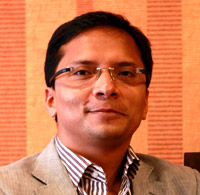
Tag: Harshad Jain

  • Fever 104 FM unveils #FreedomFromGuilt

    By A Correspondent


    As the nation celebrated its freedom on August 15, Fever 104 FM decided to provide a platform for those who are still bound – by guilt. The #FreedomFromGuilt campaign features ex-prisoners of Tihar Jail expressing regret for their crimes and gives them an avenue to express their inner thoughts, their burden of guilt, for the first time, on air. The programme was supported by an extensive social media campaign.


    In designing this campaign, Fever 104 FM and Ogilvy were supported by Tihar Jail and the NGOs, The India Vision Foundation and Siddhartha Vashishta Charitable Trust, to approach those who had completed their jail terms and give them this unique radio platform.


    Commenting on the initiative, Harshad Jain, CEO Radio and Entertainment, HT Media Ltd. said: “Fever FM has always believed in bringing about demonstrable change in the society. Fever Voice of Change has been one of the biggest CSR initiatives in the history of Radio and within the ambit of the same we have taken up many a cause including rehabilitation of acid attack victims, celebration of the unsung heroes of the Indian Armed Forces and driving people to vote with ‘Each one Kheench One’ to name a few. Fever FM has always been a thought leader in the category and we are very proud to have taken up this initiative. #FreedomFromGuilt is a campaign that celebrates freedom in its truest sense and brings out a side of the society that few have seen. We hope to collaborate on many such initiatives and take up many such causes in future as well that air aimed towards creating a marked difference in the society”


    Speaking about the initiative, Ajay Gahlaut, Deputy CCO, Ogilvy India said: “Not all convicts in jail are hard core criminals. A large percentage of them are in fact one-time offenders who have committed a crime in the heat of the moment. On Independence Day, as an expression of Freedom, we felt that these people should be given a chance to express their repentance as a step towards mental peace and a Freedom from Guilt.”


  • Fever FM hikes ad rates

    By A Correspondent


    Harshad Jain

    HT Media’s Fever FM has increase its advertising rates. Said Harshad Jain, CEO – Radio and Entertainment, HT Media Ltd:  “Fever FM’s key priority is to deliver value to its key stakeholders, listeners and advertisers. Our constant endeavor is to design initiatives that drive high engagement for listeners and response for clients. Our consistent growth and leadership in listenership across Delhi, Mumbai, Bangalore and Kolkata is testimony to connect with our listeners. We dominate markets with highest share and TSL. The increase in the price is in backdrop of continued growth in listenership and in line with our constant endeavor of keeping advertising inventory under control. We are ever committed to deliver innovative content and better creative solutions.”


  • Hyderabad wakes up to the tune of Fever

    By A Correspondent


    After successful operations in Bengaluru, Fever’s strategy has been to expand in South India. Fever concluded the first ever acquisition of a radio station in the industry in Chennai, and initiated operations of Fever 91.9 FM in Chennai in October 2015.


    Now Fever FM has launched Fever 94.3 FM in Hyderabad. Research indicated that the city has a promising base of lovers of Bollywood music and movies. Fever 94.3 FM has launched as the ‘Baap of Bollywood’ in Hyderabad with a vibrant, youthful, creative and interactive programming. Fever has lined up huge excitement for listeners with a new show launch every week for the next six weeks.


    Fever FM is also all set to launch in UP. Lucknow, Kanpur and Agra stations are already live while Aligarh, Allahabad, Bareilly and Gorakhpur will start soon.


    Harshad Jain

    Commenting on the launch, Harshad Jain, CEO- Radio and Entertainment, HT Media Ltd. Said: “With the launch of Fever FM in Hyderabad and UP we are now present in all key markets of the country: with Hyderabad we establish a strong south footprint and UP enables us to serve the large Hindi heartland. Fever FM is a Bollywood radio station and these markets boast of huge Bollywood lovers. We are sure that with our innovative, entertaining and differentiated content we will win hearts of listeners in quick time. Our celebrity led shows are an industry first and will enthral and entertain Hyderabad and UP.”


  • Fever FM hikes ad rates

    By A Correspondent


    Fever FM has announced a hike in its ad rates by 20 per cent across all stations with immediate effect.


    Since entering the market nine years ago, Fever FM has established itself as a leader in its four markets. Across the four metros,Feverenjoys 17.5 million listenersand leads 6 of the 8 drive times.Fever also leads across day parts in Delhi and Bangalore (in the nonKannada category). Source – RAM data, week 39.


    Harshad Jain

    Talking about Fever FM’s decision to increase the advertising rates,Harshad Jain, CEO – Radio and Entertainment, HT Media Ltd.said, “Fever has the highest Time Share Listening (TSL) in all its markets, the highest market share in Delhi and Bangalore, and is among the best performing and fastest growing radio stations in Mumbai and Kolkata.What’s more, in the core TG of 20-34 yrs SEC AB,Fever has the leadership market share across metros.Therefore, the increase in price is related to Fever’s consistent and rapid growth in listenership. We look forward to partnering our clients and offering them great value, and the unique Fever advantage.”


  • Harshad Jain made CEO at Fever FM

    By A Correspondent


    Harshad Jain

    HT Media Ltd. has elevated Harshad Jain to CEO of Fever. Prior to this promotion he was Business Head, Radio and Entertainment, HT Media Ltd. He has been working with HT Media for the last four years and will lead the business which now moves into an expansion stage with M&A and Phase 3 licensing round the corner and will involve building partnerships and expanding Fever brand into new geographies and beyond FM into entertainment and digital space.


    Talking about his new role, Harshad Jain, CEO – Fever, said “I’m humbled by this new role. Fever is a vibrant and dynamic organization, which has witnessed tremendous growth over the past few years. My focus will be to lead fever to the next level of growth and innovation and tap newer opportunities in the digital and entertainment space and phase 3 of FM radio.”


    Harshad brings with him over 20 years of cross-sectorial experience in the FMCG and media and entertainment spaces. On completion of his business studies in Sales and Marketing he joined PepsiCo and was with them for 14 years in roles across sales, marketing and business at regional and corporate level.


  • Is there a market for radio plays and other non-Bollywood radio content?

    By Robin Thomas


    Tune into any radio station, chances are you would be listening to some offbeat programmes. Take for instance Big FM’s storytelling show – ‘Yaadon Ka Idiot Box with Neelesh Mishra’ which is already in its second season. What is even more interesting is the fact that it is aired during the primetime 9pm to 11pm, Monday through Friday. After the success of Ramayana, Fever FM launched a new radio play, Gandhi beginning March this year. Radio City only recently introduced ‘Freedom Hour’, a programme which plays only Indie music and aired every Saturday from 5 pm to 6pm across its 20 stations. These are just a few examples, even smaller stations like Radio Choklate and Tomato FM have been airing radio plays and other non-bollywood, non- music contents. While content on FM radio has been evolving ever since its existence, the question is whether the listener is listening to them or is there no scope for these contents on radio?


    According to Harshad Jain, Business Head, Radio and Entertainment – HT Media Ltd, the listener’s choice has been changing with the evolution of the radio industry. The radio industry is showing early signs of programming content that is beyond music. “Yes there is a market for non music / non Bollywood content in the FM radio space. Music has become a leveler for FM operators. The on-air treatment done through non- music based programming element like audio drama, sports, festival specials, are contents that differentiates any brand and Fever 104 FM is arguably the only station that has built a strong emotional connect with its listeners through these initiatives. Purely from an advertisers standpoint non-music content aims towards driving engagement and high interactivity.”


    Kartik Kalla, National Programming Head, Radio City believes that differentiating music is the need of the hour. “Music constitutes almost 75 per cent of the total airtime and hence it is the most important feature in programming. We have recently introduced ‘Freedom Hour’ on Saturdays between 5-6pm across all our 20 stations. This is an extension of the music that is played on ‘Freedom Radio’ on PlanetRadiocity.com. The listeners enjoy refreshing music which is a welcome change from the regular Bollywood music that’s played.”


    Besides playing Oriya music, every Sunday evening Radio Choklate is also said to air opera or plays called ‘Choklate Rangamancha’. Radio Choklate also airs a weekly interactive show wherein, letters from listeners are read out on- air and their questions answered. Monica Nayyar Patnaik, Joint Managing Director at Eastern Media Ltd was of the opinion that radio programming has been constantly evolving over the years. Earlier FM stations would play only songs, then they emphasized more on RJ talk, then they went onto non- stop music and so on. The response from listeners, particularly for offbeat radio programmes like radio plays have been very good, it also affirms that there is a market for non-music contents.


    R Venkata Subramanian, Senior Director-Investments, MPG India pointed out that while non music or non Bollywood programmes create differentiation, a listener however mainly tunes into radio for music. I believe that these shows will be able to build their properties for a longer period of time only when they are associated with brands. In addition to these, radio programmes also need to be more interactive and engaging which would click with the listeners.


    Industry players are of the opinion that while content in radio has been constantly evolving on radio, there is a market for non- music and non- Bollywood radio programmes, but it must be highly interactive and engaging with its listeners. Despite government restrictions, FM radio has been constantly finding newer ways to engage and interact with its listeners. FM Phase III rollout is expected to witness further innovation and differentiation in radio programming, especially with multiple frequencies which is expected to introduce new genres of FM radio.


  • Need to monetize radio-social media connect (+Vdo)

    By Robin Thomas (Videos: Insiyah Rangwala)


    Social media has, more or less, become a necessity for every organization today because the consumers are out there and no brand can afford to not be interacting with them. Moreover, social media can also help  brands know their consumers’ thoughts, behaviour, likes and dislikes. It also allows brands to have a two-way communication with their consumers, and thus provides high level of interaction and engagement. And it is not just brands but other media like radio stations which are coming out with innovative ways to connect with their listeners through social media.


    At the sidelines of the India Radio Forum (IRF) 2012 industry veterans from the advertising fraternity discussed the importance of social media for radio.


    Mr Premjeet Sodhi, COO, Lintas Media Group said: “Social media is certainly important for not only the radio industry today, but also for every other medium. In the long run we will see more integration taking place between social media and radio.”


    Mr Raj Nayak, CEO, Colors- Viacom 18 explained: “Social media is growing by the day. Today almost 65 per cent of the people in India are below the age of 35 and 50 per cent are below 25 years of age. I believe this is the fastest growing medium, therefore, it is a very important medium and those that have not got onto social media, must get on before it is too late.”


    Mr Suman Srivastava, Founder and Innovation Artist, Marketing Unplugged said: “Social media is important for radio at two levels. One is to connect with the listeners and therefore, get much larger engagement which might even result in an increase in the reach. On the other hand, it is a fantastic medium for radio channels to build their own brands as well as the brands of their advertisers. In the future, I believe, we will see a lot more advertisers using radio and social media together along with, perhaps, ground activations to create events which could have a multiplier effect for those advertisers.”


    Speaking on the need for radio to partner with clients, Mr Vinay Bhatia, Customer Care Associate and Senior VP- Marketing, Shoppers Stop said: “The real big partnership for radio and their clients is in the digital space. Digital and radio have to come together and ally in such a way that they deliver joint value to the client, and I don’t think any of this is happening today. Radio is an out of home medium and we are increasingly seeing out of home consumption for digital. I think these two medium can go very well together and brands like ours which have large Facebook pages need content, we need engagement and I think radio channels that provide us that.”


    Mr Harshad Jain, Business Head – Radio and Entertainment, HT Media said: “Radio is a medium which is free of cost, it is the cheapest form of entertainment in the country, and if there are issues that can be interlinked with social media, it could call for a good integration. Having said that, it is still early days because radio as a medium still has to catch up big time before it starts integrating with social media.”


    While there are calls for integration between radio and social media, the radio industry must also find ways to monetize the radio-social media connect. Mr Sodhi pointed out that while social media can make radio activations richer, it is vital for radio stations to find newer ways to monetize this activation.


    Agreeing with Mr Sodhi, Mr Raj Nayak said that no business will work if there is no monetization. He added: “One of the biggest disservice broadcasters have done is that they have not woken up to the digital media.”


    So while radio and social media will see more integration in the long run, there is also another school of thought that believes that radio is still at a nascent stage and has a long way to go before it can get into integration with social media. However, monetization is the key for survival of any business and radio stations must find ways to monetize its social media activations.


  • Differentiation & Innovation key to success, says Harshad Jain

    As Business Head – Radio and Entertainment of HT Media, a role he assumed last year, Harshad Jain has his role tailormade for excitement. The FM Radio market may be small when compared to television or print, but given the nature of competition is a challenging play. In conversation with MxMIndia’s Robin Thomas, Mr Jain spoke about Fever 104 FM’s radio play – Gandhi, the consistency of the FM station’s leadership position in Delhi, Phase III plans and much more. Prior to joining Fever 104 FM, Mr Jain worked with companies like Pepsico, Worldspace and Airtel to name a few.


    Fever 104 FM recently launched radio play – Gandhi… What is the kind of response you have been receiving?

    The radio play, Gandhi, has done extremely well. It is currently aired at three different day time slots, and we have extremely good sponsors – Maruti Suzuki, Union Bank of India and Tata chemicals. We have been inundated with thousands of SMSes and calls, along with over 3,000 plus responses on Facebook wherein people have appreciated our initiative. And I do believe this has been one of the finest innovations in the radio industry.


    Do radio plays still strike a chord with listeners?

    Absolutely, because it drives a lot of appointment listenership. Today, the issue with the radio industry is the fact that it is tough to create differentiation. A radio drama like Gandhi or Ramayan is a high end production which drives appointment listening and, it is very relevant for any target group.


    According to RAM, Fever 104 FM Delhi consistently claimed the No 1 spot… What, would you say, are the factors that led to this success?

    Today, we are the single largest radio station in Delhi, not only among the private FM radio stations, but we have managed to go ahead of AIR FM Gold – we are the undisputed number one FM radio station in Delhi. The key reason for our success in Delhi is because we are a station which is very much integrated in Delhi. We believe that we have got a differentiated product offering in Delhi, we do a very high level of innovation and we’ve got an extremely strong local connect which makes us very powerful competition.


    IRS, on the other hand, seems to have a different story to tell… What would you say are the takeaways from IRS Q4 numbers?

    IRS is a readership survey; it is not a survey for radio. Radio Audience Measurement (RAM) on the other hand is an exclusive survey only for Radio. Second, IRS is a quarterly survey whereas RAM is a weekly survey. Third, the detailing in terms of RAM is excruciating as it provides time-band listenership, number of listeners by show, cumulative listenership, time-spent listening, therefore RAM is a measurement system meant to track a certain kind of medium. IRS is principally a tool for print media, it is about readership survey and a readership survey cannot do justice to a listenership survey.


    What, according to you, worked in Delhi but did not work in Kolkata and Bengaluru? What is the learning from Delhi for the remaining markets?

    The learning from Delhi comes from the fact that we need to be high on innovation, we need to have a differentiated product, and a very strong local connect.


    How has the Fever 104 FM Digisound impacted listenership?
    We used to be a distant number five in Mumbai, now we are a dominant number three player in the city. This proves that the strategy has worked positively for the station.


    What are your FM Phase III plans? Do you plan to expand to newer markets? Any specific cities or towns you are eyeing?

    We will participate in FM Phase III, we are still strategizing and only after thought through consideration, will we do what is required. We do have our expansions plans as to which markets we need to expand and depending on the how the viability and economic model works, we will expand.


    How active is you online presence – your website, Facebook and Twitter? How do you engage listeners off air?

    We do a lot of activities online, a lot of our RJ promotions and other engagement activities are done online. Digital is, therefore, a key part of our strategic mix in terms of reaching out to a larger audience, and we use it very effectively.


    How has the year been so far for Fever? And what would you say are the challenges and concerns facing the radio industry today?
    It has been a good year for us so far. We have entered the year very well, and we are looking at very strong sustained growth. As far as the challenges are concerned, there are couple of challenges – lack of differentiation in content is one of them. Second, the size of the advertising category is relatively small which needs to grow dramatically in the next couple of years, and third, the licence fees needs to be reduced.


     

  • Phase III countdown: ‘Overbidding will kill stations’

    By Robin Thomas

    FM radio listenership has more or less remained stagnant for a while since the completion of FM phase II. The soon to be launched FM phase III may have therefore brought some respite to FM stations across India. For some phase III is an opportunity to expand their listenership reach to newer cities and towns, yet for others it becomes an opportunity to further consolidate their position within a particular state/region. If Multiple Frequencies are allowed, it will introduce different genres of FM radio within the same city, thus encouraging new listeners to tune in.

    The drawback however would be the marginal FDI increase in radio to 26 percent from the earlier 20 percent. This marginal increase in FDI will probably discourage investors from taking the full plunge into the phase III bidding process. News is not available in the best of forms too, as FM stations are allowed to source news only from All India Radio.


    Mr Prashant Panday
    Mr. Harshad Jain
    Mr Harrish M. Bhatia
    Mr Rana Barua

    Despite all these developments, FM stations face a whole lot of other challenges which may have a direct or indirect effect on their phase III plans. The Music Royalty issue still remains unresolved, as a result of which FM stations, particularly in small towns, have to pay higher royalty. With expansion there would also be an increase in operation costs, and employee or talent management could be another challenge. MxMIndia spoke to few FM players to find out their views on the challenges for FM stations in phase III.


    Mr Prashant Panday, CEO, Radio Mirchi explained, “If people overbid in Phase III, they are finished. Radio is not like TV. One has to be extremely cost-conscious. One has to keep his head down while doing the business of radio. Phase III has e-auctions. There is a very good chance of bids going haywire. This is what each bidding broadcaster has to keep in mind.”


    Mr Harshad Jain, Business Head, Fever FM observed, “Phase III will bring with it a set of inevitable challenges like rising costs to set up new stations, and getting new audiences while the radio industry on the whole is still grappling with current costs and investments.”


    Mr Harrish M Bhatia, CEO, MY FM said, “The most important is the Royalty Issue; till the time it is completely resolved, it is quite difficult for the radio industry to grow efficiently. The absence of an acceptable radio measurement tool is another challenge. Content restriction is a big restraint for the industry as we are not allowed to provide self-generated news content. The challenges faced by the radio industry in the cities and towns other than the six metros are more or less the same as above.  To overcome these, the industry as a whole needs to work in tandem.”


    One of the possible challenges that FM stations can no longer remain immune from is the global economic climate. The uncertainty hit the world economy just before the FM phase III rollout, which may have some impact in the bidding process. “India as an economy is still expected to show healthy growth rates despite global sluggishness and we believe Radio will see greater volumes in a downturn too. The key issue is the ability to take up prices that will be difficult to manage in a downturn,” explained Mr Jain of Fever FM.


    According to Mr Bhatia, “The global showdown is more of metro phenomenon, hence it has not impacted the tier 2 and tier 3 cities. In fact, the radio business growth, even for existing players, is expected from non-metro cities.”


    In an earlier interaction with MxMIndia, Mr Rana Barua, COO Red FM had said, “I believe we should be taking complete cognizance of the fact that there is definitely a slowdown. The clients, advertisers, everybody are extremely, extremely careful about the money they are investing in any form of media. Taking things for granted and creating business plans for next two or three years seems passé now.”


    Three schools of thought emerged from this interaction, one which believes that the economic slowdown is a metro phenomenon. The second line of thinking is that the despite the global slowdown, the radio industry will continue to grow. And the other believes that the industry must admit the fact that there is a slowdown and hence the industry must take a cautious approach especially during the phase III bidding process.

  • Amritendu Roy catches Fever

    By Robin Thomas


    Amritendu Roy is now Regional Head – East, Fever FM. Prior to Fever FM, he was Head, Radio Business, Friends FM. Mr Roy who joined Fever FM in August 2011, is based out of Kolkata and will be reporting to Mr Harshad Jain, Business Head, Fever FM.

    One of his main responsibilities as Regional Head- East will be to drive the sales for the region.

    Confirming the news to MxMIndia, Mr Jain stated, “With substantial industry experience, he will be able to add a lot of value into the existing system and will prove to be an asset for Fever FM.”

    Mr Roy was instrumental in setting up Friends FM from scratch. Mr Roy started his career in advertising with Mudra Communication in 1990 and went on to become the Group Business Director at the time he left in 2004. In the 14 years with Mudra he worked in various cities like Kolkata, Delhi and Mumbai. He handled various clients with Mudra, the prominent ones being McDonalds, Indian Oil, Orient Fans, National Insurance, Reliance Telecom and Kitply. Mr Roy then moved to the FM radio industry in 2004 when he took over as Vice President and Station Head of Radio City in Delhi.