Tag: Harish Manwani

  • So how did HUL fare in JFM 2016?


    By A Correspondent


    Hindustan Unilever Limited (HUL) is India’s largest Fast Moving Consumer Goods company with its products touching the lives of nine of 10 households in India.  Now that’s a short descriptor about the company in its press statement. But enough reason why it’s good to look at the January-March quarter results. For, in many ways, HUL sets the trend in the FMCG business, and notwithstanding the onslaught of Patanjali, HUL still sets the trends (and spends) in the country.


    According to a press release, during the quarter, the domestic consumer business grew at 4%, with 4% underlying volume growth. Growth in the quarter was impacted by the phasing out of excise duty incentives, a one-time credit for excise duty refund in the base quarter and marginal price de-growth. Commented Chairman Harish Manwani: “In challenging markets and a deflationary cost environment, we have delivered another year of competitive and profitable growth. The consistency of our performance is a result of managing our business dynamically, and executing our strategy with even greater rigour and discipline. Our sustained focus on investing behind brands, sharpening our executional capabilities and driving market development has enabled us to keep winning with consumers in a rapidly changing market.”


    Here are the specifics:

    Soaps & Detergents: Skin Cleansing was driven by strong volume growth on Dove, Lifebuoy and Hamam. In Laundry, growth was led by the premium segment, with Surf maintaining its strong double digit growth momentum. Comfort Fabric Conditioner delivered another strong performance on the back of sustained market development. Household Care performance was led by Vim liquids. The quarter witnessed price deflation in this segment, albeit at lower levels, arising from actions taken earlier to pass on the benefit of lower commodity costs to consumers.


    Personal Products:  The reported growth for this segment was impacted by the phasing out of Excise Duty incentives, a one-time credit for excise duty refund in the base quarter and the residual impact from the re-alignment of channel spends. Skin Care delivered broad based volume growth across Fair & Lovely, Pond’s and Vaseline. The performance of Fair & Lovely was led by BB cream, whilst growth in Pond’s and Lakme was driven by the premium portfolio. Hair Care registered another quarter of volume led growth, with Dove and TRESemmé leading the category performance.


    In Oral Care, Close Up continued to do well, while Pepsodent core was relaunched in the quarter. Color cosmetics sustained innovation led double digit growth with Lakme Absolute and 9 to 5 strengthening its position in premium make up.


    Beverages: Tea registered broad0based growth, driven by market development and strengthened brand equities across the portfolio. Lipton Green Tea maintained its strong growth momentum. Bru Coffee delivered another quarter of double digit growth.


    Packaged Foods: Market development continues to be a key driver of growth for this segment. Kissan delivered another robust quarter on both ketchups and jams, while the solid growth on Knorr was led by Instant Soups. Ice Creams registered double digit growth driven by sharper in-market execution on Kwality Walls and the extension of Magnum to new cities.


    Water: Pureit delivered double digit growth led by the strong performance in the ‘Reverse Osmosis’ segment. The portfolio was further strengthened with the launch of the ‘Pureit Ultima with Oxytube’ device in quarter.


    Margins:  Lower input costs resulted in 240 bps reduction in Cost of Goods Sold. Brand investments were sustained at competitive levels; overall A&P was up by Rs.65 Crores (+40 bps). Profit before interest and tax (PBIT) grew by 11% and PBIT margin improved by 115 bps. Profit after tax before exceptional items, PAT (bei), grew by 13% to Rs.1031 Crores. Net Profit at Rs.1090 Crores, was up 7% with the growth rate impacted by the higher exceptional income arising from the sale of subsidiary in the base quarter.


    Financial Year 2015-16:  The Domestic Consumer business grew by 4% with 6% underlying volume growth. Reported growth was impacted by -110ps arising from the phase out of excise duty incentives. Profit before interest and tax (PBIT) grew by 10% with PBIT margin improving +90 bps, despite the net excise duty impact of -50bps on PBIT. The consistency in margin improvement was delivered even as we continued to make significant investments behind our brands (A&P was up 160bps). Profit after tax but before exceptional items, PAT (bei), grew by 6% to Rs 4078 crore. Net Profit was at Rs 4082 crore, with the growth rate impacted by the higher exceptional income arising from subsidiary and property related sales in the previous year. The strong track record of cash generation was sustained with cash from operations exceeding Rs 5000 crore for yet another year. The Board of Directors have proposed a final dividend of Rs. 9.5 per share, subject to the approval of the shareholders at the AGM. Together with the interim dividend of Rs. 6.5 per share, the total dividend for the financial year ending 31st March, 2016 amounts to Rs. 16 per share.


    Please also read a report in DNA titled ‘Hind Unilever feels the drought pinch’ at:  http://dnai.in/dmec


  • IndIAA brings all stakeholders together to collect awards


    By A Correspondent


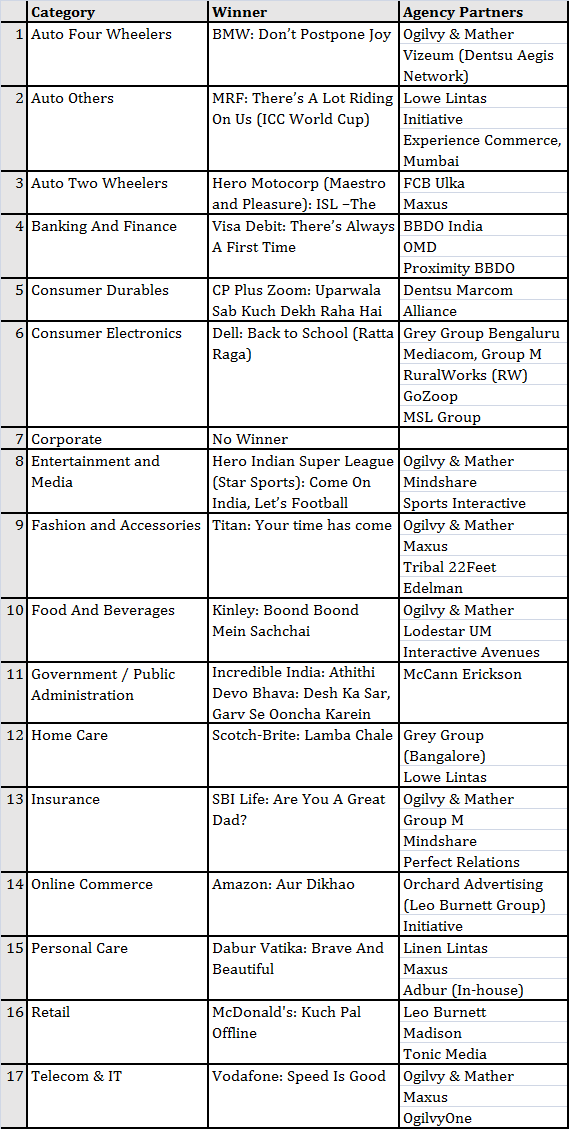
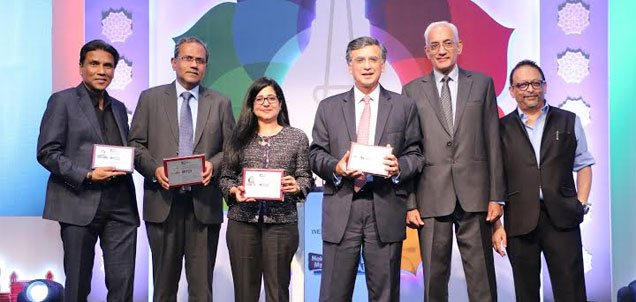
    The first edition of IndIAA Awards happened on Tuesday, October 13 evening with leading advertising, media and marketing professionals in attendance. Of the 500 entries received for 17 categories, the final shortlist had 76 nominees with 16 winners.  The IndIAA Awards were received by the Advertisers along with all the co-creators of the campaign, across Creative and Media Agencies and also included other agency partners from Digital, Events, PR, Activation etc.


    Also present were Jury Chairman Harish Manwani, COO Unilever and Non-Executive Chairman, Hindustan Unilever and Jury members – Bhaskar Bhat (Titan), Sangeeta Pendurkar (Kellogg’s India), B. Sriram (State Bank of India), and Sanjeeb Chaudhuri (Standard Chartered Bank).


    Said Srinivasan Swamy, President, IAA India Chapter “We attempted IndIAA awards as an experiment; we wanted to create a different way of awarding creativity. At the IAA Conversations preceding the awards, Dr. Subhash Chandra and Shankkar Aiyar, as expected, brought fresh perspective and deep insights around News Neutrality through the engaging session.”


    Pradeep Guha, Chairman, IndIAA Awards Committee said, “The IndIAA Award format ensured that ‘ads for awards only’ didn’t come through and this itself was the differentiator.”


    Earlier in the day, Dr Subhash Chandra, Chairman, Essel Group and Zee spoke to Shankkar Aiyar, author and journalist, on News Neutrality. The conversation ranged from the basic concept of neutrality; the solution to compulsion of revenue versus competition; regulation of news gathering and vagueness of media ownership in India. Dr. Chandra also mentioned a new technological engine being put into place in Zee, which will track stories right from filing, so that there is control over biases.


    Dr Bhaskar Das, Chairman, IAA Conversations said, “Going against the grain, if need be, to deep dive into the most relevant industry topics has been the objective of IAA Conversations. The topic on News Neutrality follows the same trend.”


    Winners of the first IndIAA Awards:


  • Now, award for ‘real advertising’ from IAA

    By A Correspondent


    A new advertising award is set to debut in India – and this one promises to reward “real, hard-working advertising.” It’s the brainchild of the India chapter of the International Advertising Association (IAA), and will be called the IndIAA awards.


    The inaugural round of awards will be held in Mumbai in October 2015. The winners will be picked by a high-powered jury chaired by Harish Manwani, chief operating officer of Unilever, and featuring D Shivakumar, chairman of PepsiCo India; Bhaskar Bhatt, managing director, Titan; Mayank Pareek, president, Tata Motors; Sangeeta Pendurkar, managing director, Kellogg India; Sanjeeb Chaudhuri, global chief marketing officer Standard Chartered Bank and B Sriram, managing director, State Bank of India.


    Manwani said, “Effective advertising implies the existence of deep consumer insights, the rigour of a repeatable process between the client and agency and optimal levels of media spends. Only then does a great creative idea get transformed into effective advertising.”


    Pradeep Guha, chairman IndIAA awards, explained that ad campaigns released between July 1, 2014, and June 30, 2015, are eligible for the inaugural awards, but the campaign must have a film component – whether it’s been released on TV or digitally.


    “This is an initiative to reward truly creative advertising and I am confident it will win great respect for its objectives,” he said. Srinivasan Swamy president IAA said, “At the IndIAA awards event, you will see campaigns that have been watched and loved, being awarded. Therefore, we will invite on stage all the co-creators of the campaign to accept the award.”


    Source:The Economic Times

    Copyright © 2015, Bennett, Coleman & Co. Ltd. All Rights Reserved

    Licensed to republish


  • Unilever COO Harish Manwani to retire on Dec 31

    By A Correspondent


    Harish Manwani, currently Chief Operating Officer, Unilever, will retire from Unilever on December 31, 2014, after more than 38 years of service with the FMCG giant. Mr Harish will continue in his capacity as the Non-Executive Chairman of Hindustan Unilever Limited (HUL).


    Mr Manwani joined Hindustan Unilever as a Management Trainee in 1976 and joined the HUL Board of Directors in 1995 as a Director responsible for the Personal Products business. Under his leadership, the Personal Products business grew from a nascent business to one of the key growth engines of the company. Subsequently, he enjoyed success in many roles, covering both categories and markets, and across many parts of the world. This included stints as SVP Global Hair Care & Oral Care; President, Home & Personal Care first of Latin America and later of North America.


    As Chief Operating Officer of Unilever, Mr Manwani’s key achievement has been his leadership of the Global Markets where he established and aligned the market clusters across the world behind a clear agenda, creating a better and more integrated go-to-market organisation. It has also allowed the business to be managed more dynamically, resource allocation to be done more efficiently across markets and best practices to be transferred more seamlessly. This has allowed Unilever to become increasingly more competitive in a tougher business environment.


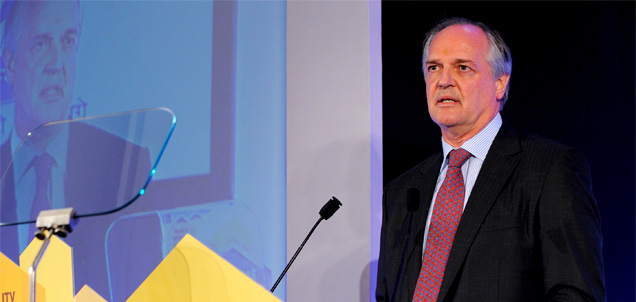
    Paul Polman

    Unilever CEO Paul Polman said, “Harish is an inspirational leader and leaves a remarkable legacy. He has been at my side in helping to drive the turnaround of Unilever, making this once again one of the most admired companies in the world. Over the last three years, especially as Chief Operating Officer, Harish has been instrumental in the transformation of the company. Under his leadership we have seen a step-change in our go-to-market organisation and there has been a relentless focus on flawless execution globally.  He has role-modelled the 4G sustainable growth model – Competitive, Consistent, Profitable and Responsible – which has become such a strong focal point for the Markets.”


    Said Mr Manwani: “I am deeply grateful to all those colleagues who have helped to make the last 38 years at HUL and Unilever so memorable and fulfilling. It has been a privilege to serve such a great company. Today, Unilever is in a strong position with a clear strategy and capabilities to drive long-term responsible growth. This makes it a good time for me to make this personal transition. I look forward to working with Paul and the leadership team over the coming months to ensure a smooth transition and to further build our growth agenda.”


  • Building a future ready organisation: Harish Manwani


    At Hindustan Unilever Limited’s 81st Annual General Meeting yesterday (June 30), Chairman Harish Manwani addressed shareholders and spoke about how change is ‘the new normal’ and the need for companies to constantly reinvent themselves in order to thrive.


    In the speech titled ‘Building a future ready organisation’, Mr Manwani spoke about Unilever’s five-pronged approach to remain future ready – first, embracing technology and inclusive innovation that meets the needs of consumers across the socio-economic pyramid; second, committing to sustainable and responsible growth; third, building future ready talent and capabilities; fourth, values-led and purpose-driven leadership; fifth, creating an agile and inclusive work culture.


    Mr Manwani underlined that to succeed in this world businesses have to develop a high capacity for responsiveness. Organisations will have toadapt to rapidly changing situations and priorities, tolerate ambiguity, and develop new ways of working in order to succeed. He said, “While technology and innovation will be the hardware that drives future ready organisations, it is a values-led and purpose-driven leadership that is the software that must drive sustainable and responsible growth. It is this combination of hardware and software that will shape the corporate winners of tomorrow.”


    We reproduce here the text of Mr Harish Manwani’s speech, as taken from the HUL website (url: http://www.hul.co.in/Images/AGM-booklet-2014_tcm114-393426.pdf):


    Building a future ready organisation


    Section One: Introduction

    We live in an increasingly interconnected world that is changing faster than ever before. In fact, change is ‘the new normal’ and ifanything the pace of change in future will be even faster than itis today.


    Take connectivity for instance. It took almost 50 years after theinvention of the telegraph before the first telephone wasinvented. It was another 50 years before we saw the television.But in less than half the time it took to move from the telegraphto the television, we witnessed the rise of computers, the invention of the mobile phone and the advent of the Internet.Now we have the power of the telegraph, telephone, radio,television, computer and Internet all in one device that can fit inour palm.


    The pace at which these technologies have been adopted inIndia is unprecedented. The spread of mobile connections is atelling example. The first mobile phone call was made in 1995.In less than 20 years, mobile connections are now all pervasiveand have in fact far surpassed landline connections, a servicethat started more than a century earlier.


    Last year, I had spoken about the volatile, uncertain, complexand ambiguous, or VUCA world, we operate in. This VUCA environment marked by continuous and dramatic changeposes opportunities and challenges for businesses. It requirescompanies to change the way they operate and constantly reinvent themselves.


    The list of those who failed to reinvent themselves and succumbed to the VUCA environment is long and instructive. TheEastman Kodak Company is just one on that list. The iconic brandthat was synonymous with photography in the era of darkroomsand films actually invented the first digital camera, but later filedfor bankruptcy after failing to fully respond to the sweeping changes of the digital era.


    On the other hand, there have been companies that havecontinuously innovated to meet the requirements of our fast changing times and thrived. For example, Apple and Google havegrown and cemented their leadership positions on a wave ofinnovations. Innovations like Google Glass, a wearablecomputing device and Google Fiber, an Internet service with aspeed of 1Gbps are already looking ahead to meet consumerneeds of the future. Apple’s latest offering of the iBeacon allows a phone to direct a driver to the nearest open spot in a parking garage or the shortest line at a food counter in a crowded theatre.


    Section Two: India at the forefront of change

    In developing countries like India, the last couple of decades have been marked by momentous change. Over the last 20 years, GDP per capita in India has nearly tripled from USD 517 to USD 1415. Poverty levels have halved from 45% in 1994 to 22% in 2012. In spite of recent economic challenges, India is poised to becomethe third largest economy in the world by 2030. About 25 yearsago, only 3% of India’s 600,000 villages enjoyed telephoneservices. For urgent communication, people would rely on whatwas commonly known as the ‘taar’, the telegraph service. Today,there are over 875 million mobile phone subscribers in India and the ‘taar’ is history, with the telegraph service shuttered last year.


    In fact, today the penetration of mobile phone is higher than anytraditional media in many rural areas.This connectivity is allowing India to leapfrog. It is increasing theproductivity of our farmers by providing easy access toagriculture-related information, eliminating intermediary nonvalueadding players and opening opportunities for microenterprises, thus fundamentally improving everyday life formillions of people. It is therefore not surprising that the country’sdigital and e-commerce market is booming. In fact, in 2013, theIndian e-commerce market grew at a staggering 88% accordingto a survey by The Associated Chambers of Commerce and Industry of India. With the growing penetration, accessibility andaffordability of smartphones, over 25% of the total Internet transactions in India are done via mobile devices.


    Companies that have tapped into this evolving class of Internet savvy consumers experienced unprecedented growth. Case inpoint: five years ago, Bengaluru based e-commerce website, Flipkart, began as a start-up with an investment of justINR four lakh and today, reportedly generates USD one billion inannual sales. The success of such e-commerce portals isspawning an online retail revolution in India.


    Technology and easier access to information and knowledgehave opened up employment opportunities resulting in a newwave of people entering the consumption cycle. We arewitnessing a significant increase in the earning power ofconsumers at the bottom-of-the-pyramid as they join theincreasing middle class population in India. The traditional socio-economic pyramid is rapidly transforming itself into adiamond with a burgeoning middle class and a decreasingnumber of low-income consumers. This is increasingly true ofIndia and many other developing economies and offers hugeopportunities for business.


    A company that is future ready will not only be able to seize theopportunities these changes present, but also protect itself fromthe challenges of the VUCA world.


    Section Three: Building a future ready organisation

    Being future ready means having the vision and the capabilitiesto compete in the world of tomorrow, and having a largerpurpose to remain relevant to society.


    At Unilever, we have a five-pronged approach to remain futureready – first, embracing technology and inclusive innovation thatmeets the needs of consumers across the socio-economicpyramid; second, committing to sustainable and responsiblegrowth; third, building future ready talent and capabilities; fourth,values-led and purpose-driven leadership; fifth, creating an agile and inclusive work culture.


    a) Technology and inclusive innovation

    India is a vast nation with widespread socio-economic diversity.Technology and innovation allow us to anticipate and better servethe needs of the many different Indias. There are hugeopportunities in meeting the needs of the rising middle class aswell as the aspiring low-income consumers.


    The urban middle class consumers are changing the way theyshop and buy. These consumers are researching brands andproducts, comparing prices across multiple locations and areopen to ordering from anywhere, anytime. These consumers areready to try new products and services and are willing to spend onbrands that match their aspirations.


    In India, to be truly future ready, one has to leverage technology tocater not only to the rising middle class but also to consumers at the bottom-of-the-pyramid. As the late Prof C K Prahalad and Dr R A Mashelkar put it, the way forward for companies is inclusive innovation. An enlightening example would be that of Aravind EyeCare, an organisation that has dramatically altered eye care in India by bringing the price of intraocular lenses down to a tenth ofinternational prices and making cataract surgeries affordable for low-income consumers. Today, the company markets its productsin more than 130 countries. Similarly, Arunachalam Muruganantham, a social entrepreneur from a village near Coimbatore, has invented a low cost sanitary pad making machine which can manufacture sanitary pads for less than a third of thecost of conventional commercial pads. Low-cost business modelsare thus changing the way we serve millions of consumers.


    At Unilever, the approach of developing innovations with consumerprice as the starting point is at the heart of our inclusive innovationstrategy. In Hindustan Unilever Limited (HUL), we have institutionalised a ‘challenge cost’ mindset where the target price for consumers drives innovation in each segment and category.


    This has helped us to develop several new market segments inHome Care, Personal Care and Foods. Pureit is a more recentexample of this approach.


    Pureit addresses one of the biggest technological challenges ofthe century – that of making safe water accessible and affordablefor millions. It provides one litre of ‘as safe as boiled’™ water at arunning cost of just 28 paise without the hassles of boiling, the need for electricity or continuous tap water supply. Pureit has emerged as the largest selling water purifier brand in India andhas now been introduced in several other countries, protecting 58million lives globally.


    Reaching up and reaching wide


    We continue to leverage advancements in technology andconnectivity to strengthen our collaboration with customers in modern trade and simultaneously expand our distribution reach indeep rural areas. We call this reaching up and reaching wide.06


    We identified modern trade as a key growth driver over a decadeago when the channel was still at a nascent stage in India andinvested in technology and capabilities to strengthen our partnerships with customers.


    We launched a state-of-the-art Customer Insight and InnovationCentre that provides us with a platform to collaborate with ourcustomers and co-create marketplace ideas to win withshoppers. We have improved upon our service delivery standardsby leveraging technology for demand sensing. We have deployeda collaboration tool with most of our large modern tradecustomers which has helped us achieve an all-time high on-shelfavailability in these stores. The Best Supplier of the Year awardbestowed upon us by key modern trade customers is arecognition of our partnership and the value that these initiativeshave added to their business.


    In 2013, we used technology to expand our direct distributionreach in both urban and rural markets. By GPS tagging retailoutlets, we were able to identify and prioritise the geographiesthat presented an opportunity for direct distribution expansion.We now service over three million retail outlets directly helping tofurther improve availability and access to our products.


    We developed new low-cost distribution models that usetechnology to leverage the increasing penetration of mobilephones among small retailers. Taking orders through telecallingsaved time and cost, and enabled us to reach outletswhich were outside the purview of our traditional distributionmodel. Through Project iQ, a technology-based analytics capability, we enabled sales people to make shorter and more effective sales calls.


    Similarly, to strengthen our reach in deep rural areas, wedeployed a low-cost mobile IT solution that enables thousands of our Shakti Ammas (rural women entrepreneurs) to take andbill orders, and manage inventory in real time. This has madethe Shakti Ammas more productive and helped them to furtherenhance their incomes.


    Digital marketing


    The Internet is changing the way brands engage withconsumers. There is a blurring of lines between advertising andeditorial; between ‘paid’ media in conventional channels and‘owned’ and ’earned’ media in emerging digital channels.


    Mobile, social media and big data are transforming the very nature of marketing.We were early in recognising this trend as a game changer. Wehave not just significantly increased our investment in digitalmedia but are also innovating to increase our impact in thisspace. Last year, we launched the ‘Media Lab’ which helps ourbrands deliver engaging brand experiences in an effective manner across Internet enabled mobile devices and platforms.


    Drawing on the insight that Bollywood-related searches areamong the highest online content sought by users in India, HULhas launched Bollywood Buzz on YouTube. Our brands are able to effectively deliver brand messages to consumers by creativelyweaving in brand content with exclusive pre-release film content.


    Another example of our brands leveraging digital to effectivelyengage with consumers is the ‘BeBeautiful’ initiative. HUL beauty brands have come together to develop and launch ‘BeBeautiful’ as an online beauty expert platform. The recent vlogging (videoblogging) campaign by ‘BeBeautiful’ has been a tremendoussuccess achieving 20 million video views in just six months.


    Perhaps the most exciting initiative has been the launch of ‘Kan Khajura Tesan’, a mobile marketing initiative aimed to help ourbrands engage with low-income rural consumers in media dark areas. ‘KanKhajuraTesan’ has been globally recognised with theprestigious Lions Gold awards at Cannes Lions InternationalFestival of Creativity this year.


    b) Sustainable and responsible growth

    As the less developed economies grow, demand will risedramatically; but we live in a world with finite resources. Largenumbers of people still remain out of the modern day economicsystem — we still have one billion people going to bed hungryevery night, 2.8 billion people short of water and 2.3 billion peopleliving without access to basic sanitation.


    We are convinced that businesses that address the needs andaspirations of consumers as well as social and environmentalchallenges will thrive in the long term. This is the foundation ofwhat it means to be future ready.09


    Unilever’s journey towards building a future ready organisationgained momentum and direction in November 2010 when welaunched our ambitious Unilever Sustainable Living Plan(USLP). The Plan aims to double the size of our business whiledecoupling our growth from our environmental impact andincreasing our positive social impact. This thinking lies at the heart of our business and is now being firmly embedded acrossevery part of the organisation.


    i) Brands at the forefront of social change

    We believe that every brand should serve a purpose in the life ofthe person who buys it. This belief has been at the forefront ofhow we build purpose-driven brands and we continue to leverage them to create positive social impact. For instance, Lifebuoy nowruns one of the largest handwashing programmes in India.


    Last year, we launched the ‘Help a Child Reach 5’ campaign in Thesgora, a village in Madhya Pradesh, known for having one ofthe highest rates of diarrhoea in India. The campaign aims to eradicate preventable deaths from diseases like diarrhoea byteaching lifesaving handwashing habits, one village at a time.


    The results have been tremendous, with a staggering 86% dropin the incidence of diarrhoea in Thesgora. The campaign is nowbeing rolled out to villages across 14 countries. Another example is Domex, our leading toilet cleaner brand,which launched the Domex Toilet Academy last year with an aimto assist in eradicating open defecation by providing access to improved sanitation. Our water purifier brand, Pureit in partnership with Population Services International has been working towards providing safe drinking water at a minimal costto families in rural areas.


    ii) Enhancing livelihoods — sustainable agriculture

    Being future ready also means caring for your environment andinvesting in sustainable supply chains. We are working withsmallholder farmers to help them implement sustainablemethods while significantly improving their crop yields. We helpthem adopt good agricultural practices like drip irrigation,nutrient management, pest and disease management. In 2013, 80% of the tomatoes used in Kissan ketchup were from sustainable sources. We already source 100% of our palm oil from sustainable sources backed by Green Palm certificates.


    In fact, we have integrated our sustainable sourcing initiativesinto the business through our ‘Partner to Win’ programme. Thisnot only enables our supplier partners to ensure sustainable sourcing across their value chain but also secures our sourcingneeds for the long term. As Unilever, we are already sourcing 48%of our global raw materials sustainably and are committed tomake this 100% by 2020.


    To address the impact of depleting water resources on food, energy and livelihoods, we set up the Hindustan Unilever Foundation (HUF) in 2010. HUF partners with NGOs, government agencies and members of the local community. It currently runsprojects that have a cumulative and collective water conservationpotential of 100 billion litres by the end of 2015. We expect to generate more than two lakh person days of employment in morethan 180 villages across India. Furthermore, we expect that theincreased water conservation would help lead to a 10% rise in crop production in some of the project areas.


    iii) Project Sunlight

    To renew and reconnect our brands to the larger corporatepurpose of making sustainable living commonplace, welaunched Project Sunlight in November 2013 to motivate millions of people to live sustainably. We hope to create a movement forsustainable living among consumers and thus help to create abrighter future for children.


    India was one of the five key markets where Unilever launched Project Sunlight on Universal Children’s Day last year. Thecampaign got an overwhelming response in India with over four million people joining the Project Sunlight movement. This year,we will reach out to more people and inspire them to adopt sustainable living practices in their daily life. The first campaign launched this year aims to encourage families to conserve water.


    We are hopeful that through such campaigns we can continue to increase awareness among people and contribute to our purposeof making sustainable living commonplace.


    c) Future ready talent and capabilities

    To create a business that addresses the needs of the futurethrough technology and sustainable models for growth, we needto nurture a continuous learning environment that builds talentand new organisational capabilities.


    We have a holistic approach towards honing our talent pipelineand building leadership capabilities in our people. We encourageour people to define their individual purpose in theorganisational context and help them realise it throughmeaningful actions. The Unilever Future Leaders Programmeprovides us a strong foundation to groom and develop talentfrom the entry level itself. Large responsibilities early on in thecareer, open and honest career development discussions, crossfunctionaland international exposure coupled with coaching and mentoring helps develop a strong leadership pipeline.


    We are harnessing technology to prepare our employees tosucceed in tomorrow’s world. For example, we have createddigital passports that are licenses for our marketers to operate in the future. As a part of building awareness and knowledge ofour managers on business, managerial and professional areas,we use online e-learning solutions. In 2013 alone our employees completed nearly 50,000 online courses.


    Our initiatives such as ‘Incite’ and ‘Food’s College’ help to build marketing capabilities required for the business to win in thefuture. These initiatives have also resulted in several successful marketing campaigns such as the Foods experiential marketingprogramme.


    We also believe that learning must be embedded in theorganisation at all levels. We have undertaken a host ofprogrammes in the space of capability building on the shopfloor.For example, our Shopfloor Skill Upgrading Programme,‘Sparkle’, assesses training needs, skills and the performance of our shopfloor employees. ‘Stepping into One’ is another programme that develops technical and leadership skills among shopfloor employees, providing them with career advancementopportunities into supervisory roles.


    d) Values-led and purpose-driven leadership

    Ultimately, the most important asset of any organisation is itsreputation. For future ready organisations, we need leaders whowill not only build the organisational capabilities to harness technology and new ways of working, but also instil the values tobuild sustainable and responsible models of growth. These arethe leadership principles that we have embedded in our company and they will continue to shape our future as an organisation.


    More than ever before we need leaders who are values-led andpurpose-driven. These are leaders who recognise that there are some non-negotiables in business and that building organisational character is essential to future success. In Unilever, we have a common code of business principles andleadership values of integrity, respect, pioneering and responsibility that have to be embraced by every leader in everypart of the world.


    e) Agile and inclusive work culture

    In a world with easy access to information and rapid changes,companies need to move fast to keep up. Speed is the new currency for future ready organisations. At Unilever, we have ingrained agility and speed in our workculture through initiatives such as ‘Project Sunset’. This initiative was pioneered by HUL to facilitate quick decision-making in theorganisation. It has been rolled out globally to build a moredynamic and agile culture.


    In 2013, we launched a new campaign, ‘Winning Together’, to reduce complexity across the organisation and empower peopleto maximise their potential through simplified ways of working, cutting inefficiency and promoting a bias for action. For example, we are driving more effective collaboration in cross-functional teams by using project classification tools and driving behavioural changes amongst employees. This is helping us to increase the pace of innovation by delivering cross-functionalprojects on time.


    Equally, diversity and inclusion is an important aspect of our sustainable business growth agenda and a key to building a futureready organisation. In HUL, we refer to this as ‘Winning Balance’. Over the last three years, we have seen a considerable shift in thisarea through greater leadership involvement and engagement. For instance, we have been able to recruit women on careerbreaks through our ‘Career by Choice’ Programme that balances personal and professional needs of talent on their return to theworkforce. In 2013, we established a Winning Balance Council comprising male and female leaders across functions who champion the diversity agenda in the business. Last year, Unilever’s progress on diversity was recognised with the prestigious global Catalyst Award. We are on the path towards creating the ‘ideal’ work culture of a simpler, agile and inclusive organisation.


    Section Four: Conclusion

    We live in an extremely volatile world that is changing faster thanever. Products and services are becoming more accessible withincreasing connectivity and improved infrastructure. To succeedin this world we have to develop a high capacity for responsiveness. Organisations will have to adapt to rapidlychanging situations and priorities, tolerate ambiguity, and develop new ways of working in order to succeed.While technology and innovation will be the hardware that drivesfuture ready organisations, it is a values-led and purpose-drivenleadership that is the software that must drive sustainable andresponsible growth. It is this combination of hardware and software that will shape the corporate winners of tomorrow.
     

  • Why Unilever CEO Paul Polman doesn’t like to worry…


    By A  Correspondent


    Paul Polman’s Unilever has announced a profit warning and is battling slowing growth in emerging markets, but the CEO of the world’s biggest consumer goods company says he doesn’t worry about anything. “You can write that Mr Polman doesn’t like to worry about anything and you will be pretty close to the truth,” he told a meeting of select journalists in the Hindustan Unilever house in Mumbai. “If I sleep then at least I come to work with little bit more energy and think about what to do versus the others who worry too much and don’t sleep enough.”


    Mr Polman may not have much to worry about Hindustan Unilever whose second quarter profit and sales growth beat estimates, but a slowdown in emerging markets, combined with uncertainties in Europe and the US, is likely to occupy his attention for quite some time. HUL, the Indian unit of the Anglo-Dutch giant, has trebled its rural network, accelerated sales growth, developed new products and has consistently grown ahead of the consumer market.


    Mr Polman, who took over as CEO in 2009, has combined an unconventional approach with some plain-speaking in an attempt to refurbish the image of multinational giants tarnished by charges of corruption and heavy-handedness in the run-up to the global financial meltdown of 2008.


    He has abolished quarterly results, urged his company to invest for the long term and championed a business model built on sustainability and healthy living. In Mumbai he said that capitalism needs to evolve and that companies can no longer allow forests to be burned down and children to die of hunger. On Thursday, he said “there will always be bumps on the road to development,” adopting a measured stance on the governance crisis which has pitted businessmen and politicians against each other. Mr Polman said that politicians and businessmen are not against each other and that countries such as India and Brazil have similar problems.


    “In two weeks time, we are in Brazil to discuss the same issues with Dilma (Roussef, Brazilian president). My point with them is it is not politicians against business… (there are) so many major issues that this world faces… (it’s about) what we can do together,” Mr Polman said.


    Emerging market countries like Brazil and India have been rattled by a severe crisis of investor confidence after a dramatic slide in the value of their currencies felled stocks during the July-September period after the government fumbled on key reforms. India, along with other emerging market economies, contributes nearly 60% to Unilever revenues.


    India is facing a slump in corporate investment and Polman tried to assuage concerns by saying that the road to development is not always smooth. “We don’t run business on the basis of short-term concerns or financial markets. We run it on the basis of opportunities. Nothing has changed there. As I said to the PM, any road to development has some bumps. It is same in every business. Every quarter is never a straight line,” he added. Unilever, he added, has shown confidence in India by investing ¤2.5 billion to increase its stake to 67.35 from 52.5%. Over the past three years, HUL added about Rs 8,000 crore – bigger than the size of some mid-sized rivals – to its top line.


    However, what may seem like an achievement is also perhaps Mr Polman’s biggest worry. “The only worry is that if we become so big, we could become internally focused versus externally focused and might lose passion about the consumer.” “You have to think about how to make the company more agile, how to think of new opportunities to grow, how to reach more people in the bottom of the pyramid when governments don’t,” he added.


    Polman’s ambition of doubling Unilever’s 2009 size by 2020 by following a business model built on sustainable development has some lessons for India as well.


    “Yes, you create billionaires here, but there is one out of 20 children not making it to the age of five,” said Polman, who once wanted to be a doctor or a priest.


    Harish Manwani, HUL chairman, said that the company should focus relentlessly on costs and in increasing market share. “Business as usual in the long term and business unusual on cost.”


    Messrs Polman and Manwani together have around 70 years of experience in selling consumer products across markets.


    “The growth may have slowed down but people are still buying more premium products. We have multiple portfolios and brands and we must stay at top of the game in both urban and rural and across price-points,” said Mr Manwani.


    While a section of analysts and investors consider stocks of consumer goods companies, including HUL, fairly overvalued given the current slowdown, MR Polman isn’t perturbed. “HUL is a very attractive stock in India and when people have the opportunity to invest in Indian equity, HUL is among the top five choices,” said Polman referring to HUL’s stock price that has almost doubled since 2009 when he became the first-ever chief executive officer from outside Unilever.


    Source:The Economic Times

    Copyright © 2013, Bennett, Coleman & Co. Ltd. All Rights Reserved

    Licensed to republish


  • AdAsia Exec Summary: Lively sessions mark Day One

    By Tuhina Anand

    AdAsia 2011 was inaugurated with the anthem of the Republic of AdAsia and a performance by the Shillong Choir Group.  This was followed by lighting of lamp by the Minister of Information & Broadcasting Ms Ambika Soni along with Dr Bhaskar Das, Co-Chairman of the Organising Committee and President, The Times of India Group and Mr Madhukar Kamath, Chairman Organising Committee for AdAsia and Group CEO and MD, Mudra Group. The flag for AdAsia was hoisted by Shahrukh Khan who also addressed the audience and reminded people of all the brands he has endorsed in his short speech. He however did emphasise that he believes advertising is not just for entertaining but about informing the consumer of a product so that when he or she is making a purchase he can make an informed choice.

    The keynote address was delivered by Mr Ram Charan, Author, Speaker and Business Advisor. The first session of the day was on ‘The Game Changers’ where Mr Harish Manwani, Chief Operating Officer, Unilever , and Chairman, Hindustan Unilever Ltd gave an insight into the company reinventing itself according to the changing times.  Mr Michael Roth, Chairman and CEO, Interpublic posed questions to Mr Manwani who answered all with aplomb. The key that emerged from this session was on the importance of adapting to the changing environment thus making the brands relevant to its consumers while at the same time being able to sell its products.

    The second session was on ‘Decoding the New Age Consumer’  where Mr Adil Zainulbhai, MD-India, McKinsey and Company Inc and Mr Laxman Narasimhan, Director, New Delhi, McKinsey & Company Inc, Mr Kochi Yamamoto, GM, Global Solutions Center, Dentsu tried to understand the behavioural pattern of the ‘New Age Consumer’.  The session gave insight into the changing world where the future remained uncertain and how marketers are grappling with this reality and trying to understand today’s consumers.

    Tom Doctoroff, JWT, North Asia, Area Director, Greater China CEO moderated the next session on ‘Asian Creative? A New Brief. On the panel were Akira Kagami, Global Executive Creative Advisor, Dentsu, Bruce Haines-Chief Strategy Officer, Cheil Worldwide, Kitty Lun, CEO, Lowe China and Piyush Pandey, Executive Chairman and CD, South Asia, O&M India. The panel gave an insight into creative from different countries where they operate including Japan, Korea, China and India. While Ms Lun talked about challenging authority and showing by example to help youngsters come up with great ideas. Mr Pandey brought into fore the relevant issue of remuneration where he stressed, ‘if you want good people, start paying them better’. Defending  standard of Indian advertsing, Mr Pandey said, “Just because a market is not in international domain for a century doesn’t mean that India is not into brand building.” He mentioned The Times of India and Cadbury’s advertising over the years that have made them successful brand in the country.

    Mr Kagami on the other hand who too was on the panel discussed the importance of corporate brand building that is critical in Japan as this helps in creating trust for thecorporate and its brands.

    Nikesh Arora, Senior Vice President and Chief Business Officer Google gave a ‘Google’ angle to his session where he began by asking people to put questions to him as QandA was not allowed in the earlier sessions. This set the mood for his session.  The next discussion was on ‘From Chat Rooms to Twitter…What Next?’. Kate Day, Communities Editor, Daily Telegraph Online, Arvind Rajan, MD and VP, Asia Pacific and Japan, LinkedIn, Earl Wilkinson, Executive Director and CEO, INMA were on the panel which was moderated by Rishad Tobaccowala, Chief Strategy and Innovation Officer, Vivaki.

    The last session of the AdAsia on Day 1 was on India 2020 where Kurush Grant, Executive Director, ITC, Sanjay Kapoor, CEO-Bharti Airtel Ltd, India and South Asia, Ravi Swaminathan, MD and Regional VP (Sales and Marketing), AMD South Asia shared views on how India can be made a truly global brand in the next 10 years. The session was moderated by Pankaj Ghemawat, Global Strategist.

  • AdAsia: Learning the rules of the game from Harish Manwani

    By Tuhina Anand

    So what does behemoth like Unilever do when a shampoo sachet priced at Rs 2 and projected at doing big sales doesn’t take off in the market? It focuses on listening to the consumers and gets an insight into why the market is not responding as expected. Then goes into reverse engineering which helps in bringing down the cost of the product, builds a manufacturing plant for sachets and prices the sachet at Rs 1, a pricing figure that consumers were more comfortable with thus getting the perfect recipe for success. This and many more such insights were shared by Harish Manwani, Chief Operating Officer, Unilever and Chairman, Hindustan Unilever Ltd (HUL) who was speaking at AdAsia 2011 on the topic ‘The Game Changers’.

    Mr Manwani termed HUL as the `emerging market company’ as the economic centres shift to emerging markets. In fact, 54 percent of their business comes from the developing market. But one of the lessons to keep in mind is that it’s not one India but many Indias and how one caters to such heterogeneous consumers is the key to succeed. Affordability and accessibility needs to be kept in mind but at the same time one has to make money too and that’s where consumer insight comes in handy. He also talked about having a sharper focus on shoppers than consumers.

    The key that also emerged from this session was Unilever’s belief in doing well by doing good like the project Shakti that has empowered women which has also helped them in selling their product. The strategy that has emerged is of making brands meaningful as well as brands that are marketed should have a social purpose. Mr Manwani said, “We have been ensuring that all our brands just don’t have functional benefit but also has social benefit.” In fact Unilever factories have been working relentlessly towards sustainability and creating products through innovation that would also help in bettering our environment.

    This shift can also be seen in communication that Unilever has adopted like in the case of Surf where initially the messaging was simple and talked about the whiteness that is the basic want from detergent to taking the route of saving and addressing the housewives the obvious customer for the product in famous Lalita Ji. The communication has now taken the route of saving two buckets of water, thus the brand becoming socially responsible. So there is a technology that helps in building product that is superior and then there is communication that helps in delivering a social message with brands that have social purpose. That’s Game Changers.

    He also pointed that power of brands will not change, power of consumer insights will remain and so will the ability to create great advertising and its power will remain unchanged but going forward what will change or bring about a change will be the advent of the digital medium, the ability to work with consumers, importance of 360-degree communication, having a strategic and not opportunistic relationship with the agency and creating tools that will help marketers in knowing exactly where there money is going when they spend on advertising.


  • 6 reasons why you can do without attending AdAsia 2011

    #1 Rs 40,000 for entry. Okay, you could get early bed or bulk entry discounts, but it’s still not small money. Plus travel – flight tickets, local travel and hotel. All of this amounts to around Rs 75,000 if you stay in a budget hotel. Rs 1 lakh if it’s 4-star-upwards.


    #2 Usual suspects, usual suspects, usual suspects. It’s the same old faces at all our industry events. AdAsia had Harish Manwani of Hindustan Lever on Day 1. But Shah Rukh Khan? Grrrr!


    #3 There is a need to draw younger professionals to AdAsia and not 40-plus and 50-year-olds.


    #4 The same old format of keynotes, speeches and panel discussions is boring. C’mon marketers and advertisers. You guys are creative, why not think of something innovative?


    #5 You network every day with your friends and aspirational friends on Facebook, LinkedIn and Twitter. So conferences like these need to relook the role of these events for connecting with the fraternity. Agreed there’s nothing like meeting people face-to-face, and Facebook friendship is also fine.


    #6 Why Delhi? It was good to not do it in Mumbai. How about Bangalore, Pune, Amritsar, Calcutta, Chennai? Wasn’t Calcutta once the capital of the adwallahs?


    The writer of this is a senior member of the media industry. She/he prefers to stay anonymous as according to her/him, the industry is not much of a sport and may not take kindly to the criticism.


  • Ad Asia set to take off

    By A Correspondent

    Close on the heels of the Formula One extravaganza comes the annual Asian advertising mela, AdAsia 2011, which begins tonight with an opening gala. The three days that follow will see sessions featuring some of the biggest names in the advertising, media and marketing fraternity take the stage and share their views with the more than 1,000 delegates from 25 countries who have registered for the event.  The theme of the congress is ‘Uncertainty: the new certainty’ but there is nothing uncertain about the buzz around AdAsia 2011, New Delhi.

    Over the 20 sessions planned for the congress, panels will share their invaluable experiences, insights and sharp analysis of ongoing events, providing new ideas, concepts and a firm handle on how the changes we are witnessing today will translate into trends in the future. They will go beyond analysis to address the question of ‘How’, and to elaborate innovative ideas and solutions to key global challenge.

    Some of the key members who will share their views include Harish Manwani, Chief Operating Officer, Unilever, and Chairman, Hindustan Unilever Ltd, Nikesh Arora, Senior Vice President and Chief Business Officer, Google, Indra Nooyi – Chairman & Chief Executive Officer, PepsiCo, Joseph Tripodi – Executive Vice President and Chief Marketing & Commercial Officer, The Coca-Cola Company, David Droga – Founder, Creative Chairman, Droga5, Kelly Clark, Worldwide CEO, Maxus and Mainardo De Nardis, CEO, OMD Worldwide among othes.

    Piyush Pandey, Executive Chairman and CD, South Asia, Ogilvy & Mather India will be part of a session on `Asian Creative? A New Brief’ which will discuss if Asia can lead the next creative renaissance, what is lacking to achieve this and how it can be tackled. There will also be a session on ‘Conversation as a route to driving certainty’. The topic will be addressed by Chuck Brymer, President & CEO, DDB Worldwide and Nikesh Arora Senior Vice President and Chief Business Officer, Google who has wide experience in various functions at Google. There will also be a session by BCG Japan on ‘Marketing to Women Consumers in Asia’ which will share insights and analyse traits of the Asian Woman Consumer and will try to ascertain whether her DNA affects her shopping habits. An interactive session with Luis DeAnda, Chief Operating Officer, TBWA\Hakuhodo, Japan will follow.

    Commenting on the Agenda and the delegate participation, Madhukar Kamath, MD & CEO, Mudra Group and Chairman of AdAsia 2011 said, “The amount of buzz and excitement this event has generated is truly incredible. I can confidently say that this is an Asian event that has caught the interest and attention of the world. Apart from Asia and the Middle East, even delegates from countries like USA, UK, Australia, Poland and Africa have registered for the event. The magnitude of the event this year is much larger than the previous years with nearly 50 speaker confirmations from across the globe. Delegates of AdAsia 2011 can look forward to intellectually thought provoking sessions of debates and discussions which will redefine how we look at the world we operate in. Speakers will include leading lights from the fields of business, marketing, advertising, media and communications.”

    This year AdAsia 2011 will also be different as it will bring to attention, provoke debate, and challenge the minds present to think of providing creative solutions to one of the critical issue on ‘The girl child’. During the AdAsia, this effort will surface in different aspects and areas of the congress. It will include a special presentation dedicated to ‘The Female Equation: Communicating with Conscience’  by  Frederika Meijer, Representative – India & Country Director- Bhutan, UNFPA.

    AdAsia began as a three-day Asian Advertising Conference in 1958 sponsored by the Japan International Advertising Association (JIAA). The principal objective of the conference was to give Asian advertising a boost in the post-war era. The conference was attended by delegates from six countries including Japan. The modest conference grew into a congress in the 1960s and was named AdAsia in 1984. AdAsia2011 is being organised under the aegis of the Asian Federation of Advertising Associations (AFAA).