Hate it or be hooked to it, social media has revolutionised the communications industry. While some people say for the better, others point out its various flaws. We bring together expert views from a cross-section of influentials – actor Gul Panag and social media strategist Hareesh Tibrewala, brand expert Harish Bijoor, former Member of Parliament Milind Deora and journalist-columnist and MxMIndia Consulting Editor Ranjona Banerji — to tell us more. Dyanne Coelho listens in
Do you think social media has really revolutionised the communications industry?

Amith Prabhu: Social Media has impacted a lot of areas in an individual’s life, includinginterpersonal communications. We often see people expressing their strongest feelings and views personally or otherwise on social media. This behaviour has also transformed the way the communications business functions in a big way. Unlike in the past, a customer-brand relationship is not a one-way communication anymore. Social media has enabled consumers to voice out their opinions to brands directly which helps them grow. They take the customer feedback seriously and act accordingly. Social Media is a healthy support system in a brands communication chart which ensures a vigorous growth of a company if this medium is applied and used intelligently.
 Gul Panag: For starters, it’s two-way communication, which was missing earlier, because you had people talking at you. Now you have people who talk, and those who speak back to you. That’s the one big change social media has brought in, and it’s revolutionary.

Hareesh Tibrewala: Communication in the pre-social media days meant a monologue: the brand talks and the consumer listens. Now, communication has become a dialogue. This monologue-to-dialogue transformation has been the biggest impact of social media on communication.
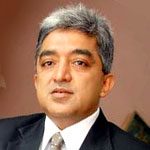 Harish Bijoor: Social media is a revolution for sure. Media, which was hitherto owned by publications, television and radio channels alike, is today open to all. Everyone can broadcast. My tweets are read, liked, re-tweeted, even massacred, by thousands in an instant. In the era before social media, this was not the case.
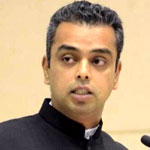 Milind Deora: Social media has really democratised the ability to communicate. Most of it is free, which also makes it extremely attractive. It’s a new, accessible way of communicating with friends and with people you want to reach out to, if you’re a politician or an entertainer. Social media has disrupted traditional mediums [of disseminating news] such as newspapers, magazines, television.
 Ranjona Banerji: I was an early sceptic about Facebook and Twitter, and only tried them out to confirm my reservations. Since then, however, I’ve been hooked. Twitter is now the top way to get news first (often, along with some outrage and hysterics). The Arab Spring – or whatever happened to it along the way — would not have had any success without Twitter. This, more than Facebook, has truly broken down barriers of language and distance, and allowed people to get in touch, like never before.
Would you say it has been a gamechanger in influencing public discourse in India?
Amith Prabhu:Â The last Lok Sabha and Delhi Assembly elections are a fitting proof of this phenomenon. We saw Mr. Kejriwal winning the election with a record breaking number of seats even after he was widely criticised for his resignation. His campaign is a perfect of example of how social media was used intelligently. Similarly, the success of Mr. Modi in winning the national elections can be attributed to the smart use of social media to a large extent.
Gul Panag: Political discourse has gained a lot because of social media. Never before in our history have so many people, and across socio-economic strata, discussed politics as they did during the 2014 General Elections. Also, people and issues that never got attention earlier, now have more of a chance of this. For instance, the North East was never a part of mainstream public discourse. But thanks to social media, the Manipur blockade from a few years ago, got attention. It was already in its third week when some of us posted about it on Twitter, but once it started trending, it made it to the front pages of most newspapers as well.
Hareesh Tibrewala: Indian society is a very communicative one. We have an opinion on everything. Till now, public discourse was limited to views expressed by celebrities or the media. Now social media has made everyone “the mediaâ€, and the collective opinion of a large majority starts influencing public discourse.  At times, it may lead to mobocracy, where half-baked ideas find emotional resonance with a majority and subsequently force public opinion. But that is the price to pay for democracy
Harish Bijoor: Public discourse is public today in the true sense of the word. There is a democracy in social media that was not visible in the pre-social media days. Though there is anarchy as well, of course.
Milind Deora: It has made not just politicians, but the government and even corporations more accountable. Today, if people are outraged over the Maggi issue, the company has to respond. Even journalists, who hold stakeholders like politicians and businesses to account, have been kept in check by social media. It really is the ultimate accountability tool.
Ranjona Banerji: In India, although there is a vast nation outside the world of social media, there is no doubt that social media dictates conversations. The fact that politicians and the police get upset about Facebook posts, and the more savvy try to have Twitter accounts, only underlines social media’s reach and importance. Both newspapers and news TV are forced to keep an eye out for what’s happening on social media. Though you could also argue that sometimes they forget that there is a world beyond hashtags as well.
And while social media has given new voice to people, how do you think has it changed the way brands, marketers, politicians and journalists communicate with their stakeholders?
Amith Prabhu:Â As pointed out earlier, social media if used intelligently is a big advantage to brands. It gives brands a ready platform to engage with its audience and take their feedback to alter their products and services as per the needs of the customers. Brands are now more interactive with their audience which hugely works in their favour.
Gul Panag: Brands need to realise that it is not just a one-way conversation where they talk at consumers. It is not only about talking to your target audience, but getting your target audience to talk about you. Brands like Redbull don’t employ direct marketing. They sponsor an F1 team, or an aerobatic flight squad for air shows, and that makes people think Redbull is cool. It is rewarding for a brand to have people talk about it, rather than it talking to people, because that also comes at a very large cost.
Hareesh Tibrewala: The best example of how social media has influenced consumer behaviour, is TripAdvisor. If you are in the hotel business and don’t get good reviews on TripAdvisor, you might as well shut shop. It no longer matters how you ‘market’ your brand. All that matters is the opinion of consumers who have used your product. Social media is now about building brand advocacy among consumers.
Harish Bijoor: Marketers, who are essentially used to marketing to the ‘patient’, need to embrace this quick and decisive media for their brands. Time to wake up, smell the social media and learn the art, science and philosophy of marketing to the ‘impatient’. Social media management is a different skill altogether. Marketers cannot hide behind the cloak of their PR outfits anymore. They need to be hands-on and quick in this medium.
Milind Deora: I use it as a good way to get feedback on issues. The current joke on social media is that the Prime Minister tweets to wish Algeria on its national day, but won’t tweet about scams in the government. But sooner or later, this will build up to a crescendo where he’ll have to say something. Social media makes you, as a politician, more accountable. It is all about a viral communication strategy and it’s different and more interactive than any other medium.
Ranjona Banerji: I think the corporate world has not yet fully understood how to exploit social media. The internet community is averse to intrusive advertising and many companies have not yet understood this. However, Twitter is a great way to complain to service providers and in my experience you often get a far prompter and more effective response from social media handles than you would if you had the courage to take the call centre ‘press 1 to be ignored, press 2 to be insulted’ route.
Conversations have now moved from the coffee table to a social media platform. What do you envision for the future of the communications industry?
Amith Prabhu: Communications business in India has a lot of potential and social media is a big part of it. A couple of years ago a PR conference was born thanks to a conversation on a social network. PRAXIS was born on twitter basis a single tweet. Similarly there are innumerable things that one can do with the help of social media. Social media opens up new ideas, infinite avenues and amazing possibilities for people who are ready to explore its power. I even secured a job at the global co-headquarters of the world’s number one PR firm using social media.
Gul Panag: In the future we’re going to see periodic, disruptive changes. For example, the first round of disruption came with Twitter, then Pinterest and Snapchat. You will always find a disruption the moment we settle into a status quo, and you can either evolve yourself, or you will be forced to evolve because of the disruptions that will happen. Instagram began as a photo-sharing medium, but it also has videos now and that’s enabling people to put their stories across in a manner like never before. So that’s disruptive change.
Hareesh Tibrewala: Mass communication in its current form will remain. However communication strategies going ahead need to have active social listening (to understand public chatter), social engagement strategy to engage in one-on-one conversations as well as influencers and advocates strategy as something integral to any communication architecture.
Harish Bijoor: Yes, discussions which were one-on-one in the physical world are today all about one-to-many in the virtual world. This is a trend. On social media, your friends are those you have never met, but seem to know well.
Milind Deora: I think the future of media will really be a hybrid of social media and television. Back in the day, if I was an artiste, a fan would write to me and I would respond. Now the fan is not writing to you privately, but in a public forum, letting the whole world know what he thinks of your music, and you are responding to his comments publicly. So one has to be very careful about using it. But it’s definitely opened up individuals, corporations, governments to greater standards of transparency.
Ranjona Banerji: Perhaps people sitting at the dining table tweeting to each other instead of talking? The methods of communication keep changing. Who knows, if you ask me these questions 10 years later, we might be saying: “Wow, I’d forgotten all about social media!”
First appeared in ‘dna of brands’ dated July 20, 2015