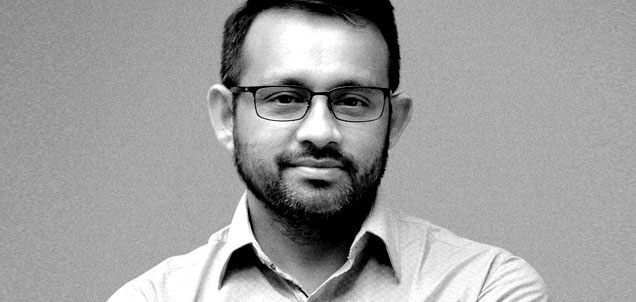
How would you like to go on a vacation to an exotic, faraway place while sitting in the comfort of your home? Or drive an ultra-expensive car that would otherwise be unaffordable? The amazing, unbelievable world of Virtual Reality makes it all possible. While this breakthrough technology has been doing the rounds for some time, it is only now that some brands are using it to promote their products. Ashish Limaye, CEO, APAC, Happy Finish speaks to Anuka Roy about the workings and wonders of Virtual Reality
For the benefit of our readers, could you please explain, in brief, what VR or Virtual Reality is?
Virtual Reality (VR) by definition means you export yourself into a virtual world. Today I am sitting here, but in case I want to explore a location where I cannot travel physically, I can still travel virtually, and that is what VR is. I could be physically present here, but I should be able to experience a different world virtually.
|
VR CASE FILES
Tata Motors Tiago
The brief from Tata Motors was clear: Let’s make people experience a test drive, no matter where they are. With a keen focus on the distribution channel, a VR solution was created enabling the car major to leverage the power of the mobile, producing engaging content via an easy-to-use app, available on both Android and iOS phones. The video content was envisioned as a complete, 360-degree experience of the car. The virtual experience began by immersing the viewer in a CG stadium before moving to a comprehensive exterior and interior view of the Tiago traveling on the road, which was shot in live-action.
Renault Kwid
Renault wanted a narrative-driven, 360-degree VR experience for its new SUV-inspired small car, bearing the tagline ‘Live For More’. Since the VR film was to support the pre-launch on-ground activation campaign for the Renault Kwid, the storyline had to appeal to people hanging out at malls, large department stores, and even pre-transit at airports.
The solution enabled Renault to narrate the story of two friends headed to a campsite in their Kwid. The VR experience helped bring the product to consumers, even if it wasn’t shown in the real world.
Information courtesy: Happy Finish
|
As someone who has been on top of technology, how different is this from the rest of what we have seen till now?
VR, as a technology, itself is new in India. What we have seen generally in the Indian advertising landscape, is a little bit of augmented reality where you bring the outside world into your world. VR is completely different from whatever we have seen till date, in terms of the sheer engagement and involvement with communication, because you are almost able to feel yourself driving a car or vacationing on the beaches of Australia, without leaving your existing location. The engagement and involvement of the consumer with storytelling is going to be the biggest difference which, in my view, is going to drive this particular segment
In the past we have seen several technology-led innovations available, which have sometimes fizzled out, for some reason or the other. Where would you say VR stands?
It is too early to actually comment on whether VR will be a success or a loss, because we are still scratching the surface. The ecosystem of VR has been very robust, unlike that of other technologies like Google Glass, which was a little ahead of its time because the ecosystem had not evolved. If you talk about VR, I think, thankfully, the ecosystem is coming along at a good pace. And when I talk about ecosystem, I mean the content creators — people like us, the need from brands to create a VR which is essentially where the communication comes from, and then hardware, like maybe Google cardboard. All these three different pieces are coming together at a much better pace than what I would expect in any other technology. Yes, this technology would have its own learning curve, it is bound to have its teething problems as well, and I think we should give it its due. But I think it is at a far better stage than other evolving technologies.
One of the factors that has been a stumbling block is the impediments in mass consumption. Even a simple thing like 3D didn’t really take off as one thought it would. Your comments.
Any communication has to be on a mass scale because only then would the masses be interested in encouraging that particular communication channel. So you are right — it needs to be on a mass scale. When it comes to VR, thankfully, there are multiple channels of distribution, which have already been explored.
What would you say is stopping VR from getting as big as it deserves to be?
The ecosystem is coming together, but the pace at which it is, is probably the only limitation; it is stopping the growth to the desired degree we would expect for VR. A lot of people have smartphones, but do they have access to Google Cardboards till the time a brand actually provides that? Second, even the content creators are not really evolved in this particular space because the creation of 360-degree VR content is a right blend of culminating storytelling, creativity and technology. It is not just about either creative storytelling, not just about technology. From an execution part of VR messaging or content, content creators are definitely one of the key stumbling blocks to my mind because there are not many players who can actually say they can create good content. The third stumbling block is the fact that clients themselves have limited understanding of the way storytelling can be implemented in this. These three factors will probably make the growth a little slower than what it should be. But I see them being just a function of time.
Despite still being out of the reach of even the tech-savvy consumer, VR has been embraced by some brands.
Brands, and progressive brands, have always loved to be the first to adopt anything that is innovative and helps to break the clutter. I am not surprised that it’s the brands which have taken the lead. The challenge for brands would be the ability to differentiate between just an innovative medium and a beautiful way of storytelling. Some brands which are doing commendable work have an understanding of the creative part of this particular storytelling, as well as the technology part, and then allow experts to steer them. Some brands have really understood what it takes to deliver and invest enough time to first have an appreciation of this particular medium. The brands which have been able to do so have certainly been able to leverage the benefit.
Would you say that certain sectors like automobiles and real estate have realised the potential of this more than others?
Automotives, FMCG, beverages, real estate, hospitality, tourism — these are the sectors who have gone ahead and embraced VR. Each one of them has some experience to narrate. There are categories like beverages which eventually talk about the process of making the beverage. It could be Coca-Cola or alcoholic brands like Whiskeys. Wherever there are experiences to be narrated, and where brands believe that consumers would love to be a part of that storytelling, they have been the early adopters. However, there are a lot of interesting examples — like life sciences — which are coming up in a big way where brands are actually talking to consumers and doctors, and telling them that a particular molecule helps cure a particular disease.
Everything finally boils down to monies and time. How much does a typical VR project take in terms of costs and monies?
Unfortunately, there is no one-size-fits-all answer to that. But if I were to do a fair assessment of a good VR experience which is a two-minuter, and a client should be looking at an investment of close to 70 to 80 lakh, which gives them a good cinematic experience and combines that with a good application or some kind of a distribution platform. I am not including the hardware cost but I think this is a reasonable budget to go with.
What do you see as the growth prospects for VR and a company like Happy Finish?
Happy Finish is not just into VR. We have other verticals as well but we do believe in VR — or for that matter interactive — as a business is likely to be growing at a much faster pace, globally as well as in India. Talking about VR as an industry within India, I think I am already seeing early signs of growth and a lot of studios which are mushrooming and providing a decent amount of output in terms of VR. In the next three years, in VR you will find that there is good amount of growth which is, in fact, good communication from the brand side, and a lot of good storytelling is likely to happen. I am expecting that a lot of creative agencies would be able to embrace this medium from a point of storytelling, and thereby provide brands and consumers completely different experiences.
This interview first appeared in dna of brands on July 11
 Creative production house Happy Finish has completed five years in India. Headquartered in London, the agency branched out to Mumbai with a studio of eight people, mainly with an intention to provide support to international clientele of Happy Finish. Today, the team has grown into a business of 30 artists in interactive mediums of media serving colients.