By Shruti Pushkarna
 After a huge success last year, the Government of Goa and the Office of the State Commissioner of Persons with Disability were back with a much bigger second edition of the country’s first inclusive festival for persons with disabilities. International Purple Fest 2024 was held in Panaji from January 8 to 13.
What a fantastic week-long celebration of inclusivity with 8000+ delegates from 17 countries, showcasing solutions, artwork, innovations in technology, experience zones, and heartwarming performances. All thanks to the hard work of the state government and the State Disability Commissioner’s office!
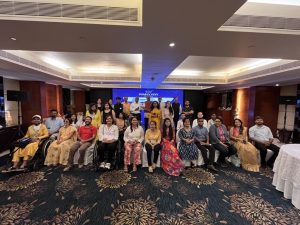
With workshops and discussions on pertinent topics like sports, education, employment, healthcare, politics, governance, laws and more, one would assume there was enough meat for the media to cover and report. But barring a couple of national stories, coverage was confined to local dailies. Another golden opportunity to cover hundreds of walking-talking human stories of success, struggle and strength, missed.
Like last year, there were Purple Ambassadors to represent each of the recognized disabilities under the Rights of Persons with Disabilities Act, 2016. And this year, they were given more screen presence, especially in a dedicated session with various State Commissioners of Persons with Disability as well as the Deputy Chief Commissioner of Persons with Disability.
Here’s what these Purple Ambassadors shared from their lived experiences, both personal and professional.
 Vishant Nagvekar, Locomotor Disability (Goa): Persons with locomotor disabilities face a lot of challenges in outdoor environments, even in events like Purple Fest, when it comes to washroom access. There is little importance placed on this while planning. I heard other wheelchair users complain of the same during in the past few days, this is something that needs attention from the Disability Commissioner’s office.
 Pooja Gupta, Thalassemia (Delhi): One of the requirements of persons with thalassemia is to get blood transfusion every 20-25 days. In India, there isn’t much blood donation on a mass scale and NAT (Nucleic Acid Amplification Testing) tested blood is not available easily. For instance, in Delhi, only two major hospitals provide NAT tested blood and not everyone can afford going to those. This type of blood can save thalassaemic patients from severe infections. Also, hardly any health insurance companies cover genetic blood disorders, and those which do charge an exorbitant premium with various terms and conditions. This is an expensive disease to manage, can the State help create awareness about this?
 Shrutilata Singh, Deaf Blindness/Multiple Disability (Gujarat): There is little awareness about deaf blindness. There are 21 disabilities in the Rights of Persons with Disabilities Act, classifying deaf blindness as a Multiple Disability is not fair, as this is a condition with varying degrees. We need this to be a separate type so it can be certified and people can avail of reasonable accommodations. Today deaf blind people face difficulties during examination, applying for a job etc. because their certificate doesn’t mention the exact disability. Secondly, a lot of information about schemes and technology from the government doesn’t get communicated to us. We need a dedicated group that shares all relevant information in an accessible format.
 Radhesh Varty, Haemophilia (Goa): Haemophilia is a condition which is unpredictable. Today I am speaking with you, standing here, tomorrow I can’t say what condition I’ll be in. There is a lot of challenge we face in reservation of jobs, because when people hear about haemophilia, they write us off. It’s hard to predict which body part might swell up when, and where bleeding may occur. We need specific accommodations for this disability and the corresponding conditions, especially to make gainful employment possible.
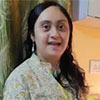 Swasti Mehta, Intellectual Disability (Maharashtra): We need specific focus on early intervention for this disability. It should be made mandatory for parents to get early intervention for such kids to improve their future because they are often confused. There is a need for occupational training for persons with intellectual disability after 18 years of age. There are no government provisions for that. Some parents send their children to private training institutes but after 18, government needs to support this disability. The loans that are provided by NHFDC (National Handicapped Finance and Development Corporation) are of no use without any training.
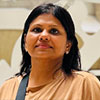 Dr Shanthipriya Siva, Parkinson’s Disease (Tamil Nadu): Why glyophosate, a herbicide, and another pesticide that cause Parkinson’s still not banned in India? After few years of Parkinson’s when your medicines don’t work and you get a lot of multiple motor fluctuations, there is a surgery called Deep Brain Stimulation which really helps patients. But it’s not performed in most government hospitals in India. Can this be made accessible to all patients with Parkinson’s because it can really help people with early onset, when they might be in the peak of their careers?
 Priya Lal, Leprosy Cured (Delhi): I want to highlight the issue regarding disability pension. In my state, I only get a mere 500 Rs as monthly pension which is quite low. We need to increase this to meet daily expenses. There are so many girls like me whose families don’t accept them and they have no access to jobs. Some families even leave these girls in hospitals. Even though I work as an auditor with a multinational company, I still face a lot of problems because of my condition. How can we change this?
 Anubha Singhal, Muscular Dystrophy (Delhi): Muscular Dystrophy (MD) has various types and sub-types. I want to highlight that many others with MD are unable to join this fest because most of them live with severe disabilities, and they need more than one caregiver at times. Looking at the accessibility of all states, we struggle. The laws exist but why is there such lack of implementation? Why are we not pushing for the online systems of building plan approvals? This can rectify the problem at the planning stage. Can the government not push this to make buildings accessible as per the harmonised guidelines?
 Saurabh Prasad, Blindness (Jharkhand): Last year, DEPwD (Department of Empowerment of Persons with Disabilities) initiated a STEM-based programme and circulated proposals to 100 different national institutes working for blind and hearing impaired people, for establishing STEM labs in their schools. But they received less than five applications. This is because these institutes don’t have teachers to take this program up. Unless we have required special educators, we won’t be able to implement such initiatives. So what plans does the government have to manage this shortage of teachers and trainers across schools?
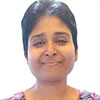 Smitha Sadasivan, Multiple Sclerosis (Tamil Nadu): It’s been eight years since the RPWD Act was enacted and we only have seven more years for the Sustainable Development Goals to be completed. In the interest of this timeline, we need to take stock of which aspects were implemented, which ones are underway and which couldn’t take off. One example is that of the caregiver’s allowance listed in the Act. Many states are giving a mere sum of 1000 Rs for caregivers who are parents, which is not a solution. These should be trained caregivers who are paid dignified wages. Data is another critical area, is disability related data available to different government departments? Also, how many people with disabilities are in decision making roles, especially in the various state disability departments?
 Chaitanya Mukund, Cerebral Palsy (Haryana): Based on my research of past two years, crimes against persons with disabilities don’t get recorded properly, both on state and national level. India has no data in this regard, this is a huge lapse, and a violation of Section 7 of the RPWD Act. When there is no information available, how can awareness be generated for the same? I’d urge all State Disability Commissioners to issue recommendation as per relevant section of the Act for the respective State Police Departments to issue enforceable guidelines with regards to recording crimes against PwDs.
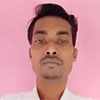 Nomesh Verma, Sickle Cell Disease (Chhattisgarh): Awareness is a huge problem, especially among medical professionals. Sickle Cell Disease (SCD) is an invisible disability, and due to the lack of proper medical consultation, many with this condition die. We need to train our doctors, and also spread awareness among common people. Treatment of this disease should be made available in villages. Around 14 lakh people are living with SCD but a mere one per cent has been issued Unique Disability Identification (UDID) cards. One of the reasons is the complex guidelines which prevent from issuance of certificate, if someone has not had a transfusion within three months. We are not able to avail of any government schemes as a result. Job reservation is also a challenge without a UDID. Can we simplify these rules?
 Prasad Joshi, Deafness (Goa): There are many challenges, primarily that of communication, which leads to several other issues. We are dependent on interpreters, because most people don’t understand sign language. We want Indian Sign Language (ISL) to be registered as an official language. This will solve most of the problems like quality of education, early prevention, jobs, et cetera. If ISL is introduced, this will help include us in the mainstream.
 Dr Anubha Mahajan, Chronic Neurological Condition (Delhi): We need a separate classification for Chronic Neurological Conditions (CNC) in the RPWD Act because Multiple Sclerosis and Parkinson’s are also neurological disorders. We get issued a certificate on the basis of chronicity, prevalence and progression of the disease but there is no clear definition for the same in the Act. The problem with CNC is the unpredictability of the disease. I can walk today, but that might not be true on another day. For every disability including CNC, we need a specialised team of doctors for assessment.
 Aditi Gangrade, Autism (Maharashtra/Madhya Pradesh): Most parents of children with autism have no awareness about this condition. A lot them force their kids into therapies for a cure, which is not medically possible. A lot of doctors are offering Stem Cell therapy as a cure, even though ICMR has issued a guideline to use this therapy only for research purposes. Why can’t we spread awareness so parents don’t fall into such traps? Some autistic children also have intellectual disability, they are often beaten up and tortured to punish them for their so-called rude behaviour. Often films ridicule persons with disabilities, why is it still allowed despite the strict laws against discrimination?
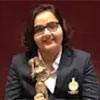 Ekta Bhyan, Spinal Cord Injury (Haryana): I urge Spinal Cord Injury to be made into a new 22nd category of disability because as per World Health Organisation, it is the most devastating disability. The numbers are huge, 1.5 million in India, and every year 15-20,000 new cases. It is an injury that impacts the central organ system, every organ is directly or indirectly impacted by this disability. So we can’t club it with orthopaedic disability. Speaking of assistive devices, a normal wheelchair costs 3-4 lakh rupees, tax exemption should be available for affordability. Also we need more spinal cord rehabilitation centres in the country.
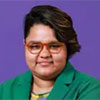 K Vaishali, Specific Learning Disability (Telangana): I have gone to 5 schools, a mix of private and government. I always wrote d instead of g, but none of the teachers were able to notice my Dyslexia. I had to diagnose myself at the age of 20. Teachers are the best people to catch hold of it at an early age but most of them have no awareness. Every school and college must have special educators. UGC and CBSE have specific guidelines about dyslexia but the teachers are clueless.
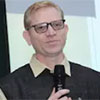 Prashant Naik, Low Vision (Maharashtra): Low Vision is a spectrum, we are neither totally blind nor do we have corrective vision. Hence, we face challenges in education and employment. One solution I want to suggest is to create awareness at a state and central level. We can perhaps have a ‘Sugamya week’ or something annually, so mainstream society can be sensitised. We should also have representation in the respective state departments for persons with disabilities.
 Disha Pandya, Dwarfism (Maharashtra): I’d like to emphasise on the lack of doctors, paediatricians or orthopaedics who can specifically guide on dwarfism. Doctors are not aware on how to treat it or help with certain aftermath. More importantly, the entertainment society has made dwarfism into a joke everywhere, in malls, schools, on the roads! Is there no way of stopping this? There are many persons with dwarfism who earn through channels of entertainment but why should they be ridiculed?
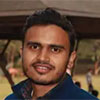 Puneet Singh Singhal, Speech and Language Disability (Delhi): I have similar issues pertaining to accessibility, forced therapies, crime against disabled and so on. I am an activist and my organisation’s tagline is “Stammer, but with love”. Just like dwarfism, people like me are used for comic relief in films and television. Why can’t we spread awareness so people don’t turn insensitive towards us?
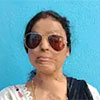 Sonali Mukherjee, Acid Attack Survivor (Jharkhand): There are laws but are not being implemented on ground. Girls are being made victims of acid attack every day. Why aren’t we regulating the sale of acid in shops? There should be stringent action against the perpetrators of such heinous crime. Acid attack survivors also face denial from health insurance providers, despite the fact that they may not have any serious illness. The other issue is pertaining to chasing the legal system for justice. My case has been running for 20 years now without a just verdict.
How can the media not see reason enough to air these critical issues that will impact the kind of nation we build for our upcoming generations? Is the media resigned to carry on propagating ridiculous stereotypes of disability which are far from reality, in these times of innovation and technology?
Wondering why MxMIndia publishes a disability advocacy column? Well, we strongly feel that the media can dramatically transform the world for persons with disabilities. This series attempts to help bring forth issues that the media must champion to create a truly inclusive and accessible India. Writing this column is Shruti Pushkarna, a former journalist and now a disability inclusion advocate based in New Delhi. Her views here are personal. To access the archives of her 80-plus columns, please visit: https://www.mxmindia.com/category/ columns/shruti-pushkarna/
If you have a view on the issues raise or would like to align with MxMIndia on this cause, write to us at editor [at] mxmindia.com.