
Tag: Gillette

  • Is Gaming the Silver Bullet that can change Brand Marketing in 2021?

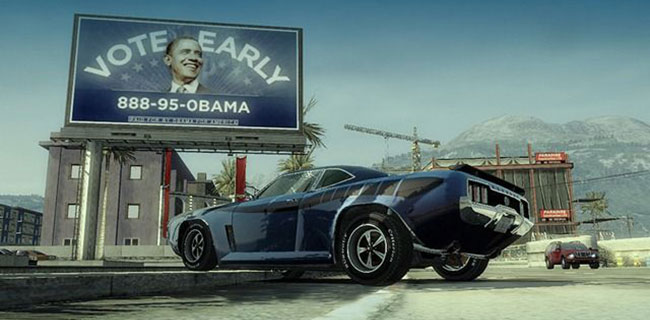
    Barack Obama used in-game advertising hoardings in the game Burnout Paradise among others, during his 2008 Presidential campaign


    By Bhuvi Gupta


    Bhuvi GuptaThis is the first time I am going on the record to admit that I have spent a lot of time playing online. Luckily though, these obsessions were recognised before they became addictions after an unhealthy time spent on Farmville, Angry Birds and lastly Candy Crush, before I admitted that I would not go down the slippery rabbit hole that can be gaming and have kept myself away since 2015.


    I am definitely the exception. In the last few years, driven by increased digital penetration and bandwidths, (and this year COVID-19) mobile gaming in India has exploded. As per a report from app intelligence firm Sensor Tower, Indians installed 7.3 billion games, nearly 17% of all worldwide downloads in the first nine months of 2020, beating countries like USA and Japan to the number one position.


    Basis the Google-KPMG Media Report 2020, the Indian gaming industry will cross USD 1.1 billion in 2021. With around 500 million people in India having smartphones (give or take a few million) and around 300 million+ gamers, there is no denying that this market is growing with the lockdown having helped accelerate the growth. The biggest USP of mobile gaming is the level of engagement that the audience has while playing a game. A GroupM- Mobile Marketing Association report (link – https://www.groupm.com/mobile-marketing-association-and-groupm-launch-mobile-ecosystem-report-2020/) highlighted that gamers are more than twice as likely to pay attention to advertisements placed in mobile games at 41 percent, as compared to ads placed on the internet at 17 percent, in magazines or on billboards at 15 percent each.

    This implies the inherent value of digital impressions becomes much higher.


    Marketing during gaming takes three forms primarily –

    :: Integrations – which are well-integrated into the narrative like branded ‘Virtual Real Estate’ like banners within the game, branded items like clothes or accessories worn by avatars, and fully branded modes or levels

    :: Advertisements for additional lives, etc. which can be typically purchased on ad exchanges

    :: Events such as e-sporting leagues
     

    Barack Obama used in-game advertising hoardings in the game Burnout Paradise among others, during his 2008 Presidential campaign


    Barack Obama used in-game advertising hoardings in the game Burnout Paradise among others, during his 2008 Presidential campaign.


    In India, Gaming in India can primarily be classified into four heads-

    :: Fantasy Gaming – which already has 100 million users with companies like Dream 11, Mobile Premier League dominating.

    :: Action games – such as PUBG and Fortnite. While Fortnite doesn’t have as many users in India it has been the front-runner in terms of brand integrations globally.

    :: Real Money Gaming – like online Rummy, Poker, and Ludo King. This comes under the purview of gambling and hence basis Indian law is subject to laws as dictated by states. While skill-based games such as Poker and Rummy are usually permitted, games of chance are prohibited. The recent PayTM First Games ban on the Google Play Store was also related to the definition of what constitutes ‘Gambling’

    :: Live Trivia apps – such as Pocket Aces owned Loco


    Why Gaming?


    With more people coming online there is ad fatigue that takes place due to the high number of ads users see. Many users also use ad blockers, and hence awareness and engagement with even well-targeted ads is low as the audience is just waiting to skip the ad.


    This is as opposed to the active audience that plays online games, where they are tuned to engage with the gaming platform to maximise scores. By using product integrations, or branded levels, brands can also help create immersive experiences for the target audience.

     

    Poco introduced their new launch, POCO M2 Pro via the game Tappy birds. A weeklong tournament called ‘Tappybird showdown’ was held where the mobile phones were placed inside the game, and players had to collect the phone to earn extra cookie points.

    Secondly, as the market is still nascent, brand integrations remain relatively unexplored. With 5G coming into India in the next 5 years, gaming will become immersive and hence technologies such as AR/VR will help create a value-added gaming environment, which is perfect for marketing.


    Poco introduced their new launch, POCO M2 Pro via the game Tappy birds. A weeklong tournament called ‘Tappybird showdown’ was held where the mobile phones were placed inside the game, and players had to collect the phone to earn extra cookie points.


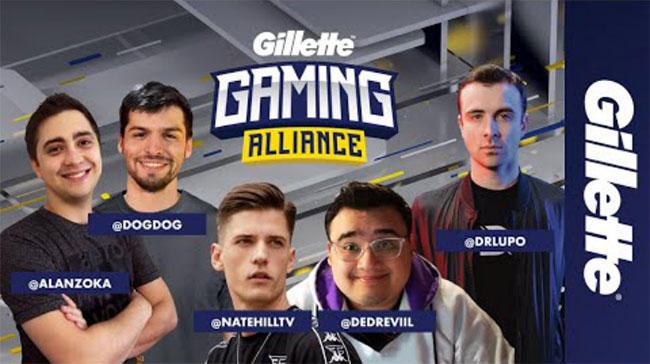
    Thirdly, emergence of e-sporting leagues and tournaments and live game streaming allows brands to leverage gaming influencers, do cause marketing, sponsorships etc. for a well-defined audience. The Google-owned YouTube has a vibrant community of gaming live streamers such as Tanmay Bhat, Gagandeep Singh (Sikh Warrior), Manasvi Dalvi (Manasvivi) etc. in India. Globally such campaigns are have already become common, for e.g. P&G’s Gillette has hosted the Gillette Gaming Alliance on Amazon-owned live streaming platform Twitch in 2019 and 2020 with a team of five Twitch influencers to create content for their fans, and highlight other campaigns and causes.


    Lastly, just like in digital advertising, brands can target users on the basis of demographics and geographies, which makes in game advertising all the more effective. There is also high prevalence of gamers in Tier2 and Tier 3 cities, which can be leveraged by brands.
    While it may seem that Gaming is more relevant for youth-focused brands, the 35+ age group has high usage in more traditional games such as LudoKing, Online rummy and Poker. Hence, depending on the target audience, brands should choose games online to create impact.


    The timing is right, the lockdown has helped accelerate user growth, and Indians brands must strike when the iron is hot to make the most of a relatively undiscovered avenue for advertising before it gets too crowded.


    Bhuvi Gupta is a marketer with over 10 years across industries, of which the last six have been in Media & Entertainment. She has been a part of many launch marketing campaigns – specifically at the Times of India group, Republic TV and the latest in marketing a Bollywood film. She will write on A&M (mostly marketing, but often on advertising too) every other Tuesday. Her views here are personal. She tweets at @bhuvigupta3



  • Is Gillette Close-Shaving its Brand Purpose


    By Sanjeev Kotnala


    Advertising is a way to enhance Brand value. As a result, brands expect growth and higher revenue. Every era has a different approach that seems to work with the generations. Brand Purpose appears to the current favourite and brands are opportunistically flirting with it.
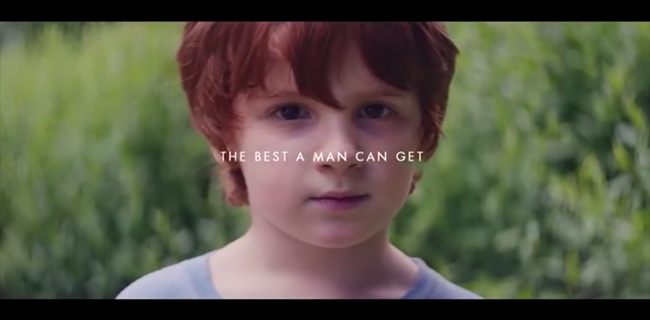
     

    A brand in its strategic madness must leverage topical opportunities. However, I think Gillette is diluting its image associating with a confusing brand purpose if any. What is the brand purpose? It is about being a secular product or an anti-racism advocate that avoids discrimination basis races and colour. Do you buy that for Gillette?~


    I have grown with Gillette selling me the golden dream of the masculine clean-shaven man. It created that image for my idol. The one every woman is fascinated with. At least that’s what the brand been telling me for long.


    I was young, the razor had just two blades. The 5pm shadow could be the difference between success and failure. Shaving an almost non-existent stubble was a ritual before any evening outing.


    Gillette had you by the balls and ruled the mind space.


    The times must have changed. It seems shaving is no longer about sharp, smooth, silky feel.


    System1 


    Every week I get System1 newsletter. It is a marketing outcomes agency. System1 picks up ‘the spot of the week’ by measuring emotion at scale and predicting the business impact of brands, communications and ideas.


    System1 says, ‘The more people feel, the more people buy. Emotional advertising leads to long-term brand growth’.


    You cannot fault this thinking.


    Mostly I agree with their analysis and find it absolutely bang-on. Just to say that our thinking matches. At times, System1 outlook does not pass my filters or fit the pattern of my thinking. I then talk about it.


    Gillette- Made Of What Matters.

    Last week, the System1 spot of the week was Gillettte; ‘MADE OF WHAT MATTERS’.


    Gillette advertisement stars British footballer Raheem Sterling. He plays for Manchester City.

    The advertisement was launched around the world in February 2020. It was about helping kids who’d become disengaged from education.


    However, it was not released in the US. Possibly the Gillette team thought that an unknown British soccer football player may not work in the US, where the game itself is of niche interest. Later, when Black Life Matter and racism wave hit the US, the spot was released. Now it takes a different cue.

    https://youtu.be/GnaChQh5Slo


    It Is About Brand Purpose Or Opportunity.

    The spot seems an answer to a topical opportunity. There is a seamless repositioning of existing creative. ‘Made of What Matters’ celebrates the idols in the game and outside it. The sports code of goodness, positivity and passion gets reflected in actions and life to push. Black lives matter. Made up of what matters.


    The protest around police violence in the US gives the communication a good head-start. However, the brand response if much delayed and deliberated. Forget the brand purpose. The TVC was available for release much earlier.


    It seems that learning from other brands like Pepsi (the Kendall Jenner ad), Gillette did not want to rush in. It waited to understand and evaluate the sympathy curve. When it became clear that the protest is triggering strong emotions across the nation. That the skin colour is not segmenting the protesters and that there is little chance of alienating a segment. It qualified as the window of intervention.


    Questions.

    Is Gillette opportunistic? In India, Gillette has recently been all about acts than ads. Does this imagery conflict? Or it does not matter. After all, it is about a silly sharpened plate of metal cutting beard.


    So what is the Gillette Brand Purpose?


    I am confused. The brand keeps shifting the dialogue to successfully leverage topical causes; obvious, insightful, created or opportunistic. Will someone on Gillette stand up and tell us what is the brand purpose. 


    Not The First Time For Gillette

    There was a lot of talk when Gillette asked men to be their best during #MeToo era. In communication, Is this what the best can get. Gillette asked men to measure their impact and try evaluating what they do. Much against a ‘boys will be boys’ attribute. It was wonderfully opportunistic. Remember the mother brand P&G. The economic power of women forced the brand to align with the dominant social statement. Oh, for a brand that is best for shaving.


    Branding and purpose branding is risky, and when you keep shifting the post, it is totally risky. Will, the brand Gillette, keep finding a new topical purpose to remain salient and fight growing competition or will it find a real purpose.


    In India, the brand tried discriminating between men who shaved or not. A clean-shaven man or with stubble. It keeps raising questions. Do women like a man with stubble? Is three-blade better than two?


    Gillette in India also presented the real-life story of Lt Col M K Sinha SM (Retd) and his father in an attempt to define the way for a new understanding of manliness and strength. Something that the next generation of men could aspire to. Was that the brand purpose? If yes, there is nothing wrong with it. However, somewhere we are lost in articulation or focus. Now, what is Gillette all about? As a customer, I am just seeking consistency 


    P&G: Mother Brand with a Sharper Focus

    On the other side, the mother company P&G has been on the track of undifferentiated living, equality and anti-racism. It made sense. Look at the #WeSeeEQUAL. 


    P&G says ‘A gender-equal world is a better world for all. Through our actions and the conversations that we spark, we aspire to build a better world for all of us — inside and outside of P&G — free from gender bias and with equal representation and an equal voice for women and men. A world where everyone sees equal’.(YouTube)

    https://youtu.be/g6E4pfAzUCE


    In other communication, P&G directly attacks racism with ‘The Talk- My Black is Beautiful’. It addresses racism frankly and direct, something that opportunistic razor brand has failed in trying to create a space for itself to embrace progressive causes. Oh yes, the Gillette brand purpose is to embrace progressive causes that give them topical momentum.


    “My Black is Beautiful” campaign focuses on the lessons black American parents have to pass on to their children. Lessons about language, presentation and beauty to help them survive in a majority-white society. The goal is to remind black Americans, they are valuable, worthwhile and capable of success despite obstacles. To encourage other audiences to think more deeply about biases they might hold themselves. (YouTube)


    OLD MEMORIES OF Gillette.

    When the first time I shaved, I needed a razor, and I wanted Gillette. At that time, people used the standard razer with the Topaz, Bharat, Swords, or Wilkinson type of blades.


    Gillette was power. Gillette was the mark. It had the rich history of more than a century of the woman falling for clean smooth-shaven men, full of confidence. Removing the 5PM light sky coloured shadows was an essential ritual before stepping out.


    Gillette has helped men to be their best in a totally different context. Now it wants to guide the next generation by telling them what it means to be made of what matters. Here is the link from Gillette to understand what women want.


    Gillette always remained faithful to women appreciation. So much that the brand promoted a crazy act of ‘Women Against Lazy Stubble. It sounded adventurously sexy and perfect fit. Then what?


    What am I a mere consumer wanting a clean, perfect shave make out of this slithery purpose shifting opportunistic moves of the brand?


    The Brand Purpose.


    The cause the brand promotes must be genuine and part of the brand/organisation culture and DNA. Reflected internally and externally. Relevant to the business, consumer-first than society. No functional brand can exist with the sole purpose of creating a better world. It is a commercial entity. It is not about being opportunistic and amplifying whichever purpose is relevant at that stage. Maybe the new generation values something they may miss in their life, a purpose. As Santosh Desai says, ‘You start with a purpose, you have it, or you don’t. You don’t source the market and latch on what is good for the time’.  


    …………………………………………………………….


    This article was written before the excellent debate on June 20 2020 titled ‘Brand Purpose; Responsible or opportunistic’ under the banner Vice&Versa  and presented by the Advertising Club. Santosh Desai spoke about how Brand Purpose is nothing but opportunistic and Josy Paul talked about how it is the core. The session was moderated by Agnello Dias. The article  was edited to add the Santosh Desai quote and recraft a few parts.


  • When it’s Tough being a Man


    By Sanjeev Kotnala

    Nowadays, it is becoming tough to be a man. And even Gillette is getting into the act.

    I am into this simple brand-feature-benefit-transactional relationship with the multi-edged Gillette razor, when suddenly from every article on marketing communication and potential award list now has started questioning me.

    Gillette Started The Battle Of Toxic Masculinity.

    When on January 13, Gillette tried its toxic masculinity concept and was brave enough to accept that maybe it was wrong to project the kind of masculinity that they have a party to. And perhaps they have been inappropriate in their reflection and projection of not only men act against woman but the woman herself.  (The toxic masculinity advertisement has some 700,000-plus dislikes on YouTube). How right!

    The brand told  you “We believe in the best in men: To say the right thing, to act the right way. Some already are in ways big and small. But some is not enough. Because the boys watching today will be the men of tomorrow” and I ask, who gave Gillette the right to contextualise and define what is wrong and what is right.

    Surely, I have multiple sources to listen, read and follow then a razor brand sharing this purposeful new doctrine. Well, the brand, in a way, went on to almost stereotype all the men in one bucket.

    All that from the fundamental insight ‘I am not the bad guy, but I don’t know how to be a great guy,’. Wow, is that advertising trying to be defining a cultural context. And which man does not know the difference between right and wrong, it’s as much as can’t and won’t.

    You are free to hold another point of view. That’s Okay.


    Is Gillette Advertising Really Purpose-Led.

    I want a razor and not a lecture on morality.

    Sincerely, I don’t like drifting aimless advertising.

    I thought that was international. And then suddenly we have this Spain Gillette asking you Are you man Enough?

    The definition of masculinity and what really is a man has been shifting. You can ask the razor brand that is finding it difficult to add more edges to its multi-edge blades.

    https://youtu.be/sfL2vpJJ1uE

    We have indeed been domesticated at home. We have been along with the daughters of the world lived through a generation of can’t, don’t and won’t. It was always more about how to behave, and that meant more of what not to do.

    We have grown with the idolised definition of what a man is or should be. Across the country, there are various definitions of masculinity.   Masculinity, revenge, honour, bravery, money, wishes and dreams were rolled into an undefined heterogeneous mix of directives.  Add virility, beard and performance into that list, and that’s what we know.

    Tear, fear and accepting defeat was never part of that definition. It’s still not,  other than the time when on social media, one wants to be politically right. And now this silly hair-cutting tool manufacturing company believing research wants men in Spain to re-evaluate the stereotypes as it makes the real man feel uneasy.

    The Complete Man Was Another Level Of Masculinity.

    Raymond’s ‘The Complete Man’ has been trying to tell us what is the construct of a perfect, complete man. It is non-intrusive and has been working. It never shouted or disturbed you with the question, Are you man Enough? And I am still talking of the earlier ‘The Complete Man’ series that was subtle and moderate by any standards.

    Men Will Be Men Is Another Polarised Masculinity.

    It is okay.  It is absolutely fine when we men laugh at ourselves. Look at the Imperial Blue ‘Men will be Men’ series. Don’t they teach you and remind you of obnoxious silly behaviour. They tell you in many ways what’s wrong or what’s right. And we men knowing what’s in it for us can take it easily. We don’t need this sharp blade razor manufacturing brand to overtly threatening tone to ask ‘Are you man enough?” or I will…

    Gillette Disturbs Asking – Are You Man Enough?

    Funny then for someone to ask “Are you man enough to admit you’re afraid?” And in the Spanish version, it begs the viewers if they are man enough to be a queen? I don’t think Gillette is thinking of asking such questions in India.

    Every research points out that the new age consumers are looking for brands with a purpose. But this? Seems like someone searched for the purpose and then tried fitting in the brand.

    I am not sure how easy or tough it was for the team at Proximity, Madrid, Spain to internalise this changing definition and shifting stereotypes before they made the client see their way.

    Oh, it is different when the question gets mellowed down to a simple and more acceptable format. “Are you man enough to be you?” Now, you see, the communication is far too convoluted and complexly un-related with the brand.

    It may be artistically exceptional and commercially well-produced. It may be superbly directed and well-executed. The truth remains that it is trying to be courageous in contextually correcting its earlier smooth shave gets you everything approach. It’s good that the brand is trying to GLOCALISE the concept, as there will be a razor-sharp difference from well-executed to downright polarised failure.

    The brand wants you to relate it to another simple fact that “It takes a real man” to do things, to be himself and do things that may not be right but a must. And this it thinks will add and facilitate an inclusive freer world. Help identify the new modern idealistic stereotype of contemporary man. Follow that changing expectation Gillette have moved from its own admissible toxic masculinity of “The Best that a man can get” to “The best men can be”. Well, that for a change is definitely within the challenging new definition. Gillette seems to be man enough to express regret and change.

    …………………..

    Gillette May Not Affect Toxic Masculinity Or Help You Find the Answer- But It Will Win Awards

    Why do I have a feeling that this long-term commitment to a right directional swipe by the brand is going to get a lot of awards: ‘The Best that a brand can get’.

    Do not forget, in Spain under this programme is a small scale prototyped 20,000 students connect programme by sociologist and psychologists. Additionally, there is that judges polarise Gillette Interactive teen chats focussing on real masculine values. There the teens will debate, reflect and surely realise (for the brand’s benefit) that masculinity means a lot different. They will get rejuvenated and charged for breaking barriers that that stop them from being themselves.

    Admit, Gillette Has Been Courageous In Their Act. Now They Need To Just Hold On To Their Belief. They may be saying it right and the way they want to say and shake up male thinking and stereotyping – but then I personally see a lot of gap between product-brand and the purpose. Hopefully I am not alone in it.

    …………………………………………………….

    DUREX STABS MEN.

    Meanwhile, another Man’s friend in need- DUREX CONDOMS tried starting a conversation under # OrgasmInequality. It is talking about a woman faking orgasm to satisfy the male performance ego.


    You’ve heard the numbers, you’ve heard the women and you’ve heard the men. Now it’s time we hear you! It’s time to talk #OrgasmInequality and Fake Orgasms. Ask a question, tell us your story or just be part of the conversation with #IFakedItToo. pic.twitter.com/cxeZRHkA0N

    — Durex India (@DurexIndia) May 31, 2019


    Something that every man knows but is afraid to speak about.

    The best friend Durex did not trade sides but reminded Man that lovemaking is all about mutual intimate pleasure.

    Horrible brand, it is asking women to share their fake orgasm story under #FakedItToo. Even if they open about these stories to the man they are intimate with, it can hurt many dudes psychologically to the level of dysfunction.

    It is different that in our country, not many women will share such stories even if it is  Swara Bhaskar and Pooja Bedi prompting them, but everyone would play their stories in mind. It did have an expected adverse playback from men. There was a lot of twitter debate about it. Yet, think the brand is still the winner.

    Another brand making it tough to be a Man knowing that the females can really influence the choice. The brand knows that it is absolutely true in the case of condoms. A man will get what everything that gets him the action and boosts his ego. And anyway it is all about Durex Mutual Climax Condom- another pressure point..

    This is confusing, as it is the case of “The best men can be” to “The Best that a man can get”. I just hope people get what is being said above. I hope the stance and comments are not taken at face value.


  • Gillette salutes fans’ passion for cricket in new TVC

    By A Correspondent


    With the Cricket World Cup underway, and as a tribute to the Indian cricket fans, GREY group India has launched a special video that salutes all cricket lovers who showcase their incredible passion and relentless support towards Indian cricket and cricketers.


    The Indian fans’ sentiments and passion flows into the performance of the players thereby reinstituting their joy and this video is Gillette’s ode to the Indian cricket fans. Rajeev Sathyesh, Country Marketing Manager, Gillette India said, “Gillette, globally has been associated with sports for many years now. As part of Gillette’s endeavor to salute the spirit of all Indian cricket fans, we have launched Special Edition India razors. The new razors have the word India engraved on the handle and proudly displays the country’s name and colours.”


    Gillette’s recently launched special edition razors that have the word India engraved on the handle and displays the country’s name and colours, to encourage cricket fans to continue extending their relentless support to the team.


    Malvika Mehra

    Malvika Mehra, National Creative Director and Executive Vice President, Grey Group India, said, “They say fans make the game. No fans, no game. This short film is Gillette’s salute to the passion of every cricket loving Indian fan. Told through a story of a blind fan whose spirit and love of the game clearly overtakes his disability. In today’s overly crowded (and yet ironically isolated) social ecosystem, any sensible brand needs to have larger conversations with its consumers, they need to evoke ‘real feelings’. The age of mere transactional communication is over. We are lucky to have a client like Gillette, who sees that. With this film we hope to touch a much richer space of a ‘real connection’ with the consumer. Leading to a far more satisfying pay off for a brand in the long run.”


    Yashaswini Samat, Executive Vice President, P&G, Grey Group APAC said, “Gillette has historically leveraged sports and sports celebrities, globally. The focus here has been on the common man, the fans and their unequivocal passion for the sport.”


  • Gillette Venus survey unveils interesting facets on women


    A new global survey by Gillette Venus reveals that most women around the world (70 per cent) have felt labeled by others. Those labels can be assigned as young as 10 years old and nearly half of those surveyed say those labels have had a negative effect on their lives (43 per cent). Despite the advances of women in the work place and home, the survey shows that girls still feel being labeled affects their self-perception and life choices.


    In response, Gillette Venus has launched the “Use Your And” campaign to inspire women and girls to stand-up against one-dimensional labels, encouraging them to #UseYourAnd and unleash the innate potential inside all women.


    As part of the campaign, Gillette Venus is releasing the new ‘And Stand’ video to spark a global conversation and inspire women to use their ANDs – all of the qualities, attributes and characteristics that make a woman who she is. The video features real women telling personal stories of lost potential stemming from labels, set against a re-mastered recording of the iconic ‘She’s Got It’ song.


    “We created this campaign based on what we were hearing from women. They feel that beauty brands tend to focus only on singular dimensions of women – either Super Model or Super Mom – when, in fact, most women are a fabulous mix of everything in between,” said Charlene Patten, Gillette Venus Global Brand Franchise Leader. “Women are limited by one-dimensional labels from a very young age, which leads to significant loss of potential. For example, if she’s labeled pretty, it is assumed she can’t be smart so she behaves accordingly. At Gillette Venus, we believe that all women have the right to achieve their full potential by embracing their ‘ANDs’ and not be limited by any ‘Ors’” said Patten.


    Gillette Venus is partnering with Claudia Chan, Founder of S.H.E. Summit Global Conference & Women’s Empowerment Expert, to educate women in identifying their stereotypical labels and support them to use their ANDs. Claudia’s expertise lies in making empowerment and mentorship available to all women with the belief that if women realize their potential, they will change the world.


    Through the “Use Your And” campaign, Gillette Venus invites women and girls to recognize their potential and embrace their unique and extraordinary qualities. Several social media executions will enable women to share stories on how they #UseYourAnd and the way they stand against labels that limit their potential to inspire others across the globe.


    Key Survey Findings

    The Global Labels Survey conducted by Wakefield Research for Gillette Venus also uncovered:


    :: Labeling/Stereotyping starts young and in school: The majority of women (70 per cent) surveyed around the world first felt constrained by stereotypes or labels as early as 10 years old, reporting their classmates as the top group of people (67 per cent) who have given them a label


    :: Women who’ve been labeled before more frequently label others: More women frequently label others who have been labeled themselves (62 per cent) vs. women who have never been labeled (34 per cent)


  • Debrief: Gillette: The Protector

    By Anil Thakraney


    Till just the other day, Gillette was busy telling us men that women prefer guys who shave. They say the stubble comes in the way of ‘closeness’, and therefore most ladies abhor the stingy hair. That I have been shaving all my adult life, and am still a zero with women, is another story, of course. But I found the idea interesting.


    However, the Gillette folks have now decided to inject social service into their communication, and are asking us men to stand up for women, to respect them. I think this is smart thinking. Ever since the Delhi gang rape, the spotlight has moved to the issue of women’s safety in India. And riding on the topicality will serve the brand well. I also like the fact that Gillette stays away from the usual shaving equipment advertising cliches, the same old smooth shave, freshness, etc, stuff. This is purely about brand building on an emotional platform, and in this category, where one brand is really no different from the other, it’s a good strategy.


    ‘Soldier for women’ is the theme of the commercial. It basically features all sorts of males and females, first standing individually, and later men surround the gals like bodyguards. Of course, all the mards are clean-shaven (Gillette does not like hairy men, remember?). 


    I like this approach. Just two things: One, the creative doesn’t pack in an emotional punch, it leaves you kinda indifferent. The ad needs to be redone so that it arouses goose bumps amongst us men. This should not be very difficult; women’s safety is a charged subject. Also, Gillette must not stay at the level of a TVC, they should go all out and create a sustained 360-degree movement. So that within the next year, in the consumers’ perception, Gillette = Caring for Women. It would be a tremendous brand positioning if they can pull it off. 


    Rating: (On a scale of 1-5): 3. Good start. Lot of work needs to be done.


  • Corporate Voice|Weber Shandwick wins highest number of accolades at e4m PR awards

    By A Correspondent


    Corporate Voice | Weber Shandwick (CVWS), India’s most awarded PR consultancy, took home more awards than any other consultancy or corporation at the exchange4media group’s Indian PR and Corporate Communications Awards again this year.


    The awards, organised by exchange4media, are the most extensive awards to recognise the contribution and success of the PR industry inIndia. CVWS shared recognition with clients for the following campaigns:


    • Hero MotoCorp Launch – Hum Main Hai Hero, Best Use of Public Relations by Private Sector Entity (Agency)
    • Gillette ShaveIndiaMovement, Best Continuous PR Campaign
    • Honda Brio Launch ‘Made forIndia,’ Best Use of Media/Marketing/Consumer Data for PR Planning/Strategy


    Additionally, Atul Ahluwalia, president, CVWS was named PR Professional of the Year (Agency). Tim Sutton, chairman, Weber Shandwick, Asia Pacific, delivered the keynote address to a large audience representing leading corporates and public relations consultancies in India.


    Speaking on the occasion, Shiv Reddy, CEO, CVWS, said: “Another year of recognition and accolades from our peers and clients in the industry leaves us proud, humbled and determined to innovate and succeed. We are grateful to the jury, our clients and the CVWS team.”


    Atul Ahluwalia, president, CVWS, added: “For seven consecutive years now, CVWS has established itself as the most awarded consultancy of the country. This continued success is wholly attributed to our ability to consistently re-invent and innovate as well as to the long-standing relationships with our clients.”


    Corporate Voice | Weber Shandwick (CVWS) is a  joint venture company owned by Weber Shandwick, a unit of The Interpublic Group of Companies, headquartered in New York, USA, and MAA Group Holdings headquartered in Bangalore, India. Incepted in 1992, the firm has grown to become one of the largest and the most awarded consultancies in the country. CVWS is a founder member of the Public Relations Consultants Association of India (PRCAI).