Tag: Gerson da Cunha

  • Day 1 @ the Dome: ‘Innovation is the magic of Ideas’


    By A Correspondent


    Goafest 2012 kicked off with the lighting of the lamp by the industry dignitaries, Mr Arvind Sharma, Chairman Goafest 2012; Mr Nagesh Alai, President, AAAI; Mr Shashi Sinha and Mr Ambi Parmeswaran, ED and CEO, Mumbai Draftfcb Ulka Advertising. Mr Sharma said that he was thrilled as Goafest 2012 over 3,000 participants, including representatives from Sri Lanka and Bangladesh.


    Mr Parmeswaran said that he was ecstatic about the event this year as there was a restructuring of knowledge sessions. Mr Sinha observed that with more metals and more categories at the awards than last year, more participants, representatives from foreign countries, exciting prices for the audience, Goafest 2012 is aiming to give participants an experience with qualitative improvement every year. And unlike previous years, presentations by speakers were followed by the Q&A sessions moderated by industry veterans.


    The first session, ‘Magical Ideas Come when You Harness the Power of Many People’, commenced with a flash mob from YouTube, taking everyone by surprise and perhaps sending a message that it was one way of using consumers to building your brand.


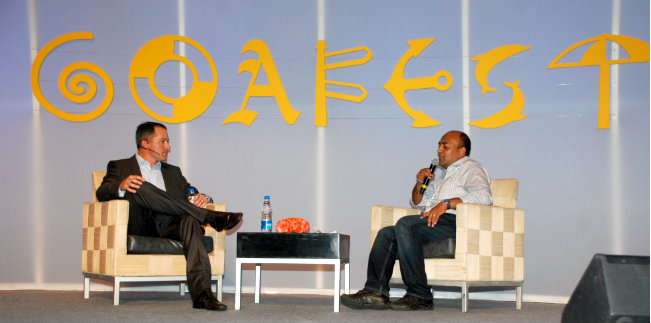
    Mr Lucas Watson, Global Vice President, YouTube spoke about how passionate consumers can help one build brands and how online videos can help even startups spread awareness and the reach needed in a very cost effective and efficient way. “Just get started online, you don’t have to be a big brand, all you have to do is gain trust among your consumers and you will be surprised how passionate people are to participate in the brands they love. The magic of YouTube is available for all to see, as it allows everyone to participate and that too in a cost efficient manner.”


    The first session was moderated by Mr N Rajaram of Airtel. When asked about the scope of co-existence between television and online videos, Mr Watson said: “Like many industries, we too are going through a transformation. There are brands which are afraid to disrupt their current mode of functioning and there are brands who want to try new and better ways of reaching out to their consumers. So I believe there will be some co-existence, nevertheless there will be winners and losers as well.”


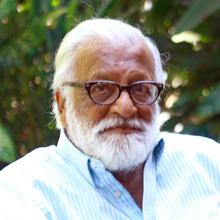
    Gerson da Cunha, stage and film actor, social worker and author dedicated Ad Katha, a book that tracks the history of Indian advertising to the late Bal Mundkur, founder of Ulka. Mr da Cunha gave the audience a glimpse of the Indian advertising right since it started through the present day advertising. He also pointed out that advertising bloomed in India from print media and that in 1991 it even opened doors to the global economy.


    Mr Jonathan Mildenhall, Vice President, Global Advertising Strategy and Content Excellence, Coca-Cola spoke on the use of creativity and content and how Coca-Cola moved from creative excellence to content excellence. He also explained that there is a need to encourage consumers to express their stories and how a brand must move to dynamic storytelling. “A brands story must show that it’s committed to make world a better place. There is a need to converse and not just listen to our consumers but to create inspiration and provocation.”


    In the session moderated by Sanjay Behl, CEO, Reliance Digital, when asked about a marketer’s role in the future and the consequences of negative conversation on a brand, Mr Mildenhall said: “Brands have to be a lot more transparent, if you inspire good conversation, it manages itself and I believe good eventually wins over evil. Brands, therefore, need to rethink the creative story they are telling their consumers. A 30 second media spot is valuable and it should be a gateway for brands to reach higher grounds.”


    Mr Tim Love, CEO, APIMA and Vice Chairman, Omnicom Group spoke about ‘The Magic of Ideas- Our Language Impediment’. He was of the view that innovation is the magic of ideas and that language is a technology. Mr Love also pointed out that as internet penetrates further in India, language communication will be going to new heights.


    The session (all of them held at what’s called the ‘Dome’) on Language Impediment was moderated by Kainaz Guzdar of P&G. When asked for his suggestions on how marketers and advertisers can come up with great ideas on language impediments, Mr Love said that they will have to be more cognizant in language and respect the sensitivity of various people. He also said that ideas are best when communication is from one individual to another.


    Mr Charles Wright, MD of Wolff Olins shared his insights about how consultancies are equally important to creating and building brands. He spoke about how by combining rigour with magic, one can solve complex business problems and how a Wolff Olins experience of branding may be completely different from an advertising agency’s experience despite working on the same product or brand. “In order to build brands that succeed, it is important that one understands what is important to the customers. We are all living in a world of perception but branding is all about changing the way people behave, and simply making promises is not important but, delivering on those promises is far more important.” He added: “Design, as a language, can help change people from hating a particular brand to making them like the brand and then probably even love that brand.”

    Click here to view all Goafest 2012 stories


  • Why Cag has stopped awarding seniors


    By A Correspondent


    (with generous inputs from a speech by Gangadharan Menon)


    Those who’ve been part of the ad and media fraternity for less than a decade may be wondering why the Big Story today is on the Cag Awards. In fact the only CAG in their lives is perhaps the Comptroller and Auditor General, better known for unearthing scams and irregularities so very frequently.


    The reason why most of our youth is unaware of what Cag is has perhaps got to do with the decay that has set into the way ad awards were being conducted. Communication Arts Guild, or Cag (written in upper-lower as against all caps) as is popularly known as in advertising circles, was founded in 1950. The sole purpose then, and now, is to spot, nurture and reward talent in the field of creative communications. Initially it started off specifically for commercial artists, but over the years it expanded to include all forms of creative communications. And in fact, the name too changed from Commercial Artists Guild to Communication Arts Guild to reflect this change.


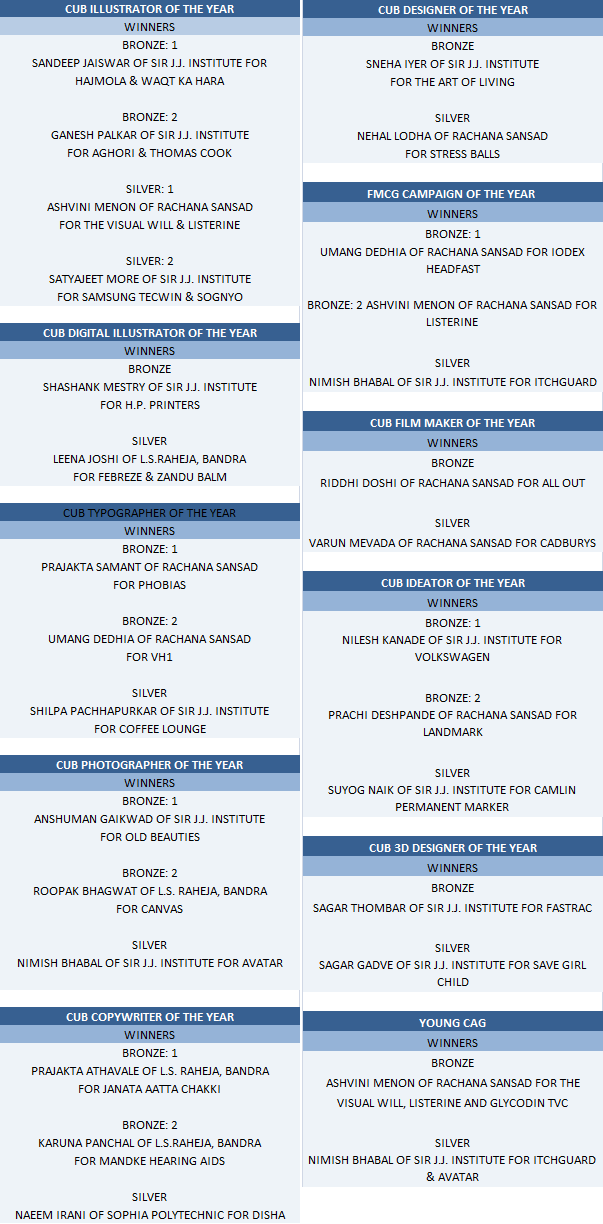
    The highlight every year was the Annual Cag Awards in various communication categories, culminating in the Art Director of the Year and the Cag Hall of Fame. The following year would see the release of the Cag Annual that would feature the previous year’s awardwinning work.


    Somewhere in the mid-90s, the much-coveted Cag Awards were discontinued. Reason: the unchecked and uncontrolled proliferation of what came to be known as scam advertising. Meaning, advertising that was never released in mass media, but was created only for the purpose of winning awards. The client was fictitious (or perhaps that cobbler or panwallah down the road who never needed any advertising), the brief was non-existent and the media was unaware of their existence. When 90 per cent of the entries started belonging to this obnoxious category, Cag called it quits. And with it stopped the highly sought-after Cag Awards, and thereby dried up Cag’s only source of funding. But the very next year, Cag started the Young Cag Awards, to spot, nurture and reward the young creative talents in the various art colleges across the city. And for a dozen years, it has been feeding the advertising and allied applied arts industries with a steady stream of young talent.


    Over the academic year, Cag holds various workshops by practising professionals, and at the end of the year conducts a meticulous talent hunt across all art colleges. Starting this year, the hunt has been extended to art colleges across the country. This culminates in various awards given across categories: Cub Illustrator, Cub Photographer, Cub Copywriter, Cub Typographer, Cub Designer, Cub Ideator and Cub Art Director of the Year. An exhibition of this awardwinning work is held every year after the awards function to inspire younger students to excel in the creative communications field.


    These awards are purely funded by the interest earned from the earlier kitty generated by the Cag Awards for Professionals. There is no fresh source of funding as Cag doesn’t believe in charging award entry fees to students. The people who work for Cag do it pro bono, merely giving back to an industry that gave them fame and fortune.


    In the year 2010, Cag took a decision to go digital. And it digitised around 36 Cag Annuals and put them on its website. This is a treasure-trove of advertisements that appeared between 1950 and 1995; and is the only source for students, academicians and professionals who want to understand the creative evolution of Indian Advertising.


    One of the recognitions that continued uninterrupted is the prestigious Cag Hall of Fame. A citation and award that recognises and acknowledges an individual’s seminal contribution in the field of creative communications, spanning a few decades. This illustrious Hall has already inducted various luminaries into its hallowed precincts: Kersy Katrak, Panna Jain, Ravi Gupta, Frank Simoes, Gerson da Cunha, Avinash Godbole, Arun Kale and Arun Kolhatkar.


    This year, Kiran Nagarkar was inducted into the Cag Hall of Fame. For his outstanding contribution in pioneering some of the finest campaigns in Indian advertising and for his versatile talent in other fields of creative writing: as a playwright, screenplay writer and an award-winning novelist.


    Nagarkar made a plea to the audience to not let Cag to die and made a clarion call to young creative professionals to shun scam advertising.

    # #


    What would you expect creative boys and girls to be doing on a Saturday morning? Majorly hung over, getting off their beds a little before noon? Guess we’ve got it all wrong. On Saturday, April 7, right in the middle of the looong Good Friday weekend, Cag held its 63rd annual awards function. At the Ravindra Natya Mandir at Prabhadevi. Since most of the award-winners were students, it was a packed house. Except for the front rows since the ad fraternity and some of the other leading lights among ‘communication artists’ don’t appear to quite care about being present. “It’s perhaps because Cag is now essentially a students’ show with just one veteran being awarded,” said one senior art director.


    The Cag committee comprises veteran professionals like Samir Khanzode, Gangadharan Menon, Sunil Mahadik, Gopi Kukde, Brendan Pereira, Ranjan Joshi and Sachin Puthran. Cag, according to vice president Gangadhar Menon is clear it doesn’t want to revive the awards for seniors. Unfortunate, because surely there ought to be a way in which one should be able to eliminate scam ads. Or at least minimise them. Cag comprises and celebrates creativity. It must now find a creative (and effective) solution to the problem.


  • Industry veterans remember Ulka founder Bal Mundkur

    By a Correspondent


    Draftfcb Ulka Group held a prayer meeting in memory of the late Bal Mundkur, veteran adman and founder of what is today Draftfcb Ulka. The prayer meet was held on Thursday, January 19, 2012 at Yashwantrao Chavan Pratisthan in Nariman Point, Mumbai.


    Piyush Pandey, Executive Chairman and Creative Director, South Asia Ogilvy & Mather India; Alyque Padamsee, theatre personality and ad film-maker; Gerson da Cunha, stage and film actor, social worker and author; and theatre veteran Dolly Thakore were some of the notable personalities from the advertising and media fraternity, other than the leadership team from Draftfcb Ulka who attended the prayer meeting.


    Shashi Sinha, CEO, Lodestar UM remembered the late Mr Mundkur as a man who was always a leader, and never a follower. A man who was very generous, always ready to help those who needed help, and a man who did not work for money alone but, also for a lot of noble causes which he did not give up even after his retirement. Mr Sinha pointed out that Mr Mundkur had left his cushy job to start his own agency, and that he named the agency – Ulka – at his mother’s suggestion.


    A two-minute silent prayer was observed in memory of Mr Mundkur which was again followed by close friends, associates, former colleagues etc. sharing their thoughts and memories of the late advertising veteran.


    Mr da Cunha highlighted the recently released ‘Ad Katha’, a special volume tracking the history of Indian advertising, as one of Mr Mundkur’s huge achievements. Mr da Cunha was also quick to point out that a lot of people not just owed Mr Mundkur the brands he created for them, but many owed him their career as well. Mr Mundkur has created great professionals, he said, while dedicating the 300-page ‘Ad Katha’ to the memory of Mr Mundkur.


    Mr Alyque Padamsee was also among those who spoke about Mr Mundkur at the prayer meet, saying he remembered Mr Mundkur as a man of rumbustious character. A man who had big ideas and was determined to see each one through. Mr Padamsee also added that his inspiration comes from Mr Mundkur, who was always ready to defend someone – ie, if you believe in something then stand up and fight for it.


    Mr Mundkur passed away in Goa on January 7, 2012 due to heart failure. Mr Mundkur had founded Ulka in 1961, ten years after he joined the world of advertising. In a span of another ten years, Ulka had become the fourth largest agency in the country, and by far the largest independent Indian start-up.


  • Bobby Sista, Alyque Padamsee & Gerson da Cunha on Bal Mundkur

    While tributes keep pouring in for the ad legend and intrepid explorer who was ahead of his time, MXM asked his peers from the golden era to look back at the Bal Mundkur they knew.


    Gerson da Cunha, stage and film actor, social worker and author:

    Bal Mundkur was a man of immense energy; he was tireless. Once he decided to do something nothing would stop him. For instance, take the case of the book Ad Katha. There have been three previous attempts by the Indian advertising industry to write this book but every time it resulted in failure, because either the money could not be collected or nobody would be available to take on the writing task or both. But the key among the two was finding the money. Bal Mundkur then sat down and wrote off a series of letters to people asking them to donate money towards the cause. As soon as he collected the money it became a serious project and people began to join him. That’s what I mean: when he decided to do something he would go ahead and achieve it. The next important thing about the book was the drafting of the letter for the book. Otherwise you and I could also write to people and they would give a damn, but to Bal they responded. In fact many of them owed things to Bal – he had built a brand, he had given them a job, etc. So the book in a way represents the kind of person that he was.


    In fact we both met about a year ago in Goa and he told me about this book. He said to me, “Let’s do it.” I responded in the affirmative and thus began our quest. While I was in charge of the content, he was in charge of the money. While we were working on the book, I’ll never forget what he told me halfway through that project. He said, “You know Gerson, I have done many good things in my life but this by far is the best thing that I have done.” And he did it – he completed the job, and he left us.


    Also, there is something else about Bal Mundkur. There are people who, when they leave this life, take something irreplaceable away with them. For example Behram Contractor or BusyBee, as he was fondly known. When he died, he took away with him the bentwood Irani shops, the cuisines – that extraordinary part and spirit of Bombay, as it was known then, which no longer exists. He took it with him and went away. Or Mario Miranda, for example. He took with him a part of Goa and a part of Bombay – Colaba especially, and went off. What Bal has taken with him is a much more complex thing. Yes, it is an era of advertising that was professional, that was innocent… there was not the kind of cut-throat rivalry that was today. Even people competing for the same account were polite and would meet each other up for a drink in the evening. So that professionalism and innocence that existed in the advertising space then has gone with Bal Mundkur.


    He was also involved with a lot of public causes – for the crippled children, did his bit for cancer patients… in fact he he was the first to do a remarkable campaign around cancer. And there were many other causes that he supported. Not just advertising and marketing, he was involved in other facets of life like hosting seminars, promoting the industry to the outside world… he even got the Trinity College of Cambridge choir here.


    There was also a generous side to Bal Mundkur. He knew the value of money but what he did with that is what makes him even greater.


    Bal Mundkur has definitely left a void and he has taken a part of the world of advertising that we once knew.


    Bobby Sista, Founder and Executive Trustee, Population First:

    It’s not really easy to describe Bal Mundkur but he was certainly one of the most colourful and charismatic personalities in advertising. He was not your ordinary guy – he could be arrogant, he could be short-tempered, he could be very charming, he could be very helpful… all of these things, but certainly he was a very good adman.


    Bal Mundkur and I go back a long way. We were closely involved in mooting the idea for forming the Advertising Club of Bombay in the early days. We also discussed the idea of starting an agency together before he floated Ulka. We almost came close to an agreement and everything else was done but then there was a last-minute hitch and it didn’t work. A year or two after that he started Ulka. So while he became fully dedicated towards Ulka, I started working for a client. But we remained friends.


    He was very talented in what he did. Such was his stature that he could even walk into the cabin of an MD with full confidence and if certain things didn’t work out he wouldn’t hesitate in calling it off.


    I do know that he was highly respected by the advertising profession. He certainly brought in a new angle to how advertising could be created. He had that kind of leadership quality – making people think differently and come up with good work.


    One of his noteworthy works includes his effort around the book Ad Katha. I remember that when he conceptualised the idea, he came and spoke to me about it first. He wanted to form an advisory council to get help on this book. He was supposed to have named his book History of Indian Advertising. Bal had even written about 180 pages of the book by then. But then he got in touch with Gerson da Cunha and they went through 2-3 different changes before they renamed the book to Ad Katha. I am happy that he was able to complete the book and launch it at Ad Asia along with 1,500 people from the industry.


    Also, one of the things that you could say about Bal Mundkur and his extracurricular activities was that he was a great fund-raiser. He had the ability to collect funds for various causes, including for seminars around advertising, both in India and abroad.


    Alyque Padamsee, theatre personality and ad film-maker:

    Bal Mundkur was a pioneer who started his own Indian ad agency, even though all the ad agencies at the time were foreign-owned. He built Ulka Advertising into one of the big five agencies of the time. He was not only a superb account management honcho, but also an extremely creative genius. Bal Mundkur was known as a very frank and fearless adman, and pushed his ideas across with charm and force.


    Photograph: Shreta Arora/O Herald O