
Tag: Generation Einstein

  • It’s not about co-creation, but increation: Boschma

    The “youth” of today have been touted as being the marketer’s favourite TG for some time now but it’s not just about catering to their apparent behavioural habits. The effort by marketers has to be able to reach out to the subliminal preferences of the youth that are redefining the way they communicate with a brand. Having studied their behavioural patterns and preferences from early 2000, the one person who has seen this group evolve over the years rapidly is well-known international author and speaker, Jeroen Boschma.


    In India to launch his book ‘Generation Einstein’, that has been co-authored by UTV Bindass, MxM India got Boschma to delve on the emergence of the youth of today, why brands and marketers should be wary of this TG, and what are the learnings that could be picked up from this book by those interested in catering to the highly volatile TG. Excerpts:


    After having vowed the world, your book Generation Einstein finally makes its debut in India. What are your first thoughts on the book seeing the light of the day in India?

    The book is about the first global generation from around the world – even the Indian youth is not Indian but is really a part of the global youth. The book delves into the behavioural aspects of the youth, their habits, preferences, and so on. Of course, the behavioural background of Indians is different from those of the generational background of youth fromHolland, where the book was first launched. It also provides an insight and a view to everybody that wants to communicate to youngsters – not only marketers and brand managers but I think even school teachers, professors and others. Basically, it is aimed at those seeking to make an impact on the youth of today.


    Could you delve on the thought process behind narrowcasting the next generation youngsters as your core TG towards writing the book?

    It took me five years to write the first version of the book. The way I approached it is I made notes of my learnings, which at the end totalled in excess of 400 pages. There was also a heavy amount of research that was done and then all the elements were brought together to be edited and written in a proper way. I am grateful to the help from my Indian colleagues who helped me in putting together this book so as to reflect the findings and tastes of the Indian youth of today.


    How different are the three versions of the book from each other?

    The first edition was published when Facebook didn’t even exist. So the other two editions had to be rewritten to accommodate learnings and findings from the social media space as well.


    What are some of the trends you came across while you got down to analyse the youth of today?

    The fact is that the youth of today do care of the world and they want to associate brands with respect to nature and for the sake of humanity. Another big trend is that the youth of today are very entrepreneurial and start their start-ups at a very young age. I have seen so many new ventures set up by young people inIndiaand they have been performing phenomenally well. I would say that is one of the big trends transpiring around the world today.


    You have pioneered the term Increation. Could you throw more light on the significance of the term?

    Increation is the process of coming up with marketing campaigns that work. We have been working on it for five years and now we have a firm grip on the way it needs to function. It provides a learning experience to ad agencies and brands to source their creation. It’s different from co-creation which doesn’t work; Increation works.


    How would you rate your experiences of co-authoring this book to suit the tastes of the youth of India?

    It’s been a long process putting this book together for the Indian audiences. It’s not easy as constructing a house; it’s about putting together thoughts together and creating an environment that the youth of today are familiar with.


    What is the lesson that Generation Einstein throws up for marketers and brands of today?

    What I have observed with Generation Einstein inIndiais that it is getting more extreme; we really do not have a choice – we have to change. We all are trying to keep the old world alive but the old world doesn’t exist anymore. It’s about the new generation and their understanding of the trends of today. The marketers and brands of today have to unlearn everything they know about the old world and channelize their focus on the youth of today.


    What are your plans for the future?

    The plan next is to organise a full-day Generation Einstein conference to get into the depth and help marketers come up with solutions to cater to the youth of today. I am also in the process of writing another book which I plan to launch internationally very soon. It still is in the early stages and the full context will only be known later.
     

  • Understanding young minds with ‘Generation Einstein’

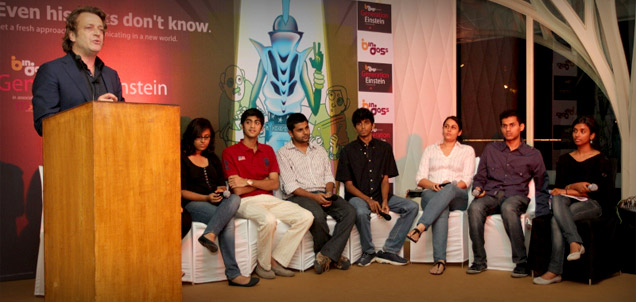
    Jeroen Boschma with young minds on the panel ahead of the release of ‘Generation Einstein’


    By A Correspondent


    It was youth power in all earnest as Bindass launched the India edition of ‘Generation Einstein’ on Monday evening at Mumbai’s tony Tote on the Turf. The book is co-authored by Bindass along with well-known international author and speaker Jeroen Boschma.


    The book describes the new generation, ‘Generation Einstein’ that was born during the last decade of the previous century. It also stresses upon the significance of the youth as an important part of the market and how fast the new generation understands the world better than anyone else. The book attempts to decode this generation and help marketers reach out to them.


    At the event, Mr Boschma spoke about how today’s generation is completely different from the previous generations. He was of the view that unlike the youth of previous generations which lived in a world of their own, the youth of this generation are very much in this world as they understand brands and marketers better: “Strong brands worldwide are brands that believe in what they do and youngsters who connect with these brands are madly in love with them.” (see interview: It’s not about co-creation, but increation: Boschma)


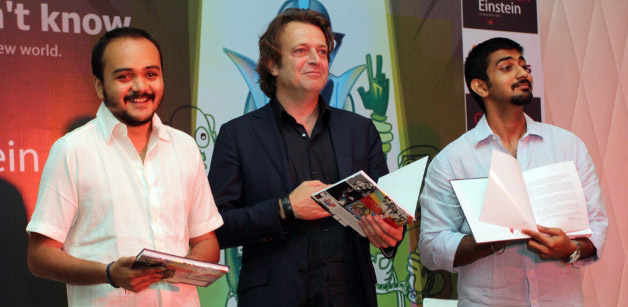
    Jeroen Boschma (centre) with Samyak Chakrabarty (to his right) and Arjun Paul Vednayagam


    The Indian edition of Generation Einstein is authored by Samyak Chakrabarty and Arjun Paul Vednayagam. “The aim of the book is to open the mind of brand managers, and to stop defining the youth, as it is not possible to define them. It is all about making interesting campaigns and allowing the youth to decide the fate of the brand,” said Mr Chakrabarty.


    The objective of the study conducted for the book is said to be about understanding the thought process of a young consumer, the factors that influence the youth to build their brand preferences, how they come to their final choice, and then using this knowledge to effectively engage the youth.


    “Every brand today has fanatic fans. Marketing is nothing like what it was before. If you want to communicate with this generation, forget what you have learnt. This generation understands that advertising is about lying. Generation Einstein says that the future of marketing is to find the purpose of their life and we need to find out how to be part of their life,” Mr Boschma added.


    In a panel discussion, moderated by Mr Boschma, the panellists, including college going teens, spoke about their favourite brands and the factors that influenced their buying decisions.


    Mudit Ganguli, a student from JaiHind College, Mumbai said that his favourite brand is Blackberry because it is cheap and convenient to use, it has versatile features, helps him get regular updates and allows him to communicate easily. Another reason why he preferred a Blackberry is because of good advertisement.


    Mohini Mukherjee, also a Jai Hind student said her favourite brand is ‘Bingo Chips’, primarily because of good advertisements, but also due to no celebrity involvement, funny advertisements, and good quantity of chips.


    Another student said that Twitter was her favourite brand because it helps her express her feelings, provides instant updates, and allows her to follow her favourite celebrities.


    One of the students talked about the reasons he trusted ‘Nike’ as a brand – good advertisements, the quality the brand offers, and the ‘Just do it attitude’ that it displays. He also spoke about how the brand is empowering the youth. He said that brands need to go back to delivering quality products and not try to create a product for everyone and eventually reaching no one.


    In conversation with MxMIndia, Samyak Chakrabarty spoke about his marketing plans for the India Edition of ‘Generation Einstein and his learnings from the study: “We would like to put this into the curriculum of mass media courses where the next generation marketers can learn about how to engage the youth. We plan to take Jeroen Boschma to colleges and deliver lectures and, of course, the book is available online for Rs200. The biggest learning we have had is that in order to understand and engage the youth, one has to keep his mind open and the fact that brands cannot define or assume or presume about the youth today.”


    The event was organized in association with MxMIndia.


    Photograph: Fotocorp

  • Bindass to host ‘Generation Einstein’ tonight

    By A Correspondent [updated]


    All roads lead to the Mahalaxmi racecourse today (Monday, May 14) as Bindass will launch the Indian edition of the very successful book ‘Generation Einstein’.  Co-authored by UTV Bindass along with the well-known international author and speaker Jeroen Boschma, the book is being launched in India keeping in mind the specifics of the Indian market and traces the emergence of a global generation in India, their likes, dislikes, lifestyle and what sets them apart from the others.

    The Indian edition of Generation Einstein – authored by Samyak Chakraborty and Arjun Vednayagam – also goes on to explain the communication strategies that marketers could adopt in reaching out to the youth with the help of India-specific case-studies like Tata Docomo, Bindass, Virgin Mobile and many more.

    The book describes a new generation, ‘Generation Einstein’ that was born during the last decade of the previous century. It also stresses upon the significance of the youth as an important part of the market and how fast the new generation understands the world better than anyone else. The book attempts to decode this generation and help marketers reach out to them.


    Commenting on the association of Bindass on the launch of book, Kunal Mukherjee, Director-Marketing, UTV & Bindass Networks, said: “Bindass being a 360-degree youth brand continuously looks out for avenues to work with people who engage or reach out to the youth in various ways. Generation Einstein 3.0 provides an insightful look into the working of the youth’s minds, how they make choices, evaluate mediums and more importantly how to establish a connect with them as equals. One of the hardest things to do for any brand today is to get their communication across to the youth and Generation Einstein helps each of us do just that as we decode the youth step by step.”

    The book will also throw light on the new age communication strategies like “Increation’ which is a more effective method of communicating with a youth segment. The new methodology of research – Increation involves putting many ideas to test, then trying to use the reactions to narrow down the ideas. The researcher will look for overlaps on what connects to solutions…leading to that one big insight that results into that one big idea.

    Young people are ultimately suited to working with increation projects. They are extremely creative because of the world in which they live and their present stage of life.

    Entry to the event, which is being organised in association with MxMIndia, is by invitation only. It will be followed by cocktails and dinner.


  • Bindass co-authors Indian edition of Generation Einstein

    By A Correspondent


    Entertainment brand Bindass is co-authoring the Indian edition of the book, ‘Generation Einstein’, along with international author and speaker Jeroen Boschma.


    The book describes a new generation, ‘Generation Einstein’ that was born during the last decade of the previous century. The youth and young adults of today aged 12 to their early or mid-twenties represent a new generation with positive characteristics and values which are shared amongst young people all over the world and therefore the first real global generation.


    The book stresses upon the significance of the youth as an important part of the market. It’s about a faster and more social generation that understands the world better than anyone else. The book aims to decode this generation and help marketers reach out to them.


    Keith Alphonso, Business Head, UTV Bindass said, “Technology and communications have brought global aspirations to the Indian youth and a lot of the international trends witnessed abroad are evident here as well. But, there is and will always be a certain Indianness that sets apart the Indian youngster. We at UTV Bindass have our finger firmly on the pulse of the youth and understand this Young India. By co-authoring this book with Jeroen we have opened up our vast archive of research based insights to make the book’s Indian Version truly relevant and contemporary. As a part of Bindass Open Source, we believe that by sharing our insights with brands and partners like Jeroen, we will all be able to get a robust understanding of Young India.”


    Already published and immensely successful in the international market, the version co-authored by Bindass will be specific to the Indian market and will speak about the emergence of a global generation in India, their likes, dislikes, lifestyle and what sets them apart from the others.


    The book will also throw light on new-age communication strategies like ‘Increation’ which is a more effective method of communicating with a youth segment. It involves putting many ideas to test, then trying to use the reactions to narrow down the ideas.


    Young people are ultimately suited to working with in-creation projects. They are extremely creative because of the world in which they live and their present stage of life.


    The Indian edition of Generation Einstein also goes on to explain the communication strategies that marketers could adopt in reaching out to the youth with the help of India specific case studies such as Tata Docomo, Bindass and Virgin Mobile, among others.


    The announcement of the Indian edition of Generation Einstein is another step by Bindass in creating awareness about internationally recognized methods of understanding and engaging brands in India with this generation, the book is expected to hit stands by end of April 2012.