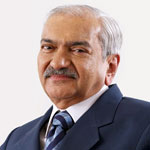
Tag: Gautam Adani

  • Mum’s the word!


    By Ranjona Banerji


    Ranjona BanerjiWhere is the Adani story in the Indian media?

    Not ignored in print and digital, but still hidden somewhere on the inside pages.

    With The Times of India’s nation pages, in the local edition of February 27, 2023, we learn how Gautam Adani has slipped to number 30 on the world billionaire index and how his group stocks have lost Rs 12 lakh crore in one month. The article, from PTI, squarely blames the Hindenburg report with came out in February and alleged stock manipulation and fraud for Adani’s fall.

    In the Business Standard (see screenshot, red line not mine, this pic is borrowed from @churimuri on Twitter), financial journalist Debashis Basu asks why no one bought those Adani shares when they fell, and contuinue to fall. Basu, who is also editor of moneylife.in, points out that it is because the Adani stock is still terribly overvalued that no one’s buying.

    Larry Summers, former Harvard professor and US treasury secretary, has been quoted across the Indian media. He said, without naming Adani, that India was facing a “possible Enron moment”. That is when the American energy giant collapsed into 2001 on allegations of inflated revenues and hidden losses. India had its own tricky relationship with Enron at the time, for those who care to remember.

    https://thewire.in/business/adani-group-enron-larry-summers

    With Adani having been praised to the skies so far for its massive growth, and all grumbles of getting too many government favours being dismissed as jealousy, slowly market experts are revealing their own positions. Mild concern and criticism, but if you remove the fear of political reprisal, who knows what they’re actually saying. Adani carries too much debt says this expert.

    https://www.businesstoday.in/markets/company-stock/story/adani-group-overleveraged-carries-3x-as-much-debt-as-it-should-says-aswath-damodaran-371667-2023-02-28

    There are signs that regulators are not responding to the red flags:

    https://www.thehindu.com/business/markets/adani-firms-addition-in-14-nse-indices-prompts-red-flags-for-investors/article66557216.ece

    A why needs to be asked here.

    And actually, this is what is missing.

    Apart from the usual suspects, that is the media which has not completely capitulated to government pressures, the Adani story has not shaken us the way it should have. Compare the way the story has been covered to the Harshad Mehta scam of 1992. It was big news every day, the rise, the fervour, and the fall.

    There was no 24 hours news TV in those days and no internet, so print was all we had. And the story was covered meticulously and dramatically.

    (Rare plug: It is definitely worthwhile watching Scam 1992 on Sony Liv.)

    So also the collapse of Enron, because of the India connection in both politics and business terms, 10 years later.

    So also the 2008 global financial collapse.

    But one cannot deny that a one-month relentless fall in the stocks of the most politically powerful company in India, which should have been daily headline news, has just lurked about in the business pages after a week of attention.

    This includes all the government-sponsored drama about foreign attacks on India and all the rest of it.

    Since 2014, we’ve been fed the glory of the “India story” regardless of market realities and self-inflicted blows like demonetisation, bad implementation of GST and various government policies which have not encouraged growth.

    Has the “assault” on Adani by the Indian stock market opened up a few cans and are a few worms now struggling to get out?

    https://economictimes.indiatimes.com/markets/stocks/news/adani-isnt-the-only-indian-tycoon-in-trouble-andy-mukherjee/articleshow/98262044.cms

    We know how it is. All possible criticism will be veiled and variously garbed, to avoid creating too much of a splash and attracting unwanted attention.

    That is the story of the Indian media today.

    And sadly, as far as the general public is concerned, unless TV takes up the actual financial story, and as long as internet misinformation cells rule, no one will really be the wiser.

    This storm will pass.

    But the depression which caused it will not dissipate.


    Ranjona Banerji is a senior journalist and commentator. She writes on MxMIndia on Tuesdays and Fridays. Her views here are personal.


  • From Licence Raj to Silence Raj?


    By Ranjona Banerji


    Ranjona BanerjiThe “humbling of Gautam Adani” says The Economist. Not sure if the Government of India is going to ask UK Prime Minister Rishi Sunak to personally spank the editors of the prestigious journal with his hairbrush, but this article provides a good round-up of the Adani “growth story” and Prime Minister Narendra Modi’s allegedconnection to Adani.

    https://www.economist.com/leaders/2023/02/09/the-humbling-of-gautam-adani-is-a-test-for-indian-capitalism?utm_campaign=a.the-economist-this-week&utm_medium=email.internal-newsletter.np&utm_source=salesforce-marketing-cloud&utm_term=2/9/2023&utm_id=1486037


    For the media however, is this damning paragraph to ponder on.

    “Licence Raj to Silence Raj

    The Modi years have in many ways eroded India’s checks and balances. His government has steadily undermined the independence of the courts and the police. The media are mostly too cowed to investigate the mighty as they once did. Few Indian newspapers would have touched a story about Mr Adani had an American firm not asked the tough questions first. Mr Adani himself recently bought NDTV, a news channel that was once critical of the government but is now supine.”

    Obviously then, everyone knows how cowardly the Indian media is. Not that it’s a secret. Our star TV anchors are inordinately proud of their pusillanimity. And their ability to prostrate themselves in front of power. It gets them promotions and is thus profitable.

    Here’s an example of how TV anchors behave, as if we didn’t already know. This is Navika Kumar, exalted “group editor” of Times Now. Her love for the Prime Minister is no secret, nor is her lack of aspiration to journalism, She has had to apologise for her treatment of Opposition politicians. But so what, eh? Clearly her love is pure.


    The Prime Minister of India thundered through the speech above in Parliament, as ever blaming the last UPA government and previous Congress governments for the state of India. That Modi and the BJP have been in power at the Centre since 2014 means nothing to the BJP because they know they will not be held to account by the media. This Kumar tweet is not different from the way any of these TV anchors and those in cahoots with them behave. These are collaborators in a massive heist on Indian democracy. And they know it.

    Adani, you may ask, where was Adani in the PM’s speech. Nowhere and that did not bother most Indian TV anchors and mainstream journalists anyway. Some asinine reference by Modi to the Nehru surname has excited them as Modi’s great “oratory”. Others are thrilled that Modi ignored Adani and had his own “agenda”.

    As if after over eight years, we don’t know what the agenda is. Should I tell you? Or have you figured out what is lying in plain view?

    The reason that Modi cannot mention Adani and that the media can allow him to get away with it is that Adani’s stock values have not stopped falling since the Hindenburg Report was released at the end of January. And that Modi has not been able to use his massive powers to help either Adani nor stem the effect of Adani’s troubles on the Indian economy points to both weakness and incompetence. The sad fact of the matter is that the media has boosted Modi’s oratory – which is mainly anti-Muslim and anti-Opposition – as good governance and ignored his government’s inability to provide governance and policy.

    The short spurt in journalism which we saw during the pandemic has subsided.

    And thus, this story remains buried somewhere on the inside pages:

    https://timesofindia.indiatimes.com/india/actual-covid-infection-in-india-17-times-more-than-official-number-bhu-led-study/articleshow/97702910.cms

    Even the other week, we had top TV anchors tweeting about what a good job Modi had done with Covid compared to other countries. Not to mention how he had personally vaccinated all of us for free. I exaggerate but we all know that that’s how it rolls.

    Meanwhile, journalists in India, the unknown, the unsung, who try to expose wrongdoing, pay the price:

    https://rsf.org/en/indian-reporter-murdered-over-story-just-hours-after-publication

    Maybe that explains the extreme cowardice of our top anchors?


    Ranjona Banerji is a senior journalist and commentator. She writes on MxMIndia on Tuesdays and Fridays. Her views here are personal


  • So what will NDTV be under Gautam Adani?


    By Ranjona Banerji


    Ranjona BanerjiIndia’s fastest growing businessman Gautam Adani has almost closed the deal to buy the news channel NDTV.

    Adani has stretched his wings, with a little bit of help from his powerful friends, to various industries from airports to mining to solar power, far from his original bastions of ports and edible oils.

    There has been much ferment over this hostile takeover because for many in India, NDTV has remained the last practitioner of Indian TV’s version journalism, as all its competitors have fallen in line with government diktats. In a sense, NDTV was the forerunner of free non-state-controlled broadcast news in India. Most of the older generation of television presenters were trained by NDTV, and that is where the first star anchors emerged from.

    Dr Prannoy Roy was a major influence on how TV would be conducted in India in the early days, after he and his wife Radhika Roy started NDTV in the mid-1980s. His show The World This Week for Doordarshan was very popular.

    The question now being asked over and over again by loyal viewers is what will happen to NDTV after Adani takes over? What will happen to Ravish Kumar, the fearless anchor who looks after NDTV’s Hindi news channel, the only TV journalist who does not kowtow to government forces?

    Why Adani wants a media outlet of his own is self-evident. His international press is not that good, and that sometimes spills over to India. The general assumption therefore will be one more propaganda channel which focuses on positive publicity for Adani companies and Adani himself. This is how many or most industrialist-owned media houses behave. Earlier the result journalism-wise would be disastrous because people expected some sort of basic standards – the collapse of the Observer papers after the Salgaocar-Ambani takeover is a case study here.

    But since 2014, assisted by a helpful government which demands total loyalty from media houses, the Ambani takeover of the News18 group has been a success. Not obviously when it comes to journalism but definitely when it comes to numbers.

    Hardly surprising then that Adani wants his own mouthpiece.

    What is amusing however – because I am cynical – is that in an interview to the Financial Times, Adani made the following comment: “Why can’t you support one media house to become independent and have a global footprint?… India does not have one single (outlet) to compare to Financial Times or Al Jazeera.”

    https://www.aljazeera.com/news/2022/11/25/indian-tycoon-defends-hostile-takeover-bid-for-broadcaster


    Now that’s an interesting standard for an Indian mainstream media which currently struggles to get even the basics correct. Neither the Financial Times nor Al Jazeera specialise in the sort of nightly high-decibel battles which characterise Indian television. The Financial Times is a serious pink paper, of the sort which today’s media owners scoff at. Indian news consumers, the general feeling goes, are largely thick, easily excitable and undiscerning and thus can only appreciate news in the form of a soap opera.

    There is nothing new in pandering to the lowest common denominator. It is an old media policy. But neither FT nor Al Jazeera fall quite into that News of the World, National Enquirer category. India Today TV recently ran a show where they objected to a tweet by actress Richa Chadha on the Indian Armed Forces. For their show, they ran photos of Chadha in swimwear. That works to belittle women, to put Chadha in her place as it were, and appeal to their crass audience. Actor Akshay Kumar objected to Chadha’s tweet, but the news of that was not accompanied by images of Kumar in revealing swimwear.

    Is Gautam Adani making it clear that this is not the sort of future he envisages for his version of NDTV?

    Well, you can hope as much as you like but the truth is likely to be elsewhere. In the same FT interview, Adani made this remark: “Independence means is government has something wrong, you say it’s wrong”.

    And Adani also said this: that the media should have the “courage” to back the government when it is right.

    There you have it ladies and gentlemen, clear intent from the tycoon himself.


    Ranjona Banerji is a senior journalist and commentator. She writes on MxMIndia on Tuesdays and Fridays. Her views here are personal


  • Will NDTV retain its independence post-Adani stake buy?


    By Our Staff


    Gautam Adani is known for many things. But we’ll look at just three relevant here: One being an astute and ambitious businessperson, two, his proximity to various governments but more so the ruling Narendra Modi-led BJP at the Centre and being a diehard foodie.


    Insiders will tell you how after key meetings with his leadership, he breaks into discussions on food. Or if he has a dinner planned with some key guests, he will not hesitate to step out and go into very extensive detailing on the menu.


    Care goes into the right masala, tadka and the timing when each thing is supposed to happen. Let the food mature well, ensure it’s well cut and plated.


    We know about his ambitions. Founded less than 35 years back (in 1988) with commodity trading, his business interests are in diverse infra areas, power, food processing, airport operations. And now the media.


    His interests in the media were well-known. His recent acquisition of stake Quint and earlier the hire of seasoned news television editor Sanjay Pugalia were indicators that he is in it for the long-term. There were some rumours of his buying stake in a leading news network, which was denied and didn’t happen.


    Although NDTV is now crying foul that it wasn’t consulted before the acquisition of 29.18% equity, it’s clear that it can’t do much about it. It had pledged the sale of 99.9% of equity in RRPL Holdings (RRPL = Radhika Roy Prannoy Roy) way back in 2008-09. At that time RRPR issued convertible warrants to VCPL (Vishwapradhan Commercial Pvt Ltd, the company that has now acquired by Adani).


    The challenge lies ahead with VCPL making an open offer to acquire another 26 per cent stake.


    Even as awards were being given out at the IndIAA Awards at Mumbai’s Taj Lands End in Mumbai on Tuesday evening, the discussion veered around the Acquisition. The question was: it’s just 29.18% equity for now and assuming that the 26% additional acquisition happens, what will be the future of the news network.


    Which brings us to the second point: the clear (and close) proximity of Gautambhai and Narendrabhai. So will NDTV also join the chorus of channels that are aggressively pro-BJP? A meme doing the rounds gave the full-form of NDTV as: Narendra Damodardas TV. It wasn’t surprising that senior Congressman Jairam Ramesh expressed concern.


    Clearly the battle for 2024 is going to be fought over news television as well as digital news, where NDTV is very strong and enjoys some leadership.


    What will happen to Prannoy and Radhika Roy and their team at NDTV? What happens to Ravish Kumar, one of the sharpest critics of the Modi administration? What will happen to the independent, alternate voice that NDTV has had over the years.


    Clearly, there’s a lot that’s set to happen. It also remains to be seen if the Roys are able to mobilise adequate support from key quarters in warding off the threat of a total acquisition and ouster.


    Let’s wait and watch.


  • Adani Group appoints Paresh Chaudhry as Group Prez- CorpComm

    By A Correspondent


    Adani Group announced the appointment of Paresh Chaudhry as Group President – Corporate Communication. Paresh Chaudhry comes with 29 years of experience in Marketing, Brand Communications and Reputation Management spanning multiple industries. Chaudhry started his career with Wockhardt Ltd. and later worked with Smith Kline Beecham, Ranbaxy Laboratories and Hindustan Unilever Limited and Reliance Industries Limited. Prior to joining the Adani Group, he was working as CEO of Madison Public Relations.


    Speaking on the appointment, Gautam Adani, Chairman, Adani Group said: We are delighted to have Paresh Chaudhry at Adani Group, who brings in vast experience in Corporate and Brand communications in diverse sectors. He will be a valuable addition to the Adani Family. We wish him all the success for a long and fruitful association with the Adani Group.”


  • Interbrand unveils new identity for Cyril Amarchand Mangaldas

    By A Correspondent


    Legal services firm, Cyril Amarchand Mangaldas (a successor firm of the erstwhile Amarchand and Mangaldas and Suresh A Shroff and Company) unveiled a fresh brand positioning and identity for the firm, at its first Founder’s Day celebration.


    The high profile event was attended by industry leaders like Deepak Parikh, Uday Kotak, Gautam Adani to name a few.


    Cyril Shroff

    Speaking at the event, Cyril Shroff, Managing Partner, Cyril Amarchand Mangaldas said, “Cyril Amarchand Mangaldas is like a start-up with a hundred year old history. So, while we are unveiling a new identity and fresh thinking today, the values and the principles that we have internalized are over a hundred years old. In many respects therefore, this new identity is like taking those same values into a new dawn.”


    Ashish Mishra

    The identity has been designed by Interbrand. Ashish Mishra, MD, Interbrand India, said, “As Interbrand India, we are committed to helping the best Indian brands navigate their ambitions to become the best global brands. We are delighted to be entering into a long term partnership with Cyril Amarchand Mangaldas which is the country’s top law firm and has the potential to emerge as a strong global brand too. As a matter of fact, through the project, the new vision for the brand has already been articulated. And it is to emerge as the top law firm from Asia by 2025.”


    To express this position, the identity draws from demand drivers that are considered most compelling in client choice – heritage, knowledge, expertise and relationships. The identity builds on these factors symbolically: The ring of gold is a symbol of unity and infinity. Gold as a color embodies tradition, brilliance and success. Wisdom, integrity dignity and ambition are qualities that are represented by the color, violet.  While the orange in “C” stands for warmth and friendship.


    The identity makes use of an interesting concept of ligatures, or letters that are joined to form shapes. Thus, C, A and M appear joined to each other within the golden ring, thereby symbolizing the tightly knit relationships both, within the firm and with clients.


    Apart from the play of letters and colors, the placement of the dot also reveals an element of surprise – the formation of an elephant within the circle. The elephant symbolizes strength, intelligence and longevity –the qualities of the firm that make it so valuable to clients. “And the fact that it is ‘hidden’ within the symbol implies intelligence and insightfulness – traits crucial for a law firm’s ability to see things that others don’t. That’s a hallmark we would want to build through experiential reinforcements for the brand going forward”, added Mishra.


  • Meet Gautam Adani, the man who Rahul Gandhi & Arvind Kejriwal are gunning for


    By Harit Mehta


    In the late 1990s, an employee of Adani Exports took a wrong call in sugar trading, resulting in a Rs 20-crore loss. Fearing he would be sacked, he apologized for the grave mistake and handed in his resignation letter. Gautam Adani, in his thirties then, tore up the resignation and told him with a smile: “I know you will not make a similar mistake in future because of this lesson. Why should your next employer benefit from this learning when I have paid the price for it?”


    Malay Mahadevia

    Old-timers still remember Mr Adani, the unassuming billionaire from Ahmedabad, moving around on his grey Bajaj Super scooter during the 1980s while his childhood friend Malay Mahadevia – a dentist who now works with the group as a director of Adani Port and SEZ Ltd – rode on the pillion. Mahadevia used to fulfil a crucial role because Mr Adani’s English was sketchy and he felt inhibited conversing with government officials.


    The graduation for this college dropout, first to a Maruti 800, and now a fleet of BMWs and a Ferrari, has been spectacular. Apart from three helicopters, he has three Bombardier and Beechcraft planes with seating capacity of 8, 37 and 50. A picture of BJP’s PM candidate Narendra Modi alighting from one of these planes was recently released by AAP leader Arvind Kejriwal, who has trained guns on Mr Adani and Mukesh Ambani for being beneficiaries of Modi’s ‘crony capitalism’. Mr Adani, however, explains that he rents out his aircraft to the BJP, or whoever asks for these services, at market rates.


    Mr Adani never tried to hide his close ties with Modi even after the NDA government was voted out in 2004. But he hasn’t really depended much on him. He cultivated friends in the UPA and other parties to expand his power business to Haryana, Maharashtra, Madhya Pradesh and Rajasthan, besides bidding for ports in Orissa, Andhra Pradesh and Tamil Nadu. Senior Congress minister Kamal Nath is believed to have helped him out in his early days. Businessmen also speak of his proximity to Sharad Pawar. His ability to make friends extends beyond the shores of India – he is known to have developed excellent relations even with the top political brass in Australia, where the group plans to invest $6 billion in a coal mine and port near Brisbane.


    But the market believes Mr Adani is the right man to back, given the seemingly bright chances of Modi becoming PM. Ever since BJP declared Modi as the party’s prime ministerial candidate on September 13 last year, the total market capitalization of the three listed Adani group companies – Adani Enterprises, Adani Port and SEZ Ltd and Adani Power – has risen by 85.35% to clock over Rs 95,925 crore. In comparison, the Sensex grew by just 14.76% during the period.


    With an estimated group net worth of Rs 25,000 crore, Mr Adani presides over an empire spanning coal, power, logistics, real estate, agro-products, oil and gas. The group, which employs 10,000 people, built the country’s largest private port and has also emerged as the top private power producer in the country.


    The empire was created in 30 years out of virtually nothing. Born in a Gujarat Jain family of textile traders who migrated from Tharad in North Gujarat to Ahmedabad, 51-year-old ‘Gautambhai’, as he is known around here, had seven siblings as he grew up in the modest Ratanpole area in the walled city here. Even while studying in college in Mumbai, his sharp trading instincts made him try his hands at the diamond trade. For a while after dropping out of college, he turned entrepreneur, making plastic out of granules. He soon realized that trading was his forte and set up Adani Exports, which turned into the country’s leading export house within no time because of the speed with which Mr Adani could spot opportunities and strike deals anywhere in the world.


    “He has diversified interests but I would always call him the maritime man of India. He has almost single-handedly changed the sector in India,” says Mahadevia. Like Mahadevia, people who have worked closely with Mr Adani think he is a visionary who always thinks bigger than anyone around him.


    Most of his imports and exports were through Kandla port in Kutch. The turning point came in the early 1990s when Mr Adani told Mahadevia to leave dentistry and help him set up a jetty at Mundra. By then the owner of a star trading house with a turnover of Rs 300 crore, he was looking to build a captive jetty along with a leading American company to export salt to Japan. The American partner withdrew midway but Mr Adani did not give up the plan. As luck would have it, in 1995 Gujarat came up with the new port policy on the PPP model to develop six ports in Gujarat. Mundra was one of them.


    To use a cliche, Mr Adani has never looked back since. After commissioning Mundra port in 1998 and by the time Modi came to office in 2001, Adanis had transformed from an export house into an infrastructure company. The port is connected to the railway network by a privately built and maintained 65km rail line – again a first in the country. The port includes the world’s largest coal terminal which handles 60 million tonnes annually as Mr Adani has bet heavily on coal, rather than gas, for his energy business.


    Not surprising that this Amitabh Bachchan fan doesn’t remember how many times he has seen ‘Kala Patthar’, a film based on the Chasnala coal mine disaster in Bihar in 1975.”He is the Bachchan of his field, always hands-on but in a positive way,” says a business associate. Senior executives are alert while stepping into his tastefully done-up chamber. “Not because he would offend you, but because he will ask seemingly simple questions which are completely out of the box and potential game-changers,” says a senior Adani executive.


    Bakul Dholakia

    “In terms of the risk taking appetite and risk absorption capacity there are very few who can match Gautam Adani. There are many who take large risks, but very few have the ability to face their adversity with courage and conviction,” says former IIM-A director Bakul Dholakia, who is associated with the Adani group’s educational and CSR initiatives. Dholakia says it is impossible to make out from Mr Adani’s face whether he has been delivered some bad news a few minutes ago. Close associates say Mr Adani has a great ability to win over people, political or otherwise. When Mundra port was being built, a consultant came up with a novel idea of building floating break-waters to contain sea waves at the cost of Rs 7 crore. The experiment sunk – literally – within 20 minutes of its execution. Mr Adani, who watched the disaster calmly, turned to the consultant and put his arm around his shoulder. “Well tried,” he said before leaving. The consultant broke into tears and worked for the group for the next 15 years.


    While much is being said about his close relationship with Modi, Mr Adani had been extremely close to previous regimes in Gujarat headed by Shankersinh Vaghela, Chimanbhai Patel and Keshubhai Patel. All these regimes allocated land to Mr Adani in and around Mundra at cheaper rates than what the Modi government is charging.


    In 2003, when most industry heavyweights stayed away from an investment meet that Modi had organized, a group of Gujarati business barons led by Gautam Adani saved the day for him. While doyens of India Inc warmed up to Modi much later, Modi never forgets people who stood by his side when it mattered the most.


    Source:The Economic Times

    Copyright © 2014, Bennett, Coleman & Co. Ltd. All Rights Reserved

    Licensed to republish