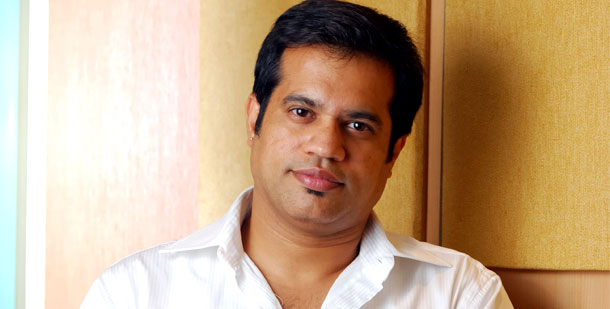
An alert: this is a long, long interview. Possibly as long as the ones of business heads of huge broadcast networks. But, then, the hat that Gaurav Hirey wears is that of Chief Talent Officer South Asia. And as the media services conglomerate of the WPP group in India braces itself for the new digital order, Hirey has his life (read KRAs) cut out for him. Part of GroupM since 2008 and with a few stints in media and one in outsourcing, Hirey is based in the Mumbai headquarters of GroupM South Asia. He returned in December after a stint in Singapore as Group HR Director – APAC at GroupM.
Excerpts from an interview over lunch and Diet Coke:
So how has been the return for you so far?
It has been both interesting and exciting. Like I keep telling everyone, it is homeground so obviously the day you walk in you are supposed to know it all and I have come back with a very different perspective, a much better one.
Apart from some obvious developments, what’s the one thing you would say has changed in the last two years since you were away?
I think from a scale perspective we have exploded more. We now have a diverse offering; we have a diverse talent pool now within GroupM. I see new types of people from technology, mobile etc joining us and I think the whole challenge is now much more than what it was maybe two years ago when I was here.
Has it changed significantly? What would it be in percentage terms?
From a diverse talent pool, I think we have changed remarkably. Close to 50-60 per cent of our pool is now diverse. So it’s not just media planning and buying… we have got people who do activations, we have got people who understand technology, we have people who understand brands and marketing much more, we have content specialists. The whole spread is remarkable.
Is this happening across the GroupM network or only in India?
I think it’s happening across the Group M network simply because of the way the industry is shaping up, but the pace at which it is happening in India is definitely faster than others as it’s become important for us reinvent and do new things and this market is doing it just right. We just seem to be making the right moves.
How would you compare India’s performance compared to Singapore, Korea and other South East Asian markets?
I think the pace is very high; it’s much faster, we are much more agile and in terms of opportunities there is a plethora of opportunities…
Here in India?
Yes.
Would you say the same about India when compared to markets like China and Malaysia?
China again is very similar to India and that is something that has stuck with me. I remember when I landed in China the first thing that I said was ‘Oh my God, this place looks so much like home’. The same pace, the same activity. The only difference being that the Chinese traditionally are a bit quieter whereas Indians have a tendency to speak and express ourselves much more clearly. Otherwise from a market perspective both are very alike.
If you were to analyse your annual adspend reports that come out every year, what you are saying does not reflect very well through the numbers that have been released?
We may be behind in adspends but we seem to be having a very healthy business model here as compared to other countries. India is ranked at No 2 or 3 most of the time in APAC in terms of business and the numbers so to speak, so it’s one of our critical markets. In fact China, India and Australia are considered as the most critical markets within APAC…
Yes, the forecast indicates that by 2017-18 India will be among the top 10 markets in the world. But going back to comparisons between South East Asia and India, how do you compare the talent there to the people over here?
I think one great thing that I have found outside India is the way they package things, the way they sell, the way they tell a story…and they really do a good job. So whether it’s in Singapore, China, Australia or the UK, the whole thing is phenomenally far better than what we do. What we do well is in the area of content, data; the kind of insights that we have and the kind of skills that we have today. Today you will find Indians everywhere; within APAC and also the GroupM network, I don’t think there is any country where you will not have an Indian representation. There is some Indian or the other in those markets as well.
We know India has what it takes to deliver results in the digital domain but is it the same when it comes to their capabilities in sales and other functions in the organization?
I see a lot of Indians in the role of client leaders…so they are actually facing clients and handling business development aspects of the trade. And it’s not just that, I do think that once somebody gets exposed to international experience one understands that this is one area that they need to be working on. So I do see a lot of Indians occupying frontlines roles.
GroupM is possibly the only media agency network which has seen people moving on from India to occupy South Asian and other global roles. This is not observed as much across other networks. Do you think this is an advantage for the exposure that you gain and for the business on a whole?
Absolutely, in fact I remember telling Vikram Sakhuja that if there is something that we should do is try and get our people to spend a year or two outside India and then get them back. This will give them a very different perspective. There are so many learnings, there is such a diverse group of people there…you have people from the UK, the Americans, Australians, Asians, Koreans… everyone is there and when you are working in that environment the way you work, the way you manage people, the way you communicate…
Is it part of your plan then to have some kind of exchange programme to ensure a certain number of people go out and experience outside work culture?
Talent mobility is one of our important focus areas and under that a lot of our agencies are preparing initiatives which will help people within the agencies to move to other countries depending on the skillsets that they have and the rules prevailing over there. I see this getting more and more formalized in the coming years. So if you are asking whether we have anything formal at this point, it is no. Whether it happens, yes, it does happen. India is probably one of the biggest exporters of talents including for GroupM India. What we are also realizing is that the new kind or type of people joining us now, they also seek international exposure…so if we do not give them the opportunities, they will find it someplace else. So it’s better that we do it.
Â
One aspect that a lot of publications or TV channels bring up is that the exposure by media agencies to affairs in rural India is not as widescale as it ought to be. What’s your emphasis on exposing your team to the countryside or middle India so that they can make more informed business decisions?
In fact these are the markets where our focus areas are centered around. We are focusing on the B and C cities where we have got special initiatives; we have a team focusing on the growth that would come from these areas. We believe that the growth is now going to come from B and C cities. So we have already started an initiative which is targeted at getting people down and on the ground in such places. We already have units like our activations unit which already operates in B and c cities…then there is also the rural marketing unit which is functional there.
Also, our focus this year is to open offices in B and C cities. We have already got satellite offices in areas like Trichur and would be launching in Ahmedabad very soon. So we see growth coming from B and C cities and our focus is there. We don’t have formal modules to expose people to those cities as such but I see next year being more about introducing them to what’s really happening in middle India and making them more aware so that they are able to service clients better. Even if you look at our client spends, a lot of it is coming from B and C cities. So it’s an area of focus and it’s also something that formally I think we need to start getting people to be more aware of.
What are the challenges that typically give Gaurav Hirey sleepless nights?
That is pretty easy at this point. What’s really happening is that the youngsters of today are not as aware of the industry as they should be…they are not aware of the opportunities of this industry and even those who join us… in fact today, we are facing a situation where 40-50 per cent of the young guys who join us, leave us. When I look at at the next 5-6 years, what gives me sleepless nights is thinking about who will I have with me; on whose shoulders the future of this organization would be built because if these young guys won’t join and stay with us and grow with us, then the organization of tomorrow is going to be quite handicapped.
One of the reasons could be that they are not being paid enough…
That’s not true.
How much is the percentage of new hires in your company? Where do you typically hire new talent from?
They come from all across. We have got a huge chunk of people say about 20-25 per cent who actually leave us and join us back. Then we have got another 20-25 per cent who are freshers…people who are fresh into the industry, just out of colleges etc. Currently, we have started hiring people from IIMs, ISB, MDI … We have a leadership training programme that we have introduced where we actually go to campuses and hire people from there.
Typically how many of them come from IIM and ISB?
This year we are looking at hiring about 14-16 people from that group. We are also looking at hiring another 30-40 from MBA institutes. So overall, a batch of about 60.
Do you hire about 30-40 people from the top 10 MBA institutes?
Not necessarily. We actually go to those places where we have had great experiences. So it could be from a college in Coimbatore where we keep on visiting or the SIBM, SIMC in Pune…it doesn’t have to be only the top institutes.
Many clients aren’t too happy about the talent in media agencies vis-Ã -vis their own.
So that is why we have introduced the Leadership Training scheme. What we are trying to do is to bridge that gap too. We can understand that. There are some clients to look at that and then there are many clients of ours who appreciate the kind of quality we are bringing to the table and they don’t really look at the pedigree at that point. A lot of our top clients today have client leaders who are not necessarily from IIMs or ISBs. They are extremely satisfied with the kind of services they are getting but yes, we hear this often and that’s why we said that even from a future perspective, we need to look at improving the quality of fresh talent that is coming. So we have just introduced the Leadership Training scheme about a year ago and this is the second year that we will be hiring from the ISBs and IIMs and we are hoping that at one point we will be able to cover that gap completely.
In percentage terms, what’s your staff cost vis-Ã -vis your various other costs?
Sorry, I can’t say that.
But is it significant?
Yes, it is.
Say more than 50 per cent?
Like typical service companies, yes.
But media agencies are already working under tremendous pressure in terms of earnings and one reason that agencies often give for not hiring enough talent from the premium B-schools is because they hardly make money. Do you think there will be pressure now on the bottomline giving the hiring from the ISBs, IIMs etc?
No. This is a conscious call, so we obviously have budgeted for this and we know what we are getting into. So when it was only traditional media I would totally buy this point but today the way the landscape has changed, we definitely think this talent is important and critical for the future of the organization. Secondly, with the new core that is coming in which is digital media, activation, data analytics etc these are not bound by the old rules of engagement. These are all project-based work; more interesting, there is more variety in the type of work too. This is also the kind of work that the new talent likes. So we are able to train and engage these young guys and I don’t think it will cause pressure on the bottomline eventually.
If we were to assess talent across the top tier in agencies some of the names like CVL Srinivasan or Vikram Sakhuja or Shashi Sinha  are alumni from BITS Pillani, the IITs, IIM etc. That layer is all there. But somewhere after that, I think, media agencies have stopped hiring from the premium schools. Why?
I think it was a factor of the numbers but today we see it as a combination. It is also about clients saying that we need to get different or new talent into the industry. We also feel the same way and it is not that we are hiring all 200 or 400 people every year from the IIMs; we are just hiring 10, 14 or 15. So that won’t put much pressure on the bottomline
Is that number good enough given the fact that you have such a huge client base?
At this moment, I think it’s a good start. I see this number increasing, I definitely see these people growing in numbers across the organization and not just at the entry level. So even when today we are hiring, we are hiring people from the client side as well. And they are people with pedigree.
Earlier a typical media agency comprised media buying, selling and business development folk. Now, with agencies going full-service and digital taking centrestage, there are people working on activations, you have creative and art directors. Does this impact the equilibrium within the organization?
Not in a big way, but it does because then we have to also make our people sensitive about the changing landscape. So the change we have undergone is about flexibility at the workplace. I think the next change is about bringing sensitivity to the fact that there is diverse talent now and that the way you manage this talent is going to be different from how we have traditionally managed it. So a creative guy, he will have his moment of inspiration and you’ve got to give him/her that space, give the flexibility, give him/her the environment where he/she can think that way and give you something creative rather than tell him, ok, you be here at 9.30am and you have to work till 5.30pm. So I think we moved away from that and we understand that we need to be flexible. Like you said equilibrium, it affects a bit because there are different sets of people and some of our managers have never managed such kind of people. So we are working on programmes which will sensitize them to the fact that these people need to be managed a bit different than how they were earlier managed.
From the talent point of view, what is it that will make people stay on in an organization like a media agency?
I think it is the experience that we provide. If a person has a great experience working with us and learning and growing with us, then the person will stay back. I don’t think anybody is going to join us and retire here. We are now borrowers of talent. So if there is good talent out there, you know that you can have that talent but it’s not going to be a permanent thing. Those days have gone when somebody would join us and just grow old with the organization. You just borrow talent for some time and after that you just see where it goes.
At GroupM we have five different agencies, each with its own unique identity…
Do you have separate HR functions in the agencies?
No. So what we are working towards is getting an HR business partner embedded in every agency. Right now we have one in Mediacom, we have one for our digital businesses, MindShare had one till last year and we are now in the process of hiring one more now. Maxus is looking at appointing one more business partner. The idea of having a HR business partner within agencies is that they will drive the agency agenda and GroupM will anchor them.


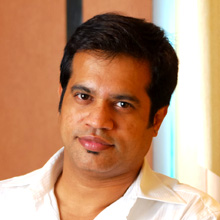 By Gaurav Hirey