Tag: Free Press Journal

  • ‘The Gutenberg Galaxy’ invites participation from ad agencies

    By A Correspondent


    The International Advertising Association India Chapter and Free Press Journal have announced the compilation of ‘The Gutenberg Galaxy’,a book that will showcase case studies of selected print advertisements which were created in the period— January 1, 2016- December 31, 2017.


    ‘The Gutenberg Galaxy’ will feature case studies of the best print ads in the period specificed. By keeping the entry free, IAA-India Chapter-FPJ wants to welcome large number of case studies. There is no limit to entries from the agencies. For this initiative, Sandeep Singh (who can be often seen on news television defending the political right) will be the Editor. The criteria for the entries are: the case study should not exceed 1,000 words and nor have more than six visuals and the entry should be sent along with a NOC from the client/advertiser. The last date for submission of the case study is March 15, 2018.


    Ramesh Narayan

    Said Ramesh Narayan President IAA (India Chapter): “The IAA is committed to contribute positively to every segment of its all-encompassing constituency. In a country like ours where print readership is robust, it is important to chronicle the best advertising that appears in this medium not from a creative lens, but in the form of a case study. I am confident the result will be an invaluable resource material that will become a collector’s item.”


    Abhishek Karnani

    Added Abhishek Karnani, Director, Free Press Journal: “This initiative is about keeping a record of best print advertisements that were printed last year. By supporting this initiative, Free Press Journal, one of the oldest publications of India, is trying to showcase the contribution of the print adverts. By including case study in the collection, we are helping the reader to understand the strategic use of print media. This collection would act as a reference book for future generation.”


    Idea achchahai. But why call it Gutenberg Galaxy…. Why not something more Indian?


  • IAA Mentorship Webinar Series to be held in Mumbai

    By A Correspondent


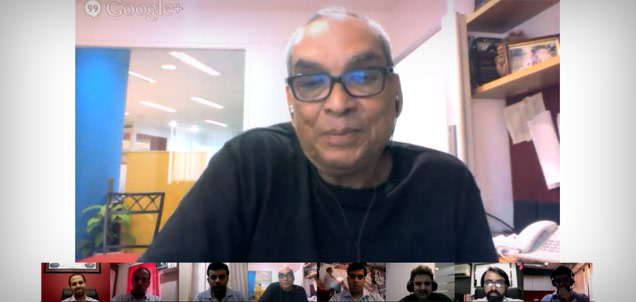
    International Advertising Association (IAA) India Chapter has invited Anish Shah, Group President (Strategy) for the Mahindra Group for its next webinar on Google Hangout on 17th December 2015 between 3 and 4 pm. Anish Shah’s key focus areas are strategy development with focus on digitisation and analytics, driving international growth especially in the US and Africa. The Group Strategy office also enables synergies across Group companies. Anish was earlier President and CEO of GE Capital and has had a stint with Bank of America, Bain & Company, and Citibank. Anish is a PhD from Carnegie Mellon’s Tepper School of Business and is alumni of IIM–A.


    Srinivasan K Swamy

    Srinivasan Swamy, President, IAA India Chapter & Vice President-Development, IAA Asia Pacific said, “With the changes in technology and growth in digital, major business houses have to adopt and evolve rapidly. This webinar series will have Indian and international experts take us through their brand/company journeys and offer insights for others to learn and adapt from”.


    Abhishek Karnani

    Abhishek Karnani, Director, Free Press Journal said, “Creativity and storytelling must now be paired with algorithms to capture the attention of consumers in the era of high decibel digital communication. Navigating this landscape can be daunting. Anish’s experience with global digital initiatives will explain the omnichannel approach needed to win and retain consumers. This is the first mentorship webinar we have added to the IAA platform.”


    Charulata Ravikumar, CEO, Razorfish  said, “True Business Transformation happens when the organization changes itself from the core with a vision to always lead the path of Innovation for life impact. The IAA has always carried out initiatives to bring such Transformation to the forefront so that the larger audience can be inspired by it”


    You can also submit questions for Anish Shah through the IAA India Chapter facebook page – https://www.facebook.com/IAA.IndiaChapter/


    The hangout will be broadcast live on our YouTube channel https://www.youtube.com/user/IAAIndiaChapter on 17th December, 3pm IST.


    The webinar series has already hosted industry stalwarts like Sanjeev Kapoor, CMO, Citi (India); Ashish Hemrajani, Founder and CEO, Bookmyshow.com; Rajan Anandan, MD, Google (India); Nishant Rao MD, Linkedin (India); Ajit Balakrishnan, Founder, Rediff.com and Julie Roehm, Chief Story Teller, SAP; Tushar Vyas, Managing Partner, GroupM South Asia; Sanjay Mehta & Mr Hareesh Tibrewala Joint CEOs, Social Wavelength et. al.


  • Maarten L Albarda to speak on ‘World Goes Digital’ at IAA webinar series

    By A Correspondent


    The International Advertising Association (IAA) India Chapter, has organised its next webinar on ‘World Goes Digital’ which will be addressed by Maarten L Albarda, renowned Marketing Consultant, former Global Director of Media & Communication Innovation, Coca-Cola on October 16, 2014 at 4pm.


    Maarten L Albarda has around 30 years of experience in advertising and marketing and started his career at JWT Amsterdam as a media planner. He moved to Leo Burnett and later to Coca-Cola, Japan where he developed the first integrated marketing campaign for Coke around the FIFA World Cup 2002. He moved to Coca-Cola Germany to share his World Cup learnings with the German marketing team for World Cup 2006.  In late 2005, Maarten relocated to Coke’s global HQ in Atlanta and then took on the responsibility for Media and Communication Innovation across all brands and key markets.


    In 2009, Albarda joined AB-InBevas as VP, Global Connections, with responsibility for all aspects of Media, Digital, Sports & Entertainment Marketing, CRM and Licensed Merchandise. In October 2012, he left the company to pursue entrepreneurial opportunities.


    “We are delighted to have someone of the stature of Maatren L Albarda to address the IAA Mentorship Webinar. I am sure brand managers and digital media practitioners would use this opportunity to interact with him,” said Srinivasan K Swamy, IAA India Chapter & Vice President, Development Asia/ Pacific Region of IAA.


    Abhishek Karnani

    Abhishek Karnani, Director, Free Press Journal and Manish Advani, Head – Marketing and Public Relations, Mahindra Special Services Group, are co-chairing the IAA Webinar series.


    The Webinar will be aired live on the IAA YouTube channel – www.youtube.com /iaaindiachapter on October 16, 4pm onwards.


  • Neeraj Roy is guest at IAA webinar on March 5

    By a correspondent


    Neeraj Roy

    Neeraj Roy, Managing Director and CEO of Hungama Digital Media Entertainment Pvt. Ltd. will be the guest at the International Advertising Association (IAA) India Chapter’s next webinar series. The webinar is scheduled to take place on March 5, 2014 at 3 pm. (*Disclosure: MxMIndia is media partner of the IAA India Chapter webinar series)


    Srinivasan Swamy

    Srinivasan K. Swamy, President, IAA India Chapter & Vice President, Development Asia/Pacific region of IAA said, “This webinar series has had both Indian and global industry stalwarts share their insights from the digital domain. This will add more dimension to India’s online endeavours.”


    Abhishek Karnani, Director, Free Press Journal and Manish Advani, Head – Marketing and Public Relations, Mahindra Special Services Group, are co-chairing the IAA Webinar series.


    Abhishek Karnani

    “We have had some great speakers in IAA Webinar Series and Neeraj Roy our upcoming speaker, is the King of Digital. I am confident that the participants could learn how to become digital experts from this session”, said Advani.


    The hangout will be broadcast live on the YouTube channel - www.youtube.com/iaaindiachapter  on 5th March, 3pm IST.


  • IAA webinar to host Rob Norman, Chief Digital Officer, GroupM at 5 pm today

    Rob Norman

    By A Correspondent [updated]


    The India Chapter of International Advertising Association (IAA) has announced its next webinar with Rob Norman, Chief Digital Officer, Group M (Global) today (Thursday, November 28) at 5 pm.


    Mr Norman is also a Director of WPP Digital and Wild Tangent and a non-Executive Director of BBC Global News Ltd.  He is on the board of the Center for the Digital Future at USC, a member of the Facebook Client Council and an advisor to venture capital funds – Greycroft and GGV.


    Said Srinivasan Swamy, President IAA India Chapter & Vice President, Development Asia/Pacific region of IAA said ” I am really happy to see that this is our 7th webinar and our initiative to provide this seamless learning platform is paying off. We now have participants from across Asia. Our speakers are coming from various geographies too. It’s all working well!”


    Abhishek Karnani, Director, Free Press Journal and Manish Advani, Head – Marketing and Public Relations, Mahindra Special Services Group, are co-chairing the IAA Webinar series.


    “We are very excited to host Rob in our forthcoming IAA Webinar; it sets a very powerful example to what IAA seeks to do for the fraternity. He will give us a global perspective on future of Digital with specific to Indian environment”, said Mr  Karnani.


    “I am confident Mr Norman will inspire thousands of young digital aspirants in their digital journey by sharing some great examples of success based on his Digital Journey”, added Mr Advani.


    Over the last seven months, International Advertising Association (IAA) India Chapter has hosted speakers like Sanjeev Kapur CMO & Head of Customer Franchise Management Citi (India), Ashish Hemrajani, Founder and CEO Bookmyshow.com, Rajan Anandan, MD Google India, Nishant Rao MD Linkedin, Ajit Balakrishnan Founder Rediff.com and Julie Roehm, Chief Story Teller, SAP, USA.


    Questions for Rob Norman through the IAA India Chapter Facebook page at www.facebook.com /IAA.IndiaChapter. The hangout will be aired live on IAA (India)’s YouTube channel – www.youtube.com/iaaindiachapter on November 28 at 5pm.


  • Free Press Journal conducts Spell Champ in Indore

    By A Correspondent


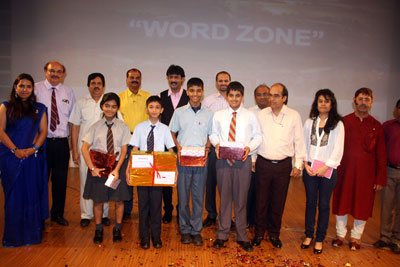
    Spell Bee champions elsewhere in the world, watch out! Kartikeya Dhakad, a student of Sri Satya Sai Vidya Vihar in Indore, showed the same grit and determination that international winners showed when he became the “Spell Champ” at a competition organized by The Free Press Journal to search for students with outstanding spelling skills in schools across the city on Thursday, October 3.


    The competition held at the Dhirubhai Ambani Auditorium of Daly College was tough as Kartikeya lifted the winner’s trophy and took home a laptop after wowing everyone with his splendid ability to spell out words quicker than his fellow contestants. Dev Seth of Emerald Heights International School and Isha Bhorkar of Choithram School were first runners-up while Amogh Kawathekar of Daly College won the third place.


    Abhishek Karnani

    As many as 61 contestants from 20 schools participated in the event that was sponsored by Amul Pro. The grand finale began with lighting of the traditional lamp by Abhishek Karnani, director, Free Press Group of Newspapers, director incharge Pravin Nagar, Group Brand Consultant Debu Mishra and General Manager (marketing) Shailesh Tiwari.


  • Video’s the way to go: Ajit Balakrishan @ IAA Webinar


    The International Association of Advertisers (India Chapter) conducted its second webinar on Thursday, May 23 with Ajit Balakrishnan, Founder and CEO, Rediff.com. The IAA Webinar series with the theme ‘World Goes Digital’ is spearheaded by Abhishek Karnani, co-chair and director, Free Press Journal group and Manish Advani, head – marketing and public relations, Mahindra Special Services Group. *


    The panellists included: Abhishek Karnani, Co-chair, Director, Free Press Journal; Ajay Pandey, founder and CEO, Badhai; Gaurav Mendiratta, CEO, Sociosquare; Aditya Kuber, CEO, Media Sphere Communications and K Narssimhan, CEO, Commit. Pradyuman Maheshwari, Editor-in-chief and CEO, MxmIndia moderated the event. Other than the panellists, some questions that came in from the public in response to our announcements on social networks were also posed to Mr Balakrishnan.


    Excerpts from the Q&A:

    Opening Remarks by Ajit Balakrishnan, CEO, Rediff.com

    There is little doubt that the internet has come a long way since all of us started messing around with it around 18 years ago. The way I look at it is that it has often been a surprise to me that the web technology and internet happened first in the media world and my suspicion is that very soon we are going to see internet and web-based thinking in trade areas like education, healthcare etc what I call as the less-frivolous parts of human endeavours. I for one, am looking forward to that.


    Q. With a large number of players venturing into the digital space, how according to you can brands fight with the larger players and continue to make a mark in the digital media space?

    Ajit Balakrishnan: Let me say that every giant killer started off by being small. I remember Google when it started in 2000 was a tiny company with revenues to the tune of US $35-40 million. I think the successful ones that we have seen throughout the world tend to offer some consumer promise in a new technological way, which they manage to deliver. If you manage to do that at all times then you have a chance to upstage the big players. I have no doubt about that whatsoever; the field is wide open at all times.


    Q. You have been a pioneer in the industry and have seen the industry grow from nothing to what it is today. Have you seen any change in the customer behaviour and expectations on the medium as yet, and, what is the change you foresee in the next 3-5 years?

    Ajit Balakrishnan: My guess is that India is at a very early stage of revolution of the internet and the number of users in India who have unconstrained access to high-speed internet on mobile as well as PC is very small. So what has happened so far is that about 12-15 million users in India have so far access to high-speed internet which in relation to about 300 million middle class Indians is a very small number. So it’s a relatively English-speaking, mostly westernised group of people who tend to follow latest trends and what is going on latest in the US and whose brand values are built around the internet. I think that when this number rises from 12-15 million users to around 200 million users in the next 3-5 years by that time you will see more typical Indians landing up on the internet. The first likelihood is that people at that juncture may not necessarily be coming from an English background and secondly, what they do on the internet will also be different – doing more of social. Some of you will remember that in the mid-80s on television there were only a handful English channels that was ruled largely by Star. Then, a pioneer in Subhash Chandra stepped in and broke the rules of the game. Today, English-language television is a very small proportion of the total. So one will see such kind of initiatives taking place in the near future. But, it is still early days and things like email or social messaging will take precedence. In the early stage of all that is happening, technology is very important. I think technology-oriented pace will continue for another 3-5 years. Post that there will be a blending of mediums like content, applications that will be blended with technology…it will become more media applications oriented.


    When you started Rediff, what did you expect in terms of users or economic outcome…?

    Ajit Balakrishnan: I did not start hoping for any financial outcome from entrepreneurship. I saw an interesting idea at that time and was fascinated by the possibilities that the internet had to offer. I was fascinated by the possibilities of the internet by watching Compuserve and AOL experiment with the medium. So I told Arun that I am going to take a room somewhere in Fort, South Mumbai and figure out where this has to go. So I didn’t have the faintest idea where this would go to but yes, even today it is very unclear to me where the internet is headed next. I personally think that the technological tricks dominated the trade are going to pass in a year or two. In fact among the top 100 companies, everybody uses the same technology; there is nothing unique one can do. The problem in India is that early adopters of sophisticated technology are very small but all that will change soon.


    The same could be said of Rediff as well which has undergone a change in the way it now presents itself on the online space. Is that an indication of the changing times…

    Ajit Balakrishnan: We essentially took a ‘tight look’ as one would like to call it. Web is increasingly becoming a visual medium today. That is different from 10-15 years ago where it used to imitate the newspaper paradigm. But it is now moving to be a visual metaphor. There is a big swing being observed towards video as well but as yet nobody in the world knows how video on internet will play out. But one part of it is where pirated video is played out more and the second part of it is bloopers. Nobody knows what will be the grammar of the 2-3 minute video but I am sure it will arrive soon. In the early days of television there were not much popular sitcoms, people played movies. But then the sitcoms arrived with 2-3 slots for ads, so something like that will happen for 2-3 minute videos as well.


    What according to you will be the low hanging fruit that will make the fence-sitters start using this second screen to complement television, newspapers etc?

    Ajit Balakrishnan: I feel the reason why digital ad agencies are not as big as the others is because they tend to be conservative. I have been on that side so I know how it happens. Their best clients are typically the ones that are very large and that make products for mass media conservative audiences. Be it a Colgate or the others, the main market for such clients is outside the sophisticated audience. The internet doesn’t make as much sense to them because their growth comes from smaller towns and rural India. So, big ad agencies tend to be full of such clients. But there are clients in the financial services sector for example, who love to have a sophisticated audience. I’d say do not give up, wait for 2-3 more years and you will see big bucks coming to the sector.


    What problems do you face in online shopping for Rediff where you have many big players in the space?

    Ajit Balakrishnan: As a group, there are lot of things that are going good for Indian online e-commerce sites like us. First is that private equity has more or less withdrawn from organised retail. So if you are based in some Tier 2 town and you cannot find a good phone in a retail shop you can rush online and shop for your product from there. There has been a sudden explosion in 2011-12 in the range of $ 600mn that has been pumped in the Indian e-commerce sector across say 50 companies. That has woken up the e-commerce industry in India. This injection of capital and excitement has made a player like us grow by 100 per cent year-on-year. While that is good news, the bad news is that infrastructure around e-commerce has not yet developed. For example, if you have a credit card you can shop easily but the failure rates with debit cards on the internet tends to be in the range of 40-50 per cent. The reason for that is that for debit cards to work well through banks it has to be communicated well through an internet high speed line and that kind of telecom service will be tougher to achieve in smaller towns and cities. So while there are 100 million debit card users there are only about 8 million credit card users. But this problem is being looked into. Once this problem is sorted the debit card e-commerce will jump up.


    The other thing is that the cost for courier companies is high in relation to margins. So the courier companies need to be much more efficient and make money in no more than Rs 10 per delivery. This is the reason why some players have their own delivery people to capture the imagination of the public. But there are some who are doing a good job compared to Blue Dart and the others that follow a hub-and-spoke model. But like all things in India, these things take some time but when it happens it happens very well. E-commerce is about 2-3 years away from a gigantic boom in India.


    How big a role do you see for video playing on the internet in India?

    Ajit Balakrishnan: The thing about video is that it jumps over the language barrier. The fact is that Indian language-based internet has not taken off at all but with video, you leapfrog that barrier. So video is indeed terrific. In fact the sales people keep telling me that the ad agencies have woken up from their slumber on the internet and they love video because that is something they understand well. So video is destined to be successful.


    The problem that small companies face is talent who get lured away by MNCs after working for a year or two with us. How did you confront a challenge such as this?

    Ajit Balakrishnan: This is not a new problem that any new enterprise faces in Mumbai or elsewhere. There are plenty of jobs and lots of talented people mingling together. This problem will continue to happen at any stage in your professional career. When you grow a little older, things like stock options are technical ways of holding things back but I think that there is a pattern among people you recruit. Some who love the idea of doing innovative work, some who love security, some who like the thrill of changing jobs every year. There are guys my age who have changed some 20-odd jobs. So there are things that you cannot control but try and build an anchor group of 5-6 people whom you feel will be critical to the success of a business. The risk with that again is that those who are among your core group today may not be with you tomorrow. While we had the stock option scheme for us it does not work in every industry. But I can promise you that hiring and retaining talent will remain a 24-hour job and will be so at all stages of your life and not just the start-up.


    How do you mass-produce content that is creative and engaging enough?

    Ajit Balakrishnan: We don’t need to mass-produce content, we should see how we can cost-produce content especially for a 2-3 minute video. I think at most it costs just 5 lakhs but the idea is much more important there than the grand production. I think with television it has come to a point where the ads costs at least 1-2 crore behind an idea which is laughable. I think they have bought this upon themselves. But nobody knows what kind of an idea would work. We are in a situation which Charles Dickens was or the book publishing industry was in the 1830s. Charles came in and showed with ‘Great Expectations’ how we can write a book and we all know that there were more than hundreds of imitators after that. We need such kind of creative geniuses.


    In India, most ad revenues go to global top 5 websites that works up roughly to about 75 per cent. What is left for everyone else is a small pie. What do you foresee of this trend?

    Ajit Balakrishnan: Advertising has such a trend where the winner takes it all; it is not just a web phenomenon. Take the newspaper industry for example, whoever is No 1 takes about 60 per cent of the revenues while the No 2 takes in another 20 per cent. So from No 3 to 10 barely mange to hang in while all the others hang in for prestige reasons. A similar thing is observed with channels as well where the top 2-3 players take in 70 per cent of the ad pie. So media is akin to ‘winner takes it all’ situation partly because audiences tend to gravitate towards what is most popular. The internet space also such a practice but that will change as the industry evolves. People who mix technology and creativity platform will emerge winners. When things begin to change there is an opportunity to move in. I have seen many creative companies that have created successes especially from Korea. I think it is possible in India too. First we have to get the audience then the revenues will follow.


    As an industry, we still hover around the 4-5 per cent ad pie. At Rediff, have you taken any initiatives to increase the pie at a faster pace?

    Ajit Balakrishnan: Where ad spends is concerned, my sense is that big agencies should control about 90 per cent of spends in India. I think they are looking for ideas. If each one is able to produce one success story for brands, overnight the pie could increase significantly.


    With the youth taking to the web in a big way for content consumption, do you foresee the beginning of the end of live television in 5 years time from now? Do you think there will be convergence of internet with television for content consumption?

    Ajit Balakrishnan: I think it is a trend of time-shifting today. It started with the VCD/VCR device that enabled us to record and watch content at leisure. The youth of today are similarly doing time-shifting and watching it whenever they please. The television audience is so large that there are lots of audiences who have nothing to do most of the time. These families will prefer the social family programmes and watch it with friends and family. I think these trends will co-exist.


    Do you see independent publishers including bloggers becoming financially independent in India?

    Ajit Balakrishnan: I am a great proponent about blogging and I think the innocence about the internet was blogging. Individuals who had ideas could go and publish it without the consent of publishers and editors…that is the touching thing about the internet. Unfortunately, the business model has not yet developed but I am sure that it will develop soon. For example, if you see the NY Times paper, you will want to read the columnists first. I keep wondering what if somebody decides to have his own blog; what are they going to do? Many of us will go directly to the blogs. So in a way the magazines and newspapers ought to be threatened. So why is blogging not economically sustainable in India is because of the scale. If there are 300 million users and if even 4-5 million users come to your blog the ratio would be about $2 per user per year. You will end up being a blogger with about $ 3-400,000 a year. That is much more than what you would get if you work for somebody. So we are waiting for scale to come about but blogging will be about text and video in the future.


    If you were to invest $ 1 million in digital in the next two years what would be the three ideas that you would chase?

    Ajit Balakrishnan: It’s a tough one but let me give it a try. I think one will be where there is a language application which does not depend on English or anything; probably more voice-based in approach. The other would be something that will be big for professionals like lawyers and doctors because their business models are local in nature. The web will allow them to practice across more places. So an idea that will enable them to expand their business models further. The third would be doing something in education but I am not sure what. These three are likely to be models that will be successful. And all these will also be highly successful on the mobile platform.


    • MxMIndia was a partner to the IAA Webinar


  • FPJ celebrates 30 years in Indore

    By A Correspondent


    English daily The Free Press Journal is completing 30 years of its existence in Indore and to celebrate the occasion, the newspaper has started a reader’s gratification programme in the city.


    As a part of the celebrations, it has started a campaign about safe driving and traffic rules in association with Indore traffic police. Apart from spreading driving safety messages through distribution of leaflets by its volunteers at two traffic intersections, the newspaper is giving instant gratification to the readers of the daily who carry a copy of The Free Press Journal at the traffic lights. This activity will be followed by several other activities in the coming months.


    Talking about the activity, Debu Mishra, consultant, sales and brand communication, The Free Press Journal, says, “People have appreciated our effort in the first two days. It’s a first of its kind initiative in the city. Every day around 600 to 700 gifts are being distributed. We are involving the entire city which will help us garner huge word of mouth publicity.”


    He adds that The Free Press Journal was the first English daily of Indore to have its own printing facility.


    The campaign started with a six-day teaser campaign in print, and is being followed by the revealers. Outdoor and radio media are also being tapped. The campaign will continue for 15 days. The daily has taken 10 hoardings across the strategic locations of the city and 25 spots every day, besides promotions on FM radio stations.


    “The idea is to cover all the important intersections of the city and creating awareness on safe driving and at the same time rewarding the commuters instantly with gifts,” adds Mr Mishra.


    Though the campaign is restricted to Indore at the moment, the newspaper intends to replicate it in Bhopal and Mumbai, in due course of time.


  • FPJ boost for small agencies


    By Johnson Napier


    Seldom does the media think of moving beyond the influential set of players when it comes to playing up the achievements of a particular sector or an industry. While the top 10 or 20 is what the goalpost seems for most in terms of coverage, quite often it is the players who are bundled up in the lower end of the spectrum that contribute as much if not significantly more to the growth of any sector. But this divide was almost forgotten at Grand Hyatt, Mumbai on September 22 when a host of mid- and small-sized advertising agencies came together to pick up nuances and mantras from doyens of the upper strata of the advertising industry.


    The initiative was part of the annual conclave hosted by Free Press Journal that seeks to empower SMEs in the advertising sector. The theme this year was ‘the change that cometh’. The panellists comprised Sam Balsara, CMD of Madison World, Punitha Arumugam, Director – Agency Business at Google India and Bharat Kapadia, founder of ideas@bharatkapadia.com. The conclave was well attended by the who’s who from the ‘not-so-big’ advertising agencies.


    The day began with Madison’s Sam Balsara taking the lead and enlightening the audience on the road ahead for the industry. Speaking on the topic “How to make the leap to the next level”, Balsara began by assuring all gathered in the audience that they were indeed in the right place at the right time. “Advertising is a booming business and the long-term perspective is indeed bright for all players in the industry. But while our economy continues to grow at a healthy 7-8 per cent, advertising’s contribution to the overall economic growth is not as satisfactory. Advertising as a percentage of India’s GNP is just 0.35 per cent compared to the global average of 0.8 per cent. In fact in the US, the number is around 1 per cent.” He cautioned the audience that there was no reason to be weighed down by the slowdown as there were better days ahead for the industry.


    Belting out some of the mantras that enabled Madison Media reach where it is today, Balsara highlighted that the small and medium agencies can indeed give a run to the big agencies by ‘thinking small, beating big’. “Most agencies would advocate one to thing big but we did the reverse and that’s how we managed to work our way to the top,” he averred. Balsara even went on to tag his agency as being a David amongst the Goliaths that existed in the industry, but he cautioned that it didn’t mean that one has to get bogged down by the size of the bigger agencies.


    Advocating to the audience his recipe for success, Balsara said that it was essential for the agencies to do what is right for the client only then will success come one’s way. According to Balsara, the key aspect was the need for agencies to develop core competency. Sharing with the gathering his favourite definition of advertising that steered him to deliver his best, Balsara said that advertising is the art of arresting human intelligence long enough to be able to make a person reach out and open his wallet. This will ultimately benefit the client leading to the growth of the advertising agency as well.


    Presenting the mantras that led Madison to emerge where it is today, Balsara shared the 10 immutable laws that he believed could do wonders to the fortunes of other agencies as well. These include: the law of disadvantage, law of service, law of innovation, law of research/technology, law of specialisation, law of focus, law of organisational building, law of conservation, law of patience and law of perception. Balsara further went on to burst a few myths about advertising which he believed was highly prevalent in the marketplace. These include advertising is too expensive; advertising is only for big companies; advertising is only for FMCG companies; good marketers do not believe in advertising and finally, consumers do not believe in advertising.


    Post Balsara’s unmissable takeaways, it was the turn of Bharat Kapadia to hand out his secrets as he spoke on ‘Getting ready for the future.”. Rather than term them as not-so-big, Kapadia took the liberty of altering the name to aspiring to-be-big agencies. Kapadia began by straight away highlighting the influential role that technology played today. “With technology eliminating most middlemen out of business, there is a fear whether advertising agencies may survive in the future? But according to me ad agencies won’t just survive they will continue to throw up spectacular growth as well.” Presenting his ideas on the secrets to chart out good growth and profitability for the company, Kapadia enlisted a few pointers that included: knowing well what the client’s opportunities were; understanding the role and importance of research/data in business; need to lay more emphasis on new media that is not only cheap but cost-effective as well; need for experiential marketing; and most importantly, the need for agencies to be more innovative. Kapadia shared with the gathering an innovation that he had effectively carried out in a newspaper in the recent past that was reasonably successful – Bru Coffee.


    Highlighting the strengths that small or medium agencies possessed compared to the big giants, Kapadia asserted that one didn’t need a sword to cut vegetables. A small knife itself could do the job more effectively. The possible strengths that the aspiring to-be-big agencies possessed include ability to garner more trust and ensure personalised service to clients, be able to deliver a local touch and the ability to offer specialisation services.


    Assigned the task of acclimatising the gathering to the role of new media in running any business, Punitha Arumugam of Google began by saying that the thing about new media is that if you do not know where you are going any road will take you there. Taking inspiration from her mentor Sam Balsara, Arumugam too went on to present the ten commandments of new media, which would help any agency to emerge successful in the future. The first was the need to think business: it was essential to have a big idea; being small or big by size is secondary. She went on to cite examples of Myntra.com and dollarshaveclub.com that went on to become successful case-studies in the recent past due to the power of thinking big. Next was the need to think fluidity: this was essential if one wanted to become successful and get good ROI. The third was think mind-casting: it was important for agencies to narrowcast and address a certain section of the audience as the underlying motive should be about targeting change leaders. The fourth was think re-imagine: with television and print both co-existing as effective mediums it was essential that agencies come up with ads that could work wonders across multiple mediums. The next mantra was think continuity: this had to do more about getting metrics that are used offline to be used successfully in the online world as well. The next was think solutions: this would be made possible with the help of technology that would make any solution come alive. Next commandment was think co-exist: the obvious need to see that all mediums co-exist seamlessly with a role being prioritised for each. Next was think adaption: need to pollinate offline ideas to online and do so effortlessly. The next was think structure: it was important that agencies learn to collaborate whether with generalists or with specialists if the job so demands. And the last but not the least, think covet: at the end, it is all about money. So it is okay if one desired a better share of the client’s attention and hence the business if he had to stay ahead of the race.


    The conclave concluded with a Q&A session where the panellists cleared a few doubts from the audience. This was followed by a vote of thanks by Jagdish Rattanani, business editor of FPJ.


  • Promising tales of tiny, tall agencies


    By Johnson Napier


    The last few weeks were rife with news of independent — or shall we say not-so-big — advertising agencies that were going all out to make their presence felt in the M&E space in India. Whether for the awards they had bagged across festivals or the largescale client wins that they had managed to pocket in their kitty, these agencies were in the news for some reason or the other. But while it may be the ‘popularity’ tag or the affiliation to a large parent company that may have done the trick for these agencies, there are others that fall shy of this honour.


    For instance, one may have faint acquaintance with an agency that goes by the name Apex Advertising or for that matter Flagship Advertising but if one were given a glimpse of the kind of clientele they have to boast – be it RBI, Taj Group of Hotels, BSNL, Pantaloon Retail, Pidilite Industries, MTV Networks etc – or even the kind of billings that they manage to pile up that ranges anywhere from Rs 5 to 50 crore, it would make for an interesting cover. And that’s precisely where the industry seems to be holding back or rather not giving these small yet powerful ad independents their due.


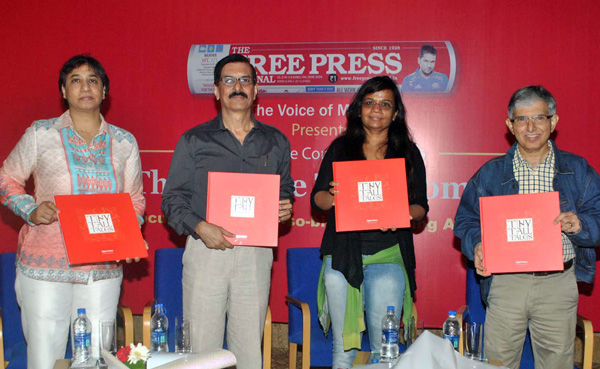
    This lacuna is currently being addressed by veteran print player Free Press Journal, that has come up with an interesting coffee table book titled ‘Tiny Tall Tales’. As the tagline suggests, this book plays up the initiatives of small agencies that are making it big. Said to be a slice of the coverage from The Free Press Journal’s column ‘Small Size Big Ideas’, the book will be launched at FPJ’s second roundtable conclave on 22nd September by Lynn De Souza, Chairman and CEO, Lintas Media Group.


    Abhishek Karnani

    Throwing light on the thought-process and the merit behind warranting such an effort that has been the benchmark of FPJ for some time now, Abhishek Karnani, Director, Free Press Journal said: “There are around 180 accredited ad agencies in Mumbai but we always hear and talk about the Top 15 agencies. There is life beyond them and these not so big agencies are doing great work away from the limelight. These agencies also represent a substantial business and have close affinity with the clients. We are proud of this initiative of the Free Press Journal, where we have taken time to look not at the obvious leaders but at those who are important and often overlooked by the media. This outlook builds on our worldview that there is deep value in the big and the small and it is important to study the not-so-big to learn about ground realities and to spot trends and understand markets that much better.”


    Sharing his experience, Author & producer of the book Sandeep Singh said, “Traditionally if you see, everybody just loves to talk about the top 10-15 agencies but there is a whole volume of business that comes from smaller agencies. Some of them are intentionally small because they want to be creative or whatever way you want to look at it, but great works do come across from them. This book is an attempt to cover these agencies.” Elaborating on the participation factor on behalf of the agencies, Singh said, “Though a few agencies refrained from participating citing some reason or the other, the book profiles most of them. Also, it is worth noting that the minimum billing of the agencies in this book is around Rs 5 crore while the maximum is pegged at Rs 50 crore.”


    Elaborating on the scope and scale of the initiative, Jagdish Rattanani, Business Editor, Free Press Journal who along with his team has helped in putting together the book said, “We hear a lot about the top 10 or 15 small ad agencies in India who are spoken about and praised a lot by the media but if you go beyond there are these ‘not-so-big’ advertising agencies that are still big in terms of what they manage to bring to the table. They are big in being strong and powerful enterprises and are dealing with a lot of interesting ideas. We sensed that there was a lot of energy and growth potential amongst these small agencies. Also we found that nobody ever tries to cover them and understand their perspective or see what they might need in this era of change to make the next big leap. That’s what encouraged us in taking this initiative further.”


    As for the point on finding the cause to be an apt fit with the model with which Free Press Journal itself moves forward with, Rattanani asserted by saying, “Though Free Press Journal is not among the biggest of the big, it is but the oldest Indian-owned English newspaper in Mumbai. Basis this, we said that we have a special interest and focus on trying to look at the others who are as good but are not so big and thus started the journey of deliberately trying to exclude the very big and focussing on the not-so-big,” affirmed Rattanani. Adding further he said, “For this exercise, we ended up going and visiting these agencies and even ran features over a period of two years and tried to play up their point of view and perspectives. All said and done, the larger story is of the ideas that lie just beneath the surface.”


    On whether the initiative was carried out to bring about intangible benefits for the newspaper group in terms of revenue from advertisers, Karnani thwarted the thinking by suggesting, “We are rendering this as a Corporate Social Responsibility. Our only concern is to help this segment to take a leap to the next level. We want to empower the not so big ad agencies to not only survive but also thrive and outgrow the market in these times.”


    In fact the group is looking at other avenues to take forward similar causes on behalf of the industry. Asserted Karnani: “We have already kickstarted our Knowledge Series wherein we invite experts to come and share their views with this group. We are also in talks with international ad associations wherein we plan to use their platform to host events for the not-so-big agencies. Also, we are also hosting our second exclusive conclave “The Change That Cometh” that is focused on the not-so-big advertising agencies. So there is a lot to look forward to.”


    While it is too early to predict the outcome of the book from peers from the ad industry, Singh is hopeful that the book will receive a positive approval from all concerned. He avers: “I hope the bigger agencies are happy and take note of the initiative in a positive light.”


    As for its plans of coming out with a sequel to the book, Singh said, “We would like to explore an opportunity of coming out with a sequel to this edition but it is still early days to be talking about that.” Agreeing with Singh, Rattanani said, “I can only say that the idea is rich and we can build on this idea but how the idea will further shape up only time will tell.”