Tag: Fred Cook

  • A Matter of Relevance (& Trust)


    By A Correspondent

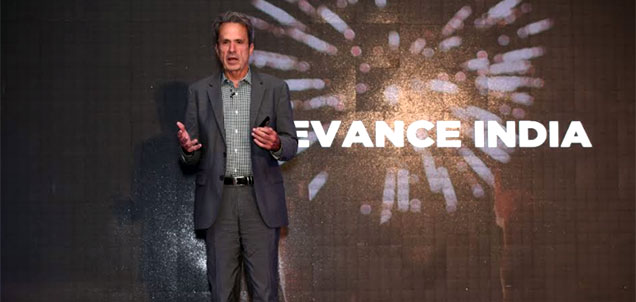
    GolinOpinion, the PR division of PointNine Lintas, released its first marketing product, Relevance India. At an event in Mumbai last week, Fred Cook, Global Chairman, Golin unveiled the Relevance framework which is being rolled out globally. The research was conducted in 13 markets, including India, covering over 13,000 respondents. The first round of data from the study indicates that in the battle for relevance, truth is having a moment of truth. Golin’s global research focused on three categories that touch billions of lives every day: social media, personal banking and automotive.

    After three years of research, in partnership with the USC Annenberg School for Journalism and

    Communications, Golin’s study in four continents including India, uncovered what drives relevance for categories and brands across the globe. The survey population encompassed millennials (18-34), Gen-x (35-54) and boomers (55+).

    The India data, that covered three categories, threw up some interesting aspects:

    People around the world believe that their ideal brand would deliver on being trustworthy (ethical, moral, honest and truthful. However according to the research, study the reality tells a different story. Of the most relevant brands studied, 0% met the ideal when it came to being trustworthy; while people are seeking it, leading brands aren’t seen as relevant. 91% of the most relevant brands studied exceed the expectation when it comes to being popular. This is a part of a major shift.

    Having lost faith in brands and institutions, people are looking to each other, to their trusted tribes – friends, family, advocates and influencers – for validation in the choices they are making. Popularity isn’t a frivolous, fleeting dimension. Talkability means putting a premium on the people who will vouch for and recommend your brand.

    Within the three categories studied it was found that social media category, research found that people don’t need truth; they want to be entertained. People prefer local banking over global – and since all banks are under-delivering on the ideal, unique relevance drivers in this category have emerged. And the automotive category struggles to have a breakout relevance brand leader.

    An ideal banking brand in India is Trustworthy, Effective and Transparent. As with other categories, respondents scored brands very similarly to one another, though SBI scores higher against the ideal and exceeds expectations on Essential and Popular. None other bank in 12 other countries, where the research was done, scored so high on trust.

    The automotive sector which covered global brands, shows Honda as a clear Relevance leader in India, followed by a close competition between Toyota and Ford. Nissan has low relevance, while Fiat is barely known. In India, an “ideal” automotive brand is Trustworthy, Effective, Authentic and Innovative. However, there is little difference in how consumers score each brand.

    Social media is a highly-relevant category overall in India, with Facebook and YouTube ranking at the top in relevance. Local channel Hike is less relevant than global channels.

    Meanwhile, the macro global trends included:

    Screens win out over people

    > Social media (59%) and television (57%) consistently ranked first and second above “word of mouth from friends and family” (45%) as the most relevant sources of news and information

    Word of mouth sees gender differences

    > Word of mouth from friends and family is more relevant to women (50%) than men (39%)

    People are drawn to pragmatic and funny

    > The top characteristics of information people found relevant were useful/practical (54%), informative (53%), and funny (35%), beating out others like inspiring, shocking and exciting

    The one dimension that is currently driving relevance across all categories is popularity: being talked about and recommended by others showing that talkability trumps truth.

    Speaking about the findings at the event, Cook said: “Relevance is what attracts and keeps people paying attention to what brands have to say and moves them to act. This is something that we, as marketers and communicators, can directly impact. We’ve been studying, and perfecting the art of analysing relevance for years because we understand that it is the most important measurement of a brand. Our research indicates that despite people being continually let down by the perceived trustworthiness and truthfulness of brands, they continue to buy their products and services.”

    Speaking of the India launch, Vikas Mehta, CEO, PointNine Lintas, said: “Finding a unified metric that can measure the impact of multiple marketing initiatives is one of the biggest challenges today’s marketers face. In Relevance, I believe GolinOpinion has found a viable choice that replaces data analysis with data analytics. It’s a great way for any brand to find out where they stand vs. competition, locally or globally.”

    Added Ameer Ismail, Chief Growth officer, PointNine Lintas and President GolinOpinion: “As the landscape changes rapidly and as brand managers or communication professionals it is extremely important to have data based insights to decide the interventions that are important for the brand and its agency partners. This is tool is designed to give brands an edge.” Developmental work on the study is being done in Chicago and Mumbai, to further improve functionalities of the tool including real-time data integration.

  • Interviews with Rob Flaherty & Fred Cook


    Social media is god’s gift to the corp comm function: Rob Flaherty

    Rob Flaherty is Chairman and Chief Executive Officer of Ketchum, one of the world’s top communications firms, with offices and affiliates in 130 markets in more than 70 countries. Flaherty was named Global PR Leader of the Year in 2016 by the International Communications Consultancy Organization (ICCO). Flaherty leads Ketchum’s 19-member Global Leadership Council to guide the strategy, client service and performance of the agency. Ketchum was named Agency of the Year in 2012 by PR WEEK and is a finalist for 2017 Global Agency of the Year.

    Since joining Ketchum in 1989, Flaherty has been involved in all aspects of the firm’s business, including having successfully led its largest office, one of its global practices and several of its largest client engagements. As a client counsellor, Rob specializes in corporate positioning and issues management. He has helped companies prepare for and respond to challenging situations ranging from product liability and airline accidents to data breaches and antitrust litigation. He also has played a lead role in growing the firm’s client base. Flaherty became President of the agency in 2008, CEO in 2012 and today is one of the industry’s most sought-after client counsellors.

    In an exclusive interview with MxMIndia on the sidelines of Praxis 2017, Flaherty tells Rahul Chandawarkar on how social media has changed the communication paradigm completely.


    How has social media impacted the functioning of PR companies worldwide?

    Social media is god’s gift to the corporate communication function.  It has quickly expanded the methods of communication and simultaneously created challenges for our clients to break through. It has changed our linear way of functioning.

    PR companies have to relook at their talent pools. For a long time, we have had journalists in our team guide our communication strategies with traditional mediums like newspapers and print media. Today, social media is reaching out to consumers directly. We now need PR people who can employ more creativity, analytical skills and also understand the different fragmented channels. PR companies have a training challenge on their hands.


    And how would you say has Ketchum Sampark accepted this challenge in India?

    KetchumSampark has accepted this challenge positively. Sampark has always been a strong, entrepreneurial company. They have huge respect for journalists, mass media and emerging trends.


    Does crisis management still remain the main strength of top-line PR companies?

    My entire career has revolved around crisis management. I have spent  30 years doing just this. Crisis management has aspects of speed, severity and risk in a very short period of time.  However, longer term marketing communication challenges are equally interesting and intellectually challenging. PR firms around the world tend to super specialise in either corporate communications or marketing communications. I am proud that Ketchum is a  combination of both.


    In a social media scenario, PR firms have several specialists working on an account. How does one convert all this energy into one unified strategy?

    Flaherty: This is an on-going challenge. It is not easy. There is constant tension when specialists work in silos. Everybody gets possessive about their own ideas. We almost become like a team of rivals fighting on our own turf.

    However, there are lessons to learn from film companies like  Pixar and leading advertising agencies who seem to have devised methods to channelise the collective creative energies of their teams. We need to learn from them.

    Creative teams in advertising even fight about their creative ideas with their own clients. We need to reach that level of maturity.


    Brands worldwide are losing their trust quotient: Fred Cook

    Fred Cook is Chairman of Golin, one of the world’s largest public relations firms, with 50 offices around the globe. For the last thirty years, he has been providing marketing advice and crisis counsel to blue-chip companies like Nintendo, McDonald’s and Toyota. He has also worked personally with Jeff Bezos, Herb Kelleher and Steve Jobs. 

    Under his leadership, Golin has been voted agency of the year more than a dozen times and Cook has been named one of the most powerful people in PR. Four years ago, he replaced Golin’s traditional hierarchical structure with a radical new model called g4, where communities of specialists deliver insights, ideas, engagement and integration to their clients.

    In an exclusive interview with MxMIndia on the sidelines of PRAXIS 2017 in Jaipur, Cook tells Rahul Chandawarkar why brands worldwide are losing their trust quotient.


    Why do you think brands worldwide are losing their trust quotient? What has gone wrong?

    People worldwide have become sceptical about brands. This is because brands  have acted in self-interest.

    Social media has made everything so transparent. People have become more aware and brands are open to more scrutiny nowadays. It is a fact that brands have been behaving badly with the environment and with their customers.

    Take the example of United Airlines in the US recently. When they took a customer off the plane, it created outrage on social media. Something like this would have probably gone unnoticed 20 years ago.


    You used the term: ‘Talkability Trumps Trust’ in your presentation. Would you like to explain this please?

    Basically, there is a lot of information out there. In a social media driven environment, brands are keen to achieve high levels of buzz. They want people to share news and they want everybody to talk about their brands. However, though brands might achieve talkability, they could lose out on trust.


    Real news versus paid news. Why are the lines getting so blurred?

    Lack of advertising revenues has prompted many media brands to introduce paid advertorials. You therefore have branded content. You can buy your way into any media outlet because of this media business model. Today, there is very little difference between advertising and public relations. Over a period of time, consumers will not be able to make out the difference between the two and the lines will disappear completely.


    It is clear that you were inspired by your mentor, the Late Ed Golin. What has been your biggest learning from him?

    Ed and I were a lot like each other. We were both from the mid-west USA. I  grew up in Indiana and he in Chicago. Ed had many great qualities. But humility was his greatest virtue. It made him stand out. He helped start McDonalds. He had a million achievements and a million awards, but this never affected his judgement. There is a singular lack of humility in society today. We are not kind to each other anymore. Everybody has become so competitive. Everybody is out to outdo the other. Ed was a good guy. We need more good people, both men and women in our industry.


    What is the way forward for PR professionals?

    Very simply, we need to become more courageous. We need more balls. We are in a very competitive environment. We have talented and creative people in every agency. Our people have the ability to lead and we need to seize the moment. There are great opportunities for the PR industry, but we need to make it happen. It is not going to happen automatically.

  • AI & VR dominate discussions at Praxis 2017

    Image taken from a Facebook post by On Purpose Consulting


    By Rahul Chandawarkar


    When Guillaume Herbette, Global CEO, MSLGroup spoke passionately about how augmented intelligence, virtual reality and artificial intelligence were slated to become part and parcel of the public relations world in the not-too-distant future, he sure had several practitioners in the audience chewing their finger nails in anxiety at Praxis 2017, the premier national PR conference in India held in Jaipur on September 15 and 16.


    A sentiment which was clearly visible when Herbette’s post-talk interviewer asked him nervously: “If what you say is true, what will happen to all of us?!” The unruffled Herbette simply said: “We need to relearn and accept this reality. Artificial Intelligence is the next big revolution waiting to happen. We better get ready for it now. ”


    Key Takeaways:

    1) Artificial Intelligence is the next technological revolution. The Indian PR industry must embrace it.

    2) Video experts, computer engineers and social scientists will be part of future PR teams.

    3) Trust, faith and integrity must remain the cornerstone of every PR firm.

    4) There was no single brand in the world which enjoyed complete trust.

    5) PR managers needed to possess the combined abilities of lobbying, media relations and storytelling.

    Not just Herbette, but many of the international speakers who spoke at the event this year touched upon the topic of artificial intelligence and the advent of high-end technology in the world of public relations. To a large extent, Praxis 6 will be remembered for throwing the spotlight on emerging technologies like AI in a very big way.


    Herbette in his interesting presentation termed the digital revolution as the first technological revolution and explained how digital influencers had replaced traditional mainstream journalists as third party endorsers. He also shared a statistic on how people are spending as much as 45 minutes every day on the internet. “The capabilities and importance of these digital influencers in communications and marketing is exploding,” Herbette said.


    Speaking about artificial intelligence (AI), Herbette explained how PR companies would need to embrace this technology very soon. “AI best combines the best of science of technology with storytelling. It will change the way we work,” Herbette said. According to him, the AI business is expected to grow by 300 per cent worldwide in 2017-18 and create business worth $ 1.2 trillion in the coming year. “Most of this business will go to companies who use AI, Big Data and the Internet extensively,” Herbette said.


    Earlier in the day, Jose Manuel Guardado, chairman, Global Alliance speaking on the topic of ‘Challenges to the PR Profession’ also touched upon the topic of artificial intelligence and virtual reality. “The rise of automated communication and sharing experiences with the use of virtual reality is fast gaining ground,” Jose said. According to Jose, PR managers today would need to improve their technological, strategic planning, written communication and social media skills rapidly to stay in the game.


    The technological thread was also visible in Ketchum Global CEO, Rob Flaherty’s talk on ‘What it takes to be a fearless and fast communicator’ on Day One. Highlighting the importance of social media and how it had become a game changer, Flaherty said: “Today, our friends send us news on social media faster than the television. We do not have to find the news. News is finding us.” Driving home his point further, Rob shared a statistic which stated that 60 per cent of all Facebook stories in India in 2017 were in Hindi and not English.


    According to the Ketchum boss, PR managers will need to embrace high-end technology. “We would need to hire video experts, computer engineers and social scientists on our teams,” Flaherty said.


    Abhijit Bhaduri, the author of ‘Digital Tsunami’, who spoke on Day One also spoke on how present-day jobs were being shaped by technology and human longevity. According to the digital guru, retaining one’s job in a fast changing technological world was becoming a challenge. “Professionals, including PR practitioners would need to develop skill sets on their own. An ‘open talent economy’ is emerging and professionals would need to be ready to freelance with three different clients every day,” Bhaduri said. Bhaduri also pointed out that new jobs like drone engineers and robotics analysts would be created to meet demand.


    However, it was not all tech-talk at Praxis 2017. The spotlight was also turned on virtues like trust, faith and integrity which were also highlighted in depth by global PR CEOs like John Saunders and Fred Cook. Saunders, Global CEO, Fleishman-Hillard  in his ‘Staying true to the calling of communications’ topic shared the story of how he had to move the courts to clear his own name and integrity in his client, singer Van Morrison’s infamous ‘love-child’ case of 2009.


    Saunders stressed the need for PR companies to be brutally honest and truthful. In his post-talk interview with Ipshita Sen of Adfactors PR, Saunders said, “PR companies need to know when to draw the line. It is imperative that we say, ‘we cannot do this!’ when we feel that our ethics and integrity are being compromised.” Saunders  said.


    Similarly Fred Cook, Global CEO, Golin shared findings of Golin’s extensive survey on the ‘trust deficit’ prevalent for various brand categories across 13 markets, 13,000 people and four continents. The survey was not encouraging. There was no single brand in the world which enjoyed complete trust, he said.


    However, according to Cook, Indians were more loyal to their brands than the western counterparts. “According to our detailed survey, the State Bank of India among banks and the Honda car among automobiles were the favourite brands for Indians in the two categories,” Cook said.


    Besides the five keynote addresses, there were six power panel discussions at Praxis this year. Discussing the topic of hiring, senior corporate communication managers spelt out the various challenges facing them in picking the right  candidate. Sonia Huria of Viacom 18 said that potential PR managers needed to possess the combined abilities of lobbying, media relations and storytelling, while Nitin Thakur of Max India said that he preferred to pick sharp talent from B-schools provided they had a positive attitude and an aptitude to learn. While Shaily Vaswani of  VFS Global felt that the PR industry needed good storytellers.


    Similarly, in the panel discussions on taking healthcare closer to patients, Aparna Thomas of Sanofi pointed out there were an estimated 65 million people in India who are afflicted with diabetes and only fifty per cent of them knew about their ailment. According to Thomas it was important to use celebrities to endorse and popularise their products.


    Creativity was another focus area which was very well represented at the conference this year. On the first evening, the vivacious Romanian, Gabriela Lungu, founder, WINGS Creative Leadership Lab explained the urgent need for creating a culture of creativity within every PR organisation.


    According to Lungu, it was important to make creativity a business priority. “Setting clear and specific creative objectives is as important as setting up financial goals and any other business goal,” the acclaimed creative guru said.


    This creative thread was under the spotlight on the concluding evening too, when Margaret Key of Burson Marsteller and Darren Burns of Weber Shandwick shared some excellent creative campaigns conceived and executed in Asia.


    The Samsung film involving a mother and her autistic son, who refused to make  eye contact, until he was taught to shoot profile photos using the mobile phone was particularly touching.


    On Day One, in the first of the power panels, founder-CEOs of independent agencies Quik Relations (PK Khurana), PRHub (Xavier Prabhu), Media Mantra (Pooja Pathak) and Commune (Ruby Sinha) spoke about the value add they are able to bring to the profession despite their respective size of operations.


    The two-day conference ended with the Fulcrum awards with metals presented to individuals and agencies.


    Rahul Chandawarkar is a former editor who chucked the daily grind for an all-new life as a columnist, communications consultant and sportsman based in Colva in South Goa. Chandawarkar covered Praxis 2017 proceedings for MxMIndia