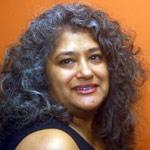
Tag: Freaking News.

  • Ranjona Banerji: Express on the top

    By Ranjona Banerji


    Aah cricket! I can’t believe that I’m writing this but cricket made a difference to the news mix last week. We’ve been so full of politics for so long now and that includes the politics of sport. But the start of the Cricket World Cup and India’s two wins in the first stages meant that we had a break from manufactured outrage.


    Of course there is no doubt that cricket fatigue will set in at some point and I’ll be grumbling here quite soon as this tournament goes on and on… There will be an endless questioning of Sachin Tendulkar and the endless squeaking of Boria Majumdar both on Headlines Today. There will be some needless (I cannot say gratuitous because no money = no appearance) film star presence because cricket is not glamorous enough in India as we all know. There will be outrage over every small fielding position. There will enormous anger that some other team actually dared to play well.


    And not all the deities in the world can save Team India from the media’s wrath if things do not go the media’s way… There you have it. That’s the World Cup in three paragraphs!


    **


    Actually, it’s been a news-filled week and the Indian Express has been at the top of one of the biggest stories: what the media dubbed the “terror boat” from Pakistan. Since the story of the boat that blew itself up on the night of December 31 2014 broke in the first week of January, questions have been raised, not least by India’s intelligence agencies. The Indian Express was at the forefront, asking uncomfortable questions with uncomfortable stories and incisive opinion pieces.


    Last week, they came up with a speech by a DIG of the Coast Guard where he claimed that he was in Gandhinagar when the boat was headed to the Porbandar coast and he had ordered that it be blown up (“We don’t want to serve them biryani”). There was hell to pay after that and denials and counter-accusations flew fast and thick between the Coast Guard, defence ministry, the government and the media, especially (obviously) television.


    The Indian Express waited as the denials became stronger and then released a tape of the DIG’s speech. This led to maximum embarrassment.


    However, fun as all this was, there are a couple of problems here. The first, amusing as it is for the media, is the “I was misquoted” excuse. The electronic age makes this excuse redundant. You can wiggle around saying you were misunderstood or quoted out of context. But even those have limited traction. If you are going to blab secrets or put your foot in your mouth, find a better explanation for your words before someone makes your words public.


    The second problem is more serious. It is the way that every story falls so quickly by the wayside. The coast guard DIG’s statement is serious because, among other things, it points to a frightening lack of communication between our security agencies and implies the defence ministry lied to the nation especially on a subject as fraught with tension as our relationship with Pakistan.


    But we have already forgotten about the story as we have jumped on to the next big one: The auction of Narendra Modi’s suit, the Budget session, the disappearance of Rahul Gandhi, Mohan Bhagwat’s comments on Mother Teresa or the information leaks and robberies from the petroleum ministry to petroleum companies. Some of these are not even that big but stories are judged on how they can be milked for attention and not for their intrinsic worth.


    Ah well.


  • Ranjona Banerji: Barkha Dutt leaves NDTV, Rajyavardhan leaves women fuming

    By Ranjona Banerji


    Celebrated TV journalist Barkha Dutt shot to fame during her coverage of the Kargil War-Like Situation. She also gathered an enormous fan following with her studio discussion programme, We the People, which debated various issues in a sort of unstructured format. Many feel she has a way of connecting to people that is rare and appealing. In her 20 years with NDTV, in the various names the channel has been known as, she has been an abiding face.


    However rumours of her leaving the channel have not been new in media circle, from when Peter Mukerjea set up the Newsx-9x brand to when Rajdeep Sardesai quit CNNIBN. Now Dutt has quit to set up her own media outfit, although her two shows, We the People and The Buck Stops Here will continue.


    Yet, Dutt’s tenure in television has not been without controversy. There were objections to her access to army positions during the Kargil conflict. Her coverage of the Gujarat riots of 2002 angered Hindutva followers and her coverage of the 2008 terror attacks in Mumbai angered many who felt she gave away vital information putting lives in danger.


    But her worst moments were when the Niira Radia tapes were made public by Open and Outlook magazines. To hear a senior journalist agreeing to become a messenger for a corporate lobbyist trying to influence the appointment of a cabinet minister for the telecom ministry was shocking even to hardened journalists. Dutt denied she ever meant to pass the message on. But why Radia ever thought Dutt would help her was not made clear. To some of us oldtimers, at the risk of sounding unbearably self-righteous, there are limits beyond PR reps are not allowed in. Calling you at 4 am to discuss cabinet ministries is one of them.


    Even worse, as was brought up by then Open editor Manu Joseph during a questioning of Dutt organised on NDTV itself, was why a journalist as experienced as Dutt did not see a story in Radia’s request. The fact is, the telecom industry was pushing for A Raja of the DMK to become telecom minister in UPA 2. By any standards, that’s a story.


    And here’s this one:

    http://www.huffingtonpost.in/2015/02/16/barkha-dutt-ndtv_n_6690808.html


    **

    Last week, Information and broadcasting minister and Olympian shooting champ Rajyavardhan Rathore annoyed women and journalists by a speech he made to the Indian Women’s Press Corps. The minister said that women journalists need not go out into the field but might better use their skills for analysis. He also mentioned their safety and their other roles and responsibilities as mothers, sisters, daughters and so on.


    There was immediate outrage on social media, where his patriarchy was questioned. Rathore then responded with a number of tweets which first said that he was misinterpreted and then that he was misquoted. India Today took their story off their website as a result of the tweets and blamed the news agency (IANS) for the mix-up. But as the link below from newslaundry.com shows, Rathore did indeed make those remarks and those media outlets which succumbed to his tweets and took down the story, had jumped the gun.


    Women in journalism have fought very hard to get where they are. And they do not need advice of this “know your limits” sort from anybody. No need for a shooting champ to shoot his mouth of.

    http://www.newslaundry.com/2015/02/16/the-benign-patriarchy-of-rajyavardhan-rathore/


    **


    Twitter fascinates me, as regular readers of this column know. The way companies respond to complaints and ideas tells its own story. Makemytrip possibly wins with its sense of humour demonstrated when BJP candidate and now MP Giriraj Singh said that all opponent to Narendra Modi should go to Pakistan. Makemytrip’s twitter account said it was organising charter flights. On a personal note, Makemytrip has always responded and helped when I’ve tweeted to them. So have Indigo and Jet Airways, Tata Docomo, Vodafone, Ten Sports and Neo Sports.


    The two failures in this regard remain by old bugbear Star Sports, now without ESPN but still as silent to tweets and Tatasky.
    My humble opinion is that companies which do not respond to customers and people on social media will one day pay the price…


    **


    For those who missed this, Twinkle Khanna’s brilliant column on the All India Bakchod Roast and the Indian right to be being offended:
    http://m.indiatimes.com/entertainment/this-twinkle-khanna-column-is-breaking-the-internet-today-230279.html


  • Ranjona Banerji: The nation wants to know when Barack Obama will answer Times Now! No, really!

    By Ranjona Banerji


    Many people have complained to me that if I was being sarcastic about Arnab Goswami and Times Now being the best anchor and channel to watch on the Delhi election results day this week, it did not come through. My sincere apologies. But I reassert that Times Now was the most entertaining channel to watch!


    **


    But here’s a story where you have to partially at least agree with Goswami and Times Now: the assault on Suresh Patel by the police in Madison, Alabama, which has left him paralysed: http://www.washingtonpost.com/news/morning-mix/wp/2015/02/11/alabama-cops-leave-a-grandfather-partially-paralyzed-after-frisk-goes-awry/


    I say partially because while the story is horrific and the actions of the police smack of both brutality and racism, it was ridiculous for Goswami to sit in his Mumbai studio and demand an answer from US president Barack Obama. Certainly, you can castigate the US system, you can take on racism but it is silly to use a hashtag like ObamaStopPreaching to highlight Sureshbhai Patel’s plight.


    The fact that Obama spoke of the need for secularism in India did not mean that he said that there is no racism in the US. Quite the contrary. He mentioned racism in America and his own experiences in his speech in India as well. But in a jingoistic way, it is heartening to see an Indian TV anchor, watched by 1.2 billion people (Goswami hinted at that on Thursdaynight though I have yet to see it in a Times Now ad) ask questions of the US president with no hope of ever getting an answer.


    Meanwhile, NewsX has been claiming since Friday morning that some part of this story was “first on NewsX”.


    Wait till Goswami hears about that, all you paparazzi channels!


    **


    NewsX however went hammer and tongs at activist Teesta Setalvad on Thursday night, after a Gujarat high court denied her anticipatory bail application in a case about possible fraud in money collected for a museum to commemorate victims of the 2002 Gujarat riots. The anchor Rahul Shivshankar made it clear to some hapless guests that he did not want to discuss the legal aspects of the case but the hypocrisy of Setalvad.


    Just to make life interesting, the Supreme Court has since stayed the arrest warrant. Obviously the apex court is more interested in discussing the legal aspects of the case than Shivshankar?


    This comment from The Economic Times puts some of the questions for and against Setalvad in perspective: http://blogs.economictimes.indiatimes.com/et-editorials/stop-harassment-of-human-rights-activist-teesta-setalvad/


    **


    Mohammed Fahmy and Baher Mohammed are hopefully to be released on bail soon from an Egyptian jail. The two Al-Jazeera journalists were arrested on suspicion of being Muslim Brotherhood sympathisers. A retrial has been ordered in their case. Earlier, Australian journalist Peter Grieste also one of the three Al Jazeera journalists, had been allowed to go home as well.


    http://www.aljazeera.com/news/middleeast/2015/02/egypt-court-releases-al-jazeera-journalists-bail-freeajstaff-150212114228426.html


    **


    The US is mourning the deaths of two senior journalists. Bob Simon, celebrated foreign reporter and war correspondent with CBS, died in a car accident in New York on Wednesdaynight. Simon had reported on wars since Vietnam. He was 73. http://www.cbsnews.com/news/cbs-news-correspondent-bob-simon-1941-2015/


    The New York Times is mourning the loss of David Carr, 58, who wrote a very popular media column. Carr collapsed in the newspaper’s Manhattan newsroom on Thursday.

    http://www.nytimes.com/2015/02/13/business/media/david-carr-media-equation-columnist-for-the-times-is-dead-at-58.html?_r=0


  • Ranjona Banerji: Anyone cares about Freedom of Speech?

    By Ranjona Banerji


    The case of Shireen Dalvi, editor of the Mumbai edition of the Urdu newspaper Awadhnama, perfectly and in some ways tragically encapsulates our wavering devotion to freedom of speech and the up-and-down solidarity between journalists.


    Many in India – on social media at least – came out in support of the French satirical magazine Charlie Hebdo even though few had even heard of it before the ghastly terror attack by Islamists leaving 14 dead. But standing with Shirin Dalvi is another matter. So what if the newspaper she edited is published from Mumbai and not Paris? So what if she’s been in hiding since January 17 because of cases filed against her by Muslim fundamentalists and others because she reprinted a Charlie Hebdo cartoon? So what if her children are too frightened to go to college? So what if the Mumbai branch of the newspaper has been shut down by the owners leaving Dalvi and other employees jobless?


    Dalvi has been charged under section 295A of the Indian Penal Code, “outraging religious sentiments with malicious intent”. Dalvi had in fact apologised for carrying the cartoon, making it clear that she did not want to blaspheme the prophet Mohammed. She also wrote an editorial saying that the way to protest against such cartoons is not by killing or threats.


    The idea of freedom of speech has to be absolute. But in India, we are constantly alert to various sentiments being upset. The idea that Dalvi as an editor and a journalist has certain rights has been ignored by the Mumbai police in this instance over the rights of those who have felt offended.


    Veteran journalist Jyoti Punwani, in this article for scroll.in, finds that there is another angle to the hounding of Dalvi: the fact that she is a rare female editor with a meteoric career rise in the male-dominated world of Urdu journalism: http://scroll.in/article/704074/Behind-hounding-of-female-editor-who-published-Hebdo-cover,-pettiness-of-Urdu-journalism-lies-exposed


    It is heartening in some small measure that both the Mumbai Press Club and the Bombay Union of Journalists have issued statements in support of Dalvi and most Mumbai editions of newspapers have been carrying articles about the case. But a larger voice, like we saw for Charlie Hebdo? Uh-huh.


    This is from the statement of the Mumbai Press Club:

    “We see this as a systematic attempt to intimidate a journalist who was merely doing her job, and drive her out of the profession. Her being a woman editor, a rarity in the Urdu media, seems to have has added an edge to her persecution. We call upon the state government to create conditions for her and her children to be able to return home and live in security.


    The Press Club is also writing to Maharashtra Chief Minister Devendra Fadnavis, who also heads the state Home Ministry, to stop the harassment of Shireen Dalvi through trumped up FIRs, and to ensure that she and her children are provided police protection.”


    **


    The national media’s hysteria over the Delhi state elections continues (or, as one news channel put it, “our continuous coverage continues”).


    Those who watch TV regularly know that the entire world is circumscribed by Arvind Kejriwal, Kiran Bedi, Amit Shah and Narendra Modi. Who knows, perhaps it is.


    **


    The only way out for those in India who have other things to think about than Delhi seems to be the release of a new Amitabh Bachchan film. Which perhaps proves that Bollywood PR beats political PR hands down. This I write judging from the appearance of India’s best known film star on every news channel.


    A “sham” approach to news?


  • Ranjona Banerji: Three years of observing the media

    By Ranjona Banerji


    It is three years since mxmindia.com was launched and three years since I started looking at the media as an observer and not just a participant. Three years since I forced myself to start watching Indian news television seriously and not just as an amuse bouche before moving on to main course TV.


    When Pradyuman Maheshwari, founder and editor-n-chief of mxmindia.com asked me to start commenting on the way news is presented and on the way the media operates, it required a rejig of my approach to the media. I had to try to be more objective than I was while trying to determine how many of my opinions were merely subjective or were based on years of experience. I had to set aside old loyalties to both places and people, which is always the most difficult to do.


    All of us in the media have an idea of where the profession is going and where we want it to go and then try and bridge that gap – if any – through our work. But mxmindia required a new discipline from me: to assess the media’s doings and then predict outcomes. Often when you do that, everything looks dire. So you relook at your views and try and separate the inherent journalistic cynicism to at least veer towards some optimism.


    So what have I learnt from this impossible exercise? The first is obvious: The primetime TV debate has to be reworked. Barring Nidhi Razdan’s Left, Right and Centre on NDTV and Karan Thapar’s To the Point on Headlines Today (taking off from his show on CNN-IBN), the rest is all noise masquerading as substance.


    Sooner rather than later, Arnab Goswami’s NewsHour on Times Now is going to implode. The very drama that was its selling point will become its downfall. Goswami has several skills as an anchor but he is now riding on momentum rather than strategy. The nation turned to him because he asked questions that no one else did. But now he is desperately scrambling for relevant questions and the slugfest that ensues every night ensures that no one ever answers.


    One hears that NewsX is considering getting some big name in to do its night-time show which may hopefully save us from a child’s view of politics, the same way Karan Thapar has taken Headlines Today from a college canteen idea of life to the adult world. CNN-IBN has lost its sparkle somewhat and perhaps one day its new owners will realise that no media house can thrive with direction mainly from the marketing department.


    The second is the degradation of print journalism: By following the agenda set by television, print has willingly demoted itself to a secondary status. If it does not wake up to this, it will find itself third on the list after the internet and in the same state as the print media throughout the world.


    Most newspapers and magazine in India still have the depth and strength of institutional memory and professional journalists but if they do not exploit these resources they will be dead in the water in the foreseeable future.


    The third is in fact the most obvious of all: Everything on the Internet. But there are many versions of life on the Internet and we seem to be confused about all of them. Indian newspapers often cannot comprehend that every newspaper which has a website is part of the cyberworld. It is not competition – it is an extension which may soon become the whole entity. Journalists also use social media like it is an easier way to get information than actually getting down on the ground and working. But Twitter and Facebook can be cacophony and reality both. They are only useful tools.


    Standalone websites are so far supplementary and like the real world, cater to different tastes. A quick glance through firstpost.com and scroll.in will prove that in buckets.


    Instead of a forecast, I’m going to end with some advice for today’s ambitious young journalists: Don’t look at this as a profession but as a vocation. Don’t look at your work as a way to a promotion but as a way to the next great story or the next great page or photograph or programme. Being on top is not just getting a bigger desk. If you don’t get that, then it’s all gloomy with a chance of oblivion. On that note, congratulations to mxmindia.com and may the force be with you!


  • Ranjona Banerji: Silence, outrage & much fawning over the PM

    By Ranjona Banerji


    The international media, at least such as we see it in India, is not unnaturally obsessed with the new “Caliphate” of ISIS which has apportioned to itself parts of Iraq and Syria. Since it now claims to speak for all Muslims and is a group which is even further to the fundamentalist right of al-Qaeda, ISIS represents everything the West and some parts of the rest of the world fears the most about Islam, Islamism and Islamic terrorism.


    Of course, while the anchors and reporters are all worked up with moral outrage, most experts and commentators point to the USA’s inescapable role in the collapse of Iraq plus the effects of constant Western interference in the Middle East. Oil, as many have pointed out, has been the curse of the Arab world.


    Just as a passing thought, I would love just once for some non-white television journalist to walk through New York, London, Paris and say to the camera, “I have been picking up chatter on the Christian street”. No?


    Of the Indian news channels, Newsx appears to have someone in Baghdad. The rest are relying on feeds. Surprisingly, given the normal hyper-jingoistic nature of Indian TV news, the fate of the Indians living in Iraq has been rather subdued. One wonders why…


    But then when you watch the fawning over the fact that Prime Minister Narendra Modi was at Sriharikota to attend the launch of India’s 27th PSLV, you have your reasons. The launch, as someone pointed out, was not the news: Modi’s presence was. The PM was suitably impressed by the launch, the media was even more impressed by the PM and all is right with such a world.


    The best takeaway from this launch however came from the Twitter handle @PMOIndia. This informed us that the PM ended his speech with “Bharat Mata ki hai” and also, in another tweet, that the PM had indeed concluded his speech. Modi also felt that India’s space programme was a “perfect example of his vision of Speed, Scale and Skill” – a remarkable achievement on the part of India’s scientists, given that the election was won as recently as May 16.


    **


    On television, we found also found other things to concern ourselves with: Trinamool Congress MP Tapas Pal’s appalling speech about how he would get people beaten up and women raped, the continuing saga of Preity Zinta and Ness Wadia, the rising price of onions, building collapses and the failing monsoon. Railway accidents we do tend to forget about the week after they happen and we are at that stage now. What rail accident, you ask? Indeed.


    **


    The most chilling story of last Sunday’s papers was from the woman who has accused BJP MP and minister Nihalchand Meghwal and many politicians, including from the Congress, of rape: http://indianexpress.com/article/india/india-others/my-husband-wanted-power-thats-why-he-brought-men-from-both-congress-and-bjp-to-me/


    There is an odd silence from the Central government on this case and an even odder reluctance from the media to do its usual hammer and tongs act…


    **


    Then there’s this, which is also ripe for outrage, Goa chief minister Manohar Parrikar takes about rape in a lighter vein: http://gulfnews.com/news/world/india/parrikar-s-rape-remark-insensitive-say-women-s-group-1.1353761


    **


    While we’re looking at issues to outrage about, has there been a blackout of the suicide attempt by Tanu Sharma of India TV? Too many skeletons, allegations to close to the quick? http://news.oneindia.in/feature/suicide-attempt-when-media-insider-cries-foul-why-does-media-fall-silent-1473101.html


    **


    For those who rail against the control that big business has on the media, was one of the world’s most celebrated sports writers made to leave The Times London after 32 years because he was too expensive or because he upset the rich huntin’ fishin’ fu….’ crowd? Simon Barnes leaves The Times: http://www.theguardian.com/media/greenslade/2014/jun/27/thetimes-national-newspapers


    **


    And finally, the most complete silence of the media on a subject which it talks about to itself. The Mumbai Press Club organised a chat about Paranjoy Guha Thakurta’s new book on Reliance and gas pricing. The media attended and a “lively discussion” took place. Kalpana Sharma writes about what happened after that!

    http://thehoot.org/web/home/story.php?storyid=7614

  • Ranjona Banerji: Rumours UnLtd on news channel top jobs

    By Ranjona Banerji


    The rumour mills within the media are running as fast as those in the political sphere. Just about everyone is playing musical chairs or is on the merry-go-round. Changes at the top are forecast at CNN-IBN, Times Now, NDTV, Indian Express, India Today… Those of you who are feeling left out are free to start your own rumours. Remember however to add a dash of feared political reprisal because of your leanings, the dangers or joys of corporate interference and the ability to interact with sundry India experts in foreign universities in order to give your rumour some believability. The last only applies to print journalists and editors. TV has its own rules about where it finds experts. Usually, it is print journalists.


    I have to confess some severe dereliction of duty. The decibel levels surrounding this election have steered me far away from TV news. However, I watched Times Now the other night after ages. The panel included Rahul Narvekar, once of the Shiv Sena but now with the Nationalist Congress Party. Before the discussion on Ramdas Kadam’s remarks on how Muslims would be treated if Narendra Modi comes to power could begin, there was a little light-hearted studio banter. Arnab Goswami mentioned Narvekar’s shift to the NCP. The person from the National Conference said Narvekar could join the NC anytime. Goswami said to Narvekar, See you are getting job offers. Narvekar said, Why Arnab I believe you are also getting job offers. Goswami simpered. Yes, dear reader, I still watched this programme for another 15 minutes.


    **


    I also watched Nidhi Razdan’s Right, Left and Centre on the hullaballoo over the principal of St Xavier’s College, Mumbai, writing a mail to students telling them to “choose wisely” when they voted. The principal did not mention any names but since he stated that the Gujarat model was not all that it was touted to be, the inference was that he was asking his students not to vote for the BJP. Since he talked about the Food Security Bill, he was pushing students towards the Congress was the other inference. In today’s climate, even heavy breathing down an old-fashioned telephone line can start a forest fire. And so we had one.


    True confession: I was invited to be on the show but could not make it. But veteran journalist Anil Dharker and Nandini Sardesai, former head of department of Sociology at St Xavier’s put up a fine defence of the institution while Kiran Bedi and Gurcharan Das blustered through the various merits of the Gujarat model. Das interestingly seemed to think the St Xavier’s principal was against job development.


    On Twitter meanwhile, people were struggling with the difference between principal and principle.


    **


    For a few weeks now, former colleague Govind Ethiraj has been running a serious on Google hangouts called India Hangouts where he, Ayaz Memon and guests discuss election-related news as well as other issues of the day. I joined one yesterday as a guest, talking about Mumbai’s low voting percentages. Questions are taken on Twitter. It’s a half-hour show and there is little digression from the issue at hand. An interesting experience and an alternative to TV debates.


  • Ranjona Banerji: Don’t support Modi and get damned!

    By Ranjona Banerji


    It’s familiar territory but it still requires revisiting. Both Rajdeep Sardesai and his wife Sagorika Ghose, both of the news channels CNN-IBN, were targets of online trolls this week – again. And again, the anger was aimed at their political affiliations. Or more specifically, because they were perceived as being opposed to the BJP’s prime ministerial candidate, Narendra Modi.


    Now online trolls are a well-documented group who use anonymity to attack people for all sorts of reasons. These attacks are often personal and vicious. Some have the ability to withstand them and some don’t. I myself have argued that journalists – because we operate in the public domain – must develop thick skins if we want to survive.


    So the discussion here is not about viciousness and threats of bodily harm. It is about the increasing inference that any journalist who does not support the BJP or Narendra Modi is corrupted. The obvious corollary is that journalists who do support the BJP and Narendra Modi are pure and untainted. Yet, both cannot be true.


    Either we want total objectivity at all times from all journalists which means that Swapan Dasgupta and Ashok Malik (I am just pulling names out of a hat) can no longer support or become mouthpieces for the BJP and Modi in print as much as all the others who are accused of being “Congress stooges” must stop interpreting Rahul Gandhi for the benefit of the rest of us. But if you allow one – and I see no one stopping either Dasgupta or Malik – then you have to allow the other – and that includes just about any political party or formation, not just the Congress.


    The irony for Sardesai and Ghose of course is that their employer and the channel they work for are widely seen as being pro-BJP and definitely pro-Modi. The same odd situation was faced by TV journalists of the Hindi news channel Aaj Tak during the Gujarat riots of 2002. While the India Today group was clearly pro-BJP (and this was evident in the writings of the India Today correspondent in Gujarat, among other indicators) members of its news channel were attacked for simply reporting what was happening.


    Indeed, this is why it is dangerous for media houses to have clear but unstated political positions. Everything is open to misunderstanding and attack. It is perhaps time, it needs to be reiterated, for media houses and journalists to be clear and open about their political affiliations. It happens in other countries; why not here?


    There is little doubt, for me at least, that this credibility crisis for the media has worsened after the revelations of the Niira Radia tapes and the conversations of Barkha Dutt and Vir Sanghvi with the lobbyist and PR person. After the initial disclosures by Open and Outlook magazines, there was some media coverage which soon petered out. This was a serious lapse on our part. We needed to have been more stringent because we in the media suffered the most. Instead, we hoped that if we ignored it, it would go away. Rot, however, has its own patterns of behaviour.


    The attacks on Caravan magazine for publishing interviews it did with terror accused Swami Aseemanand emphasise again the dangerous media environment we know live in. There’s no point denying it: the question is how we deal with it.


    **


    There is one brand of journalist who is forgotten in all this Congress versus BJP hoopla: those who do not support any one party but find various elements of many parties disturbing or difficult. I happily put myself in this category. As the old saying goes: I am not prejudiced, I just hate everybody!


  • Down with Meenakshi Lekhi!

    YouTube screengrab of BJP's Meenakshi Lekhi on Newshour on Times Now on Thursday, December 12


    By Ranjona Banerji


    I have been both an admirer and a very harsh critic of Times Now’s editor-in-chief Arnab Goswami in these columns. But now I come as an admirer. His equanimity in dealing with an appalling personal comment on the News Hour debate on Thursday night is truly commendable. The BJP’s Meenakshi Lekhi accused Goswami of taking money from interested lobbies in a discussion on political reactions to Section 377 of the Indian Penal Code which criminalises homosexuality.


    While Lekhi is free to have her personal opinions about homosexuality and morality, she perhaps found herself cornered in this discussion. Her stand was that the whole fuss about the Supreme Court recriminalising homosexuality was “much ado about nothing” – although the media and many sections of Indian society are up in arms. The media has sided with human rights, dignity and the rights of the LGBT community. These may not be the same views as the conservative part of society, which Lekhi’s party represents. But to accuse Goswami and the media of being paid to stand up for Constitutional freedom is unacceptable.


    It is to Goswami’s great credit that after a somewhat menacing exchange with Lekhi, he continued with the show. However, by then the atmosphere had changed and it was a very subdued and hurried end to what had until then been a lively discussion.


    Casual conversation nowadays often refers to “paid media”, thanks mainly to the media itself discussing it. But that does not give licence to people to point fingers at someone’s personal integrity without proof on national television. The idea itself is ludicrous: that the LGBT community will have paid everyone from the media to lawyers to politicians to speak out against a clear attack on human rights. If indeed the LGBT community could do that much, then Section 377 might have been struck down long ago by legislation.


    But logic is not part of this argument. The fact is that the Congress, unlike its normal pusillanimous self these days, came out strongly against Section 377. The BJP has obfuscated the issue. Lekhi herself first said that she was happy that Section 377 was not struck down. And then she came up with this “much ado about nothing” line, a blatant misuse of Shakespeare if any. Instead of being feted on news television the way it normally is these days, Lekhi found herself under attack. A mention of the RSS – the mother organisation from which the BJP draws its moral strength and raison d’etre – and Lekhi saw red.


    It is possible that Goswami will be the larger person and let Lekhi’s comments go. But they are no less reprehensible for all that and represent an attack on media integrity as a whole. In my view, Goswami should not let it go. Legal action is a possible recourse for him since Lekhi’s remarks can be seen as defamation. But the media and the BJP need to relook at the suitability of Lekhi as a spokesperson. Much as television in India has challenged all norms of civilised behaviour, this one crossed the line.


    **


    The English media has been, as is evident, ranged against the Supreme Court after this judgment and came out in full support of the LGBT community. Newspaper coverage, from front pages to editorials, has spoken in one voice. So has news television. This is most welcome. Although there is likely to be a backlash from conservative and religious voices – letters to the editor already suggest as much – the media has not flinched. Indeed religious leaders of all colours have been made to explain themselves on TV, much to their discomfiture. Interviews with parents of gay children have given us the human picture of the families and support structures affected by this judgment. The grandmother on Barkha Dutt’s show on NDTV is most memorable, bringing tears to everyone’s eyes. Rahul Eeshwar – who often represents the right wing voice on TV especially on religious matters – was shot down when he tried to present his bogus science on Times Now on Wednesday night. Vikram Seth’s interview to Karan Thapar on CNN-IBN’s Devil’s Advocate presented the pain of the Indian homosexual in erudite terms.


    **


    Social media as ever was at the vanguard of the anger against the Supreme Court and Twitter certainly offers a quick idea of how the wind is blowing – even if it is limited socially and economically. For the most part, apart from some absurd tweets which said Sonia Gandhi was against Section 377 because all homosexuals are Christian, the rabid side of Twitter was less apparent.


  • Ranjona Banerji: Same old same old on Sachin

    By Ranjona Banerji


    Sachin Tendulkar announced his retirement from cricket on Thursday and hardly surprisingly it shook the world and the media. Although the announcement has been anticipated, it was a still a moment of sorrow if not shock. Almost every newspaper led with it and most tried to outdo the other with a catchy headline. The Economic Times said “India will never be the same again”, The Times of India went for “God Bye”, Mid-Day took a bold decision to dedicate the whole paper to the great cricketer, Hindustan Times said, ‘There will never be another you” and The Indian Express went poignantly simple with “The Void”.


    The articles inside were a mix of rehashes of old comments by former cricketers and old interviews as well as some new writing. Plus all the facts we did and did not know about Tendulkar. (Yes, I did know that he was a big John McEnroe fan as a kid, so there!) The problem is that so much has already been said about Sachin Tendulkar, good, bad, indifferent. However, India captain Mahendra Singh Dhoni’s recollections of his first meetings with his idol in TOI were moving. If only TOI had found someone other than the dull and cliché-ridden Boria Majumdar to write its front page piece on Tendulkar. India has a vast collection of excellent cricket writers, some of them within the TOI stables. Why go to an outsider? Why not ask your national sports editor Bobilli Vijay Kumar? This is the easiest way to demoralise your own staff.


    News channels must have all gone gaga on Tendulkar but I could not watch the same old same old. They have all already had innumerable debates on when will Sachin go, why doesn’t Sachin go, who will make Sachin go, to make any discussions they have from now on seem like a bunch of hypocritical hooey.


    **


    This week, MxM editor Pradyuman Maheshwari wrote about communications he had with NDTV’s new ombudsman eminent jurist Soli Sorabjee. It is clear from the exchange that the role of an ombudsman is still muddy as far as India is concerned. Sorabjee’s responses were those of a lawyer rather than someone who had been appointed to act as the viewer or reader’s representative when it comes to grievances against a news outlet. A similar confusion can be observed in the manner in which Markandey Katju treated his earlier days as chairman of the Press Council of India.


    Much as everybody thinks that they can be a journalist, life as a newsperson is neither that simple nor apparent at face value. That old saying “it’s not rocket science” is deceptive – anything that you don’t know enough about can be as confusing as rocket science to a lay person. So yes, journalism is rocket science to an outsider and it is definitely not the same as law.


    The Hindu is the only newspaper which has taken the idea of an ombudsman seriously, where complaints against the paper are printed and addressed. The Mumbai edition of Hindustan Times used to have a reader’s editor but not any longer after the person who did it quit.


    As for NDTV, it is laudable that they have an ombudsman and such a well-respected one at that. However the job of the ombudsman is to protect the viewer from the channel and not the other way around. Also, it would help if the NDTV website told you how to reach the ombudsman. The Complaints Redressal section took me to this:http://www.ndtv.com/convergence/ndtv/new/Complaint.aspx


  • Ranjona Banerji: More questions, less answers on Durga Nagpal

    By Ranjona Banerji


    I wouldn’t want to be in Durga Shakti Nagpal’s shoes right now. The IAS officer from Uttar Pradesh is being held up as a beacon of bravery and honesty by the media and by political parties trying to get mileage out of just about anything. Television seeks to sensationalize because it feels that’s what it needs to stay relevant. And print gasps along behind, trying to catch up.


    The more the media calls Nagpal “the brave officer” and “an honest officer”, the more frightened the brave and honest officer should feel. Whenever you are set up too high, those that set you up will ensure that your fall is as dramatic and certainly more painful.


    The curious thing is, that the reason why Nagpal is being projected as brave and honest is somewhat obscured. Was it because she took on illegal sand miners? Was it because she demolished a wall of a mosque? Or was the mosque an excuse to prevent her interference in sand minding? Did the villagers object to her demolishing the wall of the mosque to did they ask her to wait until after Ramzan? Was there an intelligence report about the tensions in the village and the chance of a communal flare-up or not? Was she brave and honest or just arrogant?


    There are no clear answers to any of these questions. There are conflicting reports in different media. And there is nothing from the IAS officer herself. There is speculation about how her parents named her most aptly after a goddess in warrior form and strength particularly female strength in the Hindu context. There are campaigns to protect brave and honest officers from evil politicians. There are opinion pieces on how the bureaucracy is stymied by political interference.


    The turnaround when it comes will reverse all these questions. We will find out how the bureaucracy is an evil money-grubbing enterprise, Machiavellian in its spirit as it hoodwinks the people and politicians. Brave and honest will cease to mean anything (if they mean anything now) and become jokey references about dishonest people. TV will quickly move on to something else because this story will have lost its traction.


    The media is what the media is. But there are some notable points. The first is that this campaign seems to have started without sufficient background work. How are we to form a reasonable opinion on what happened without adequate facts? And secondly, why start a campaign that is so open-ended and ridiculous. Tweets and online polls – let’s push the issue – might get the charge sheets against Nagpal dropped. But how will all this make any substantial difference to the way bureaucrats and politicians run this country?


    The attention around the India Against Corruption movement and the ignoring thereafter and the rise and fall of Anna Hazare must send shivers down Nagpal’s spine. Perhaps that is why she has been silent. And no intrepid (brave and honest?) reporter has managed so far to convey her take on the matter so far.


    If I was her, I would run as far and as fast as I could!


    Ranjona Banerji is a senior journalist and commentator based in Mumbai. She is also Contributing Editor, MxMIndia. She can be reached via Twitter at @ranjona. The views here are her own