Tag: Ford

  • Ford India launches ‘Committed to Serve’ campaign

    By Our Staff


    Ford has unveiled its new campaign #CommittedToServe, underpinning the company’s promise of continued parts, service, and warranty support to customers in India. The campaign saw a print ad on January 1. There is also a digital commercial and a TVC.


    Notes a communique: “The campaign film opens with the protagonist handing over the keys of her EcoSport to a Ford Service executive. The film then shows her looking at their sparingly used Ford Ikon and enquiring if the old Ikon can also be serviced, just to surprise her mother on her birthday. The Ford Service person agrees instantly valuing the brand’s association with the customer and then shows up in the evening, with both vehicles serviced & old Ikon, decorated with a ribbon. The special ‘birthday’ gestures leave both women emotional and proud of their association with the brand and its products.”


  • Ford attempts to break stereotypes with latest TVC

    By A Correspondent


    Ford India attempts to break the myth and stereotypes around its cost of service feature in its latest TVC.The genesis of the campaign finds its roots in research that shows how consumers tend to believe others and blindly follow perceptions without knowing the truth.


    Taking a unique and fresh creative route to expose the trend, Ford’s latest campaign on the cost of service features well-known on-screen ‘villains’ – Singham fame Prakash Raj, Bad Man Gulshan Grover, and small screen vamp Sudha Chandran. All antagonists in the campaign highlighting how they get stereotyped as bad in real life too due to their evil appearances in cinema/ television.


    The narrative seamlessly builds connect with Ford’s continuing efforts in breaking the myth of being high on cost of service with hard hitting facts like the 5th year cost of service for Ford EcoSport being Rs 3,662.


    “Ford in India is transforming, and a key part of this success lies in winning the trust of the customer by passing the control back to them. Be it 800+ Sub Assembly Levels of Parts where we have broken big assemblies into sub-component or Longer Service Intervals, we are enabling substantial savings for customers,” said Rahul Gautam, vice president, marketing, Ford India. “With our new campaign, we want to break the myth and establish that Ford cars are surprisingly affordable using an interesting and creative way of storytelling.”


    The TVCs created by Global Team Blue (GTB) will target key sports, news and GEC channel along with significant digital and social presence.


  • Mediaah!: Why Goafest hasn’t lost the plot and deserves one more chance

    By Pradyuman Maheshwari


    I write this more in response to Anant Rangaswami’s article on Firstbiz and his Facebook posts. What I like about Anant’s writing is his definite views on issues, many of which I agree with.


    But on Goafest, he’s been unduly harsh. His point on Facebook: Goafest has lost the plot. It’s press release offered a programme with just time slots and no mention of speakers and topics.


    I received the communique too, and chose to not carry a report on it because it didn’t say anything at all. It was an advance intimation of the programme, but could have been held back for a few days with some names.


    I also agree with Anant that Goafest in the summer is a nightmare (my descriptor, not his). Since I sweat a lot, I can say that it’s terrible even in the aircon. So, even though the event is indoors, the walk or buggy ride to your rooms could see you drenched in sweat. Your eyes could be burning all day and even the world’s best coolants wouldn’t work.


    Last year’s Goafest could best be described as forgettable. It had loads of negatives. The Creative Abby was a disaster (albeit for a fault that wasn’t of the organising committee). First a controversy about the Ford Figo scam ads saw the exits of some high profile staff at JWT and Ford, then the Tata Chemicals scam ads that were eventually pulled out of the competition and later the controversy around scam ads and plagiarism.


    Somewhere along this was the decision by Ogilvy to not participate in the Abby. Ogilvy had huge misgivings about the awards, and Ad Club prez Shashi Sinha tried his damnedest to get them back. But Messrs Piyush Pandey & Co didn’t budge.


    When Pratap Bose took charge as Ad Club president last year, he resolved to ensure a buy-in from all towards the Creative Abby. That doesn’t seem to have happened thus far.


    To add to the confusion, the AAAI delayed the Goafest announcement and later found the elections as reason to postpone the dates. Then came the news that Nakul Chopra had opted out of the Goafest chair position.


    Finally Srinivasan K Swamy, better known in the frat as Sundar, took charge. I’ve interacted with Sundar a fair deal in the recent past, especially as head of the International Advertising Association India Chapter of which he is the head. I believe if there’s one person from the AAAI who can pull it off, it’s him. The IAA is supremely active thanks to Sundar’s leadership. I find him exceedingly keen on doing things and he knows the art of getting things done.


    I am not sure how Goafest 2014 will be. I have heard people say that some regular sponsors have declined to be associated this year. But Sundar is confident of a turnaround and I think he ought to be given a chance.


    Yes, I do think Rajesh Kejriwal’s Kyoorius Awards with the coveted D&AD partnership, has stolen the thunder from the Abby, but there’s space for multiple awards. We’ve seen how other disciplines – radio, digital, outdoor and PR, for instance – have multiple awards and they are all doing well. So ditto with creative.


    I have heard some angry comments amongst industry elders about Anant’s Firstbiz piece and I was told that some pressure may be exerted on Network18 via the media agencies asking him to refrain from writing nasties against Goafest. I hope that doesn’t happen, that wouldn’t be right.


    Sadly, Anant’s views are echoed by many in the industry. Before Sundar’s name was announced, even I wasn’t sure whether there was any point in conducting this year’s edition.


    Sundar & Co have an uphill task ahead of them. But I think they need to be given a chance.


    The industry deserves a good, celebratory Goafest. The format, the timing and the awards are a problem. Perhaps the organising committee and AAAI need some younger blood taking the lead on Goafest. Perhaps it may be a good idea to get a professional body to conduct the show – Kyoorius, e4m, Campaign/Haymarket… whosoever.


    I know what I am going to do: have MxM support Goafest until before the event happens. The coverage of the conference (and the awards and the fun element) will then take over. And on that, we’ll be brutally honest about how it is.


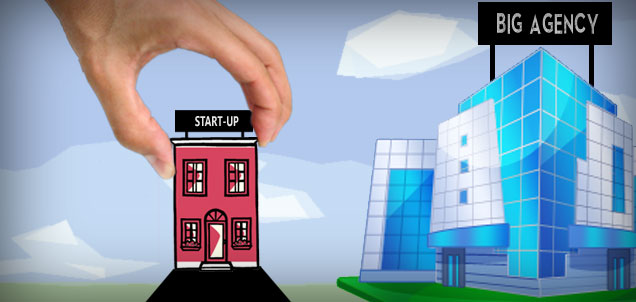
  • Big spenders advertisers prefer start-ups for digital


    By Kala Vijayraghavan & Lijee Philip


    In September 2012, when Mahindra & Mahindra was preparing to launch its compact SUV Quanto, it overlooked its mainstream advertising agencies Interface and Lodestar, and went to Hungama, a boutique agency, for a digital ad campaign screened in malls. Hungama developed a technology where a consumer’s electronic car key started a Quanto ad on a computer screen, which went on to simulate a feel of the vehicle in typical weekend settings. The idea was to create a digital experience of the SUV and help the brand break out of the clutter in a competitive segment.


    “The response time for social media activities should be next to nothing,” says PN Shah, CEO, automotive, Mahindra & Mahindra, explaining why he preferred a specialised digital agency over tried-and-tested partners.


    “We need tailormade, online, onsite and on-time solutions that help us react and respond quickly.” Like M&M, top consumer companies, including HUL, Godrej Consumer, Ford and Honda, are now cold-shouldering their traditional ad agencies such as JWT, Dentsu, Mindshare, Interface, Lowe Lintas and Mudra to tap social media marketing agencies such as WATConsult, BCWebWise, Bloggers’ Mind, Blogworks, Digit9.0 and other such startups for their digital requirements.


    “Traditional agencies are not thinking digital adequately,” says Hemant Bakshi, executive director, home and personal care business, HUL. “They are creating digital as separate divisions. Digital has to be at the heart of the communication and not peripheral to it.”


    Counters Suman Srivastava, ex-CEO, Euro RSCG and founder of Marketing Unplugged, a marketing consulting company: “It is fashionable to blame agencies or say they tend to think in silos. But the fact is the traditional marketers themselves do not understand the medium.”


    HUL has worked with BCWebWise quite a bit ever since Chaaya Baradhwaaj, its founder and CEO, launched HUL’s Sunsilk Gang of Girls, an online social networking website built around its leading beauty shampoo brand in 2006.


    Youngsters, who embody the credo of the internet age of being ‘digital natives’, are now guiding companies in digital, which is emerging as a disruptive force in consumer marketing. “Our roots are in digital. We come with no baggage of other media,” says BCWebWise’s Ms Baradhwaaj. “The dynamics of the technology-driven medium, the interactivity it offers, and the fact that consumer pull by far supersedes brand push can be inherently understood if you have been eating, breathing, and living digital in your advertising/communication life.” Adds Sunil Kataria, chief marketing officer of Godrej Consumer Products: “Twenty-something youngsters are able to understand digital better as a disruptive force in consumer marketing. We are tapping such specialised agencies and startups.”


    Mainstream advertising agencies counter this, saying there’s no great work happening. “These are college kids charging a low fee from these companies to earn extra money,” says Partha Sinha, director Asia, Publicis, a large advertising agency.


    “None of our digital ads have even been shortlisted at Cannes.” According to Mr Sinha, companies have created a perception barrier, and themselves do not have the systems and skills to understand digital.


    “They are only doing basic maintenance work on social media,” he says. “The fact is, companies are not desperate on digital. They are still hung up on outdoor and television. The day companies get serious about social media internally is when they will find similar change in their advertising agencies.”


    HUL is integrating social media and mobile into the marketing of its brands at the planning stage itself. These were premium brands that have a high online audience such as Tresemme, Sunsilk, Lakme, Closeup and Surf. In the next two years, it expects to treble ad spends in online and digital, taking it to 10% of its overall ad spends.


    Similarly, Godrej Consumer opted to tap an integrated design company, Creativeland Asia, for its digital campaigns to relaunch its Cinthol brand (MakesMeAlive) and launch its air purifier brand, Aer (colouryourfriendsapp). “Social media cannot be just an appendage to your traditional medium,” says Mr Kataria. “We are a new breed of organisation that thinks from the society aspect and then fashions our campaigns, and not vice versa,” says Sajan Raj Kurup, founder and CEO, Creativeland Asia.


    Sourav Jain, a social media marketing specialist, feels traditional advertisers have a lot of catching up to do. “They do not understand the technicality of the process in social media,” he says. “Social media is not only effective, but is also relatively inexpensive. Here, one gets a chance to interact, and build relationship and reputation for their brands.” Admitting that big agencies took to digital with a lag, Arun Iyer, creative director at Lowe Lintas, says they are up to the task today. Like Mr Sinha of Publicis, even he sees it as a perception problem at the end of the companies.


    “Even when we make our presentation in the digital space, clients do take a look at it, but then chose a smaller specialist,” says Iyer. In the current context, smaller players are packing more punch. “They are far more specialised and are able to build expertise faster,” says Rajesh Lalwani, founder and principal of Blogworks, a Delhi-based social media agency. Its team of 28-30 people has worked for Harley Davidson and Ford Fiesta AT model.


    Mr Lalwani says that, for most auto companies, social media accounts for 10-20% of their marketing spends. “Bigger agencies seem indifferent to social media at this point of time since it is too small to interest them,” adds Jnaneswar Sen, senior vice-president (marketing and sales), Honda Cars India.


    Despite working with Soho Square (part of Ogilvy), Dentsu and Grey Worldwide, when it came to leveraging social media to launch Amaze, Honda selected Blazar, a small boutique advertiser. “They are managed largely by a younger team,” says Sen. “They clearly know what the young generation wants.” Adds Rajiv Dingra, CEO of Mumbaibased social media agency Wat Consult, which ran the social media campaign for the Mahindra two-wheeler Centuro and Ford: “Car buying is a high involvement purchase and social media helps to keep the buzz alive.” Dhingra feels this does not come naturally to large agencies. “They are unable to specialise and build depth. We were able to quickly foresee what the consumer wanted. ” Understanding feedback/data, and modifying plans quickly, is a challenge best handled by smaller players, according to Carlton D’silva, chief creative officer of Hungama Digital. “Most likely, larger ad agencies will acquire boutique agencies rather than developing capabilities from scratch.”


    Source:The Economic Times

    Copyright © 2013, Bennett, Coleman & Co. Ltd. All Rights Reserved

    Licensed to republish


  • What does Goafest have in store?


    By Meghna Sharma


    In the world of media and advertising, awards go hand-in-hand with controversies. The upcoming Goafest is no exception – the annual festival to celebrate creativity in South Asia has been in the news for the wrong reasons. First, one of the biggies and main winners at the fest – Ogilvy and Mather – decided to stay away from the Creative Abby. Then, the entry of a controversial scam ad by JWT for their client Ford India led to heads rolling and shock waves across the industry.


    But turning to the positives, of which there are many, Goafest among other things offers many, especially youngsters in the industry, the opportunity to showcase their talent and learn from each other.


    In the light (and shade) of this, MxMIndia asked industry players what they feel about the festival, what they are looking forward to, and who they think should win.


    KS Chakravarthy, NCD, Draftfcb Ulka

    It’s an open field this year as there is no frontrunner or contender this year. All of the campaigns so far are good and deserve an equal chance of winning. There has been a good amount of work done by various agencies and it would be great to see it together. Also, to hear what the speakers have to share with others is always an interesting part of the event.


    Naresh Gupta, managing partner, Bang In The Middle

    I don’t have a favourite. This year hasn’t seen one landmark campaign that is the favourite. I would like to see a lot of challenger brands’ work to win. I would like to see more real work. Work that is mainstream. Work that the brands did to solve a marketing problem. I would also like to see greater integration of real and digital world.


    Anil Kakar, Founder/Chief Creative Officer, Gasoline
    As always, I am hoping to see the finest our industry has to offer. This year, in particular, I expect to see surprising work, especially in terms of craft. It’s good to see that we’ve been raising the bar in terms of execution, year after year and I am hoping this year will be no different. Among the few pieces that I can remember, I think the print campaign for Varuna D Jani is brilliant in terms of execution. The Morphy Richards commercial is another exceptional piece of work, worthy of a metal.


    Ashish Khazanchi, NCD, Publicis Ambience

    I’m sure the conversations, this year, are going to focus mainly on the controversies. However, apart from that, I’m going forward to the work and new talent. Also, with Ogilvy stepping out of it, it is difficult to say who’ll be a clear-cut winner unlike the previous years where some of the work done by the agency has won various awards. We expect to do well and of course there is Leo Burnett and McCann which have good work to their credit.


    Vivek Srivastava, Jt MD, Innocean Worldwide


    It’s a platform to interact and observe. There should be some interesting seminars. The Goafest committee has worked rather hard to get an interesting line up of speakers. And the Industry Conclave is being done in a manner which makes the business leaders deliberate and argue about issues that are affecting our businesses in the immediate term. I am surely looking forward to these. Our agency Innocean has had some shortlists. I would be happy to see those win for sure. In my view campaigns that genuinely impact consumer behaviour, make an impact on the brands’ future and ensure their relevance in this dynamic are the ones that deserve to win.


  • #Scamadgate: Ford sacks employee who cleared ads + MxM View

    By A Correspondent


    After MxMIndia first wrote that Ford India is equally responsible for #Scamadgate given that the Abby entry was approved by its marketing head (reportedly someone at the level of vice president), Ford India has issued a statement: ”We deeply regret this incident and agree with WPP that it should have never happened. The posters are contrary to our values and everything we believe in at Ford. We sincerely apologize that they ever were created. After internal reviews, both Ford and WPP have taken appropriate actions. We take this very seriously. Together with WPP, we are reviewing our processes and increasing our education efforts to help ensure nothing like this ever happens again.”


    The “appropriate actions” haven’t been elaborated on by Ford’s spokesperson Deeptie Sethi. While Ms Sethi doesn’t give us the name, a report in the Detroit Free Press quotes Jim Farley, Ford’s head of global marketing, as saying in an interview that the Ford India employee who approved and signed off the award for the Abby “no longer works for Ford” (link: http://www.freep.com/article/20130328/BUSINESS0102/130328066/3-employees-at-Ford-of-India-fired-over-controversial-ads).


    MxMIndia has the name of the person who signed off the ads for the Abby, but given that there’s no official confirmation at the time of writing, we are not revealing her/his name. What we do know is that the people helming the marketing department at Ford India are: Vinay Piparsania who is Executive Director of Marketing, Sales and Service and Sriram Padmanabhan who is Vice President, Marketing.


    Update/Mar 29, 12.30pm:

    When quizzed further to identify the employee who has been dispensed with, Ms Seth said: “The Ford India employee no longer is with the company. Per our policy, we will not identify the individual publicly.”


    MxM View: While MxMIndia is aware of the name of the person whose services have been terminated with, we will not proactively reveal it. While part of the reason is that we do not have official confirmation, we also believe it will be unfair to the employee, his/her family and to the organisation. We didn’t want to do this with Bobby Pawar and Vijay Simha, but by early morning the name was public. It appeared that JWT India folks didn’t mind the media carrying the names, as it showed the client that they have cleansed themselves. We believe it is an unfortunate development. The fact of the matter is that both organisations do not appear to have any clear policy on scam ads, and all the stuff about standards etc is BS. If there was a policy in place, we wouldn’t have had the scam ads in the first place! We urge JWT India/WPP and Ford India to do their bit to ensure their ex-employees are rehabilitated. That will be their good deed for the Holy Weekend.


    See also: Ball in Ford India’s court now,

    Mediaah!: After Bobby Pawar, will Ford marketing head also go?


  • #Scamadgate: Anil Thakraney: Pawar had to go

    By Anil Thakraney


    Bobby Pawar must be sorely regretting he’s not a politician. Had he been one, JWT’s creative chief could have said the Ford scam ads are a conspiracy to malign his image, haha. Well, this isn’t Indian rajneeti, and therefore he got the boot. Must say Pawar’s conduct saddens me. As the big leader of the agency, he ought to have immediately taken direct responsibility for the offending ads, and resigned. Even if this crappy work was done by some young, desperate creatives, even if he wasn’t aware of the existence of these ads. Had he done so, Pawar might have walked away into the sunset with some degree of dignity still intact.


    Instead, the senior agency leaders’ first reaction was to wash their hands off the mess. Such leaders have to be sacked, no two ways on that. Especially so in the ad world, because scammy, unauthorized ads such as these directly affect the client’s image. It’s only within the global ad frat that the names of WPP and JWT crop up. To the rest of the world, Ford is the offender. Naturally therefore, some blood needed to spill.


    Speaking on a larger note, it’s shameful that after all these years of heated discussions on the subject, agency creatives continue to indulge in scam ads to win awards. Hopefully, Pawar’s sacking will result in some change. For one, national creative directors need to start worrying about the kind of culture and values they inculcate within their organizations. If the entire focus is on easy awards, scams will continue to happen, they are inevitable. If youngsters are evaluated mainly on the quantum of awards won, they will be tempted to cheat.


    Secondly, it’s high time systems and processes are initiated whereby juniors cannot upload any work that hasn’t been okayed by very senior creative directors. There was a time when young creatives would beg and plead with their media department to get a scam ad released in a lowly newspaper. Now, they just have to tweet it, and it’s out there for the world to see. All the more reason urgent attention needs to be paid to the operating processes, particularly so in large and medium sized ad agencies. One measure I can suggest right away is this: Every single employee needs to sign a declaration that he/she shall not publish anything official on the net without sanction from the national creative director. If they break this rule, they shall get instantly sacked, regardless of the material uploaded.


    Lastly, JWT must consider itself fortunate if Ford decides to continue with the partnership. Very fortunate, to be precise.


  • Ford launches EcoSport Urban Discoveries campaign

    By A Correspondent


    Ford India has announced the roll-out of its integrated marketing and communications product experiential campaign, EcoSport Urban Discoveries. The 360-degree campaign is the foundation for the launch of Ford’s upcoming urban SUV, EcoSport. Hosted on an online platform, www.ecosportdiscoveries.co.in, the campaign aims to reach out to a target customer base spread across the country.


    The scale of this campaign will be achieved by a high output, simultaneous amplification strategy that will be leveraged through multiple paid, owned and earned media channels. Ford will additionally carry out in-programme placement that will help take the EcoSport directly to home television screens in India through general entertainment channels.


    Announcing the roll-out, Vinay Piparsania, executive director of Marketing, Sales and Service for Ford India, said, “We at Ford believe that real people and their real experiences truly bring out the best in our products. This has inspired us to empower the people of India to set the stage for EcoSport’s launch in the country. EcoSport Urban Discoveries will give over a hundred customers, the opportunity to drive and experience our exciting Ford EcoSport ahead of its market launch. This campaign will help us go further in engaging with our customers and educating them about our upcoming big product.”


    EcoSport Urban Discoveries will be executed in two phases divided by consumer activation roadshows across 12 key cities – New Delhi (including NCR), Mumbai (including Navi Mumbai), Bengaluru, Chandigarh, Kochi, Ludhiana, Chennai, Jaipur, Hyderabad, Ahmedabad, Pune and Kolkata to cover North, South, East and West regions. These roadshows will feature modular interactive zones that will be set up in high-footfall malls in each city to offer potential customers a touch and feel experience of the product and its features.


    “With EcoSport Urban Discoveries we would like to help customers make the right purchase decision for them to enjoy an unforgettable ownership experience and, en route, take away fascinating stories which they can share back home with their family and friends,” said Mr Piparsania.


  • Internet influences over 50% car buyers: Google

    By A Correspondent


    If you are planning to buy a car, who will you go to for advice? The Internet…family… a car expert? Various people choose various options, but according to a study done by Google India, with over 120 million Indian Internet users, the Internet plays an important role in influencing the decision-making process of India’s growing number of car buyers.


    The offline study conducted by Nielsen on behalf of Google India at car showrooms in eight metros (NCR, Mumbai, Pune, Chennai, Bangalore, Kolkata, Ahmedabad and Kochi) revealed that one in two car buyers conducted research online before arriving at the dealership. The survey also revealed that of those who had researched about their purchase options online, over 50 per cent changed their choice of car brands after uncovering new information on the web.


    Speaking about the study, Rajan Anandan, vice president & managing director, Google India, said: “This offline study substantiates the growing number of auto-related searches we’ve seen on Google Search inIndia. Auto is among the fastest growing vertical in terms of query volumes on Google. Most OEMs have not yet tapped the full potential of the digital medium and we hope this study will help them to understand and engage the Indian consumer online.”


    Respondents reported that they used the web to research and compare prices, watch online videos, find images, do competitive analysis, find dealer contacts and read both expert and user reviews. Most car buyers also rated OEMs website as the most important and trustworthy source of information. Of the 50 per cent respondents who went online, 42 per cent said they used search engine as the first source of information, just behind the opinions of friends and relatives’ (47 per cent).


    However, the auto-makers aren’t affected by the study. Abhishek Gupta, former brand manager at Maruti Suzuki India Limited and business head – North at RPS consulting said that  people might go online for research but final decision depends on what family and friends recommend. “One goes online to get a basic understanding. He might read blogs, reviews or comments to get others point of view but will buy a car which he aspires to purchase or what people close to him tell him to.”


    Voicing the same opinion, a marketing head at the leading Japanese car manufacturer, said: “Maybe Google is correct or maybe they are not. But it’s a fact that one needs to go to a showroom to get a feel and look of the various cars s/he has shortlisted before zeroing in on one.”


    The research was conducted outside the car showrooms of India’s leading OEMs namely: Maruti, Tata Motors, Ford, Chevrolet, Hyundai, Honda & VW. The total sample size for the research was 2,791 respondents. Out of which 93 per cent were males, with 75 per cent of the respondents in the age group of 25-44.


  • AdAsia: Brand-building in a trust deficit world

    By Akash Raha

    With a plethora of brands in the market and a cacophony of declarations from each, the result is a trust famine in the mind of the consumer.

    In such a trust deficit world, the protocols of brand-building could be a lot more complex but highly rewarding. The panel members in the session named ‘Building brands in a trust deficit world’ helped navigate through the fog of distrust and threw light on a brand becomes trustworthy.

    The panel members in this session were Robin Wight, President, Engine and WCRS; Vikram Sakhuja, GroupM, Chief Executive Officer, South Asia; Michael Boneham, President & Managing Director, Ford India; Deepa Prahalad, Author & Business Strategist and Sandeep Ghosh, CEO, Bharti AXA Life Insurance. Ms Prahalad began the discussion by asking the rhetoric question, how can a brand build trust in a trust deficit world? Trust is very important and it is not dead, but fewer brands are trusted these days. Some brands are struggling to build trust not because they are not trustworthy, but because trust is so hard to gauge and build.

    Trust is not only about what is the brand giving in terms of quality of product and services but quality of a brands conduct and the causes the brand is championing. Mr Wight went on to talk about the psyche of the consumer and said that the biological purpose of a brand is to enable the consumer to make the buying decision with little mental effort. The brain really does not want to make any buying decisions all it wants to do is pass on the genes. The brain wants to do the least work it can do and hence a trustworthy brand scores over the others. If there is decline in trust, then there is a problem and the brain has to re-think about it. For example, if the brain had to think which mobile phone to take, considering the number of phones we have in the market, it will take it years to decide. Hence today, they use the web to make their mental effort easier. Engagement that a brand creates is very important, but what we need is not only engagement but peer to peer marketing which is so successful. Peer to peer marketing depends on building trust where the consumer spread the message themselves. He gave examples of the Coca-Cola advertisement where they reached out to 80 million people with no cost to the company. The message of the World Cup was spread without the company having to spend a penny and only through peer to peer marketing.

    In recent times, we have seen a downtrend in trustworthiness of several financial service institutions after premiere banks across the globe declared themselves bankrupt. The consumer can’t help but question the bubble that the bankers create. Mr Ghosh of Bharti AXA life insurance said that there is a need for financial services structures to move away to the land of promise and begin delivering. It is essential to move from mere promises to real proof, where the spectrum of financial service provide tangible proofs and demonstrate trustworthiness.  He showed examples of two of their campaigns where they gave tangible proofs to the consumers to build trust. Such strategy of proof as opposed to shinny promises can work wonders in building trust.

    Ford is another company which stands for trustworthiness and its case is no less interesting. During recession, Ford was one of the few companies that refused bail out, and such a step only build more confidence and trust in the brand. Mr Boneham  pointed out that since then they have worked very hard around that aspect and about their independence and walking alone. “We built and rebuilt our brand for what we were standing for. Under each of these we focused on what we could do to separate ourselves from others… A few things we then focused on was quality, green, safe and smart.” The company devoted a huge amount of time with the consumers to understanding their needs and what they wanted. And it is from this that they improved on the product and built up the trust quotient. We use consumers to build experience. Even in our ads we have consumers speaking rather than celebrities. We have focused on consumers talking to consumers.

    Mr Sakhuja of Group M was the last to speak and said that the point in context is “Building trust in an attention deficit world rather than trust deficit world.” Commitment levels per se (of the consumers) are not really high rather, it is quite low. The consumers don’t give the trust away easy, but when they do, they stay with it… they are not as fickle minded as several marketers are. But there is the psychological equity to it. The question is that, are people sure about what their brand gene pool is? People are not building enough of core psychological brand equity. He gave the example of Nokia, which according to surveys still ranks high on the trust quotient even though their market share has dropped significantly. The entry barrier for phones has suddenly become low owing to the several new players that have come into the market, so people are experimenting. Yet there is the latent psychological equity to buy Nokia.

    It is also essential for brands to have consistency in the messaging over time and across all touch point to create trust. The key is to keep the old and add the new… In the urge of doing new one should not discard the old value systems for the new. Moreover, for brands to be trustworthy, they have to be modest, even when they are doing very well because one never know when the next problem is coming from. “There are no secrets anymore… Don’t talk down to the customers,” said Mr Sakhuja.