Tag: FICCI Frames 2013

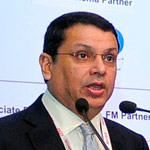
  • #Frames2013: Text of Uday Shankar’s keynote

    Good morning and welcome everybody. Secretary Uday Kumar Verma, Honorable Minister Dr.Soon Tae Park, Andy Bird – who has flown down all the way to be here, my dear friend Karan Johar, Rameshji, ladies and gentlemen.


    I take this opportunity to say that I am honored to be here in my new role as the chairman of FICCI Media and Entertainment Committee. I am stepping into the big shoes of the late Yash Chopra who was a leader of the Indian film industry for four decades. Yashji played a pivotal role in building Media and Entertainment as a cohesive community with a clear identity, and made FICCI FRAMES its most distinguished platform. Your presence here today is a testimony to his contribution. My goal will be to work with you all to further reinforce this community and accelerate the growth of the industry.


    And hence, the choice of the theme for this year’s FRAMES: “Engaging a Billion Consumers”.


    A concrete manifestation of this aspiration is reflected in the next big milestone that we have identified for the Indian film industry: to produce a 1,000 crore blockbuster. Celebrating its 100th year, Indian cinema has shown proof of its enduring followership and in recent times has set new benchmarks at the box office. It is time for the next audacious leap. And, there is no better consensus builder and no one more enterprising than my friend Karan Johar to steer this ambitious task. I am confident that both Karan and I will benefit heavily from the sage counsel of Ramesh Sippy.


    I remain convinced that such quantum leaps are possible across the media and entertainment sector. We all have tremendous progress to show for the last two decades: as a community, we have shown an admirable commitment to enthrall Indians and the Indian diaspora with compelling content. But, in business and creative terms, the Indian media and entertainment sector still remains much smaller than it should be in a country of 1.2 billion people. Our collective and individual ambitions should be taking wings around this big opportunity.


    I am confident that in the next three days we will come up with big ideas to make media and entertainment economically more robust, creatively more vibrant and socially more meaningful. However, in my view the single most important enabler towards all this would be a strong alignment within the industry, and with other stakeholders in the Government and the policy establishment. Our most recent experience with digitalization is a superb evidence of the power of alignment. Despite many hurdles, the unthinkable is beginning to happen in television distribution, with the first phase of digitalization well underway. As we speak, over 10 million cable homes have gone digital and in the next 2 years, 80 million homes will be digitalized. It will be the fastest digital transition anywhere in the world. How did this happen? It was because all of us within the industry and in the government were strongly aligned behind a move that was good for the industry and great for consumers.


    But, let me be honest – our experience with consensus building hasn’t been great. Usually, we disagree more than we agree. So, I want to highlight today what I see as the four big problems facing the industry around which we need consensus. And, in the days ahead, I hope to focus my own and the FICCI media and entertainment committee’s energies towards forging a consensus on how we can address each of these challenges.


    Firstly, media and entertainment is a real economic enterprise not just a vehicle of glitz and glamour. This industry is an economic enterprise like the best of them and is capable of creating employment and wealth much faster than most other sectors and with the ability to be a force multiplier, like it is in most countries. It is particularly relevant in India because it can be an employment generator without massive public investments and without being hampered by the deficiencies of public infrastructure. Just to put things in perspective, as a 15 billion dollar industry, we employ over 6 million people. This can be so much more significant and meaningful.


    Let me explain this further: according to official estimates, about 15 million people are entering the job market every year while the country is generating only about 3 million new jobs a year. This means that we are adding, as my friend Shekhar Kapoor eloquently put it, a city of unemployed people as big as Delhi every year.


    And yet, the lens often used to look at this industry is largely one of glamour and propaganda and the biggest debate is on how to control and contain it. As a result, the growth of M&E has not been supported by policy and regulatory initiatives. With full recognition of the government’s constraints, this year’s budget is a case in point. Instead of giving fiscal support to digitalization which can unlock huge economic value, there is an imposition of additional customs duties on boxes and of withholding taxes on content rights. Why would you not nourish an industry which has the potential to become a huge employer? Why would you not fuel an industry that can grow with more policy support than resource support? The time has come for all of us to make sure that it is not just industry status that we seek; it is a fundamental change in mindset.


    Confusion on basic facts

    This takes me to the second big challenge. How can we seek support from the government when as an industry we do not even have the basic facts in place?


    It is not my desire to add fuel to the debate on TAM. However, it is indeed a matter of concern that the credibility of the most prevalent currency of all transactions in TV enjoys so little credibility. Imagine if the automobile sector didn’t have consensus on the number of cars sold or the railways did not know the number of passengers transported or the tonnage of freight carried. The lack of reliable data is not limited to TAM. In fact, as a TV executive, I am surprised sometimes how I am even able to function. I do not know enough about my viewers – in fact I don’t even know how many of them are there. There are 140 million cable and satellite homes but the measured universe is 62 million households. I do not know how many subscribers I have with a particular MSO and the MSO doesn’t know how many households his LCO delivers the signals to. Same is true in advertising too. The country’s premier media agencies can’t even seem to agree on a fact as basic as the size of the advertising market. One leading agency estimates the total market size to be ~35,000 crores, while the other, equally illustrious, estimates it to be ~29,000 crores. A variance of no less than 20%! I don’t even want to get into projections for next year, where this variance is even more bizarre! The ambiguity in data for other sectors of the media and entertainment is no less. For instance, no film producer seems to know accurately how many people actually bought tickets to watch his film. How can this industry function without a shared and non-controversial view of the most basic facts? Numbers are supposed to be the foundations of rational business decisions but how can we make decisions when professionals in the business of numbers can’t get their numbers straight?


    Crisis of talent

    The third issue that must keep us awake at nights is talent. We have a real crisis on both supply and quality. While it is not unique to Media and Entertainment, what is different is the lack of recognition of the scale of the challenge. While other fast growing sectors like IT and financial services are actively working to find the right talent and building the right skills, we, as a community are complacent in our belief that this sector is different. We hide under the pretense of creativity and have convinced ourselves that creativity gives us the license to be informal and chaotic. It is this informality and chaos that has seeped into our approach to spotting and grooming talent. This is dangerous. We must realize that discipline and formality are not antithetical to creativity and if anything they are necessary ingredients to fostering the creative process.


    In the last 10 years, there has been a manifold increase in the content we have produced, the number of channels, the number of newspapers, the number of radio stations, and the number of films – but there is not even a nominal increase in the number of quality training institutions to support this kind of growth. Fly-by-night training shops have mushroomed, making the problem even worse.


    Even in what are considered “established” disciplines like management and technology, the situation is not any better. Not a single premier management institute has a proper course on media and entertainment.


    No industry without free expression

    While these are all big challenges, for me, the most important issue at the moment is the one on freedom of speech. This perhaps is the only major democracy in the world where, after over 60 years of independence, there continues to be a debate on how much freedom can be given to the media. I am shocked that there are still groups and interests who continue to debate on the right amount of freedom that can be granted to media; as if this is something to be granted and as if this is even negotiable.


    There is a strong positive correlation between creativity and the space for free expression. There is no greater evidence than Silicon Valley that culture is destiny. The Valley’s preeminent role in global media and technology can be directly attributed to the freewheeling culture of the 1960s and 1970s California. So, what is troubling to me is that in a very competitive world, we are questioning the scope of free speech – one of the few real sources of advantage for us. China and Russia are way ahead of us in most areas of business and industry. But we, as a democracy, should be unquestioningly leveraging the democratic advantage that we have over them and many other competitors to become a global media and entertainment giant.


    What is interesting to me is that we all agree that the role of media is to question the status quo. But with the right to question must come the right to provoke and the right to offend. In the absence of these, there is no debate and without debate there is no clarity. But we seem to be regressing in this area.


    When Satyamev Jayate points to weaknesses in the medical system, doctors are offended. When Jolly LLB creates a courtroom satire, lawyers are offended. Even when a precocious teenager posts a comment on Facebook, some people start baying for her blood. We are not far from a point where someone’s sneeze or a cough on a television show will be source of offense and outrage for many. What makes it worse is that increasingly the democratic institutions have more patience for those who promote intolerance. It is time for us to recognize that free speech is what is sacrosanct, not the right to be offended.


    In conclusion, I want to go back to the idea of the 1,000 crore blockbuster – mainly because of the scale of its ambition, how bold and daring it is. Just in the last couple of years we had major Hollywood movies – like Life of Pi and Slumdog Millionaire – where everything was Indian except production and direction, and these went on to become world-wide successes. There is no reason why those movies should not have been made in this country by one of us here.


    It is that kind of ambition that needs to fire up all the sectors in their pursuit of the next big leap. Today, let’s commit ourselves to this goal.


    Thank You.
     

  • #Frames2013 Time for the M&E sector to take the next audacious leap


    By Kshama Rao


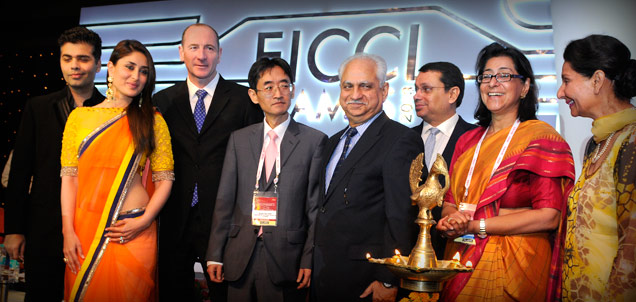
    The 14th edition of FICCI-Frames started on March 12, 2013 at Hotel Renaissance, Mumbai with this year’s theme being ‘Engaging a Billion Consumers’. The first day of the three-day convention started with Karan Johar, Co-Chair, FICCI-Frames moderating it with FICCI President Naina Lal Kidwai kick-starting the morning event calling it an “annual Mecca where the media and entertainment industries came together to take stock of the year gone by”. This was followed by Uday Shankar, chairman, FICCI Media and Entertainment Committee, talking about the theme this year and another keynote address by Andy Bird, Chairman, Walt Disney International. Other key members on the dais were Dr Soon Tae Park, deputy minister, ministry of culture, sports and tourism, Republic of Korea (Korea being the partner country for this edition) and Perneet Kaur, Union Minister of State for External Affairs, Government of India.


    Text of Uday Shankar’s keynote

    While everyone made the right noises about digitization being the “significant driver of change”, the 100 crore b-o success “our next milestone has to be a 1000 crore one” and the various ways to engage a billion consumer through different media, it was Mr Shankar’s – he has got into the shoes of the late Yash Chopra to take on the mantle for taking FICCI to newer heights – fire and brimstone speech that had the audiences applauding the loudest. He said, “It’s time for the next audacious leap for the media and entertainment industry to take, setting a new milestone. The unthinkable is happening with digitization and though it’s taken a little while it’s happening for sure.” He then called for the government to align itself with the industry and its drivers for change. He asked for a pressing need to see the media and entertainment industry as any other business sector and work towards formulating policies and bring about change that could be a win-win situation for everyone concerned. He said it’s “time to nourish the industry and fuel it with policies and that in doing so, a change in the mind-set was required.”


    He also talked about a strong desperate need for “measurement” and that lack of data in terms of viewership and footfalls in theatres being the single-most deterrent in the progress and functioning of the industry. “No one really knows the size of the market he or she is catering to, we don’t know the exact viewership; a film producer doesn’t even know how many people have bought tickets to his film! Let’s not forget that rational business decisions are made and based on accurate numbers which we don’t seem to have!”


    Last but not the least, Shankar lamented about how despite being a largest democracy, we seem to have patience for those who practice intolerance. “Creative freedom comes with a premium. Freedom of speech is threatened here all the time.”


    He also wondered why a film like a Slumdog Millionaire or a Life of Pi couldn’t have been produced out of India and it’s time we did so.


    Andy Bird spoke among other things about the coming together of creativity, technology and the tapping of the international market at Disney as also the buying out of UTV and its contribution in helping Disney understand the Indian markets better.


    While Ms Kaur lauded the efforts of FICCI and wished them in their endeavor, she also stated that as the upholders of the Indian culture the “entertainment industry also should show some restraint”.


  • #Frames2013: Making Phase 2 of TV digitization a reality

    By Johnson Napier


    When phase 1 of digitization became a reality in India there was a sense of accomplishment that was witnessed amongst most factions within the broadcast industry. Apart from the huge advantages that it presented to the broadcasters and allied interests, it was also seen as an exercise that enabled the consumer to become empowered like never before. But while issues remain about the impending challenges emanating from phase 1 of the rollout exercise and also the non-interest shown by some metros, the industry seems to be waiting with bated breath for phase 2 of the rollout to take shape.

     

    In the session on ‘The second phase of TV digitization’ noted panelists from the sector came together to discuss and mull options of making the exercise a more robust and achievable one. The panellists comprised of N Parameshwaran of TRAI, Sameer Manchanda of DEN, Sunil Lulla of TTN, Man Jit Singh of Multi Screen Media, Raman Kalra of IBM, Tarun Katial of Reliance Broadcast and Anuj Gandhi of Indiacast. The session was moderated by Vivek Couto of Media Partners Asia.


    N Parameswaran

    N Parameswaran, Principal Advisor, TRAI began by highlighting the outcomes witnessed by rolling out of P 1 of digitization. “We all know what has happened with P1 of digitization where metros like Mumbai and Delhi have recorded a remarkable conversion rate. We may have questions about the metros of Kolkata not yet achieving their target and Chennai not yet taking off but rather than the negatives we should focus on the positives from this exercise, including the role that the industry players and stakeholders played in making this dream a reality.” According to Mr Parameshwaran, while P2 digitization would be kicked off from March 31, 2013 it would again require the coming together of industry players, trade bodies, MSOs/LCOs and the government itself in making this dream an achievable one.


    Sameer Manchanda

    Sameer Manchanda, Chairman and MD of DEN began by appreciating the efforts put in by all from the industry and added that “digitization has been the biggest change that has ever happened to our industry. While there are a lot of positives from this exercise, one of the big drawbacks as been lack of accountability. The MSO/LCO operators have to ensure that the KYC forms are filled by the consumers as it is mandatory and binding on them. There is still some time to go before that becomes a reality. Where I see it, P2 of digitization is a transition phase and will start rolling out over the next 60 days.”


    Anuj Gandhi

    Without wanting to sound too cynical, Anuj Gandhi, Group CEO, Indiacast said that while digitization has bought about a positive change for the industry there was some serious thinking that is needed. “If P1 of digitization is taking us about 7-8 months to become a reality we can imagine what P2 would be like. The onus lies on the MSO/LCOs to make this rollout a reality but I can assure you that this won’t be possible without the coming together of all from the industry.”


    Man Jit Singh

    Man Jit Singh, CEO, Multi Screen Media had a similar feeling to share as he voiced his excitement at the good that was seen from rolling out P1 of digitization. “Due credit should be given to one and all from the industry who made this a possibility and we can hope for a similar outlook from P2 as well. Even the government’s role has been encouraging but there are a few shortcomings that have to be worked upon if further rollout is to become more successful. There are issues that are cropping up at the MSO/LCO level regarding filling of KYC forms, data collection etc. All these have to be addressed immediately.”


    Raman Kalra

    Raman Kalra of IBM Global Business Services said, “We have entered an era where it is the end of digital. By that I mean that we are already in the know-how of how digital works and the benefits that the medium presents but the challenge now is how do we take it to the next level. There is need for the industry to come up with strategies to cater to the ever-evolving ecosystem.” Pointing out that the consumer today was faced with an array of choices to access entertainment, he said that consumers won’t mind paying more money to access content but it is essential that we know who our customer is and what are his likes/dislikes.”


    Tarun Katial

    Tarun Katial, CEO, Reliance Broadcast said that what DAS has done is enabled channels to have a wider reach and get carried more easily. “Early data has shown how most channels, especially those offering niche offerings, have benefitted in terms of ratings and acceptability from DAS. For new players, as you sharpen your positioning there are high chances of they getting lapped up more easily. The exercise has also opened new avenues for advertisers who will be looking at niche channels with renewed interest. I guess the advertisers will have to shell out more advertising dollars where niche channels are concerned.”


    Sunil Lulla

    Sunil Lulla, MD & CEO, TTN highlighted that the current economics do not fund the ecosystem as the industry is going through a transition and there is need for change. According to Lulla, it would do the industry a lot of good if the prices were to be lowered but that is not a logical thing to do. “In fact it is commendable to see how the industry has come together in making phase 1 a reality and the same can be expected from phase 2 too. At the end it is essential that we keep the customer at the centre of all that we do and keep on satisfying him so that he comes back to us for more.”


  • #Frames2013: The key is to know your markets and its demands: Anne Sweeney

    By Kshama Rao


    At the first keynote of the 14th FICCI-Frames convention, Anne Sweeney, co-chair Disney Media Networks and President, Disney-ABC Television group spoke about creativity and the importance of localization in creativity. She talked about how local markets and local culture play an important role for any programme or format to work in different countries.


    To source out local talent so that the character-actor fit is perfect for the said market is another important aspect of making a good show, she said, recounting how the creative team had short-listed two girls to play the role of Hanna Montana. While one was an experienced sit-com actress, the other was this shy, inexperienced girl who went on to be known to the world as Miley Cyrus aka Hanna Montana. “The key is to know what your market is and its demands. When we make or adapt shows to the Indian market, we have to know what’s important to an Indian audience and how different is it than any other viewership we might have catered to. The core values are universal is what we have found out time and again aligned perfectly with the Disney themes,” Ms Sweeney said.


    She then went on to cite two popular shows in the Indian kiddie show market – Best of Nikki and The Suite Life of Karan and Kabir, the latter being a desi take on The Suite Life of Jack and Cody. “The reason these two shows have best worked for us and the Indian market is because they celebrate culturally relevant things say a festival like Diwali or Holi. The theme is kid-centric and family-inclusive.”


    She said advancement in technology has only made story-telling much more compelling and magical. “It has helped us to push story-telling in the right direction just like it did several years ago when Disney made Snow White!”


    She said the key is to empower the audience and “give the consumers content which is what they want, when they want and how they want.”

    In a q&a session that followed with Man Jit Singh, CEO, Multi-Screen Media and Chairman, FICCI Broadcast Forum, Ms Sweeney also reiterated that as much as they love to adapt foreign content to Indian screens “the key is also to balance it with original content. It’s not just about recreating these shows for a different market but make it original too. Like some of the properties were created in Europe but adapted later to the US market. We are also looking at Indian content we could adapt to foreign markets.”


    Lastly, she said that while there is always the business challenge, difficulties in understanding the market, sourcing local talent and understanding the needs of the audience, it’s shows that are family-inclusive that work the best. “When we worked closely with children in focus groups to know what they were watching and when we asked them who their favourite heroes were, they never mentioned a superhero, it was always either the father, mother, brother or sister in their family. So family-inclusive shows are key for children’s programming!”


  • Business, networking & more @ Frames 2013


    By Johnson Napier


    While you may be taking some time out to browse through this story, hundreds of delegates from different corners of India, and a few from around the world, would have converged at Hotel Renaissance in Mumbai. In fact it would suffice to say that those who have anything and everything to do with Media & Entertainment would have made it in large numbers today to be part of the biggest and only convention for the sector in India – FICCI Frames 2013.


    In its 14th edition, the event has a host of activities that have been planned out over a three-day course. To begin with, Day 1 would begin with a bagful of high-profile dignitaries who would be presenting their viewpoints and observations on the way forward for the industry. It would begin by a welcome address by Naina Lal Kidwai, President, FICCI and would be followed by a theme address by Uday Shankar, Chairman, FICCI Media & Entertainment Committee. Joining the two dignitaries on stage would be Uday K Varma, Secretary, Ministry of Information & Broadcasting, Govt. Of India who would be providing a vision statement for Information & Broadcast Industry. He would be followed by Guest of Honour Dr. Soon Tae Park, Deputy Minister, Ministry of Culture, Sports & Tourism, Republic of Korea who also would be highlighting his observations on the industry. Andy Bird, Chairman, Walt Disney International would be the next to hog the limelight as he would be presenting the keynote address at the event. Preneet Kaur, Union Minister of State for External Affairs, Government of India would be the other high-profile guest who would be delivering the inaugural address at the opening ceremony. The event will also see the felicitation of Subhash Chandra, Chairman, Zee Entertainment for his two decades of contribution to the broadcast industry.


    According to the organisers of the event, the aim of FICCI Frames 2013 would be to deliberate on the growth of the industry and find ways to maximize both its creative and economic potential by engaging with the billion strong consumer base in our country. To do that, there are key international thought leaders, studio heads and academics who’ve been lined up to speak on a range of topics covering the main objectives of the sector – digitization, making big budget films and being successful in Bollywood, censorship, marketing, exhibition, distribution, viability of the sports broadcasting business, the future of content consumption in an era progressively getting defined by the digital media, innovation and planning required in various policy issues within TV, cinema, animation and gaming.


    Uday Shankar

    Sharing his viewpoint on the event, Uday Shankar, Chairman, FICCI Frames 2013 said, “While the industry has made spectacular progress in the last 20 years in increasing the intensity of engagement with the Indian consumer through superior content, there is still a gap in our ability to monetize the engagement and use the resources generated to advance both access and content. The year 2013 is one of many milestones in the media and entertainment industry and Frames will offer an opportunity for us to put these developments into perspective, look at the larger picture and engage on such a bold and important theme.”


    Leena Jaisani

    Speaking on the core theme that has been shortlisted for the event, Leena Jaisani, FICCI senior director – M&E remarked, “This year the theme is ‘Engaging One Billion Consumers’. We work to make sure the entire media and entertainment sector takes the next big leap in maximising monetization, therefore the theme of engaging a billion consumers.” Adding further, Ms Jaisani said, “While the industry has made spectacular progress in the last 20 years in increasing the intensity of engagement with the Indian consumer through superior content – there is still a gap in our ability to monetize the engagement and use the resources generated to advance both access and content. Frames will offer an opportunity for us to put these developments into perspective, look at the larger picture and engage on such a bold and important theme.”


    Karan Johar

    Highlighting his outlook for the event, Karan Johar, co-chairman of FICCI Frames 2013 said, “It is a platform that brings best of the creative and business minds to engage with delegates. Delegates come to the event to seek different things. Someone’s agenda is to scout talent and another person may have just come to look for finance. Whatever time I have spent in attending sessions, I have learnt the most from them. In fact, I admitted this on the podium last year. There are certain things you are not aware of and sitting on the panel or in the audience you imbibe new things. This must be the experience that others also go through I guess.”


    In fact Mr Johar has a larger agenda that he’d be taking up where the film fraternity is concerned. He affirms, “The Rs 100-crore benchmark is limiting the growth and content of our films and we have to aim for Rs 1,000 crore from a film. It may not be possible today but we have to have a mandate to achieve that. FICCI will work towards a roadmap for Indian films to gross Rs 1000 crore for a film. It is not an impossible task. In fact we have a session on planning and creating a Rs 1000-crore blockbuster that promises to be interesting.”


    One of the reasons why the event manages to attract so many delegates is the quality of speakers who land up at the venue to share and dish out mantras and growth strategies. This year too there are a host of stalwarts that have been lined up including Andy Bird, Chairman, Walt Disney International, Anne Sweeney, Co-Chair, Walt Disney International & President Disney ABC Television Group; Bob Bakish, CEO, Viacom Media International, Teri Schwartz, Dean, University of California, Los Angeles (UCLA), Colin Maclay, MD, Berkman Center for Internet and Society, Harvard University, Andy Kaplan, President, International Networks, Sony Pictures Television, Mira Nair, film-maker, Dominic Proctor, President, Group M Worldwide, Seymour Stein, Vice President, Warner Bros Music, David Womart, the Producer of the Oscar-nominated Life of Pi, film maker Gurinder Chaddha, Jonathan Taplin, Director, Annenberg School of Innovation, The University of California school of communications and journalism, Andy Weltman, the international head of Pinewood studios, and Graham Broadbent, the British producer of the Best Exotic Marigold hotel.


    As is the norm, this edition of Frames too has a partner country and South Korea has bagged the honour this year. Pointing out the advantages of the association, Ms Jaisani said, “South Korea is the partner country at Ficci Frames 2013 and this year is significant as Korea and India celebrate the 40th year of the establishment of diplomatic relations. There is huge potential for collaboration in films, animation, gaming, technology and service offshoring between the two countries. Leading Korean companies in animation, broadcasting, mobile gaming and film will be available for biz matching. There is a huge synergy as India is looking at innovation from Korea and vice-versa they are looking at engaging Indian media companies for offshore services – especially in animation, gaming and VFX.”


  • Tryst with destiny @ FICCI Frames in March

    By A Correspondent


    Uday Shankar

    Announcing the launch of the 14th edition of India’s foremost business conclave on media and entertainment, FICCI Frames 2013, Uday Shankar and Karan Johar, the Chairman and the Co-Chairman respectively of the Media & Entertainment Committee, unveiled the theme of the conclave, ‘A Tryst With Destiny: Engaging a Billion Consumers’.


    Speaking on the occasion, Mr Shankar said, “While the industry has made spectacular progress in the last 20 years in increasing the intensity of engagement with the Indian consumer through superior content, there is still a gap in our ability to monetize the engagement and use the resources generated to advance both access and content. The year 2013 is one of many milestones in the media and entertainment industry and Frames will offer an opportunity for us to put these developments into perspective, look at the larger picture and engage on such a bold and important theme.”


    Mr Johar said, “The M & E industry has the potential to become the catalyst for social change and a force of good for every niche of society. FICCI Frames has been the most eminent platform for the M&E sector and its initiatives over the past decade have improved the quality of content generation, skill development and stature of the industry. We believe that our new agenda will be the change agent for social and commercial development, connecting a billion people, while shaping and informing their opinions and getting influenced by their collective needs in turn.”


    At Frames 2013, the aim is to deliberate on the growth of the industry and find ways to maximize both its creative and economic potential by engaging with the billion strong consumer base in our country. We have key international thought leaders, studio heads and academics lined up to speak on a range of topics covering the main objectives of the sector – digitization, making big budget films and being successful in Bollywood, censorship, marketing, exhibition, distribution, viability of the sports broadcasting business, the future of content consumption in an era progressively getting defined by the digital media, innovation and planning required in various policy issues within TV, cinema, animation and gaming.


    The line-up of stalwarts includes Andy Bird, Chairman, Walt Disney International, Anne Sweeney, Co-Chair, Walt Disney International & President Disney ABC Television Group; Bob Bakish, CEO, Viacom Media International, Teri Schwartz, Dean, University of California, Los Angeles (UCLA),  Colin Maclay, MD, Berkman Center for Internet and Society, Harvard University, Andy Kaplan, President, International Networks, Sony Pictures Television, Mira Nair, film-maker, Dominic Proctor, President, Group M Worldwide, Seymour Stein, Vice President, Warner Bros Music, David Womart, the Producer of the Oscar-nominated Life of Pi, film maker Gurinder Chaddha, Jonathan Taplin, Director, Annenberg School of Innovation, The University of California school of communications and journalism, Andy Weltman, the international head of Pinewood studios, and Graham Broadbent, the British producer of the Best Exotic Marigold hotel.


    Key stakeholders and regulators will also be present, from government to industry leaders. Attending for the first time will be the information ministers of SAARC countries, forming an exclusive panel on forging bilateral ties to augment growth amongst geographically and culturally connected countries.


    FICCI Frames 2013 will be held from March 12 to 14 at Hotel Renaissance, Mumbai.