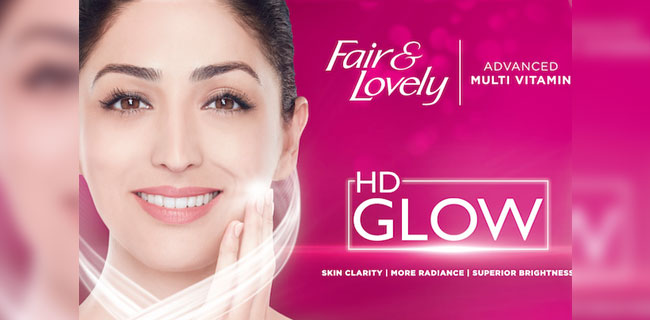
Tag: Fair & Lovely

  • The Unfairness of It All


    By Prabhakar Mundkur

     

    When Hindustan Unilever announced its decision to rename its moneyspinner $500 million brand Fair & Lovely to Glow & Lovely, it was a classic case of doing too little too late.


    To imagine that the decision was perhaps based on the greatest upheaval of racist stereotyping of our time with the excruciating George Floyd pinned to the ground doesn’t say much for Hindustan Unilever’s decision. There is nothing to congratulate them about.  There can be no appeasement of public emotion. There can only be guilt and shame.


    Activists through the decades have objected to Unilever’s fairness cream but it needed a revolt as ugly as George Floyd’s death, for the great marketer to make this small move.  Not since Rosa Parks was denied a seat on a bus in Montgomery has the world been so affected by the colour bias of the human race.


    But how good is the new name Glow & Lovely? Decades of skin care research has shown that ‘Glow’ is a major benefit in for the skin care regimen. Just like ‘Shine’ is. a major benefit for hair. So, taking a benefit from research and planting it in a brand name is perhaps not the most creative way of configuring brand names. But then Unilever has not been particularly known for its creativity. That lesser brands like Emami had already pre-empted this thinking by naming their brands Glow & Handsome is a bit of a shame. After all, one expects leaders to show the way. Not follow in the footsteps of their smaller competitor in the FMCG business.


    But is Glow and Lovely a good name?


     There is a reason why Glow and Lovely doesn’t sound right given the vagaries of the English Language. The reason why it doesn’t roll of the tongue as easily as Fair and Lovely has to do with the English language. Both Fair and Lovely are adjectives. Glow on the other hand is either a verb or a noun depending on how you use it. Glowing & Beautiful would have sounded better in English. Because Glowing is an adjective. But it then lengthens the brand name. And Unilever might have decided they would stay close to the current syntax. Anyway to the large majority of Indians it would hardly matter. It’s just another name for Fair & Lovely. Fair and Glow are both four-letter words. But how the name changes the advertising need to be seen. Will the new ads have dark and glowing faces to make amends with the brand’s past? That is anybody’s guess.


    How Darkie changed its name
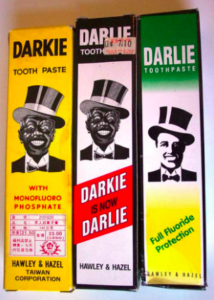
     

    It may interest people to know that the exact opposite of Fair & Lovely existed as a toothpaste in Asia many decades ago. A toothpaste called Darkie. Produced by Hawley and Hazel, the brand was very popular in Asia. The pack showed a smiling black performer. The brand was then acquired by Colgate Palmolive which faced a lot of racist flak on the brand. In 1989, Colgate Palmolive decided to change the brand name to Darlie.


    “It’s just plain wrong,” Reuben Mark, chairman and chief executive of Colgate-Palmolive, said about the toothpaste’s name and logotype. “It’s just offensive. The morally right thing dictated that we must change. What we have to do is find a way to change that is least damaging to the economic interests of our partners.”


    Seems like a shame that another global company had thought about this so deeply more than 30 years ago. So Unilever in many way is 30 years too late.


     What will posterity say about Fair & Lovely?


     But what this would mean for the generations to come is anybody’s guess.  Will Generation Alpha which may use the brand a few years from now warm up to the brand given its history? (Generation Alpha is the demographic cohort succeeding Generation Z. Researchers and popular media use the early 2010s as the starting birth years and the mid-2020s as the ending birth years.)


    How will these young people see our racist past? One piece of research showed that Generation Z are as racist as their millennial parents. But will this continue on to Generation Alpha? Technology is likely to change a lot of mindsets in the future. And that may change the fortune of the brand called Glow & Lovely.


    Prabhakar Mundkur is an advertising veteran, a lateral thinker, storyteller and musician. He has spent several years in advertising – in India and elsewhere in the world – including at JWT China where he headed the Unilever business, amongst other functions. In fact he worked on Unilever brands for a good 17 years… though never on F&S ;-). A prolific writer now, he was LinkedIn’s #1 Top Voice for 2016 and YourStory’s 100 Emerging Voices 2018. He writes frequently on MxMIndia.

  • Glitch bags digital mandate for Fair & Lovely

    By A Correspondent


    The Glitch, a full-service digital agency, has won the mandate for Fair & Lovely, HUL’s skincare brand. The agency will be managing the communication strategy, social media marketing and brand management across digital platforms.


    Commenting on the win, Prachi Maroo, Business Director at The Glitch said: “We are extremely excited to get the opportunity to partner with one of the world’s biggest personal care brands. Fair & Lovely adds greatly to our existing personal care category portfolio that we have been building over the past few years. Our aim is to take the brand’s presence on digital many notches higher both across the skincare range as well as the foundation.”


    Added Sunetro Lahiri, Creative Director at The Glitch: “Fair & Lovely as a brand has been a marketeer’s study case vis-a-vis getting the grassroots and tactical strategies perfect for years on end. The partnership is extremely exciting for the possibilities and journeys we’re itching to chart out as a creative thinktank.”


  • Lever wants more lather from personal care products

    By Kala Vijayraghavan & Sagar Malviya


    In the 1920s and 1930s as radio caught the imagination of Americans, Procter & Gamble (P&G) moved in to sponsor programmes, giving birth to the term ‘soap opera.’ Over the decades, P&G even began producing soap operas. Suddenly something changed a year ago. The maker of Tide detergent and Ivory soap discovered Facebook, Twitter, Youtube and its countless cousins. By the end of 2010, P&G announced that it had bid goodbye to its association with soap operas and instead embraced social media.


    Back home, P&G’s global rival Unilever too is moving along similar lines. It’s not as if the Indian affiliate, Hindustan Unilever Ltd (HUL), is washing its hands off soaps. Rather, soaps and detergents are no longer the biggest winners for HUL. The new hero: the personal care portfolio – from Pond’s cream to Dove shampoo – which now accounts for three fifths of profits as against two fifths eight years ago.


    At 47%, soaps and detergents still contribute the most to the top line but only a third of profits. Personal products (PP) account for 28% of sales and that will keep increasing in the years ahead on the back of new product launches, new category creations and brand extensions. Consumer analysts at Standard Chartered Research expect “continuous launches in the fast growing personal care segment such as Vaseline for men, Pond’s Gold radiance, Dove hair care range to increase PP’s contribution to 32 per cent in 2013.”


    That shift will be even more pronounced in the years to come. For two reasons: Unilever’s CEO Paul Polman wants three fourths of the global operations’ sales to come from developing markets. And most of that growth is going to come from health and personal products as awareness levels and exposure to new lifestyles increase in countries like India and China.


    What’s more, soaps and detergents are well penetrated categories where growth rates have to taper off sooner than later. Cut-throat competition on price with P&G and a rush of domestic brands will also play its part in slowing growth in this segment. On the other hand, penetration levels in personal care and packaged foods are still in low double digits.


    “Our strategy is consumer-led,” explains HUL CEO Nitin Paranjpe in an emailed response. Growing affluence levels, a younger population and changing aspirations and attitudes towards consumption are driving growth in personal care and packaged foods, Paranjpe points out. “Our investments in these segments reflect the changing consumption structure in India.”


    Hair care or shampoo is clearly HUL’s mainstay in PP. With brands like Clinic Plus, Sunsilk and Dove, the consumer products giant has a share of just under 46% of the shampoo market. The other pillars of growth are skin care where, in the premium fairness category in urban areas, HUL has almost 38% of the market in the bag.


    Meantime, HUL has also been entering other categories. Over the past year, for instance, it extended the Dove brand into face wash and launched the Sure brand of antiperspirant deodorants for men. Fair & Lovely(FAL) has also been extended to FAL Multi Vitamin Face Wash and to the Anti Marks Eraser Pen.


    Bringing in international brands like Sure is one part of the game plan. Extending some of HUL’s timeworn brands – including those of soaps and detergents – is the other prong. For instance, mass soap brand Hamam can now be seen in the hand wash segment; and the Rin detergent bar has been stretched into fabric whitening. And one of HUL’s oldest brands Vaseline has found its way into male grooming segments such as skin cream, face and body wash.


    In a recent internal presentation, marketers let on that HUL has a 30% share in the hair conditioner category worth 27 million euros, which is growing at 40% annually. Business in the face cleansing segment has doubled in a year through deployment of a portfolio of brands including Ponds, Pears, Lakme and Fair & Lovely. The presentation also made the point that “in the case of premium skin care products we are focusing on premium skin lightening and anti-ageing with Ponds, Vaseline in hand, body wash and men’s grooming.”


    If Paranjpe and the HUL top brass are keen to pump up the PP volume, it’s also because profit margins are higher there. Analysts reckon that operating margins in PP are 25% whilst in soaps and detergents they have declined from highs of 14% a few yeas ago to 7.5-9% now.


    Rivals, however, sound a note of caution. “The personal care industry was seen as a high margin business, but the recent spike in raw material prices and the disruptive competition in the market have seen margin profile of this business change completely,” says Dabur India CEO Sunil Duggal. Analysts reckon that margins in PP would have come down by 150 basis points over the past 3-4 quarters.


    Adds Harsh Agarwal, Director, Emami: “There is a misnomer that the personal care segment has very high margins. But it may not be so in mass-priced products where gross margins depend purely on the brand’s pricing power.”


    Just like in soaps and detergents, HUL too has to reckon with intensifying competition in PP. Emami with brands like Fair & Handsome, which is a market leader in skin care for males with a 60%share. In 2010-11, Dabur’s skin care portfolio reported a near 17% growth led by robust growth across the Fem, Gulabari and Uveda brands.


    And a clutch of international cosmetic and personal care majors from L’Oreal to Shiseido are keeping HUL on its toes in higher end segments. Still, with relatively new-found categories face wash, hair conditioners and anti-ageing creams opening up, HUL may well be looking at a fairer and lovelier in the road ahead.


    Source:The Economic Times

    Copyright © 2011, Bennett, Coleman & Co. Ltd. All Rights Reserved