Tag: Eyeway

  • Shruti Pushkarna: Invisible Disabilities: Missing from any Discourse on Disability

    Shruti PushkarnaBy Shruti Pushkarna


    Lately, I have found myself unwinding to reruns of old favourite TV shows (now easily available on OTT platforms). The extensive amount of work unleashed by the pandemic, both on the professional as well as home front, leaves me utterly exhausted. So I treat myself to a nightcap in the form of yesteryear soap operas.


    An episode of Boston Legal, (an American legal drama series which first aired in 2004) resonated with my current stance on challenging stereotypes and perceptions, specific to disability.
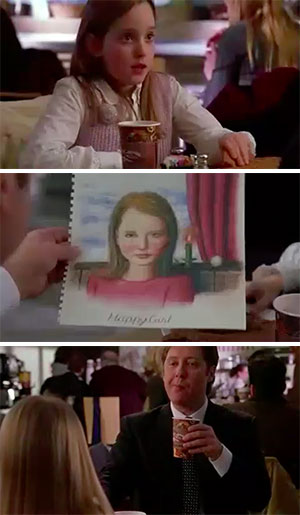
     

    Screengrabs from Boston Legal, Season 2, Episode 15 where the protagonist makes a case for a little girl who cannot smile after a car accident damaged her nerve

    In this particular episode from Season 2, the protagonist Alan Shore (James Spader) makes a case for a little girl who cannot smile after a nerve damage from a car accident. As she is mercilessly teased at the public school, Marrisa’s mother pulls her out, and decides to give her daughter a fresh start at a private institute.  Except the girl’s brilliance in academics and co-curricular activities is not enough to secure admission at a top-tier school. She is denied admission because she didn’t ‘smile’ at the Admissions Director.


    Like Marrisa, several people with invisible disabilities face rejection by family, friends, peers and society at large. Only because they seem incongruous with our limited definition of ‘normal’. In fact, they are worse off than the disabled people in wheelchairs, people with white canes or hearing aids, because their condition isn’t ‘obviously’ seen or recognised.


    Invisible disabilities are not immediately apparent but they are debilitating in their own ways. These include chronic illnesses like sleep disorders, diabetes, renal failure, autoimmune disorders, food allergies or gastro-intestinal disorders, epilepsy, haemophilia, developmental and learning impairments, fibromyalgia, psychiatric illnesses and so on.


    Although appearances may not indicate anything, people with invisible conditions live with symptoms such as continuous pain, fatigue, dizziness, loss of bladder control, brain fog, sudden vision disturbance, speech issues et cetera.


    The World Health Organisation estimates that globally almost a billion people live with some form of disability. And a United States report suggests that 74 per cent of persons with disabilities don’t use a wheelchair or any aid that makes their impairment visible. Both the United Nation Convention on the Rights of Persons with Disability (UNCRPD) and the Rights to Persons with Disabilities Act (RPWD) 2016 of India clarify that disability includes people with mental illness, epilepsy, intellectual impairment and other disabilities which may not be evident to a casual observer. And yet, they face discrimination.


    In a country like India, where disability is anyway stigmatised, persons with invisible conditions (are bound to) face various challenges while traveling, shopping, making hospital visits, in places of entertainment and interacting with people in general.


    To cite real life cases, two people suffering from Multiple Sclerosis and Sjogren’s syndrome respectively, had to compromise their career choices because the effects of their conditions hampered their professional output. Sjogren’s syndrome is an autoimmune disease in which your immune system attacks your own body parts. Symptoms like dry mouth and dry eyes make it hard to continue in a regular job. Rheumatoid Arthritis (RA) is another example of a chronic inflammatory disorder which leads to bone erosion and joint deformity. RA also attacks internal organs and its fatigue symptoms are more than just feeling tired.


    Now many persons with invisible disabilities learn to cope using medication, pain management or physical therapy, depending on their ailment. But the fact that their disabilities are judged or reduced or even entirely overlooked, causes them further mental and physical problems.


    It’s imperative that the media creates awareness about such conditions so our society becomes sensitive and empathetic towards this section of the population. Schools and offices should be expected to train teachers and staff as well as introduce policies to make reasonable accommodation for persons with invisible disabilities.


    Inclusion can happen when (physical and attitudinal) barriers are overcome. Anyone who wears eye glasses or contact lenses is not considered ‘disabled’ today. Of course that wasn’t true before spectacles were invented in the 13th century. Simple solutions can change the way we perceive people’s limitations.


    It’s about time we think solutions rather than imposing our expectations on people who struggle for most part of their lives trying to ‘fit in’. Acceptance cannot be conditional to a constricted imagination.


    The little girl in Boston Legal was inspired by René François Ghislain Magritte, a Belgian artist who was well-known for his work with surrealism and thought-provoking images. He often depicted ordinary objects like clouds, pipes, bowler hats in an unusual context and mislabelled them, to challenge observers’ preconditioned perceptions of reality. Marrisa defies the common idea of happiness denoted by a smile by drawing a self-portrait and writing ‘Happy Girl’ under it.


    Shruti Pushkarna is a former journalist (part of the founding team of MxMIndia) who has moved full-time to the social sector. She heads operations at the New Delhi-based Score Foundation where she works as Director-Programmes & Communications. Shruti writes for MxMIndia every other Thursday. Her views here are personal. She can be reached via Twitter at @shrutipushkarna


  • Shruti Pushkarna: What’s with the shallow news coverage on disability?

    Shruti PushkarnaBy Shruti Pushkarna


    Last week, two headlines on the digital platforms of leading dailies caught my attention. One read, “Two blind HSC students find writers at the 11th hour”. And the second stated, “HSC exams: Finding writers a real test for some”.


    Both these news stories highlight one of the most commonly faced problems by any blind student in India. Given their vision impairment, these students are dependent on ‘scribes’ to write their exams.


    But before I get into talking about the myriad challenges of finding and dealing with scribes, let’s look at the recent news coverage.


    While I was happy that the issue appeared on mainstream media, I was disappointed at the reportage. The stories lacked any indepth understanding of the issue. For an average reader who is absolutely unfamiliar with the issue, the news item merely touched upon how two visually impaired students in different parts of Mumbai were hassled hours before their examination. Though that’s a start for interest generation, the story ends with no detail or perspective on the matter.


    Result being, most readers wouldn’t have registered it. Those who did probably went away without processing the gravity of the problem facing blind students.


    So what exactly is the scribe problem faced by the blind community?


    A majority of visually impaired students in this country who appear for school, college or any competitive exams, rely on writers to volunteer for assistance or hope that the institutions/ authorities would arrange scribes for them.


    In the absence of either scenario working out, a lot of them end up paying for scribes, almost like buying themselves a chance to move upward in the educational or employment hierarchy.


    In fact there are agents and institutions that offer a variety of writers at different prices, depending on subject expertise. Like the millions of scams festering in the country, scribes (or the scribe mafia as I prefer to call them) are eroding the visually impaired students of their ability to learn or become independent.


    And what are the academic or the government authorities doing about it? Zilch. Absolutely nothing.


    The education bodies at both national and state level are expected to comply with the central government issued guidelines for visually impaired students to avail scribe facility for assistance, but the ground reality is far from it.


    Often state boards and examination authorities issue their own rules days before the exam, paying no heed to the policy set in place by the Ministry of Social Justice and Empowerment.


    The Rights of Persons with Disabilities Act 2016 mandates for ‘reasonable accommodation’, “to make suitable modifications in the curriculum and examination system to meet the needs of students with disabilities such as extra time for completion of examination paper, facility of scribe or amanuensis, exemption from second and third language courses”.


    Last year, a job aspirant in Barabanki, Uttar Pradesh lost out on the opportunity of employment because the examiner denied entry to his scribe just minutes before the exam. He had to wait a whole year to apply again. This is just one of the million accounts where students fail to appear or score less in their tests given the shoddy implementation of the law.


    The scribe problem isn’t new. It persists through the year, for various exams across all states in the country. And yet majority of the Indian population hasn’t a clue about it. It’s a whole different matter that today enough technology aids are available to make visually impaired students self-reliant when it comes to writing their exams. But that’s for another day, another column.


    How come the mainstream media hardly reports the issue in its entirety? Why doesn’t the media question the implementing agencies? Is it because persons with disabilities are not the ‘sensational’ vulnerable group that will garner eyeballs? Especially when it’s far easier to rake up a storm over some fake news floating around on social media.


    Shruti Pushkarna is a former journalist (part of the founding team of MxMIndia) who has now moved full-time to the social sector. She heads operations of the New Delhi-based Score Foundation where she works as Director-Programmes & Communications. She writes for MxMIndia every other Thursday. Her views here are personal. She can be reached via Twitter at @shrutipushkarna


  • Disability: What Must Our Media Do


    By Shruti Pushkarna


    Shruti PushkarnaBefore I started writing this piece, I casually googled  ‘media and disability’. Interestingly, most results were pertaining to the role of the media, portrayal of disability, some academic papers on the subject and so on. Well, that’s typically what comes to mind when you throw these two words together at anyone.


    Having crossed over to the disability sector from journalism, I have witnessed several debates (both in official and informal settings) where disability experts, people with acquired disability, scholars and mediapersons battle with each other, presenting their views on the subject.


    Again, most debates are focused on ‘representation’. I find the premise of all such discussions fallacious. Our debates, writings, films, stories, all are from an ‘external’ standpoint. It’s always from ‘how I understand it’, or ‘how I perceive it’ or ‘what I have gathered from my research’. And that’s why any coverage or any engagement with disability in the media is at the surface level. Still.


    This is part of the reason why stories and accounts are either heroic or pitiful. What I see lacking is the ‘normalisation’ of the idea. We like to compartmentalise issues and people into boxes that are easier to handle. Look at them a certain way rather than making them a part of the overall landscape of things.


    In the process, someone else decides what is the issue, how does it impact a life and how it should be tackled. The understanding of it, once or twice removed.


    As a communications specialist, I recognise the influencing power of the media and the fraternity. Common notions of disability arise from our media exposure. The images and words that come to mind are ‘wheel chair’, ‘crippled’, ‘handicap’, ‘dependent’, ‘incapacitated’, ‘vegetable’ etc. Clearly, these are neither complete nor correct.


    Let’s try to break this down. ‘Disability’ is basically a condition that ‘limits’ a person. This condition could be mental or physical, it could be permanent or temporary. It could be a condition present from birth or acquired later in life. But it’s a ‘condition’. A person with disability is a person with certain limitations, but still a ‘person’. That’s what we often miss out on. We tend to focus on the disability so much that we seldom learn anything about the person. The person may be educated or a school dropout, interested in adventure sports or music, may be a foodie, or a movie buff.


    How often do you see a person with disability invited to a public forum to present views on anything other than disability issues? What about the regular issues that affect citizens of this country, like infrastructure, climate change, taxes, education, unemployment or inflation?  Do these not equally affect this section of society? Or are we assuming that disabled people don’t access any services, like you and I do.


    According to Census 2011, 2.2 per cent of India’s (then) 121 crore population is disabled. And these are government statistics, way less than the actual numbers. There is a legislation called the Rights of Persons with Disabilities Act (RPWD) 2016 that lists out 21 types of disabilities. The RPWD Act mandates equal access to all facilities and services to persons with disabilities. The Act is progressive in its view of shifting the focus from ‘reservations and entitlements’ to ‘empowerment and inclusion’.


    A policy can be enforced and implemented. But for it to become a ‘practice’, mindsets have to be altered. That’s what media can help with.


    Attitudes can often be more disabling rather than the actual barriers in access. I have worn spectacles since Class 2 or 3, I don’t even remember. My inability to see without glasses is also a ‘disability’. But spectacles can cover up for my impairment. Kids in my school use to single me out and poke fun at my thick glasses but with time, it changed. Slowly, with more people dependent on correctional lenses, it became ‘normal’ (it’s a full-blown market today!).


    It’s what we see and how much of it we see. If today in schools and workplaces, we start encountering persons with vision impairment, speech impairment, or any other disability, that will gradually become the new normal.


    Certain sectors like IT, hospitality and education have started employing persons with disabilities. Their limitations are easily addressed with small changes in the physical or digital environment. This has helped businesses understand the needs of the larger disabled population better. The media should also consider hiring them, so the ‘normalisation’ of disability can happen from within.


    This will change how people respond to ‘disability’. The element of shock or awe will slowly be replaced by a more pragmatic approach.


    Today, when I go to a movie theatre, I’m happy to see seats reserved for people in wheelchairs. But the access to the cinema still remains an issue. On several occasions, I have seen wheelchair-bound people being physically lifted by four staff members to get  them to a seat just so they can access mainstream entertainment.


    If it were easily ‘accessible’, more people in wheelchairs would be seen at the movies. Last year, I attended a special screening of the film ‘Sanju’ at PVR Cinemas in Delhi, for blind and visually impaired people. Wondering how blind people can see a movie? Well, they do. Often accompanied by sighted people who can help them follow the missing links in the absence of dialogues. Technology has reduced that dependence too. An app called XL Cinema, free to download on an Android phone, can enable a blind person to follow ‘audio description’ of the movie alongside the actual screening.


    There is the issue of access and then the issue of dignity. The industry needs to address both. And that will happen when we deal with them as ‘people’ and not as a mere ‘section with special needs’.


    According to Census 2011, there are around 104 million people aged 60 years or above. This group of people may also fall into the bracket of ‘people with special needs’. Similarly, with a sizeable percentage of disabilities caused by road accidents, India’s overall disabled population is constantly on the rise. We cannot ignore or outcast them.


    Often our imagination is curtailed because of their lack of participation in mainstream activities and spaces. Their absence leads to a confined view, further forcing them to live on the peripheries.


    This year, the theme of the International Day of Persons with Disabilities is to promote their participation in the development agenda. The UN-defined Agenda 2030 for Sustainable Development pledges on ‘leaving no one behind’. The media needs to look at ‘disability’ as a cross-cutting issue and promote inclusion in every sphere.


    Shruti Pushkarna is a former journalist (part of the founding team of MxMIndia). who has now moved full-time to the social sector. She heads operations of the New Delhi-based Score Foundation where she works as Director. Her views here are personal. She can be reached via Twitter at @shrutipushkarna


  • George Abraham: Can Sports Broadcasters not Overlook Blind Cricket Fans?

    BCCI
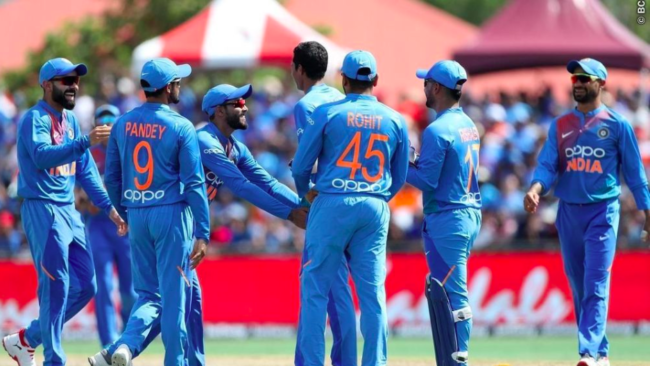
    File Picture of the Indian cricket team in a cricket match. Representative Picture only. Courtesy BCCI.TV


    George AbrahamBy George Abraham


    I have been following Indian cricket since 1969. I debuted as a cricket fan during the India vs New Zealand series when the Graham Dowling-led side locked horns with Tiger Pataudi and his team. India won the first Test at Mumbai, New Zealand levelled the score at Nagpur while the third Test at Hyderabad was drawn thanks to rain. Next, the Indian cricket fan was treated to a five Test feast when Bill Lawry’s Australian team visited India. Every match was covered on radio, every ball was described in detail, updated scorecards were read out at regular intervals. Listening to the radio commentary was accelerating and we, the listeners, were literally made to feel that we were present pitch-side. As a visually impaired youngster, I was totally bowled over by the sport, never missed a match. Commentators like Anant Setalvad, Devraj Puri, Dicky Rutnagur, Balu Alaganan literally became the eyes of millions of listeners across the nation. During a Test match, I, like many others, would be carrying a transistor radio wherever I went. Conversations at streetcorners, coffee houses and social events would be about cricket.

    Then in 1978, when the Indian cricket team under Bishan Bedi made the historic tour of Pakistan, the cricket fans across the country were introduced to television coverage for the first time. Yes, Doordarshan coverage was by then available nationwide. Now fans could actually see live their cricketing heroes and action sitting in their homes. These were exciting times for the cricket aficionado. I was in college and I remember watching the games along with friends in the common room. Kapil Dev had made his international debut. Seemed an exciting prospect. Fans across the country had the opportunity to watch the flair of Gundappa Viswanath and Zaheer Abbas, the grit and focus of Sunil Gavaskar and Javed Miandad, the flight and guile of Erapalli Prasanna and Bishan Bedi alongside the pace and swing of Imran Khan and Sarfraz Nawaz. Television had ushered in an exciting new era in cricket coverage.


    Over the next few years, TV coverage became the preferred mode for fans to follow the sport. The emergence of former cricketers as commentators added fresh colour and appeal to watching cricket. Former legends like Richie Benaud, Ian Chappell, David Gower and Sunil Gavaskar added tremendous value to the cricket viewing experience.


    While I did enjoy these developments, as a blind person, I found that I was missing out on critical information. For instance, at the toss, the playing eleven of the two sides are displayed on the screen. The commentators only talk of some key players being featured in the match. As a fan, I would like to know the entire list of players. When a new batsman walks out into the middle or a new bowler comes into the attack, the screen has the display of his career records. Often, the commentators do not talk about it. Ever since the scorecard details are displayed on the screen, the practice of reading out the detailed scores at the end of a session of play has stopped. Very often, when a brilliant catch or an outstanding piece of fielding happens resulting in a dismissal, the name of the fielder is not mentioned by the commentators. During the just-concluded ICC World Cup that took place in England, there were several occasions when one did not know as to who was Virat Kohli’s partner since the commentators kept talking about Kohli’s greatness, his stats and so on. As a blind cricket fan, I was at a loss as to who was at the non-striker end or who was taking strike when Kohli was at the non-striker end. I guess they assume that viewers can see and recognise players and besides the screen perhaps is displaying the details.


    The commentators certainly add a huge amount of interesting content by way of their humour, insights, anecdotes and knowledge of the game. However, I believe television companies and cricket boards need to draw up a set of guidelines which would ensure that the coverage becomes more inclusive. There are millions of fans like me who are blind and follow the games on television. Having travelled extensively within the country promoting cricket for the blind, I can confidently assert that there are thousands of blind cricket connoisseurs who tune into TV channels in support of their favourite cricketers and teams. I believe that a little bit of awareness and consciousness of the prevalence of the blind viewer and a willingness to make those minor tweaks in the way commentators engage, could make cricket viewing exciting for all.


    Starting October 2, South Africa has been playing  India in a three Test series followed by a fairly busy domestic season for the Indians leading up to the T-20 World Cup in 2020 and the World Test Championship which concludes in 2021. There is a lot of cricket and I believe blind cricket fans would love it if television cricket coverage becomes inclusive.


    Some Pointers:

    1. Playing squads must be read out at the start of the match

    2. Name of the bowler and batsman must be mentioned at the start of every over

    3. When a batsman walks into the middle for the first time, his stats must be shared

    4. Likewise when a bowler is brought into the attack for the first time in the innings, his bowling records must be shared

    5. When runs are scored, the commentators must call out the name of the batsman and the number of runs accrued

    6. When a wicket falls, the commentators must mention the mode of dismissal and the names of the players involved in the dismissal

    7. When a catch or a brilliant piece of fielding happens, the name of the fielder must be mentioned

    8. The updated scorecard must be read out at the end of each playing session

    9. When interesting records and titbits are shared on the screen, the commentators must read it out

    10. Often Twitter handles and phone numbers are shared on the screen to interact with the commentators and experts, they must be spoken out too

    11. The team score and the individual scores of the batsmen at the crease must be spoken aloud at the end of each over

    12. When the camera focuses on famous personalities in the stadium, it would be nice if the commentators can mention the names. This adds to the excitement of the action

    13. Finally, the commentators must be conscious that their viewers also include passionate cricket fans who are visually impaired and that these fans too are interested in every piece of the action. In fact it might be a good idea for the commentators to from time to time recognise their blind viewers.


    These are my personal suggestions to make cricket television coverage more inclusive. I believe it is time broadcasters covering cricket in particular and sport in general realise and recognise that their coverage reaches out to millions of viewers who are blind. It certainly could make business sense to start including them.


    George Abraham has been blind since his early childhood, but that hasn’t prevented him from working and living his life like any of us. He worked with an advertising agency like Ogilvy, pioneered blind cricket in the country and now runs Score Foundation which, among other things, also offers a helpline for visually impaired individuals who need support and direction (Toll-free number: 1800 5320469). On Sunday, October 20, George Abraham will run the Delhi half marathon. He can be reached via Twitter at @georgebhai and via mail at george [at] eyeway.org