Tag: EY report

  • India’s online gaming market to reach INR16,428 cr in FY23: EY

    By Our Staff


    Over the past three years, the online gaming industry has grown at a CAGR of 28%, reaching INR16,428 crore in FY23 and is likely to reach INR33,243 crore by FY28, as per the latest EY report, titled ‘New frontiers – Navigating the evolving landscape for online gaming in India.’  This boost is largely attributed to factors like widespread smartphone penetration, improved internet connectivity, a growing youth population, and the development of local gaming content.


    Additionally, the pandemic played a significant role in driving up mobile game downloads as people sought digital entertainment. India continues to be a ‘mobile first’ market, with 94% of its gamer base engaging in mobile gaming. Despite the rapid increase in game consumption, India’s online gaming revenue is still merely 1.1% of global online gaming revenue.


    As per the EY report, attracting significant investments, the sector is expected to draw INR22,931 crore between FY20 and FY24 YTD from both domestic and foreign sources. Currently employing around one lakh people, the sector shows potential to expand job opportunities to 2,50,000 by 2025.


    Said Raghav Anand, Partner, EY Parthenon: “India’s online gaming segment is experiencing remarkable growth, indicating substantial economic potential. With a robust gaming community consisting of 42.5 crore gamers—second globally after China—the sector has potential to accelerate Foreign Direct Investment inflows, job creation, and investments across various sectors. For the segment to truly thrive, a stable regulatory and legal framework is imperative. Uncertainties can impede the realization of its full potential and hinder rapid scalability.”


  • 10 Opportunities & Threats for M&E companies


    Media and entertainment companies can gain competitive advantage by finding opportunities in disruption, notes an EY report By John Harrison,

    EY Global Media & Entertainment Sector Leader


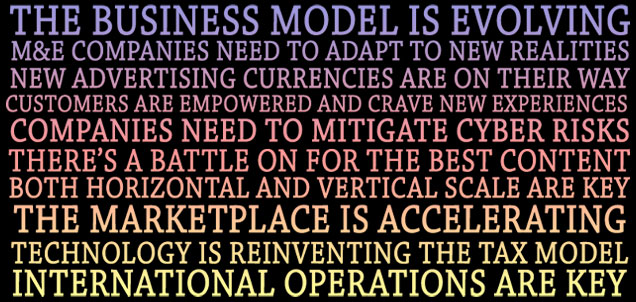
    What are the most significant growth opportunities for media and entertainment companies today? What are the most significant risks or threats that they face? The EY Global Media & Entertainment sector team has identified and assessed ten areas of upside and risk for the industry.

    Read on to find ways companies in this industry can respond to the shifting environment.

    1. The business model is evolving

    Disruption is sweeping through the media and entertainment (M&E) industry, powering the invention and rapid expansion of new business models and leading to uncertainty about the durability of well-established ecosystems. Consumers are expecting media and entertainment providers of all types to deliver choice, convenience and value, all wrapped inside personalized, customized experiences that are available on demand and on a cross-platform basis — and with limited advertising and strong data protection.

    2. M&E companies need to adapt to new realities  

    Intensifying competition for viewers and advertisers, combined with ongoing declines in subscribers, is putting pressure on topline performance at many M&E companies. At the other end of a margin squeeze, costs are escalating — especially in the critical areas of content and talent.

    Unsurprisingly, the mantra of cost cutting has reared its head again as a key priority for management teams; however, the solution today is more holistic and nuanced than simple brute-force reductions. What the M&E industry requires is a new level of operational excellence — the kind of strategic expense reduction that delivers short-term results and long-term efficiencies.

    3. New advertising currencies are on their way

    As the lines blur between linear and digital media, advertisers are developing new currencies to better understand and target consumers. Audiences are fragmenting across video platforms — from live TV to time-shifted and connected TV (over-the-top video, streaming media players, connected digital video recorders), and from desktop to mobile and immersive videos (augmented reality, virtual reality and wearables).

    With this fragmentation, advertising models are also evolving new forms, including programmatic, native, vertical, 360 degree and addressable ads. Audience measurement — the key piece in the puzzle and critical to understanding consumers — has become more complex and continues to lag.

    4. Customers are empowered and crave new experiences

    In the traditional M&E model, creativity, distribution and monetization were linear. For the most part, consumers were passive, waiting for content that was made available at a time dictated by others. Digital has created a new world order that is more atomized, disintermediated, complex and, above all, dynamic. As a consequence, M&E consumers are more empowered. They have steadily rising expectations around how products and services should be delivered.

    Just a few years ago, consumers were delighted to be able to stream a movie or TV show on multiple devices. Now, a consumer expects personalized experiences across their daily life, from mobility and financial services to communications and entertainment.

    5. Companies need to mitigate cyber risks

    Every click, view and download results in massive amount of data being created every day. This data offers M&E companies a real competitive advantage, however, this same data is a magnet for cyber criminals.

    M&E companies need to take a four-step, risk-based approach to cybersecurity:

    :: Prioritize: Identify and prioritize the assets that matter most to the organization.

    :: Plan: Improve processes to plan, protect, detect and respond to cyber threats.

    :: Protect: Consider the impact of security breaches that third parties present and develop a supplemental plan addressing these potential gaps.

    :: Preserve: Develop a continuous improvement plan that enables management of constant change efficiently and effectively.

    6. There’s a battle on for the best content

    The rapid proliferation of video distribution platforms and a corresponding uplift in engagement metrics, subscription fees, advertising revenue — or a combination — has created an intense competitive landscape for developing and acquiring the best content.

    With so much content available across many distribution alternatives, M&E companies need to think of innovative strategies to enable consumers to find compelling programs to watch. We expect AI and machine learning technologies to be leveraged by M&E companies to dissect viewing patterns from multiple perspectives to build personalized recommendations into consumers’ digital interaction. Also, the importance of network collaboration with distribution “frenemies” will increase, curating content relevant to specific platforms.

    7. Both horizontal and vertical scale are key

    The rise of global social, video, advertising and e-commerce giants — with their user bases measuring in billions, tremendous financial resources, market-leading growth rates and appetite for risk — is creating a new competitive reality. This “winner takes all” backdrop is powering a strong sense of urgency across the M&E sector to respond strategically.

    M&E leaders view inorganic action as the fastest way to gain heft, increase share, rationalize the marketplace, quickly add new capabilities, reshape existing asset portfolios and futureproof their business models. According to EY research, the top rationales for M&A in the sector are “enhancing product and service portfolios” and “gaining market share,” indicating strategic imperatives of scale and scope.

    8. The marketplace is accelerating

    As new technologies accelerate how supply and demand intersect in all industries, the dynamics of M&E marketplaces — for both consumers and advertisers — are becoming “superfluid,” placing new pressures on all parts of the ecosystem to move more quickly.

    The dynamics of programmatic transactions are now expanding to other aspects of the business, which increasingly embrace data and automation. As digital dynamics are increasingly infused into all media (even traditional), the opportunities to accelerate superfluidity will continue to grow.

    9. Technology is reinventing the tax model

    US tax reform represents the biggest change in taxation in more than 30 years. Multinational M&E companies must respond to its wide-ranging implications. Yet tax reform is really an inflection point in what has become a much wider conversation about the future of the tax function. In the year ahead, companies and tax executives will need to explore how they engage with regulators and how they manage reporting to take advantage of new technologies.

    10. International operations are key

    Globalization is critical to M&E companies looking to build scale, open new markets and remain competitive. Although we see the rise of economic nationalism and the prospect of higher trade barriers, at the same time, a suite of enabling digital technologies is rendering borders less relevant. Today’s M&E companies must be more open than ever to the opportunities of growing their international operations.
     

  • EY report indicates highest volume deal for Indian M&A industry

    By A Correspondent


    As per EY’s latest Transactions Annual report, Indian M&A ended the year 2017 with 1,022 deals with a disclosed value of US$46.8 billion. While the deal volume reached a record high (as compared to 895 deals in 2016) since 2010, the deal value was lower by 12 per cent from US$53.2 billion in the previous year. Primary deal drivers for the year were aimed at market expansion and entry into new markets, digital disruption and sector convergence.


    Said Amit Khandelwal, Partner and National Leader, Transaction Advisory Services, EY: “India recorded a healthy M&A activity in calendar year 2017. While there was an increase in the number of deals, they were concentrated in the lower bands US$20 million. The big ticket deals were fewer in number in 2017 when compared with 2016 as corporates held back from venturing into big ticket acquisitions. In addition, the timeline of some of the big-ticket deals got stretched due to increased scrutiny by the regulators and complex deal structures.


    The momentum in volume of deals is expected to sustain in the coming year as the Government chalks out a comprehensive reforms plan for 2018 to improve the business and investment climate. Sectors like technology, life sciences and financial services are expected to attract significant investor attention.”


  • Indian events and activations biz to cross 10k cr by 2020-21: EY


    By A Correspondent


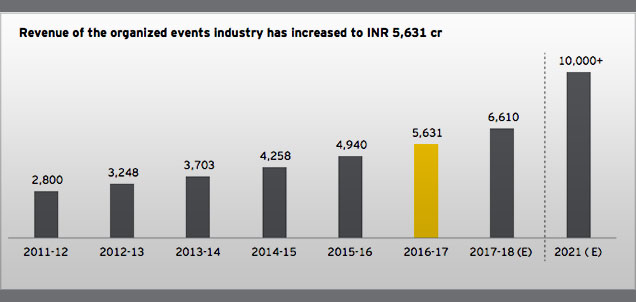
    The Events and Activations industry has grown at 16% in FY2016-17 and is expected cross INR 10,000 crore by FY2020-21 according to EY – EEMA (Event and Entertainment Management Association) report titled ‘#Experience_Next’. The key insights in the report suggests that average number of events are increasing across all formats, Government spending is expected to grow at 14% and sports is expected to grow at 18% over the next 5 years, wherein India attributes to 1% if the global sports market.


    Said Ashish Pherwani, Partner and Media & Entertainment Advisory Leader, EY India: “The Events and Activation industry is growing at a fast pace and is expected to further grow exponentially due to its ability to adapt and grow with innovative technology. With focus on newer avenues such as sports leagues, rural expansion, digital activations, increased Government marketing initiatives etc., we see events industry surpassing overall growth rate of M&E industry.”


    Added Sabbas Joseph, President, Event and Entertainment Management Association:“Event management has now transformed into experience creation with amalgamation of technology, innovative ideas and creative content. The Indian economy has undergone a lot of changes in the recent past and the Events and Activation industry has come out unscathed. This demonstrates the industry’s strength and ability to get things done under any circumstances.”


    According to the report which is based on a survey of 64 event management companies and 31 marketers, overall the events and activations industry is expected to grow from INR 5,631 cr in 2016-17 to INR 10,000+ cr in 2020-21. The organized events industry is growing faster than the 11% – 13% CAGR of the Indian M&E industry. The key growth drivers for the same are digital activation, sports leagues, rural expansion and government initiatives followed by IPs, personal events, product launches, expansion of mini-metros and BTL spends.


    Some more snapshots of the findings from the report on the current scenario:

    [] Managed events is still the largest segment, with around 90% of respondents providing these events

    [] Average IPs and activations per respondent have doubled since 2013-14, while average digital events per respondent have shown a 9x growth since 2013-14

    [] There is a fall in proportionate revenue generated by activations from 31% in 2015 to 22% in 2017, showing that there is a distinct move to digital activations

    [] More respondents are providing services internationally – up sharply from 8% in 2011 to 56% in 2017

    [] Around 75% of all respondents’ clients were corporates

    [] Technology, FMCG, auto, media and entertainment and telecom are the largest users of the Events & Activations industry

    [] An average of 26% of the total employees of the respondents consist of women employees


    And on opportunities for the industry:

    [] Digital is driving growth, as respondents felt that marketers spends on digital events would grow at 20% over the next two years

    [] Most respondents felt that sports would significantly grow at 18%

    [] Most respondents expected ticketed events to witness a moderate level of growth in the next 2-3 years

    [] 95% of the survey respondents agreed that rural events and activations would gain increased importance over next 2-3 years

    [] Over 85% of respondents plan to launch new products or properties in the next two years, and almost a fifth of respondents will launch 3 or more products

    [] 73% of marketers expected their BTL spends to grow during the next two years, with 43% expecting growth to be over 10% per annum

    [] Digital integration was either important or very important for the events of 90% of marketers


  • Surat, Jaipur, others to drive consumption: EY


    By A Correspondent


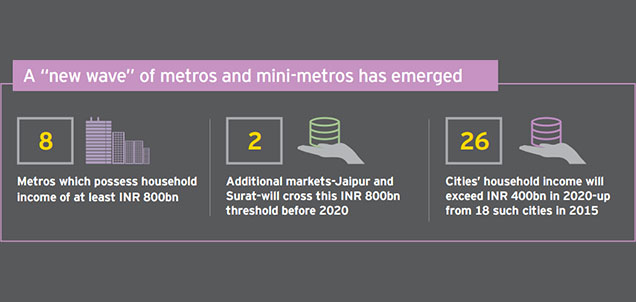
    India will see the rise of two new metros – Jaipur and Surat – by 2018, with a household income of over Rs 800bn by 2018, according to an EY report titled ‘India’s growth paradigm: How markets beyond metros have transformed’. These are projected to record real GDP growth of 8.7% and 10.3% respectively from 2015-20, relative to metros’ 8.3%. As a result, both cities will cross the Rs 800bn threshold within one to two years, with total consumption levels to reach 75%-80% of metros like Pune and Ahmedabad.


    The report identifies 42 new-wave markets, which are expected to grow at 8.9% as compared to the 8 metros that are expected to grow at 8.3% CAGR in the 2015-20 period.


    Said Ashish Pherwani, Media and Entertainment Advisory Leader: “Non-metro growth is out-stripping that of metros in India. There are clear cases of unmet demand in India’s Top 50 cities in certain sectors. This provides a huge opportunity for various sectors to both widen and deepen marketing strategies, and effectively tap into one of the world’s largest earning populations.”


    The report also notes the rise of eight new half-metros, with household income exceeding Rs 400bn by 2020. It also highlights 13 new-wave cities that represent a high-growth opportunity, but are largely untapped, according to the report. These include Patna, Raipur, Warangal, Gwalior, Dehradun, Allahabad, Rajkot, Vishakhapatnam, Jodhpur, Vijaywada, Ranchi, Kota and Jabalpur.


    Additionally, the top 23 untapped markets, as identified by the report, are all new-wave cities. These 23 markets represent 19% of metros’ household income-but only 12% of retail outlets 15% of telecom centres and 17% of malls, notes the report.


    The report further considers the potential of individual markets across each sector – FMCG, Retail, fashion and durables, Auto, Telecom and DTH, E-Commerce, Education, BFSI, and Real Estate. It delves into the expected ad spends across each sector, and highlights the top-10 untapped markets across each sector.


    The report can be downloaded at www.ey.com/in/urban-growth.


  • E&Y report on apps unravels amazing insights

    By A Correspondent


    With billions of devices expected to be connected in the coming years, media and entertainment companies are well-positioned to seize an early advantage as an enabler and receiver of IoT applications, according to the EY report ‘Internet of Things: Human-machine interactions that unlock possibilities’. The total potential for IoT in the M&E space is expansive — to create, deliver and tailor content for new platforms and to measure the context of media consumption using analytics.


    The increasing sophistication of IoT sensors makes it possible for devices to read, gauge and understand consumers at unprecedented levels. According to the report, the M&E industry is already using categories of sensors such as inertial, motion and image sensors used in animation, gaming, video images, camera stabilization, sports and 3D. This is opening up new, intimate entertainment experiences for consumers.


    One of the most anticipated benefits of IoT for marketers is its potential – through the use of sensors – to unlock data on a person’s habits, preferences and most significantly, the context in which media is being consumed. Better data analytics will also address deficiencies in the current measurement system for media consumption, such as avoiding the duplication of unique users across platforms, and enhance what marketers know about their audiences.


    Ashish Pherwani

    Ashish Pherwani, Partner and Head – Advisory, Media and Entertainment, EY says, “IoT is bringing a rapid disruption in the way content is distributed and consumed. The in-depth insights provided by smart devices is allowing M&E companies to respond to evolving customer needs and deliver personalized, contextually relevant entertainment experiences to consumers. Moreover, it is enabling them towards better targeting, thus boosting ad spends and subscription income via increased human-machine interactions.”


    If smart devices provide useful data to content providers that is perceived as non-intrusive and the resulting content experience correctly interprets consumers’ current readings (mood, need, intention) in real-time, and then quickly respond to those needs with relevant and targeted advertising, the implications for improved brand loyalty could be vast.


    For M&E companies to realize the full potential of IoT, they need to also consider the associated risks, including regulatory hurdles, legal precedents, intellectual property rights, lack of connectivity standards and lack of IoT scale to reach critical mass, the report finds. The biggest challenges are around privacy and cybersecurity. Protecting personal information is an issue that will become exponentially more difficult as IoT collects enormous amounts of data and connects more devices, software, machines and humans.


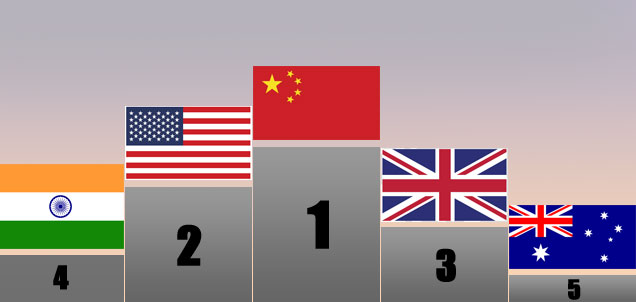
  • India #4 in EY’s Most Attractive Nations for M&E Investment


    By A Correspondent


    It’s India Shining in the world order. At least for the Media and Entertainment sector. According to consulting firm EY (eka Ernst & Young), India ranks fourth in the most attractive nations for investment. This coupled with the fact that espite the usual industry challenges and downside risks, the media and entertainment (M&E) sector has a high level of confidence in the global economy. EY recently survey senior executives from global M&E companies for the 13th Global Capital Confidence Barometer which was released on Monday.

    Specifically, this is what the EY report says on India:

    Even as the outlook for many emerging markets turns negative, investor sentiment toward India is seeing a significant recovery. The Indian Government’s pro-business stance and an increasingly promising economic outlook are fostering a more attractive investment landscape for inbound investment.

    Several government initiatives, including the digitisation of cable television, the Phase III auctions of FM radio spectrum and an increase in FDI limits, are expected to drive growth in traditional media. India is also the second largest internet market after China with over 300 million internet users. Although digital content consumption is currently tempered by low smartphone and broadband penetration, a surge in broadband adoption is expected with the rollout of 4G services and the government’s Digital India initiative.

    While the ubiquity of media consumption has not yet translated into significant industry revenue – by 2016, India’s online advertising market is forecast to be a little more than  US$1 billion, while the forecast for China is in excess of US$23 billion –  India is expected to become the third largest economy in the world by 2030 after the US and China.

    With a triple fold increase in GDP expected over the next 15 years, M&E industry revenues and their contribution to the GDP are expected to increase significantly.

    India has seen some big M&A deals in M&E in 2015. The key ones being:

    Deal Type

    Announced Total Value (USD Mn)

    Target Name

    Acquirer Name

    M&A

    417

    MAA Television Network Star India

    Pre-IPO

    273.4

    Videocon d2h Silver Eagle Acquisition Corp

    Private equity

    166.5

    Prime Focus – Reliance Mediaworks merger

    M&A

    110.8

    Reliance MediaWorks -BIG Cinemas Carnival Films

    M&A

    (Closure pending)

    78.1

    DT Cinemas PVR

    When asked their perspective on the state of the global economy, 81% of executives said it is improving, up from 52% one year ago. Executives surveyed maintained an overall positive attitude, indicating an improving level of confidence in corporate earnings (64%), short-term market stability (83%), credit availability (77%) and equity valuations (56%).


    Says John Harrison, Global Media & Entertainment, Transaction Advisory Services Leader at EY: “Media and entertainment executives are more confident about the global economy and key market indicators than 12 months ago. However, short-term headwinds, such as foreign currency volatility and earnings pressure from digital transformation are tempering enthusiasm. As the industry learns to better harness digital adoption and fully exploit the multiplatform distribution environment, companies are becoming more confident about expanding their offerings and making strategic acquisitions that will improve their competitive advantage.”


    When assessing economic risks to their businesses, executives indicated increased volatility in currencies to be the greatest, (36%), followed by slowing growth in key emerging markets (23%), the economic and political situation in the Eurozone (20%), increased global and regional political instability (14%) and timing and pace of interest rate rises in the US (7%).


    Executives surveyed overwhelmingly expect the global mergers and acquisitions market to remain strong in the year ahead, with 73% indicating it will improve (up from 49% last year), 24% saying it will remain stable and 3% saying that it will decline. When asked if they expect to actively pursue acquisitions in the next 12 months, 59% responded favorably, which is more than double from two years ago when only 25% indicated they were going to actively pursue acquisitions. While the number of M&E companies expecting to pursue an acquisition in the next 12 months is the highest it has been in two years, only 44% of respondents are optimistic about the likelihood of closing acquisitions. This is possibly a result of the perceived valuation differential between sellers and buyers increasing in the past six months.


    Target deal sizes are moving higher, with 22% of respondents indicating that their largest planned acquisition size in the next 12 months will be greater than US$250m. While a majority of acquisitions are expected in the US$250m or less area, the trend since last year is toward more substantial deal sizes.


    Confidence in corporate earnings is more measured, possibly a result of foreign currency volatility as well as structural challenges facing the M&E industry from digital transformation.


    Other key findings of the report include:

    • Digital continues to have the greatest impact on M&E companies’ core business and acquisition strategies.
    • Foreign exchange volatility is causing concern as a lot of costs are US-dominated and revenue is increasingly international.
    • Structural challenges related to digital adoption persist, which, along with foreign exchange fluctuations, is having a near-term impact on corporate earnings.
    • Respondents are most likely to invest in China, the US, the UK, India and Australia.
    • 58% of executives said that their company’s focus during the next 12 months will be cost reduction and operational efficiency, followed by growth at 28% and maintaining stability, 14%.
    • Strategic divestment and other potential portfolio actions are moving higher on the boardroom agenda as media and entertainment companies seek to optimize capital allocation to thrive within a fast-changing world


    The report is a survey of senior executives from large M&E companies around the world that gauges corporate confidence in the economy, identifies boardroom trends and provides insight into companies’ capital agenda.