
- Anil Kakar
And on this third Thursday of the month, we start a new monthly series with senior professionals and captains from the industry reminiscing about something that was told to them by their bosses, mentors or colleagues that dramatically changed their outlook to work… and life.
It was the summer of ’96. The time was 11:02 am. There I was with my head propped up on my hands, in the Enterprise office, aged 21 and a half, staring at the blank page on my computer with barely concealed disdain. It was time for Mohammed to walk into the office any moment now. We were already way past the material deadline. Panic sets in. The Production Manager walks straight up to me and yells, “Since you were not done with the copy, I’ve kept the artwork on hold. Is it ready yet?” More panic. My mind was blank, just like the page staring back at me from my computer. After all, this was an ad I had rewritten 216 times, no less.
In comparison, a resignation letter seemed much easier to write. Looking at my impending fate in the agency, I decided to quickly write one. Just in case.
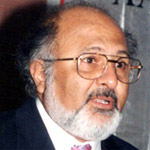
- Mohammed Khan
I quickly added a new page on my computer and I started typing: ‘Dear Mohammed…’
Gosh, where does one start? In the time I had spent at Enterprise, I had learnt that every piece of communication could be turned into a conversation piece. Yes, even a resignation letter.
Right. Delete page. Start over again. Change background to black. Change typeface to Goudy Old Style. Change point size to 16. Print.
There it was. At last. A crisp, black print-out fluttering with the pages of my writing pad. The letter gave me much-needed relief. In a matter of minutes, I felt like a whole new person.
Unfortunately, the feeling didn’t last long. At least, not until I pulled out and looked at the print-out again.
White type on black? I must have lost my marbles. The copy was totally illegible. Well, if my aim was to get sacked, this would have worked wonderfully well, but not before I was minced and grilled like meat. Damn.
Change the background to white. Set the copy again. Wait a minute. Suddenly, the whole layout looks imbalanced. Adjust spaces on top. Still too much imbalanced negative space at the bottom. Increase point size to 17. Nah, let’s make it 16.7. That looks just right. Place a picture in the centre. The picture is too wide for the page size. I crop the picture. Something doesn’t feel right. Mohammed’s words come darting back at me; ‘You have no right to crop a picture, you’re playing around with a photographer’s vision’. Right. Apologies. Control Z. Should I expand the font, instead? There, it’s stretched to 125% and sits comfortably. Wait. This is not the way the typographer envisioned his typeface, either. Control Z. And so it went on. And on. And on. 3 dots in the headline? Blasphemy. An exclamation mark? Instant death. A visual of fish served on a square plate? Annihilation. What about a headline? Damn, I just wrote 216 which didn’t make the cut.
Yet, after an hour of careful deliberation, I came to the conclusion that anything is better than leaving an agency which had taught me everything at the start of my career. Yes, even the 217th headline.
At that moment, I disappeared. I hopped across to a seedy bar and grabbed a beer in the middle of the afternoon. Perhaps, my first ‘afternoon’ tipple which started a trend.
I wrote headlines on paper napkins and headed straight back to the office. I walked in to Mohammed’s room, my hands still trembling with anticipation. He lit a cigarillo and sat on his chair. I showed him a set of headlines which he kept reading over and over again, intently.
Finally, he looked up at me with a wrinkled forehead and asked me angrily, “What on earth is this?”
“Headlines”, was my dumb reply. Dumbstruck, I almost reached for my resignation letter.
He turned around and said, “How clever of you, I can see that. Why couldn’t you write these earlier?”
Relieved, I slipped the resignation letter back into my pocket and asked him what was wrong with the 216 headlines I had written earlier.
“Well, on the 217th attempt you wrote for no one else but yourself.”
Thank you, Mohammed. That was perhaps the most important lesson I’ve learnt in the 20 years that I have been in the business.
Anil Kakar is founder of Gasoline, an independent brand communications agency based in Mumbai. He has worked for close to 20 years with agencies such as Leo Burnett, Enterprise Nexus, Ambience Publicis, SSC&B Lintas and Percept. Anil worked with Mohammed Khan at Enterprise Nexus for four years between 1996-2000. Has he been in touch with Mr Khan and when was the last time he met him? “Unfortunately, I haven’t been in touch with him in the recent past. The last I bumped into him was a year ago at Palladium. :)”
Compiled by Meghna Sharma
 By Naresh Gupta