Tag: Emami

  • m/Six bags media mandate of Emami

    By A Correspondent


    m/SIX, a unit of GroupM, has bagged the AoR media mandate of key Emami Group businesses such as Emami Ltd, Emami  Agrotech Ltd, and Emami Cement Ltd. The account will be handled by the agency’s Mumbai and Kolkata offices and the scope entails the television buying and implementation responsibilities.


    Harsh Agarwal

    Said Harsh Agarwal, Director – Emami Limited: “We are happy to have m/SIX on board and look forward to the value-add they promise to bring to servicing of the mandate.  We are confident that with the very dynamic and fast changing media scenario, m/SIX with their global presence and wide experience and expertise will be able to develop a robust strategy for our media buying to add impetus to all our marketing initiatives.”


    Prasanth Kumar

    Added Prasanth Kumar, CEO GroupM South Asia: “It’s a great win for m/SIX and we are excited and delighted to partner with Emami. Emami Limited, Emami Agrotech and Emami Cement are great brands and these wins are the testament of great efforts and solutions that the team brings on to the table for our clients.” He added, “These wins motivate us and we will continue to work with our partners to deliver the best.”


  • Katrina Kaif roped in as new face for Emami 7 Oils in One

    By A Correspondent


    Emami 7 Oils in One has roped in actor Katrina Kaif as its new brand ambassador. Speaking on the occasion, Priti A Sureka, Director, Emami Limited said: “As per industry estimates, light hair oil is the fastest growing segment with a CAGR of 25 per cent in the last five years. As a brand we have taken keen interest in the segment, established ourselves as a dominant player and have gained firm foothold in this dynamic space. We welcome Katrina to our Emami family. She is an epitome of beauty and is grace personified. She is a global figure who has carved her own niche with her sheer confidence and success. Her infectious charm only adds to her superstar repertoire. She fits the brand image impeccably and her involvement will surely have a positive connect with our consumers.”


  • The Man Company unveils #GentlemanInYou campaign

    By A Correspondent


    Emami-backed men’s grooming startup The Man Company has unveiled its #GentlemanInYou campaign conceptualised by Hashtag Orange. Said Saurabh Kapoor, CEO & Founder of Hashtag Orange: “Over the years, the socially accepted traits of a gentleman have been twisted to a great degree. Social insights reveal that a man’s conduct with women is believed to be the core parameter of defining one as a gentleman. This campaign was conceptualised to break such stereotypes and redefine the modern gentleman to highlight the real traits of a true gentleman. The idea of this campaign is simple and extremely relatable and therefore, it has garnered phenomenal engagement among the audiences.”


  • Emami launches campaign #HEOnTheGo

    By A Correspondent


    Emami, along with WATConsult, has launched a digital campaign, #HEOntheGo for its latest product, He Face Wash.


    To create intrigue amongst its target audience, He released a teaser video “The Flying Basin” early this month. The video promoted the idea of the possibility of cleansing one’s face while ‘on the go’. The video showed people booking flying basins through an app to wash their face whenever water was not easily available to them.


    Speaking on the launch and the new campaign, Harsh V Agarwal, Director, Emami, said: “We are very excited with the introduction of ‘HE On The Go’ Waterless Face Wash, a first in India, from our male grooming brand ‘HE’.  We are confident that today’s alpha male, who is constantly on the move, will find this innovative face wash extremely convenient and refreshing. The product has all the attributes to become a constant companion to every Indian man.”


    Added Rajiv Dingra, Founder and CEO, WATConsult: “For the launch of the first waterless face wash, we decided to use technology like drones in the video as well as a twitter integration for the on ground launch. The response from the consumers has been encouraging and I am sure that they will use the face wash while on the go.”


  • ASCI dismisses complaint against Emami Hair oil

    By A Correspondent


    In an encouraging move to both consumers and brands, the Advertising Standards Council of India (ASCI) has affirmed the soundness of the claims of “Emami 7 Oils in One Damage Control Hair Oil” of providing ‘Upto 20x stronger hair’ and ‘Upto 96 per cent less hair fall’.


    The affirmation of ASCI on the soundness of the product comes in the wake of complaint received by them on the above claims being made by the brand, which was dismissed by the regulatory body.


    To substantiate its claims, Emami had submitted detailed response along with clinical trial reports done at a renowned International Laboratory in USA, which proved that there was upto 96 per cent reduction in hair fibre breakage for ‘damaged Indian black hair’ treated with single application of Emami 7 Oils in One vis-a vis untreated hair of similar origin.  Emami also shared instrumental studies conducted at IIT Mumbai to validate the product’s efficacy in terms of hair fibre smoothness and its thickness.


    Based on the above, the Consumer Complaint Council (CCC) of ASCI concluded that both the claims of “Upto 20X Stronger Hair” and “Upto 96 per cent Less Hair Fall” have been duly substantiated and do not mislead consumers. ASCI’s decision reaffirms the sound testimonials of ‘Emami 7 Oils in One Damage Control Hair Oil’.


    Emami 7 Oils in One damage control hair oil has been designed by leading international hair trichologist and the Research & Innovation Team of Emami Limited with the unique combination of vegetable oils, mineral oils, omega fatty acids, vitamins and hair beneficial 7 herbal aushad complex.


  • Don’t show bias on basis of skin colour: ASCI to fairness cream brands like HUL, Emami

    By Shephali Bhatt & Ravi Balakrishnan


    New guidelines from the Advertising Standards Council of India, a self-regulatory body, could quite literally change the face of advertising in the approximately Rs 3,000-crore fairness category which includes creams, face washes and lotions.


    Hindustan Unilever dominates the category with its Fair & Lovely brand, and other big brands include Emami’s Fair & Handsome for men, as well as Garnier from L’Oreal.


    A draft of the new guidelines specifically targets several well-established tropes of fairness advertising.


    The new rules propose, among other things, that ads should not show darkerskinned people as unhappy, depressed, or disadvantaged in any way by skin tone, and should not associate skin colour with any particular socio-economic class, ethnicity or community.


    According to Sam Balsara, chairman and managing director, Madison World and a former chairman of ASCI, “The reason for these guidelines is to make it clear to advertisers as to what society finds acceptable and what it doesn’t.”


    When asked about the ramifications on the guidelines on its advertising, a spokesperson from Hindustan Unilever, said, “We welcome ASCI’s move to further strengthen guidelines. This will help to promote transparency in advertising. These guidelines are currently at a draft stage and have been published for seeking industry inputs.”


    Adds a spokesperson from Garnier, “We strongly believe advertising should not encourage social discrimination of people based on aspects like the colour of their skin. All Garnier communication focuses on the efficacy of the product and is most importantly, backed by scientific fact. Our conviction is that there is no single model for beauty.”


    Both ASCI and Balsara say that advertisers have been consulted while coming up with the guidelines. And advertising folk who chose to respond off the record believe (or at least hope) that the letter and spirit of these guidelines allow a certain room for interpretation.


    Pioneered by Afghan Snow in 1919, the fairness category is dominated by Hindustan Unilever’s Fair & Lovely, launched in 1975.


    Today, almost every skin care brand worth its name, from Garnier to Ponds, has a fairness variant, with an entire sub-category targeting men. It has been built on storylines about how being dark skinned could materially affect the job and marital prospects of consumers.


    However, over the last decade, there’s been a groundswell of protests against these products and how they are marketed. Celebrities like film director Shekhar Kapur have taken on the category on social media including Twitter.


    An entire segment in Madhur Bhandarkar’s Traffic Signal is devoted to an anti fairness-cream rant. The category’s ads has been pilloried in global media for promoting a kind of “racism”.


    Chennai-based Women of Worth has been running a campaign around the theme Dark is Beautiful with support from actor and director Nandita Das. It’s finally made ASCI take notice.


    Long regarded as a well intentioned but powerless body, the ASCI has revitalised itself over the last couple of years, moving with speed and aggression against ads that break its code of conduct.


    Says Shweta Purandare, secretary-general at the ASCI, “Over the years, we have come across several complaints against advertisements regarding skin lightening or fairness improvement.”


    Source:The Economic Times

    Copyright © 2014, Bennett, Coleman & Co. Ltd. All Rights Reserved

    Licensed to republish


  • Emami appoints Milkha Singh as brand ambassador

    By Writankar Mukherjee


    Emami has roped in renowned athlete Milkha Singh to endorse its premium health supplement, Zandu Kesari Jivan.  This is the first ever brand endorsement of Singh, popularly known as ‘flying sikh’.


    Emami director Harsha V Agarwal said the brand Zandu Kesari Jivan which promotes good health, youthful vigour & energy found a perfect fit in Milkha Singh, who even at the age of 84, is a symbol of youthfulness and vigour. The brand is also endorsed by Birju Maharaj.


    Chyawanprash is a growing health supplement category in India worth at Rs 400 crore. A new television commercial of Zandu Kesari Jivan featuring Milkha Singh is scheduled to go on air this month. The TVC is created by Scarecrow Communications.


    Source:The Economic Times

    Copyright © 2013, Bennett, Coleman & Co. Ltd. All Rights Reserved

    Licensed to republish


  • Navratna Cool Talc becomes Emami’s first Rs-100cr ‘hero’ sub-brand

    By A Correspondent


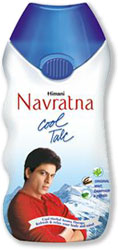
    Navratna Cool Talc, a brand extension from the house of Emami Ltd, has emerged as the first sub-brand to join its list of Rs 100 crore “hero” brands. Navratna Cool Talc which has created a separate “cool” sub-category in the talc segment recorded an 80 percent growth in FY 2012-13. The brand expects to hit a minimum of 25 percent Y-o-Y growth despite the talcum powder segment in India having hit a near saturation point. The success of Navratna Cool Talc further exemplifies Emami’s strategy on building a robust brand portfolio through brand extensions. Navratna Cool Talc currently enjoys a sizeable market share of 18 percent in the Rs 4,300-million-worth Cool talc and PHP sub-segments of talcum powder.


    As a part of its aggressive marketing strategy to achieve the targeted growth, Navratna Cool Talc is going to roll out a brand new TVC strategically positioning the brand as ‘Bina Bijili ka Sabse Chhota A C’. Cosmetic products and talcum powders generally play around the concept of beauty, fragrance and physical discomforts due to natural extremities. Navratna Cool Talc has made a category expansion initiative as a FMCG brand to build a campaign as a relief provider around the concept of extreme physical discomforts during painful long hours of power cuts faced by people in various parts of the country. Developed by Leo Burnett and produced by Conred, the film for the load-shedding campaign has been directed by Gajraj Rao of Code Red Films.


    The roll-out of the new campaign in early-June this year would be done through press ads, TVCs in all major Hindi GEC channels, radio spots and in-theatre commercials targeting the markets of UP, Bihar, MP, Maharashtra, Jharkhand, Chhattisgarh and Tamil Nadu.


    This brand communication will be coupled with the brand new ‘Thanda thanda Cool Cool’ TVC campaign featuring Bollywood Badshah Shahrukh Khan. As a leg-up to the expansion drive in the Southern market, Southern superstar Jr NTR has been recently roped in by the brand to feature in the same campaign. For the very first time, the brand is also going to use Jr NTR’s image on the product packs down south to provide more thrust to the region-specific communication.


    “Navratna Cool Talc has been growing at 40 percent year on year since 2006 although the growth of the talcum powder category as a whole has nosedived. Our strategy to focus on building robust umbrella brands with strong and consumer relevant sub-brands is giving us the envisaged results. The success of Navratna Cool Talc is testimony to this,” said N Krishna Mohan, CEO, Sales, Supply and Human Capital, Emami Ltd.


  • Marketers make hay in Rural India


    By Ritu Midha


    There’s no denying the unprecedented push being issued by marketers in getting their brands to reach out to rural cities and towns. Most marketers, who earlier had shied away from reaching out to these markets, are now reviving their interest and want to be a part of the action in the so-called Rural India. Till recently, the interest was not translated into action due to various issues like lack of infrastructure, information and consumers loyalty to a few brands that braved adversities and made inroads into these difficult-to-reach markets. However, things are changing now and, to a large extent, the change can be attributed to information access and the penetration strategy adopted by the mobile networks, which were closely followed by handset marketers.


    Harish Bijoor
    Avinash Oza
    Mihir Mody
    Mayank Shah

    As per Harish Bijoor, CEO, Harish Bijoor Consults, the rural consumer is just getting the taste of experimenting and owning, and hence a larger opportunity lies there. He elucidates: “I would segment the hinterland into urban, rurban and rural. The hunger deepens as you go from urban to rurban to rural. The opportunity for marketers therefore deepens as one penetrates further down this strata.”


    There are a number of pull factors attracting marketers to these areas; one also shouldn’t ignore the emphasis being laid by the government in improving infrastructure and education levels across the country. Avinash Oza, Director Brand Communications, DDB Mudra Max reflects on this sentiment: “The government’s infrastructure vision of connecting rural with urban through construction of roads and rail network has led to migration, mobile working population, and better education – it has also provided an opportunity for marketers to reach out to rural areas, thereby increasing accessibility across categories. In addition to infrastructure, Doorsanchar Kranti (Telecom Revolution) has bridged the rural-urban divide via satellite cable, and DTH connections.” He, incidentally, believes that it is a crime to call them villagers – they are distant urbanites.


    Presenting his outlook, Mihir Mody, Founder & CEO, Adwallz, said: “There is awareness and good spending power. Gradually these markets are becoming urban in attitude and awareness, thanks to the medium of television. Marketers, too, are exploring a new world in rural – FMCG and telecom success stories are now attracting other product categories… the sheer numbers are formidable.”


    Marketers have taken note of this evolution, and there is an increased focus on rural markets across product categories. Mr Krishna Mohan, CEO, Sales, Emami Limited said: “The great rural-urban divide in household consumption patterns has reduced drastically. Bharat is indeed keeping pace with India when it comes to spending on most fast-moving consumer goods. Rural sales contribute more than 40 to 50 per cent of total sales in various categories for Emami. We have increased emphasis on engaging rural consumers. The market is huge with a lot of potential.”


    Mayank Shah, Group Product Manager, Parle Products too is of the opinion that rural markets are indeed opening up, however there might be a difference in purchase behaviour and consumption pattern. He states: “In case of rural buyers, it is smaller units. Instances and opportunities of buying are less and they buy if the right quality is delivered at the right price.”


    It is not only the FMCG marketer who is witnessing an increased awareness and demand, but also the durables and electronics sectors. Kamal Nandi, VP – Marketing & Sales, Godrej Appliances explains: “It is not only the towns in these areas which are seeking a metamorphosis, but demand in rural markets too has increased. Though it might still be the entry level products that are being sold there – the aspirations are high, and demand is increasing. For instance, we have seen remarkable growth in sale of single-door refrigerators in these markets.”


    The consumerism in rural areas is being led by youth who are better connected, informed and travelled than the generation before. As Mr Oza stated: “Youth here are fast adopters, acceptors and can be termed as change agents. To reach households, the route is to bring youth on your side. Marketers can use youth by following ‘learning with livelihood’ model when they plan to penetrate hinterlands.”


    Another trend that has shown marked improvement is penetration of media in rural areas. This has resulted in more number of consumers who are being exposed to brands and their promises. However, the success of a brand in rural areas, to a very large extent, lies in the retailer’s hands – and it is important for the marketers to win them over. Citing an example, Mr Oza said: “Each retail store has 3-4 shop boards. On my visit to Khandwa in Madhya Pradesh, I came across unique shop boards. One brand – Pariwar tea, even deployed shop boards with retailers’ photographs. This shows that Maslow’s hierarchy pyramid works the opposite in the hinterland.”


    Beyond being in the good books of retailers, marketers have also realised the importance of educating consumers in these markets. The objective, of course, is to increase awareness levels and thereby consumption. Krishna Mohan stated: “The way forward is to help consumers, especially in the rural areas, to make the switch from loose to branded products or aid new consumption habits, either with novel products or new formats. We have embarked on a project called Swadesh, where Emami through its field staff would cover rural markets directly through dedicated organisation structure for rural operation.” He added: “Communication is another vital factor in ruralIndia. We need to reach out the consumers through innovative ways and create brand recall.”


    Though a number of theories have been floating around on the scope that rural markets throw up for brands, what is certain is that this is where the action would come from – and obviously more moolah. This would be driven largely by consumers from these belts that are increasingly becoming savvy, have better disposable incomes and are ready to spend. However, at the same time, the consumer is discerning, price conscious and desires to take small steps. The need of the hour is to communicate to him in a right manner and offer him the right product in the right size – win him over by giving the right advice and see your brand grow. But it must be mentioned here that word-of-mouth or buzz marketing is still the key to a making higher purchase decisions. As one jilted consumer might lead to many being drawn away and that’s the last thing a brand might want to confront itself with.


    Imaging: Rafiq, Photograph: Fotocorp


  • Shahs to drop Anchor’s oral care portfolio; Emami close to buying toothpaste brand

    By Kala Vijayraghavan & Sagar Malviya


    Mumbai-based consumer products Anchor Healthcare has had several rounds of discussions with the Kolkata-headquartered Emami to sell its oral care business, top officials close to the development said.


    Kotak Mahindra, the investment banker to the deal had also approached other personal care companies such as Godrej, Dabur and Marico for a potential transaction, added the officials.


    However, interest in Anchor’s only other brand outside of oral care, Dyna soap, was lacklustre, with buyers more interested in Anchor White toothpaste, Anchor Gel as well as a toothpowder and toothbrushes. When contacted, Atul Shah, promoter of Anchor, denied any sale plans. However, a senior executive at a domestic investment bank confirmed that the company has been sounding off various buyers.


    In early 2011, Business Standard had reported that the Shahs had plans to sell the entire consumer products business, lock, stock and Dyna. However, a banker privy to the proceedings pointed out that valuations of the business may have deterred the promoter family from selling in single transaction.


    The Shahs are expecting over Rs1,000 crore for the consumer business, added the banker. The company is estimated to have closed the year ended March 2012 with sales of Rs450-500 crore, said a research analyst covering the fast-moving consumer goods sector.


    Emami, for its part, has created a war-chest to fund acquisitions. In 2010, the board of the cosmetics and toiletries marketer had approved plans to raise long-term resources up to Rs2,000 crore through the issue of securities as well as to double the borrowing limit to Rs3,000 crore primarily to fund potential buys.


    In 2008, Emami had acquired Zandu Pharmaceuticals, but subsequently hasn’t had much luck with buyout attempts. Last year it lost out to Reckitt Benckiser in the race to buy Paras’ personal care business that includes brands such as Livon, Borosoft and SetWet. Early this year, Reckitt sold some of Paras’ personal brands to Marico in a deal that Emami too was keen on.


    “Emami will continue to explore avenues for inorganic growth, but we do not wish to comment on any speculations,” said NH Bhansali, CEO, finance, strategy & business development, Emami.


    In 1997, Anchor challenged multinational giants like Colgate and Hindustan Unilever by finding a unique proposition in a tough-to-differentiate category by launching a ‘vegetarian’ toothpaste. In the initial years, Anchor managed to grab a market share of close to 10 per cent in a highly-competitive market.


    In 2007, the Anchor group had sold an 80 per cent stake in the business of electricals to Japan’s Matsushita Electric Works – owners of the National and Panasonic brands – for Rs2,000 crore. Personal care became the family’s focus area. Soon after the sale of Anchor Electricals, the group bought Forhans, one of the country’s oldest toothpaste brands, from John Oak Remedies. However, the Shahs didn’t make much headway with Forhans, which does not figure amongst Anchor Healthcare’s brands on its website.


    Source: The Economic Times

    Copyright © 2012, Bennett, Coleman & Co. Ltd. All Rights Reserved

     

  • Swad of Success: Regional FMCG firms like Panjon, Bisk Farm, Mapro, raising funds to expand operations

    By Sagar Malviya


    After a gap of almost four years, TV commercial of the once popular Swad digestive candy hit the screens early this month. Swad, which is making a come back, is one of the brands owned by 48-year old Panjon, an Indore-based firm that sells candies to balm and toothpaste endorsed by Shammi Kapoor and Sonali Bendre in its glory days. The plan is to reach out to more states, expand product portfolio and grow sales ten-fold in two years.


    Panjon isn’t alone. Almost half a dozen smaller regional firms such as Bisk Farm, Mapro, Wagh Bakri and V-John, among others, are entering newer states, some advertising for the first time, while others planning to raise funds to survive a fresh salvo by large consumer goods companies that expanded into the turf of smaller rivals last year.


    “While our products are doing well in MP and UP, competition is also getting intense in these home markets,” admitted Atul Kothari, managing director at Panjon, which is in talks with a clutch of private investors to raise funds for expansion. “We are looking to enter Gujarat, Punjab, Haryana and Bihar this year,” he said. The company plans to add more than 1,400 distributors to its existing network of 600.


    So what exactly was the trigger? Well, for one, large FMCG firms have been aggressively reaching out to rural consumers through expanded distribution, which led to smaller regional players losing market share across segments in their core markets.


    Over the past couple of years, P&G has almost doubled its distribution reach and now has a direct reach of 1.3 million outlets, against HUL’s direct reach of 1.60 million outlets. Emami expanded reach by as much as 30 per cent primarily in rural areas, while HUL added more than 50,000 villages to its network just last year. Ditto, in the case of Dabur, which rolled out special rural focused sales initiatives across eight key states and widened reach in 71 high potential districts.


    However, the regional players are now plotting a counter attack, not just in their existing markets but also in newer states. The Rs 500-crore SAJ Food Products that dominatesEastern Indiawith its biscuit Bisk Farm is a case in point.


    “Last year, we entered Karnataka and are planning to reach Andhra Pradesh next month. We aim to have a national footprint by 2013,” saidVijay Singh,MDof Kolkata-based SAJ Food Products. He added that the firm has even discussed internally about coming with a public issue in the next two years.


    But it won’t be easy. And smaller rivals are aware of the fact that price competitiveness with national players would rather be futile with the latter having economies of scale. Hence, they are looking to cash on through their quality proposition rather than being price warriors.


    Maharashtra-based processed food firm Mapro Foods andGujarat’s tea company Wagh Bakri feel that they are better in terms of quality compared with rivals such as Hindustan Unilever. “Large players are very aggressive in terms of schemes and offers. But we believe that consumers want quality and not price-offs,” said Parag Desai, executive director of Wagh Bakri, that is looking to enterPunjaband Haryana.


    Some firms that already have an indirect reach nationally are also keen to distribute products directly and cut costs on intermediaries. Delhi-based Vi-John is reworking its distribution strategy by eliminating super-stockist and instead having selling agents in each state.


    “We are planning to add over 1,500 distributors and 70 stockists to have direct reach in western and southern markets,” said Vimal Pande, CEO of Vi-John Group, which has 30 stockists and 2,500 distributors.


    Modern trade is doing its bit too. “Regional brands need to build stronger consumer connect to keep their consumer franchise or they could expand distribution to add new consumers and grow base,” said Devendra Chawla, president – food and FMCG at Future Group.


    Source: The Economic Times

    Copyright © 2012, Bennett, Coleman & Co. Ltd. All Rights Reserved


  • Big brands use TV stars to connect with masses

    By Rajiv Singh


    Now, Malhotras can raise a toast. After gulping down countless cups of tea during umpteen meetings over the last few months, this middle class family in North West Delhi has finally found a ‘perfect’ match for their son. Rashmi, their prospective daughter-in-law, is not only beautiful but also has a pet name ‘Toasty’ – something that instantly clicked with the Malhotras.


    Reason: The other Toasty they know is a lovable daughter-in-law, played by Aishwarya Sakhuja in Sony’s TV fiction Saas Bina Sasural, who keeps her family together. “I am sure Rashmi has similar qualities like Toasty,” said an elated Mrs Malhotra.


    Malhotras are not alone in getting influenced by serial characters. There are thousands of such people across the country. And several marketers are now waking up to the potential of small screen stars as brand endorsers.


    Over the last six months, a slew of brands including Cadbury, Emami, Hyundai, Maruti, Dulux, Red Label and Lux has roped in popular TV celebrities such as Sakhuja and Hussain Kuwajerwala who can connect well with people at a fraction of cost of hiring a popular Bollywood actor.


    “It’s a great strategic move by brands. The TV characters have a strong resonance with the viewers, especially the middle class that relates to the values shown in the serials,” said Prathap Suthan, an advertising industry veteran who created the government’s ‘India Shining’ and ‘Incredible India’ campaigns and is now the chief creative officer of iYogi, an online technical support services provider.


    Saurabh Uboweja, director of brand consulting firm Brands of Desire, said that by casting TV stars with successful running soaps, advertisers can have the dual advantage of both role and star endorsement for a sensible signing amount: “They get two candies for the price of one.”


    MONEY MATTERS

    While TV celebrities do have their own large fan following, their relatively lower endorsement fee is a huge plus for several companies in the present tough business environment where subdued consumer sentiments and rising costs have hit sales of several products.


    One such company is Maruti Suzuki, the country’s largest carmaker that has had a tough last year and expects its sales to fall 11 per cent in the year ending March.

    “In the current cost-cutting environment, it makes more sense to hire TV stars,” said Shashank Srivastava, Maruti Suzuki Chief General Manager (Marketing). The carmaker roped in TV celebrity Anita Hassanandini this month to feature in its Swift Dzire commercial. Last December, it signed Kavita Kaushik and Rajesh Kumar from SAB TV to endorse its multi-purpose vehicle, Eeco.


    “Selling a car is not like selling a Bournvita,” said Mr Srivastava. “So, there’s no point in shelling out fortune in having big Bollywood celebrities.” Big celebrities have not really worked for Maruti. Father-son duo of Amitabh and Abhishek Bachchan could not boost its Versa sales in 2000-2001. Maruti has also had actor-director Farhan Akhtar and actor R Madhavan to endorse A-Star and Wagon R, respectively, but with limited success.


    CLOSER TO LIFE

    Marketers also say it’s easier for people to relate to TV celebrities than big screen stars. “While a Bollywood celebrity projects an image which is aspirational and larger than life, TV celebrities relate closer to the real life of the viewers and are hence becoming extremely popular,” said Krishna Mohan, CEO of FMCG firm Emami, which signed Suhana of Star Plus’ serial Sasuraal Genda Phool aka Ragini Khanna in November last to endorse its moisturiser Vasocare.


    Unlike film stars, small screen celebrities are identified with the characters they portray in popular long-run serials. So people relate them to the values their characters hold, like a committed housewife, an ideal husband, a perfect daughter… ¦ It helps brands project a distinct identity by endorsing them.


    Late last year, paints brand Dulux rolled out a media innovation by tying up with three popular television serials to create vignettes that resonate with their thematic campaign, ‘Apne Rang Chalakne Do’. AkzoNobel’s brand showed the lead pairs from Star TV soaps Yeh Rishta Kya Kehlata Hai and Iss Pyar Ko Kya Naam Doon, and Sony’s Saas Bina Sasural in its commercial.


    “Since daily soaps are a big draw in India and the consumer follows their journey closely, the protagonists of the daily shows had the appeal that was needed to propel the idea,” said Pushkar Jain, marketing manager for Dulux at AkzoNobel India.


    However, there’s a flip side of using TV celebrities as well, said Mr Uboweja: “Brands want to capture these stars and their soaps when they are running hot. But the shelf life for both is fairly short”. “This ad strategy is a bit like instant noodles, good enough to fill the stomach but not enough to satiate the appetite,” he added.


    Source:The Economic Times

    Copyright © 2012, Bennett, Coleman & Co. Ltd. All Rights Reserved