Dinamalar, Eenadu, ManoramaOnline and Prajavani news media publishers have come together to form the South Premium Publishers (SPP), a ‘South languages’ digital advertising package. This brings the four leading dailies, to digital advertisers collectively. Advertisers can advertise on the digital assets of these publications and reach out to their target audience in one go.
The package offers a reach of 37 million unique visitors, with 715 million-page views and an attractive average time spent of 3.36 to 8.09 minutes, notes a communique, offering 3 Billion ad impressions per month. (Source: GA report, Combined Monthly Average, April 2020 – September 2020)
Said Mariam Mammen Mathew, CEO, Manorama Online: “South Premium Publishers offers advertisers credibility, digital brand safety and increased awareness, with more control and ease of access to premium digital inventory from all major publishers of South India. This is the only premium digital publishers’ network that delivers. We, at Manorama Online are happy to be part of this pioneering platform in Indian Digital Publishing.”
Added L Adimoolam, Director – Business and Technical, Dinamalar: “We are the market leader in Tamil Digital market. In 2019-20, of the total Indian AD market of 70k+ crores, 21% has been contributed by Digital. Given the current digital growth prospects it’s important that we give the best and the most convenient platform to the advertisers & agencies to connect with South Indian digital audiences. We are truly glad to form this consortium with all Premium Publishers in our market, which has a combined experience of 300 years. Now advertisers & ad agencies will be able to execute a South India campaign through a single point contact and 1 single RO at the best possible rates in the market. We have launched our consortium website, www.southpremiumpublishers.com which has all essential information”.
Adds a communique: “73% of the combined users are between 18-44 age group, from young purchasers to HNI’s, whose primary source is digital news.”
Said Arpan Chatterjee, COO – Digital, TPML, the publishers of Prajavani.net: “South Premium Publishers has its own uniqueness in enabling advertisers to target quality digital audience across South India through a single interface for brand and content campaigns. With more than 3 billion ad impressions every month to a very engaged audience in their own language, it is a strong value proposition from SPP. Prajavani is glad to be a part of SPP”.
Talking about the key idea behind this alliance, I Venkat, Director, Eenadu said: “Our group is known for Value Creation and Value Innovation. This combination is a step towards creating value for our esteemed digital advertisers. We need to recognize that the market dynamics are evolving, which demands innovation in our existing business model and collaboration is one of the solutions. This combination will help advertisers to reach out to Southern Indian premium digital audiences in a very credible, secure, and highly engaged environment”.
Arvind Kumar, seasoned mediaperson and Executive Director, The Advertising Club Bangalore, passed away earlier today (September 25) in Bengaluru reportedly after a massive heart attack.
Arvind Kumar had been spearheading the operations of The Advertising Club Bangalore since 2007 and was also Group Advisor, Marudam Group of Companies since 13 years.
Before that he was Senior Vice President he started as the All-India head of sales and marketing of the channels. He was launched four channels under the Alpha brand for Zee and also headed the Zee – Asianet jv Dakshin Media as its Director and headed and launched Asianet Bharati in Tamil and Asianet Kaveri in Kannada before he started his own enterprise at Barterbiz. Earlier he spent many years with the Times of India group and Eenadu.
Notes a communique from The Advertising Club Bangalore: “He has been the pillar of The Advertising Club Bangalore and part of the Managing Committee since 1985. He has served as the Secretary, Vice President as well as President of the Club for 3 terms. He was currently associated with the The Ad Club Bangalore as its Executive Director overseeing all the activities of the Club, continuously exploring new programs, initiatives and ways in which to create a world class platform. He will be remembered, not only for his great humour and child-like curiosity, serving the advertising community of Bangalore selflessly for decades, but also as a hugely respected and outstanding human being, who everyone loved and is devasted to see leave.”
After eight successful editions, Eenadu Champion Cricket (ECC) tournament is back with the 2015 edition. The tournament will have participation from innumerable institutions across the states of Andhra Pradesh and Telangana, as remarkable feats will be showcased and new benchmarks will be made.
This state-level open cricket championship will have qualifying matches played at district and regional levels in both the states, culminating in the grand finale. Finally, the big league matches will be played in the biggest battle ever to win the Championship Cup.
Eenadu Champion Cricket (ECC) is organized by Eenadu Eetharam – the special initiative of Eenadu which has spearheaded authentic news and quality driven Infotainment, setting high standards aimed at the Youth.
As part of the new format, in the qualifying matches, teams from all the districts will fight it out in two categories – juniors & seniors in the age group of16 to 22 years and there will also be day and night matches. This new addition to the format will make it more challenging for the teams and interesting for the audience.
The tournament will be on 3 levels, i.e. District, Regional and one final ECC Cup. District winners would compete for the Regional Championship Titles. The 5 Regional Championships titles — Rayalseema Rockers, North Andhra Ninjas, Central Andhra Challengers, Telangana Tigers & Hyderabad Heroes will be battling it out in the final matches.
The day and night matches will be under flood lights for the Seniors from the regional level while the Juniors will be playing during the day. There will be 10 overs knock-out matches for the districts and 20-overs knock out for the regional level. The winners emerging from the regions will pit against each other in a league format of 20 overs. 5 league matches will be played in Vijayawada and 5 league matches in Hyderabad. The grand finale will be held at LB Stadium in Hyderabad.
A J Christophe
Acknowledging the contribution of the stakeholders of ECC Cup’ 2015, A J Christopher National Head, Sales & Marketing Eenadu, said “we would like to thank all the sponsors, franchisees, players, organizers, the Media and fans from across Telangana & Andhra Pradesh for supporting this tournament and being instrumental in shaping the success of ECC Cup over the last 8 editions. With the tagline of Mee Aata Mee Paata, the event aims to offer the audiences a package of competitive Cricket and unparalleled Entertainment, the way they want it – It’s Their Way. We wanted to give back the youth a new and evolved tournament, which they have loved and helped us build over the years, the way they would like to truly enjoy it.â€
International Brands like Honda, Oppo & LG have partnered with the event to ensure that they aid in the quest of reaching out to the talent at the grass root levels and provide each and every one an opportunity to make it big.
1. The entire conference is built around the theme- current complexity and advantages. The treatment of this subject is the first for INMA hence makes it worth attending.
2. Keynote address by Nandan Nilekani where he will talk about sustaining in the volatile market.
3. Earl Wilkinson of INMA will focus on the key subject of new growth plan and how to get there.
4. Discussion on the future of news
5. Youngsters will be involved who will make a case for how they want their newspapers to be
6. The concern area of ad-growth challenge will be another discussion that is worth attending
7. Battle of the bulge will discuss the issue of cost depreciation and utopian expectation. The point being can you really reduce the cost?
8. The burning issue of increase in circulation but decline is readership will also be discussed at length
9. The ever-pressing matter of talent shortage and what one should do about it is another topic that will be brought to the fore.
10. All the topics this year are very provocative that will encourage debate and discussion.
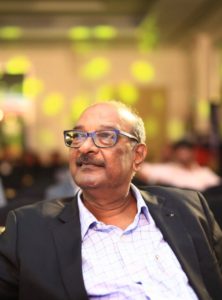
I Venkat is the Director at Eenadu and Chairman of ASCI. He is also on the Board of INMA South Asia
Hardly had the news of the acquisition of English news channel NewsX by ITV Media Group and Hindi news channel Live India by Prosperity Agro filterd in, there were murmurs on whether it was vital for the government to impose entry barriers for the news media. ITV of course has been in the news for around five years and Live India already had a sizeable stake by a property developer HDIL.
As part of MxM Mondays, we spoke to a cross-section of news media practitioners to offer their views on the issue.
This issue of media ownership has been debated on in the past, and more so recently, because of the entry of corporate groups into the news media. Earlier this year we saw two big corporates enter the media domain, when Reliance Industries bought a stake in Raghav Behl-led Network18 and Aditya Birla Group invested in the Aroon Purie-led Living Media India.
While big business owning media is not a new phenomenon, there are numerous instance of politicians owning and controlling sections of the media, especially in Southern India.
Hence the question arises: Is it a cause for worry when people with non-media interests start owning the mass news media?
Here are a cross-section of views from captains of the industry (in alphabetical order of their last names):
Tariq Ansari, Chairman and Managing Director, Next Mediaworks Ltd
Tariq Ansari
The worry is not around who owns the media but whether they act in a way that is consistent with journalistic standards of integrity and fair play. We seem to have forgotten simple journalistic conventions like a declaration of interest from the owner of the publication/channel on stories in which there is a substantial commercial interest.
Media, much like steel or fertilisers or communications, will eventually belong to those who have the means and desire to invest in it. The point about it being the preserve of a few is inexplicable. Nobody is stopping anyone from raising the capital to start a newspaper/magazine/TV station/radio station/website. We live in a free country. Anyone who has the ability to own media should be able to do so, without limitation. Clearly my preference would be that criminals or those with clear vested interest should not own media, but I am not sure if the law of the land can prevent this from happening.
Vinod Mehta
Vinod Mehta, Former Editor-in-Chief, Outlook magazine
I am worried. Media diversity is very important for freedom of the press. I don’t want Media in the hands of a few owners. It should be open to all.
And here’s what MxMIndia’s regular columnists say:
Ranjona Banerji, senior journalist, columnist and Contributing Editor, MxMIndia
Media ownership is a worry to the extent that journalists are not able to withstand corporate pressure. For instance, the Birlas started Hindustan Times and the Tatas has a stake in The Statesman (to name just two) and the battle between marketing and editorial is as old as the profession. The problem comes when senior editors capitulate and reader interest is surrendered or sacrificed. I would turn the spotlight back on journalists: are we fighting the good fight?
Many years back when I asked a leading industrialist why he was keen on starting a news channel he replied with the famed Deewar dialogue (some alcohol in the system did the trick): Aaj mere paas buildingey hai, gaadi hai, bank balance hai, but even then these guys owning newspapers and channels are ruling the world. We were in the late 1990s, and journalists and news media owners were indeed much sought after. That may have waned over the years, but the desire to own news media stays. What hasn’t changed is that the intent of owning the news media goes far beyond returns on investments.
When the British ruled India, it was the desire to mobilize public opinion that led to several national leaders and even businessmen to embrace news. Post-Independence, with the birth of a new economy, it was a mix of nationalistic sentiment and also to use it as an ally in a tightly controlled business environment. The ’60s and ’70s saw the media taking off with magazines like the Illustrated Weekly of India, later India Today and several others in regional languages. The imposition of the Emergency got people to realize the importance of the news media as the liberalization of the economy and and the airwaves ensured that there is no looking back.
Being a democracy, there are no entry barriers to the media. And rightly so. However, when a few years back a few real estate and assorted players jumped into news television there were representations to the information and broadcasting ministry that there ought to be tighter controls.
The current murmurs are being heard because NewsX has been acquired by businessman Kartikeya Sharma. ITV, his media company, also runs the newspaper Aaj Samaj and regional and Hindi news network India News. And the reason for the concern: it was feared that being the brother of Manu Sharma who has been convicted in the Jessica Lallmurder case, he could misuse his position to influence the executive and the judiciary. Well, the Supreme Court upheld its sentence of life imprisonment in 2010, so evidently he didn’t achieve much. To be fair to Sharma, a senior editorial and business executive who has worked with him, told me that he saw no interference on content, especially on the Manu Sharma front.
Clearly, the money power of rich businessmen and politicians cannot bring in readers or viewers, as the case may be or make a success of the media enterprise. In the late’80s, the Ambanis acquired Commerce Weekly and converted it into a business daily. They also acquired The Sunday Observer that was once edited by Vinod Mehta and was exceedingly popular.  The Ambani indulgence in the media failed despite hiring top journalists and publishing executives. They could only use the papers to fight a few minor battles, and even those without much success.
Mehta worked and fell out with industrialists Vijaypat Singhani and L M Thapar as both found news too hot to handle and counter-productive to their primary businesses (and revenues). One had assumed he would meet the same fate when Rajan Raheja, a then-emerging industrialist with some interests in real estate, set up the Outlook magazine group. Mehta has led many battles with the mighty and powerful in his magazine and both Raheja and Mehta have survived each other.
Save the Outlook example which is a good indicator of business interests and independent journalism co-existing, clearly big money is not enough to drive consumption of news media. My worry though lies elsewhere:
1. Lack of transparency in the ownership of media.
2. Creation of a monopolistic scenario with business groups investing in multiple and similar vehicles
3. Level playing field for competition in case of vertical and/or horizontal cross-ownership, and
4. Diversification of media companies into entities beyond news
1 & 2. Transparency requirements in media ownership are critical. When the government announced recently that a certain conglomerate doesn’t not have interests in the media, is it really the case, or is that what is on paper and hence deemed correct? While doubts have been raised about how the acquisition of a sizeable chunk of Network 18 via an independent trust would impact the editorial independence of the group, the real worry is the rumoured interests of the group in other media ventures too.
Could we have a situation that a genre of channels or newspapers or the media entities in particular region of the country be owned – directly or indirectly – by one group? How do we tackle a monopolistic scenario such as this?
3. The PR head of a radio station in Delhi once complained that she could never hope to get her press release into the two main English dailies in the city because both had their own FM stations. So, while the most inane event from the group’s radio station gets covered, the lady’s FM frequency never got a mention even for a big activity. So rampant is this blacking out of a rival group’s activities that it’s now considered standard practice. In many countries there are strict rules for horizontal and vertical cross-ownership. While the TRAI has suggested restrictions in vertical ownership (a TV channel can’t fully own a DTH or cable platform etc), horizontal ownership is fine (so a TV channel can also run a newspaper, radio station etc).
4. The last of my worry areas can be a bigger concern, and, if misused, even graver than big business or a political party getting into the media. Many news media groups have invested in sectors outside of news and doubts have been expressed if there is any connect between the relationships with governments via the news media and the winning of such contracts.
Even though the government at the Centre is weak, and we can be sure it will flex its muscles often enough in the run-up to various elections until 2014, I don’t see any immediate solution to the problem. But what can play a deterrent for those who abuse the media will be public opinion via social media.
Sevanti Ninan, Editor, thehoot.org and Columnist, Mint
Sevanti Ninan
Yes, it is a cause for worry when people with vested interests start owning the mass media because political ownership of the media is increasing, and there are no transparency requirements on media ownership.
Readers and viewers are unable to discern ownership-related biases. There is also a renewed trend of corporate investment in media increasing. Media companies are supposed to file ownership details with the registrar of companies, but one, it is not properly done, and two it is very difficult for lay people to access the correct and latest data.
On the issue of media being a preserve of only a certain groups, even now it is fairly widely owned.
Maheshwar Peri, Chairman, Pathfinder Publishing India Pvt ltd
Maheshwar Peri
In my opinion there is no cause for worry. I think, increasingly, the cause for worry comes from a few industrialists who’ve gotten into media. But if you go back to the flag bearers of Indian journalism in the 1980s, Indian Express was owned by RNG, an industrial group. So, to say that ownership by industrialists would hurt media is a slightly wrong way of looking at it.
There is definitely a cause for worry when people get into media for reasons other than running it as a professional empire. If you look at some of the politicians who’ve come into media or political parties that are launching their own channels, that’s a cause for worry because they have a reason to dish out news which suit their needs and opinions.
So there is a problem when people in public office get into media, but it’s not so much of a problem if industrialists or venture capitalists or any others moneybag get into it because they want to make it a commercially viable operation. And they know they can make it commercially viable only when the reader/viewer respects them. In case of politicians, they are not interested in making it commercially viable; they just want to ensure that their point of view finds a space in the public domain.
I think unless a reader or consumer respects you, you won’t be able to sell beyond a point. So all of us, whether or not owned by corporates, are always trying to ensure that we give unbiased and credible information so that the reader continues to respect us as well as the advertiser continues to invest in us.
And what makes one think that they have a better opinion about media than a fruit vendor? I don’t think there can be a classification of who has a better opinion about certain things in this country – we are a democracy. So the worse thing is to say that ‘these’ kind of people can get into media and ‘those’ kind cannot.
Tarun Tejpal, Editor-in-Chief, Tehelka magazine
Tarun Tejpal
To some extent, there is cause to worry about media ownership. We have to air, discuss and examine issues of monopolies, cross media ownerships, and of cross business ownerships. And to try and build in some structural safeguards that both help ensure the financial viability of honest, robust media, and deter media owners from using their media instruments for unfair advantage in their other businesses.
Theoretically, it (media) should be open to all. But we must build in safeguards that minimize the misuse of public discourse and public instruments of media. This is not easy, but a discussion must start on this issue at all levels.
Paranjoy Guha Thakurta, Senior Journalist
Paranjoy Guha Thakurta
The growing corporatization of the Indian media is manifest in the manner in which large industrial conglomerates are acquiring direct and indirect interest in media groups. There is also a growing convergence between creators/producers of media content and those who distribute/disseminate the content.
In India’s unique ‘mediascape’, it is often contended that the proliferation of publications, radio stations, television channels, and internet websites is a sure-fire guarantor for plurality, diversity, and consumer choice. There were over 82,000 publications registered with the Registrar of Newspapers. There are over 250 FM radio stations in the country. Despite these impressive numbers of publications, radio stations and television channels, the mass media in India is possibly dominated by less than a hundred large groups or conglomerates, which exercise considerable influence on what is read, heard, and watched.
One example will illustrate this contention. Delhi is the only urban area in the world with 16 English daily newspapers; the top three publications, the Times of India, the Hindustan Times, and the Economic Times, would account for over three-fourths of the total market for all English dailies.
However, what is unacceptable is media barons using news outlets as tools to further their business interests. In this country, as in the world over, large media corporations are clearly playing a bigger role in the political economy that they report on. Though a free media is fundamental to the existence of a liberal democracy, concerns about the accountability and transparency of media companies remain. For instance, the RIL deal has enabled Network 18, Eenadu, and the merged group to expand its offerings to benefit its stakeholders and its advertising target audiences. What remains to be seen is whether clear boundaries can be etched between the boardroom and the newsroom.
There’s absolutely no doubt about the fact that if it’s truly going to be a responsive media, then the media should reflect the views, the interests, the aspirations of a larger section of population as possible. The problem with much of our media is that they are too busy trying to ‘reach’ consumers to potential advertisers than providing information to citizens.
Next Week:
Why do we all like to damn TAM?
The Sectoral Innovation Council recommendations last week said that there was need for an alternative to TAM, short for the media research company formed by a jv of two international research biggies: Nielsen and Kantar. This is a view that has been expressed several times over the years.
One of the main peeves against TAM is the number of Peoplemeter boxes present to collect data. Can 8000+ boxes effectively poll a populace of 1.2 billion, is what many broadcasters keep asking in public. In private though, not many are ready to pay up by increasing their subscription fee to enable the installation of more boxes across the country.
Also, what’s happening to BARC, the joint industry body that was to provide an alternative?
MxMIndia will speak to a cross-section of the industry to get answers. Meanwhile, if you have a view, email it to us at editor@mxmindia.com with the subject ‘MxM Mondays #2’
The writing was on the wall the day Anuj Gandhi joined Network 18 in March this year to oversee the group’s distribution and new business development. And the reason for this was the all-new relationship between Network 18-TV 18 and Reliance Industries forged a few months before his joining.
Other than the providing of the much-needed funds and the consequent stake in one of India’s largest (and more powerful) media conglomerates, Reliance was also looking at making full use of the content produced and owned by the various Network18 and Television18 arms, especially for the Reliance 4G services.
Also, in the post-digitization era, distribution becomes a key driver in the revenues of a broadcaster, especially for niche channels. And with various mobile devices becoming popular and wireless technology progressing rapidly from 2G to 4G even in India, the monetization potential for multimedia content leapfrogs.
Enter IndiaCast, a joint venture of TV18 and Viacom18 to create India’s first multi-platform ‘Content Asset Monetization’ entity.
IndiaCast Group CEO Anuj Gandhi is a veteran in the distribution and the affiliate sales front. An MBA from the SP Jain Insitute of Management, he has worked with Discovery Communications as Director – Affiliate Sales (1997-2002), as President of SET Discovery (2002-07) and CEO of DEN Networks (2007-2010) and worked as an independent consultant for a little over a year. He has also worked with IndusInd Media in distribution (way back in 1994) and prior to that with Ranbaxy. Clearly, being an early leader in every aspect of the distribution business, Mr Gandhi is well-poised to monetize the wide variety of content that IndiaCast has in its basket.
Hours after announcing IndiaCast, Anuj Gandhi spoke with MxMIndia, his first and until the time of publishing only detailed interview on the shape of things to come.
So we see the the birth of a laaarge distribution company…
IndiaCast is much larger than other traditional distribution companies because it entails monetizing content assets of all the groups – right now TV18 and Viacom18, and post-acquisition of Eenadu, but for all rights. It’s effectively all non ad-sales kind of monetization businesses. It will be online, traditional brick-and-mortar distribution businesses at a global level. So it is pretty huge.
It’s just the beginning. My sense is that most people will do it because the lines are diffusing between various rights that people use in the market. It has already happened in the international market where a DTH guy blocks Over The Top (OTT) or IPTV rights from you and vice versa. So you will have technologies where OTT rights will sit on a box so the cable guy will come and tell you that I not only want to do cable rights but I also want OTT rights. Thus, with the passage of time, new media will get merged with traditional media and we want to be at the forefront of the revolution which will happen in the next few months/years.
Any international tie-ups in the offing?
We already have international updations in the US, UK and Dubai. Colors is being distributed there and going forward, we want to expand our portfolio. We plan to distribute more and more channels internationally. So it’s work-in-progress on that front.
So what happens to Sun18 now that IndiaCast has been formed?
Sun18 was an alliance that worked very well and will continue to do well. The deal at Sun18 was that we will distribute Sun and Disney channels in Hindi-Speaking Markets  (HSM) and they will distribute us in the South. So, the only change in the whole alliance is that instead of distributing in the whole of South, they will only do Tamil Nadu now. Otherwise everything stays the same, we still distribute them in the North and also Disney which is part of their network. With this, Sun18 North has kind of folded into IndiaCast.
Is it a coincidence that IndiaCast happened days before the scheduled digitization in the metros or was it on the cards for a while?
No it was in the pipeline and we were talking about it for a while now and we knew that we needed to get all our pieces in order.
Any major challenges you see coming up in the future?
I think the major challenge would be to get the deal right for digitization. Whether it happens in 25 or 90 days (as digitization in the four metros is likely to get delayed by a few months), this is a chance where the industry needs to correct itself; we all need to work in getting the ARPU situation right in this country. So the challenges are basically at the industry level. Also, on the global front, the challenge is to be able to do more channel launches in international markets and be seen as a serious player. Also, one more challenge will be about how new media unfolds in the country.
With viewers being able to subscribe to channels a la carte, do you anticipate reach/visibility of channels to take a beating… for instance, what if a person just takes one or two channels a la carte?
While there will be some percentage of the market that will opt for it because by law you have to offer it. Like when CAS started, everyone talked about a la carte and people taking only one or two channels, but it just doesn’t happen. It doesn’t happen anywhere in the world and it won’t happen inIndiatoo. There may be a few people who would want that but that would be a single-digit percentage for me. So I am not too worried about it. But what will happen is, as they say, the time spent on niche channels will go up with digitization as everybody will be getting the same quality of channels. But if you start picking and chasing packages, some channels will start suffering. Not everybody is going to take all Hindi news channels, for example. So if they are in the same package, then people may pick them but if they are placed differently then it may not be the case. So some impact will happen, but not in the short term.
We see that IndiaCast will also represent Sun and Disney in HSMs. Any others on the anvil? Since UTV channels are now part of Disney, will they move too?
Nothing right now, I think we already have too much on our table right now. If something happens tomorrow, we do not know but we are not looking at adding anything new as yet.
As part of Network 18/Television 18 agreement with the Reliance Industries Ltd’s Independent Media Trust stake, there was also a plan of all Network 18/Television 18 content being syndicated to Reliance 4G? Will it be done via IndiaCast?
I won’t be able to comment on this but as is known, all content monetization businesses lies with IndiaCast so the same businesses will be done with any 4G networks whether it is from Reliance or any other telco from the business.
So going back to the earlier discussion, the arrangement with Sun18 stays…
Yes, we have just changed the definition in terms of the three states in the south. Otherwise it remains where it was. So Sun18 continues to exist and holds up in IndiaCast. It won’t be called Sun18 anymore. There is no shareholding changing – Sun18 North is just folding up into IndiaCast.
Do you see consolidation gaining prominence as we move ahead?
I think it will happen for some time. What way and form – will now change as technology is becoming a critical part of our business. The traditional mergers may not happen as much but there has been a lot of M&A happening on the platform side which will also have an impact on broadcasting.
With digitization happening, do you anticipate the revenue from non-advertising sources will actually be more than what comes from advertising?
I cannot generalise it and will depend on channel to channel. But will certainly grow; I feel that it could be 50-50 at the network level. So niche channels will benefit more from subscription than ad sales but mass channels will still earn revenues from ad sales.
So just as it holds true for the sales folk these days, do you see the distribution team also have much say in content in the future?
I wish my bosses here say that distribution guy must have a say in content (laughs). But it’s not that now. Until now the interaction with the consumer was through various means and the stakeholders were too many in the value chain. Going forward, because it will be a box and be kind of a direct deal – so if I am going to an MSO, he can probably tell me area specific complaints – it will reach back to the content owners much faster and in much clearer terms than what is happening today. That is what is happening in international markets and it will start happening inIndiatoo. But we are a couple of years away from that.
So we’ll soon have distribution heads becoming CEOs of networks…
This sort of an acquisition is part of a growing trend of ‘corporatization’ of the media where big business houses such as the Aditya Birla Group and the Reliance Industries group are investing into existing media groups. Through this process of consolidation, they are also bailing out these groups.
The Raghav Behl-led Network 18 and Ramoji Rao-led Eenadu are now part of one big conglomerate because Reliance Industries Ltd (RIL) has bailed out both by pumping in a huge amount of money. On paper, it appears as if they are still separate corporate entities, which they are, as per the laws of the land. But the kind of associations they have struck gives an impression that they are now going to work like a conglomerate. Now this is exactly what has happened in the case of Mr Aroon Pourie who heads the India Today group which is also going to be one major conglomerate. So what we are seeing, in that sense, is the ‘cartelization’ of the media. There are cartels being formed, there are oligopolies being formed.
The recession in the west has led to shrinking of advertising expenditures for the media in India and across the world especially after 2008, and this has had a direct impact on the fortunes of media organizations. So this process of consolidation has got expedited. What this means is that the media in India is going to become less plural, it’s going to be dominated by relatively fewer groups. What you are really seeing is, large corporate groups exercising greater dominance on the media. Now there are two implications.
Also read:
AV Birla group buys 27.5% in India Today group
Birla may use personal money for buy, Mail Today may now launch editions in Mumbai, other metros
Why media purists needn’t worry about Kumar Mangalam Birla’s 27.5 % in Living Media
One is, of course, you are finding telecom companies (Mr Aditya Birla also happens to be the head of Idea and Mr Mukesh Ambani’s RIL is a major player in the broadband wireless access space), which are providing you communications, are also now playing an important role in companies that produce content. So the content providers and content distributors are coming together. This, in my opinion, is going to result in a loss of heterogeneity, resulting in a loss of plurality. In a sense, the oligopolies that are going to be formed will also impact the listeners of content, the viewers of content, or the readers of content. The content they get will be less heterogeneous.
The other part of the story is that these companies are also big advertisers. Therefore, the clout of the advertiser will go up. As I said, the telecom service providers are now becoming important stakeholders in companies that are producing content. So the distributors of content are becoming stakeholders in the producers of content. Similarly what you also see at another level, the companies which are big advertisers are also now becoming the owners of the media. So in my opinion, these trends towards ‘cartelization’, or the formation of these giant corporate conglomerates is not going to lead to greater plurality as far as the consumers of content are concerned.
The numbers of TV channels and newspapers and websites often give you a very deceptive kind of a picture and the capital is a classic example of that.Delhiis the only city in the world with 16 English language daily newspapers. This gives you a misleading picture, that readers of English dailies inDelhihave a huge choice. But the fact of the matter is that two newspapers, The Times of India and Hindustan Times would account for well over three-fourths of the total market of all English daily newspapers. And if you add to that Economic Times, then these three publications put together would account for more than 80 per cent of the total circulation of all English newspapers in India. So, in terms of numbers it looks good, but if you look at the structure of the market, you see few dominant players.
In India, unlike in other countries of the world, like US, UK or Australia, there are no cross-media restrictions. In other countries, there are both vertical as well as horizontal restrictions. Vertical restrictions mean that the content producer and the content distributor are different companies/groups. In India, the same guys who are producing content are also distributing the content. You have the DMK controlling the distribution channel and also producing the television channel; you have Zee News producing news and also controlling Dish TV. There are clear conflicts of interest that arise if your distributor and the provider are the same. That’s only one part of the story.
The other is what is called horizontal cross media restrictions. That means, the same company dominates all forms of the media, like print, radio, TV, in the same geographical area. In our country we don’t have any legal restrictions on cross media holdings. As far as the media is concerned, the group concept or the conglomerate concept does not operate in our country. So you have Bennett Coleman Ltd which brings out various print publications, and then you have Times Global Broadcasting which brings out the television content. These two companies happen to be controlled by the same set of people. But because the legal restrictions that exist in India apply to individual entities and not to conglomerates, effectively you have no cross-media restriction.
Speaking of editorial content, editors will not publish or broadcast anything that would go against the interest of the corporate that controls; these would become subtle forms of censorship and control. For instance, Living Media which includes, Aaj Tak, India Today, Headlines Today and Mail Today, these publications or these broadcasters are unlikely to publish anything negative that could affect the business interests of the Aditya Birla Group. So that could be an eminent danger, that degrees of freedom that editors and content providers would enjoy, would get curtailed not just because of the pattern of ownership but also because the owners of major conglomerates are also major advertisers.
Even if on paper, the editors have the autonomy and independence to publish what they like, there could be subtle forms of censorship wherein editors would feel constrained or would think twice before publishing any story that could in any way go against the interest of the promoters of the company that control these media conglomerates.
I am optimistic about the future of media in India but I am also concerned about the fact there is loss of heterogeneity, loss of choices to the consumer.
(As told to Shruti Pushkarna)
Paranjoy Guha Thakurta is a senior journalist, editor and broadcaster based in New Delhi.
Reliance Industries is embarking on a major diversification into the media and entertainment sector with the Mukesh Ambani firm agreeing to fund a transaction that will result in a sizeable stake for itself in a company controlling two of the industry’s largest businesses, the Network18 Group and the Eenadu Group of channels run by the Hyderabad-based Ramoji Rao.
People close to the transaction, which has a number of stages, told ET that an RIL subsidiary will help the promoter group of Network18 fund the rights issues of its two listed entities, Network18 Media and Investments, which runs the portal moneycontrol.com, and TV18 Broadcast Ltd, which operates a number of business and general news channels, notably CNBC TV18 and CNN-IBN.
ET was not able to independently verify the amount to be invested by RIL, but people with direct knowledge of the transaction estimated it to be more than Rs 1,500 crore. The money from RIL will help Mr Raghav Bahl, the promoter of the TV18 Group, subscribe to the rights issues of both the listed companies, Network18 and TV18. The full amount expected to be raised through the rights issues is estimated at over Rs 3,500 crore.
The boards of TV18 Broadcast and Network18 Media will meet on Tuesday to discuss plans for a rights issue. Mr Raghav Bahl did not respond to an email questionnaire; a Reliance group spokesperson also remained silent, while Mr B Sai Kumar, the CEO of Network18, declined comment.
Times NOW and ET NOW, owned by Bennett, Coleman & Co. Ltd, the publisher of The Economic Times, compete with some of the television channels owned by Mr Bahl. The strategic investment by RIL will be used by the Network18 Group to retire debt and eventually buy out RIL’s stake in Eenadu, the pan-India vernacular language channels owned by Mr Ramoji Rao.
RIL sources said they had invested Rs 2,600 crore in the Eenadu Group through a subsidiary giving it ownership of all businesses apart from its Telugu channel, in which it owns 49 per cent. The transaction, once complete, will result in RIL recovering most of its investments in Eenadu. Messages and an email sent after business hours to the office of Mr CH Kiron, the managing director of Ushodaya Enterprises, the holding company of the Eenadu Group, did not elicit any response.
By its own admission before the Andhra Pradesh High Court, Reliance Industries has said it has invested Rs 2,600 crore in entities of Mr Nimesh Kampani-led JM Financial Group, which in turn had invested in Ushodaya Enterprises. The AP High Court is hearing a petition alleging the investment was a payoff to Mr N Chandrababu Naidu, the former chief minister of Andhra Pradesh, an allegation RIL has denied in its affidavit. RIL’s deal with Mr Bahl, likely to be announced on Tuesday, is expected to create a powerful national news and entertainment company spanning several regional languages as well as English and Hindi.
RIL to get Exclusive Rights to Content
RIL, people close to the transaction said, is expected to hold an economic interest equivalent to a 30 per cent stake in the promoter group of companies, with the original promoter Mr Bahl owning 51 per cent and all voting rights.
Further, RIL will have exclusive rights to content from 30 channels and web properties of the two media houses, which will lend a competitive edge to its broadband services to be rolled out later this year.
RIL is laying the groundwork for national 4G broadband services expected to be launched sometime this year. Content for broadband services is generally outsourced, but RIL will have an advantage over others with this transaction which will give its subscribers a wide variety of channels ranging from general entertainment to news and movies.
Earlier on Monday, Mr Sai Kumar, in a letter to all employees of TV18, hinted at a solution to the group’s debt problems. “Let me also take this opportunity to tell you that we are very close to addressing our debt levels and related issues which have been reported by various media in the last few weeks. We will learn the details from Raghav pretty soon,” said Mr Sai Kumar, who took over as CEO after the sudden resignation recently of long-time CEO Mr Haresh Chawla.
The money is likely to be invested directly in companies controlled by Mr Raghav Bahl, such as RB Holding Pvt Ltd and RB Investments Pvt Ltd. These companies own 30.34 per cent stake in Network18 Media while Mr Bahl holds 9.03 per cent in his name. Network18, in turn, is the main shareholder in TV18 Broadcast with a 49.98 per cent stake. The two companies have suffered heavily in the downturn triggered by the financial crisis of 2008-09. While revenue growth has been strong, profits have plummeted and borrowings have soared.
At the end of March 2011, Network18 had debt of Rs 1,777.89 crore. Its profit for that year fell 87.27 per cent. TV18’s debt stood at Rs 550.54 crore while profit fell 17.40 per cent. The markets have punished the two companies. Network18′ s market cap is down 171.57 per cent since January 5, 2009 while TV18’s has fallen 560.23 per cent in the same period. Mr Bahl’s companies also have a distribution joint venture with the Chennai-based Sun Group, called Sun18. It is not known if Sun’s channels, among the strongest in the south, are a part of this arrangement. American giant Viacom too has a joint venture with Mr Bahl for producing movies.
The Advertising Standards Council of India (ASCI), the self-regulatory voluntary organization of the advertising industry, has unanimously elected Mr I Venkat, Director, Eenadu, as the Chairman of the Board of ASCI at its board meeting. Mr Venkat has been a member of the Board of Governors for five years and has provided active support to self-regulation in advertising.
Mr Arvind Sharma, Chairman of India Sub-Continent, – Leo Burnett, was elected Vice-Chairman; and Mr Vikram Sakhuja, CEO-South Asia – Group M Media India, was re-appointed the Honorary Treasurer.
During 2010-11, the Consumer Complaints Council (CCC) met 12 times and considered 777 complaints against 190 advertisements. Of these, complaints against 104 ads were upheld, while 80 were not upheld and six were considered non-issues. In 84 cases, the ads in which the complaint was upheld were voluntarily withdrawn or modified as per the CCC’s decisions, making for an over 80 percent compliance rate.
Mr Rajiv Dube, Director-Group Corporate Services ,Aditya Birla Management Corporation Pvt Ltd, and the outgoing Chairman of ASCI, said, It has been a privilege for me to have served as the Chairman of ASCI and I step down from the position with the satisfaction of a progressive year on self-regulation in advertising behind me, for which I would like to thank all who supported strengthening the movement further.
On his new role, Mr Venkat said, It is my honour to be elected as the Chairman of an organization which has been providing remarkable service to the Indian masses and the ad industry by effectively self-regulating advertising content over the past 26 years. With the support of the ASCI’s Board and the CCC, I will endeavour to further improve the awareness and usage of ASCI. I urge the ad sector, the regulators, civil society activists and above all, the general public to actively seek ASCI’s services and also provide suggestions for its improvement.
The other members of the new Board of Governors:
Advertisers
Mr Narendra Ambwani (Agro Tech Foods)
Mr Rajiv Dube (Aditya Birla Management Corporation)
Mr Shantanu Khosla (Procter & Gamble Hygiene & Health Care)
Mr Gopal Vittal (Hindustan Unilever)
Media
Mr Rajan Anandan (Google India)
Mr Benoy Roychowdhury (HT Media)
Advertising AgenciesÂ
Mr Subhash Kamath (BBH Comms India)
Mr Srinivasan Swamy (RK Swamy BBDO)
Allied Professions
Mr Dilip Cherian (Perfect Relations)
Mr Dhananjay Keskar (IBS)
Mr Pranesh Misra (Brandscapes Consultancy P. Ltd.)
 After eight successful editions, Eenadu Champion Cricket (ECC) tournament is back with the 2015 edition. The tournament will have participation from innumerable institutions across the states of Andhra Pradesh and Telangana, as remarkable feats will be showcased and new benchmarks will be made.
 By I Venkat
 Media ownership is a worry to the extent that journalists are not able to withstand corporate pressure. For instance, the Birlas started Hindustan Times and the Tatas has a stake in The Statesman (to name just two) and the battle between marketing and editorial is as old as the profession. The problem comes when senior editors capitulate and reader interest is surrendered or sacrificed. I would turn the spotlight back on journalists: are we fighting the good fight?
 Many years back when I asked a leading industrialist why he was keen on starting a news channel he replied with the famed Deewar dialogue (some alcohol in the system did the trick): Aaj mere paas buildingey hai, gaadi hai, bank balance hai, but even then these guys owning newspapers and channels are ruling the world. We were in the late 1990s, and journalists and news media owners were indeed much sought after. That may have waned over the years, but the desire to own news media stays. What hasn’t changed is that the intent of owning the news media goes far beyond returns on investments.




 Any international tie-ups in the offing?