Tag: EEMA

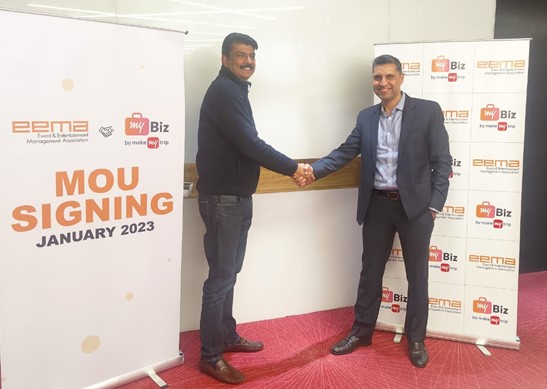
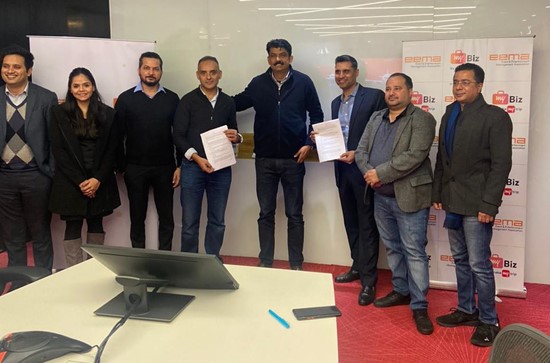
  • MakeMyTrip partners with EEMA

    By Our Staff


    The Event and Entertainment Management Association (EEMA) has signed a Memorandum of Understanding (MOU) with MakeMyTrip’s MyBiz platform to provide cost-effective and time-saving corporate travel solutions for its members. As per the understanding, all member entities of EEMA, located across 100+ Indian cities, will be able to avail of differentiated services offered by the MyBiz platform.


    Said, Ankur Kalra, Treasurer, EEMA: “The partnership aims to simplify and automate the entire travel booking process for all member entities of EEMA through MakeMyTrip’s self-booking platform. This partnership will enable event professionals to focus on what they do best – creating unforgettable events and entertainment experiences – while their travel needs are taken care of by the experts at MyBiz.”


    Speaking on the development, Rajesh Magow, Co-Founder and Group CEO, MakeMyTrip, added: “The attempt is to obviate the travel pain points of the events management industry. All the members of EEMA will be able to enjoy a high level of automation and benefits offered by the MyBiz platform leading to valuable savings on the travel budget.”


  • EEMA hosts #StayAtHomeConcert amidst Covid-19 crisis

    By A Correspondent


    On March 22, the events and entertainment industry came together under the umbrella of the Event and Entertainment Association of India (EEMA) to present an online concert and to pay tribute to those working on the frontlines in the battle to contain Covid 19.


    Fifty artists across the length and breadth of India came together on social media platforms to urge the nation to stay at home during an online #StayAtHomeConcert.


    Said Sanjoy Roy, President-EEMA: “The entertainment industry is going through one of the worst crises ever faced in recent times. With projected losses of over 10,000 crores, which will affect 80 per cent of MSME’s and may result on 40 per cent of job losses, we are reaching out to the Government to help this sector and will continue to work collectively in the fight against the spread of Covid 19.”


  • Event industry captains launch initiative towards women’s empowerment

    By A Correspondent


    Event industry captains have pledged support to an initiative towards gender equality. At the recently concluded EEMAX annual convention of the Event And Entertainment Management Association, the association launched the ‘We Care’ initiative that would work towards gender equality at the workplace.


    The initiative, notes a communiqué, is being driven primarily with the objective to work towards changing the industry’s workplace culture, to make it more conducive for the women who comprise more than 40 per cent of the workforce.


    Said Sabbas Joseph, President-EEMA: “The event industry is evolving. It is now a serious career option for new recruits. We need to encourage girls and women to join this industry by giving them a great workplace culture to thrive and grow without worries of their safety. And we need to sensitise agency owners and co employees to take care of them like their own.  With women today becoming an integral pat of the work force andholding key leadership positions across the industry, it becomes imperative that we ensure a safe environment for them to work in. However, in a predominantly male environment, the female employee is often overshadowed by the industry’s alpha characteristics”.


    Under the ‘We Care’ drive, three key issues would be addressed and tackled.  These issues include SAFE or Security Arrangements for the Female Employees; SHH or Sexual Harassment Helpline and MOM or Mandatory Off For Moms.


  • Govt of Delhi & EEMA streamline Event Licensing issue in Delhi


    The Event and Entertainment Management Association (EEMA) in collaboration with the Govt. of Delhi recently made significant efforts towards creating a conducive process for license acquisition for events in the nation’s capital.


    Besides appointing a nodal officer for creation of the single-window licensing process, with an eye on ease-of-doing-business an agreement and process has been put into place whereby EEMA member companies can do ticketed events in the national capital without paying entertainment tax before the event.


    The decision was preceded by a series of meetings between the National Executive Committee of EEMA and the Delhi government led by Hon’ble Chief Minister of Delhi, Arvind Kejriwal, the Hon’ble Dy Chief Minister, Manish Sisodia and the Hon’ble Tourism Minister of Delhi, Kapil Mishra. Following a detailed EEMA representation, the Chief Minister appointed a nodal officer to engage with EEMA and find solutions in the shortest possible time.


    True to the CM’s word, the Delhi government has moved at a rapid pace. EEMA’s persistent efforts towards streamlining the licensing process in Delhi have yielded some promising results for all EEMA Members.


    Commenting on the achievement, Sabbas Joseph, President, EEMA said “Through the proactive approach of the Delhi government and EEMA, positive results with regards to licensing have started to show yielding a win – win situation for the entire events and experiential marketing industry. This is a big step towards making Delhi an event-friendly city”


    Speaking on the development, Rajeev Jain, Treasurer, EEMA stated, “This is indeed a big bold step by the Delhi Govt. & Dept. of Entertainment Tax. Change in the Entertainment Tax depositing framework for EEMA members is certainly a big gift to the industry and number of ticketed & corporate events in the city will see an increase. This directive is a first step to make Delhi an event-friendly city and reinforces the role of the Event Industry as a major stakeholder in the city’s growth.”


    Through regular interactions with the Delhi Govt. & Commissioner – Excise, Entertainment & Luxury Tax to ease the licensing laws in Delhi, the following directives have been issued:


    Ticketed Events in Delhi

    > EEMA members will now be able to organize their ticketed events in Delhi without submitting any entertainment tax before the event.

    > Tax as per the ticket sale can be deposited after the completion of the event. Earlier this was to be done prior to ticket selling permissions being given.

    > To facilitate this arrangement, EEMA shall enter into an MOU with the Department of Entertainment Tax.

    > EEMA similarly would formulate guidelines for its members availing of this facility.

    > EEMA will also be submitting a Bank Guarantee of a stipulated amount as a surety on behalf of its members.


    Licensed Auditoriums under single window clearance

    > 23 auditoriums in the city have been issued a permanent license for holding an event.

    > In another major development to achieve ease of doing business, more such venues are under consideration.


    Single Window Clearance: Reducing Licensing Hurdles

    > The government is in the process of bringing Entertainment Tax, Fire, MCD & Electricity under the purview of a single-window clearance.


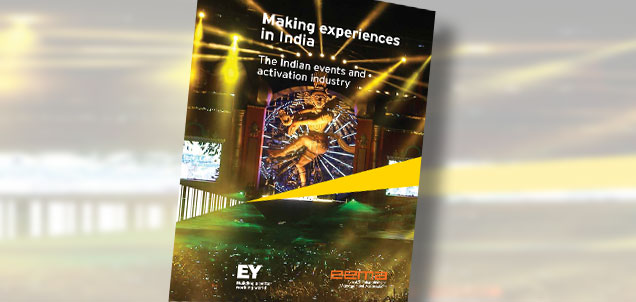
  • Events & Activation grows 15% annually fm 2011-12: EY-EEMA report


    The organized events industry has grown at 15% annually from INR2,800 crore in 2011-12 to INR4, 258 crore in 2014-15.


    Managed events remain the largest service offering, but, IPs (Intellectual Property) and digital events are growing at a faster rate than managed events. IPs continue to provide a disproportionately high share of revenues to their owners and activations are increasing in importance; however, managed events are beginning to get commoditized.


    Survey respondents have increased their staff strength from an average of 55 employees in 2011-12 to 84 employees in 2014-15, which has resulted in payroll costs increasing from 13% to 18% of total costs. EBIDTA margins are in the 10%-15% range.


    The key strengths of the industry remain the ability to get things done, ideation and efficiency, while there is a need for the industry to work on acquiring the right talent, managing costs, demonstrating ROI to marketers and increasing transparency in operations.


    Future trends

    The industry is expected to grow at 16%-17% to reach INR5, 779 crore in 2016-17, on the back of marketers increasing their below the line (including digital) spends to 21% of their total marketing spends. The growth will be led by personal events, MICE (meetings, incentives, conferences and exhibitions), activations and sports. Most survey respondents are expected to develop one to three IPs over the next few years.


    Non-metro markets are expected to increase in importance as marketers look to tier II and tier III cities for incremental growth. Digital events and activation is also expected to grow significantly on the back of smart phone penetration, internet availability and the cost efficiency of such campaigns for marketers.


    Margins are expected to decline from an average of 16% to 13% over the next two years, mainly due to a growth in overall costs by 12%, and more particularly in payroll costs by 15%, as companies expect to increase their average headcount from 84 to 104 employees.


    Mergers and acquisitions

    While the industry has reported very few M&A transactions over the last few years, there exists scope for consolidation. More than 50% of deal activity over the last few years has been inbound (foreign companies buying into India). However, deal values are usually sub-US$10 million. Valuations are driven by IPs owned, advertising agencies’ interest in activations and digital events and sports leagues.


    Tax implications

    Taxes continue to be a large cost for event companies in India. There are several challenges such as double taxation, taxation across multiple states and varying and inconsistent application of different taxes. The introduction of Goods and Services tax could have a significant impact on the industry in terms of rates and implementation across multi-state activities.


    Governance, risk and control

    The introduction of the new Companies Act, 2013 will result in a more comprehensive approach to governance, risk and control for events and activation companies. Key changes will be in internal financial controls, compliance with more than 60 acts and regulations, and implementing a vigil mechanism to identify undesirable activities.


    EEMA wishlist

    There is a need to grant industry status to the events and activation industry, enable single window clearances, manage withholding and other tax issues and enable skill development for the industry.


    Vision 20:20

    In order to succeed in the future, the industry needs to work towards the following initiatives:

    > Internal aspects: Improve the quality of talent through skill definition for various jobs, skill development, job security, compensation benchmarking and implementation of health and safety standards. The industry must build robust olicies, processes and information systems to manage business efficiently and safely, and implement technology and automation.


    > External aspects: The industry needs to work on its positioning to marketers, build an account focus and demonstrate returns more effectively. There is a need to improve the supply chain by developing quality vendors, implementing a system of vendor accreditation and improving overall risk management. The regulatory ecosystem needs to be made more conducive by simplifying taxation, permissions and copyright issues.


    > Strategic aspects: The industry must build more IPs focused on defined communities of interest to marketers, and embrace the opportunity provided by marketers’ increasing spends on digital media.
     

  • EEMA-E&Y report predicts 25% growth for Event & Activations in 2 years

    By A Correspondent


    The Indian event and activation industry in the organized sector is expected to grow at an average rate of 25 per cent from its current size of Rs2,800 crore to Rs4,375 crore in 2013-14. Out of Home (OOH) and radio segments are said to be one of the key growth drivers of the event industry over the last three years. The next phase of growth in activations is expected to come from ruralIndiaas the metros are said to have reached a saturation point; hence the need to tap the large consumer base in the rural belt. These are some of the findings from the EEMA (Event & Entertainment Management Association) and E&Y (Ernst & Young) white paper on the ‘The Business of Experience – The Indian Events and Activations Industry’.


    In addition to these findings, 57 per cent of the surveyed respondents are of the opinion that the share of the total marketing spends attributed to BTL (Below the Line) activities (including events and activation) is expected to grow around 10 per cent over the next two to three years to reach nearly 20 per cent of the total marketing spends. The respondents also believe that on the road ahead, profit margins of the events and activation companies will grow at an average of around 15 per cent.


    The respondents were also asked to list five most critical issues they expect to face over the next few years. Inadequate event infrastructure; Talent acquisition and retention; Poor image/ Lack of transparency; High competition levels and Inability to demonstrate ROI’s were the top five issues that were a cause of concern for the respondents.


    In conversation with MxMIndia, Brian Tellis, President, EEMA talked about the two areas of growth for the event and activation industry in the near future. According to Mr Tellis, the unorganized part of the industry is estimated to be as large as the organised sector, if not larger: “The industry will grow from two areas. First, the industry will start getting a larger share of the existing marketing pie. The existing marketing budget of the brand is estimated to grow by 10 per cent as far as experiential marketing is concerned. The second area of growth will come from the bits of the unorganized sector which will become organized. So yes, it is time for high growth.”


    On the takeaways for the industry from the white paper, Mr Tellis said that the industry should first start developing its own Intellectual Properties (IP’s) because the ROI on Intellectual Properties is very high. He also pointed out the need to develop a calculation matrix and ROI matrix as this would enable marketers to confidently spend more money on BTL or experiential marketing.


    Talking about the challenges and opportunities for events and activation industry in the long run, Mr Tellis said: “There is a need to convert the unorganized sector into organized sector and the to develop Intellectual Properties (IP) because that will ensure sustainable revenues in the long run.”


    MxMIndia also spoke to other industry players and marketer for their views on the challenges and opportunities facing the event and activation industry and its effectiveness in brand building.


    According to Mr Girish KJ, vice president-Wizcraft International, over the years as the economy expanded rapidly, so did the need for brand activation, and experiential marketing has become a key value driver in the marketing mix: “In certain sectors, we find that  experiential marketing is what delivers high value to brands. We find a lot of first time clients simply being overwhelmed by the value they derive from investing in brand activation. Eventually, brands that invest in creating meaningful experiences will have a much better reason to be in the customers’ consideration set. In terms of engagement with communities, branded experiences deliver the best return on investment. We have seen that branded events and activation delivers among the highest return with a carefully thought out strategy and a well planned and executed branded experience.”


    On the challenges and opportunities facing the events and activation industry, Mr Girish KJ said that investing in and creating experiential marketing professionals for tomorrow; and attracting and retaining the best and the brightest talent will always be a challenge. “To today’s digitized, desensitised, over-communicated customer, the power of the brands experience cannot be over-emphasised. Globally, customers are shunning main stream, talk-down communications and clamouring to be involved with their brands. That is the opportunity for our industry to embrace.”


    Yogesh Nambiar, Head, Events Operations, TransStadia felt that events and activations industry is expected to grow in the future, but the real growth is however expected only post January 2013: “Currently we are witnessing a downslide from the event management side of the business, because most of the marketers are more or less looking at the Intellectual Property (IP) side of the business and not the event management companies or agency. Today marketers are looking at events and activations as an extension of their marketing arm, so you have to have good ideas to increase ROI’s for brands. From an ROI basis, I believe activation or BTL plays a large role for marketer or brands.”


    Kamal Nandi, Executive Vice President (Marketing and Sales), Godrej Appliances observed: “With more and more brands give experiential experience to consumers, I believe events and activations are only going to increase because that allows consumers to experience the products. Yes, marketers are spending more on activations. But, if you compare ATL and BTL spends, you will find that BTL spends have been constantly increasing over the years, and more money is being spent on experiential marketing. In our industry, events and activations are gaining momentum; however more and more spends are increasingly shifting towards BTL activities. So we definitely see this as an effective way of connecting with consumers and therefore as an industry we are spending more in this area.”