Tag: Draftfcb+Ulka

  • Festivals legitimise consumption: Ambi Parameswaran


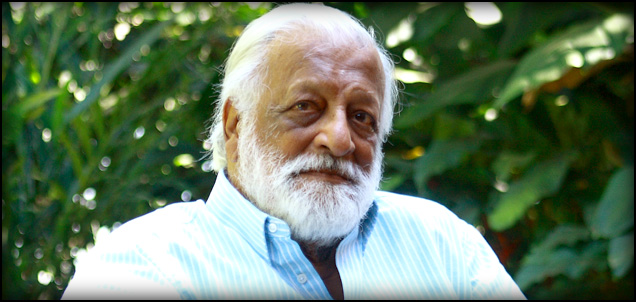
    In the world of advertising and brand management in India, Melarkode Ganesan Parameswaran needs no introduction. Or perhaps he does. For, the engineer from IIT Madras, MBA from IIM Kolkata and PhD from Mumbai University has been known in the industry as MG Parameswaran, and to friends and colleagues: Ambi. An author of six books – all serious brand- or case study-based, Mr Parameswaran completed his doctoral thesis in 2012 and did what many degree-holders aspire to do, but never get down to: convert the thesis into a bestselling book.


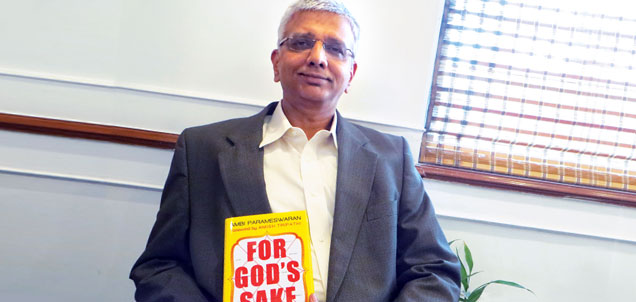
    With For God’s Sake, Mr Parameswaran, now Advisor at DraftFCB Ulka (until recently CEO and Executive Director with the agency), has managed to strike a heady mix of an easy-to-read tome mixed with some heavy duty business fundamentals.


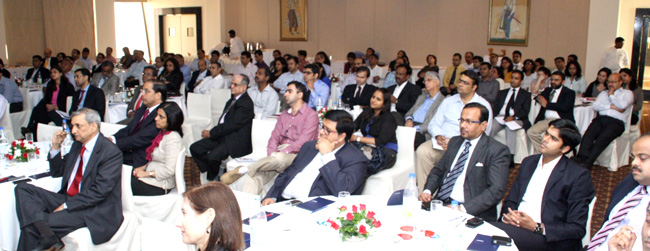
    After the book’s launch in Mumbai on Tuesday, Mr Parameswaran took time off to take a few questions.


    Your book is based on your PhD thesis. While it’s critical for one to choose a topic that’s unique, surely religion was, to use an oft-used phrase in your business, much out-of-the-box. How and why religion or religiosity, as you call it?

    When you select a topic for PhD, you have to pick topics that are relatively new. I wanted to work on brands and castes, whether different brands have a caste typology. That was too out of whack, so my guide asked me to look at something on which there was at least some work happening in the academic world outside. I started looking again and found that religiosity was an area which was interesting and no real work had happened in India.


    India has become an increasingly intolerant nation. It’s tough questioning or raising issues about religious customs and traditions. Did that impact your discourse?

    Well when I started out I was wondering if Indian consumers would be open to talking about religious practices and beliefs. But the qualitative phase gave me enough confidence that we as Indians are quite open to talking about religion. In the US the religion question is not even asked in their Census. In India we are now digging even towards getting caste names. So it was not a problem getting consumers to talk.


    And was it easy rejigging your PhD thesis into a book?

    Well, it was a bit of a task. In fact except for the broad theoretical strokes I had to pretty much write afresh for the book. Fortunately, I had collected enough material for my PhD, so I had to go back to all those articles, books and monographs and look at them from a lay person and not an academic researcher. While the PhD took five years, writing the book took around five months, extra.


    Your book cover says ‘An adman on the business of religion’? While business could be defined variously, do you find that religion has become a business?

    Religion is very much woven into a lot of businesses in India. That was the theme of the book. I have intentionally stayed away from the hot topic of religion as business. There are some books that deal with that topic. Not mine.


    In the book you write about how Ramayana and Mahabharata on Doordarshan were turning points for the boom in religiosity, but there were also films like ‘Jai Santoshi Maa’ and Shirdi Sai Baba that propelled a great following for both gods. How much of the current surge in religious following would you attribute to the media? And print too, with coverage to film folk walking to Siddhivinayak…

    I think religion got into centrestage with Ramayana and DD. It has occupied centrestage ever since. In fact the first public sector enterprise to be named after a religious icon was Maruti Udyog. I feel as we Indians are experiencing a bit of prosperity, we are using our religious practices to buy an insurance for its longevity. The same is true with people walking to SiddhiVinayak or to Sabari Mala.


    As an adman who has been working with growing brands and also watching successes and failures, is there a great ‘brand success story’ of any religion or religious movement in the last decade or two?

    Not that I can think of. The last of the big religions belong to the Abrahamic era. However among the younger religions, Sikhism is named as the biggest by a recent Time survey.


    Akshay Trittiya is one festival that’s come up from nowhere? Valentine’s Day has become a ‘shubh muhurat’ for weddings. Do you see opportunities for many more such since marketers would want to cash in on occasions to fuel consumption/purchase?

    Absolutely. We will see the rise of more such festivals around us. In a sense, these festivals are legitimising consumption and making it perfectly okay. So more occasions the better, as a marketing man would say.


    Any religious god, custom, belief you – as an adman – think is pretty cool from a branding point of view?

    The rise of Shiva is cool. The way Hanuman and Ganesh got reincarnated as Bal Hanuman and Bal Ganesh are both great ideas.


    A personal question: are you religious and superstitious yourself?

    I am religious in the sense I do believe there is a GOD or a collective consciousness that keeps us going. I don’t think I am very superstitious at all. It is possible to be religious and not superstitious.


    And did you acquire any belief or superstition while researching the thesis/book?

    Not at all. But I lost faith in the quick fix Vaastu consultants.


    Lastly: while you’ve been known as Ambi, on paper and officially it’s always been M G Parmeswaran. But now it’s Ambi Parmeswaran? Numerological reasons? Or just better branding in a B2C world?

    Given the fact that “For God’s Sake” is aimed at the casual reader, my publisher wanted me to use a more reader friendly name, hence Ambi Parameswaran. My academic publishing continues happens under my formal name, M G Parameswaran.


    BOOK EXCERPT
    The Mystery of the Missing Bindi


    It was September 1994. Our agency DraftFCBUlka (then Ulka Advertising) had just completed a new advertising film for the soap brand Santoor. The new creative was set in an aerobics studio and featured the Santoor woman exercising to some lively music. The ad, which was being shot by the veteran ad film director PrahladKakkar, was going to be a breakthrough. All of us in the agency believed that it would work in the marketplace to resurrect the brand that had hit a plateau after seeing great growth for a few years. We had in fact bet the agency’s reputation on this ad with our long-term client Wipro. But I was very worried. I suddenly remembered that right through the film the Santoor woman was not shown sporting a bindi. In the story, she was a mother and her kid enters the scene with a loud ‘mummy’ squeal much to the surprise of onlookers. How could we have missed out on the bindi, I wondered. First thing next morning I called our film manager Monia Pinto and asked her if we could ‘rotoscope’ a bindi on the model PriyaKakkar’s forehead (rotoscopy is a technique whereby you insert a digital image into a real-life moving picture; it was relatively new and very expensive in the mid 1990s; the Hollywood film Who Framed Roger Rabbit had used this to great effect). Monia, the liberal that she is, pooh-poohed my worry. As did many of my other colleagues. The film was presented to the client, aired on television and became a landmark film in the history of brand Santoor. The Santoor woman, sans bindi, went on to play cricket, teach hula hoop to her kid and even made film stars dance to her tune over the next decade, helping make Santoor the third largest soap brand in the country. But the bindi thought stayed with me. The bindi is a part of Hindu culture and even has a strong tantric underpinning. Both men and women wear the bindi or bindu, which means drop or globule. It is supposed to be the sacred symbol of the universe, depicted as a dot or the zero. Applied between the eyebrows, it is purported to be the position of the sixth chakra, a place which is also the exit point of kundalini energy. Tantric literature abounds with explanations on the red bindu (symbolizing fire/blood) and white bindu (symbolizing semen). Married women also wear red vermilion or sindoor in the parting of their hair, which is first applied there by their husband on their wedding day, during the sindoordana ceremony. Only married women are allowed to wear the sindoor, according to Hindu custom. Interestingly, though Islam does not have a bindi or sindoor custom, most Muslim women in Bangladesh sport a bindi. Even in Pakistan, Muslim women at times wear designer bindis, quite ignoring the Hindu symbolism of the bindi.


     

    Not too many people know all this socio-cultural background to the humble bindi. And the Indian advertising industry is populated by young men and women from upper-middle-class families. Most of them are what are called EMTs (or English Medium Types). The scenario is changing rapidly now with an increasing number of HMTs (Hindi Medium Types) joining the tribe, but the EMT orientation remains.These EMTs were told, in the early days of their training, to ensure that advertising did not hurt anyone’s sentiment, least of all the Indian woman’s. So all ads that showed married women had to show them with a mangalsutra and a bindi! (Professor Julien Cayla of the University of New South Wales discovered that Indian Muslim women, whom she has studied extensively, were almost immune to this religious symbolism in most Indian television advertising.) My curiosity was piqued and I wanted to see if Indian advertising had evolved from the ‘bindi–mangalsutra’ trap. Accessing advertising archive services, my colleagues and I managed to extract around a hundred television commercials for packaged consumer goods (soaps, toothpastes, shampoos, tea, etc.) from 1987, 1997 and 2007. We wanted to see whether the portrayal of Indian women had changed in the three decades under study. Using content analysis techniques, we analysed the ads across several dimensions such as role portrayed by women (spouse, mother, working woman, celebrity) and occupation and setting (home, workplace, shopping, etc.). In addition to these specific well documented international metrics, we also added a few of our own Indian metrics. These were the dress worn by the woman (sari, other Indian apparel, western apparel) and the presence or absence of the bindi and other religious symbols (mangalsutra).


    From almost 75 per cent of women in ads in 1997 sporting a bindi, it was down to less than 30 per cent in 2007. (The next time you watch television, do check if you can spot an ad that shows a woman sporting a sari, a mangalsutra and a bindi. And reflect if these symbols trigger something in your mind. What do you think is the woman’s education level? What social class do you think she belongs to? What is her age? What would her outlook to innovative products and services be? What kind of mother would she be? As a wife, what would her big worries be?) We then turned our gaze towards print advertising. When Femina celebrated its fiftieth birthday a few years ago, we took the opportunity to revisit our hypothesis of the missing bindi. Our researchers spent several days at the Femina archives pulling out ads that portrayed women. We pulled out ten ads per year in a random but systematic process and in the end got to look at almost 500 ads that featured a picture of a woman over the five-decade period. These 500 ads were subjected to the same analysis as the television ads. We found that as against 3 per cent of ads portraying working women in the 1960s, the number had increased to 16 per cent in the new millennium. Once again, the sari and bindi stood out in our analysis. While 55 per cent of women shown in the ads from the 1960s were draped in a sari, the number was down to 9 per cent five decades later. What about the bindi? The dot had almost vanished-from 45 per cent to 5 per cent in the same period.


    Excerpted from ‘For God’s Sake’ by Ambi Parameswaran.

    Published with the permission of the author

    Portfolio Penguin,

    Pages 258, Rs 499 (hardback)


  • Tata Chemicals offers ‘namak’ to Draftfcb+Ulka, retains I-Shakti for Leo Burnett

    By A Correspondent


    Tata Chemicals has announced the appointment of Draftfcb+Ulka as its creative agency for Tata Salt, and Leo Burnett for its Tata I-Shakti foods portfolio. This announcement comes after a competitive multi-agency pitch. According to a communiqué, Tata Chemicals has identified its food business as a strategic priority for growth and therefore decided to engage two creative agencies.


    It may be recalled that there was a controversy around the Tata Salt Lite radio spots that won Leo Burnett four metals at the Creative Abby earlier this year. The issue had reached the Tata Chemicals bosses and ethics board which finally got Leo Burnett to withdraw the entries.


    Meanwhile, the release announcing the appointment added: “Tata Salt was recently reported as one of the Top 10 consumer product brands in India by the Kantar Worldpanel’s Brand Footprint 2013. Tata I-Shakti unpolished pulses were awarded the ‘Product of the Year- 2013’. It was also awarded the ‘Emerging Brand Award’ by the ‘World Brand Congress’ at the ‘Brand Leadership Award 2013’.”


  • Mumbai Police & Draftfcb+Ulka billboard to observe moment of silence for lost heroes

    By  A Correspondent


    Over the years, Mumbai Police and Mumbai Traffic Police along with Draftfcb+Ulka have spread the message of a ‘Safe Mumbai’ via a prominent hoarding spot at Babulnath in South Mumbai. This is the hoarding at the junction of the tail of Marine Drive/Girgaum Chowpatty with a road on the left leading to Raj Bhavan/Walkeshwar/Malabar Hill and to the right to Hughes Road/Peddar Road/Warden Road/North Mumbai.


    For the past 20 years this billboard has achieved an iconic status with some of the  most impactful & thought provoking messages on road-safety. Various campaigns created over the years have made motorists smile, sit up, take notice and buckle up/switch off their cell while driving, stick to their lanes etc. Basically encouraging citizens to be responsible when you are on the road.


    On the occasion of India’s 67th Independence Day, Mumbai Police and Mumbai Traffic Police in association with Draftfcb+Ulka has taken on a larger theme of paying tribute to India’s lost heroes. The hoarding urges fellow Indians to remember those who sacrificed their lives for our country by observing a moment of silence. But with a twist – asking people to send a blank tweet with the hashtag #AMomentOfSilenceForOurHeroes as a mark of respect for the brave heroes.


    K S Chakravarthy

    “We dedicate this Independence Day to our lost heroes. This is a brilliant initiative and we support it.”-  said VivekPhansalkar, Joint Commissioner of Police, Traffic K S ‘Chax’ Chakravarthy, National Creative Director, DraftfcbUlka Advertising said”I absolutely loved the idea the minute I saw it – it is simple, it asks for just a minute, and the novel idea of asking for a blank tweet as a symbolic ‘minute’s silence’ will, we hope, help to make people pause and reflect – for much longer than a minute – how much the nation owes those who went before.”


    MxMIndia View: Idea achcha hai, but too long a hashtag!


  • Anirban Chaudhuri joins Draftfcb+Ulka in Delhi

    By A Correspondent


    Anirban Chaudhuri

    Draftfcb+Ulka has hired Anirban Chaudhuri as Head of Strategic Planning for its Delhi operations. He comes in with 18 years of expertise in brand advisory and integrated marketing communications development, having worked with leading domestic and multinational players for India as well as South East Asia.


    Mr Chaudhuri has worked at Shining Strategic Consultancy, IMRB International, TNS, Dentsu and DDB Mudra Group in the past and most recently was experimenting in the digital space with a marketing knowledge portal.


    Said Arvind Wable, Advisor to the Board: “Anirban brings a unique combination of brand consultancy, market research and a keen insight into digital & social media which will be a valuable addition to our strategic planning efforts.”


    Added Sanjay Tandon, COO, Draftfcb+Ulka Delhi operations: “Anirban has a close connect with our value system and with his diverse experience promises to play a game changing role in creating brandwealth for our clients.”


  • Sudarshan Sudevan joins DraftfcbUlka Interactive as Creative Head

    By A Correspondent


    Sudarshan Sudevan

    DraftfcbUlka Interactive has announced the appointment of  Sudarshan Sudevan as Creative Head-Digital. Prior to this appointment he has been associated with firms like Hungama, B.C Webwise and Isobar.


    Commenting on the appointment, Satish Ramachandran, Senio VP at DraftfcbUlka Interactive said “At DraftffcbUlka we always believe in integrated digital solutions; towards this we have been consistently investing in talent and technology to ensure we are ahead of the curve. Sudi is a perfect addition to the team with his passion and experience in the space.”


    Said Chax, National Creative Director,DraftfcbUlka: “Sudi is truly a product of the digital age, as passionate about technology as he is about ideas. With him at the helm of our very talented digital team, we look forward to an even tighter integration of our mainline and digital teams”


  • Asterii seeks to create new wave in the world of analytics

    By Johnson Napier


    How often do we come across marketers, media agencies and surprisingly, even research bodies who say the inevitable: ‘due to lack of data… we couldn’t project the right numbers’ or ‘our projections fell short of expectations due to the variation in numbers’ and so on? In fact most marketers are wary of pumping in huge monies behind a project or activity given the lack of availability of accurate data that goes a long way in simplifying trends and analysing customer behaviour across markets – ingredients that play a critical role in the marketing plan of most brands.


    While research agencies are the most sought after for mapping such trends, they often fall short in providing a plan that is wholesome; something that could alter the way marketers look at the future. Such shortcomings are turning out to be easy pickings for agencies, which are on an overdrive launching divisions dedicated solely to analytics and data. And the latest to join the bandwagon is ad agency DraftFCB+Ulka that has announced the launch of specialty division, Asterii Analytics in India.


    Niteen Bhagwat

    In India, the team will be led by Niteen Bhagwat, who has been assigned the post of Executive Director and CEO. Sharing his views on the new launch, Mr Bhagwat admitted that while agencies were waking up to the phenomenon in a heightened manner, there was still a lot that is needed to be done in the space. “The mantra at DraftFCB+Ulka has always been about creating brand wealth and making our clients richer. At one point in time, it was having right strategies and good creatives, which will continue but the marketplace is becoming increasingly competitive for our clients. The same set of tools or decision-making may not be as optimum or efficient as it was earlier. We believe that if our clients have to compete, they have to take decisions that are completely rooted in data. So, if we have to continue delivering on our promise of creating brand wealth with the underpinning of analytics, it is absolutely critical. It also compliments beautifully with our overall approach of being a strategy strong agency group.”


    An analytics person with more than two decades of experience in the field, Paula Fedoris, EVP, Chief Analytics Officer – DraftFCB pitched in by giving a global overview on the origins of analytics and the need for the discipline to make it big in India. “In certain markets, the marketing and media analytics trend has been taking place for the past 15 years or so. There are certain agencies, particularly in theUnited StatesandEurope, which have gravitated towards making sure that marketing strategies and media investments are as smart as possible. So we have been applying analytics to these challenges for quite a few years now. This is more so for agencies which are more focussed on one-to-one marketing or database marketing or direct marketing, they have always been very quantitative-oriented.”


    Paula Fedoris

    According to Ms Fedoris, with some organisations, when the internet came in a big way in 1999-2000, it was then that some of these tools and techniques went on the online space. “Over the years, we have been able to generate a lot of data by our marketing activity. The companies are trying to data-mine insights from this information to draw new insights and conclusion and make better decisions, not only about their current business but also on where they need to go in the future and how this information can help in identifying new and important trends that they need to be mindful of, as they develop a strategic direction and maintain competitiveness in the marketplace.”


    Citing statistics, Ms Fedoris said that overall businesses are generating about 40 per cent new data every year and how companies are being able to harness this information and in the marketing arena this has been accelerating even more.


    As for the USP that Asterii would bring to the table, Mr Bhagwat stated categorically: “Asterii will bring a far sharper focus on analytics than other offerings from marketing communication companies. That’s majorly because it is a standalone agency, so much of the resources and people in the team will be focussed on Asterii; they won’t get lost in handling other functions within the organisation. As for the other groups that offer analytics, what we understand far better than most is the concept of insights. So we would be far better than the others based on our insights and ideas in the marketplace.”


    In fact, Mr Bhagwat was certain that it was the most opportune time to launch in the country as marketers would take a liking to the service given the hostility that’s being faced by them amidst a hostile economic scenario. “When businesses are under pressure, analytics is proven to be able to give you a lift in terms of sales or profitability and by a huge margin, if done properly. If the market conditions are tough, analytics would probably be the answer to find new segments to increase growth or market share or figure out ways to optimise your marketing communication by doing market mix modelling. So, if at all there are budget pressures, analytics will help clients spend their money more effectively. In a sense, now is the best time for us to launch our division.”


    Chancing upon the opportunity, Mr Bhagwat admits that the agency has approached at least ten marketers to offer their services. These include clients who are aligned to the advertising agency as well. “We have started speaking to a whole host of people we are associated with and the response has been encouraging. Close to ten marketers have evinced interest and we would be meeting up with them to decide future course of action. What actually materialises, I think only time will tell.”


    On the sectors that the solutions would be centred around, Mr Bhagwat said that it would be automotive, packaged goods, financial services and retail. When asked on how they went about shortlisting these sectors, Mr Bhagwat said: “There are certain sectors that are rich in data, so the comfort level in doing analytics in those areas will obviously be very high. Also, at the same time, companies in sectors such as retail, automotive, packaged goods and financial services would be analytics-aware sectors and so the kind of solutions that they would want would be of a different kind versus companies in, say, fashion or food where analytics is not used as much.”


    A much more historical and detailed perspective was provided by Ms Fedoris: “Historically, analytics started with the financial sector because they are very quantitatively-focused and this got further momentum with the advent of credit card transactions and the ability to find out what the people were purchasing. In theUnited States, we were able to marry our purchase decision behaviour with the demographic information and so that was always a robust area that people focused on. It seemed to then migrate to the travel industry, as people began to book their airline tickets and have loyalty programmes, both the airline and the hotel industry understood the importance of relationship marketing and began developing databases of their customers. Ultimately it moved on to retail as people used their credit card in the retail establishment and then finally it moved on to the packaged goods area.” According to Ms Fedoris, a lot of people are going on to the internet to find information on how to go about buying packaged goods product and are able to find solutions online. “So these are the core sectors that emit a lot of data on patterns and trends,” she said.


    So focussed is the group on the new division that it won’t stop short in going all out as far as investment is concerned. Asserts Mr Bhagwat: “Analytics, for us, is an absolutely critical offering that the agency group is going to have. So investments won’t come in the way of growth as such. We are not looking at this only as a revenue model but more as a capable solutions provider. We have invested in new office space in Mumbai that can seat up to 50 people; we are also investing in fairly expensive software and hardware that goes with it. Also, Paula would be coming toIndiaon an ongoing basis to be able to bring along global best practice tools that are in use around the world. This will enable us to have global scale and capability in our Indian operations.”


    As for the growth, Mr Bhagwat feels it is too early to foretell, but that is not of concern as yet. On a stronger note, he feels that the analytics market is still in its infancy and has a lot of potential that’s yet to be explored. “Analytics market inIndiais still in a nascent stage; they do not pay as much money as they do in international markets. So it is an under-served and under-priced market,” quipped Mr Bhagwat. According to him, all this will change once people start understanding the true value of analytics and how one can take advantage over competitors by employing analytics. In his opinion, the tipping point is next couple of years. But what is important is that the availability of good quality data is going to improve dramatically in the future, he concluded.


  • DraftFCB+Ulka launches Asterii Analytics

    By A Correspondent


    The DraftFCB+Ulka group has launched Asterii, an analytics company which is stated to continue the group’s endeavour to build capabilities and solutions that will create brand wealth for its clients.


    Explaining the rationale of the launch, a release from the company said, “Today’s business environment is being reshaped by three distinct factors. The first factor is a rapid decline of exploitable market segments. Easy access to technology and global internet-driven communication systems means that any idea gets replicated in months, if not weeks. The market has millions of profitable niches but these are not visible using conventional marketing techniques. “The second factor is the high cost of launching new brands and variants and consequently the high cost of failure. A cluttered market environment compounds the problem.


    “In such an environment marketers and businessmen are discovering that the time-tested method of intuition-based decision systems, albeit with a lot of process and information backups, is not yielding the desired results. In such an environment, there are several companies, which we call analytic organisations, which are competing on the basis of analytics and have built the entire organisation on a culture and process of data-driven decision systems. These companies increasingly are outperforming their peers in the marketplace “This shift has become possible because of a third factor which is the confluence of data and the computing power needed to manage and interpret that data.India, traditionally, has a paucity of good data and computing power was too expensive for the medium-sized business.


    “But today, India is at a tipping point due to the rapid expansion in the retail and financial sectors and a huge amount of data being available to marketers, the IT and communications revolution would mean computing power on your desktop. These three factors are going to intensify a trend and a shift towards analytics-based decision-making, which would become the game changer for companies over the next ten years.”


    Asterii is headquartered in Mumbai with Niteen Bhagwat as the executive director and CEO. The global analytics network has over 100 analysts within the DRAFTFCB network with key resources in Europe andUSA. Asterii has domain expertise across retail, automotive, financial services and packaged goods. The release said that Asterii, a coined word, is derived from the word Asterism which means seeing a pattern of stars in the sky and patterns, which give meaning to the billions of data points that any business has to interpret and decipher.


    Asterii will draw on over 50 years of expertise in creating ‘brand wealth” and developing communication programmes and marketing strategies that are based on unique consumer insights. The company is unique among analytics companies in that it goes beyond techniques and tools to bring “insights” which are rooted in data and analytics and which will help create solutions that will have a predictable impact on the client’s brands and business.


    Asterii, a specialist marketing analytics company, plans to support clients across the entire spectrum of marketing activities. It is supported by a global network of analysts in the DraftFCB ecosystem, giving its clients and business partners access to the global tool kit and best of breed technology solutions. The Asterii solutions toolkit will span the entire spectrum of marketing activities from the assessment phase to growth and maintenance strategies for a brand. The specific modules that Asterii Analytics offers are as follows:


    • Assessment Solutions

    Robust tools to help clients evaluate and select markets, map competitive forces and thus help assign a value to the consumer opportunity. This will help create a macro view on the brand and also help develop go to market strategies.


    • Growth Solutions

    Growth opportunities that emerge from being able to segment the market and do predictive modelling based on behaviour data or other unstructured data sources. Growth is about designing the right acquisition programme and by developing a robust testing and consumer response model. Growth is also dependent on the pricing decisions.


    • Relationship Management Solutions

    Asterii believes in the adage that the best means of growth are from within and that meeting customer expectations and creating customer delight is far more valuable than acquiring new customers.


    • Monitoring & Optimisation solutions

    Analytics also means that measuring and calibrating the performance of the marketing programme. With state of the art reporting platforms like the smart wall and the social news room data and information becomes easily interpretable insight.


  • Obituary – Bal Mundkur: Slogans, spice and a bite of ‘song’

    By Vidya Heble


    “Bal Mundkur has passed away.” It seemed an impossible thing to believe, but the fell hand had indeed taken him, on the morning of January 7, 2012.


    It was on a winter day many years ago when I first met Bal Mundkur at his home, Surya, on the banks of the river Mandovi in Goa. He was, of course, a legend and I trembled inwardly at actually meeting him, albeit in a personal capacity.


    His career as a naval officer and aviator had been followed by an illustrious innings in advertising, which he had famously given up to retire in Goa. ‘Retire’ was only figurative, because he proceeded to put his unrelenting energy into designing and building his house, and then lending his prodigious talent to projects which he felt would benefit society, including restoration of a fort and setting up of a museum. He even found his way into an offbeat little film (http://wn.com/rare_indie_goa,_ma_cherie_part_1) which is quintessentially ‘Bal’.


    “For the Royal Society for Asian Affairs, where he contributed an article on ‘Incredible India: The Inconvenient Truth’, he described himself “as neither an activist nor a frustrated journalist but as a dispassionate commentator”.


    People in Goa looked on him with awe, and he was known as a man of exacting standards and uncompromising expectations. Even my “Hello”, I felt, would be subjected to scrutiny. But he was delighted to meet a fellow Konkani, and dwelt pleasurably on the joys of Konkani food, much of which he was not allowed to eat by then. Pickle, chutney and spicy food was out of bounds, but Uncle Bal, as I called him, managed to sneak teekha stuff onto his plate now and then. When he discovered that I can cook, he extracted from me a solemn promise to make him some standard Konkani dishes, among them potato ‘song’ – a simple dish of cubed potatoes cooked in well-sauteed onions, tamarind and a lot of chilli. I made a mental note to tone down the chilli for Uncle Bal, who of course read my mind and said, “Don’t forget, lots of chilli!”


    But Uncle Bal had so much else on his plate that he never did find the time to come over for a Konkani meal. With time and circumstances, I didn’t meet him again for some years. But being in the business of media news meant, inevitably, that our paths would cross professionally. When I rang him up after a long interval, to ask for an interview on Ulka’s anniversary, he remembered the long-promised ‘song’, and once again we assured each other that I would cook and he would eat, one day.


    As always, however, Uncle Bal had too much going on in his life. One never knew where he would be next – dashing between Goa and Mumbai, scooting off to Europe or South-East Asia or somewhere else – or what project he would take up. Perhaps fittingly, his last offering was the history of Indian advertising, Ad Katha, which was released at Ad Asia 2011 in New Delhi.


    But those who know him, know that he would not have rested after this. That fertile brain would have been working on something else, and he would have been ringing people up with exhortations to participate, to donate, to sponsor. His zeal was unwavering and his passion, perpetual. Somewhere he might even have found time to stop for a bite of ‘song’.


    We will all remember Bal Mundkur in different ways. I’ll recollect him with a dash of spice.


  • Remembering Bal Mundkur


    By A Correspondent


    Founder of Ulka Bal Mundkur, 86, passed away on the morning of January 7, 2012 of heart failure at his residence, ‘Surya’, in Reis Magos, Goa, overlooking the Mandovi River.


    The agency, now Draftfcb + Ulka, celebrated its 50th anniversary last year and is ranked the third largest advertising group in the country.


    Mr Mundkur was originally a naval officer, and later a commercial airline pilot. A modelling offer from his brother, who worked at Levers, marked his entry into the world of advertising which he joined in 1951. Ten years later Mr Mundkur founded Ulka, which means shooting star, and the agency’s career was indeed starry. In a span of 10 years, Ulka became the fourth largest agency in the country, and by far the largest independent Indian start-up.


    A release from Draftfcb + Ulka says, “An avid collector of all things rare and beautiful, Bal’s prized chess set starred in Satyajit Ray’s celebrated Shatranj Ke Khiladi. Bal was not just a businessman, but he was also an extremely passionate crusader for a wide range of causes, from a building for a cerebral palsy hospital to bringing the choir of Trinity College, London on a tour across India.


    “In the nineties, Bal retired… and moved to Goa, where he continued working for causes close to his heart – which included helping set up Asia’s very first Museum of Christian Art in Goa.


    “Bal remained full of energy and enthusiasm till the end – at 85 he set up the Centrum trust, which recently published Ad Katha, the story of Indian Advertising over the decades.


    “Bal has moved on, but he will live on in the hearts of those who knew him.”


    Read:

    Obituary – A dash of spice

    http://www.mxmindia.com/2012/01/obituary-bal-mundkur-slogans-spice-and-a-bite-of-song/


    Tributes – Warmly remembered

    http://www.mxmindia.com/2012/01/bal-mundkur-man-and-memories/


    Mediaah!: RIP, Bal Mundkur

    http://www.mxmindia.com/2012/01/mediaah-rip-bal-mundkur/


    Photograph: Shreta Arora/O Herald O