Tag: Dr AL Sharada

  • Refreshing role reversal. Ogilvy redoes iconic Cadbury Dairy Milk TVC


    By Our Staff


    It needed a brave client in 1993 for the original film, it needed an even braver client now, says Piyush Pandey, Chairman of Global Creative & Executive Chairman, India. Indeed.


    In its 10 years, MxM hasn’t done a ‘big story’ based on a communique of a new TVC. But this one deserved it.


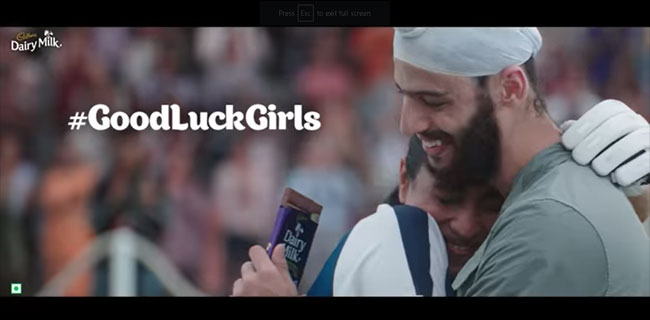
    Reason: Cadbury Dairy Milk has released a refreshed version of its iconic 1990s campaign. The film conceptualised by Ogilvy India, for Mondelez India, shows a young woman cricketer scoring a winning run and her male friend running towards the field dancing with an unabashed glee, celebrating her smashing performance, as the crowd cheers on. The film ends with the powerful message of #GoodLuckGirls in recognition of today’s equal world where women are breaking barriers and pursuing all their dreams.

     

    Piyush Pandey
    Piyush Pandey

    Said Piyush Pandey, Chairman of Global Creative & Executive Chairman, India, said, “It needed a brave client back in 1993 to go ahead with the original Cadbury cricket film that became so popular. It needed an even braver client to attempt something with an iconic film and make magic out of it. I am delighted that the team at Mondelez India and at Ogilvy India has done this magic, made it relevant, exciting, and so Cadbury, in its bold and front foot fashion.”

     

    Anil Viswanathan
    Anil Viswanathan

    Commenting on the ad, Anil Viswanathan, Senior Director –  Marketing, Mondelez India, said: “From acing in the corporate world to winning Olympic medals, women are at the forefront of creating new milestones, every single day and our film is an ode to each one of them. As a brand that has always promoted gender inclusivity, contemporising an iconic campaign is our way of recognising the changing times and extending support to all the women trailblazers. An extension of our ongoing generosity narrative, the film also lands the message of how taking small yet significant steps to acknowledge the achievements of women would make the world a better place to live in. We hope this film brings back a gush of nostalgia and are confident that this refreshed version will find as much love as the original one”.
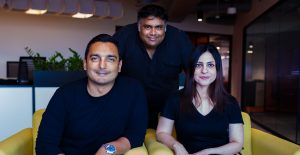
     

    Sukesh Nayak, Harshad Rajadhyaksha, Kainaz Karmakar, Chief Creative Officers, Ogilvy India
    Sukesh Nayak, Harshad Rajadhyaksha, Kainaz Karmakar, Chief Creative Officers, Ogilvy India

    Added Sukesh Nayak, Harshad Rajadhyaksha and Kainaz Karmakar, Chief Creative Officers, Ogilvy India: “The excitement and the stress in our heads were competing with each other. To recreate such a big hit is like setting yourself up for a million opinions. The only reason we went ahead was it felt right, and it felt awesome. We loved the idea from our gut. Luckily, so did the client. Hats off to the all girls’ team who thought of it and hats off to Bob from Good Morning Films for making it so well.”
     

    A L Sharada
    A L Sharada

    Here’s what Dr AL Sharada, Director, Population First said on the ad: “There are some ads which are iconic. The Cadbury ad was one such. The gay abandon of the young woman rushing on to the pitch dancing, the embarrassed shy smile of the man, the helpless police man and the response of the audience- one could never forget the ad. Such beautiful execution. Even today the ad does not fail to bring a smile on our faces when we remember it. What happens if the roles are reversed? A roar of appreciation and celebration. The ad touches on nostalgia and yet is so contemporary. With women cricketers doing so well and changing gender norms, the ad looks so plausible and is absolutely mind blowing.” Dr Sharada puts advertisements under the scanner for their gender sensitivity for Campaign India.


    And here’s the original ad.


    CREDITS for the current ad:

    Ogilvy Senior Lead & Creative Team: 

    Piyush Pandey – Chairman Global Creative & Executive Chairman India, Ogilvy

    Hephzibah Pathak – Vice Chairperson & Chief Client Officer, India

    Sukesh Nayak – Chief Creative Officer, India

    Harshad Rajadhyaksha – Chief Creative Officer, India

    Kainaz Karmakar – Chief Creative Officer, India

    Creative: 

    Tanuja Bhat – Executive Creative Director

    Siddhesh Telang – Group Creative Director

    Swagata Banerjee – Creative Director

    Samyu Murali- Art Director

    Ogilvy Account Management:  

    Prakash Nair – Associate President & Integrated Brand Team Leader

    Antara Suri – Senior Vice President

    Parshuram Mendekar – Client Services Director

    Manseerat Sethi – Account Supervisor

    Ogilvy Planning: 

    Ganapathy Balagopalan – Head of Strategic Planning, Ogilvy Mumbai

    Bhakti Malik – Vice President, Planning || Prasidh Dalvi – Planning Director

    Production House: Good Morning Films

    Director: Shashanka Chaturvedi  || Producer: Robin D’Cruz:
     

  • South Asia Laadli awards on May 12

    By A Correspondent


    Population First will hold the first edition of The South Asia Laadli Media & Advertising Award for Gender Sensitivity 2015-16 will felicitate 37 media professionals who have exemplary sensitivity in reporting on gender issues. The awards will be presented by the Chief Guest of the event Dr Shashi Tharoor (though given the Republic exposes, we aren’t certain that he will make it) and hosted by the journalist-entrepreneur Barkha Dutt. The awards event will be held on May 12 in Mumbai.


    Said Dr AL Sharada, Director of Population First: “From a mere 100 entries in 2007 to more than 1500 entries in 2015, Laadli Media Awards have come a long way in acknowledging the media’s contribution in women empowerment and gender issues. The increasing volume of discussion in public domain on gender issues is an indication that we are witnessing the beginnings of change Also the partnership with Colors is a refreshing start to the new edition and indeed helps us to sustain the impact and reach of the awards. Today, with the expansion of Laadli to other developing nations through the support of IAA, we look forward to stories pertaining to gender from five South Asian countries. We hope to continue this momentum, and create a long standing impact of changing the society riddled with patriarchal mindsets”.


    Added Ramesh Narayan, Vice President, IAA: “We are very happy to lend our support to this meaningful award. Our chapters and associates in Pakistan, Sri Lanka, Mauritius, Nepal and Bangladesh are working on selecting one journalist in each country who has done wonderful work in the area of gender sensitivity and that person will be nominated to receive the special IAA Laadli South Asia Media Award.”


    The South Asia Laadli Media & Advertising Award for Gender Sensitivity 2015-16 for the category ‘Best Short Film’ will be presented to Radhika Puri for her short film ‘Water Wives’ which digs into the existing system of husbands marrying multiple times inorder to have wives double as labourers to fetch water. The award for ‘Books in the Novella’ category  will be awarded to Volga for her book Liberation of Sita published by Harper Collins.   ‘Parched’ and ‘Neel BatteySannatta’ will be presented awards in the films category.


    The ‘Best Advertising Campaign’ award will be given to ‘Vicks’ for its portrayal of the third gender. The Laadli Media Award for ‘Game Changer’ will be presented to ‘NayiSoch’ by Star India.  The Lifetime Achievement award will be presented to KamlaBhasin, a leading women’s rights activist.


    The jury for the Laadli Media awards including leading professionals like KV ‘Pops’ Sridhar, Sameera Khan, DeepaGahlot, Dilip D’Souza, Kumar Ketkar, Amrita Chowdhury, Amy Fernandes, Kalpana Sharma, Gurbir Singh, AyazMemon, Namita Roy Ghose, KiranKhalap, NamrataZakaria andNeeru Nanda.


  • Laadli day for women with media campaign


    By Meghna Sharma


    Celebrating Women’s Day is no small matter. From special programmes to activities, from status updates to tweets, everyone will do their bit to make the day special for the woman/women in their lives.


    But with too much negativity around us, it is possible to celebrate oneself? ‘I am Laadli’, a social media campaign by Population First in collaboration with Leo Burnett, plans to do just that by making women celebrate themselves.


    A L Sharada

    “We know we are not going to change the world through this campaign, and that is not our objective too. We just want women to celebrate the day by celebrating themselves. It’s a day when we want to celebrate the positive,” says Dr A L Sharada, Programme Director, Population First.


    The agenda

    Started in 2005, the Laadli campaign addresses the issue of sex selection through community initiatives, college based youth initiatives, media sensitization on gender issues and interventions with medical professionals and BMC medical department.


    Over the years, the campaign has seen many ups and downs, but wants the positively to triumph over the negativity. Last few months have shown the gruesome face of humanity in the country where women have to fight for their safety even in the 21st century.


    So is to be blamed for it? At the very root of the violence against women is the mindset that undervalues women, rationalizes violence and discrimination against them and perpetrates denial and abridgement of their rights.


    “Through this campaign call upon every woman who has succeeded in claiming her rights, overcoming discrimination and one who has made a place for herself in whichever way in this society to proudly claim her right to ‘be’ and reaffirm her commitment to ensure that every girl becomes a Laadli of not just her family and friends but of the nation,” hopes Dr Sharada.


    KV Sridhar

    “This year the plan was to keep it simple yet powerful,” says KV Sridhar, NCD, Leo Burnett which got associated with the campaign six years back. “One doesn’t and shouldn’t need others to celebrate themselves. Hence, we wanted this year’s to be different and thought ‘why can’t we just do so by telling women to add ‘I am Laadli’ as a prefix to their names.”


    It is just the beginning but already a lot of women especially celebrities have joined the venture to help other women. Renuka Sahane is one of them.


    Renuka Sahane

    “I was contacted by the initiative last year and since then I have been associated with them. One doesn’t need a reason for doing so. I’m sure every woman would want to be a part of a campaign which celebrates its very existence,” feels the actor, who is proud of the fact that her family didn’t distinguish between her and her brother and both were given equal opportunities as well as encouraged to follow their dreams.


    More than just tokenism

    Every year, the day sees numerous activities celebrating women, but do they really make a difference or are nothing but just a token?


    “One must not forget that an ocean is made of many drops. So, if through these small efforts one tries to make a change, it is much more than just tokenism. It goes a long way in some way or the other,” feels Mr Sridhar.


    “We don’t want others to become reformers or activists. We just want them to be positive and helps others be it in any way. For instance, funding a child’s education, volunteering at any NGO, spreading awareness are just some of the many ways one can try to make a difference. And appreciating that shouldn’t be seen as tokenism because it will take time to change mindsets,” adds Dr Sharada.


    Responsibility of media

    “Unfortunate as it was, the Delhi gangrape incident did bring about a change in our society. People who never took a stand, took one and came out to support not just the victim but all the women who are ill-treated in some way or the other,” points out Dr Sharada when asked what role the media plays in bringing about societal change.


    After the incident, many blamed the media – advertisements and films, especially item numbers, as the reason for such incidents. “Television is a very strong medium and influences many but it would be wrong to blame it. All depends on how one watches it. For instance, if one watches a lot of crime shows, does he become a criminal?” asks Dr Sharada.


    However, Ms Shahane believes that the content of the television too needs a little improvement. “If, day in and day out, women are shown as an object or treated like doormats in the shows, then it is not helping society in any way. It just goes to prove how patriarchal our society is.”


    As for social media, which sees youngsters and others alike contributing and sharing their thoughts across sections, the initiative hopes to change attitudes and mindsets of people through their campaign on the medium. “We want everyone to be a Laadli. So by the simple act of adding Laadli to the name on social networking sites or signatures on their mails, official or otherwise, one is only going to spread the message and help others too to be proud of themselves,” says Mr Sridhar.


  • Jaldi 5 with Dr A L Sharada: More ads must say: Yes, she can

    Population First has been at the forefront of the initiative on the way the girl child has been projected in the media. Dr A L Sharada, Director, Population First, spoke to MxMIndia on the girl child and the media and how we can prevent the celebration of the International Day of the Girl Child from being mere tokenism.

    01.  It’s good to see that the first ever International Day of the Girl Child is being celebrated. How do we prevent it from being mere tokenism?


    I welcome the UN, as a global body declaring October11, as the International Day of the Girl Child. This gives us an opportunity to take stock of the work that we have done so far, look further into what needs to be done and how we could take the issue at hand, forward. However the fear that it may turn out to be yet another gesture of tokenism is a valid one. The only way we can stop it from becoming yet another international day celebrated as a formality every year, is through concerted efforts to work on some of the major issues regarding the girl child.


    There are many issues concerning girls such as child marriages, low enrolment in schools and neglect of their health and nutrition needs. We need to advocate and lobby for more focused policies and programmes to improve the status of the girl child. We need to use the opportunity provided by the International Day of the Girl Child, every year to reflect upon achievements, fine tune our policies and redesign our programme, if required.


    Do you see that Population First’s efforts have had an impact on the media?


    I see lot of positivity and openness from the media towards these issues and a willingness to approach them differently. In the current media scenario, many of these issues are being addressed but more need attention. We, at Population First believe that we have to start a dialogue with all stakeholders, media being a primary stakeholder. We, as a nation have internalised, and have deeply ingrained patriarchal values to an extent that unless someone points it out, at times we are unaware of a possible patriarchal tone in our public communications. We need to initiate dialogues with all groups of society, so that together we can build a more gender-sensitive society.


    02, In your experience interacting with marketers and advertising agency professionals, do you think they are sincere in their attempts to appreciate the responsibility towards the girl child in a society like ours?


    Our experience with the advertising professionals has been very positive. We found them to be open-minded, willing to look at our standpoints and revise their current approach. From the time we began interacting with professionals in the advertising industry in 2008 up to today, we find a much greater presence of girls in advertising and many advertisements that are now projecting positive and non-stereotypical images of girls.

    03.  Do you think self-regulation bodies like ASCI, Advertising Club and AAAI should also take it upon themselves to promote the cause?


    Yes, definitely. It is important that activists working on gender issues and the regulatory bodies of media and advertising work together to ensure that the media does not project demeaning and negative images of girls. It is also imperative that  media does not consciously or otherwise, support or promote negative social attitudes and practices such as eve-teasing, commodification, objectification of women and violence.

    04.  What are your views on gender biases in today’s advertising?


    In 2008, during our analysis of advertisements showing girl children, we found that girls had a lesser presence and were often presented in a stereotypical fashion, for example mostly endorsing products that have been promoted by their mothers too. It was also observed that an ideal family is always shown as mother-father with one daughter and one son, or two sons. Rarely did we find ads showing two daughters. While a lot has changed in the last few years, in terms of projection of girls in advertisements, it is still rare to find an advertisement where two daughters are shown in a family setting. This, I believe, promotes the perception that a son is a must in the family. In a context where the country’s sex ratio is declining, this is a very disturbing trend.


    Television serials, television and print media content also further aggravate this image of women. What are your views here?


    Yes, it is true that the portrayal of women in print and electronic media is regressive and voyeuristic in flavour and we have to work on changing this. This is why we have instituted Laadli Media Awards for Gender Sensitivity. We have received 1500 entries this year and the quality of the content is improving. There is a lot of potential for change. The most pertinent example here is that of the popular show, Satyamev Jayate, which has suddenly got numerous issues into our drawing rooms. It shows the effect of one strong programme with a potent combination of Aamir Khan, an industry giant like Reliance and a media tool like Star TV. This shows that there is potential to bring social change. New media and its various options are also democratizing the way news now reaches out and has gained momentum with youth across the country as tools for creating public opinion. It is an exciting time to be, in terms of working with media on social issues

    05.  One view of marketers is that they need to sell to consumers, given the prevailing behavioural patterns, and that they are not in a position to correct these attitudes. How do we bring about a change in this view?

    I would like to highlight two ads here. For instance, an HDFC investment plan ad shows a father investing for his daughter’s education instead of a more common notion, such as saving for her marriage. This is a positive and refreshing approach to the product and in no way undermines the value of the product. The other ad I would like to mention is the Tata Nano ad where a small girl hugs the car, and the father gives her the car keys. This shows that the father is proud of his daughter. Giving visibility to girls in ads, is by itself crucial. We need to see more such instances where girls have to be shown in a capable light and in diverse concepts while selling a product. After all, communication is all about conveying the message effectively, is it not?

    (Interviewed by Fatema Rajkotwala)