Tag: DOOH

  • Xaxis executes digital outdoor for Veeba

    By A Correspondent


    GroupM’s Xaxis in partnership with M/Six and Lemma recently announced the results of their pioneering digital out-of-home (DOOH) campaign for Veeba Sauces. The campaign showcased new real-time audience targeting and measurement capabilities for out-of-home advertising and helped increase in-store sales by more than 15 per cent.


    Said Ankit Sharma, brand manager at Veeba Food Services: “Xaxis presented us an opportunity to deliver programmatically digital out of home. With our fantastic product line-up, being able to display our message in target stores supported by mobile activity, remarketing to users who were within 20 meters of a DOOH location, was a smart approach. The campaign helped increase sales by 15% across the target 24/7 stores in Delhi. Moving forward, it is a channel we will be considering within our media mix.”


    Added Saket Sinha, senior vice president and head of M/Six India: “M/Six has always believed in outcome-based advertising, and that connecting with walk–in consumers at a store is a critical part of the marketing funnel. By enabling brands to tap into the benefits of programmatic advertising, we were able to provide Veeba Sauces with a unique medium to reach consumers with eye-level messaging and  cover an area far greater than what was possible through traditional OOH.”


    Said Bharat Khatri, country lead, Xaxis India: “Out-of-home advertising has always been an effective media channel to drive awareness for brands and now combined with programmatic technology this medium is more automated and measurable than ever before. We saw all the benefits of programmatic DOOH come to light, the ability to communicate in real-time through networked digital screens, wi-fi and mobile broadband to deliver contextually relevant messaging, and drive more immediate consideration, trial and purchase. This is a compelling reason for brands to invest in DOOH.”


  • Xaxis measures DOOH exposure among individuals for Manyavar

    By A Correspondent


    Xaxis announced the results of a recent campaign for retail brand Manyavar, that tracked individuals from digital outdoor exposure to retail store visits. Implemented on mobile and digital out of home (DOOH) advertising, the campaign was tracked attribution from individual OOH exposure against subsequent consumer behaviour.


    The campaign attribution study was designed to help Manyavar evaluate cross-media frequency management between DOOH and mobile. Xaxis used geo-fencing technology to measure DOOH exposure among individuals, then against mobile ads delivered to the same locations. Results revealed that store footfall increased by 198 per cent among groups exposed to both outdoor and mobile ads, meaning those who had been engaged by outdoor and mobile sequentially visited Manyavar stores three times as often as those who had not. In addition, users who had seen the OOH ads interacted more with the mobile ad compared to users who had not.


    Said Abhijeet Dhar, Marketing Gead, Manyavar: “The Xaxis and Kinetic team deserves high praise. Not only did their innovation and out-of-the-box thinking help us identify a new approach to measuring attribution, but the unique consumer insights we gained from this campaign were a game-changer. They truly understood our business goals and tailor-made a strategy that delivered results beyond our expectations.”


    Added Rachana Lokhande, Co-CEO, Kinetic India: “OOH has always been under the lens for not having measured results, but not anymore. Our client Manyavar was open to the idea of measuring the outcome of the campaign and analysing the audience using OOH + Mobile. Xaxis and Kinetic worked in collaboration to showcase the potential of driving incremental reach using mobile as an extension of OOH and then measuring audience behaviour. The data and insights are a clear indication of great synergies between both these medium.”


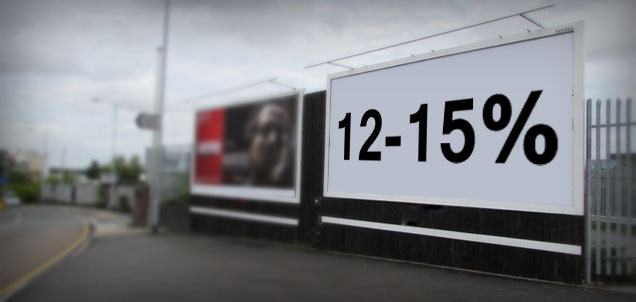
  • Posterscope predicts 12-15% growth for OOH in 2019


    By A Correspondent


    It’s the season for adspend forecasts. And here’s for OOH only from Dentsu Aegis Network arm Posterscopre. The 2019 is expected to be another important and exciting year for OOH in India, it notes expecting growth rate to be anywhere between 12-15 per cent.


    Posterscope India predicts disruptive growth this year on the back of important events like the upcoming General Elections, Cricket World Cup, and the Indian Premier league among other marquee events.


    It notes that digital out-of-home (DOOH) inventory will continue to increase and reach the levels of respectability it deserves while its share of revenue will see a significant rise. New categories of advertisers will come to the fore and dislodge some traditionally strong advertising categories. Meanwhile, newer infrastructure will provide varied and interesting advertising options.


    Here are some of the key developments that Posterscope believes will continue to drive OOH’s rapid evolution:


    Data-driven OOH: Campaigns will be driven using data that go beyond demographics to online behaviour, card transactions, app usage and location analytics to decide where the OOH ads should appear.


    ROI-led OOH: ROI will be the driving force in the next 12 months. Posterscope India expects to see boundaries in OOH being pushed through digitisation, automation, scientific planning tools, machine learning and cross-media collaborations to drive and achieve returns that are in line with other media offerings.


    Growing digital OOH: With DOOH inventory increasing, advertisers can now unlock at scale the flexible capabilities of DOOH by running creative bespoke to key triggers such as time, audience and weather. Posterscope’s ROOH digital OOH exchange is pioneering efforts in this space.


    Cluttered event calendar: The year being a particularly busy one in terms of large ticket events from sports, entertainment and even elections, we believe there will be a surge of investments from a varied base of advertisers.


    Location intelligence: As locations-based marketing specialists, Posterscope India believes in its ability to act as a common thread to tie multiple data sets together to create a clear OOH story about what’s changing the way out-of-home is being offered.


    Smart cities: A new area of urban development is upon most major cities globally, and in India, this is coined under the ever-ambiguous term and scope of ‘Smart Cities’. The way in which technology will redefine everyday tasks, transport and logistic services is now becoming a reality. Via partnerships with leading smart city development organisations, The Digit Group and DG Cities, Posterscope India is creating opportunities and encouraging brands to lean in, learn and redefine how this investment can last a lifetime.


    Disruptive OOH: Consumers are now always connected with more than 90% of OOH consumers using their phone whilst OOH in each week. In addition, we spend over two hours every day on social and messaging platforms sharing the things we stumble across and catch our eye in the OOH space. Now more than ever, disruptive innovations can deliver attention and engagement far beyond where it stands in the real-world through digital sharing.


    Said Fabian Cowan, Director, Posterscope India: “In a fast-paced ever-changing out-of-home ecosystem, having informed intelligence of what are going to be the drivers of change is critical to our offerings and client associations. We firmly believe that we have the leading technology platform, the best planning tools, the strongest data and analytics capabilities, the most advanced automation programme, the broadest and most diversified view of the out-of-home channel and, most importantly, the best people to manifest and deliver the best ooh solutions.”


    Added Haresh Nayak, Group MD, Posterscope – South Asia: “As industry leaders we are driving change across the medium. Our predictions are not only based on year-long research and a close watch on trends but also based on our understanding of how cities and consumers transform with advancements in technology, access to data, infrastructural developments and evolved travel patterns. 2019 is poised to be a very exciting year for OOH and our predictions depict that amply.”


  • Warc report predicts digital OOH spend to reach $14.6bn this year

    By A Correspondent


    Spend on digital out-of-home advertising (DOOH) — i.e. video content and/or digital signs located in high traffic public locations such as high streets, airports, bus shelters, subways and malls — is expected to grow 10.1 per cent each year between 2018 and 2021, accounting for the entirety of growth in the out of home (OOH) market as spend on traditional sites begins to decline from next year.


    Digital’s share of total global OOH adspend is expected to rise to 37.3 per cent — or $14.6bn — this year, up from 34.8 per cent in 2017, 32.4 per cent in 2016 and 22.7 per cent in 2012. The rapid growth of DOOH is driven in part by the higher cost-per-thousand (CPM) the format commands, but also the rising penetration of digital panels and the opportunity to combine data-driven targeting with powerful, dynamic creative.


    It further states that major providers are accelerating investment in digital sites, and this will further fuel growth over the coming years. JCDecaux is building on its existing base of 59,744 digital screens worldwide with the ongoing digitalisation of street furniture in New York, Chicago and London. Clear Channel added 450 new digital screens last year, taking its global total to 14,510, while Lamar intends to add 300 screens in 2019, adding to its existing base of 2,800.


    In terms of markets, adspend figures from the latest AA/Warc Expenditure Report show half of UK’s OOH ad investment is expected to be spent on digital sites this year, equating to £593m ($770m). Magna forecast spend in the US to reach $1.2bn, up from $582m in 2012. The Direct Place-based Advertising Association (DPAA) believes $100m of this will be traded programmatically, up from $65m in 2017.


    In Germany, where Google is exploring DOOH opportunities, spend is expected to reach $285m — 18 per cent of the OOH market and more than double the amount invested two years ago; and in France, the share is forecast to be 11.9 per cent ($183m) this year.


    Data from the Outdoor Advertising Association of America (OAAA) show that digital billboards now account for 21 per cent of all billboards in the country, and research by Nielsen show that approximately 60 per cent of US consumers see a digital billboard each month and 37 per cent see one each week.


    In the UK, DOOH plays a core role in the daily commute, generating £152m in adspend for Transport for London. The power of the medium is such that Global, UK’s largest commercial radio group, recently moved into the DOOH sector by acquiring Exterion, Primesight and Outdoor Plus, gaining 30 per cent in market share.


    A strength of DOOH is the delivery of dynamic creative, using real-time and predictive triggers to ensure the most relevant ad is surfaced to the right people, in the right place, at the right time. The rise of digital screens, particularly on the high street, gives advertisers more choice in where and when their ad is placed, while the creative itself — especially if video — can be powerful.


    Said James McDonald, Data Editor, Warc: “The combined power of digital out of home and mobile location data can be used to add greater targeting capabilities to a broadcast medium, serving programmatically-traded creative by the hour to the right people, in the right place, at the right time. This is an enticing prospect for advertisers looking to leverage digital’s strengths without the risk of ad blocking, fraud, and risk to brand safety.”