Tag: Dominic Proctor

  • GroupM makes ESP standalone agency brand, Mumbai to be ESP Properties hub

    By A Correspondent


    Media agency major GroupM has announced the expanding of its sports and entertainment offering under a new global agency brand, ESP.


    ESP will be made up of two separate businesses: ESP Properties and ESP Brands. Both businesses will be part of WPP’s media investment management company GroupM, but remain independent of its media-buying operations.


    According to a communiqué, ESP Properties will be GroupM’s first company dedicated to serving rightsholders from the worlds of sports and entertainment, including federations, leagues, events, teams, publishers and venues. “It will offer a thorough assessment of their commercial programs, and advise how to grow the revenue they generate through a full range of services across data, digital and content development. It will also offer global partnership sales on behalf of rightsholders, both to existing WPP brand clients and beyond.”


    ESP Properties will be formed through new hires, the integration of existing GroupM business units including leading sponsorship agency IEG, and the acquisition of data-driven sports marketing agency Two Circles. It will collaborate with specialists from the WPP network to deliver a full range of marketing services. It will also work with GroupM Entertainment on new programming concepts and, where mutually beneficial, provide direct finance for new projects.


    ESP Properties will launch with over 150 staff in hubs across New York, Chicago, London, Singapore and Mumbai, plus additional teams in Los Angeles, Sao Paulo and Dubai amongst others. It launches with a roster of globally recognised clients including the All Blacks, Cleveland Cavaliers, Valencia CF, England and Wales Cricket Board, Pele, and City Football Group.


    Said Sir Martin Sorrell, CEO of WPP, in a statement: “There is significant and growing demand on the part of clients to invest more in content and sports but few in our industry have had a serious response to this. Our new ESP Properties will bring creative power and commercial insight to rightsholders for the first time, providing unmatched opportunities to better tailor their offerings to the needs of today’s brand sponsors. ESP will also work hand in hand with our recent investment in Bruin Sports to provide our clients with access to many high-value media and sponsorship opportunities.”


    GroupM is also expanding its support for brands to plan, negotiate and activate sports and entertainment partnerships by growing the specialist teams in its individual media agencies. These specialist teams will be underpinned in key regions by the second business within ESP, ESP Brands. ESP Brands will be an evolution of the former partnerships consultancy GroupM ESP.


    Dominic Proctor, Chairman of ESP and President of GroupM Global, added: “The global launch of ESP Properties brings leading commercial and creative capabilities to some of the world’s most celebrated names across sports and entertainment. Sport is a driving force in media and we want to serve the market better by assisting rightsholders in optimizing their properties and creating more winning partnerships with leading brands. At the same time we will ensure we work more efficiently on behalf of brands by providing even more resources for the specialist sports and entertainment practices that are embedded in our GroupM agencies, underpinned by a central team in key regions, ESP Brands.”


    The new ESP Properties will be led by John Kristick, Global CEO of GroupM ESP since 2011. Kristick is a senior sports marketing executive with nearly two decades of international experience, including being appointed Managing Director for the USA Bid Committee to host the 2022 FIFA World Cup, and previously working for more than ten years in Europe serving as an Executive Director for Infront Sports & Media from its inception. The business will be led regionally by Jonathan Hill (EMEA), Laren Ukman (North America) and JinWei Toh (APAC). ESP Brands will be managed regionally in North America by Bryce Townsend and through the individual GroupM agencies in other regions.


    John Kristick, CEO of ESP Properties, said:  “ESP Properties’ offering is truly unique in meeting the changing needs of the world’s leading federations, events, leagues, teams and other rightsholders. We have brought together a range of experts from across GroupM, such as IEG with over three decades of experience in sponsorship consulting, and our new partners Two Circles who have been leading the way in data-driven sports marketing. By combining this strategic expertise with unmatched understanding of how to navigate potential brand partnerships, we can uncover new revenue opportunities for rightsholders worldwide.”


    The launch is part of WPP’s commitment to content, demonstrated by its investments in MediaPro, VICE, Indigenous Media, FullScreen, MRC, and, most recently, Bruin Sports Capital.


    Said George Pyne, founder of Bruin Sports Capital:  “ESP Properties provides rightsholders around the world with a very powerful combination of strategic services and sales expertise. The ability to access the group’s unmatched global resources and corporate client base will be very helpful as we create value for the relevant businesses Bruin operates. We also anticipate collaborating with ESP Properties to jointly deploy capital and create new businesses as opportunities arise.”


  • Product fails when commercial imperatives get in way of editorial integrity: Proctor


    By Pradyuman Maheshwari


    Dominic Proctor took on the role of President of GroupM Global in January 2012. Prior to that, he spent a decade-and-a-half years as CEO of Mindshare Worldwide, the GroupM agency he had founded in 1997. With billings of over a 100 billion dollars that constitutes around 30 percent of all global media, GroupM is the holding company for all of WPP’s media agencies – notably Mindshare, Maxus, MEC and MediaCom amongst others.

    Excerpts from an interview with Dominic Proctor while he was in Mumbai around a fortnight back.


    This is your third visit this year. What brings the GroupM CEO to India so often?

    I think it’s rather patronizing to speak about India as a market for the future. It’s a massive market now, and for us it’s a very significant part of our global company. It’s obviously going to get bigger and better as the economy and the population develops but we come to the present as well as the future.


    You’ve been coming here for over a decade-and-a-half. What do you see as the significant difference between then and now?

    Much more open-minded. I think those days were characterized by fairly closed minds in the marketing services industry. The status quo was everybody’s friend and therefore it took longer than most countries to get business going here. The thing about a closed economy or a closed mind is that you don’t get the fresh oxygen of ideas as in other markets.


    The disadvantages of a closed economy is there isn’t much business, but when you have an open environment, the competition also gets stiffer, right?

    That’s capitalism… that’s cool, that’s fine.


    How do you see the digital business in India vis-à-vis the rest of the world?

    The rise of digital platforms has been of fundamental importance to media and marketing and our business in India. It may have started rather slowly, but the important thing is it’s changing in the same way as the global, digital economy is. Each country starts in a different place and has a different speed. The direction is more or less the same.


    But the spends here are not as much as in the rest of the world.

    That’s exactly my point. They will catch up.


    Is it because the best creative brains don’t work for digital here? They work for television commercials instead?

    That’s not the reason at all. The reason for varying speed is the differential uptake of digital media by consumers. In the end, rupees follow the eyeballs.


    Could the spend be getting distracted by the many offerings in digital- search, social media, conventional banner ads etc?

    It’s a sign of growing up. It’s a sign of a platform maturing and moving in different directions to its usual requirements.


    If you were to self-assess, what would be your own assessment of GroupM in digital given that Unilever, one of your biggest clients, is not with you?

    I’d give ourselves a 7 on 10 and wouldn’t give anybody else much more than that, because I think there’s a lot of headroom to grow. Some of our direct competitors have been rather quick to assume the way of solving the problem is primarily through acquisitions. We’ve made some acquisitions and we’ll make some more. Acquisitions alone aren’t the main driver. The main driver is the fact that the whole world is becoming digital and therefore our business needs to become digital.


    In digital, both media and creative agencies have turned full-service. Would you hence say your competition is not necessarily media agencies like yourselves but also an Ogilvy, JWT, Leo Burnett…

    I think it goes way beyond that. Our competition for client attention, demand and revenue is not just from other agencies and other types but also from consultants, specialists and clients themselves who do things inhouse. Our competitive set is very broad indeed. That’s a sign of our business growing up and fighting on a lot of fronts. That’s good.


    Is there a need to reinvent yourselves given the way businesses are growing? Is there any one thing you’d like to do in terms of reinventing?

    We reinvent ourselves constantly. The most challenging thing in reinventing is of course training and development of talent. I’m very happy to say that our talent retention record in India is very good compared to other markets.


    Are you able to attract the top talent given the very high remuneration levels at B-Schools? Especially since your clients have them…

    That’s a challenge for us. I’ve been on platforms talking about the fact that we need to continue to move up hierarchy of partners to clients, because we need to earn the revenue that will pay for the A-list talent. There’s no doubt that other competitors for talent, example, Google, can have deeper pockets than us. I think people join us not just for that reason. A lot of them join us for varied life and varied training. It’s the environment. This year, we won the Porter prize for best places to work. To me that’s just as important, if not more, than our ability to pay a few more dollars to a few more people. People come here not just for that. They come here for the working environment, training, grounding in business. It’s really important to not forget that when you’re working in a media agency, you have the privilege of looking at a lot of different clients across a lot of different marketing platforms in media. That gives you tremendously good grounding for a business career.


    What happens is people use your organisation as a jumping board to move elsewhere

    That’s fine. I don’t mind that. That’s why I’m pleased our people aren’t jumping ship.


    Talking of higher remuneration, if a GroupM can’t achieve that, who can? You are a market leader, and have a longstanding relationship with clients.

    We can and we do. Our income rate and clients are increasing. We’re of increasing value to our clients. The more value we are to clients, the more revenue we can make, the more we can attract talent. It’s a virtuous circle.


    GroupM today is a lot more than just a media agency in India and the rest of the world. How much of your focus is on businesses such as Dialogue Factory and your association with sporting events and other BTL activity?

    A lot of it. One thing common to all countries is that the bedrock of our business is media planning and buying. It’s always been clear to me that unless we can get that fundamental activity right and be efficient and effective for our clients, then we have no ability and no permission to expand our service offering. We absolutely have the ambition to broaden what we do in our agencies. Sports marketing, digital consultancy, data analysis, we could go on. It’s becoming more and more broad because the clients demand is for agencies to have more and more specialist insight into the opportunities, to make sure that the specialist insights are integrated.


    In the current scenario where digital has overtaken print media spends, what is your view of the future for spends in print versus the rest?

    If your print business stays fresh, relevant and interesting, that’s where the eyeballs will go. The challenge simply isn’t just to abandon all traditional media platforms and just follow the digital dollar, the strength of a print brand, the attractiveness of its editorial, the freshness of its presentation are critical. If you lose those things, you lose your audience not just from print, but digital as well. Your brand suffers.


    One of the peeves of print publishers is that the advertisers forever want innovations. Like in the papers you have these jackets, one or two or more pages of advertising over the front page, taking away the interest of the reader?

    It does if it’s boring and it irritates people. So, the balance between the editorial and marketing judgment has to be more even. You just look at any country in the world,  where commercial imperatives get in the way of editorial integrity, the product fails. Media entities are brands. If you mess around too much with the brand, it becomes confusing to the consumer.


    Over the last couple of years, GroupM in India has seen a fair amount of changes. One is the embracing of digital has leapfrogged. We’ve had the Y-Co, a kind-of youth ‘Shadow Board’. How many processes of GroupM India have you followed elsewhere in the world?

    Y-Co is an Indian idea born here. I was at the launch myself, a year ago, and it has now been taken up in other markets. So, India is both an exporter and importer of ideas. Y-Co is an Indian export idea, made in India. Your current Prime Minister has been talking about Brand India. It’s also an importer of ideas. So, a lot of the initiatives happening here were born elsewhere. It’s an import-export business.


    Anything you’d like to see here in GroupM in future?

    We encourage our teams to continue to be open-minded. We encourage them to be more focused around the digital developments. As brand or market leaders in India, we’d want to be at the forefront of these and rather than wait for a market to form and join in, we’d like to form a market.


    Over the last year, India has seen a lot happening in the field of audience and viewership measurements. We are all set to get a new measurement regime in television and we have had an uproar over a print survey. Since you are a key stakeholder in the business, how do you advise your clients when questions are raised about the veracity of data?

    We have specialists who are able to give very special advice in very important areas. Measurement is a very important part of what we do. Return on investment is a very acute measure of our performance and return can be linked to the performance of leadership or viewership. of course, it’s fundamentally important to get it right. To me, it’s symptomatic of change. As media landscapes change, the way we measure them changes too. We intend on being a very important part of stewarding that change so that it’s fair and accurate. If it isn’t, we’re going to be rejected.


    A variant of this interview first appeared in ‘dna of brands’ as part of the dna issue dated October 6, 2014


  • #Frames2013: Indian M&E must take a global stance: Dominic Proctor

    By A Correspondent


    That the media and entertainment industry in India is making steady progress is known, but whether it is able to deliver advertising value to brands in a manner that gives them maximum bang for the buck is still questionable. For brands to remain interested in the medium and empower them to play a larger role in steering the ecosystem forward would require a great deal of recalibration from the industry and its stakeholders.
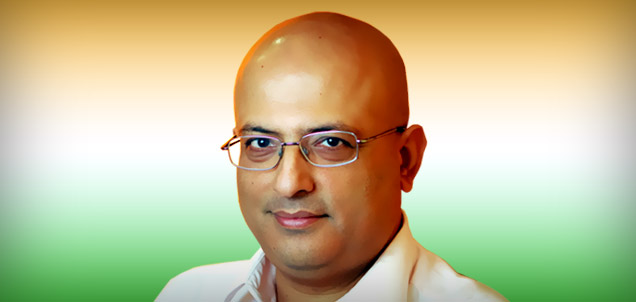

     

    The session on ‘Will advertising still be the key growth driver for the converged ecosystem?’ by Dominic Proctor, President, GroupM, Global threw up interesting insights on the role that the advertising and media industries had to play in helping the sector achieve remarkable growth.


    Taking off on the key theme that had been drawn up for him Mr Proctor said, “If you ask me, will advertising drive growth in the converged ecosystem – the short answer to that is yes! But the real question is – we all know that India is an emerging entertainment superpower, but will the growth come from just from extending business in India or will the business grow because of the global ecosystem? We believe that the Indian entertainment business is at crossroads and they can make a choice of whether to stay as a relatively inward-looking business or join and be a part of world entertainment business.”


    Questioning the reasons for the industry being under-valued, Mr Proctor stated, “I often wonder why the media business as not managed to do what the IT business has in terms of its growth and size. While the IT business is about $ 100 billion the media business is still about one-fifth of that size. The reason why the IT business has become what it is because it has taken a global stance.”


    Presenting another interesting facet about the media industry, Mr Proctor said that the thing about India is that it is a powerhouse of strong content. “If you look at the sector, the country produces more than 1000 films every year, has more than 700 channels, has more than 7 DTH platforms, about 900 million mobile downloads, has a huge base of consumers who access content online or through a mobile device… all these are factors around which India could build itself up in the global entertainment value chain. Right now what is happening is that a lot of programming on television or music on platforms or even sports is being produced for local consumption; that approach has to change and a more global route needs to be taken,” he said.


    Adding further, Mr Proctor said that where content is concerned it is obsessively dependant on things like Bollywood, cricket, stars etc but it was important to see whether these options were going to be sustainable in the long run. “For example, cricket in all its form is seeing a downfall in viewership over recent months. This poses a serious threat to its profitability and sustenance in the long run. But what is interesting is that Indian sports is expanding its horizons and looking at options such as football, hockey, golf, etc. But it is still not what is observed in other markets like the US and UK where each sport has become an entity of its own, be it in terms of viewership or revenue generation. So sports marketing in India will require a broader base for the long term.”


    Sharing his observations on the medium of films, Mr Proctor said, “If you look at films, the problem with that sector is that it hasn’t really moved at a pace that benefits brands more than it does from cricket. This is despite movies having a larger viewer base than sports. The tie-up as of now between the two is still very clumsy and they need to find new ways to take it to the next level. One way they could do it is through the web, which presents massive opportunity. Other avenues include hyper-targeting through STBs that could also change the way the ecosystem works. The way forward for our business is to move from inventory planning against demographics to specific audience planning and buying because the technology that we have at our disposal allows us to optimise our offerings by serving different advertisers and consumers.”


  • India Shining with Vikram Sakhuja


    By Johnson Napier


    Proctor on Sakhuja


    Exclusive to MxMIndia: Dominic Proctor, President of GroupM Global on Vikram Sakhuja’s appointment to the position of Global CEO of Maxus and the relocation of Maxus’ Global Heaquarters to India


    Vikram has been selected as he is the best candidate for the job, not because he lives in India. The fact that he does live in India is an additional bonus because it spreads the management of Maxus around the world, consistent with the new world order. It also reflects the fact that much of our global senior talent resides in Asia and I fully expect that more of that talent will move into global positions in the years to come. Not just in GroupM agencies but business in general.


    The world has become a smaller place and boundaries are no longer barriers. Maxus does not have a single HQ so there is no plan to move more people into the market. Indeed the agency will continue to grow and develop as a very global business.


    Vikram will join the global management team of GroupM and I am really excited by the opportunity to work with him more closely. He will bring a different and interesting perspective to our business as we continue to grow. The fact that he is coming from a fast growing market will also be a benefit as we plan to grow quickly everywhere!


    I can’t think of anybody as qualified as Vikram to build on the great work that Kelly Clark and his team have done in establishing Maxus as the world’s fastest growing agency.

    As India celebrated her 66th Independence Day, the headquarters of the world’s fastest growing media agency is to be shifted to the country. And Vikram Sakhuja, currently Group M’s CEO for South Asia, has been appointed Global CEO of the media advertising network’s Maxus agency.


    Proctor Dominic

    Mr Sakhuja’s appointment was part of a series of senior-level changes announced on Wednesday by Dominic Proctor, President of GroupM Global. “The world has become a smaller place and boundaries are no longer barriers,” Mr Proctor told MxMIndia. “Maxus does not have a single HQ so there is no plan to move more people into the market. Indeed the agency will continue to grow and develop as a very global business.” Said Mr Sakhuja, “It’s very exciting and humbling at the same time… It’s still sinking in.”


    In the first move, GroupM North American CEO Rob Norman becomes Chief Digital Officer for GroupM Global, a new position at the company.


    Rob Norman

    “Our activity in digital will define our future success and we are truly fortunate that Rob will step into this crucial role full time,” Mr Proctor said in a communiqué issued earlier, announcing the movements.  “There is nobody better suited or more experienced than Rob to lead our teams into the future.”


    Mr Norman has extensive experience in the digital arena having served as CEO of GroupM Interaction since 2006.  Mr Proctor said his responsibilities will be significantly expanded in his new role.


    Kelly Clark

    At the same time, Mr Proctor said Kelly Clark, currently Global CEO of the GroupM agency Maxus, will succeed Mr Norman as CEO of GroupM North America.


    “Kelly has had wonderful success with our companies in Asia, the UK, and Europe and most recently at Maxus globally,” Mr Proctor said.  “His broad experience and track record will bring a great boost to our business in North America.”  Prior to taking over Maxus in 2008, Mr Clark served as CEO of GroupM Europe, Middle East and Africa.


    Talent and leadership is sitting everywhere: Vikram Sakhuja


    The new Global CEO of Maxus spoke to MxMIndia hours after the news of his appointment was announced


    Congratulations… has the news sunk in yet?

    It’s very exciting and humbling at the same time. It’s a very vibrant and exciting agency to be with. All I can say right now is that I am thrilled with the news. It’s still sinking in.


    In a sense you’ve piped some favourites to the job…

    I really have no idea on how the contender things work. It obviously involves the system and you’ll have to ask that to the bosses at Group M.


    We’ve seen the stellar work that you have done for Group M but personally, what would you attribute your ascent to the top to?

    I can’t really say what is it that has worked in my favour. One needs to introspect such things, I guess. Something great has obviously worked for me. But one has to work things up and have a gameplan and get people together to move things in a particular direction. The ability to have a vision and the ability to drive it are the things that I have tried to do as the Group CEO for Group M South Asia. And if that has worked, then it’s great.


    How big a challenge is it to fit in the shoes of Kelly Clark, who’s been promoted to CEO of Group M North America?

    Kelly’s shoes will be very large to fill. I remember that I joined the system when he was the APAC head at Mindshare and was transitioning between UK and Europe handling several roles for the agency before he moved to Maxus. Hats off to Kelly for the sheer intrusiveness and energy with which he has driven the agency. I am a big fan of his.


    What are the immediate changes that will be seen on ground?

    Not sure on when the new change will come into effect and will be clear only when a successor has been decided. These things take time and it is still work in progress.


    In a sense you become the first global CEO of a media agency to be based out of India. And Dominic Proctor too has highlighted the emergence of an APAC market as being the driving engine for the future. What do you have to say about this?

    It so happens that you got talent and leadership sitting everywhere. I have been fortunate enough to be picked out of here but at the end of the day, we are living in a pretty global world and the new reality is that communication barriers are slowly fading away. In our earlier system, people used to be running the system out of Australia, Singapore, Hong Kong but suddenly where you sit is not central to what is called the ‘headquarter concept’. In my case too, it just so happens that I am going to be based in Mumbai. But I won’t read anything too much into saying that Asia Pacific has emerged as a hot favourite – it’s great to hear that but at the end of the day we have been part of the global network for years and it feels that way. I don’t see it as APAC being suddenly recognised. If you see Ashutosh Srivastava, the Mindshare APAC head also has taken up a global responsibility…so there are Indians all over the place. It just shows the ability of the system to look at APAC as the global hub rather than elsewhere.


    Will it be a challenging task to lead global operations out of India?

    It’s just that I am going to be based in Mumbai and I will be travelling as the other global CEOs do. A global CEO’s job doesn’t automatically mean that everything is decided by a bunch of team sitting at some headquarter and running the entire set-up, it doesn’t work like that. You’ve got to work through a network, you’ve got to create a team and drive a certain agenda. It doesn’t require physically handling a bunch of people in one place.


    One of the challenges will be to see that Maxus continues to achieve the 20 per cent growth trajectory in the coming future as well…

    I have no idea how I’ll continue to keep it at that. But it will be an interesting challenge. I look forward to my role at Maxus.


    Vikram Sakhuja interviews on mxmindia.com


    Interview with Anil Thakraney

    http://www.mxmindia.com/2012/06/ creative-agencies-have-allowed-themselves-to-be-dumbed-down-vikram-sakhuja/


    Text and MxMIndiaTV interview at FICCI-Frames 2012

    http://www.mxmindia.com/2012/03/ff12-integrated-media-is-the-best-way-forward- vikram-sakhuja/


    MxMIndiaTV interview at World Magazine Congress 2011

    http://www.youtube.com/watch?v=GSS2j9PQMkU& feature=player_embedded

    Maxus was named the 2011 “Media Agency of the Year” by Adweek and last month the agency was named the fastest-growing global media services agency in the world for the third consecutive year by RECMA, the independent organization that measures media agency sector operations.


    Taking Mr Clark’s role at Maxus will be Mr Vikram Sakhuja, currently CEO of GroupM India and South Asia. “Vikram is the perfect candidate to take on the Maxus role from Kelly,” Mr Proctor said.  “Maxus has a great management team and a lot of momentum.  I have no doubt that Vikram will continue to build a great agency.”  He added that Mr Sakhuja will remain in his current role until his successor is announced (See ‘Proctor on Sakhuja’ in box alongside).


    All three will report to Mr Proctor and the new roles begin later this year.


    Mr Sakhuja’s appointment is the second global level appointment made by Maxus in recent times. Earlier this year, Madhvi Pahwa moved from a Group M responsibility to that of Global Talent Director. Ms Pahwa was to be based in India.  But now, Maxus has become the first global media agency to have its headquarters in not just India, but also Asia. Said Mr Proctor on the relocation of the HQ: “It also reflects the fact that much of our global senior talent resides in Asia and I fully expect that more of that talent will move into global positions in the years to come. Not just in GroupM agencies but business in general.”


    Lynn de Souza, chairman and CEO of Lintas Media Group, believes that it’s a welcome recognition for Mr Sakhuja and India. “It shows that Indian talent is appreciated and not that it needs to be exported out of India to do good work. That is the essential story that comes out of this,” she said. Added Mona Jain, CEO, Vivaki Exchange:India has been consistently delivering healthy growth numbers for several agencies and is also one of the fastest growing markets in the continent. So it is only fitting for them to consider India as the hub for managing global operations.”


    For Mr Sakhuja, it’s a significant move as he moves to Group M global management team directly and not via the Asia-Pacific route. However, he doesn’t think there’s an all-new focus on APAC. “It just so happens that I am going to be based in Mumbai. But I won’t read anything too much into saying that Asia Pacific has emerged as a hot favourite – it’s great to hear that but at the end of the day we have been part of the global network for years and it feels that way,” he said.


    The successor to his current position as CEO, Group M South Asia hasn’t been announced yet. Once that’s done and the transition happens, Mr Sakhuja will take on the global role at Maxus in right earnest.


    INDUSTRYSPEAK


    Lynn de Souza, Chairman & CEO, Lintas Media Group

    I think it is a fantastic development both for Vikram himself who has really done a very good job ever since I have known him and it’s an appreciation for all the good that he has done and the potential that he has. So I am very happy for him. Also, for the industry itself, it shows that Indian talent is appreciated and not that it needs to be exported out of India to do good work. That is the essential story that comes out of this.


    Certainly, Maxus is a great agency; I have always said that. It’s excellent news; the recognition for Vikram as well as for India is really very good.


    Divya Gupta, Chief Executive Officer, Dentsu Media India

    This epitomizes India as a key, growth engine for most brands and marketers across the globe.

    It also augurs the emergence of India as a strategic global and regional hub for management and control of network businesses.
    I wish Vikram success.


    Mona Jain, CEO, Vivaki Exchange

    The agency has always been rated highly. It’s great news that the CEO should be from India which shows that the country is becoming very critical in the entire global scheme of things for agency networks. Also, India has been consistently delivering healthy growth numbers for several agencies and is also one of the fastest growing markets in the continent. So it is only fitting for them to consider India as the hub for managing global operations.


    Maxus Global Factsheet

    > Launched in late 2008, is part of GroupM, the world’s largest media investment management group that serves as the parent company for all of WPP’s media agencies, and which buys over one third of the world’s media every day.

    > Rated world’s fastest growing global media agency network

    > Talent base 1,400 people across 67 locations worldwide

    > Global clients include Barclays, SC Johnson, NBC Universal, Fiat Group, Nokia, Vodafone, Church & Dwight, Nestle and L’Oreal

    >Services include Communications strategy, Media planning and buying, Digital marketing, SEM and SEO, Direct response media, Data analytics and Marketing ROI evaluation

    (Information source: Factsheet, www.maxusglobal.com)


    Rise and Rise…


    Vikram Sakhuja

    Twitter @VikramSakhuja


    Education:

    IIM Calcutta (1988)

    IIT Delhi (1984)

    Modern School, Delhi (1979)


    Work:

    Group M

    CEO South Asia (earlier MD, Mindshare Fulcrum and later Mindshare South Asia) (2002-present)

    Star TV

    Exec VP Marketing (Jan-Dec 2001)

    Coca-Cola India

    Marketing Manager-Brands (1996-2000)

    P&G India

    Associate Manager-Media & MR (1988-96)

    DCM

    Management Trainee (1984-86)


  • Change time @ Group M. Irwin Gotlieb is chairman, Dominic Proctor is prez. Nick Emery is new Mindshare CEO

    By A Correspondent


    Media agency major GroupM has announced that Mr Dominic Proctor, long-time CEO of Mindshare Worldwide, will be President of GroupM. The position is newly created.


    The announcement was made by GroupM Global CEO Mr Irwin Gotlieb, who said the move is designed to strengthen the company’s senior management team in order to successfully meet today’s marketplace challenges and opportunities.


    In his new role, Mr Proctor will continue to report to Mr Gotlieb, who officially becomes GroupM Chairman as part of the reorganization. Mr Proctor will be succeeded as Mindshare Worldwide CEO by Mr Nick Emery, currently the London-based Chief Strategy Officer for Mindshare.


    “These changes represent a logical and important progression for us, and we’re confident that our clients and staff will prosper as a consequence,” Mr Gotlieb said, making the announcement. “Our rate of growth and the complexity of our business require that we constantly evolve. Media investment management sits at the crossroads of media, data and technology and we must be positioned to capture the significant opportunities that are on the horizon.”


    Under the new structure, Mr Gotlieb will focus on the overall strategic direction of GroupM and ensure that the company deploys data and technology to drive change for the benefit of GroupM clients and stakeholders. Mr Proctor will oversee management of GroupM’s agencies worldwide, which in addition to Mindshare include Maxus, MEC, and MediaCom. GroupM’s regional heads, as well as the CEOs of the company’s four major media agencies, will report to him.


    “I’m especially pleased that Dominic, who has been so instrumental in the long-term success of Mindshare, has agreed to move into this new and important role in GroupM and concentrate on the global management of our company,” Mr Gotlieb said.


    Mr Proctor has deep experience in managing media agencies. He launched Mindshare Worldwide in September 1997 as WPP’s first media investment management agency and led the company over the ensuing years to its current position as one of the leading media shops in the world. He started his career in 1979 and worked in various advertising agencies before joining JWT in London, where he became Media Director in 1989, Managing Director in 1991, and Chief Executive in December 1992. He held this position for five years, during which time he also had a seat on the board of JWT Worldwide.


    “GroupM has become a large and complicated company requiring more hands on the wheel than in previous years,” Mr Proctor said. “We have many more moving parts and we need more operational management to maximize the opportunities across our agencies. I’m delighted to step into this role, and equally pleased that Nick has accepted the CEO role at Mindshare. He has been a great partner since the start, and Mindshare will go from strength to strength under his leadership.”


    Mr Emery, a Mindshare veteran who joined the company when it was founded in 1997 and has worked closely with Mr Proctor ever since, said: “Mindshare is a great global network with fantastic, market leading talent and clients. I’m honoured and privileged to be able to take over from Dominic.”