Tag: Disney UTV

  • Ronnie Screwvala sets up Unilazer Sports; Supratik Sen to head biz

    By A Correspondent


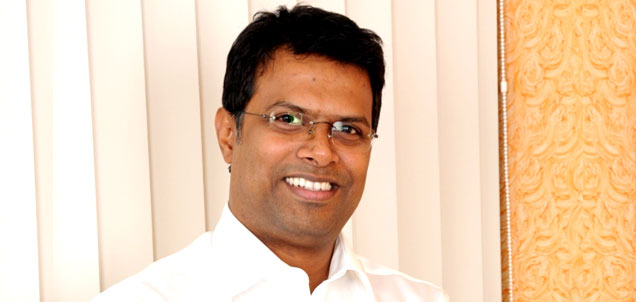
    Former Disney UTV head Ronnie Screwvala’s Unilazer Ventures has ventured into sports and has hired seasoned sports marketer Supratk Sen as its CEO for the venture. Supratik Sen joins in from Red Bull India wherein he was National Head for Sports and Events Marketing.


    Unilazer Sports, a division of Unilazer Ventures, led by Mr Sen will focus on teams, leagues, academies as well as creating IPs and franchises in two or three selected sports.


    This ex-national rugby player, who was also a professionally trained footballer and cricketer spent the last five years at Red Bull India leading all their marquee projects with athletes, sports projects and events in the country. Before joining Red Bull, Mr Sen worked with Australian major Repucom. He has also worked with sports, event marketing and media management companies Procam, Percept D’Mark and E-Sense Entertainment.


    Unilazer Ventures Ltd, promoted by First Generation Entrepreneur Ronnie Screwvala is a diversified entity with focus on creating ground up businesses and being a Strategic Equity Investor in others. Unilazer brings hands on business experience from its Founders backed by an expert team that adds value to strong entrepreneurs/founders in varied aspects of their business growth. While Unilazer is sector agnostic it has a leaning to new greenfield and high growth segments like Agriculture, Healthcare and Pharma, Education, E-commerce and sectors deeply entrenched in the India Consumption Story


  • M K Anand to head Times Television, Sunil Lulla to head to BCCL in new role: Sources

    By A Correspondent


    M K Anand
    Sunil Lulla

    M K Anand, until last month Managing Director, Media Networks at Disney UTV is set to be joining Times Television as its head, according to our sources. Sunil Lulla, currently Managing Director and CEO, is reportedly moving into parent Bennett, Coleman and Company Ltd (BCCL) in a new role, possibly as part of the Managing Director’s office.


    Although Mr Anand’s moveback to Times has been in the grapevine ever since he announced his departure from Disney UTV last month, neither of the movements have been confirmed by BCCL or Times Television. MxMIndia has learnt of these from reliable sources.


    The appointments are likely to be effective February 3, 2014. Mr Anand has worked with The Times of India group for 19 years, first with print for 14 years and later with the television business as VP for Zoom from 2004-09. He moved to lead UTV Software as CEO and see through the acquisition by Disney as well as the transition to Disney UTV.


  • MK Anand quits Disney UTV, replacement to be announced soon

    M K Anand

    By A Corrrespondent


    M K Anand, Managing Director, Media Networks at Disney UTV is moving on.


    He has put in his papers, and his last date at Disney UTV is December 31, 2013. Although the entertainment-to-broadcast-to-gaming conglomerate has not confirmed the departure officially, a senior executive confirmed the development indicating that a new structure for the broadcast business is being worked out and then the name of the team leader will be announced.


    Mr Anand has worked with The Times of India group for 19 years, first with print for 14 years and later with the television business as VP for Zoom from 2004-09. The leapfrog to CEO of UTV Software saw him lead the broadcast business through the transition to Disney UTV.


    M K Anand’s destination is not known and he wasn’t reachable for comment.


  • Rise, Rise (& now Exit) of Ronnie Screwvala

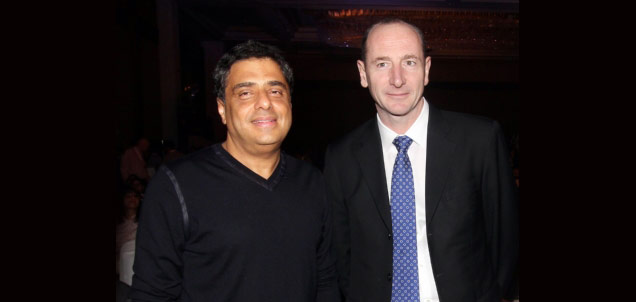
    Ronnie Screwvala with Andy Bird. Picture: Fotocorp


    By A Correspondent


    The exit wasn’t unexpected, the timing may not have necessarily been known. There were many who said while The Walt Disney Company may have acquired UTV, it was the latter which was calling the shots. Yes, indeed. Disney-UTV was a Ronnie Screwvala company, and even though Andy Bird, Chairman of Walt Disney International, was around to oversee that all was well with the India operations, clearly it was Mr Screwvala who steered the business.


    With reason. While UTV’s promoters were happy to cash out, Disney needed a UTV for its India presence. It was the film business that was a huge pull for Disney. Meanwhile, Siddharth Roy Kapur, currently Managing Director of Disney UTV’s studio business, has been appointed successor. He will take charge on January 1, 2014.


    Winner all the way

    Rohinton Screwvala started out big even in the early 1980s. He offered top quality international programming and movies via cable, when people were content watching all of it via video cassette recorders. Ronnie, as the boy in his 20s was known, built a cable TV network called Network and wowed his customers in the Cuffe Parade district of South Mumbai.


    Ronnie was popular on Bombay Doordarshan’s youth-centric show called ‘Young World’ as also in the city’s theatre circuit. He soon ventured into producing ad and corporate films and some content for Doordarshan. His crew comprised now-wife Zarina Mehta, Deven Khote, Shernaz Patel, Bugs Bhargava and a few others. Even then, programmes like ‘The Mathemagic Show’ from the Screwvala stable were considered slick and top-grade.


    On June 22, 1990, United Software Communications Private Limited was incorporated as a private limited company. The private was dropped in 1995, and the United turned into UTV in 1998.


    In 1992, when Subhash Chandra started Zee TV, he commissioned UTV to produce some 250 hours of programming. In the meantime, the company ventured into inflight entertainment for airlines and even started selling airtime for programmes made by non-UTV producers. In 1995, UTV launched India’s first daily soap titled `Shanti’. The soap starred a certain Mandira Bedi who now stars in the Indian version of ’24’.


    In May 1995, UTV acquired 54.60% stake in Laezer Production Private Limited (incorporated in 1982) in order to enter into the area of post-production. Laezer Production was rechristened United Studios (USL) the same year. In 1996, Disney contracted USL to dub its library into various Indian languages. Two years later, the firm acquired the animation production company of the renowned animation artist Ram Mohan. Somewhere around then, the company also got into movie distribution business.


    UTV’s foray in broadcasting started with Vijay TV in November 1998 and in 2000, Ronnie set up an internet content creation and aggregation business under the aegis of UTVNet.


    From then on, there was a fair bit of restructuring and financial consolidation that happened. In 2001, 51 percent of Vijay TV was sold to Star India and in 2002-03 and later in 2004, UTV’s 43.89 percent equity in the Tamil channel was also sold. In the meantime, the studio business of Western Outdoor Media Technologies Limited (WOMTL) was acquired.


    In 2005, UTV went in for an IPO which was oversubscribed by 26.35 times. Having forayed in news-based programming early and even anchored some shows, Ronnie set up business channel UTVi which was later called Bloomberg UTV given a tie-up with the overseas financial information network. The business channel saw a stake sale to Reliance Capital.


    Given the success it found with many movies , there were several international studios and entertainment majors eying a stake in UTV (including Rupert Murdoch who made an investment), but it was The Walt Disney Company which acquired it eventually. As of February 2012, UTV turned into a wholly owned subsidiary of Disney with Ronnie at the helm.


    Succession planning

    For a few weeks now, there has been a buzz that Ronnie was stepping down. On Thursday, October 24, the announcement finally came in as the Walt Disney Company (TWDC) announced that Ronnie Screwvala will step down on June 30, 2014 and Siddharth Roy Kapur, currently Managing Director of Disney UTV’s studio business, will take over the company’s India operations. Mr Kapur will become Managing Director of TWDC India effective January 1, 2014, and Ronnie will assist in the transition until June 30 next year. Later in the evening, he hosted a dinner for the staff. An early farewell dinner of sorts.


    “It’s been a fantastic seven-year working relationship with Disney,” said Mr Screwvala, “first as a co-shareholder, then when Disney held a majority stake in UTV, and since February 2012 as Managing Director of Disney UTV India. It has been a great experience to be part of the world’s No 1 entertainment company and to have worked with such a talented team to solidify our footprint in India as a diversified and successful business across television, broadcasting, movies, consumer products, games and digital.”  Andy Bird, Chairman of Walt Disney International added, “I’ve had the pleasure of working with Ronnie for the past seven years and appreciate his entrepreneurial drive and vision for Disney in India. He has successfully managed integration efforts and set the foundations of long term growth for our business. In 2012 when we acquired UTV, Ronnie had a clear mandate to merge two organizations, build a single team and lay the strategic direction for a diversified media and entertainment company that would be part of the growing India growth story. When he passes on the baton in June 2014, almost two-and-half years since the acquisition, he will leave the company in a great place strategically and with a strong leadership team.  I want to thank Ronnie for helping to shape Disney’s journey in India and for his contribution to our success. We are delighted that he will continue to be associated with Disney in the future,” added Mr. Bird.


    Mr Bird also announced that Mr Roy Kapur will become Managing Director of TWDC India effective January 1, 2014. “Sid has been an integral part of the Disney UTV family and brings to the role a diverse set of business and creative skills and a strong pulse on the Indian audience and consumers.”


    “Sid’s innate understanding of the Indian viewer, his ability to leverage those insights in business, coupled with his experience and expertise in fast-moving consumer goods businesses, television and in building India’s leading movie studio made him the natural choice for the role. I look forward to working with Sid to take Disney UTV to its next level of growth in the years to come,” added Mr Bird.


    “Disney is one of the most admired media brands in the world and I see this as a great opportunity to work together with the incredible team we have at Disney UTV in India, to take our content and our brands to the next level of growth in one of the most dynamic media markets in the world,” said Mr Roy Kapur. “It’s been close to 15 years for me in media and entertainment, more than half of those at Disney UTV, and it’s wonderful to be part of a fantastic team and the diversified businesses that now make up the combined company.”


    What next for Ronnie?

    As per a communiqué issue, after June 2014, Ronnie will pursue his entrepreneurial goals in some of the impact sectors in India and devote more time with his foundation, Swades. While at the time of writing one is unsure of what the contract says on whether he can venture into any of the sectors that Disney-UTV is into for a while, but clearly all those who have tracked his career know that you can’t keep the man away from the action for too long.


  • Ronnie Screwvala to step down at Disney UTV on June 30, 2014. Siddharth Roy Kapur will be MD wef Jan 1

    Ronnie Screwvala

    By  A Correspondent


    The Walt Disney Company (TWDC) has announced that Managing Director Ronnie Screwvala will step down on June 30, 2014 and Siddharth Roy Kapur, currently Managing Director of Disney UTV’s studio business, will take over the company’s India operations. Mr Kapur will become Managing Director of TWDC India effective January 1, 2014, and Mr Screwvala will assist in the transition until June 30, 2014.


    “It’s been a fantastic seven-year working relationship with Disney,” said Mr Screwvala, “first as a co-shareholder, then when Disney held a majority stake in UTV, and since February 2012 as Managing Director of Disney UTV India. It has been a great experience to be part of the world’s No 1 entertainment company and to have worked with such a talented team to solidify our footprint in India as a diversified and successful business across television, broadcasting, movies, consumer products, games and digital.”  After June 2014, Mr. Screwvala will pursue his entrepreneurial goals in some of the impact sectors in India and devote more time with his foundation, Swades.


    Andy Bird, Chairman of Walt Disney International added, “I’ve had the pleasure of working with Ronnie for the past seven years and appreciate his entrepreneurial drive and vision for Disney in India. He has successfully managed integration efforts and set the foundations of long term growth for our business. In 2012 when we acquired UTV, Ronnie had a clear mandate to merge two organizations, build a single team and lay the strategic direction for a diversified media and entertainment company that would be part of the growing India growth story. When he passes on the baton in June 2014, almost two-and-half years since the acquisition, he will leave the company in a great place strategically and with a strong leadership team.


    “I want to thank Ronnie for helping to shape Disney’s journey in India and for his contribution to our success. We are delighted that he will continue to be associated with Disney in the future,” added Mr. Bird.


    Mr Bird also announced that Mr. Roy Kapur will become Managing Director of TWDC India effective January 1, 2014. “Sid has been an integral part of the Disney UTV family and brings to the role a diverse set of business and creative skills and a strong pulse on the Indian audience and consumers.”


    “Sid’s innate understanding of the Indian viewer, his ability to leverage those insights in business, coupled with his experience and expertise in fast-moving consumer goods businesses, television and in building India’s leading movie studio made him the natural choice for the role. I look forward to working with Sid to take Disney UTV to its next level of growth in the years to come,” added Mr Bird.


    “Disney is one of the most admired media brands in the world and I see this as a great opportunity to work together with the incredible team we have at Disney UTV in India, to take our content and our brands to the next level of growth in one of the most dynamic media markets in the world,” said Mr Roy Kapur. “It’s been close to 15 years for me in media and entertainment, more than half of those at Disney UTV, and it’s wonderful to be part of a fantastic team and the diversified businesses that now make up the combined company.”


    The Walt Disney Company India started operations in July 2004 with its head office located in Mumbai, and significantly expanded its footprint in February 2012 after acquiring a controlling stake in UTV


  • Poised for a content-led assault: M K Anand


    Though it has been the works for much longer, the Disney and UTV merger has happened in right earnest for just around a year. Since then, the Ronnie Screwvala-led conglomerate called Disney-UTV has been stitched together without causing any publicly visible signs of anguish that are part-and-parcel of any merger or division. M K Anand, managing director, Media Networks, Disney UTV, tells MxMIndia about life after integration, his focus on content, and whether the network is looking at going in for a GEC, as was rumoured last year.


    It’s been over a year now with Disney UTV. How the story been so far? Is it well integrated?

    Well, for the first 15 months now we have focused on getting the whole team together as one piece, that was first and foremost. Ultimately, the wellspring of all output is coming out of these people here. We started as two different companies from two different suburbs and brought them all together and make a one-team situation. We are in the last phase, we have not completely done that. I think basically I brought two boats together very close and then tied them and slowly was confident to take some planks together so that the water is not seeping, and it’s become one boat.


    The processes of Disney and UTV were dramatically different…

    Well, intense processes is what defines Disney… so very very deep, very very thought out and very very correctly done is Disney. And UTV’s most important benefit has been very high speed. In the market, whether it was films or whatever we have done in the TV space, there was a lot of premium on agility, the challenge that I faced was to ensure that I do not lose both, so we needed speed to diligence and we needed to bring diligence to speed. I don’t think it is an either or situation, you don’t need to sacrifice one for the other, you can achieve both, that’s something we are quite happy to note.


    So in specific terms, which part of the transition happened most easily, and what took some time?

    First of all, we are still in the middle of it all, the integration is not fully complete. Next year at this time you would say the thing is done because we have taken a building of three-and-a-half floors and that’s going to be the first integrated company office where everybody is going to sit at the same place and the whole environment is the same. Till that happens, I think you will still have, a bit of this and a bit of that. Second, the technology backbone is getting integrated as we speak. There are a lot of processes which are determined by technology. For the unified new system to be developed and proper testing done, the deadline is September 30 this year. That’s when we want to completely migrate into one backend one media centre, one uplink centre, satellites, everything.


    How have your three buckets of the broadcast business panned out – the kids, movies and youth channels?

    The buckets is more on internal division. At an external level, we would like to, as we move forward, become one Disney UTV network as against this system or that system. Yes, we are sort of focused on the niches so there are specialists who look after the kids’ business, kids’ GRP , viewership, there are specialists who look after movies GRP, specialists look after Bindass and UTV Stars, so those are product levels and I would really not want to call them buckets. The bucketization of the business i had done to ensure that these two boats that actually got together, so to allow the each boat to have an identity while the merging was happening. Two months back, we have totally removed it, I mean totally horizontalised. The entire sales is one team, there is a sales head, the entire programming is one team, the entire content is one team, the entire marketing is one team, so earlier we were these 3 buckets but now we are 5 departments and we are integrated at the top which is run by 3 – 4 of us who have visibility over everything. Vijay heads the programming, Nikhil heads the sales, Indro heads the content, Bikram heads marketing, Charles heads the tech backend. All these people have total oversight on all the channels. The entire company, 20, 30, 40 people from each of these departments are reporting into these guys, they are department heads. So now we are not divided business-wise.


    This is the second or third time in one-and-a-half years that you have had a change.

    Actually the first time. Yes, the first one was the integration itself but that was a financial or ownership change or an acquisition-based reality, but after that we basically brought both ships together. There was no change in the organization structure at all — Vijay was already business head of kids channels, Nikhil was already the business head of youth channel, Sameer was head of movie channels. That structure has been there right upto March 2013. What we have done is practical re -organization, people have been re-allocated. For the first time we are now putting teams which have different corporate origins. I thought it was better to do it now than earlier because we wanted to people to really understand, recognize each other. If i would do that restructuring at that time, there would have been lot more reservations. The buy-in is easier except that the fact I see that the new office has taken a little more than what we would have loved it to be.


    With the new org structure in place, how and what is the road ahead for each of the channels?

    The first thing we did was to ensure that now that we have 9 products including international etc what are those products we can launch quickly, what are the products we expand quickly and in what area. One of the first  was Disney Junior which got launched quickly. We were interested in expansion in the south with Disney channel but unfortunately because of distribution blockages we were not able to do that. The second thing we wanted to see is what is deficient in content and distribution; ultimately these two make a broadcast product. When we did that we realised that distribution was the thing we could have done faster. Distribution was about setting an agenda, budgeting it and giving ourselves a deadline. Then we realised that only UTV Action to a large extent and Disney channel were the two channels that were optimally distributed. All the other channels needed a little more and it was not done due to whatever reason – objective not set, finance not adequate.


    By May last year, we were done with the basic policy of equating the team all together, it gave us a target of December 31, by which time we wanted to completely revamp and overhaul the placement of the channels. Research and ground work started around June, we took a lot of consultancy help from people in the business like TAM and Chrome and What’s On India. In August, we started changing the placement, the neighbourhood on all the channels, so we started getting results from end of September and early October. Then the 10-week blockage or the blackout happened, so when the December 24 data came in, our change in GRPs and reach was not purely because of DAS, although people think it is DAS which helped us. We had already started correcting our distribution so UTV Movies for instance was a sub-30 channel, it is now poised to be an above-50 channel in terms of reach. Similarly with Bindass, Hungama, with Disney channel, so there was very clear correction of reach that we required and that required us to penetrate with the benchmark of the market leader and not the benchmark of what is possible for us to do. Pre-data, most of our channels were 70 to 75 percent penetrated and we said lets go to 90 percent so we have tried to benchmark 90 – 95 percent penetration for all our channels and I am quite happy. What that did for us is from about combined 4.5 percent Hindi speaking markets we moved to about 6 percent. To understand the impact from 170 GRPs in some weeks we have gone to 215, 218, on an average we have gone to 200 GRPs so about 12 to 15 percent improvement on overall gross impact of the network.


    Are you happy with the progress on distribution…

    I had looked at 2012 as the year of distribution so the last part got done by 2012. I wouldn’t say that everything got done but we more or less finished everything in the first quarter of this calendar year. The other thing we realised that when you get into DAS, you need more muscle to get the deals in the manner you want – whether it was placements or subscriber revenues. Anuj (Gandhi) had joined IndiaCast and we had a prior relationship with him, so it was a short time before we were able to seal that JV. We were quite happy to be part of IndiaCast.


    How is that doing for you?

    Very well.


    In terms of revenues coming from distribution, given LC1 and Phase 2 and soon the entire country get digitized. How ready are you for Phase 3 Absolutely. LC1 knowledge was there last year so we had benchmarked that by September 30 we would have started getting results. We would have loved to see how we were climbing, but that 10-week data was not there. But by September 30 we had ensured we were in all places in the country without having prejudice to whether it is metered or not metered, so all the channels are now fully LC1 distributed, and DAS has improved things for us.


    Did the team rationalization etc cause any upheaval?

    We nipped that upheaval in the bud by doing some very detailed talent mapping across. Any rationalization means when you will bring people of two organizations together and some of them may have worked with each other in the past and the situation in the new entity is different.


    Before we brought the whole thing together, what we did was what cartographers do to unknown territories. You don’t go all over the place to make the map; you take the terrain and do the altitude of say 20 different places and then you know here is the hill and here is the pond. So what we did was, Disney is the host so from that point of view we thought of bringing everybody to the Disney scale of structure of salaries, designation or managements cadres etc. Fundamentally what we did was we picked up 10 percent of UTV people as representative of the total, we mapped those people and we took their current designation and salary out from the knowledge point of view. We just took their functions and experience, and started mapping them with other people in the Disney system, so that was an on-paper exercise that HR did with me. Then we matched those 30 people with 30 mirror people on the other side, and we put the actual operating managers together and we discussed how two people on either side are similar for so-and-so reasons.


    This exercise was the most important. The moment we did that, there was a clear buy-in that this person may be called an assistant vice president but that person’s current role and job in that company is equal to director or senior manager. So once the designations of the 10 percent were established, then we did the full mapping of all the people, went back to salaries and said this level should get this salary; then we realised that because of designation this person is becoming senior manager but the senior manager is currently getting 8 lakh and the requirement of senior manager is 12 lakh – so should we make that person a manager or a senior manager? There was a lot of activity which we repeated, which I myself did with HR, and it went very well, very smoothly, because we had done such diligence and there was such great democratic consensus from the groups. No one complained.


    Are you happy with the way it has happened?

    Completely. Usually an integration of this level would have taken 20 percent people out. Look at it; have you heard of any resignations? People going out from here? We were able to tighten the whole thing without sacking a single person. My diktat, you could say, was that integration would not be used or quoted, now or even five years later, that I lost my job because Disney and UTV integrated. Last year and this year I would say people have gone out by natural attrition, there are people taken on for performance, but that’s a natural thing.


    Moving to the present, are you happy with way your channels are doing post the transition?

    I am happy with the development of reach, but once you get a team in place and get your technology, your distribution in place, now what do you do? Use the same channel to produce higher value products, better products and more products, so there is a natural extension into increasing Bindass, increasing Disney channel, increasing Hindi movies channel in terms of content capability. In our business it is easily measured by something called TSP. Now we will start improving TSP through higher investment into content. Last year was the year of distribution, I think the next two years will probably be the era of content and then we will have the year of new launches.


    From December onwards we have started earmarking the Top 10 people in all departments, and I have mandated that everybody should spend time with consumers, whatever focus groups that research does, once in a quarter people should go along with the research team and sit alongside to listen to what consumers are saying. It is our move to becoming larger. My point is when we were separate we were 110 GRP-80 GRP company. Then we came together and now we are 200 GRPs.The biggest guy is getting 600 GRPs and we are now one-third of that. The payback over 5 years to 10 years is, if you get higher GRPs, more viewers are using you, spending time with you, so fundamentally, the next step, can we go to 300 GRPs? From there can we go to 450 GRPs, 750 GRPs, can we become No. 1? These are all theoretical, conceptual questions; as of now, this 200 GRP system, can we push it to 250 GRPs by putting better, more, higher quality content on the existing platforms? We have already started that on the movie channels, you can see that on UTV Action and UTV Movies it has gone from 40-50 GRPs to 80 GRPs.


    So we are very naturally poised to go into a content-led assault on the market and really gain traction in terms of time spend and a little more reach. We are doing quite well because this whole traction that we caught in the last quarter of the calendar poised us to ask for those rates and we are happy that advertisers have rewarded us with the right ad rates.


    But you now have the 12-minutes ad restriction…

    The 12-minute restriction coming up in October is good for us as fortunately about two years ago we had already started getting strict about it. When I was running Bloomberg, I was running 22 -23 minutes. On movie channels we have run 20 minutes. In around October 2011, we put a curtain that even if we have problems in the numbers, we will not go beyond a certain number and that number is in the range of 14 to 17 minutes, 16 minutes is the highest on certain channels. Because of this our cutback is going to be only two minutes on the kids’ channels, for example.


    It goes up at peak hour?

    Yes, that is the difference. What’s happening in music-based channels is, they run break-free in the morning and try to push it into various places at other times. That is one good thing now, that all of us are on par. If you want to run break-free you are going to lose money. So I think we are not going to be that affected. I’m not saying it is not going to impact but it would affect us to the tune of around 3 percent at the end of the first year but by the end of the second year it would have given us so much more hygiene-led improvement in break TVRs that we believe it will be better for all of us.


    Will in-house promotions suffer?

    No, we will have to morph it into show programme products like promotions or contextual placements. I think it will go from 2 minutes to 1 minute across the universe.


    Do you think TRAI will also govern in-house, in-show placements?

    No, they saying that when you are putting something on your EPG, we want you to not put more than 12 minutes every hour of content other than what you have promised, so you have to show 48 minutes of content. If you are promising Telebrands there then you put Telebrands, but when you are saying I am putting a show there then you have to give 48 minutes content. In those 12 minutes if you do 6 minutes ads and 6 minutes promo we won’t get up to protest. Our first step is to ensure quality of service and that quality of service is 12 minutes maximum of non-content time.


    What about acquisition of movies; competition has been fairly aggressive on acquisition, and a player like Zee which was not really aggressive has now become very aggressive…

    An HMC has to have a GEC if it has to be able to look for new movies. A movie channel is a library, a good content library, of content like Tarzan the Wonder Car, Lakshya, Amar Akbar Anthony; that is the fundamental promise, that whenever you switch on the channel it’s going to have some entertaining content. I don’t promise you to give a new movie. So unless you have your own GEC it’s difficult to bid for new movies. Our business model will always be library-based but the library has to be replenished because something has to keep coming in, and to some extent new movies need to come.


    There were rumours last year that you were looking at going in for a GEC. True?

    No, we are not contemplating a GEC. Last year, we were not contemplating a GEC, we were out in the market looking for how to broadbase our existing offering. GEC as a model is hyper-competitive as well as giving way to other models, and when DAS fully gets rolled out, we don’t know… It’s like saying, do you want to invest in a PC company at time when we are seeing that the tablets are on the rise. It’s better we get into the tablet business or the handheld business at the time that the PC is going out of the fashion. I am not saying that the GEC is going out of fashion yet, but I would be quite hesitant about fully moving into that and saying that is the bet.


    But it’s a good driver.

    Yes, but as a model I’m already able to drive 200 GRPs with 4-plus. If you look at other players, No 4 is driving about 280 to 300 GRPs including a GEC. No 3 and 2 are driving 400 to 450 GRPs and N1 1 is driving 600 GRPs. In that situation, 200 GRPs is not bad, without a GEC. That too our distribution is optimized only over the last four quarters and we are seeing results, which means there was ceiling for growth and we don’t believe that currently we are fully optimized as far as these channels are concerned with reference to content. Over the next year, you will see what we are going to do with Bindass. The whole orientation shift of Bindass has gone from 25 GRPs to about 50 on average, I guess it’s 47 today. Purely by tweaking the format, and probably investing a little more into original production on these channels, we believe we can drive this network itself to 250 GRPs. Then what are we talking about? Ultimately what is the television business? How many people you are impacting, how many people you are influencing, how many people you are entertaining. That is measured by the numbers we are getting. And if those numbers are good with or without a GEC, then it raises the question, are there other ways?


    So you surely won’t be looking at a GEC?

    It depends on the horizon; I am talking about the strategic horizon. One and a half years or two years is the correct horizon to look at for any media company and management. But if you are talking about a Colors, Star Plus kind-of GEC, then no.


    Is there any new channel that you are looking at launching?

    No, to be specific, if you will ask me, GEC or non-GEC, I am not launching any new channel as I see it for another one-and-a-half years. Other than some language versions if that’s possible.


    On the regional front?

    No


    In terms of the future, the strategies you mentioned, what are the kinds of GRPs you are looking at, say a year from now, combined?

    Combined I would look at an average of about 230 GRPs from our current level of 200 GRPs, another 10 percent without launching any new product.


    10 percent in a year, is that fair?

    It’s a large network, everybody is stable. Unless one launches a new channel, to capture without launching channels by sheer competitive improvement of our content, if we are able to push that number, we are doing a good job, basically my movie network should be a 100 plus network by next year this time.


    UTV has always been game-changing in terms of new programming, breakthrough ideas etc. Post the merger has there been any flagging in this respect?

    Post merger, in fact, from both sides whether it was confidence and local management ability and backing, or it was financing or lack of it, the post-integration era for me, as an individual, I feel more empowered and more enabled to do what I want to with reference to a growth agenda than I would have been earlier. I am not saying we were not growing, we were absolutely aggressive, but for instance right now, nothing stops us from having a 10-year horizon to become No 1, ahead of the existing player. I am not saying it’s an objective, but you could if you want to, because you have the ability and pedigree to do that. UTV was a guerrilla; it was about how to make the maximum out of the best combination of, say, mass speciality channels. So that was a niche strategy. Right now we can be niche, we can be mass, if you want we can do a GEC. Nothing stops Disney, for instance, it has all the capability to roll out a GEC, if strategically it is required. So capability-wise I think we are a little better off combining the two, whether it was management ability from the local management side or the sheer scale of Disney being Disney. With reference to proof of that, we just silently launched a channel called Disney Junior just like we launched UTV Stars the year before that. We were able to do a JV with IndiaCast without much noise.


    The integration, plus the IndiaCast-UTV JV, plus growth of about 25 to 30 GRPs to come to 6 percent of the market, plus DAS 1, 2 and LC1 and the whole tax changes etc – it’s been a solid year. In this kind of situation we have only improved. All channel ERs are up, revenues are up, quite on target.


    Ok are there any breakthrough programmes you are looking at, such as we heard of Amitabh doing a fiction show for Sony, are there any such big things that are going to come up?

    I think yes, we have given ourselves some targets from the point of view of the top 10 indian franchises. I’m not talking just about GRPs but in terms of recall, in terms of sharing pack, in terms of buzz value, right now for instance we can probably look at Emotional Atyachar as one of the top shows in the last three years in the Indian industry. So we are giving ourselves the target that in the next 18 months we can come up with one more top show. It could be a Disney, Hungama, Bindass or a UTV stars show, that’s the task we have given ourselves. What have we contributed to the Indian consumer, not as channels but as programmes? Doraemon as a franchise, we have gifted to Indian children. We found it, we bought it, we packaged it and we put it out there. As a broadcaster we have done that kind of a service to the viewer. I think it is a breakthrough concept, and we want one more such by 2014 end.


    We are living in a DVR era, and you have people accessing television on the internet etc; does it impact your revenues, how are you getting set for that era?

    As of right now, it has not. Will it? Yes, it will, but when distribution becomes ubiquitous and that can happen any time because if 4G comes and devices are really good and cheap, it could be situation where YouTube can become suddenly larger than Tata Sky in India in terms of reach. How will we insulate ourselves? Only one blanket for that – better and better content. Fortunately we are a content company, and we are sure we will do better than average, 100 percent and nearing excellent most of the time.


    In terms of the bottomline how are you, pre-merger and now?

    I can’t really give numbers but we are, I would say, we are on a consistent cost base. I’m talking about the integrated operation of the two companies, without much of increase over last two years. We are able to find efficiency due to better integration, we have been able to squeeze manpower in this one whole year by reducing recruiting etc. Overall on a stable cost base, our revenue has been increasing at the rate of 25 – 30 percent over the last two years and we look forward to a similar number, about 30 – 32 percent increase is what we are expecting.
     

  • Disney takes 30 kids, families to HKG Disneyland

    By A Correspondent


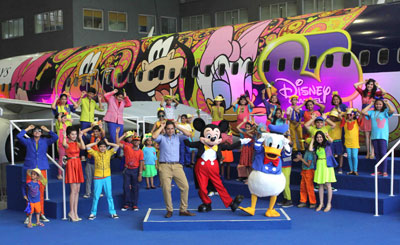
    Disney’s beloved Mickey Mouse and Donald Duck along with the popular cast from Disney Channel india, winners of Jet Set 2 and designer Shantanu on the occasion of unveil of the Disney branded plane

    Disney Channel culminated its Jet Set 2! Campaign with 30 kids and their families flying to Hong Kong Disneyland.


    Generating a staggering 8.3 million entries, Disney Channel’s Jet Set 2! surpassed last year’s 6 million entries and has seen winners from across the country.


    “The phenomenal response to the campaign, now in its second year, demonstrates the brand’s unique ability to connect so well with audiences. Our association with renowned designers Shantanu and Nikhil for the Disney inspired line, unveiled through the winner kids, only added to the excitement and celebrations,” said Bikram Duggal, Director-Marketing, Media Network, Disney-UTV.


    The channel, in association with Jet Airways, also unveiled an aircraft adorned with Disney characters at an event held on Monday (June 17). The new Disney plane from the fleet of Jet Airways will take to the domestic skies beginning June 20.


  • UTV’s Samir Bangara joins Qyuki as MD & CEO

    By A Correspondent


    The board of Qyuki Digital Media Pvt Ltd has announced the appointment of Samir Bangara as its Managing Director and CEO, succeeding Poonacha Machaiah. Mr Bangara will assume his new role from June 3, 2013.


    Prior to this appointment, Mr Bangara was managing director of the digital business at Disney UTV. With 15 years of extensive experience in the media and technology space, he was responsible for driving growth and scaling the digital business of the company in various avatars.


    More than track record in building companies, what is important to me and A R Rahman is that the goals and dreams of people who join our endeavour are equal to ours. We welcome Samir in joining us both as part of the founding team, confident of his commitment, aspirations desire and abilities to venture with us beyond where individually we are capable of,” said Shekhar Kapur, film director and producer.


    Unlocking the creative potential of India is an incredibly compelling idea. I was in the midst of starting my own venture focused on this when I met Shekhar. The ability to partner Shekhar Kapur and A R Rahman and coming aboard Qyuki added terrific synergies to my own ambitions,” said Samir Bangara.


    Any start-up in this space is like sailing into the high seas with sails being ripped by uncertain storms. Poonacha has been a great captain at the helm and kept the ship steady and on course. He will be missed and we wish him luck” said AR Rahman, composer, singer, songwriter and record producer.


  • Vishal Gondal, founder of Indiagames, moves on

    By A Correspondent


    Vishal Gondal

    Vishal Gondal, Founder and CEO of Indiagames and Managing Director – Digital of Disney UTV, will be moving on from the company. His last working day will be June 30. Sameer Ganapathy, who was earlier handling the distribution for the media networks business of Disney UTV, will now take on the business function for the digital arm of Disney UTV.


    Ronnie Screwvala, MD, Disney UTV, said, “Vishal has been a great founder and CEO for Indiagames. As we consolidate the digital, mobile and web play for Disney UTV in India, we plan to build on our creative prowess and transform the digital business to be a direct to consumer, yet working closely with all our partners, telecom operators, OEMs and others. This is similar to our approach in our other verticals of movies, broadcasting and consumer products. Sameer Ganapathy brings an astute business sense and high resourcefulness to this position, which is key to meet the ever growing trajectory of the digital business in India.”


    Ronnie Screwvala

    Mr Gondal said, “Indiagames had small beginnings but a big dream. I cannot help but look back with a tremendous sense of fulfilment and pride, upon the long, eventful & exciting journey. I am really proud of what the team has accomplished. Excellent support from our early investors Infinity, IL&FS, TOM Online, Adobe, Cisco & UTV & the subsequent acquisition by Walt Disney provided us the opportunity to work towards our vision of making gaming big in India. Over last 18 months, we have spent time integrating the teams and set a platform for continued growth. Consequently, I’ve decided to move on to pursue my passion for being an entrepreneur,” said Mr Gondal.


  • Indiagames & Parle launch IPL Cricket Fever game

    By A Correspondent


    Disney UTV’s Indiagames has launched the official IPL season 6 mobile game, ‘IPL Cricket Fever 2013’. It has associated with the Parle brand, 20-20, within the game.


    The in-game branding includes mat branding, four branding (every time the player hits a four), cheerleader stand branding, in-stadia branding etc. Available on Android, the mobile game is close to the actual on-ground IPL match with all official 9 teams – Mumbai Indians, Chennai Superkings, Sunrisers Hyderabad, Delhi Daredevils, King XI Punjab, Kolkata Knight Riders, Rajasthan Royals, Royal Challengers Bangalore and Pune Warriors.


    Vishal Gondal

    Vishal Gondal, Managing Director – Digital, Disney UTV said, “We have been providing cricket enthusiasts with the official IPL mobile game year-on-year successfully since season 3. With the IPL frenzy growing with every passing year, we have witnessed millions of downloads of the game which has been growing exponentially.”


    This is the second time that Parle has associated itself with a mobile game. In 2011, Parle G featured in Ra.One’s official game.


    Pravin Kulkarni, General Manager, Marketing, Parle Products said, “India is a cricket loving nation and IPL is the current craze in the audience. The format of IPL, which is T20, fits perfectly well with our brand Parle 20-20 cookies.”


  • BoxTV inks deals with Sony Pictures Television and Disney UTV

    By A Correspondent


    BoxTV has announced content agreement with Sony Pictures Television and Disney UTV to offer premium titles on its video streaming service. Launched by Times Internet, BoxTV is a premium video service that offers movies, TV shows, short films, documentaries and much more, which users can watch on a regular web browser or through the device of their choice.


    To this end, BoxTV has also partnered with UTV Motion Pictures, Shemaroo Entertainment Rajshri Entertainment and Everymedia Technologies for Bollywood and Regional content in addition to their agreements with major International studios; Sony Pictures Television, Disney UTV and Celestial Entertainment for premium Hollywood content.


    Angel Orengo, Executive Vice President, Distribution, Asia Pacific from Sony pictures Television said, “We are happy to offer some of our premium titles on BoxTV’s on demand service. The Indian digital media industry has grown rapidly in the last few years and we support their efforts to launch this service and another exciting medium for content consumption in this evolving digital landscape.”


    We are excited to offer some of our best content from ABC Studios, Disney UTV Pixar, Disney UTV and Disney UTV Studios to the consumer at one destination. We believe that Box TV will be a great platform for us to showcase our wide breadth of entertaining and world class content,” said Amrita Pandey, Executive Director – Syndication, International Distribution & Disney UTV Media Distribution, Studios, Disney UTV. Satyan Gajwani, CEO of Times Internet Ltd, said, “We are very excited about the agreements we have forged with premium International studios. BoxTV is a one-stop source for all video entertainment and we strive to consistently deliver greater value to our customers by bringing the best anytime, anywhere entertainment on multiple platforms. With these partnerships, we provide our users access to a vast content library of popular choices to watch.”


    The service will be available across iPhone, iPad, Android phones and tablets; Kindle Fire, EvoTV, Woxi Pod and Roku. Apps for Windows 8, J2ME and Blackberry platforms are currently in the pipeline.


  • Jaldi 5 with Anuj Gandhi, CEO, IndiaCast: No dramatic, but fundamental change


    Anuj Gandhi, CEO of IndiaCast and the yet unnamed proposed jv of IndiaCast and DisneyUTV and a veteran in the distribution space, on what the new entity means for the broadcast business


    Anuj Gandhi

    01.         IndiaCast was already distributing Disney channels in India though UTV wasn’t being distributed by you… so there will be no dramatic change on the ground. Right?

    No dramatic but fundamental change in the way we are perceived in the market.

    02.         As someone who has been a participant and watcher of the Indian broadcast space, would you see any more consolidation in the space?

    Some small pieces are still to be sorted but no major change at the national level – next phase may focus in the regional space

    Will IndiaCast be ‘game’ for more partners from independent clusters of channels?

    We will look for quality rather than quantity and also brands/products which add value to the overall bouquet

    03.         Much done, yet Mediapro with 70+ channels is still far ahead of IndiaCast. What will narrow the gap in the weeks/months/years to come?

    I don’t think we need to narrow any gaps – will like to focus on what we have and how to ensure that we get our fair share in the market.

    With distribution companies such as IndiaCast playing a critical role for monetization of channels in a digitized world, do you see such a consolidation move helping achieve that?

    Yes, it does. Also, it gives us a much wider reach and helps in better negotiations.

    04.         Your international and new media distribution and syndication will not be part of the jv. Would you see independent JVs/consolidation happening towards that too?

    These streams are still growing for us and traditionally there hasn’t been much consolidation, so not sure. We would like to build on what we have rather than aggregation.

    05.         It’s interesting that the world’s largest media conglomerate (Disney) ties up with a jv of the fourth-largest media conglomerate (Viacom) for distribution. Was it just the ground realities in India that brought you’ll together or was it a lot more?

    I think it is the way distribution business in India works where aggregation happens at the content level. So, it is just ground realities in this market.