Tag: disability

  • Is disability inclusion a far-fetched dream?


    By Shruti Pushkarna


    Shruti PushkarnaI enjoy driving, especially if it’s interstate. Road trips both liberate and invigorate me. But I avoid getting behind the wheel at night due to my nearsightedness. I wear high minus lenses, or what optometrists call a strong prescription, and that makes it difficult to focus on the road with lights flashing in my eyes from front and/or rear.


    Simply put, highway traffic is disabling for me. My eye condition in that sense is restrictive or even prohibitive. But in no way do I feel incapacitated or less than anyone else. And on several occasions, I have managed to steer towards my destination with lighting hiccups.


    Myopia or any corneal issue is hardly termed a disability in the conventional sense of the word. It’s an impairment but I don’t recall being addressed as a person with vision impairment so far. Even though I struggle to see without my glasses or contact lenses.


    For me, contacts solve two problems, one is cosmetic and the other is encountering people’s perception towards anyone with thick spectacles. They make the disability invisible. To another’s eye. For me, it stays tangible in every aspect of daily living.


    Last month, I slipped in the bathroom and severely injured my knee. I was grounded for three weeks before I could start limping around the house. Trying to walk with very little pressure on the knee, I ended up exerting the ankle. That’s problematic because I live with a sore ankle, weakened by tissue damage multiple times. To lead a normal life, I have to exercise regularly and strengthen other muscles in the leg. Else, I experience trouble in walking and driving, in addition to excruciating pain.


    But if I exercise, the said muscles for 15 minutes daily, I can cope. Doesn’t sound too complicated, right?


    Except after two long hauls of Covid-19, regular exercise has been out of question for me. It took a while to understand the changes my body experienced due to the virus and overmedication. Fatigue and persistent fever weakened my system. The gut was also hit, making it impossible to digest foods or medicines that could help. Every time I attempt at building a healthy routine, I falter as some symptom (re)surfaces.


    Are you already wondering what a mess I am? Or feel that I’m quite a ‘special’ case? Don’t worry you are not the only one thinking it. As frustrating as it maybe to live with a recurring series of problems, what’s worse is to be judged for it.


    Your family, friends, colleagues and employers project biased perceptions, disregarding difficulties you grapple with, to counter those very judgmental eyeballs. You often become the butt of distasteful jokes. You stop mentioning your health problems to your closest circle of people. You show up to work even on days you are physically unfit. You overperform to exceed expectations, in both personal and professional space. So that you are accepted.


    Yet the insensitivity disturbs and distresses.


    Globally, one in seven of us live with a disability. And of those, 80% are invisible. That’s 1 billion people living with a non-visible disability. 96% of people with chronic medical conditions live with an invisible illness. Covid has added to this count, with an increasing number of people experiencing a long-term disabling condition, like Crohn’s disease, Liver Cirrhosis, Diabetes, Anxiety, Neurological and Intestinal disorders, et cetera. People have also been battling severe allergies, loss of smell, altered taste, brain fog, depression, brittle bones and more, in the post-Covid world. Furthermore, people with chronic illness are mired in Catch-22 scenarios, making it impossible to treat one condition without a worsening side effect.


    According to Disability 100 Findings Report from May 2021, “No executives or senior managers at any of the FTSE 100 companies have disclosed they have a disability.” With no representation on the top, what is the probability of employees sharing their challenges at work?


    Acceptance precedes accommodation. If we don’t see, hear or understand it, how will we build an inclusive ecosystem for all?


    If you follow stories on disability or inclusion, you’d realise October is a month rife with awareness campaigns. Individuals and organisations working for disability rights have been busy sharing information and insights or curating events for World Cerebral Palsy Day (October 6), Blindness Awareness Month and Invisible Disabilities Week (October 16-22).


    These annual observances are an opportunity to educate as well as remind people of the challenges and the courage, the dreams and the hurdles, the limitations and the successes, and most importantly, the different aspects of the lives of millions living with some form of disability. It’s a celebration as well as an acknowledgment of the diversity that exists.


    But apart from niche accounts posting on Instagram or LinkedIn, there hasn’t been any significant mass coverage of the issues facing people living with cerebral palsy, blindness, mental and neurological disorders, chronic illnesses or other innumerous invisible disabilities. How come the Indian media remains oblivious to the prospect of sensitising the civil society towards a large and vulnerable section of the population?


    So why are we publishing this column on an A&M site? Well, we strongly feel that the media can dramatically transform the world of persons with disabilities And this series can help bring forth issues that the media must champion to create a truly inclusive and accessible India. To write this column, in late 2019, we invited Shruti Pushkarna, a former journalist who now works as Director, EnAble India where she heads North India operations as well as media and communications outreach. Shruti writes for MxMIndia every other Thursday. Her views here are personal.
     

  • Disability Inclusion: Should the media practise and propagate accessibility?


    By Shruti Pushkarna


    Shruti PushkarnaMay 19, 2022 marks the eleventh edition of Global Accessibility Awareness Day (GAAD). Founders, Joe Devon and Jennison Asuncion teamed up in 2012 to initiate the famous GAAD movement following a blogpost (by Joe) and a thread on Twitter (spotted by Jennison).


    The objective is to raise awareness and know-how on how to make the digital environment (products and services) accessible for one billion people across the world, who live with some form of disability.


    Through various events, talks and hackathons, everyone gets talking, thinking and learning about digital inclusion and access. India has been an active participant in the movement. But other than the usual suspects, including disability advocates, potential beneficiaries of accessible ecosystems, accessibility testers and consultants, most of us don’t really care about this annual observance.


    In fact, unless one is aligned to the disability sector in some way, the term GAAD is probably alien.


    Before we (society and media) can propagate the removal of barriers in access, it is imperative to understand the problem and its magnitude.


    Imagine not having access to online services like banking, food delivery, social media, maps, search engines. Feels strange, right?


    In the digitally connected world, we cannot fathom making physical trips to the bank, telecom provider, grocer, fruits and vegetable vendor, chemist et cetera for essentials.


    It’s almost paralysing to think of a life without our handy gadgets: smartphone and computers.


    Persons with disabilities live with physical, mental or sensory limitations. But technology can enable them to lead less crippled lives.


    Here are just a few scenarios citing how digital inclusion can alter the rules of engagement.

    1. Booking flight tickets online

    A person with hearing or speech impairment, vision impairment or locomotor disability can access travel booking apps or websites using computers and assistive technology (or devices). However, an inaccessible audio or image Captcha can prevent them from independently closing the transaction.


    2. Internet banking

    A disabled person confined to his or her home because of the barriers in the physical environment, can avoid the hassles of visiting a bank for financial transactions. Most of us are empowered by the ease of digital payments today. Persons with disabilities can also use payment gateways, online banking and mobile wallets to seamlessly transfer money. Again, the platforms need to be compatible with assistive tools and technology.


    3. Ordering food, medicines, other essentials

    Persons with disabilities don’t have to depend on another for everything. There are a lot of daily activities and needs that can be met independently. Like ordering groceries, medicines, vegetables, fruits or scrumptious food, using popular websites and apps that deliver stuff to the doorstep.


    4. Reading

    Whether it’s catching news updates or reading fictional accounts, e-publications and audio books make reading easily accessible for a larger population, including print disabled. Needless to say, this impacts inclusion in educational institutions as well as the workplace.


    5. Social engagements

    Access to social media platforms like Twitter, Facebook, WhatsApp and Instagram helps expand a disabled person’s social circle. They can interact with a wider and diverse group in a virtual setting, without being constrained by their disability.


    So why should we care about ensuring access to this section of the population?

    The numbers are huge.

    We are talking about 15 per cent of the world’s population that faces challenges in accessing websites, mobile applications, or other digital products, if developers and designers don’t adhere to accessibility guidelines. And these include people who are educated, employed and even taxpayers.


    Disabled folk are caught in a vicious cycle of marginalisation.

    Excluded from opportunities of education, employment and entertainment, persons with disabilities continue living on the margins. Access to digital services, especially in a world driven by technology, can help them attain personal and economic independence.


    Equal access implies increased participation that helps in refuting stereotypes.

    Picture an inclusive classroom where students with and without disabilities can access books and lessons through computers, smartphones or assistive devices. Quality education can reduce the burden on reservations and benefits, with more and more disabled folk pursuing jobs based on merit and aspirations. Gradually belying the stereotype of lifelong dependency.


    Seeing the disabled as active citizens.

    The ability to attend school, work a job, participate in an online forum, make financial investments, argue and opine on social media, transforms the disabled from an invisible majority to active citizenry. A natural progression towards ‘person first’ narrative follows, where disability becomes inconsequential.


    Untapped human resource can impact the economy.

    The International Labour Organisation suggests that including persons with disabilities into the workforce can positively impact the GDP by 3 to 5 per cent.

    Accessibility not only paves way for an inclusive society but also makes perfect business sense to make products and services available to a wider pool.


  • It’s not funny! Mocking one’s disability for another’s hilarity


    By Shruti Pushkarna


    Shruti PushkarnaLaughter, they say, is the best medicine. Humour is also an equaliser of sorts, the jester can ridicule the prince and the pauper alike. Often what can’t be uttered directly, is passed off easily, garbed in satire. We see that a lot these days, in the form of standup comedy, where political powers or specific groups are targeted in jokes. Gaining popularity in both online and offline avatars, standup comedy is increasingly becoming a respectable career choice for many.


    But what happens when the joke is directed at someone vulnerable or marginalised?

    The other day, I came across a video clip in which an Indian comic, Abhishek Upmanyu incites laughter by mentioning physical disability. The joke is not only in bad taste, it makes no sense. I’m sure there is a larger context to his gig, but nothing justifies the sheer insensitivity.


    What is funny to someone, can be extremely hurtful to another. Growing up, I used to wear thick spectacles to school. That’s when we didn’t have the luxury of ordering high index (thin) glasses to meet one’s cosmetic needs. I was mercilessly derided by peers who called me ‘chaukhi’ which loosely translates to ‘four-eyed girl’. Some kids even hid my glasses, and rejoiced seeing me bump into furniture, trying to find my way around.


    While their laughter filled up the classroom and the corridors, it wasn’t funny for me.


    Because of intrinsic stereotyping in literature, cinema, television, advertisements et cetera, the business of ‘othering’ is assumed to be acceptable. It comes naturally to people, young kids included.


    It has been normalised to such an extent, that we use phrases and words without worrying about the implications. Common utterances include, ‘That joke is so lame’, ‘Why are you acting bipolar’, ‘Are you retarded’, ‘Can you dumb it down’ and so on.


    Another comedian, Neville Shah was slammed online for ridiculing persons with disabilities. Incidentally, this artist features on a popular OTT platform. In this particular clip, Shah mocks disability and reservation for the underprivileged sections of society.


    https://twitter.com/riteshjyotii/status/1393945614946164746?ref_src=twsrc%5Etfw%7Ctwcamp%5Etweetembed%7Ctwterm%5E1393945614946164746%7Ctwgr%5E%7Ctwcon%5Es1_&ref_url=https%3A%2F%2Fwww.idiva.com%2Fnews-opinion%2Fnews%2Fcomedian-neville-shah-criticised-for-casteist-remarks%2F18020195


    How can apathy towards a sizeable section of the population result in comic relief?


    Bollywood also has a history of portraying disabled people as farcical, oafish or villainous. Their physical disability is accompanied with a character distinction that puts them apart from the rest of the cast. Premnath plays the powerful villain, Sir Judas in the film Karz who is speech impaired. Shah Rukh Khan plays young Rahul in the film Darr, chasing Juhi Chawla with an abnormal passion. His unhealthy obsession is attributed to mental instability. Vivek Oberoi plays the villain, Kaal in Krrish 3 who is paralysed neck down.


    Buffoonery and disability also go hand in hand in Indian cinema. Tushar Kapoor is characterised by speech disability in the famous Golmaal series. The weird noises made by his character have made him all the more endearing to the audience. Three lead actors, Akshay Kumar, Riteish Deshmukh and Abhishek Bachchan pretend to be disabled, in the slapstick comedy Housefull 3. One character plays a wheelchair-bound cripple, another pretends to be blind, and the third dons the garb of a mute man, only to generate some silly laughs.


    However, mocking disability is not limited to the Indian subcontinent. Several comedians across the world have indulged in thoughtless mirth at the expense of persons with disability.


    A Canadian comedian, Mike Ward mocked a disabled singer, Jeremy Gabriel who became a celebrity as a young boy. Known as ‘Petit Jeremy’, Gabriel has Treacher Collins Syndrome, a genetic disorder that affects facial bone structure. In his case it caused severe deafness. His family filed a human rights complaint, which was challenged and won by Ward on grounds of free speech.


    In 2018, advocacy groups, individuals and parents of children with Down Syndrome vociferously condemned comedian Tom Segura’s repeated usage of ‘retarded’ in the Netflix special ‘Disgraceful’.


    In the American sitcom ‘Big Bang Theory’, Stuart Bloom who is the owner of a comic bookstore, struggles with physical as well as mental health issues. He is made the butt of jokes, used for cheap comedy and easy one-liners.


    In the process of entertaining a majority, comedians and writers indulge in ‘otherising’ a minority and reinforcing prejudices in the societal mindset. Should the media be perpetuating such stereotypes?


    Shruti Pushkarna is a former journalist who now works as a programmes and media specialist for the inclusion of persons with disabilities. Shruti was part of the founding team of MxMIndia and now writes for MxMIndia every other Thursday. Her views here are personal. She can be reached via Twitter at @shrutipushkarna


  • Shruti Pushkarna: Does disability make social engagements less gratifying?

    By Shruti Pushkarna


    Shruti PushkarnaI personally love the winter season in Delhi. December and January are my favourite months, as long as the sun keeps shining. I enjoy stepping out after layering up adequately. But winter rain can be a downer.  Moist and gray outside, chilly inside, it’s hard to feel anything but gloom.


    Needless to say, it’s even more discomfiting to be locked in because of the rampant virus. The lack of choice, of going out to work, shop or meet someone, puts us under stress, unconsciously.


    In such harsh times, the idea of catching up with a friend over a steaming cup of tea or cocoa is exhilarating.  It’s the easiest, most casual thing for us to do. Call a pal, sibling or cousin, pick a café and chill. I have a list of catch ups planned once the Covid numbers start abating.


    Social engagements are intrinsic to human beings. A sonorous fact of the post Covid times. When we speak of inclusion, whether it’s gender, caste or disability, the conversations are mostly centred around empowerment through employment.


    We (organisations, governments, individuals) often underscore the need for social integration. Apart from the sense of dignity that comes with economic self-reliance, persons with disabilities (just like you and me) aspire for societal acceptance.


    Let’s take five commonplace scenarios which offer some form of gratification or liberation to us. And then picture if the 2.68 crore disabled population and 13.8 crore elderly (who may live with temporary disability or limitations in mobility, reading et cetera) feel the same way.


    1. As a woman and a working professional, driving gives me a sense of freedom. The fact that I don’t have to depend on anyone to shuttle me back and forth, or worry about hailing a taxi and contracting the virulent Omicron, is liberating. You can argue that disabled people cannot drive with their physical limitations. True. But there are ample solutions in the market. Here’s a picture of a paraplegic who drives himself around in a modified hand-controlled car.


    2. Catching the latest releases in a theatre nearby. And topping up the screening experience with popcorn and soda. How many wheelchair users have you encountered in a cinema hall? Even though some theatres have special access to a few seats. Did you know that a blind person relies on audio description to follow the visual narrative? A lot of OTT content on popular platforms like Amazon and Netflix now have audio described productions. Even if the disabled chap were to make it to the movies, can she or he really make an independent trip to the snack bar?


    3. Going out on a lunch date involves picking your favourite cuisine and the right ambience. Not so easy for someone with a disability, which often prevents them from even planning one. They have to ensure if the place is physically accessible for a wheelchair or a crutch or a walker. This includes entry/exit points, washrooms and seating area. Have you had to worry about a braille menu or a sign language interpreter for your meals?


    4. Shopping for clothes, shoes, bags or household stuff can be cathartic. But picking up something for yourself or a loved one is not easy if the shopping plaza isn’t accessible. Again, access is not defined in terms of physical navigation alone. The entire shopping experience has to be disabled friendly, including human assistance, secure transactions, quiet spaces for someone on the autism spectrum, and so on. Icing on the cake would be clothes and accessories designed for persons with disabilities. Online shopping does take care of some of these issues, except it’s not as delightful for those who enjoy the old school touch and feel version. A couple of years ago, Future Group’s Big Bazaar took a step towards making shopping inclusive and accessible.
     

    5. What better way of winding down in bed with an enjoyable book. I restrain myself from entering bookshops because of the urge to buy every interesting title. But if I want it, I can simply pick it off the shelf and start reading. Books have a way of expanding our imagination by transporting us into different settings. Can visually impaired people get a taste of something they will never see, by just reading about it? Yes of course. Except they access books in audio formats. Incidentally, India was the first nation to ratify the Marrakesh Treaty, an international legal instrument which makes it easier for blind and other print disabled people to access works protected by copyright. Yet, I know so many who struggle to find accessible books for their reading pleasure.


    In the last few years, I have made a lot of new friends who live with some form of disability. They share my urge to eat out, travel, gossip and splurge. Basic social engagements reiterate the ‘normal’, giving a chance to form connections without prejudice.


    Unfortunately, media portrayals hardly focus on the scope of collective light-hearted human indulgences, irrespective of (dis)abilities. Either disability is ridiculed, or treated too gravely, making it abnormal in some way.


  • World Disability Day: Is it time to question the country’s readiness on disability-friendly policies?


    By Shruti Pushkarna


    Shruti PushkarnaTwo years ago, on December 3, I wrote my first column with the intent of initiating a dialogue on ‘disability’. Why did I feel the need to do so? Primarily because disability or the needs of the disabled population have never been part of our mainstream agenda. Raising awareness, I thought, would be the first logical step towards reducing the ignorance levels.


    Second, the conversations on disability in the media focused on romanticised tales of role models, generating sympathy from the audience or worse, making them feel thankful for their able-bodied existence vis-à-vis someone who was paying off his or her karmic debt.


    I don’t know if my attempts at reinforcing the need to normalise disability, shifting the focus on abilities, and accepting the differences, has altered any mindsets. But if I have been able to make you pause and think even for a moment, I feel accomplished.


    And on the eve of International Day of Persons with Disabilities (IDPD), I renew my vow to keep at it. Keep advocating for an ‘inclusive’ world for all. Not only because it’s the right thing to do, and everyone deserves a chance to live independently with dignity. But also, because including 15 per cent of the global population will change the majority’s perspective towards life and situations.


    If you are wondering ‘how so’, believe you me, that’s been my biggest personal lesson. Disability is a condition that a person is either born with or acquires later in life. It’s a condition that results in limiting the person in some ways. The limitations, however, are a result of barriers in the physical (and virtual) environment as well as behavioural blockades.


    Learning to respect the differences stems from concentrating on the potential of people without fixating on what doesn’t ‘seem’ possible to us. For this to happen, ‘accessibility’ has to become a priority. Once persons with disabilities start participating and interacting with the mainstream, the walls in our heads will slowly start coming down.


    Let me break this down a bit. I worked as a television news producer some years ago. If I were to take up that job again, I can easily see a blind person scripting or voicing the show. I can also picture a speech impaired production assistant accompanying the crew on shoots, maintaining logs, holding up cue cards etc. A person with locomotor disability can very well be the go-to guy (or gal) for topical research.


    This is just one possible scenario emanating from my ‘limited’ understanding. Imagine the possibilities.


    If we can work on removing the obstacles and introducing solutions that enable persons with disabilities not only to enter or exit a space, but perform all the functions that are essential to that scenario, this column will become redundant.


    Why? Because first-hand interactions and experiences are the most effective ways to ‘sensitize’.


    Before you write me off as pedantic, here are some examples which reiterate the gaps in inclusion and speak of our (read society/government/corporates/policy-makers/media) indifference towards the disabled community.


    1. It’s 2021. And the Rights of Persons with Disabilities Act 2016 recognizes 21 types of disabilities. But our accessibility definition starts and ends with a wheelchair. So much so, that we force blind, deaf or speech impaired people into a wheelchair despite their ability to use their legs!

    2. Even wheelchair access is not implemented fully on the ground. Many places don’t have wheelchairs. If you bring one of your own, good luck pushing it through the narrow doors of rooms, toilets, shops, restaurants etc. And then there’s the ramps. You are sure to exercise your forearms pushing the wheelchair up and down the inconsistent and steep inclines.

    3. Where are the statistics on the disabled population? Forget gender, children, state or disability specific data, the latest count we have is from Census 2011 which is far from accurate. If we don’t know how many need access to services and spaces and in which geographies, what is the likelihood of catering to their needs?

    4. The United Nations theme for IDPD 2021 is “Leadership and participation of persons with disabilities toward an inclusive, accessible and sustainable post-Covid-19 world.” After the pandemic, a majority of our social and professional activities have moved online. But digital platforms including websites and mobile applications are not fully accessible to persons with disabilities. December 31stis the deadline for filing income tax returns and the government’s official portal is ridden with virtual barriers. Digital wallets, the new norm of post-demonetisation and socially distanced world, remain inaccessible.

    5.The UN Sustainable Development Goal 11 is to make cities inclusive, safe, resilient and sustainable. Yet we are building parks, cinema halls, shopping plazas and holiday resorts discarding the principles of universal design.


    Although some media reports and surveys might suggest that we don’t score too badly on the global index, is India really a disabled-friendly country? Can the media step away from tokenism on December 3 and really ask some tough questions on whether our country adheres to the ‘Leave No One Behind’ philosophy?


    Shruti Pushkarna is a former journalist who now works as a programmes and media specialist for the inclusion of persons with disabilities. Shruti writes for MxMIndia every other Thursday. Her views here are personal. She can be reached via Twitter at @shrutipushkarna


  • Shruti Pushkarna: ‘Coupling’ with Covid: One hell of a roller coaster ride

    Shruti PushkarnaBy Shruti Pushkarna


    As promised, here is a personal account of my three months’ absence, when I couldn’t put pen to paper and furnish my otherwise extremely regular fortnightly column. If you are wondering what’s this got to do with the theme of disability, the answer is probably nothing. Except maybe it articulates a similar sense of helplessness and frustration, experienced by the disabled folk on varied levels 24×7. A first for me, it was truly novel and intense.


    The start of a new financial year, April 2021 saw a sudden explosion of Covid cases in the country. Delhi and NCR were badly hit. As I took my marital vows (in a close family setting), Chief Minister Arvind Kejriwal announced a curfew with immediate effect. En route to my new abode, we were stopped and questioned by cops for disregarding the latest notification. Caught off-guard, we requested the trail of cars be allowed to pass the barricade.


    Oblivious to the alarming crisis building outside, we chuckled and chatted, celebrating our conjugal beginnings. But in two days, things changed drastically. One after the other, the whole family tested positive for Covid-19. With each phone call, the tally went up, everyone reporting cases from their circle of family and friends.


    Initial symptoms of fever and cough didn’t seem so bad. It was the messaging going around that instilled fear, forcing one to imagine the worst scenarios. ICU videos of patients struggling to breathe, accounts of people dying from the lack of oxygen on their way to the hospital, shortage of beds and oxygen, hoarding of drugs, news and social media was full of it. Not to miss the emphatic promotions of oxygen concentrators, oxymeters (not made in China), homeopathy medicines and what not. Everyone and their uncle was an expert on coronavirus!


    Grappling with isolation and new relationship dynamics, best decisions weren’t easy to come by.  Starting with doctors.


    What do you do when you first start to show symptoms? Who do you call? Most physicians you’ve known all your life have no experience with Covid, so whose opinion do you trust? And to top it all, various Covid treatment guidelines floating around add to the imbroglio.


    For a week, we diligently followed the usual course of antibiotics, vitamins and breathing exercises. Things didn’t improve, in fact went downhill. The viral videos came to life, as my husband struggled to breathe and I made endless calls to arrange for a concentrator. We were lucky, the machine finally arrived, but as both of us tried to make the contraption work, things took a risky turn. We had to rush to a nearby hospital.


    I helped my husband into an ambulance and loaded my car with the oxygen backup (since the hospital wasn’t equipped), clothes and some essentials. As I got behind the wheel, my own O2 levels dipped.


    It seemed surreal, but it was all happening in real time and space.


    Picture this. My husband on one bed, breathing with the oxygen tube jutting into his nostrils, his O2 numbers fluctuating, causing the machine to beep incessantly. I lay on the bed next to him, with a cannula in my wrist, injecting steroids and antibiotics into my body. Sometimes, I tried to look out the window, for a ray of hope. But all I saw was the backyard of another hospital where new patients and dead bodies lined up daily. The beeping from the machine and the siren from the ambulance became my staple aural diet.


    Even so, there was no room to express any anxiety. In there, I had only one mission, to get us out of there. To make sure we got the right treatment. Thanks to my mother’s chronic illness, I have reasonable amount of experience with caretaking and dealing with doctors. I have learnt not to depend on nurses or hospital staff for adequate patient care. Services are shoddy, often due to low compensation and dearth of human resources. Given the dire circumstances and the volume of cases at the time, one could hardly blame the health workers.


    I saw other Covid patients on the same floor, battling alone, as no family member wanted to enter the infected zone. I wondered how many of them got proper attention. Those who weren’t medically aware or aggressive enough simply relied on whatever the staff handed out to them.


    It’s amazing how most citizens don’t question the treatment administered to them. Not just in Covid, doctors don’t like patients or their caretakers seeking clarification on the prescribed course of action. Bedside manners and hospital management don’t seem to feature in medical school curricula.


    So why am I indulging you in this elaborate excruciating extravaganza?


    With the scare of a third wave brewing, one can’t help worrying about what will happen if people act as recklessly as they did the last time around. I want to share some do’s and don’ts that can help.


    Don’t read the news.

    It never helps. Every case is different and there is no point in drawing parallels. Just focus on your body and its recovery. Also, the prime motive of coverage seems fear mongering to garner eyeballs.


    Don’t engage in medical updates and futile conversations.

    Limit your communication to what helps your case. Reiterations of your physical state will only exhaust you emotionally. Stick to speaking with those who ‘really’ care.


    Trust your doctor.

    As tempted as you might be to follow multiple medical advisories, don’t. Have faith in your doctor’s expertise and let her/him help you come out of it.


    Stay positive.

    The only thing that pulls you out of any tough situation is a healthy mind. No matter how bad your physical condition, remind yourself constantly, that you can overcome. Our mental state impacts our physiology, so use it to heal from within.


    Focus on disease management.

    Covid is all about proper management, starting from Day 1 at home. Ensure you are in touch with a good doctor from the start. Follow the advice diligently and keep an eye on changing symptoms. Take an informed call (without worrying) on when to get hospital care. Arrange for oxygen backup and have a network of friends and family lined up for remote help. If you plan and manage it well, the likelihood of recovery is higher.


    Don’t lose patience.

    This virus takes a toll on your body and mind, in unfathomable ways. The disease has after-effects that can trouble you for months (I’m still suffering). It’s a test of your tolerance. It helps to accept the situation and wait for it to recede, of course with necessary treatment and precautions. It’s easy to get frustrated because it turns your world upside down, but you need to exercise patience.


    Save for a rainy day.

    If you have money in your bank, half your stress gets taken care of. The disease starting from testing, treatment, after care and logistics, makes you bleed. Throwing money at the problem eases some troubles for sure. But be watchful of obvious traps and treachery. I wasn’t and I regret it.


    I must confess that working with the disabled community has given me valuable insights into acceptance, threshold and grit. And firsthand trauma made me realise what it is to be up against odds every singly day of your life.


    It’s been a lesson in compassion, forbearance and gratitude.


    (Welcome back, Shruti – Ed)


    Shruti Pushkarna heads operations of the New Delhi-based Score Foundation where she works as Director-Programmes & Communications. She is a former journalist (part of the founding team of MxMIndia) who has moved full-time to the social sector. Shruti writes for MxMIndia every other Thursday. Her views here are personal. You can tweet your comments and suggestions to @shrutipushkarna

  • Shruti Pushkarna: Who really cares about Disability?


    By Shruti Pushkarna


    Shruti PushkarnaOver the last year-and-a-half, through this column, I have highlighted the sheer neglect and absence of empathy towards persons with disabilities. It is apparent in our policies, provisions, their implementation, legal framework, news coverage and above all in our general lingo. We don’t care about the disabled. As harsh as it may sound, it’s true.


    Disability seems to be the last on any agenda, that is, if it pictures at all. It took us a while to acknowledge equal rights of women, homosexuals, transgender and so on. One wonders how many years to go before we can dignify the existence of the country’s disabled citizens. This when more than one billion people in the world are living with some form of disability.


    Let’s look at the ongoing vaccination drive to prevent the third (or fourth or fifth) wave of Covid-19. Periodically, the government and the media showcase data, citing millions of doses administered across states. But there are no numeric mentions of jabs taken by the disabled community. There are ample media stories speculating the efficacy levels of different brands of vaccines, the shortage of centres or doses, distribution issues etc. What’s missing from the coverage is that there are no systems in place to ensure persons with disabilities have proper access to the process.


    Most people can go online and make an appointment or register themselves on the CoWin app. But is it really accessible to all? There are many blind and visually impaired people who are unable to make an appointment using the drop-down menu on the website or the mobile application. People with vision impairment use screen readers to interact with their digital devices. And drop-down menus not designed adhering to accessibility guidelines, are almost impossible to navigate.


    Moreover, the assumption behind online registration is that everyone has access to a smartphone. That is fallacious, because a sizeable chunk of the disabled population has no access to mobile phones or Internet. It’s almost as if the process is designed to exclude.


    Physical access to the vaccination centers is also an uphill task for the disabled folk. Traveling from point A to point B is not easy in these times because social distancing is hard to maintain for people who heavily rely on physical assistance. Even if hospitals have ramps for wheelchair access, the staff lacks the awareness of how to engage with a person with hearing impairment or visual impairment, or someone with autism or cerebral palsy. Not every disabled individual is lucky to have a caretaker accompany her or him. Not to mention disabled couples who live alone or worse, have been discarded by their families.


    But all the raving and ranting about this issue is confined to closed discussion groups or disability welfare forums, that struggle to find a mainstream voice for advocacy. The media doesn’t report. And so the policymakers and the medical fraternity couldn’t care less.


    Speaking of reportage, the two-child policy was in the news earlier this month. After Assam, Uttar Pradesh is pushing for a new norm in the state, aiming to bring the birth rate down to 2.1 per thousand population by 2026 and to 1.9 by 2030.


    The draft bill emphasises on incentives and disincentives with regards to government jobs, schemes and provisions. Uttar Pradesh is not a lone player, states like Rajasthan, Madhya Pradesh, Maharashtra, Gujarat, Uttarakhand, Andhra Pradesh and Telangana have had some form of the two-child norm in place. They have restricted people with more than two children from contesting Panchayat elections or made them ineligible for government jobs.


    The UP Chief Minister’s announcement evoked quick reactions from political, social and religious groups. Followed by analysis and opinion pieces in leading publications. While some focused on the very method of population control and the draconian disincentives, there were others that drew attention to the disastrous impact on women and poor people.


    But I don’t intend to debate on the premise of such a law or its implications on a select few. I simply want to cite some elements from Chapter III on General Exceptions.


    Titled, “Of Death or Disability of Child”, this section states, “Notwithstanding anything contained in this or any other law for the time being in force, an action of an individual shall not be deemed to be in contravention of the two-child norm under this Act, if the either, or both, of his children born out of the earlier pregnancy suffer from disability and the couple conceives a third child subsequently.”


    India ratified the United Nations Conventions on the Rights of Persons with Disabilities (UNCRPD) in 2007. And yet the above section violates the principles of UNCRPD as well as the Rights of Persons with Disabilities Act (RPWD) 2016. The disregard for the disabled is appalling. The law seems to empathise with families who suffer from the birth of a disabled child. There seems to be no hesitation in equating Death with Disability in this rule of exception.


    The RPWD Act advocates for inclusion and empowerment, for equal rights and reasonable accommodation. And here’s a new legislation that undermines it all.


    Still no mention of any of this in the news pieces dissecting the proposed draft bill.


    It brings me back to the point where I started off. Are we guilty of willfully ignoring 2.1% of the 130 crore Indians? Aren’t their concerns significant enough to garner some media attention?


    Shruti Pushkarna heads operations of the New Delhi-based Score Foundation where she works as Director-Programmes & Communications. She is a former journalist (part of the founding team of MxMIndia) who has moved full-time to the social sector. Shruti writes for MxMIndia every other Thursday. Her views here are personal. You can tweet your comments and suggestions to @shrutipushkarna


  • Shruti Pushkarna: Disabled Lives Matter: Time to take a Cue from America

    Shruti PushkarnaBy Shruti Pushkarna


    Millions of people had their eyes set on January 20, 2021. The inauguration ceremony of the 46th President of United States of America being seen as a beacon of hope, to restore faith in democracy. Something the outgoing President had ridiculed in myriad ways, throughout his four years of governance (read disruption).


    The feeling of optimism suffused across the world, not just experienced by US residents but all those who witnessed a self-obsessed supremacist make moves (read blunders) that annihilated the very principles of equality, justice, harmony, even humanity.


    I, too, was following the election results closely. As someone who strongly advocates for the rights of persons with disabilities, I was elated at the mention of disability in Joe Biden’s victory speech on November 7. Biden is only the second US President apart from Barack Obama to acknowledge disability in his address. He said: “We must make the promise of the country real for everybody, no matter their race, their ethnicity, their faith, their identity, or their disability.”


    That was a simple yet strong message countering the apathetic ableism portrayed by Donald Trump. The outgoing President consistently discriminated and made derogatory remarks towards the disabled population. After ordering to remove braille labels from Trump Tower, he was quoted saying: “Get rid of the f*****g braille. No blind people are going to live in Trump Tower.” And then there was the famous incident where he mocked a disabled reporter on national television.


    Through the 2020 Presidential race, it was clear that Senator Biden stood for everything that Trump wasn’t. The different groups segregated by colour, race, ethnicity, economic status, caste or disabilities were hoping to vote in a leader who could work towards reconciling and bridging the gaps.


    Biden included the disabled community in his campaign, promising them accessible healthcare and support for students with disabilities. The inauguration ceremony was presented with live captions, American Sign Language, audio description and other accessibility features on YouTube.


    Statistics indicate that nearly one in 12 US children struggle with a disability related to speech, voice, language or swallowing. President Biden had a long battle with stuttering, a neurological condition, impacting the fluent flow of words and speeches. But his open admission and how he overcame this impediment in public speaking turned him into a role model for American kids. How someone with speech impairment could end up in the White House!


    Andrea Hall at President Joe Biden’s Inauguration led the Pledge of Allegiance in Sign Language.
    Andrea Hall at President Joe Biden’s Inauguration led the Pledge of Allegiance in Sign Language. Screengrab from https://www.cbsnews.com

    The inaugural ceremony featured two other special events that amplified the new administration’s commitment towards inclusion and accessibility. Andrea Hall, a firefighter and Union Leader from Fulton County, Georgia led the Pledge of Allegiance in American Sign Language.


    The other inspirational figure was Amanda Gorman, 22-year-old poet laureate. Born prematurely, Amanda was diagnosed with speech and auditory processing disorder.  As she flawlessly recited her moving poem “The Hill We Climb”, her name started trending on Twitter. But Amanda confessed in an interview how hard she had practised because until a couple of years ago, she struggled to pronounce the letter ‘R’. Her disorder makes it difficult for her to accurately pronounce and hear certain sounds. Both Biden and Gorman worked hard on improving their spoken fluency, giving voice to their dreams of a new America.


    This celebration of equality reminded me of December 2015, when Prime Minister Narendra Modi made two significant announcements with regards to the disabled community in India. The famous ‘Accessible India’ campaign was launched on the International Day of Persons with Disabilities, with a promise to make transport, public spaces, tourist spots, airports, railway stations and all information and communication disabled friendly. Later that month, PM Modi also proposed a change in nomenclature from the word ‘viklang’ (handicapped) to ‘divyang’ (divine body).


    While I personally disagreed with the terminology, many believed it would reduce the negative and alienating undertones associated with physically or mentally challenged. The idea was to encourage members of the civil society to see persons with disabilities for their abilities rather than shortcomings.


    As for the ‘Accessible India’ campaign, the target was to retrofit buildings, frame guidelines for new buildings and transport, make government websites accessible and also audit private companies on accessibility index. The original deadline of conducting an accessibility audit was July 2016, with a view to make the most important government buildings fully accessible by March 2018. The Ministry of Social Justice and Empowerment further extended this to March 2020 citing “slow progress”.


    Even with all the policies in place, inclusion and access remain a distant dream for the disabled in India. Yes, things have improved and innovation in technology makes for easier integration in the digital era. But eventually the actual progress on ground depends on the political will.


    I hope President Biden prioritises the needs of the disabled and his actions reflect his real attitude, beyond words. As Amanda Gorman said:


    “We are striving to forge a union with purpose,
    to compose a country committed to all cultures, colors, characters and
    conditions of man.

    And so we lift our gazes not to what stands between us,
    but what stands before us.

    We close the divide because we know, to put our future first,
    we must first put our differences aside.”


    Shruti Pushkarna heads operations of the New Delhi-based Score Foundation where she works as Director-Programmes & Communications. She is a former journalist (part of the founding team of MxMIndia) who has moved full-time to the social sector. Shruti writes for MxMIndia every other Thursday. Her views here are personal. She can be reached via Twitter at @shrutipushkarna


  • Shruti Pushkarna | Lessons from 2020: Time to think mainstream solutions for all

    Shruti PushkarnaBy Shruti Pushkarna


    2020 is finally coming to an end. We all agree on what a waste this year was, considering how our plans were reversed, lives disrupted and holidays canceled. As for work, we found new ways of functioning and remaining productive amidst a global pandemic. Truth is we survived this terrible year and the next one is just round the corner.


    Typically, in December, people think of resolutions, goals, budgets, but our lives are still shrouded in uncertainty. When will the vaccine be rolled out? Will it be effective? How long before we build herd immunity so that we can go back to normalcy just like in the pre-Covid days?


    No easy answers there. How about ending 2020 by acknowledging things that SARS COV-2 helped us discover, as individuals and as a society?


    The most important thing I have learnt especially while working with persons with disabilities is, the key to surviving (and thriving) is ‘acceptance’. When Covid struck, people were frustrated. The government called for a nationwide lockdown leaving us with no choice but to accept our situation. When we accept, we stop fighting with the problem and start channelizing our energy into finding possible solutions.


    Operating from home is a case in point. In the absence of physical spaces to work, study, exercise, hang out or play, we found alternatives within our residential confines. We modified our living situations to make room for daily routines that were conducted outside earlier.


    Acceptance leads to possibilities. Yet another learning.


    There are always alternatives, a different line of thinking and a new way of processing limitations. The disabled world knows it well. For persons with disabilities, the only real barrier is a negative attitude. Responses like ‘no, can’t do’, ‘not possible’, ‘not equipped’, ‘can’t happen’, exclude them from majority of mainstream activities.


    The past year may have helped the ableist society realise some such truths. Thanks to Covid, now we know that possibilities are only limited by our (collective) imagination. When able bodied people like you and me were denied access to our regular environment, we created a close replica in the form of a virtual universe.


    Barrier-free access is something persons with disabilities across the world have been fighting for, over decades. Attending school or college, getting a job in an office, watching a movie, reading a book, traveling, dining, sightseeing, even accessing social media or other digital services, poses serious challenges to the disabled. But we have never thought of mainstream solutions to these problems because their impairment has been grounds for an almost legit exclusion.


    We are all intrinsically selfish, is also a lesson learnt, though this one’s hardly exclusive to 2020.


    If the society accepts differences in abilities rather than typecasting people as ‘incapable’ or labeling them as ‘invalid’, we can start building an inclusive environment for all. Innovation in technology and increased internet penetration makes it easier to allow access to a larger, heterogeneous group.


    Let me state some obvious examples from the current scenario. Disabled students are attending online classes with the help of smartphones and computers along with able-bodied peers. Similarly, jobs are being carried out remotely, irrespective of physical impairments. OTT platforms have a wider share of the content viewing pie and their audience includes persons with different types of disabilities. Banking and other financial transactions are taking place online, albeit certain access issues. And the list goes on.


    When Covid-19 rendered us helpless despite all our defence mechanisms, we didn’t give up. We simply started safeguarding afresh. Among those who have survived the virus, some have experienced temporary disabilities, and there are others who have developed chronic illnesses due to partial respiratory or renal failure. But we are not blaming their karma for the medical outcome, are we?


    Why can’t we see the disabled people without the stigmatised lens too? If there is hope for a better tomorrow, then why shouldn’t similar optimism be extended to someone with a hearing, speech, visual or locomotor impairment?


    It’s time we acknowledged that the differences we see in people and situations, first emanate in our minds. What we actually choose to see outside is a mere reflection of that mindset.


    Here is an idea to carry forward to 2021. Let’s never forget what a person is capable of, given appropriate environment and aids. Let’s stop walling off people with problems presumably different from our own.


    Shruti Pushkarna heads operations of the New Delhi-based Score Foundation where she works as Director-Programmes & Communications. She is a former journalist (part of the founding team of MxMIndia) who has moved full-time to the social sector. Shruti writes for MxMIndia every other Thursday. Her views here are personal. She can be reached via Twitter at @shrutipushkarna


  • Shruti Pushkarna | World Disability Day: What will it take to change the status quo?

    Shruti PushkarnaBy Shruti Pushkarna


    As I write this piece, I’m experiencing a mixed set of emotions. I’m thrilled because I have managed to nearly complete a year of this column on ‘Media and Disability’. At the same time I’m sort of disillusioned, thinking if this fortnightly exercise has made any real difference for persons with disabilities. I’m saddened because the media or the society doesn’t much care about vulnerable groups and their respective challenges. But more than anything I’m angry.


    Change is not easy to come. I’m aware. But I’m angry at how little has changed in the past several years in this age of information boom and 24X7 news. Also despite the new empowering laws and policies that gave us hope of better times to come.


    As a society we haven’t even gone beyond thinking of disability as a karmic fallout. Seriously, what is wrong with us? Typecasting aside, we look at persons with disabilities as lesser mortals who deserve to be where they are. Religious leaders, spiritual gurus, even parents of disabled children and the masses believe and propagate so. The media only goes a tiny step further embellishing them with either a heroic or pitiful portrayal.


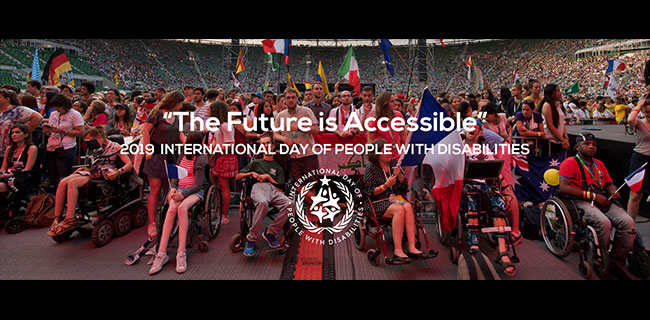
    Across the globe, December 3 is observed as the International Day of Persons with Disabilities. This year, the focus is on spreading awareness about not only the obviously visible disabilities but also the less apparent ones, with the hope to build a more inclusive world. There is a special emphasis on creating a sustainable and accessible post-Covid environment for everyone.


    Here in India, it feels like a distant dream. Last year this day, I wrote on ‘What Media Must Do’ vis-à-vis not leaving the disabled out of the mainstream discourse’. Maybe I should recycle the same commentary, as it seems to have fallen on deaf ears. Through the year, I have raised several pertinent issues pertaining to different types of disabilities, the difficulties faced by them in spaces of work, education, entertainment and the apathy that seeps through the cultural fabric of our country.


    The frustration that all of us faced after being locked down for a few months due to the spread of Covid-19 comes nowhere close to what disabled people go through every single day, living on the periphery, discarded by the mainstream, excluded by their community, denied the opportunity to exercise their abilities.


    Let’s face it. It’s a thoroughly unequal, unjust and imbalanced state of affairs. Strange parallel coexistence of those who binge-watch ‘Fabulous Lives of Bollywood Wives’ and people who are refused mere 35kg of ration despite the Delhi High Court orders for the disabled to be included under the National Food Security Act.


    Not only are people unaware of each other’s alternate realities, our media coverage is even more lopsided. For a very long time, I believed that the media had the responsibility and obligation of operating in public interest. As a former journalist, I swore by it. But today everything is about ratings, demographics, market share and monies.


    It’s all about the content that sells. And the content that sells hardly costs anything to produce. So why invest money in investigating and reporting real issues and accounts when the objective is to run a profit division? Instead of giving a voice to the weak and ignored sections of the population, the media is feeding our guilty pleasures and morbid fascinations.


    Covid-19 has changed a great deal in terms of how we work, educate our children, or engage with friends and family. Apart from all the perils, we have discovered new ways of functioning. From a disability perspective, the gap that existed especially in education and employment has somewhat been bridged. Due to innovations in technology, disabled people are empowered to study and work alongside able-bodied peers in the comfort of their homes. The virtual mode of operation has removed the physical barriers, opening doors for inclusion.


    Most Disability Advocates believe we have made more progress in the last 10 months than in the past decade. While this is a promising opportunity created by the pandemic, the ableist world has to take note and build accessible products and infrastructure.


    It again comes down to awareness and the will to include. We are crippled by our individual attitudinal disability, which dissuades us from acknowledging the needs of another. The truth is we like to be ignorant. We prefer being so because it’s easy. As long as it doesn’t affect us, it’s not worth talking about. Our content consumption habits and social media patterns reflect the narcissistic bubbles we exist in.


    The country needs to be pulled out of eternal slumber. We need to get angry at the status quo, at the injustice, at the skewed coverage of issues. I’m reminded of the famous speech from the1976 movie Network where Howard Beale (Peter Finch) says: “I’m mad as hell and I’m not going to take this any more. I want you to get up right now. Sit up. Go to your windows. Open them and stick your head out and yell.”


    The question is whether the country will join in. Can the media lead the citizens in a rallying cry for change?


    Shruti Pushkarna heads operations of the New Delhi-based Score Foundation where she works as Director-Programmes & Communications. She is a former journalist (part of the founding team of MxMIndia) who has moved full-time to the social sector. Shruti writes for MxMIndia every other Thursday. Her views here are personal. She can be reached via Twitter at @shrutipushkarna


  • Shruti Pushkarna: Invisible Disabilities: Missing from any Discourse on Disability

    Shruti PushkarnaBy Shruti Pushkarna


    Lately, I have found myself unwinding to reruns of old favourite TV shows (now easily available on OTT platforms). The extensive amount of work unleashed by the pandemic, both on the professional as well as home front, leaves me utterly exhausted. So I treat myself to a nightcap in the form of yesteryear soap operas.


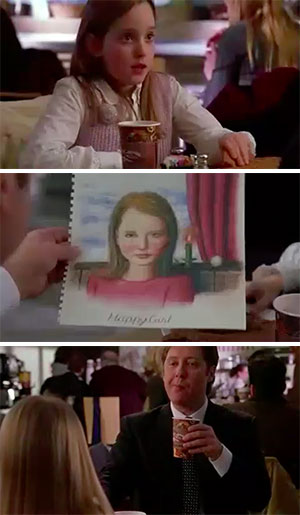
    An episode of Boston Legal, (an American legal drama series which first aired in 2004) resonated with my current stance on challenging stereotypes and perceptions, specific to disability.


    Screengrabs from Boston Legal, Season 2, Episode 15 where the protagonist makes a case for a little girl who cannot smile after a car accident damaged her nerve

    In this particular episode from Season 2, the protagonist Alan Shore (James Spader) makes a case for a little girl who cannot smile after a nerve damage from a car accident. As she is mercilessly teased at the public school, Marrisa’s mother pulls her out, and decides to give her daughter a fresh start at a private institute.  Except the girl’s brilliance in academics and co-curricular activities is not enough to secure admission at a top-tier school. She is denied admission because she didn’t ‘smile’ at the Admissions Director.


    Like Marrisa, several people with invisible disabilities face rejection by family, friends, peers and society at large. Only because they seem incongruous with our limited definition of ‘normal’. In fact, they are worse off than the disabled people in wheelchairs, people with white canes or hearing aids, because their condition isn’t ‘obviously’ seen or recognised.


    Invisible disabilities are not immediately apparent but they are debilitating in their own ways. These include chronic illnesses like sleep disorders, diabetes, renal failure, autoimmune disorders, food allergies or gastro-intestinal disorders, epilepsy, haemophilia, developmental and learning impairments, fibromyalgia, psychiatric illnesses and so on.


    Although appearances may not indicate anything, people with invisible conditions live with symptoms such as continuous pain, fatigue, dizziness, loss of bladder control, brain fog, sudden vision disturbance, speech issues et cetera.


    The World Health Organisation estimates that globally almost a billion people live with some form of disability. And a United States report suggests that 74 per cent of persons with disabilities don’t use a wheelchair or any aid that makes their impairment visible. Both the United Nation Convention on the Rights of Persons with Disability (UNCRPD) and the Rights to Persons with Disabilities Act (RPWD) 2016 of India clarify that disability includes people with mental illness, epilepsy, intellectual impairment and other disabilities which may not be evident to a casual observer. And yet, they face discrimination.


    In a country like India, where disability is anyway stigmatised, persons with invisible conditions (are bound to) face various challenges while traveling, shopping, making hospital visits, in places of entertainment and interacting with people in general.


    To cite real life cases, two people suffering from Multiple Sclerosis and Sjogren’s syndrome respectively, had to compromise their career choices because the effects of their conditions hampered their professional output. Sjogren’s syndrome is an autoimmune disease in which your immune system attacks your own body parts. Symptoms like dry mouth and dry eyes make it hard to continue in a regular job. Rheumatoid Arthritis (RA) is another example of a chronic inflammatory disorder which leads to bone erosion and joint deformity. RA also attacks internal organs and its fatigue symptoms are more than just feeling tired.


    Now many persons with invisible disabilities learn to cope using medication, pain management or physical therapy, depending on their ailment. But the fact that their disabilities are judged or reduced or even entirely overlooked, causes them further mental and physical problems.


    It’s imperative that the media creates awareness about such conditions so our society becomes sensitive and empathetic towards this section of the population. Schools and offices should be expected to train teachers and staff as well as introduce policies to make reasonable accommodation for persons with invisible disabilities.


    Inclusion can happen when (physical and attitudinal) barriers are overcome. Anyone who wears eye glasses or contact lenses is not considered ‘disabled’ today. Of course that wasn’t true before spectacles were invented in the 13th century. Simple solutions can change the way we perceive people’s limitations.


    It’s about time we think solutions rather than imposing our expectations on people who struggle for most part of their lives trying to ‘fit in’. Acceptance cannot be conditional to a constricted imagination.


    The little girl in Boston Legal was inspired by René François Ghislain Magritte, a Belgian artist who was well-known for his work with surrealism and thought-provoking images. He often depicted ordinary objects like clouds, pipes, bowler hats in an unusual context and mislabelled them, to challenge observers’ preconditioned perceptions of reality. Marrisa defies the common idea of happiness denoted by a smile by drawing a self-portrait and writing ‘Happy Girl’ under it.


    Shruti Pushkarna is a former journalist (part of the founding team of MxMIndia) who has moved full-time to the social sector. She heads operations at the New Delhi-based Score Foundation where she works as Director-Programmes & Communications. Shruti writes for MxMIndia every other Thursday. Her views here are personal. She can be reached via Twitter at @shrutipushkarna


  • Disability: What Must Our Media Do


    By Shruti Pushkarna


    Shruti PushkarnaBefore I started writing this piece, I casually googled  ‘media and disability’. Interestingly, most results were pertaining to the role of the media, portrayal of disability, some academic papers on the subject and so on. Well, that’s typically what comes to mind when you throw these two words together at anyone.


    Having crossed over to the disability sector from journalism, I have witnessed several debates (both in official and informal settings) where disability experts, people with acquired disability, scholars and mediapersons battle with each other, presenting their views on the subject.


    Again, most debates are focused on ‘representation’. I find the premise of all such discussions fallacious. Our debates, writings, films, stories, all are from an ‘external’ standpoint. It’s always from ‘how I understand it’, or ‘how I perceive it’ or ‘what I have gathered from my research’. And that’s why any coverage or any engagement with disability in the media is at the surface level. Still.


    This is part of the reason why stories and accounts are either heroic or pitiful. What I see lacking is the ‘normalisation’ of the idea. We like to compartmentalise issues and people into boxes that are easier to handle. Look at them a certain way rather than making them a part of the overall landscape of things.


    In the process, someone else decides what is the issue, how does it impact a life and how it should be tackled. The understanding of it, once or twice removed.


    As a communications specialist, I recognise the influencing power of the media and the fraternity. Common notions of disability arise from our media exposure. The images and words that come to mind are ‘wheel chair’, ‘crippled’, ‘handicap’, ‘dependent’, ‘incapacitated’, ‘vegetable’ etc. Clearly, these are neither complete nor correct.


    Let’s try to break this down. ‘Disability’ is basically a condition that ‘limits’ a person. This condition could be mental or physical, it could be permanent or temporary. It could be a condition present from birth or acquired later in life. But it’s a ‘condition’. A person with disability is a person with certain limitations, but still a ‘person’. That’s what we often miss out on. We tend to focus on the disability so much that we seldom learn anything about the person. The person may be educated or a school dropout, interested in adventure sports or music, may be a foodie, or a movie buff.


    How often do you see a person with disability invited to a public forum to present views on anything other than disability issues? What about the regular issues that affect citizens of this country, like infrastructure, climate change, taxes, education, unemployment or inflation?  Do these not equally affect this section of society? Or are we assuming that disabled people don’t access any services, like you and I do.


    According to Census 2011, 2.2 per cent of India’s (then) 121 crore population is disabled. And these are government statistics, way less than the actual numbers. There is a legislation called the Rights of Persons with Disabilities Act (RPWD) 2016 that lists out 21 types of disabilities. The RPWD Act mandates equal access to all facilities and services to persons with disabilities. The Act is progressive in its view of shifting the focus from ‘reservations and entitlements’ to ‘empowerment and inclusion’.


    A policy can be enforced and implemented. But for it to become a ‘practice’, mindsets have to be altered. That’s what media can help with.


    Attitudes can often be more disabling rather than the actual barriers in access. I have worn spectacles since Class 2 or 3, I don’t even remember. My inability to see without glasses is also a ‘disability’. But spectacles can cover up for my impairment. Kids in my school use to single me out and poke fun at my thick glasses but with time, it changed. Slowly, with more people dependent on correctional lenses, it became ‘normal’ (it’s a full-blown market today!).


    It’s what we see and how much of it we see. If today in schools and workplaces, we start encountering persons with vision impairment, speech impairment, or any other disability, that will gradually become the new normal.


    Certain sectors like IT, hospitality and education have started employing persons with disabilities. Their limitations are easily addressed with small changes in the physical or digital environment. This has helped businesses understand the needs of the larger disabled population better. The media should also consider hiring them, so the ‘normalisation’ of disability can happen from within.


    This will change how people respond to ‘disability’. The element of shock or awe will slowly be replaced by a more pragmatic approach.


    Today, when I go to a movie theatre, I’m happy to see seats reserved for people in wheelchairs. But the access to the cinema still remains an issue. On several occasions, I have seen wheelchair-bound people being physically lifted by four staff members to get  them to a seat just so they can access mainstream entertainment.


    If it were easily ‘accessible’, more people in wheelchairs would be seen at the movies. Last year, I attended a special screening of the film ‘Sanju’ at PVR Cinemas in Delhi, for blind and visually impaired people. Wondering how blind people can see a movie? Well, they do. Often accompanied by sighted people who can help them follow the missing links in the absence of dialogues. Technology has reduced that dependence too. An app called XL Cinema, free to download on an Android phone, can enable a blind person to follow ‘audio description’ of the movie alongside the actual screening.


    There is the issue of access and then the issue of dignity. The industry needs to address both. And that will happen when we deal with them as ‘people’ and not as a mere ‘section with special needs’.


    According to Census 2011, there are around 104 million people aged 60 years or above. This group of people may also fall into the bracket of ‘people with special needs’. Similarly, with a sizeable percentage of disabilities caused by road accidents, India’s overall disabled population is constantly on the rise. We cannot ignore or outcast them.


    Often our imagination is curtailed because of their lack of participation in mainstream activities and spaces. Their absence leads to a confined view, further forcing them to live on the peripheries.


    This year, the theme of the International Day of Persons with Disabilities is to promote their participation in the development agenda. The UN-defined Agenda 2030 for Sustainable Development pledges on ‘leaving no one behind’. The media needs to look at ‘disability’ as a cross-cutting issue and promote inclusion in every sphere.


    Shruti Pushkarna is a former journalist (part of the founding team of MxMIndia). who has now moved full-time to the social sector. She heads operations of the New Delhi-based Score Foundation where she works as Director. Her views here are personal. She can be reached via Twitter at @shrutipushkarna