Tag: Dinyar Contractor

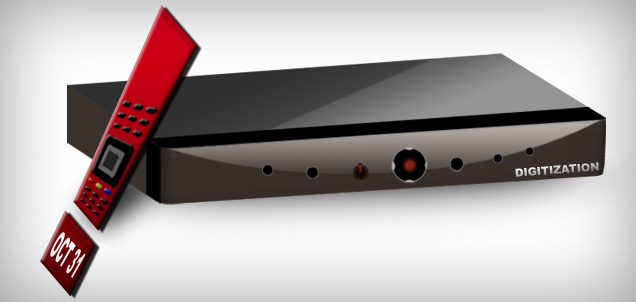
  • Can we achieve the October 31 deadline?


    By Shruti Pushkarna


    Under mounting pressure from various stakeholders, the government announced an extension of four months for the first phase of digitization of cable television. Digital Addressable System (DAS) will now be effective from November 1 in the four metros, Delhi, Chennai, Kolkata and Mumbai.


    A press release issued by the I&B Ministry read: “The Cable Television Networks (Regulation) Amendment Act, 2011 has made it mandatory for switchover of the existing analogue Cable TV networks to Digital Addressable System (DAS) by December 2014, in a phased manner. In respect of four metros of Delhi, Mumbai, Kolkata and Chennai, the digital switchover is mandated to be completed by 30th June 2012.”


    But towards the end in the press note, the ministry acknowledged that keeping ground realities in mind, the MIB is compelled to set a new deadline. The statement reads, “…keeping in view public interest and after intensive and extensive consultations, as well as written commitments from all the stakeholders, for fully implementing the regulations of TRAI, the Ministry of Information & Broadcasting has decided to modify the 30th June deadline for a complete switch over to 31st October 2012 for all four Metro Cities i.e Delhi, Mumbai, Chennai and Kolkata. All the TRAI regulations for DAS will come into effect from 1st November, 2012.”


    The extension was announced notwithstanding the pending matters before the Delhi and Bombay High Courts and the TDSAT. The Bombay High Court will hear the petition on June 21 and the Delhi High Court will hear the matter on June 25, which is also the date when TDSAT will hear a similar matter filed by LCOs and IndusInd Media & Communications Ltd.


    Soon after the announcement of the new sunset date, MxMIndia spoke to various stakeholders to get their reactions on the new timeline and to find out if October 31 is an achievable deadline. While some welcomed the government’s decision for postponement to November 1, others felt that the extension issued by the ministry is not enough for the humongous task at hand.


    MSOs welcome the govt’s decision, though some still unsure of achieving the deadline

    Ashok Mansukhani

    Ashok Mansukhani, Director, IndusInd Media & Communications Ltd said: “I think it’s a sensible development and it will help in smooth transition to digitization. The new date is completely achievable, it was fully discussed in the taskforce. I don’t know about Tamil Nadu since the government there is supposed to install the set top boxes but for the other three metros, certainly it will happen. It’s a welcome step and it was fully discussed in the taskforce and it’s a natural result of the taskforce deliberation.”


    JS Kohli, CEO, Digicable said: “We are happy with the postponement. Although it’s not a six month extension but yes we can deliver on the new date. We are satisfied with the extension.”

     

    JS Kohli

    Ravi Gupta, Independent MSO, Delhi said: “The new sunset date is good although it is two months less than what we were expecting. They should have given a six months extension, I still don’t think we can achieve the task by November 1. A lot of digital headends are under installation and integration is what takes time. I don’t think anyone from the ministry has done a detailed study of this process. No senior official from the ministry or from the TRAI has visited a digital headend. A minimum of six months extension should have come.”


    LCOs happy with the extension but feel four months not enough

    MR Srinivasan, General Secretary, Chennai Metro Cable TV Operators Association said: “It is good in a way because we are not yet ready because in Chennai only 2 lakh boxes are available. But now atleast we have some breathing time. Moreover, the government of Tamil Nadu is planning to start some MSO operation in Chennai, so it’s some relief and we have some time to plan ahead and be ready before the sunset date. Actually we expected an extension upto December but atleast we have got a slight relief, something is better than nothing.”


    Sanjay McGee, Local Cable Operator, East Delhi said: “Although it’s a good decision, in the last meeting between LCOs and I&B Ministry, Rajiv Takru agreed that four months extension was not enough. At first the ministry refused any extension, but when we urged on atleast three months extension, Rajiv Takru stated that if there has to be an extension then take atleast six months. But they have taken a middle path and decided on four months. They shouldn’t have announced the extension at this point, they should have waited till June 29. Now the consumer will not take the deadline seriously and the pace will slow down. If we keep working at the same pace as of today, then we might be able to achieve the new deadline.”


    Swapan Chowdhury, General Secretary, Cable & Broadband Operators’ Welfare Association, Kolkata said: “I am not satisfied because four months will not cover up the whole situation. Government might have given an extension but they have not considered any facts and figures. I say that because 70 per cent in Kolkata still don’t have set top boxes (STBs), so four months are not enough for deployment of such a huge number of STBs. It will not even happen on November 1. Maybe another 20 or 30 per cent seeding will be done up till the new date but what about the remaining numbers. In the June 8 meeting with the I&B Minister it was categorically mentioned that none of the government appointed nodal officers have checked the actual seeding position or the status of ordered material. Unless and until the government studies the ground situation deeply it will again fall back. The actual facts are different from what’s being presented on paper. They should have given an extension upto atleast Jan 1.”


    Broadcasters disappointed with the postponement, suggest on strict penalties for those who don’t adhere to the timelines

    Sunil Lulla

    Sunil Lulla, Managing Director & CEO, Times Television Network said: “It’s a complete disappointment. What is the guarantee that the new date will be held, when there is a date set by law, why should the date be changed? A lot of time, money and effort has gone by broadcasters in promoting and communicating the date and making sure consumers went along. The industry and the consumer suffers because there are some parts of the entire constituent which may not have adhered to these deadlines, may not have implemented the seeding of the boxes. This was announced on the net through a press release, the government hasn’t really notified us. I think it would have made sense for them to invite all stakeholders and agree on a new date if there was to be one and to a process by which these date wont slip.”

     

    Rahul Sood

    Rahul Sood, Head- Network Distribution & Affiliate Sales, NDTV said: “Basically LCOs were pushing for a Jan 1 timeline and broadcasters were saying that if you have to give an extension, it should be only for three months. So I guess they have taken a middle path by extending it upto October 31. The TRAI guidelines which came out on April 30 were such that within six months there has to be implementation of the same. I think that’s the loophole that MSOs and LCOs were quoting and asking for a minimum six months extension. So keeping all that in mind, I think ministry has taken this step. But if as an industry we have this discussion again on October 20, then it’s a real shame. There should be no excuses now, timelines have been extended, now there has to be a joint willingness to from all stakeholders to make sure this happens. While they have issued this date change, I think with that strict penalties and penalization code should be put in place as well for those who don’t adhere to the new timelines.”


    An independent commentator says new sunset date ill-conceived

    Dinyar Contractor

    Dinyar Contractor, Editor and Executive Publisher, Satellite and Cable TV Magazine said: “This is not going to work, this date is ill-conceived. There is no way that set top boxes can be procured and deployed in that timeframe even if the order is released today. As I’ve mentioned earlier, delivery time on set top boxes alone is around four months so this extension makes no sense except postponing one more extension. Any date prior to end of December is not realistic and is not going to resolve the problems or the issue, which is obtaining and deploying set top boxes. So I feel that the extension is inappropriate.”


  • The Anchor: Dinyar Contractor on 10 reasons why the digitization deadline is a mighty challenge

    By Dinyar Contractor


    1. At the FICCI- I&B ministry meet that was held a week ago in Mumbai, barely 40 days before the analogue sunset date, the I&B officials said that they had reviewed digitization in Mumbai the previous day so their report was immediate and current and they confirmed that 33 per cent of the homes in Mumbai already have set-top boxes. I would like to turn that around factually and say that 67 per cent of the homes did not have digital boxes even 40 days before the sunset. So it is pretty much an impossible task that 67 per cent will get it within 40 days.


    2. Let’s look at Chennai. Arasu Cable has confirmed that they don’t have set-top boxes. In fact, a day after the FICCI meet, Arasu had asked its cable operators to log in to the Arasu site and send in their estimates of how many boxes will be required. Arasu will then put together these estimates and float a tender which means they would then start asking for people to give prices for boxes. So for the boxes coming in is way over the horizon for Chennai.


    3. Incidentally, there is a lead time just for a component of a set-top box in the world market today of four months. That means if you order your box today and the manufacturer orders the component, it will be four months before the manufacturer gets the component. What that means is that the box will not be manufactured and it will definitely not reach you before five months. Therefore, if at all there is a postponement, it doesn’t make sense to have any postponement which is earlier than Jan 1, even six months is really cutting it fine.


    4. There is a major national level MSO who candidly admitted to me that their HD boxes have landed but they don’t have the funds to clear them. The government had promised 74 per cent FDI as part of the digitization effort but the government has not implemented this and therefore, MSOs have not been able to tap foreign investors. So without enabling funds, the government has put this clause out which does not make any sense.


    5. We are talking of a sunset date 30 days from now. So for instance, I as a cable operator go to somebody’s home and I say please take the set-top box. And they say, sure I’ll take it but what is it going to cost me? And I say I don’t know what it is going to cost you because the government hasn’t declared the rate. Now as a customer I would not accept the box.


    6. On May 28, the TRAI put up all the analog pay channel tariffs. There is a Supreme Court judgment which says that broadcasters cannot charge more than 42 per cent of the analog pay channel rates for digital. So 42 per cent is the ceiling, however that 42 per cent is completely irrelevant since broadcasters are providing pay channels to DTH platforms at something between 10 to 15 per cent. So from May 28, the ball has started rolling where negotiations have been opened between broadcasters and MSOs to work out some figure for their pay channels that will be somewhere between 10 and 42 per cent. So there is a huge spread in the rates between 10 and 42 per cent, these negotiations are obviously not going to quick and easy. I don’t see these negotiations culminating in three weeks or a month.


    7. There was a Parliamentary Committee report which was released and tabled in the Lok Sabha a few days ago where the Committee says that this entire thing should be delayed by at least six months. I see this as the first stone thrown by the government to ripple the waters and start talking of a delay.


    8. The TRAI suddenly declared that every digital headend must deliver 500 channels. Incidentally, a major portion of the set-top boxes already deployed are incapable of doing 500 channels. This is again a fact that is not adequately ventilated. They can typically do 350 channels, less than 400 channels. It means that they have to take out may be 2 million of the boxes that have already been seeded and throw them away. Where is the money going to come from? We are not even realistic about what is going on.


    9. In Kolkata, don’t forget there is Mamata Banerjee who might rake up the issue against digitization depending on the political capital it might have.


    10. Here you have a sunset clause where the government has not enabled anything, they have only been talking of a sunset but they have not done anything to facilitate and to enable the sunset. The delay has nothing to do with the MSOs or the cable industry, it is simply completely chaotic unplanned deputation of the law or total lack of enabling a systematic process in which digitization could have been introduced.


    Dinyar Contractor is Editor and Executive Publisher, Satellite and Cable TV Magazine (www.scatmag.com)


  • TV-wallahs eager for digital wave


    By Rishi Vora


    The television distribution scene in India has for many years seen the dominance of cable wallahs. Digitization only started in a big way when DTH players pumped in huge sums (there was no ordinance then) and succeeded in building a critical base of subscribers in the country. As a result cable operators were seen as laggards. Sample this: there are about 40-45 million DTH homes out of the total viewing population of more than 225 million households, so DTH has grown despite competition from cable and is likely to increase the subscriber base substantially with the recently passed ordinance by the government.


    As for the cable operators and MSOs, they are left with no option but to invest in infrastructure. Den Networks is investing Rs 1,000 crore and expects to get 2.5 million subscribers in the phase one. Hathway will invest Rs 500 crore and they are also bullish about increasing the subscriber base. Analysts feel that now is the perfect time for MSOs to increase their share in the business.


    So, while it seems all good for the industry, the fact is that digitization is something that was always talked about, and is now a work in progress as far as complete digitization is concerned. The government has, in a recent development, pushed the sunset day for four metros from March 2012 to June 2012. The date for cities with a population more than 1 million is March 31, 2013.


    For broadcasters, this is a big relief from the carriage fees, which in the past have resulted in loss of revenues. The four metros is a big market with 20 million households; and digital homes eating into cable and analogue… But, digitization, for broadcasters, also means that the consumer will now have a choice of what channel to pay and watch. That in experts’ minds is a challenge many broadcasters will have to face – to keep their viewers’ interest levels high and for the long run.


    Subhash Chandra, Chairman, Zee opines, “Digitization will only help the television industry further grow. The government’s decision on clearing the ordinance is a very positive move. It will give a boost to the cable and satellite industry and help create a more sustainable business model for the television industry.”


    On the growth of DTH players in the county, he said, “DTH is leading the adoption of digital technology. There are about 39 million gross DTH subscribers in the country. Now they have a great opportunity to consolidate their businesses.”


    However Dinyar Contractor, Editor-in-Chief of Satellite and Cable TV Magazine, has a contrary view to the whole scene. He feels that there is still some time for digitization to happen pan-India (2014) as the ordinance states. And that broadcaster are wary of going digital, or are wanting to delay the process of digitization of TV in India, as the profits are not much, plus there is the risk of losing eyeballs, as there will always be viewers who are not open to the idea of paying and viewing, as against the concept of free-to-air channels.


    Tarun Katial, CEO, Reliance Broadcast Network Limited, feels, “Digitization will bring-in fair reporting of subscriber base, which will lead to standard pricing and subsequently eradication of local monopoly. It will help companies increase subscription revenues and reduce down carriage fees for broadcasters in a phased manner.


    Ajay Chacko, President, A + E Networks | TV 18 JV, says that the move will bring in more accountability in the business. And apart from additional subscription revenues, he believes that digitization offers a whole new benchmark for broadcasters, and a platform which is more measurable than cable and analog.


    Neo Sports COO Prasana Krishnan welcomes the ordinance. “This is the much needed change in the industry. What it will do to the industry? I think it will revolutionize the broadcast landscape in India.”


    If the ordinance were not passed, Mr Katial is of the opinion that the current capacity constraints in analog cable would have stifled the growth of new channels and introduction of technologically advanced content. “The carriage costs paid by broadcasters which currently remain high in view of the limited bandwidth of analog cable would decrease post digitization. This would allow broadcasters to make higher investments in programming and marketing, thus improving the customer experience,” he explains.


    Another advantage the industry will see over the years in the fast adoption of HD television and 3D, which will open new revenue streams. As far as television distribution industry is concerned, the ordinance will lead to more transparency and greater accountability. It means opportunity for all stakeholders – broadcasters, distribution platforms including cable companies, MSOs and DTH.

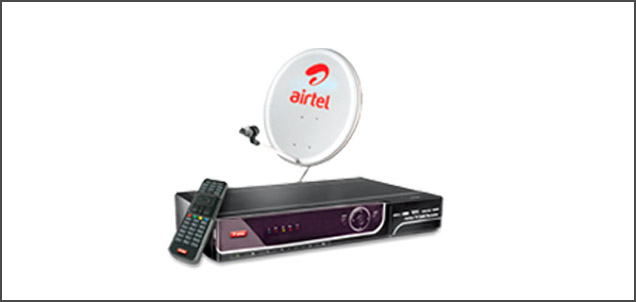
    Photograph: Airtel Digital TV HD Recorder from airtel.in

  • Digitisation ups mood at trade show

    By Insiyah Rangwala

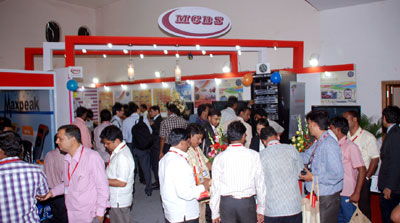
    The announcement of the new regulation enabling the rollout of digital addressable systems in the country, upped the mood at the Satellite and Cable TV Trade Show last week. Organised by the Satellite & Cable TV magazine, the show, now in its 20th year, SCaT saw the attendance of over 15,000 people from the industry and networks.


    Mr Dinyar Contractor, Editor and Executive Publisher of Satellite & Cable TV, said the response to SCaT has been overwhelming. With hardware prices having fallen from three years ago at 100 channels being Rs 1 crore to last year’s Rs 60 lakh and this year’s 200 channels at Rs 27 lakh, this has positively affected the mid size networks, as digital is now no longer inaccessible to them. The critical new element at SCaT has been the discussions of pricing and buying.


    The technologies showcased at SCaT this year were the digital set-top box, MPEG2 and MPEG4 along with emergence HD channels. Mr Dharmesh Gandhi, Product Marketing Manager at NDS, said their key aspect was content protection and providing the middle ware for pay TV. They were showcasing new features such as the search option and targeted advertising. It helps a user with browsing and discovering more related content.


    Mr Vikram Nagda, Marketing and Operations Head, Channel Masters, stated that they feel very positively about the digitization of cable TV in India as it has enabled the internet to become an even larger commodity. Mr Saravanan Narayanasamy, Chief Technical Engineer, Indian CAT from Pace, said that with or without the government digital is picking up as it can be seen at SCaT with the tremendous turnout from newcomers.


    Mr Manoj Thakur Deputy General Manager, Catvision, said that even though currently digital in India is big only in the metros it is increasingly broadening its reach.


    According to Mr Contractor, the mood in the trade is so buoyant that most operators have reconfirmed their presence in a bigger way for next year with stalls being pre-sold.