Text & Video by Santosh Jangid
There are brands from large FMCGs like Surf or Ariel or Dettol which are as much Indian as any other international brand. They do appreciate local nuances. Aloo-tikki is the bestselling item on the McDonald’s menu. So how come we don’t see these popular brands in the Brandz Top 10?
The scope of Brandz in India includes Indian brands as well as multinational brands. We are including all brands that are available in India and are relevant to consumers because there is a consumer comprehend involved as well, so we are not excluding any brand. The framework would include any brand, so if we have selected x number of categories that we are going to include in BrandZ this year, we look at brands that are listed because that’s the only way we can get financial information about them and we will have a consumer component where we will talk about all those brands among consumers.
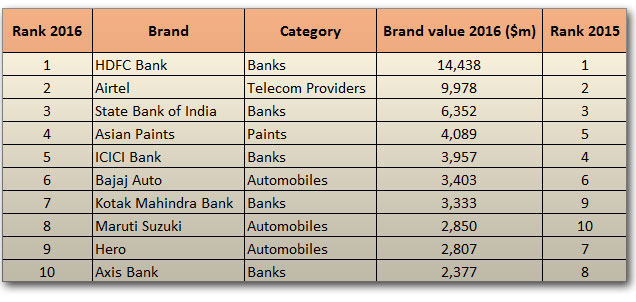
The fact that an HDFC Bank has scored over various others for the third consecutive year underscores the strength of the brand. But it is hardly advertised… would you say there is a co-relation with advertising and promotions and brand salience?
HDFC Bank has a large consumer base which is experiencing the brand on a day-to-day basis. The key element to success is how meaningful is the experience that you are creating for your consumers. Second element is: appealing communication which is getting your word out to the market. So, you have so many consumers, so many users, you’re building equity with them on day-to-day basis, you are meaningful, you are introducing new things in the market place. Therefore, communication is one of the things that helps you take it to your customers. Brands which have low awareness will have a bigger task in taking out to the consumers but larger brands are safe because of their size as they get out to consumers much faster.
Why do you think that Airtel despite its large spends on advertising and some memorable campaigns has not been able to attain the top slot?
In a consumer’s mind, when we watch a communication, we do not think – that this is a telecom communication or this is an FMCG communication. For us, it’s a lot of brands that are trying to reach us and we don’t watch it by silos or categories. All of the brands are trying to break into our minds to create space for themselves but only a few reach as there is so much competition and clutter, the benchmark is becoming tougher and tougher to reach into a consumer’s mind. So an ad has to be phenomenally good. It should connect with you, say something relevant and you should carry it with you when you buy it next time.
It is interesting to say that premiumisation is key to the success of brands in the study. But in the final analysis, it’s dhanda or the revenues that matter, right?
There are different niches in the market for every category. Finally it’s about money but which route I am going to take to get there is important. Some brands choose the route of premiumisation whereas some want to go with mass and want to reach as many people, gain share and some brands could do it in a different way.
You say that brand loyalty is weakening, especially in urban centres. Would you say that is the case in rural India too?
Based on the other work that we are doing for the clients, I would say probably that urban is a little different. Whenever you have more choice, then loyalty comes down because it becomes much more difficult to build loyalty when you have so much choice in front of you. In urban, probably there is a little more choice so loyalty could be a little lower but there is not too much to differentiate between rural and urban in India.
Lastly, any standout features or trends of the Indian study vis-a-vis BrandZ in other centres? How are we different from the rest?
The role of difference is becoming more important in India. It is more important now than it was 10 years ago, it is more important than other regions as well. So, just having a meaningful brand which is great is not sufficient now. You need to do that and also create a point of difference versus the next competitor so that finally you are chosen because finally it’s the customer’s preference. Personally for me, the difference was very interesting and the fact that it’s more important than the rest of the world is even more interesting.
We couldn’t adding one more last question: given the way it’s growing, do you think Patanjali will be in the Top 10 next year? And at what slot?
We need companies with financial revelation, financial information, so we are only looking at companies that are listed.
 Seventy-four percent of companies that over-perform on revenue growth create customer experiences based on data driven insights, with only 30 percent of under-performing companies reporting the same, according to initial findings from Insights2020 – Driving Customer-Centric Growth, a global marketing leadership initiative. The study, led by Millward Brown Vermeer in partnership with The Advertising Research Foundation (ARF), ESOMAR, LinkedIn, Kantar and Korn Ferry, builds on the findings of Marketing2020 and is focused on aligning insights and analytics strategy, structure and capability to drive business growth.