 Text and Videos by Shruti Pushkarna
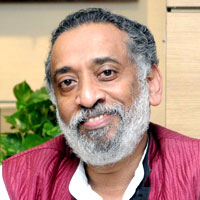
He is one of the first names that crosses anyone’s mind when speaking of public affairs management or image management. Addressed by many as an ‘influencer’, he is known for his roles as an image manager and a policy advisor. Dilip Cherian, Consulting Partner at Perfect Relations started the company in the early nineties and now the firm is South Asia’s largest communications consultancy with 14 offices and 550 professionals on the team. Mr Cherian has also been the editor of the business magazine, Business India and the Observer before he entered the communications business. His work goes well beyond public relations and media. Mr Cherian is the member of the Board of Advertising Standards Council of India and on the Governing Council of the National Institute of Design. He has also been a member of the Censor Board.
In this conversation with MxM India’s Shruti Pushkarna, Mr Cherian confesses to being an ‘image guru’ and shares his views on various subjects like managing public affairs in the PR space, lobbying, policy making, PR in a social/digital world and the biggest challenge he thinks the PR industry is facing today. While many in the communications business have admitted to the challenge of attracting talent into the business in the past, Mr Cherian goes a step further when he says, “I think talent is going to be India’s huge pitfall in the coming years. We are producing pathetic people for almost every kind of task.”
| Dilip Cherian Interview Part 1 |
| [youtube width=”400″ height=”200″]http://www.youtube.com/watch?v=4Z4b_10_GWk[/youtube] |
Q: You are often referred to as the ‘image guru of India’. And a lot of people address you as an ‘influencer who opens the right doors for his clients’. How do you react to that?
A: The image guru part I confess to, the opening doors part… I don’t do that. What I do however is, as an image guru, I try and help my clients to focus on what are the issues they should be communicating about. I also help them understand what are the implications of what they are doing and whom they are communicating to. So what I am good at is, pointing in a direction and also very often enhancing their skills in being able to project themselves correctly. This kind of situation requires knowledge of who they are communicating to, so it’s not that I open a door, it’s just that I tell them when they walk through the door, what should they say and how would that impact their image.
Q: So you do confess to being an ‘image guru’?
A: It’s both the kind of appellation which works in a positive sense for the company because I only work through Perfect Relations and through the five group companies that we have. I think that the designation, as it were, helped me focus on what my real work is. My real work is more in the nature of someone who provides coaching to my own people, or to the people we work with, to enhance their skill sets in being able to better manage their image. So the ‘guru’ part is about the teaching part and that really is about helping others enhance whatever skills they may have, or to reduce sometimes, and this is equally important in my view, to reduce the aberrations which prevent them from having the image which they desire.
Q: You have done an extensive amount of work in public affairs management. Tell us a bit about your experience of work in this area of PR. Also, how critical do you think is public affairs management to the communications business?
A: Public affairs management is a relatively new science as far as India is concerned, and that’s because of the fact that public affairs used to be, the way it was practiced, largely a dirty word because it had nuances of ‘off-the-balance sheet’ activity. Where we have come in and over the last ten years what Perfect Relations has done is that in the public affairs space, we have created space for a new kind of activity. And that is, helping to communicate with policy makers to influence the direction of policy; policy when it’s wrong or policy when it is being created or policy as it’s being created. In the public affairs area, the relationship with the client is that of the guru kind but also of a confidential advisor, telling them what are the aspects of decision-making they need to focus on rather than the people. Because what’s happened over the past is that too much enthusiasm has been expended on people. It’s not about people, policy making is about a process, and that’s the first skill set we have managed to bring into this area of public affairs. The second thing that we do in public affairs is we help global companies understand that decision-making in India is not uniquely different from anywhere else. So Perfect Relations is the only company which has had experience and skills set in working at a panchayat level, at a district level, at a state level and at the central level. The decision-making vectors and the parameters in each of these spaces is different. Global companies don’t necessarily have somebody who can lead them through this; this is not about market entry strategy, this is about understanding the policy landscape of the country.
|
Dilip Cherian Interview Part 2
|
| [youtube width=”400″ height=”200″]http://www.youtube.com/watch?v=LDi643AWsD4[/youtube] |
Q: How critical is the function of crisis management in PR?
A: Over the last 25 years of existence if there were one function for which we’ve been called in at the highest level, whether it’s in the public sector when for example there was a fire on an oil rig, or whether it’s in the case of a global company when there was a firing in faraway Goa, or whether it’s in the case of an Indian company whose licence got cancelled, Perfect Relations has always been the first port of call for somebody who is in really deep trouble. So crisis management is something that happens as a plug-on rather than as part of a process. Largely we have come in when the agency that was currently handling a client was seen as not geared to have the bandwidth, the experience, the specialized people and the local teams available on the ground; and that’s the reason why we get called in. Over the last 25 years of doing this in India we also realized some years ago that crisis preparedness as a module needs to be put into companies. So for some of the clients who have the budgets to be able to do this because this is expensive, today we have teams that go in and train top management in the five life-saving skills, life-saving in terms of corporate life of a company, that are needed to ensure that crisis preparedness is at a higher level than it ever was before.
Q: What are your views on lobbying? Do you think past controversy has tainted the image of PR as an industry?
A: Lobbying is a dirty word in terms of the kind of nuances and practices that a large number of players have indulged in. Is this a result of the way our democracy functions? I don’t quite know. But is it possible to function differently? The answer is, absolutely yes. It takes more patience, it takes much deeper skills and it takes a lot more of focused attention of top management. The problem with ‘bad lobbying’ as I call it, is because sometimes CEOs or owners want to outsource it, saying, we are not doing this. Let somebody else take care of the dirty work. And then it becomes a dirty job. So where we are concerned, what we advise our clients and owners of companies who work with us is, that this is something that you need to integrate yourself into because when the mud starts getting splattered it’s bound to hit you; so rather than outsource it, be part of the process and ensure that you take liability and responsibility for what goes into it. We find that kind of lobbying does not have a bad name, whether it’s a government department, whether it’s a minister, whether it’s a panchayat, everybody is willing to talk to the person who is actually the ownership person in terms of what he or she is planning to do on the ground. Very often they get heard and very often the problems get sorted out. So lobbying of the kind that we call ‘ethical lobbying’ is something we are quite happy to say that we do, and we’ve had no problem dealing with multiple organizations using these techniques.
Q: How do you think PR can be more than just mere press relations?
A: I think PR is already more than press relations. What is happening is that, like any industry, you follow the 80-20 rule – 80 percent of agencies in the business do what is easiest to do, which is, merely handing some pretty pathetic material to journalists who are absolutely uninformed. There’s a market there and so 80 percent of the companies like to do it. The 80-20 rule when flipped on its head, today we get 80 percent of our revenue not from our press relations work but from the advisory work where we talk to the brand managers and we talk to marketing directors, we talk to the people looking after the digital space. For example, digital – it’s a huge new way for corporations and companies to reach out to customers, it’s a one-to-one designed sort of communication. It’s difficult, it requires the same set of skills which PR people thought they used to have, which is communication. But it’s a whole new technology landscape and it’s a whole new idiom. So what we do now is to try and ensure that 80 percent of our revenue comes from the activities which are no longer those that 80 percent of the players in the industry try and do.
Q: How do you think social media has impacted PR and its functioning?
A: I think it’s important to distinguish two things. Social media is changing the way humans communicate with each other, that’s one. But digital media goes far beyond that. It’s also about ensuring that your reputation is intact in the vast new internet space. So the way we look at digital PR is probably along the same lines that we look at press relations. It’s not about putting one-to-one communications in a mass market, it’s about actually changing the platform from which you communicate so that you don’t need to say too much and you already are in a sense transmitting those values to everybody who reaches out to you. So you need to communicate less but you need to have much higher quality. So it’s strategic, it requires a vast volume of monitoring which our teams now have tech tools to help them do, and it’s about training – because like in the case of lobbying, in the digital PR space, we recognize it is the voice of the CEO, it is the voice of the brand, it is the voice of the marketing specialist that needs to be communicating directly to the customers who reach out to them.
Q: Tell us a bit about your role as a policy advisor?
A: I took a decision about ten years ago, which is about 15 years after running the company full time, that you need to put a certain part of your skills back into society. So whether it is working with the Censor Board, which is taking calls on which films could cause communal disharmony or relate in sexually inappropriate kind of behaviour being encouraged, I spend a certain part of my time in ensuring that I am available with my skills to organizations that in a sense implement policy. At the other end of the spectrum is the Advertising Standards Council, which helps corporations to figure out in a pure industry-based platform what is appropriate behaviour for advertising agencies and what is not. I am a great votary of self-regulation for some of these industries. If you want to prevent strangleholds of government, you’ve got to have powerful industry bodies that do self-regulation. So at the ASCI, my contribution is to ensure that as a PR person, I am able to look at advertising from a slightly different standpoint and provide guidance to the other advertising people about the way it would be looked at in government, by the media etc. So in the contribution to the debate, to the framing and the implementation of public policy, I hope that in the last ten years that I have spent, I am putting this contribution back in terms of the life skills I have built up.
Q: How was the transition from a senior journalist to that of a PR practioneer, especially since, at the time when you moved to communications, PR was not taken very seriously?
A: Whether it was working with an editorial position at Business India, or whether it was running a newspaper for the Ambanis called The Observer, or whether it was setting up a journal for parliamentarians, all the journalism that I used to do actually impinged on some of the areas which I today work on. So in Business India it was the element of business strategy, in the Observer it was the ability to understand how the government at the bureaucratic level functioned, and at the paper we were launching for parliamentarians, it was looking at policy-making inside the rotunda. So I thought with the skills I had, over a period of time, I was beginning to repeat myself and I felt that rather than repeat myself ad infinitum, I need to move to the other side, flip it over and become an advisor to corporations. So it was in a sense a random decision which was sprung up on by circumstances but also it was something I had prepared myself for. Was it for this, the answer is no; but was it for something else, the answer is yes. It just happened that this was the something else.
Q: It is believed by some that PR professionals influence journalists and content is published in lieu of money. Do you think it’s a correct allegation?
A: My read on paid content is that for a variety of reasons and not a small element to do with social media, I think it was an idea which came and it is an idea that’s not going to last because the piercing of that kind of pretended journalism veil is over. So today when there is paid content, it gets pilloried in a manner that social media alone can do. On the other hand, there is at a social level the whole issue of right to information. So between the right to information and social media, I think the days of conventional paid media is reaching its end already very fast.
Q: What are the challenges that face the PR industry today? Do you think attracting talent to PR is one of them?
A: I think talent is going to be India’s huge pitfall in the coming years. We are producing pathetic people for almost every kind of task. Also with this new urbanization that’s happened over the years, people have created a new generation of people with expectations that simply cannot be fulfilled in the workplace. So people are hopping around hoping that they can find someone who will recognize their talent. That’s not going to happen. The world over, today Spain has somewhere like 40 percent of the youth unemployed, the UK has 30 percent youth unemployed, I think unemployment is a result of not preparing a new generation for what a work field actually is. It’s not about jobs, it’s about talent and it’s about recognizing that talent needs to do it every day to become talent, it’s not talent because they think they have it. I think the PR industry has a huge talent problem. What are we doing to address our problem of talent as an industry? Eighteen years ago we set up an institute to work on training PR professionals. It didn’t work. But we have started one again because I think the time was too early then. I think now, seeing the demand there is for PR, the time has come, the industry is recognizing, also students are recognizing they don’t have the skills. So we are now beginning again the process of creating talent. And the first batch should be out in a few months.
Q: Where do you think is the PR industry headed in the next five years?
A: I think the industry is headed to greater growth without a doubt because industry will grow at at least twice the pace at which industrial growth happens, so that’s almost a given. The direction to go in the future is going to be specialization and specialization at all levels, press relations, strategic advice, digital advice. Another big change that’s going to happen is that you are going to probably have to bring back people from retirement to find jobs because I think you are not going to get the talent you are going to need for many of the things that the PR industry will need to do. So I see the age profile in the industry actually going up instead of going down as is the case with most service industries.
Q: Who do you think does the best PR for himself or herself in the country today?
A: I think the people who do PR for themselves perhaps do it unwittingly because they have natural skills at it. So I would say that if one looks at individuals who are doing a great job at portraying who they are, the one who is kind of a runaway success is Abdul Kalam. He has done a fabulous job as a President and he’s actually found an afterlife. In terms of stars, Amitabh is a shining example of PR and he is also one of those who have managed the transition to social media quite cleverly.

 Dilip Cherian, Founding Partner, Perfect Relations
 Rajiv Desai, Chairman and CEO, Comma Consulting
 Shashi Shekhar, Chief Digital Officer, Niti Digital
 By Dilip Cherian