Tag: Digital Marketing

  • MxM Open Classroom | Digital Marketing Day 5 | Understanding the Social Media networks on the Fringe

    Bhuvi GuptaBy Bhuvi Gupta


    And so, we have come to day 5 of the Open Classroom series.  The focus of this series was to give readers a deep understanding of the social media networks which occupy the most mindshare currently  – TikTok, Facebook & Instagram, to windup the series, we will briefly discuss advertising on popular social media networks from two opposite spectrums. Firstly, those which have existed for the last decade and are used for reaching a specific, mostly urban demographic, that is YouTube, & Snapchat and secondly  those which are not more than 5 years old and targeting audiences in tier 2, 3 & 4 cities.  There are multiple social media platforms trying to capture mindshare in in tier 2, 3 & 4 cities, and while userbases differ, they offer more or less the same audiences & suffer from the same issues. Prominent platforms include, Likee, Bigo (both owned by Bigo) , Helo (owned by ByteDance) & Sharechat (an Indian VC funded startup).  In this article, we focus on Likee & ShareChat.


    As per the Kantar ICUBE 2019 report, rural India registered a 45% growth in monthly active internet users (MAUs) in 2019 to reach 264 million internet users, and is expected to grow 15 percent or reach 304 million users in 2020.

    The report also states that Video, Voice and Vernacular (3 Vs) are the underlying factors for the internet boom in rural India. The truth is vernacular penetration will define the next wave of growth for all social media platforms including Facebook, Youtube & Snapchat, and not only those focused on tier 2, 3 & 4 markets.

    Old but not yet established


    YouTube

    YouTube is an online video sharing platform which has 2 billion users globally, and a presence in more than 90 countries. YouTube as also the internet’s second largest search engine, after Google.


    While YouTube has enjoyed a steady presence in India, it is in the last 2 years that an Indian focus has lead to exponential growth. In 2019,  the number of channels with more than 1 million subscribers grew four-fold to reach 1200.  Regional language channels also grew. There are 94 Tamil channels 60 Telugu channels, 35 Bengali channels and 15 Malayalam channels with more than 1 million subscribers, today.


    Because of YouTube’s huge viewer base and granular targeting, it can play an effective part for reaching diverse audiences. Points of note –


    • Advertising on YouTube is especially relevant if TV is apart of the marketing mix.

    • Budgets allow advertising on the YouTube Masthead (price tag of 2 crore plus) is a high impact property which can help in 1 billion plus impressions & hence high awareness. While previously the banner was sold on a per day basis, YouTube now also sell the masthead banner space on a Cost per Impressions(CPM) basis for a few days every month.

    • Use Influencer Marketing – leverage channels aligned to the brand’s target audience to create branded content


    Quick Facts

    • User Base in India – 265 million Monthly Active Users

    • Demographic Profile – Age-agnostic. Regional and gender diversity (120+ channels with more than 1 million subscribers are run by women)

    • Ad formats – Video ads (Non skippable  & skippable), Display ads, Cards, Overlay ads, Masthead banner ad, influencer marketing


    SnapChat
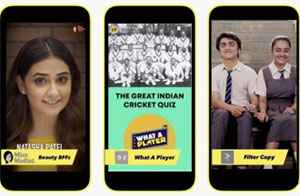
    Snap Originals in India

    Snapchat , owned by USA headquartered Snap Inc. is a multimedia-messaging app which allows users to share static & video content called ‘Stories’. It also includes a Discover tab where content partners & brands show ad-supported short-form content. Snapchat has become known for representing a new, mobile-first direction for social media, for e.g. it was the first to introduce both Augmented reality filters & Stories on its platform, both of which have since got replicated in most other popular apps. India has been a focus market for Snap Inc., since 2018., which has lead to an 80% increase in DAUs (Daily Active Users) in the country. This growth is partly fueled by the integration of  four new Indian languages including Hindi, Gujarati, Punjabi and Marathi & partly by local partnerships across device manufacturers, telcos, content creators (Brut, HuffPost India, The Logical Indian, The Quint, VICE India, Pocket Aces,) etc.. These content partnerships have also been used by Snap for original content creation, branded as ‘Snap Originals’.  Brands should advertise on Snap primarily to reach the youth in metros, and definitely if they target women below 34 years in metros .  Snapchat also offers granular targeting options with low ad spends.


    • User Base in India – undisclosed, 229 million MAUs globally

    • Demographic Profile – Urban Youth, below 34 years of age, 55% of the audience being women

    • Ad formats – Sponsored Lenses , Sponsored filters,  Sponsored stories, ads in discover


    The platforms targeted at Rural India

    Most platforms which are targeting rural India have a few commonalties – firstly they are focused on regional languages, they are still focused on building communities and while have made inroads on revenue streams, they are not focus areas. Thirdly, most have come under some flak for objectionable content, whether pornographic or political. Marketers are hence, still wary of leveraging them, but as the platforms get more established in the coming few years, they will contribute to sizeable digital spends. We focus on two such platforms, which seem to be winning the numbers game in 2020 –


    Likee –  was the 7th most downloaded app of 2019 and has 115 million Monthly Active Users in India.
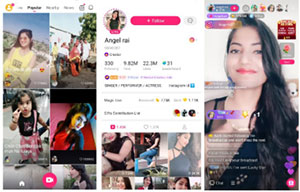
    Screenshot of Likee user’s profile, homepage & Live

    Likee (rebranded from Like) is a short video creation platform created by Singapore based firm, BIGO Technology in 2017. It offers  short video creation with a variety of creative Augmented Reality filters and effects, a news tab to catch up on current affairs & an option to go ‘Live’ where users are allowed to send virtual gifts and roses to their favorite creators. It offers support for 15 Indian languages, including Tamil, Telugu, Marathi, Gujarati, Urdu and Sanskrit.


    While similar to TikTok, the user interface is much simpler and filters are more creative. Its 115million+ user base is primarily concentrated in tier 2& 3 cities. Advertising options on its platform, are similar to those offered on TikTok i.e. branded filters, branded challenges & in-feed ads. Inventory on Infeed-ads are sold using the Google Ad Exchange & Facebook Audience Network


    Likee has been used for promoting many popular movies of 2019 such as Chhichhore, Dabangg 3 & Housefull4.  For e.g. For Housefull4, users  could transform into any of the characters they chose from the film using the Facemorph filter. Selected users were then invited for a meet& greet with the cast


    Sharechat

    Sharechat is a social networking service founded in 2015 in India which available both on mobile & web. It allows sharing of both video & static content, and is available in 14 languages including dialects like Rajasthani, Haryanvi and Bhojpuri. It also has a chat feature, which allows users to communicate with each other. The platform currently has a user Base in India of 60 million+ MAUs.  Rather than follow the strategy formulated by TikTok, as most platforms in the space are doing, ShareChat has managed to differentiate itself from other platforms  due to its multipronged strategy –


    • Advertising – Brand integrations through micro-influencers on the platform. Micro influencers help create unique brand experiences through UGC (User Generated Content). Coca Cola, Oyo, MTR, Airtel, Pepsi and the Future Group are some of the advertisers already working with ShareChat.

    • Community – it has focused on targeting users in tier2,3 & 4 cities only in Indian vernacular languages. It has recently launched several interest-based micro-communities on subjects such as commerce and religion, gaming and fantasy sports to drive user-engagement

    • Content Moderation – moderates content to global standards followed by Twitter ( who led a Series D $100 million investment round in 2019)


    Images courtesy indianexpress.com, qz.com, public feeds of apps

    Bhuvi Gupta is a marketer with 10 years of work experience, of which the last six have been in the media and entertainment industry. She has been a part of many launch marketing campaigns with experiences at the Times of India group, Republic TV and the latest in marketing a Bollywood film.
  • Are Marketers ready for the Digital E-way?


    By Ritu Midha


    The internet has long stopped being Wonderland. Indians are adapting to the ways of the web, and flocking to it for multiple reasons. The third largest internet consumer on the web, India is also one of the largest smartphone markets. Indian marketers are experimenting with the capabilities of the internet and while early adapters are already reaping benefits, others too are looking at getting into a far more serious relationship with it. Flirting alone is not enough!


    First a quick look at some recent internet studies. The numbers might vary from study to study, but the trend they plot is the same:


    – As per the Boston Study ‘From Buzz to Bucks: Capitalizing on India’s ‘Digitally Influenced’, Internet users in India will grow from 125 million in 2011 to 330 million by 2016, nearly a 300 percent jump. This will lead to more purchase decisions being impacted by digital influence.


    As per this report, 40 per cent of India’s 90 million urban internet users already say that what they buy is influenced by online activities such as product research and price comparison. The digital influence right now affects $30 billion of urban consumer spending, and is likely to accelerate further.

    It states that men are far more likely than women to be on the internet (32 percent versus 12 percent) and more than 300 percent likely to be digitally influenced (14 percent versus 4 percent).

    – Kleiner Perkins Caufield & Byers partner Mary Meeker’s report, meanwhile, states that India will have 67 million smartphone subscribers by the end of 2013, a 52 percent growth YoY.


    Interestingly, more than 50 percent of Indian respondents surveyed stated that they share nearly everything online, while the same number for the US is just 15 percent.


    – As per 2013 global ‘Internet World Stats’ report, India is ranked third (following the US and China) in number of active internet users. In sheer numbers it translates to 120 million users (up from 81 million users in 2010). In percentage terms, however, it is only 11 percent.


    As for the smart phones the study estimates that from 18 to 20 million smart phones in 2012, the number will grow to 30 million by 2016.


    – The Google study perhaps is the most interesting of all. It states that of the 150 million internet users in India about 40 per cent are women. It indicates that of these about 60 percent (24 million) are online every day. Among their key activities online are checking email, interaction on social networking sites and online shopping.


    Though the numbers might not sound huge when compared to television viewership or readership numbers, the medium’s continuous growth, India getting younger by the year, and purchasing power of this populace make it a force to reckon with. And then there are the medium’s inherent traits like high involvement, engagement, focused targeting, and measurability.


    Another key reason for the marketers to join the digital bandwagon is reducing cost efficiency of traditional media. States Vivek Nayer, CMO, Marketing Division, Mahindra & Mahindra, “In traditional media there is huge competition for commercial time and column centimetres. With the new guidelines, channels will be able to show ads only for 12 minutes per hour. It might lead to further increase in ad rates. In traditional media due to the high rates, ad sizes and durations are being reduced. Brand stories cannot be shared in 20-30 seconds. The digital platform allows you to tell the brand story. Secondly, there is high spillover. In digital, media interaction is far more targeted.”


    Marketers are not looking at digital just as a medium of brand communication but as a platform to engage with the consumer. Vivek Balasubramaniam Srivatsa, Head Marketing, Renault comments, “Online is not just a media choice, it creates brand experience and drives transactions. The key is to bridge the virtual world with the physical world seamlessly.”


    India getting younger and the young Indian being bolder and far more web savvy than his/her parents too is a key reason for the advertisers to look at internet far more seriously. States Ranju Kumar Mohan, Director & Business Head, JK Ansell – Kamasutra, “Audiences are evolving. Digital is the right medium for targeting bold experimental Indian youth. An effective way to use online is to link offline events with online activity. It immensely helps in growth in conversations.”


    Rajiv Dingra

    One of the key reasons digital engages with the consumer much better than the traditional medium is because here consumer is not listening to the story, but is a part of it. According to Rajiv Dhingra, Founder & CEO, WatConsult, “Digital marketing reduces marketers power to control the message – that power here resides with consumer. For the brands to be able to connect with the consumers online, it is important to make them a part of the story.”


    For a brand like Bisleri, which has long seen success via tradition route, too digital is emerging as an important medium to cut the clutter. States Anjana Ghosh, Director Business Development & HR, Bisleri, “For the last 50 years we have built brands like Gold Spot, Thums Up, Limca, Maaza and Citra via traditional media. However, now with more 3000 brands trying to battle for consumer attention on television and print, it is inevitable that one uses digital in the best possible way. It is important to engage with the consumer, and know what the consumer says.”


    Brands are increasingly using web to promote its on-ground activities. It helps in reaching a much larger number of users, and thus increases the RoI manifold. States Mr Nayer, “Amplification of offline events online enhances RoI. Mahindra has formed the Purple Club for Mahindra XUV 500 owners, and we do special events for them. One such event is XUV 500 torque day where we invite XUV 500 owners to drive on F1 track. We do considerable online activity around the event – we put up videos, send mailers and create buzz on FB. During the event, it is not only us putting live updates on Facebook, but also the participants themselves! It increases the buzz manifold. Another event we created was at Auto Expo Delhi – where we used augmented reality. Here a virtual cheetah sitting on the car and moving around became extremely popular not only with those at the venue but also online. The video had wow factor, and so went viral. Besides amplifying the ground event massively, it also won us a gold Abby and a silver Abby.”


    Marketers are emphatic that brands’ online persona needs to be same as the offline one. The interactions and activities conducted online too should be in sync with its offline activities. Any dissonance, they believe, would end up impacting the brand personality adversely. Mr Srivatsa comments, “The online experience needs to be in line with the brand promise. The key is to interact with online users right and to make them our brand ambassadors. There has to be seamless integration with reality.”


    A few brands have taken a leap forward. They are not only using online for brand communication and interacting with the consumer alone, but also to get insights into the consumer behaviour. Vinay Bhatia, VP, Marketing & Loyalty, Shoppers Stop reflects, “Marketers can get interesting and useful insights into their consumers by analysing data. We have a introduced a tab ‘Perfect for Me’ on our Facebook page. Here we display products to the users based on their preferences. Almost 50 percent of the people who use Perfect for me tab are First Citizen Club members. We now have both, their buying data and thinking data. Marrying the two provides useful and interesting insights.”


    Adds Mr Mohan, “One gets sharper data and insights from digital platform. Our product extension in 2010 was based on feedback we gathered from trendsetters. It was done on a closed door FB page.Based on that feedback KS deodorants were created. These deodorants are now doing very well in the market.”


    Marketers are also realizing that while they can talk to the consumer on various platforms, internet is the only place where they can listen to the consumer. Subramanya Sharma, CMO Cleartrip states, “Forums, Twitter, Facebook and feedback are the platforms to continuously listen to your consumers, understand their needs and pain points. What people like and converse about, are clear guidelines to improve one’s products and services.”


    Sanjay Tripathy

    For services the web is a completely different ball game – as the focus here is not on marketing alone but also on providing an excellent online service experience. Sanjay Tripathy, EVP, Head-Marketing, HDFC Life says, “BFSI (Banking, Financial Services & Insurance) is not a product business. Our online presence, to some extent, is about query and interest, which leads to new business acquisition. The web, however, works immensely well as a medium to service the customers.” He adds, “Having said that, for online to work, the right ecosystem is important. The company should have right mindset and right partner.”


    So the inclination is there to use internet as a medium not of advertising communication, but of brand – consumer interaction. Though, there are still only a few examples of path-breaking digital marketing, the learnings are immense. What a brand expects and attains out of online brand-consumer interaction depends on the brand’s PLC, its involvement level, and also on its internet age. As more and more brands put weight behind digital in this tug of war with traditional media, it will get more interesting. However, inclination alone is not enough, brands need to condition themselves to listen to the consumers and evolve. If they just want to convey an advertising message, digital is no match for television.

    Quotes in this article are excerpts from 9th Marketing Conclave organized by the Internet Mobile Association of India (IAMAI)


  • CMOs believe digital marketing is way forward

    By A Correspondent


    Digital Marketing was the theme of the 9th Marketing Conclave organized by the Internet Mobile Association of India (IAMAI).


    The marketers across categories agreed the digital marketing is the way forward. The common belief among the panelists was that interactivity, engagement and measurability are making the marketers look at it far more seriously now. While they are using digitally differently based on where in the product life cycle their brand really is, they were united in their opinion that digital marketing is here to stay.


    Focusing on the auto sector, Vivek Nayer, Chief Marketing Officer – Auto Division, Mahindra & Mahindra said, “The key to success in digital marketing is content. As the platform allows multiple points for brand storytelling, it is imperative that the space is used judiciously. Digital marketing has made consumer the most powerful person for a brand. The space is all about conversations and how consumers are engaged”. He showed some interesting examples to establish that digital marketing helps in better customer engagement and association.


    Added Vivek Srivastava, Head – Marketing, Renault India, “The best aspect of digital marketing is it helps a brand to create impact and also measure the same, which cannot be obtained by traditional marketing”.


    Addressing a session on Digital Marketing – Retail, Vinay Bhatia, Customer Care Associate and VP, Marketing & Loyalty – Shoppers Stop, emphasized that every company should have its tailor made digital marketing strategy based on its requirements. He said, “There is nothing wrong or right in digital marketing. All of us are in the experimental stage and yes investment in it is already showing benefits”. He went on to add, “Social media provides thinking data. If aptly used, it can turn around business. We have substantially increased our digital marketing budget”.


    Andrew Campbell, Chief Brand & Marketing Officer – Reliance Industries, meanwhile stated that while all customers might not shop online, they use digital platforms to be better informed. He said, “Retail is all about Trust, Value, Service and Growth. What has changed over the years is the Scale and Channels. Digital marketing helps to create a bond with the consumer”.


    Inaugurating the Conclave, Rajan Anandan – Chairman, Internet And Mobile Association of India (IAMAI) pointed out that while India is witnessing great increase in Research Online Shop Offline, at the same time e-commerce sites are doing excellent business.


    According to the IAMAI ‘Digital Advertising in India’ report, the online advertising market in India is projected to reach Rs 2,938 crore by March 2014. The report finds that by March 2013, search advertising constituted about 38 percent of the total online advertising spend, translating to about Rs 850 crore while display advertising form a sizeable 29 percent (Rs 662 crore). Advertisements on mobile phones and tablets have grown from a 7 percent share in FY 2011-2012 to 10 percent of the Indian online ad market in FY 2012-2013, totaling to spends of around Rs 230 crore. Social media, email and video advertising constitute 13 percent (Rs 300 crore), 3 percent (Rs 68 crore) and 7 percent (Rs 150 crore) of the online advertising market, respectively.


  • Ad:tech 2013 focuses on integrated digital marketing

    By A Correspondent


    The third India edition of digital marketing event, ad:tech New Delhi 2013 saw panellists deliberate on topics such as integrated mobile marketing, video integration, location-based relevancy, social media ROI, search and content. Alyssa Altman, Vice President, SapientNitro, in her keynote on the second day of Ad:tech New Delhi 2013 shared findings of their survey in which 88 percent of respondents said that today’s global marketing world has become challenging than ever before. She cited a Gartner study which predicts that by 2017, CMOs will purchase more technology than CIOs.


    While the first day of the conference focused on marketers’ perspectives on the digital consumer; the second day hailed ‘gamification’ as the latest trend for this year and speakers predicted that it will become a major global experience by 2016. Globally, there are more than 500 million people playing games at least for one hour every day. Avinash Jhangiani, Vice President – Digital, Omnicom Media Group, explained about their game changing live collaboration platform for global media planning, ‘Source’, which can even create powerpoint decks automatically. He also shared examples of brands like Visa, Mahindra and Movie Munchies that have successfully gamified their campaigns.


    Citing the example of Mario Bros, Rahul Avasthy, Director Strategy for Zapak Digital Entertainment, said that the same game mechanics can be applied to non-game real-life experiences to help solve the challenges of bounce rate and converting latent leads (CPL). He noted that successful campaigns require not just good content but also intent, citing the example of Arby’s Burger which leveraged gamification generated over 41,000 organic entrants and 3,00,000 actions.


    Mohd. Imthiaz of Hoppr said that there are only 20 million smart phone users in India which is why marketers need to plan campaigns that can run on every type of phone. He said that location-based services can help make the typical lean hours into peak hours. He mentioned that for a consumer, the real benefit a marketer can provide is the joy of watching and sharing content.


    Praveen Sharma, Head of Media Sales, Google India, insisted that with proliferation of multi-screens, apart from the opportunity, it also poses challenge for content creators since viewers filter out the mediocrity on screens other than the TV. T Gangadhar, MD, MEC India said, “As a media agency, we are moving away from media planning to audience planning. We consider YouTube as channel. Plans are increasingly becoming video plans.”


    Prashant Singh, MD – Media, Nielsen India said, “It is important for a digital campaign to be based on three parameters: reach, resonance and reaction. Getting these three basics right would help measure the ROI.” Pratik Mazumder, Head Marketing and Strategic Relations, Yatra.com highlighted the fact that while brands are insistent on ROI from digital media, many brands do not move beyond ‘Likes’ on social media to engage with the consumer.


    The event concluded with power-packed presentations from Sunita Rajan, Senior Vice President, BBC Advertising who spoke on ‘Revenue at the speed of User Adoption’ and Bettina Sherick, SVP Digital Strategic marketing, 20th century Fox International on ‘Marketing the cinema experience in a digital world’. She cited the example of global marketing initiatives for Life of Pi and how Fox leveraged the proliferation of digital platforms for marketing purposes, and also created innovations for consumers to disconnect and experience films on the big screen.


  • Creating stories digitally for marketing success


    By A Correspondent


    Digital media is becoming an integral part of brand communication and journey. The content, connected consumers and convergence is only fuelling the digital marketing. From Coca-cola to SMEs in Delhi’s Chandni Chowk are exploring this medium to connect with consumers. There is close to 72 hours of content that is generated every minute of every day from around the world. Most of it is being consumed in real-time. Digital is growing exponentially, and brands not taking advantage of it might just face tougher time engaging with the consumers.


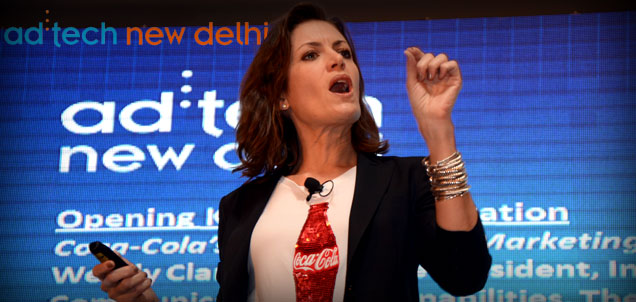
    Speaking at ad:tech 2013, the premier digital marketing event held in Gurgaon every year, Wendy Clark, Senior Vice President, Integrated Marketing Communications and Capabilities, The Coca Cola Company, stressed on the need to create more stories that are share-worthy instead of typical advertisements. Sharing the digital campaigns by Coca-Cola, she deliberated on the concept of Liquid & Linked Marketing. “There are eight learnings so far on this journey,” she shared, “be share-worthy by creating content that is interesting and compelling; embrace the new salesforce which are consumers willing to carry brand messages ahead; listen and then engage; test, fail, learn, and then scale; speed trumps perfection so be ‘flawsome’; disrupt yourself or be disrupted by the market; do not accept the status quo; and, play well on a behavioural level to manage increasingly complicated campaigns.”


    Ms Clark was of the view that storytelling could happen on digital, or any other traditional media, “It is only storytelling of different durations,” she maintained. Focusing on the three areas of stories, spread and value, she cited the example of the ‘Hug Machine’ set up by Coca Cola in National University of Singapore, which would offer a free can of Coke if you hugged the machine. Even though the campaign ran only inSingapore, it became viral globally and generated over 10 million views in theUSitself.


    Katharyn White, Vice President Marketing, IBM Global Business Services delved into how the changing consumer is also resulting in the changing role of marketers. She emphasized on the three imperatives for marketing professionals: understanding the customer as an individual; creating a system of engagement that maximizes value creation at every touch; and designing culture and brand so that they are authentically one.


    Technology, according to marketers is increasingly becoming an enabler that is helping brands create emotionally connected brand stories. Sanjay Tripathy, Executive VP – Marketing, Product and Direct Sales Channels, HDFC Life, spoke about how his company thought of engaging consumers by creating themes around insurance and thus, creating conversations. Nikhil Rungta, Country Marketing Head, Google India, cautioned, “Technology can be intimidating,” but that did not stop Google from creating conversations around real people and real stories, such as the Thanjavur painting. Technology helped the brand marketers to not only create stories but make conversations out of it.


    Mr Rungta also shared how AT&T created a series of 5 webisodes to connect with the consumer, instead of TVCs. The power of videos also enable to consumers to share it, co-create it, become a part of it and, in the long run evangelize the brand.


    Rajesh Chakrabarti, CMO and Chief Innovation Officer, Reliance Commercial Finance and Reliance Home Finance said that while internet penetration and usage is growing multi-fold inIndia, “it is still difficult to sell insurance online.” Reliance used the ground (offline) to get the customers to the web and today, the number of policies sold online has grown from 10,000 to 70,000 policies every month even though he emphasised that it is not easy to engage consumer on the internet. To attract the consumers to online insurance, Reliance kept the interface simple and managed to increase its online revenues by 83 percent in the Commercial Finance and Home Finance domain.


    K Ramakrishnan, President – Marketing, Cafe Coffee Day, stated that offline and online channels are merging. “The brands need to communicate to consumer has changed to ‘how to make consumers communicate on brands’ behalf’. With creating right conversations, consumers do indulge in brand evangelism. Being open to social media also implies that you will get negative feedback. It is an opportunity for brands in this case to look for opportunity here, brand should be able to listen and reward people for it. There needs to be courage to take risks.” Sanjeev Kapur, CMO, Citi (India) talked about delivering customized experiences to consumer according to their preferences.


    Harneet Singh, VP-Marketing, Domino’s Pizza India shared how Domino’s replicated its offline 30-minute delivery challenge online. And today, “eCommerce contributes 15 percent of delivery sales. With native Apps, we have introduced advanced analytical re-marketing strategy. The mobile ordering app has results in 10 percent of our total digital sales.”


    Marketers are also sure that going forward, digital marketing investments will significantly outpace the traditional media investments.


    With the changing media matrix, the role of media agencies is also changing. Speaking to MxM India, Mr Chakrabarti said that with digital becoming an integral part of any marketers’ plan, the need arises for specialised agencies which can provide specific solutions and plans. Ruth Stubbs, CEO, iProspect and Digital Media – Aegis Media APAC said, “Digital technology is creating more media. With more and more business being done online, we need to reinvent the roles we play. It is important to know how we can reset our approach to reinvent the way brands are built in this 24×7 connected environment. It becomes our massive responsibility to guide the brands through the massive digital chaos.”


    Digital chaos it may be, but it sure is throwing up some great stories and conversations!


  • We are very optimistic about India: Tripti Lochan

    By Johnson Napier


    Digital marketing agency VML Qais has had a busy 2012-13 helping multinational clients and digital start-ups chart their digital course and implement groundbreaking online initiatives. One such recent example the agency undertook was an online study for their client Revlon India, which was conducted to better understand the mindset of Indian women and their attitudes and habits towards foundation.


    According to Tripti Lochan, CEO, VML Qais, as was the case with Revlon India, brands are today recognizing that digital provides a more powerful engagement than any other media. In fact she is very confident that marketers will soon be putting their dollars more convincingly behind digital.


    In an interaction with MxMIndia, Ms Lochan stresses on the need for real-time creation of branded content by brands and how regional clients are increasingly demanding India-specific strategies as part of value-added services. Excerpts:


    We know of brands flocking to the social media platform to reach out to their audiences wherever they are. What was unique about the social media exercise you undertook with your client Revlon India?
    We believe that all strategy needs to be driven by consumer insights. As a first step for Revlon India, we carried out a social listening piece, to understand real consumer conversations & attitudes regarding beauty, health, and wellness. Our strategy was then pivoted on these insights. With Revlon India we are bench-marking not only against Indian competition but global beauty and fashion players like MAC/ Estee Lauder/ Burberry. We want to use social media as a long-term conversation platform that allows Revlon to continuously gain insights from consumers, and be relevant to their needs.


    Any notable trends that emerged as the users sampled your questions/survey?

    There were a lot of interesting trends, notably the fact that Indian women prefer natural make-up. Colours are welcome but those that work best with Indian skin tones. Many Indian women are multi-tasking and looking for beauty brands that match that lifestyle – easy to use and long-lasting are two recurring needs. This is validated through Generation Asia India research that we carried out earlier in the year where the theme of individualism is strong.


    Is a sample size of 75,000 (via online) big enough a number to convert perception to reality? Did you consider collating inputs through the offline route as well?

    It is a substantial sample to consider. And since our strategy was online focused, with focus on communicating on Facebook, we wanted to get the perception of this audience – which is digital, the connected segment.


    As a digital agency, how according to you have brands woken up to pursuing online marketing activities in terms of budgetary allocations and importance vis-a-vis traditional mediums?

    The spends on digital do not by any stretch of the imagination mirror the time consumers are spending online. This is because brands have a “comfort factor” concerning spending on things they know well. But the good news is that brands are recognizing that digital provides a more powerful engagement than any other media. We are already seeing experimental budgets being set aside. I am very confident that marketers will soon be putting their dollars more convincingly behind digital. If you look at a brand like Revlon, it’s an opportunity to replicate beauty-counter conversation around make-up into a digital dialogue with consumers. Which other medium would allow them this?


    VML Qais seems to have an array of corporate clients under its belt. What makes your firm an agency to vie for?

    As an agency we have a firm belief: we are marketers first, before anything else. And as marketers, we keep to the fundamentals of marketing: take direction from business objectives, base everything on consumer insights, and think holistically. Yes, digital is complex; it requires an understanding of an added layer – technology. Of course the importance of understanding this cannot be underestimated. And to steer through this requires you to have the ability to join the dots – between what your business objectives are as a brand, what consumers want, and what technology allows us to do today. We believe that technology will continue to change, as it has been over the last decade. There are new developments that impact marketing every day. And we need to be in continuous curiosity and learning mode, so we can help our clients navigate through this sometimes-confusing environment. The first thing I tell our clients is that we are not experts in their business – and that we learn as much from them as they do from us. As an agency, it is our desire to do the best we can by our clients that shows results.


    What is the trend you anticipate 2013 to throw up regarding brands taking the social media space for marketing & promotional activities?

    I think one of the most interesting trends we have been seeing is the real-time creation of branded content by brands. This is the ability, in real time, to look at conversation in real time, create a point of view or response against this, weaving in the brand’s POV. This, done in an innovative, creative way, can be used for marketing and promotional activities by brands.


    What does 2013 augur for VML Qais on the growth front in India?

    We continue to have some really interesting projects at hand in India. Our client relationships are strong and growing. We have set some aggressive growth targets for VML Qais in the region, including for India. The year has begun well with big regional wins. We see a lot of our regional clients wanting specific India strategies, and that is part of the value-add we can offer them. We are able to provide global insights in India to brands that want to benchmark against global competitors, and Indian companies that want a regional or even global strategy. We are very optimistic about India.


  • WATSummit ’13 to discuss new era of digi mktng

    By A Correspondent


    WATMedia has announced its annual event, WATSummit that brings together eminent personalities to confer the evolving facets of social and digital industry. In its third edition, the theme of WATSummit 2013 is ‘A New Era of Digital Marketing’. The annual summit that is scheduled to take place on 15th Feb, 2013 at The Orchid Hotel, Mumbai, will also host WAT Awards 2013, wherein, thought leaders of Web, Advertising and Technology will be awarded.


    WATSummit 2013 will witness participation of prominent visionaries discussing topics that contribute to the growth of digital and advertising space.


    A panel of experts will be seen highlighting the prominence of social media with ‘Social Media Marketing – Making sense of jibber-jabber by brands’. The evolution of ‘Digital Media Marketing – Can it build a brand on its own?’ will be discussed extensively by a panel comprising Digital Agencies and Brands.


    The summit will also bring to light the E-commerce industry and the upspring of mobile marketing with in-depth discussion on topics like ‘Ecommerce Market build brand V/S build business’, ‘Mobile Marketing – Promises of reach V/S Actual Impact’. The final panel will be seen conferring the do’s and don’ts and the challenges of ‘Startup Marketing – Breaking the cluster and creating a Brand’.


    Sharing his views on the third WATSummit, Rajiv Dingra, Founder & CEO, WATMedia Pvt Ltd said, “I am pleased to announce WATSummit 2013. The response to the earlier summits has been encouraging, which brings us to its third edition. This year, at WATSummit 2013, we aim to emphasize on the new era of digital marketing. The medium has grown exceptionally over the past few years and brands and consumers across the world consider the digital medium a dominant tool. I am delighted with the participation of renowned speakers who will share their profound knowledge. With WATSummit 2013, our endeavor is to embark on a digitally successful journey.”


    The keynote speakers for the event include dignitaries such as Suresh Reddy – Chairman & CEO, Ybrant Digital & Neville Taraporewalla – Country Director, Advertising and Online- Microsoft Corporation.


  • The Anchor: Carlton D’Silva on 5 reasons why marketers must take digital seriously

    By Carlton D’Silva


    #1 Keep up with the times. To be in tune with the changing milieu it has become imperative for a brand to be present in the digital medium. The brand else would look historic as digital presence is essential for any brand today. It is a way forward for the brands and a way to keep up with the new generation. In fact, the digital presence of a brand and its various innovations is what makes the brand different from the various traditional communication media.


    #2 Connect where its TG hangs around. If one is targeting youth, which most marketers today do, then digital cannot be ignored. Data shows that 70 percent of the Indian youth are today online hence it is ‘the’ medium where your TG is and definite should be high on the radar of any marketer who is focusing on this segment.


    #3 Cross-function ability. I don’t think any other medium is so agile as digital, which has the ability to extract the good parts of other media and then take it forward. Like an on-ground activation can be recorded and put up on digital and it could go the viral route, thus the restriction of place that an on-ground activity provides can easily be overcome when the same can be viewed by people across. Digital helps in enhancing a traditional medium and can help it make a massive idea.


    #4 Quantifiable. No other medium can be tracked better than digital. It can help in specific targeting while being non-intrusive, unlike spillages that happen on traditional media. Also its ability to lead to immediate transactions, like seeing an offer online that leads to purchase there and then, makes it the best option for converting an ad into a sale immediately.


    #5 Last but probably the biggest reason why the marketers should adopt digital medium is that it facilitates conversation with consumers. The medium helps to connect instantly with the consumers and no other medium provides that. Also, if there is negative talk around the brand, the medium allows you to listen and then help in taking steps to amend the negatives.


    Carlton D’Silva is the Chief Creative Officer at Hungama Digital


  • Digital, the efficient earner: B N Chandrakanth, Theorem

    By Robin Thomas


    Theorem, a technology company focused on digital marketing or online media operations, started at a mere number of four, and today has over 1000 people  with offices in the Americas, Asia Pacific, Europe and the Middle East. The company provides a broad suite of digital solutions in areas ranging from creative services and media operations to reporting and analytical services. In conversation with MxMIndia, Chandrakanth B N, Co-Founder and Managing Director, Theorem India, spoke at length about the company’s journey over the last ten years since its foundation in 2002. He also spoke about his India plans, specifically post Rs 100 crore investments in India, and much more.


    Q: From mere 4 people in the organisation, today Theorem is said to be more than a 1000 in just 10 years, over 150 clients… What are the key drivers that have led to this success?

    We are more of a technology player in this domain. One of the biggest growth drivers for Theorem has been the growth of the digital media over the last 10 years. Even in mature markets like the US, the overall ad spends going to digital was only 7 percent; the digital ad pie has of course doubled over the years. We set up our company with the vision to focus on the digital media operations domain. What we brought was the strength of the strong Indian IT service business ie efficiency and technical knowledge, while keeping the costs low for our clients. This became very attractive to our clients in the west, and so our team achieved better quality service delivery than their own teams based in New York or San Francisco etc. Hence, it was very attractive for companies in the digital media space whether it is an agency or publishers or technology companies to work with us because we brought in both domain expertise plus we brought in the scales of operations and very importantly the technical knowhow and skills required. These are some of the factors that I believe helped us grow in the last 10 years.


    Q: What would you say are some of the learnings so far in the last 10 years?

    Digital offers the most cost-effective way of communicating or advertising. Not just cost-effective, but it is very effective in terms of reach as well. When we started, display and email were two big key drivers for digital marketing. Right after we started, Google took off, which basically brought in search marketing and so search became a key element of the digital marketing eco-system. We adapted to these changes and then obviously social media came along and mobile came along. So we have seen an evolution of different media vehicles within the digital sphere. We also saw a lot of technological innovation happen within this domain. The evolution of this space has been very fast and there has been so much technology coming in, and there has been much more efficiency too.


    Q: So, has there been a change in the way the marketers have approached digital media over the years?

    Absolutely. Since we have largely worked with western markets, we have definitely seen that change wherein marketers or brands are adapting to digital a lot more. We can see that in the numbers ie doubling of the digital ad spends from 7 to 14 percent. There is a lot more awareness about the effectiveness of digital advertising in the western markets and marketers are also a lot more demanding as far as their requirements from the media are concerned. It is a fairly mature market today.


    India on the other hand is still an evolving market. Marketers here need a lot more education to understand the benefits of the digital media, its effectiveness in delivering better ROIs, how digital is going to be different from the traditional media, and so on… So, there is still a fair bit of education that is required. We are seeing changes and I believe a company like ours can play a huge role in educating the Indian marketer. I still believe that there is a lot to be done in the Indian market.


    Q: What are your India-specific plans? Theorem will be investing Rs 100 crore in India over the next 3-4 years… What is the nature of these investments?

    We have a large facility and teams based out of India, supporting our global clients right now and so we are looking at expanding on that. In Mysore we have our own campus and we are looking at expanding that. More importantly though we are looking at India as a market and how we can take our domain expertise and add value as opposed to being a large-scale IT support organization. We are also trying to be in the forefront of the marketing itself and help with more innovation. So, yes in the next four to five years we are looking to expand our operations from both facilities and team perspective which is potentially a Rs 100 crore investment.


    Q: You have two offices in India, Mysore and Bangalore… Any expansion plans within India?

    Yes, as the industry evolves further this is definitely a possibility. It is nevertheless early years for us, but we are definitely looking at probably newer cities, newer regions. The operation centers are in Bangalore and Mysore right now so that may continue to grow in these regions but, if we see the need we may even look at other regions.


    Traditionally US has always been a very large market for us, UK would be the next largest and then Europe but, where we are really seeing growth is in regions like Australia and Middle East. In India we have to do a lot of work in terms of creating solutions and that is what we are working on right now. India as a market is very interesting for us, and we are definitely seeing growth in some of the non traditional markets as well.


    Q: What is the business model you follow? Which of your services bring bigger share of revenue – creatives, media operations, analytics, consulting? Any newer services we would see you introduce this year or in the near future?

    Right now we are an IT services company supporting the digital marketing world. Largely we provide experienced or trained resources to support online media operations. So, this is really our business model, it is a traditional IT services model but, then we are obviously trying to move up the value chain and provide more high-end services for some of the local markets.


    Our revenues are spread evenly across our services, our media operations have been a big portion of our business and all the other services are also growing quickly as well. We are working on some new solutions and products, a couple of which we will launch soon. Some time later this year we will be launching another product and some time next year we aim to bring in some more innovative solutions to the market.


    Q: What rich media services does Theorem provide?

    Theorem provides end-to-end rich media services including creative development, trafficking and QA (quality assurance), across a range of media including mobile, email, banner ads, landing pages and micro sites. Furthermore, our expertise spans technologies including MediaMind, DoubleClick Studio, Eyewonder, PointRoll, and Flashtalking among others. Theorem strength and key differentiation lies in its depth of knowledge and breadth of services in providing rich media QA that’s extremely complex and highly evolved. In fact, we are one of the very few firms globally that offer this service to our clients.


    Q: And what do you think are the biggest concerns or challenges that Indian markets face, as far as rich media ads are concerned?

    Bandwidth issues in India are a big concern as the internet infrastructure needs to mature a lot more for the mobile rich media ads to become more popular. I believe it has to evolve, the infrastructure needs to get better and I think once we see our infrastructure improve rich media ads will also get more popular.


    Q: We have been witnessing some consolidations in the digital industry, with a lot of mergers and acquisitions lately… What is your take on these developments? Good signs for the industry?


    I believe it is a sign of maturation for the digital industry in India. I personally think it is a good sign; there is a lot of focus on India. So, as the market matures, our internet infrastructure gets better, and we are able to convince the marketers that digital is a more effective medium for them to start leveraging. We have a huge youth population and they are all going to get on the internet and the easier it gets to log onto the internet, obviously the larger the population you will have to market to. Therefore all our tier II and tier III cities need to get better bandwidth and internet infrastructure.


    Q: And are we going to see Theorem too acquire some agencies soon …?

    Potentially yes. There is always a possibility of this as we grow …


    Q: What kind of impact did the global economic conditions have on your international and India business? Did it have any impact on the industry?

    Interestingly, we never saw never saw a slowdown in the last 10 years. In fact 2008-09 were one of the biggest growth years for us. During the slowdown we have been hiring and giving raises. So digital provides a cost-effective means of communication and advertising. During the years of slowdown more people look at cost benefits of digital advertising. Although the overall spends may shrink, the piece of the pie is definitely going to increase for digital during these times.


    Q: What are your growth targets and goals over the next one or two years?

    We are looking to double by the end of 2015…


  • WATBlog announces CMO conference

    By A Correspondent


    With an aim to give marketing professionals key insights into digital media, WATBlog announced the Digital CMO Conference. The event will have top CMOs of the country come together to showcase case-studies that have witnessed ground breaking success in digital media. The conference will be held on August 31 in Mumbai.


    WATBlog’s Digital CMO conference will showcase insightful presentations by the biggest brands that have emerged as the thought leaders in the digital media space. The conference will cover all aspects of digital marketing, including the role of social media in Customer Service and how the digital platform can help build brand reputation. The delegates expected to attend the conference would be a mix of CEOs, entrepreneurs and marketing professionals.


    “Digital marketing in India has gained significant momentum over the past year. A lot of brands are now looking at social media as an integral part of their marketing mix. We have organized the Digital CMO Conference to help these brands understand the best practices and soak up valuable insights from those who have run successful campaigns in the digital space” said Rajiv Dingra, Founder and CEO, WATMedia.


    Key speakers at WATBlog Digital Marketing CMO conference will be: Krishnakumar P, Executive Director, Marketing, DELL; Virginia Sharma, Chief Marketing Officer, IBM; Kavita Joshi, Head of Digital Marketing, HDFC Bank; Arun Nair, Head – Digital Marketing, Mahindra Holidays & Resorts; Dharini Mishra, Global Head of Brand, Suzlon Group


  • Day 2 @ad:tech: Nothing’s too small in new digi world

    By Shruti Pushkarna


    [youtube width=”400″ height=”200″]http://www.youtube.com/watch?v=p2FRhKna0k8[/youtube]

    The final day of ad:tech witnessed engaging keynotes and panels on topics like social commerce and mobile marketing. Here’s a wrap up of the second day at the conference.


    Small is the new big: Rethinking digital in a world of smaller, smarter screens

    Day 2 of ad:tech 2012 opened with a keynote by Pete Blackshaw, Global Head of Digital Marketing and Social Media for Nestle. Mr Blackshaw opened his session, ‘Small is the new big: Rethinking digital in a world of smaller, smarter screens’ by introducing two broad themes. First, ‘the boring basics still really matter’ and the second, ‘small is the new big’. Elaborating on the first theme, Mr Blackshaw emphasized that the essentials of marketing are the very principles that a company should build its digital strategy upon. He said, “The essentials of marketing in the traditional sense that include: Searching out and identifying big ideas that are contact neutral and have a potential of sustainable communication; engaging with consumers when they are most ready to receive; and creating an attractive and rewarding brand, find unique life on the digital platform.”


    Talking about his role in both the areas of corporate communication and consumer communication, he said that a big convergence is happening between the two. “There is convergence between corporate and consumer communications; marketing and research – asking questions has been an integral part of consumer research and now involves a large part of digital too; product quality and sales and; supply chain and digital – as consumers can now look behind the brand,” explained Mr Blackshaw.


    He also talked about the three operating pillars of Nestle, listening, engaging and transforming. He said that these three are part of the many winning actions that Nestle has uniquely defined for each function. And one basic that still applies is the power of storytelling. Blackshaw cited the example of Nescafe Know Your Neighbour campaign in India to emphasize his point that good narratives work well with the consumers. One has to device a good narrative, tie it to a big idea to engage consumers.


    Speaking of the other theme, ‘small is the new big’, Mr Blackshaw said, “We need to think harder about simplifying our messaging and serving the consumer. We need to shrink, simplify and serve. Our screens are shrinking and so we need to simplify to serve better.”


    “This is a great time in marketing…organizations are in transformation, digital is creating lots of new opportunities to connect and bond and add value for consumers. The number of consumers going online, using social media is unbelievable, I think that creates both challenges and opportunities,” concluded Mr Blackshaw.


    The evolution of content, commerce and entertainment in the digital world

    Satyan Gajwani, Director-New Media, BCCL delivered the second keynote address on Day 2. His presentation was divided into three basic areas, content, commerce and entertainment.


    In entertainment, said Mr Gajwani, “…the focus has been on two or three major initiatives. One is gaana which is a digital music platform that’s really oriented around discovering new content. Second is the way we have looked at sports and IPL specifically, that’s going to be a big focus for us in a month from now when IPL launches in April. And last is a new project we are going to launch in a couple of weeks, called Box TV. Box TV is going to be a premium video destination for India where we’ll get full length movies and TV shows and eventually sports, a lot of high end content oriented around a different type of video experience.” Mr Gajwani also emphasized that it’s important to be ‘social by design’ in today’s digital world.


    Talking about commerce, Mr Gajwani said it is time to understand the supply chain better. He also said, “Eventually there has to be some sort of molding between content and commerce as a model where the user can engage with content that’s engaging and quickly use that as a means to transact as well.”


    Behind all content, entertainment and commerce, Mr Gajwani said, “…we are trying to build a KYC behind it all, which is Knowing Your Customer, both in terms of what is it that he likes and eventually developing some sort of profile of who he is. And behind that we want to launch a loyalty programme where we know what kind of a user you are and then encourage you to be a more active user by giving you badges that validate you for your activity.”


    Mr Gajwani concluded by saying that the hottest thing in 2011 was e-commerce and that 2012 will be all about consolidation and a deeper focus on supply chain management.


    Mobile Marketing

    This session designed to look at insights on how marketers are evaluating the power of mobile as a medium to drive their business objectives, was moderated by Rajesh Jain, Founder Chairman & Managing Director, Netcore Solutions. Other panelists included, Dippak Khurana, Co-Founder & CEO, Vserv Mobile; Dr Nickhil Jakatdar, CEO & Co-Founder, Vuclip; Abdul Khan, Senior Vice President & National Head of Business Marketing, Tata Teleservices and Kiran Gopinath, Founder & CEO, Ozone Media Solutions.

    Rajesh Jain opened the debate with a fundamental question to every panelist, ‘what are the barriers that are holding mobile marketing back?’

    Abdul Khan of Tata Teleservices said, “Mobile marketing has got a terrible press. Creativity is abysmal in this area. It is because of the pricing structure that it is viewed as a commodity.”

    Mr Gopinath said, “One of the key barriers holding it back is that a lot of our customers are slow in mobilizing their sites, the lack of mobile sites is holding it back. And secondly, it will take a lot more education of people in the agencies for mobile marketing to fully take off.”

    Mr Khan also added, “It is probably just a lazy mindset that is holding back mobile marketing, it cannot be money as people are frivolously allocating money tp programmes like IPL.”

    Mr Jakatdar echoed Mr Gopinath’s point of educating people, saying, “We need to communicate in the same language with brands, agencies and publishers.”

    Dippak Khurana made an interesting point that the ecosystem today is quite complex and for mobile marketing to kick off, dedicated resources have to be allocated. He said, “Currently organizations are busy with digital and social, leadership needs to take a call and put dedicated people for mobile.”

    Rajesh Jain concluded the session by drawing out the main points from all panelists. He said, “There is a need for dedicated people in organizations to look at mobile. The lack of mobile sites needs to be addressed and finally someone needs to look at the ability to convert clicks into cash. Clicks are not getting converted into cash because of lack of payment options on mobile.


    Social Commerce

    The session was moderated by Rajan Srinivasan, Senior VP Marketing, Web18 Software Services Ltd and the panelists included- Narasimha Jayakumar, COO, E-commerce, Homeshop18; Kirthiga Reddy, Director Online Operations, Facebook India; Ramesh Chembath, Asst Vice President, Head- Marketing and Modern Trade, Godrej and Ishita Swarup, CEO, 99labels.

    The session centred on how brands can make the most of social technologies to transform shopping experience.

    Ms Reddy making her initial comments on the subject said, “E-commerce sites need to rethink the whole e-commerce experience and think of how to put people at the centre.” She also added that online behaviour is nothing but a reflection of offline behaviour.

    Mr Jayakumar emphasized that before we get into engaging the consumers we need to get the basics of the e-commerce in place. He said, ‘First ee have to make sure that the consumer is happy with the experience and then we start engaging.”

    Answering a point on whether there is any difference in the digital social and the traditional social, Mr Chembath of Godrej said, “When it comes to appliances, it is really a social activity. Buying an appliance is when a whole family goes out to make the purchase. But there has beena huge shift in consumer buying behaviour off late. In traditional social, one would ask members of the family, neighbours or even friends before making the purchase. But now with nuclear families, people are willing to experiment with brands. Instead of asking their peers, they want to go online and check the reviews posted by users on products and brands. That’s the new digital social.”

    From the debate it also emerged that brands need to see the value of social in fundamental areas like connecting with people, sharing experiences etc. The power of social really comes from the personal connection brands can provide on the web with the help of social.


    Exploring the future of storytelling

    Richard Dunmall, Vice President, Global Accounts & Agencies, Microsoft Advertising made his keynote presentation on ‘Exploring the Future of Storytelling’. Mr Dunmall shared a glimpse of futuristic technologies being adopted by advertisers and publishers in connecting with their audiences and telling their brand stories. He started off by talking about how to master the new digital storytelling world. He said, “What consumers want, technology delivers through self-expression, enjoyment, connection and discovery.”

    The four trends according to Mr Dunmall that marketers are making big bets on, are


    i) Everyone’s a storyteller

    ii) The new face of fun – the ability for people to play, share experiences

    iii) Increasingly contextual world

    iv) More human experiences


    Mr Dunmall said, “Everyone is becoming a storyteller in the new digital world, becoming a relevant owner of content. Every brand has a story to tell and digital is enabling new ways of storytelling.”

    Talking about the new face of fun, Mr Dunmall said, “Technology allows human to play in a much more enhanced way, the ability to compete with each other and have fun is what leads to engagement.”

    Talking about the third trend of the world becoming increasingly contextual, Mr Dunmall said, “Every surface can become a digital source of content in the future.”

    And of all this leads to a more ‘you’ centric experience that allows brands to customize and build a brand narrative around it. Mr Dunmall concluded his presentation by reemphasizing, “Possibilities of technology are endless.”


    The DigiMarketing Imperative

    The last keynote of Day 2 was a presentation on ‘The DigiMarketing Imperative’ by Kent Wertime, Chief Operating Officer, Ogilvy & Mather, Asia Pacific. Mr Wertime started off his presentation with a question on how ready are marketers to make the shift to DigiMarketing and everything it entails.

    Mr Wertime said, “Market despite the enormous opportunity is dramatically under-spent around the world. Agencies need to be much quicker in moving and they need to add a lot more capability than they have. There is definitely a continued lag in digital and as an industry, marketers need to fill the gap increasingly.”

    Mr Wertime also said that the shift to DigiMarketing needs to be a tectonic shift. He said, “It’s really not about the fast movers but about the slow movers. If one looks at the shaping of the future, it has actually followed a very logical course. Similarly the shift to DigiMarketing needs to be a tectonic shift. Marketing money is going to go increasingly to the digital and within a global context, markets like India have enormous room to grow.”

    Mr Wertime also added that the number of people armed with digital devices is increasing and so as an industry we have to take opportunity of this shift in a way that will please customers.

    Talking about whether the shift to digital will be that of a replacement kind, Mr Wertime said, “The digital is an additive story and not replacement, it is a relational story with traditional media.”

    Concluding his presentation, Mr Wertime said “There has to be a shift from POE to PUC, that is, Paid Owned and Earned to Participation Utilty and Contribution.”


    ***


    Delhi will play 3rd time host to ad:tech in 2013. Rammohan Sundaram, Event Chairman and Founder, CEO & Managing Director, Networkplay Media Pvt Ltd announced that ad:tech will be back in New Delhi in 2013 between Feb 20 and 23. He also announced that the launch of ad:tech Bangalore will take place sometime towards the end of September.


  • ad:tech New Delhi 2012 hunts for the best Indian blog entry on digital marketing

    By A Correspondent


    The second edition of the world’s No.1 digital marketing, media and advertising event, ad:tech New Delhi 2012, is inviting entries for the ‘Best Blog Entry’ contest.


    Bloggers need to submit an original and unpublished article on “Digital Marketing- What’s in Store for 2012″ in up to 800 words, along with their short bio and credentials, by February 12t, 2012. Entries may be emailed to bloggercontest@networkplay.in.


    Shortlisted blogs will be put up on the official social media channels of ad:tech New Delhi 2012 and will compete against each other in a poll to get the maximum number of likes and retweets. The blog with the maximum public support will be adjudged the ‘Best Blog Entry’ which will entitle the blogger to an all access pass to the three day exhibition and conference.


    ad:techNew Delhiis being held at The Leela Kempinski in Gurgaon from February 22-24. It will provide the winning blogger once-in-a-lifetime chance to meet globally respected advertising and marketing experts, and to present his or her thoughts on digital marketing.


    This year’s ad:tech will have participation of over 70 digital marketing companies, more than 2,500 delegates and experts from the digital marketing fraternity. Promising to be bigger, better and bolder than ever, ad:tech New Delhi 2012 already has a glittering line up of keynote addresses by Shiv Singh, Global Head of Digital, PepsiCo Beverages; Pete Blackshaw, Global Head of Digital Marketing and Social Media, Nestle; Arvind Rajan, Managing Director & Vice President, Asia Pacific and Japan, LinkedIn; Gian M. Fulgoni, Executive Chairman & Co-Founder, comScore, Inc; Satyan Gajwani, Director – New Media, BCCL; Richard Dunmall, Vice President, Global Accounts & Agencies, Microsoft Advertising; and Kent Wertime, President and Representative Director, Ogilvy & Mather (Japan) K. K., Chief Operating Officer, Ogilvy Asia Pacific.


    The winning blogger will also get a chance to hear over 80 leading experts in various panel discussions and sponsored workshops, and attend the vast exhibition of the latest technologies in digital marketing. ad:tech New Delhi 2012 is also inviting and evaluating nominations for the official blogger for the event.