
Tag: Dhruv Jha

  • Reality goes Regional… and how!


    By Ananya Saha


    Kaun Banega Crorepati might have been adapted from the international Who Wants To Be A Millionaire, but that is not where the adaptations stop. Suvarna TV, the Kannada general entertainment channel, has adapted the reality show into Kannadada Kotyadhipati, Vijay TV in Tamil Nadu has a version in Neengalum Vellalam Oru Kodi, and so does Asianet, which has the Malayalam version of KBC – Ningalkkum Aakaam Kodeeswaran. ETV Marathi has launched the Marathi adaptation recently. And it is not only KBC. Bigg Boss was recently launched on ETV Kannada and an announcement has been made for a Bangla variant of the show with Mithun Chakraborty as host. Many reality shows in the past have been adapted into regional languages and channels, and the trend seems set to grow.

    MxMIndia spoke to industry professionals for their view on regional adaptations of reality shows.
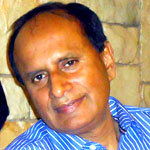
     

    Dhruv Jha, GM- Content & Experiences, Lodestar UM

    The regional adaptations do well, and they open well. It is to do more because of the kind of buzz that is generated on national scale – they are able to replicate it in some manner, and then it’s more like ‘we are not far behind’ and ‘if you can have a Bigg Boss, so can we’. And there is an aspirational level at the state and regional level that the channels also feel ‘our stars also deserve a Bigg Boss’. I believe the initial ratings were good, though I am not sure of the ratings now.


    I am sure that there are brands buying into it. If initial TRPs are generated, if there is a buzz, then regional adaptations are able to monetize. Strong national brands that are strong regionally, they are able to look at this option. I know of brands who are looking at AFP (advertiser funded programming) model and they are looking at programming in region – if it the format that is going to work, then there will be brands investing into it.


    All said and done, most of the reality shows on national GECs are also adaptations. Truly adapted, it can be as good – in any language or market. And the channel or programme would have to consider local culture, sensitivity and sensibilities while adapting.

     

    Anuj Poddar, AVP and Business Head – Regional Channels, Viacom18

    KBC is a proven format that continues to be successful; audiences have not tired of watching six seasons in Hindi. So why should the Marathi audience (even if they have watched it before in Hindi) not watch KHMC when it is tailormade for them? Format shows are adapted all the time, across the world, across regions.


    But let me also give you a specific fiction example: “Uttaran” from Colors has been remade as “Asava Sundar Swapnancha Bangla”. For that I asked the team to answer 2 questions: “How will we make it different enough and more relevant so that viewers who have seen the Colors version will yet watch the remake on ETV Marathi?” and “How will we make it as similar or true to the original Colors version so that the elements that made it work in the first place are not lost in the remake?” We made sure we had the answer to both these questions and a healthy balance on both these seemingly opposite aspects. If you get that right then the viewers will come. And if the viewers come, the advertisers will follow.


    KHMC (Kon Hoeel Marathi Crorepati) is completely tailored for the Marathi audience. The questions, while being based on overall general knowledge, are inclined towards the culture and history of the Maharashtrian heartland. Our objective with this show is to also create awareness of the rich heritage and history of this Maha – Rashtra amongst people. The contestants are naturally Marathi-speaking people. The auditions have been done across Maharashtra. So in every way, the show is adapted to the regional audience. Having said that, the grandeur and the magic of the original format is all there – no compromises on that!


    The KHMC format is hugely back-end intensive. I must admit that before getting into it I did not realise how much logistical work goes into the show. And what we have achieved is probably the fastest ever mounting of this format so far, because we had a specific time-window that we had to catch. So my full compliments to my team and to Big Synergy for having pulled this off. The challenge of course is that such formats come with well-established quality benchmarks that the audience expects – if you compromise on that, they would feel cheated. And yet, the resources available to a regional channel are fewer than to a national channel – so it is a tight balancing act. Having said that, I am confident that the Marathi and other regional markets will scale up further.
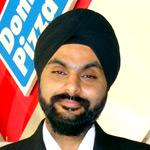
     

    Harneet Singh Rajpal, Vice-President – Marketing, Domino’s Pizza India

    For any brand, particularly a mass brand that is present across the country, it is very important to have a regional connect. While presence on national television gives a wider reach across the country, to engage a consumer at a regional level it makes sense to advertise on regional properties, especially for the brands that have regional presence through regional channels on the shows that have been adapted and already follow on the success of national shows.


    Domino’s spends close to 20 percent of our total media and television ad budget on regional channels. This would mean the 7-8 markets that we are present in.

     

    Anilkumar Sathiraju, AVP & Head South, DDB Mudra Max

    The adaptations of big ticket shows are being accepted by many, be it audience or advertiser for that matter and the response is, in my opinion, a positive one. Not sure about whether the channel is able to make profits, but yes, they are investing heavily and the channel dependence on that particular show is becoming very critical and important


    Challenges as such that the show should be accepted by the audience regionally/locally, else its no point, cos it might just not work. Therefore channels are obviously looking at what kind of content appeals to the local audiences and thereon adapting the same


    KBC in Tamil did ‘average’ in 1st season, later on seasons it’s doing pretty ok. In Malayalam, KBC did quite well, in Karnataka it was a bigger success than Tamil Nadu. May be it’s because the audiences were used to a personality such as Big B that nobody else was accepted. In today’s scenario if you look at what a Big Boss has done in Karnataka, we have something to talk about. The original Big Boss in Hindi was accepted anyways but when it came to adapting it to Kannada, initially am sure people couldn’t accept it, but now the program as such is doing well in the market place.

     

  • HBO’s ad-free channels: good enough to pay more for?

    By Meghna Sharma


    The campaign to promote the launch of two channels – HBO Defined and HBO Hits – by HBO Asia and Eros International Media has started. The premium advertising-free movie channels plan to redefine the pay TV movie space in the country.


    The channels available on DTH operators – Dish TV and Airtel Digital TV – bring the best of Hollywood and Bollywood together. The channels are currently on air and are available for a free preview in the initial phase of the launch.


    HBO Defined and HBO Hits will showcase content through HD and SD feeds on Dish TV and SD feed on Airtel Digital TV. These will be offered at a special introductory price of Rs 49 and Rs 69 for SD and HD services, respectively.


    MxMIndia finds out if there is a market for such ‘premium’ channels in India and if they’ll be survive the competitive market:


    Anilkumar Sathiraju, AVP and Head South, DDB Mudra Max

    While there is a market for ad-free channels, am not too sure how long will they be able to survive. Today, in a scenario where 600+ channels exist, there are many channels which are still yet to make a mark. In that situation, while viewers are likely to sample an ad-free channel(s), I am unsure if they will be able to sustain for long.


    Divya Radhakrishnan, managing partner, Helios Media


    HBO is a subscription based channel globally. It started accepting ads due to the distribution structure of the Indian TV industry. Now with digitization and DTH getting seeded across homes in India, the viewers are getting used to pick and pay for their channels and not just a bundled offering from the cable operator.


    As much as it’s not a good thing to hear for our business, ad avoidance always adds greatly to TV viewing experience especially in the movies and sports space. Hence if reasonably priced, it will have takers in the high-end homes. Mainstream channels in their HD avtaars get talked about more for its minimalistic ads more than the channel clarity.


    Having said that, the content will need to be extremely compelling for the consumer to shell out more bucks. Old titles, repeated zillion times on TV in the past coming in an ad-free environment may not hold that much appeal however latest releases may do so.


    Dhruv Jha, GM (Content and Experiences), LodestarUM

    There is an emerging space, I have heard consumers/viewers comment, “Let’s watch it on HD, virtually no ads.” Movie viewing experience without ads can be more pleasurable. There is a discerning viewer and with rising incomes and free time being at a premium… pay for channels will start playing in a niche targeted segment.


  • History TV18 @ 1: Factual, eclectic, successful


    By Meghna Sharma


    A year ago, it may have seen like yet another big bang launch of an all-new channel crowding the Indian satellite space. The niche offering, History TV18, a joint venture between TV18 and A+E Networks, aimed to redefine the factual entertainment genre through an eclectic mix of local and international shows.


    Ajay Chacko

    “As we stand at this first anniversary milestone, I believe we have challenged some of the established rules of the game in this genre. Our consistent leadership in time spent per viewer and our phenomenal contribution to the genre growth is a testament of our success,” CEO Ajay Chacko told MxMIndia. “This is just the beginning. Now that we’ve carved a niche for ourselves in the genre, we look forward to replicating our global leadership in the factual entertainment space in India.”


    As the channel broadens its horizons and carves a niche for itself with its edgy and differentiated programming mix featuring shows with greater emphasis on creating fact-based entertainment, thrill and action formats that appeal to a much wider audience, Sangeetha Aiyer, the Channel’s General Manager (Marketing) says, “The journey has been quite interesting so far. When we launched our intent was to make a distinct change in the factual entertainment genre and after one year of completion, we are honoured to have achieved this. Immediately after the launch, History TV18 accelerated growth for the entire genre from 2 percent and 15 percent in ’10 and ’11 to a whopping 29 percent post-launch.”


    Sangeetha Aiyer

    The channel boasts of delivering content which is vividly different. “Our content is contemporary; full of action and adventure. It has lot to do with achievement. It is about people making history every day. Also our objective has been to grow the factual entertainment genre and not just compete within the genre. We also got overwhelming response for our The Greatest Indian initiative. It was History TV18’s first local production in India and successfully garnered amazing response over the three month period with over 2 crore votes coming through missed calls and online. The campaign also sustained a healthy engagement on social media platforms reaching over 20 lakh Facebook users through viral content,” adds Ms Aiyer.


    The channel differentiates itself from the rest in the genre and claims that History TV18 is a factual entertainment channel, emphasizing that its content is based on ‘facts’ and has a heavy dose of ‘entertainment’, whereas other channels in this genre are more of factual knowledge. The USP of the channel lies in its programming mix and the target audience of the channel is CS 15+ AB market. However, another reason what makes it different from the rest is the fact that it is available in six languages (English, Hindi, Tamil, Telugu, Bengali & Marathi) in full HD across all major markets in India. “This has helped us enormously to broad-base and grows the entire genre,” says Ms Aiyer.


    The marketing budgets in the launch year of the channel was in the range of Rs 8-10 crore, but in the subsequent years the channel plans to consolidated and leverage network synergies.


    Dhruv Jha

    In terms of ratings, the channel accelerated growth for the entire genre from 2 percent and 15 percent in ’10 and ’11 to a generous 29 percent post-launch. But how is the genre doing?


    According to Dhruv Jha, business head, Lodestar UM Content and Experiences, there is definitely a market and audience for the genre, but it will always remain a niche. “Viewers of such channels are a sub-set of a larger audience which are very loyal to it and seek more and more of it. And as time progresses, we’ll see an increase in the number of viewers too but it will never to able to attain the appeal/popularity of a mass-consumed channel.”


    Janardhan Pandey

    Agreeing with Mr Jha, Janardhan Pandey, associate VP, DDB Mudra expands, “I see this genre picking up audience consistently with increased mass appeal. The channels have done quite well in attracting audiences. I see a good amount of viewership addition to this segment in coming years and I am sure these players have been doing exactly what the audiences want to experience, ie the right mix of world-class programming aligned locally.”


    The channel promises to continue to push the envelope in terms of a differentiated, clutter-breaking, world-class programming mix; and thus grow the genre. “In the process we plan to consolidate our leadership in 6 metros, 1 mn+ towns and finally all India. One of our great successes this year was the phenomenal success of our first local production ‘The Greatest Indian’. We plan to replicate this through similar innovative, path-breaking concepts,” concludes Ms Aiyer.