Tag: Dentsu India Group

  • Vipul Thakkar appointed NCD at Dentsu

    By A Correspondent


    Dentsu India Group has announced the appointment of Vipul Thakkaras the National Creative Director, Dentsu Communications Pvt. Ltd.The former Creative Head- South & East of DDB Mudra Group, Vipul is a seasoned advertising professional withover 19 years in the business.


    Vipul joins from DDB Mudra Group, where he was Creative Head – South & East. He has created work for an enormously wide variety of brands from categories such as lifestyle, finance, beverages, fashion and FMCG.Vipul has worked in agencies in Mumbai, Bangalore and Egypt. At DDB Mudra he was responsible for some iconic work on Royal Challenge, McDowell’s No.1, TTK Prestige, Peter England and Jos Alukkas. Prior to DDB Mudra, he was at Ogilvy Bangalore, where he created some brilliant work for ITC Bingo, Sunfeast Yippee, Allen Solly, MTR and Titan watches.


    In his new role, Vipul will be the creative leader of Dentsu Communications and will work towards strengthening the agency’s southern network and expanding the Mumbai operation. His appointment is part of a broader strategy to strengthen on the group’screative caliber.


    Rohit Ohri

    Speaking on the occasion, Rohit Ohri, Executive Chairman, Dentsu India Group said, “I am delighted to have Vipulas a part of the Dentsu Communications leadership team. ‘Work that works’ has been Vipul’s mantra. His work has worked not only for the brands that he’s worked on, but also for the agencies he has worked in.  He has built motivated integrated teams, seamless agency networks and a solid creative reputation for the organizations he has worked for. I’m confident that Vipul’s creative leadership, will take Dentsu Communications to greater heights.”


  • Dentsu-UNFPA join hands to launch CSR Advisory Services

    By A Correspondent


    Dentsu India’s social and development sector communication division, Citizen Dentsu, in partnership with UNFPA (United Nations Population Fund) India, launched CSR advisory services, to assist Corporates with their CSR planning and implementation. With this initiative, Dentsu India will be the first Ad and Communications firm to offer CSR services, along with a reputed implementation and monitoring partner, UNFPA India.


    The provisions of CSR Policy, notified under the Companies Act 2013 promises to be a historic milestone, as India becomes the first country in the world to bring social responsibility to the centre stage of corporate reporting framework. The real challenge, however, for the 6000-odd corporates above a certain size, who now will be required to plan, implement and report their CSR activities annually to their stakeholders, is really coming out of a familiar domain and diving deep into a much-talked-about, but fairly unchartered CSR territory.


    Citizen Dentsu, manned by a team of professionals, has years of experience in strategic communications for numerous development sector issues like child survival and safe motherhood, immunization, HIV and AIDS, education, water and sanitation and environment. Besides, Dentsu companies all over the world work on CSR initiatives for many of their global and local clients.


    Emphasising the respective roles of the two partners, Rohit Ohri, Executive Chairman, Dentsu India Group and CEO, Dentsu APAC, said, “While Citizen Dentsu will work closely with clients in strategizing and planning their CSR initiatives, helping clients extract the maximum through brand-CSR synergy, which we think company heads will be greatly interested in, UNFPA will provide technical support for projects undertaken by pre-evaluated and approved set of NGOs”.


    Frederika Meijer, Representative, United Nations Population Fund, India adds, “We have a range of CSR-ready projects that companies can partner on to meet their CSR commitments in India. More importantly, with UNFPA employing globally certified protocols to monitor and evaluate non-government and civil society organizations (NGOs), as well as their work, the CSR projects can be expected to be far more efficient and effective”. She believes that while there are thousands of field-level organizations ready to take up CSR projects, Citizen Dentsu’s experience with social and developmental projects in India and UNFPA’s inputs in terms of NGO selection and planning, monitoring and evaluation of projects, would be a clear and unique differentiator.


    Rajendra Singh from Citizen Dentsu and Rajat Ray from UNFPA India will be steering the partnership. With both being seasoned hands in brand and corporate advertising, as well as in handling development-led projects, it is easy to understand why they have been picked for the task.


  • Do looooong ads work for brands?


    By Priyanka Nair & Mukta Lad


    3.33. 3.53. 4.40. 7.16. Before you shut this paper and run a mile, we will have you know that this isn’t a complicated math problem coming your way, but the durations of some of the ads you’ve been seeing of late. With our daily dose of listicles masquerading as news for our seriously short attention spans, one would think quick and easy fixes are the way to go.


    The world of advertising begs to differ, though, offering a paradox. A spate of really long ads are the not-so-new kids on the block, where brands are taking the liberty to take as long as seven minutes to narrate their mostly heartwarming stories, The year is seeing a lot of the films that take their time to tell the tale, both internationally and back home.


    Pepsi’s ‘Ghar wali Diwali’
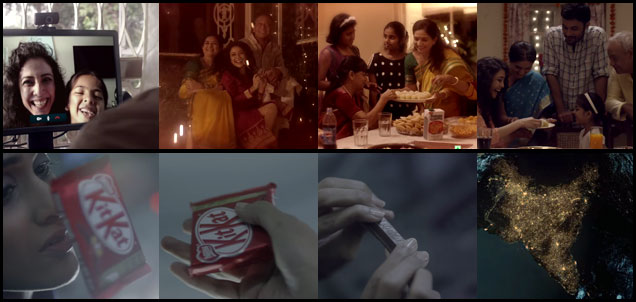
    KitKat’s Diwali
    Kissan’s ‘Joy of Togetherness’
    Fortune Oil’s ‘Ghar ka Khaana’
    Google’s ‘Reunion’
    Tata Sky’s ‘PrisonBreak’

    Most recently, KitKat and Pepsi jumped on the Diwali bandwagon, and two much talked about long-format films were born. They are usually released online, making it an inexpensive medium to tell powerful stories. But with such ads clearly becoming a regular trend, we have to ask; are brands really justifying the length of their communication with stories that are compelling enough? And do they work?


    Piyush Pandey executive chairman and creative director, Ogilvy & Mather India and South Asia, the man behind Fortune Oil’s emotive four-minute ‘Ghar ka khaana’ ad, believes, “With long-format, your single responsibility is to the viewer. It’s like people who make movies. A viewer of a long-format ad has made the effort to click on your film. It’s not like he was sitting around watching something else and the ad came on. It’s your responsibility to make sure he feels rewarded after the time spent and says ‘I must share this with my friends.’ I am assuming as professionals we know that we have a responsibility to the brand.”


    For T Gangadhar, MD, MEC India, it was the advertising during FIFA that has lingered on in his mind, especially the riveting spots by Nike and Adidas. “The episodic treatment, the fleshing out of the idea, the execution was such that there would have been no other way to create them except through the medium of long-format,” he says, admitting that he really didn’t notice the amount of time he was investing in watching them.


    Globally, too, brands have asked their agencies to deep dive into this particular style of creative build up for some time now. From Johnnie Walker to Dove and many in between, several brands have tried and tested using this narrative style for some years now.


    Apart from Fortune Oil, KitKat, Pepsi, Google’s ‘Reunion’ and #PledgeToVote, Tata Sky+’s ‘Prison Break’ and Kissan’s ‘Joy of Togetherness’ are some of the Indian ads that went much beyond the proverbial 30 seconds.


    Narayan Devanathan, EVP and national planning director, Dentsu India Group thinks of this trend as a fad, though. “To me, this seems like the work of diva creative directors who want to cash in on lack of extra mediabuying costs, the freedom the internet offers as a medium and the fact that they might be able to wiggle out a few favours from the directors in the same budget,” he says bluntly.


    Perhaps brand managers are looking at creating these epics as a feather in their cap. But Devanathan and Gangadhar would rather brands didn’t make long-format ads a fashion statement, please. It is best if the idea defines how much time it needs to unfold, instead of the other way around. But is there a formula as to who should or shouldn’t leverage this medium? “Boring brands have gone ahead to create some interesting long format ads, while some interesting brands have put out some boring ones,” says Gautam Kiyawat, CEO, Madison Media, implying that anyone with a good story should go ahead. But what makes marketers give a green signal to agencies?


    Mayur Bhargav, general manager (Chocolate and Confectionery), Nestlé India mentions that his digital centre noticed that India’s successful Mars mission was generating a lot of positive discussions on social media. They went ahead to create the KitKat Diwali film, knowing that its topical nature rated it high on the shareable scale.


    Gangadhar, however, wasn’t too convinced by the film. “If the video is going to be longer than 30 seconds, then it needs to become more content and less ‘advertising’, especially for the internet, where brands aim at making content people would want to share. The KitKat Diwali film, to me, was quite ‘addy’ in that sense.”


    Senthil Kumar, JWT India’s NCD and Suresh Eriyat, director, Eeksaurus, the men who made the KitKat film, believe that there making these spots can be a challenge. “It’s easier to hide the imperfections in 30 seconds, but the long format tests almost every limit that creative guys know of,” Kumar reveals. Eriyat elaborates, “Unlike short format ads, the biggest challenge in a long format ad is losing objectivity.


    Another danger is that it can end up becoming boring and monotonous. I am of the opinion that if one sees the KitKat campaign out of the context of Diwali, it may seem irrelevant.” At the end of the day, what do consumers feel about these ads, really? Devanathan, donning his planner’s hat, mentions, “The Pepsi ‘Ghar wali Diwali’ film, to me, lacked Pepsi’s youthfulness and Kurkure’s wackiness.”


    But advertising and planning be damned, he says, considering consumers didn’t really care about the ad’s length or whether it had the brand’s values at the core. They were touched by the emotion and shared the ad nevertheless, making it a viral success.


    The long and short of storytelling on digital is that the canvas is yet to reach its creative tipping point, as brands are taking their own sweet time exploring the medium.


    Source:The Economic Times

    Copyright © 2014, Bennett, Coleman & Co. Ltd. All Rights Reserved

    Licensed to republish


  • Dentsu assigned creative duties of Panasonic Fans

    By a correspondent


    Dentsu Communications has bagged the creative duties of Panasonic Fans. The creative duty was awarded to Dentsu based on its current creative partnership with Panasonic.


    Rohit Ohri
    Simi Sabhaney

    “We’re delighted with this new assignment. This further strengthens the relationship between Dentsu Communications and Panasonic and is a testimony to the great work done by Dentsu for Panasonic in India and the region,” said Rohit Ohri, Executive Chairman, Dentsu India Group and CEO, Dentsu APAC (South).


    After bagging the creative duties from the consumer electronics major, Simi Sabhaney, CEO, Dentsu Communications said, “We were assigned the task of developing the launch communication for Panasonic ventilation fans in India. Winning the creative mandate for Anchor Electricals is a very prestigious event for DCPL Mumbai. Panasonic is a global leader in fans business and would be one of the leading international entrants in the ‘Ventilation Fans’ category.”


    Takaki Oguri, Joint Managing Director Sales and Marketing, Anchor Electricals Pvt. Ltd. said, “Panasonic’s global expertise in the ventilation field will aid Anchor to unveil a host of innovative products, redefining the paradigms of indoor air quality focussed ventilation solutions. Presently we intend to launch some of Panasonic’s trendsetter products; later on we will actively focus on expanding the entire range. This will be a robust value addition to Anchor’s existing Ceiling Fans Portfolio.”


    Ashok Gangar, Vice President Sales and Marketing, Anchor Electricals Pvt. Ltd. said, “We used Dentsu’s expertise while commissioning the first “Panasonic LED Lighting Experience Centre” in Mumbai, last year. We are hoping to establish a niche trade channel for marketing these high-end indoor air quality focussed ventilation products with this affiliation.”


    “Exhaust fans are a low involvement category and the choice of the brand is mostly left to the contractors and interior designers, our attempt was to imbibe the concept of ‘ventilation’ versus ‘exhaust’ in the end-consumer minds. This struck an accord with the Anchor-Panasonic team as it was looking for an approach that was distinctive enough for Panasonic ventilation fans to establish themselves in the said category,” added Sabhaney.


    “We are happy to award the creative duties to Dentsu Communications as our promotion partners for Panasonic Ventilation Fans and hope to establish ourselves as a premium brand in the said category soon,” said Mr. Toshiki Itagaki, Director Fan Business, Anchor Electricals Pvt. Ltd. on awarding the creative duties to Dentsu Communications.


  • Arijit Ray moves to group role as Simi Sabhaney joins Dentsu Comm as CEO

    By A Correspondent [updated]


    Simi Sabhaney
    Arijit Ray

    Dentsu India Group announced the appointment of Simi Sabhaney as Chief Executive Officer of Dentsu Communications.  Ms Sabhaney, former President (Bengaluru and Chennai) at Ogilvy India, has spent over 23 years at the agency and will be based in Bengaluru (given some key Dentsu clients based there).


    Rohit Ohri

    Welcoming her, Rohit Ohri, Executive Chairman of the Dentsu India Group, said: “It’s been great going for us at Dentsu Communications. I’m looking to Simi to now lead the agency into it’s next phase of growth. Simi’s vast experience on diverse categories will truly add value to our client’s brands and businesses.”


    Meanwhile, Arijit Ray, who headed the agency, will now lead new business development across the group. Commenting on Mr Ray’s move to the group role, Mr Ohri said: “Arijit has been a great partner to me in Dentsu’s new exciting journey in India. I now wish to leverage his strengths in new business development for the entire group. I wish him all the luck in his new role. “


  • Dentsu Digital bags Honda & Indo-Nissin mandates

    By A Correspondent


    Dentsu Digital, a fully integrated digital marketing solutions company of the Dentsu India Group, has been awarded the businesses of Honda Motorcycles and Scooters India (HMSI) and Top Ramen instant noodles from Indo-Nissin.


    On HMSI, the agency will launch an integrated social media campaign via various platforms to expanding the footprint across different touch points. It will also help drive Honda’s search and optimization efforts with the help of media campaigns and search engine optimization.


    On Top Ramen, the mandate given to the agency is to find a digital expression to its offline campaign by creating consumer engagement and interest with its core target group.


    Glen Ireland

    Commenting on winning these prestigious accounts, Glen Ireland, CEO, Dentsu Digital said, “These wins directly reflect the hard work and effort put in by the entire agency. It also bears testimony to our understanding of the client business, their challenges and goals.”


  • Rajesh Mathew joins Dentsu Communications as Senior Vice President

    By A Correspondent


    Continuing with its series of senior-level appointments, the Dentsu India Group has announced the appointment of Rajesh Mathew as Senior Vice President, Dentsu Communications, Mumbai.


    An adman throughout, spanning over 17 years in advertising, Mr Mathew was Managing Partner at Doosra Brand Communications, Mumbai (part of the Aegis Media Worldwide network, since December 2011) prior to joining Dentsu.


    Welcoming Mr Mathew to Dentsu, Arijit Ray, CEO, Dentsu Communications said, “Rajesh’s induction into Team Dentsu Communications is part of our on-going impetus on strengthening and consolidating the talent profile. I am sure Rajesh’s diverse experience across brands over so many years across markets, will help enhance our value proposition amongst our key business portfolios. I wish him a great innings at Dentsu.”


    Mr Mathew said, “I look forward to the exciting challenge and opportunities at Dentsu Communications; given the ambitious growth plans that are set, I couldn’t ask for a better timing than this, to come on board.”


    Among the agencies Mr Mathew has worked for in India include Saatchi & Saatchi Direct (Bangalore), Ogilvy & Mather (Bangalore), Lowe Lintas Worldwide (Chennai – as Brand Services Director), Rediffusion DYR & Wunderman (Chennai – as GM for both the Agencies), Contract Advertising (Chennai – as Senior Vice President & Manager), Ogilvy & Mather (Mumbai – as Vice President & Business Head).

  • AdStrat: Monster.com ‘Find Better’

    Soumitra Karnik, NCD, Dentsu India Group

     

    1. Name of the Campaign: Monster.com ‘Find Better’


    2. Research insights:

    Finding a better career/job is serious business, it’s no laughing matter. And yet, there is a danger of the brand and the business becoming too serious, too “manufacturer” oriented. According to a survey conducted by Monster India, 80 per cent of Indians believe that getting a new job is not just dependent on your capabilities and experience; ‘Luck’ plays an important role. 69 per cent people in India, believe that ‘Luck’ plays an important role in job search as well.


    [youtube width=”400″ height=”225″]http://www.youtube.com/watch?v=UakFavcFagw[/youtube]

    3. The Brief:

    With social media and professional networking playing a pivotal role in all spheres of our lives, there has been a shift in the way both jobseekers and employers are consuming services. This new media opportunity led the path for Monster to innovate in the e-recruitment space. Monster is the worldwide leader in successfully connecting people to job opportunities. From the web to mobile to social, they help companies find people through their most advanced technology. The innovative products and services help connect jobseekers and employers better than anyone else across the world. Now is the right time to transient into the next level.


    Monster India has introduced the new user interface. The company launched Monster College to facilitate campus hiring; Monster JobsActive, in partnership with DishTV, to help people with no internet access apply for jobs through Monster India. The company also launched The Monster Employment Index (MEI) which is a monthly gauge of online job posting activity in India based on a real-time review of tens of thousands of employer job opportunities culled from a large representative selection of career Web sites and online job listings


    4. The thought process behind the creative:

    Job-searching is subject to many vagaries – The pool of candidates in the fray, their relative ranking in the pool, having/not having any “contacts” in the field, the possible hiccups with the search and results of the job site, the timing of the opening, physical location of the opportunity, idiosyncrasies of the hiring manger, cultural fit, compensation criteria, not to mention an inevitable X factor.


    That X factor? It’s a little something called luck. And inIndia, as in most parts of the world, luck plays a huge role in almost every sphere of our lives. Or at least, people like to believe that. From the use of innumerable lucky charms to invoking many symbols of auspiciousness from human and other-worldly sources (caution against signs of good-luck such as sneezing, breaking glass, walking under a ladder, having a black cat cross your path), luck is wooed relentlessly.


    5. Media vehicles chosen: Owned, Paid, Earned


    6. Key issues kept in mind while executing the ad:

    The trick for a brand in this category is to find the right balance between creating clutter-breaking brand communications without dissing the serious nature of the task at hand.


    7. Does the treatment do justice to the brief?

    The TVC is about candidates who try to carry every possible symbol of luck with them to enhance their chances of getting a better job. The TVC exaggerates the acts of superstition in a humorous manner to show the extent that people go to, to get luck on their side. It then drives home the point that with Monster.com, you get luck on your side.


    Striking a balance between levity and gravity, it is a culturally relevant interpretation of the “Find Better”. It leverages the core strengths of monsterindia.com and its presence on web, mobile as well as social , beyond just a superior search algorithm, and demonstrates powerfully each of monsters ‘features’, showcasing how you can get luck on your side and find better.


    8. What according to you is the differentiating factor about the ad?

    The highlight of the film is when the mother emerges from the bag in this show of one-upmanship. It’s most unexpected and at the same time humorous; you can almost hear a gasp followed by a chuckle from the viewer.


    9. Market/client feedback: Not available yet


    AdStrat, compiled by Shubhangi Mehta appears every Monday.


  • 5 things that agencies must do to attract top talent

    By Rohit Ohri

    The advertising industry is guilty of ‘criminal neglect’ in its approach to recruiting talent. For an industry that sells original thinking, this is surely creative suicide.


    The good news is that no matter what the size of the company, attracting and retaining talent has more to do with one’s commitment to building a sustainable organisation, rather than how much one pays.


    My core belief on talent management revolves around proactive engagement. If organisations proactively think about how they should keep their employees engaged over a period of time, attraction rates go up and attrition rates fall.


    That said, here are five things advertising agencies must do to attract the best talent: I call it the REACH principle.


    1. Reach wallets

    It’s true that it takes more than just money. But it does take money. Beating the market is neither an attractive nor a sustainable practice when it comes to compensation.


    Many companies ignore this truth and apply a famine and feast mentality when it comes to compensating creative talent. First under-paying, when the company has the leverage and then over-paying later, in order to attract or keep that talent from being snapped up by eager competition. This breeds suspicion and kills loyalty.


    Instead, be relentlessly pro-active in maintaining market parity at every position, with bonuses and incentives for extraordinary results. This creates an environment in which financial resentment is not a motivation for your talent to look for new opportunities.


    Desperate competitors may still over-pay. But when talent feels valued, the premium required to convince them to leave gives you an immediate competitive advantage.


    2. Reach clarity

    Clearly articulate your vision and then build around it. As a species, we are united by our instinct to create. We want to make things… especially, a difference.


    Google’s success is driven by a simple premise – to organize the world’s information and make it universally accessible and useful. A goal that attracts informs and unifies some of the most original thinking of the last ten years.


    Define the change your company wants to make in the world. No matter how local. Nothing attracts like a clearly defined vision of a better future. Being made to feel that one plays a significant role in helping the company achieve its goals enhances performance and builds loyalty.


    3. Reach goals

    Measuring progress is one of the keys to harnessing creativity. A study in the Harvard Business Review showed that a sense of progress is the attribute which people value most in their day. Progress can only be measured on a continuum that has a beginning and an end.


    Defining the difference you want your business to make provides the latter. The former comes from individual reviews – a subject worthy of its own post. Annual reminders of how far the organization has come are also imperative.


    Celebrating the company’s anniversary with a retrospective comparison of where you were a year ago and now stand, is simple and powerful. It helps to reiterate goals and review the course…


    4. Reach out

    Be Open. Be Honest. Transparency is the most over-worked word in the English language at the moment. However, this does not make it less essential to attracting and retaining great people. Don’t build walls around you…break barriers and allow others to do too. If you want your people to respect your view points, respect their’s too.


    5. Reach hearts

    Say Thank You. The artist in all of us needs to be recognized. So does the human being. And yet most companies are slow to praise. Or even to thank. Thanking your people as often as possible is a small acknowledgement that you take neither their talent nor their choice for granted. Respect their choice to stay with you and chances are that they won’t go anywhere else in a hurry.


    These steps require investment – of time – and a little money. Practice them collectively and your company will be irresistible – and invaluable…


    Rohit Ohri is the Executive Chairman at Dentsu India Group


  • Top Ramen consolidates its advertising duties with Dentsu

    By A Correspondent


    Top Ramen, the instant noodle company from Indo-Nissin, has consolidated its advertising duties with the Dentsu India Group. Dentsu Communications has been already handling the creative duties and now with media, too, coming under its umbrella, Dentsu has consolidated the entire business.


    The media duties were earlier being handled by Madison Media. The size of the business in the last financial year was close to Rs10 crore and is slated to scale upwards and be in the range of Rs15 crore.


    Confirming the development, MNVV Prasad, General Manager, Sales and Marketing, Indo-Nissin Foods Ltd, said: “At this juncture we were looking at integrating our communication. Since Dentsu is already partnering with us for creative, we decided to consolidate the media with them too.”


    He added: “The instant noodle market has undergone tremendous change in the last two years, especially with international players coming into fray and the existing ones going aggressive. Top Ramen has been a leader in the world in this category and scores in innovative product strategy. We hope to combine our advantages and come out with a strategic communication that will differentiate us from others. We want to grow on the basis of our different positioning in this category.”


    Top Ramen has been competing with Nestle’s Maggi much before Knorr, ITC’s Yippee or GSKs Foodles came in the fray. Sensing competition, Top Ramen has gone aggressive on its marketing plan in the last two years and even signed on Saina Nehwal to feature in its advertising, which is a shift from its earlier strategy.