Tag: Dell

  • Dell launches video campaign for cybersecurity

    By Our Staff


    With Cybersecurity Awareness Month 2022 coming to a close, Dell Technologies India has launched a video-led social media campaign in line with its theme – #FortifyYourSecurity. It was conceptualised by 20:20 MSL and the communications team at Dell Technologies, the campaign created an avenue for people to share their experiences and initiate a conversation around cybersecurity at large.


    Said Ripu Bajwa, Director and General Manager, Data Protection Solutions, Dell Technologies, India: “Cybersecurity is no longer a boardroom discussion, rather a reality for anyone who is connected to the internet. That’s the message we wanted to drive with our campaign – #FortifyYourSecurity. With the campaign video series, our goal was to encourage an actionable dialogue around safeguarding oneself from cyber threats and data breaches in a simple and relatable manner. We are delighted to have collaborated with CXOs, executives, and content creators to help us further our mission of building a cyber resilient future.”


  • Dell chooses VMLY&R as lead creative agency

    By A Correspondent


    Dell has appointed VMLY&R as its lead creative agency in India for both the Consumer and Small business portfolio. The mandate was won after a keenly contested pitch.


    As the lead agency, VMLY&R will go beyond traditional creative agency duties to create an overarching Connected Consumer Experience for Dell, which will span the entire width from mainline, digital & social communications, platforms & experiences and data, notes a communique.


    Ritu Gupta

    Commenting on the appointment, Ritu Gupta, Director- Marketing, Dell said: “With the evolved customer journey and changing purchase behaviour it was important to select the agency that brings capabilities in elevating connected consumer experience.”


    Anil K Nair

    Added Anil K Nair, Chief Executive Officer, VMLY&R India: “We live in an ever-evolving world, where decades of digital adoption has now been compressed into a few months. It poses a great opportunity for an iconic brand like Dell to be portal; connecting them to various aspects of their lives and they get to live, learn, walk and play. The mandate for VMLY&R India is to think beyond the obvious and focus on a superior and seamless customer experience.”


    VMLY&R handles the Dell Technologies brand globally, in a multi-faceted relationship that includes brand strategy and creative, martech, customer experiences, social strategy/content, and thought leadership.


  • Dell reaches out to CXOs via new ad

    By A Correspondent


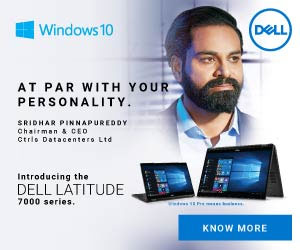
    With the Latitude 7000 series laptops, Dell offers CXOs and senior management an option of choosing a work machine that matches their stature and pace. Conceptualised and executed by Grey, the campaign takes a trip down the lives of CXOs as they try to drive their organisations ahead, with Dell Latitude as their partner.


    Speaking about the film, Gautam Bhasin, Group Creative Director at Grey Bangalore said: “A CXO’s life revolves around handling challenges and confidential information, being accountable and taking tough calls. Which is why he needs a laptop that works in tandem with his pressure. So, we mirrored the CXO’s journey, showing how a Latitude would seamlessly fit into their world, handling it all, just like him.”

  • Big Boys go to B-school for betterment

    By Anumeha Chaturvedi


    Liane Cabral Ghosh was working as a senior manager and strategist at Dell’s research and development centre in Bangalore, when she decided to enroll for an INSEAD leadership programme for senior Indian executives last August.


    “I was growing well in technical functions, but did not have management skillsets. I wanted a programme that could provide a career jump for senior leadership positions,” said Ms Ghosh. The programme concluded last month, and it seems that Ms Ghosh has been taught well. She will now join Canadian IT company Innovatia this month as country manager.


    Senior-level professionals across functions, profiles and industries are going back to school for short-term and long-term executive education programmes in order to reskill themselves. Ms Ghosh’s batchmates at INSEAD included Rajshree Naik, the marketing head of Forevermark, De Beers; and Manesh Nair, former director of business relationship consulting, India and Thailand, at American Express, and after the course, global director for partnership development posted at American Express, New York.


    “We are witnessing a growth of 25 per cent when it comes to participation in ‘open enrollment’ executive education programmes every year,” said Deepak Chandra, deputy dean at the Indian School of Business (ISB).


    Open enrollment programmes are meant for professionals from all fields looking at a specialisation in functions like marketing, finance or sales strategies. ISB will host 5,000 such students this year. It currently offers 45-50 such programmes, up from 5-6 a decade ago. The courses at ISB last anywhere from a week to a month.


    “Reskilling assumes greater importance in challenging times,” said Chaitanya

    Kalipatnapu, co-founder and director of Eruditus, a firm promoted by the alumni of INSEAD and Harvard Business School (HBS) to deliver executive education programmes. “Business schools witness a spike in activity during a slowdown, as candidates consider it safe to turn to education and feel the slowdown would be over and done with by the time they pass out.”


    Among the IIMs, Kozhikode is the only one to offer a two-year executive post-graduate programme in management for professionals. The batch size for this programme accredited by the London-based Association of MBAs (AMBA) has increased from 220 in 2010-12 to 333 for 2012-14. “We have increased the batch size owing to a significant demand for this course among professionals,” said C Raju, professor, quantitative methods and operations management, at IIM Kozhikode. The institute will also have two new one-year executive education programmes on human resource management and IT this year.


    “The number of requests and applications for customised and open enrolment programmes have more than doubled this year,” said Mr Kalipatnapu. It offers executive education programmes from INSEAD (one-year), Wharton (both short-term and long-term), and Tuck School of Business in India. While Wharton has introduced open enrollment executive education programmes in the country this year, Tuck School of Business entered into a first-of-its-kind by-invitation consortium with a few companies like TCS, Mahindra & Mahindra and HSBC this year, wherein the companies nominated their senior managers for a programme on innovation and leadership. The Tuck programme is spread over nine months.


    Individuals often opt for these programmes on their own, but companies too nominate and shortlist candidates and even work with universities on customised case studies to address their business needs. “Companies are realising that education is a good motivating tool to attract and retain talent,” added Mr Chandra.


    “Companies realise that the economic challenges demand a more targeted approach to talent management,” said Mr Kalipatnapu. Firms like Bharat Petroleum, Accenture and IBM work with these top schools for programmes tailor-made to suit their needs.


    Harvard Business School India Research Center, which handles executive education programmes in India, has diversified its portfolio of executive education programmes this year. “We had three executive education programmes last year, and we plan to have around 10 this year,” said Amrita Chowdhury, associate director, education, at HBS India Research Center. It has introduced new programmes on leadership and corporate accountability and innovation. “As senior professionals move up the leader, they realise they need specialised skills in general management and leadership,” said Ms Chowdhury.


    She said that while the majority of candidates in a programme would comprise large private companies and PSUs, 30-40 per cent of the candidates are senior management professionals or owners of SMEs. “These are companies with a turnover of around Rs 100 crore, have gained a lot of scale, and are now looking at skilling their top management for the next phase of growth.”


    Companies like Genpact and Aon Hewitt also have tie-ups with the HBS Research Center for shortlisting candidates for their programmes. “Our managers run large teams across the world and they learn about leadership and understand how cultures operate through these programmes,” said Amit Aggarwal, senior vice-president, global leadership development and training, at Genpact.


    While Genpact sends around 3-5 professionals for such programmes every year, Aon Hewitt shortlists its partners and even sent one of the directors for the programme this year. “The programme touched upon all elements of leading businesses and people, and was insightful, as managing people is one of the most crucial aspects of our business,” said Ryan Lowe, director at Aon Hewitt, who attended the HBS programme on managing professional services firms in January this year.


     

  • LinkedIn Strengthens Follower Ecosystem

    By A Correspondent


    LinkedIn – the world’s largest professional network with more than 14 million inIndia- is furthering its commitment to help brands build a more effective follower ecosystem in a business context with the launch of LinkedIn Targeted Updates and Follower Statistics. LinkedIn has signed on a select group of early release partners – including DSP Blackrock, AT&T, Dell, Microsoft, and Samsung Mobile – who will be immediately using these new follower tools.


    With these new offerings, this initial group of marketers will have access to the most robust targeting and analytics capabilities for their campaign initiatives on the platform from their LinkedIn Company Pages. They will be able to create hyper-focused follower lists – based on several targeting criteria, including Industry, Seniority, Job Function, Company Size, Non-company Employees, and Geography – to which they can deliver highly relevant content to increase engagement.


    In addition, marketers will also have self-service access to an insights dashboard that will further support their efforts by allowing them to assess their follower acquisition efforts; track engagement metrics, including likes, shares, comments, and percentage engagement, over time; and review their followers’ demographic information.


    LinkedIn Targeted Updates and Follower Statistics, through the hyper-customization of messages and campaign performance analysis it provides, is enhancing the LinkedIn follower ecosystem and the ability of brands to communicate with their most impactful audiences on the platform.


    • LinkedIn’s Unique Follower Ecosystem:

    LinkedIn’s follower ecosystem has been designed to enables marketers to: identify and acquire the right followers; more effectively engage and communicate with followers on a regular basis via relevant content; and analyze and optimize the impact of their follower relationships.


    • LinkedIn’s Follow Company Button:

    LinkedIn Targeted Updates and Follower Statistics’ launch follows on the heels of the introduction of the LinkedIn Follow Company button – the first phase of LinkedIn’s follower ecosystem strategy in February. It facilitates engagement through a button added to businesses’ Web pages and other marketing materials.


    Also 63 per cent of LinkedIn members expect companies to have a presence on LinkedIn. Members “following” companies and want to maintain these relationships: 70 per cent of LinkedIn members follow or would follow companies on LinkedIn; two out of three LinkedIn followers (64 per cent) would follow companies “indefinitely”; followers are active on LinkedIn (global).


  • Nokia, Reckitt etc outsource @Twitter to woo consumers

    By Shelley Singh


    Abhishek Roy, a 25-year-old commerce graduate from Delhi University and a diehard believer in social media, has more than 100 followers to his Twitter account. But that’s not the only account the heavy-metal addict operates on the social networking and micro-blogging service. Mr Roy also tweets for a living.


    As an employee of Bloggers Mind, a social media-focused start-up that promises to ‘multiply your brand buzz’, Mr Roy spends his working day putting out tweets that typically promote products and services of companies. One of the companies that keeps Mr Roy busy is Nokia, which has outsourced its Twitter handle to Bloggers Mind.


    “A great app to become an amazing cook! bit.ly/zo6bvd. Here’s a review of the app from @mynokiablog,” is just one of Mr Roy’s tweets that go out to some 15,000 followers of Nokia India.


    In Mumbai, 26-year-old Upasana Sanyal’s typical day is no different. Ms Sanyal, who joined technology services provider Mahindra Satyam six months ago, sends out 300-400 tweets a month. A recent one was on the company’s quarterly results.


    Q3, Re dip gains mixed; volatility high,” was the cryptic but crisp message to the twitterati following the company. “Tweets spike around results time or key announcements. It’s a good deviation from the mundane,” said Ms Sanyal, a consultant with Mahindra Satyam.


    At Dell India, Suyesh Shankar, 39, a marketing manager for consumer and small- and mid-sized businesses, spearheads the US firm’s social media agenda, which comprises a Twitter team that sits out of the company’s Bangalore-based Social Media Command Centre.


    Roy, Sanyal and Shankar are the communicators with the mandate to capture consumer attention in 140 characters. While Mr Roy is with a specialist social media services provider, the latter two are key members of in-house Twitter teams.


    Across India Inc, Twitter has fast transformed from an individual tool into a key platform to create and sustain brand buzz. The communications range from customer feedback and new jobs announcements to customer grievances and no-holds barred promotional blitzes.


    While companies such as Nokia India, Kotak Securities, Reliance Digital, Reckitt Benckiser and TripAdvisor outsource their Twitter handles, others such as ICICI Bank, Dell, IBM and Flipkart manage it in-house. Other agencies, such as Bloggers Mind, that provide third-party tweets include Convonix, Interactive Avenues and OgilvyOne.


    Twitter for most corporates is one link in an integrated marketing chain. “Our Twitter team is an extension of our ‘khayaal aapka’ effort and brings to life our commitment to be where our customers are,” said Anita Pai, senior general manager, ICICI Bank. In a typical month, ICICI Bank monitors 200,000 social media mentions, out of which 70,000 are tweets.


    Handset major Nokia India manages between 400 and 700 tweets a month via Bloggers Mind. “We use Twitter to engage with consumers on a real-time basis, share tips, information and address feedback or queries,” said Viral Oza, director (marketing), Nokia India. Bloggers Mind has a nine-member team for Nokia and four for Reckitt Benckiser.


    Aditya Vaidyanathan, account director for Nokia at Bloggers Mind, said: “We have a weekly planner with clients as to what messages to send out and how to address queries.” This includes promotional trivia such as: “Did you know that 360,500 text messages are sent out from Nokia phones every second”; or answering queries like: “How do I add new dictionary words to Nokia Lumia?”


  • [PR Channel] The digital revolution: Opportunities for PR

    By Luna Biswas


    It would be incorrect to say that traditional media is losing its sheen from the perspective of news vis-a-vis the digital media. While the latter is gaining ground, it is imperative to understand how the internet can be effectively used to position communication from PR perspective. In today’s day and age, web provides the platform to create and publicise content without waiting for a newspaper to print the same. Every individual has the power to write/upload about anything, be it good, bad or ugly without being vetted.


    The problem that comes to the fore is the legitimacy. While online versions of newspapers and portals have the credibility factor, it is the individual who can – through blogs and social media – impact a brand, for that individual has a captive audience who trusts him more than they trust a news item. and this is where the difference between traditional and online media is for the PR community. a potent tool that has to be integrated and monitored for reaching out to the key target audience.


    Where, then, is the solution? For PR agencies it is impossible to overlook the digital world. Every available tool counts to create an effective public relations campaign. The paradigm shift, or at least partial shift, has to be from depending on social networking sites and moving towards creating online mastheads for clients. Social media or social networking sites have to be used as tools and not the end means to reach out to the target audience. The problem with social media is that it doesn’t engage customers with brands after a point in time but actually takes users from brands.


    Integrated communication agencies need to advise clients, and create for them a strong masthead by sourcing their audience from the social media spaces. Unless a digital campaign encompasses the “own” space for audience to engage with a company/brand, the campaign will not be successful. a platform has to be created where the audience can engage with the brands in terms of proactive interaction.


    Dell and apple are two great examples that have created platforms to communicate with customers and vice versa. What they have ensured is that the audience uses “that own” space to interact, vent their ire and communicate requirements. From a digital campaign perspective, it is something that needs to be deeply looked into. The mechanism used by these companies has resulted in keeping the audience on one platform, without them using another platform to complain or run down the brand.


    a successful online PR campaign has to be evolved keeping in mind how best the consumer can be attracted and kept within the precincts of the brand for which the communication has been devised.


    For this to take place, communication agencies need to make two elementary changes in their outlook towards the digital space. First, they need to recognise the need to build unique spaces because they are the mastheads of the digital world, not simply search tags or social media ‘like’. For each brand and company, the agency has to build different grand strategy of owning the constituents and making their masthead the most powerful gathering point for the brand.


    The planning of these spaces has to be unique for each brand, and based upon content power that drives conversations around the brand. Like advertising, which has learnt that the most effective way to build memorable brands is by creating cultural connects, the chore for integrated communication managers will be to create new spaces where the audience is offered the entire gamut of experience that he would experience from a newspaper. The current approach of engagement with social media is dangerously short-sighted because the brand is engaging in a conversation with the audience.


    Luna Biswas is Vice President, Member-Leadership Team, Hanmer MSL Communications Pvt. Limited. a part of the MSLGROUP