
Tag: DDB Worldwide

  • Vanaja Pillai to head diversity, inclusion & impact at DDB Mudra


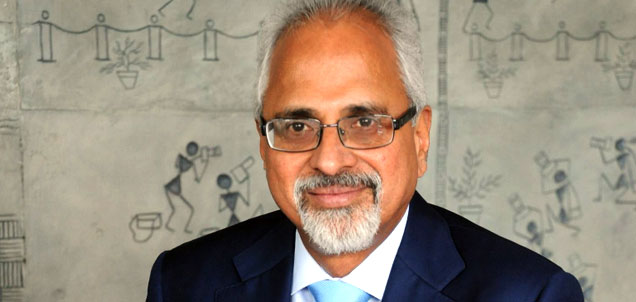
    Vanaja Pillai
    Vanaja Pillai

    In her expanded role, Pillai will work closely with CEO and MD Aditya Kanthy and HR head Rita Verma on initiatives to grow a diverse and inclusive workplace, including talent acquisition, retention, training and outreach to talent in underrepresented communities.


    Said Kanthy: “If we don’t change, we’re done. To compete in our times, we need to take a critical view of every aspect of our business. Our approach to talent and culture included. There is much to do in this area, and Vanaja is just the right person to lead us to success. Besides being a stellar leader, having run operating roles in the agency business with flair and distinction, Vanaja has over the last two years built one of the industry’s best run diversity programs – the Phyllis India Project. This work with the Group’s effort as a global network to bring in diverse voices to help shape workplace culture and brand communication of the future.”


    On the appointment Nikki Lamba, Chief Diversity, Equity and Inclusion Officer, DDB Worldwide said: “Vanaja’s work on the Phyllis India program has been applauded across DDB’s borders and is a brilliant example of senior leadership driving actionable change in advancing DEI within the DDB family. We are excited about her taking on this larger mandate and bringing DEI to the heart of our business, people and product strategies in India. There is a lot of good work happening already in parts of the DDB network that India will surely build off and gain from.”


    Speaking on her deeper role, Pillai added: “It has been an exhilarating journey, from the intent of creating an India chapter for the Phyllis Project, to having the first batch graduate last week. The bar has been set high for every challenge we pick up from hereon. Over the next year we will focus on a select set of DEI goals and approach them with the same rigour and passion that made the Phyllis India Project what it is today. From an overall talent perspective, the pandemic made us even more aware of the need for constantly focusing on people and their growth. We hope to make some of our talent programs world-class this year.”


  • DDB introduces new visual identity

    By A Correspondent


    Ad agency network DDB has introduced a new visual identity that captures the essence of who it as an agency including an outward symbol of its thinking, work and its people.


    Highlighting the creativity and interconnectivity of the worldwide DDB team, the evolved logo was created internally by the DDB North America design team.


    Speaking on the new visual identity, Wendy Clark, CEO, DDB Worldwide said: “Great brands have a foot in their past and a foot in the future. This visual identity perfectly captures our heritage and legacy, the contemporary thinking and work we’re known for now, and positions us for the future we intend to claim.”


  • Madhukar Kamath to report directly to DDB global CEO


    By A Correspondent


    DDB Worldwide has announced a new management structure in the Asia Pacific region which will see Madhukar Kamath, Group CEO&MD, DDB Mudra Group in India, now reporting directly to Chuck Brymer, CEO, DDB Worldwide.


    John Zeigler currently Chairman and CEO, DDB Asia Pacific India and Japan has announced his retirement from the agency. Effective October 1,, he will take on the role of Chairman Emeritus, DDB Asia Pacific.


    David Tang, who currently leads DDB Group Singapore, has been appointed as the CEO of DDB Asia. In his role, Tang will be responsible for managing DDB offices in Southeast Asia, Greater China, Japan, and Korea. He will report to Chuck Brymer, Chief Executive Officer of DDB Worldwide.


    Marty O’Hallaran, Chairman and CEO, DDB Group Australia and New Zealand will also report directly into Chuck Brymer.


    Madhukar Kamath

    Said Madhukar Kamath, “Since the acquisition of the Mudra Group by DDB in November 2011, it has been a fascinating growth journey.  As part of the DDB AsiaPacific network, we learnt a lot from John, Marty, David and the rest of the team in APAC. I now look forward to working closely with our Global CEO Chuck Brymer. For my colleagues and me, this new reporting structure underscores the importance of the DDB Mudra Group and the immense potential for growth in India.”


    Said John Zeigler, “I have worked with many talented people, and the time is right for these same people to continue to drive DDB Asia Pacific forward. DDB has been my extended family for so long, and I will always think of it with fondness, pride and admiration.”


    Brymer comments, “John has been a terrific partner for both DDB and myself. He contributed an enormous amount to our agency’s growth in terms of our people, our work and our clients. We wish him well in his new endeavors. I also look forward to working closely with our colleagues in India, Asia, Australia and New Zealand.”


  • Cannes announces jury list for four categories

    By a correspondent


    The Cannes Lions International Festival of Creativity has announced the members of a further four juries who will meet in Cannes to judge work in the new Product Design,  Film, Media and Promo & Activation Lions categories.


    Commenting on the formidable jury line-up including the new Product Design Lions jury, Terry Savage, Chairman of Lions Festivals, said, “As a global festival celebrating the best creative ideas in brand communications, it is important to embrace all facets of this ever-changing industry, and as such we very much look forward to welcoming the members of the first ever Product Design Lions jury to Cannes Lions along with all our other juries. By judging and awarding only the very best work using integrity, commitment and unbeatable industry knowledge, this esteemed group of industry professionals selected for these juries, will ultimately help drive the industry forward on a global scale.”


    As implemented last year, there will be a two-stage judging process for the Media Lions category. A 40-strong jury of media professionals from around the world will be divided into eight sub-groups of five people tasked to cast the first round of votes that will determine the shortlist. Jury president Matt Seiler, Global CEO of IPG Mediabrands, will spend time with each sub-group but will not vote during this first round. At the second voting stage, the shortlist will be judged and the winners selected by the Awarding Jury made up of 13 media industry leaders including the jury president.


    The three other juries will be led by Amir Kassaei, Chief Creative Officer, DDB Worldwide, USA (Film Lions); Susan Credle, Chief Creative Officer, Leo Burnett, USA (Promo & Activation Lions) and Donghoon Chang, Executive Vice President, Samsung Electronics, South Korea (Product Design Lions).


    Amir Kassaei, Chief Creative Officer, DDB Worldwide, USA is the Jury President for the Film category while Matt Seiler, Global Chief Executive Officer, IPG Mediabrands, is the Global - Jury President + Awarding Jury for the Media category.


    Susan Credle, Chief Creative Officer, Leo Burnett, USA is the Jury President for Promo & Activation while Donghoon Chang, Executive Vice President, Samsung Electronics, South Korea is the Jury President for Product Design category.


  • I’m not sure if DDB will participate in Cannes next year: Amir Kassaei

    By A Correspondent


    DDB Worldwide Chief Creative Officer Amir Kassaei has indicted some Cannes Lions 2012 jurors of bias. Mr Kassaei alleged that judges of certain global holdings had been ordered to vote for work from their respective groups. In a video interview to Campaign Brief, Mr Kassaei said that the integrity of Cannes was at stake and the authority as well as the value of the festival was being undermined. In the same interview, he also hinted at boycotting Cannes next year if a proper investigation was not undertaken by the organizers of Cannes for this year’s jury decisions.


    [youtube width=”400″ height=”225″]http://www.youtube.com/watch?v=t27gPMSJND0[/youtube]

    Mr Kassaei said: “We (DDB) as the most awarded network in the history of Cannes will go into a very tough discussion about next year because we cannot accept that the people are willingly voting against the best work in the jury.”


    Mr Kassaei’s accusations follow claims by WPP’s Chief Executive Sir Martin Sorrell that Cannes judges could have been pressured into block voting, which has damaged his agencies chances of winning. Sir Martin Sorrell was quoted in The Guardian saying he had heard rumours of certain jury members being pressured into voting for selected entries and dismissing quality pieces of work from the judging process without due cause.


    The jury in question was chaired by Mainardo de Nardis, the Chief Executive of OMD Worldwide and Manning Gottleib OMD, Omnicom-owned media buying agency won the Grand Prix award for a Google Campaign.


    Reacting to Sir Martin Sorrell’s allegations that Omnicom somehow rigged the Media Lions award in favour of Manning Gottlieb OMD’s work for Google, Mr Kassaei said that WPP executives were ordered to discriminate against Omnicom agencies’ work in the jury voting: “I have since been notified by no fewer than 12 jury members that people from other holding companies this week are being briefed to kill Omnicom, especially BBDO, DDB and TBWA, this is a fact.”


    He added, “What differentiates Omnicom from WPP is the creativity and innovation. I would respect them if they did the better work. Just look at the objective facts, in the media category, WPP is doing better than Omnicom, so accusing us that we’re playing silly games is not right.”


    Furthermore, Mr Kassaei said: “The problem we have at the moment is that Cannes used to be the World Cup of advertising because of the qualification and the result of the juries, and at the moment I don’t have a feeling we are at the World Cup of advertising because a lot of people are playing politics instead of judging the best work of all.”


    In an interview to Afaqs on the judging of Media Lions, Dominic Proctor, President, WPP’s media holding company, Group M, said: “I’ve heard a lot of whisperings in bars and restaurants that there did seem to be some kind of strange voting…I heard rumours that certain blocs of votes were being encouraged. If that’s the case then it would be a worry because if Cannes wants to be taken seriously as a media and a creative platform, then we need to make sure that the process is not in any sense corrupted.”


  • 10 Days to Go-Goafest! It’s all about celebrating ideas: Arvind Sharma


    As the countdown begins for Goafest 2012, Arvind Sharma, Chairman Goafest 2012 and Chairman, India Sub-continent, Leo Burnett, speaks to MxMIndia’s Tuhina Anand on the festival this year and why it is truly the celebration of creativity at its best.


    What can one expect from Goafest 2012? How will it different from last year?

    The Festival will stay true to its fundamental vision. It is a platform for celebrating creativity and a source of inspiration. Most importantly for the entire fraternity comprising young and not-so-young, Goafest is the preparatory ground for the industry to gauge where and how to go forward. I feel that the core, sometimes, is forgotten in the bid to do something new.


    I mean, we live in a world which is changing rapidly, so having something new is inevitable. If you look at successful festivals around the world 90 per cent remain the same. Similarly, at Goafest, we have defined categories and 95 per cent remain the same in terms of predictability of entering, judging, Awards Governing Council and Goafest Committee. There is consistency in that format and our effort of providing conversations. All this is same as what one had last year.

    Having said that about the predictability factor, let me also add that moving forward is equally important.


    So, what’s new?

    This year we are looking at ways to involve clients in a meaningful way. The fact is that, there would be no advertising if there were no clients. The business of advertising is about partnering with the marketers. We, at Goafest, believe in evolving vision that doesn’t really mean evolving identically, but in evolving together. We look at bringing in more opportunity for conversations and that’s the reason why we have brought clients this time into the seminar.


    There is a slight change in the format. So far, there have been series of international speakers, while some of these presentations have been received well, some weren’t, and there have been questions on the relevance of those to India. Changing that, we have brought in senior Indian clients to raise questions after the presentation. So there will be 30-35 minutes for the speaker followed by 10-15 minutes of Q&A led by a senior Indian client. He or she will be the voice and mind of the audience and bring in the Indian perspective to the entire presentation by agreeing, challenging, bringing contextual light and interpreting the whole presentation.


    We have also brought the Marketing Wizards to Goafest. This is calling the under-30 staff of the marketing community. We have had a good response and we expect overall 70 to 80 major advertisers to participate, which include team of two people representing to some even registering team of 30 people even though we have a limit to numbers.


    Why this whole idea of bringing in Grand Prix to all verticals?

    Grand Prix, traditionally, has been awarded in Print, TV and Integrated. This year, we have expanded the Grand Prix to cover all the 9 verticals. This was not an easy decision and the step was debated. We believe that the time has come for specialists in area to move to the centrestage. I don’t really know if the jury will find works worthy enough for Grand Prix in each of the vertical, but this would help in finding worthy advertising and celebrating it around India and even around the world.


    For a young designer who is always on the periphery of an agency, winning gold is good but winning the GrandPrix might help in moving the same person to leadership position. We hope that the move will catalyze long term fundament change in the way we create advertising.


    We hear this year there are entries from other South Asian countries?

    Yes, we have entries from Sri Lanka and Pakistan and we will have delegates from Sri Lanka and Bangladesh. In South Asia, we have different cultures but there are more similarities than differences within those cultures and we can learn a lot from each other. Unfortunately, the politics of the subcontinent is more difficult. We had planned a road show in various countries but our passports got stuck and this could not happen.


    Can you throw some light on the conclave and the seminar?

    We have put together an enviable list of names and these are speakers who really are worthy of listening. Jean-Yves Naouri, COO Publicis Group spends almost 150 days in flight. He knows what is happening in the business around the world and will share his valuable insight. Tim Love has been involved with theCannesand he played important role in the shaping of the future of Omnicom Group. Jonathon Mildenhall, VP of Global Advertising Strategy and Creative Excellence, CocaCola promises to be stimulating session. Steven King, CEO, ZenithOptimedia will also be on panel. Anuradha Sengupta, who loves throwing challenge, will be part of the session.


    On the seminar speakers, Amir Kassaei, Chief Creative Officer, DDB Worldwide, Rishad Tobaccowala, Chief Strategy and Innovation Officer, VivaKi and Prof John Philip Jones, Emeritus Professor at the Newhouse School of Public Communications,Syracuse University,New Yorkwill be speakers. While the world is talking video as the future, Lucas Watson, Vice President, Global Sales and Industry Marketing, YouTube will tell us how and Simon Wardle, Chief Strategy Officer, Octagon will be worth listening to for all the planners in the industry. Erik Vervroegen, International Creative Director, Publicis Worldwide will give his take on creativity. We will announce one more name in this list soon. From the Indian marketers side who will be part of Q&A, we have Sanjay Behl from Reliance, Kainaz Gazder from P&G, Viral Oza from Nokia, Gayatri Yadav from Star India and Hemant Bakshi from Unilever.


    Awards have been under the scanner, do the controversies surrounding it mar the event in anyway?

    Awards show will have criticism. What is driving us is the celebration of creativity and look at this Fest as a platform to prepare ourselves for the way industry will go forward.


    Why did the Goafest Committee decide the theme – Magic of Ideas?

    Everything that happens at festivals is ideas. While advances in technology and database is important, but what we celebrate is ideas. If we add everything on an excel sheet, we will see that when a brand gets a lot of traction or if it is ignored, it is all to do with ideas. No client launches a product with the intention of not succeeding, so getting it right is important. For a product to be embraced, it has to connect with people and this cannot be reduced to a formula but has to do with the magic of ideas.


    The awards have been leaked in the past, losing some of its credibility, how do you ensure that this doesn’t happen this year?

    We believe that awards will not be leaked. In this, the media as well as the organizers have a role to play. There is a symbiotic relation. We do our best to avoid any such incident. Some information has to be shared with the media beforehand, but there is an embargo on release information and last year journalistic fraternity showed a sense of responsibility. I will add that the media has equally a big stake in the Fest.


    What will you say to the agencies that have decided to stay away from the fest?

    Whether to participate or not is an agency’s decision. We on our part, including the AGC, have been ensuring that our job that includes category, rules, audit and the jury does their job well. Let creative minds debate as for us touch wood, thing are going as per planned.


    If you have to send a formal invite to the industry for the Fest what would you say as to why must the fraternity attend?

    You will get to see the best of work and see the best creative minds judging what they think is worthy of awards. You get to interact with seniors and bright creative minds which many times is impossible in the busy schedules that we lead. Besides you will get to hear exceptional speakers’ line-up.


    Goafest creates the space for debate with peers and youngsters, which includes large group discussions and one-on-one interaction. We are expecting around 2,500 people to attend Goafest this year. Not to forget that Goafest is not heavy-handed like training sessions but good learning place where you also have loads of fun.


    Personally for you, how has it been plugging all the gaps before the festival?

    We have a very big team working across agencies. There is a sense of joy and shared sense of purpose to make Goafest a success. We are in it together and there still is a fair bit of work to be done. However, it’s been an enjoyable experience.

    Click here to view all Goafest 2012 stories

     

  • Being the best is our trademark: John Ziegler


    After a three-month long restructuring and realigning exercise in India, DDB Mudra Group presented itself in a new and refined avatar to the world on Tuesday. Having found its saviour in Mudra to expand its foot print in to India, DDB Worldwide is ready with a formula and a team that it promises would shake up the Indian advertising and media market and make it a force to reckon with in the coming months.


    Representing the group to make this historic makeover, John Zeigler, Chairman and CEO of DDB Group, Asia Pacific, Japan & India was a picture of hope and accomplishment as he presented to the gathering his views and expectations from the alliance.


    As the leading voice, and overseeing markets that span 21 agencies in 16 countries, and more than 2,500 employees, Zeigler is a great believer in reinvention and what it implies for brands in this global, think local, market. In conversation with Johnson Napier of MxMIndia, Zeigler emphasises on India’s role in the APAC market for DDB Mudra Group, on how rival agencies like WPP are taking a cue or two from his agency and what the agencies of today need to know to stay ahead of the curve. Excerpts:


    Q: How would you assess DDB Worldwide’s growth story across the globe, especially in the Asia Pacific market led by India?

    Across our businesses worldwide, we are looking to achieve a growth rate of 15 per cent. With the kind of businesses we have in India, we should be able to achieve a growth rate of 25 per cent plus. As for our other agencies across Asia Pacific, we had a compounded growth rate in excess of 30 per cent year on year.


    Q: Having upped your stake in Mudra recently and post the overall restructuring exercise in India, it seems to be an affair that was heavy on the investment front. Your comments.

    I would say the investments have really been in terms of people, training, exposing them to the rest of the business operations that we have and we are doing that dynamically every day. From another investment point of view, we see the opportunity to jointly grow our businesses which doesn’t require any investment other than time, talent and people.


    Q: Do you see Omnicom further raising its stake in Mudra anytime soon?

    That is something that will be really dictated by the equity partners comprising of Reliance Group and Omnicom. It is something that will echo with the passing of time. From our point of view, it should happen as quickly as possible.


    Q: You have all along emphasised the importance of emerging markets for the DDB Group. Have you identified any new markets that you plan to tap in the near future?

    We are going to scale up our growth soon in the market of Vietnam. We have just wrapped up an acquisition deal there and will be starting a new business soon. And the other key country for us would be Indonesia. But we would be able to tell you more about these markets only later.


    Q: While the emphasis of the group is on providing 360-degree integrated solutions, it is creative that is stealing the thunder to a certain extent in India. What do you derive of this sentiment? Where does digital fit in this matrix for the group?

    In terms of social creativity, what we have learnt is that the connection of creativity across digital and traditional – there is no wall. We have to look at it as a complete communication opportunity to capture the consumers’ interest and intrigue, the ability to pass it on and for them to become the media. So we are going to be growing digital but not as an exclusive digital entity alone; we’ll be growing digital within the core business as well as specialty part of the business.


    Q: How would you assess Omnicom’s growth story against those of WPP and Publicis Groupe who have also heightened their interest around the Asia Pacific market? 

    Omnicom is very anxious to grow inAsia. We have demonstrated that already. If you look at the last five years, you will see Omnicom has had much greater organic growth than WPP. This organic growth has been complemented by some strategic acquisitions and you will see Omnicom continue to grow much faster than the other groups. Again, our goal is never to be the biggest, it is just to be the best. In fact, WPP has also now changed their slogan to say that being best is better than being the biggest. But that’s only because they have talked about being the biggest, that they are understanding the importance of being the best – like we always have; so they are trying to take an element of that positioning from us.


    Q: Though a sister agency, how has BBDO been growing in India and in Asia Pacific?

    We work differently and therefore I cannot comment as such, but I would say that they have been doing well in India. Obviously we would like to support them and help them sell their services to their clients through the existing base from the DDB Mudra Group. We do share some clients, like for instance we both service Johnson & Johnson, Mars, and others. So we compete and collaborate with BBDO where it is relevant for our client.


    Q: Though not as grave as its predecessor, the slowdown has impacted the growth of the industry to an extent, including in India. What are your views on the global media growth story going forward?

    Most of the agencies are trying to fix the economic crisis situation by leveraging money – making money spread thinner than it should. That’s one of the reasons why banks got in trouble because of bad business practices. I think a lot of people are struggling with the economic crisis because they have tried to cut their cost structures down so far that they have actually started to cut into the value of their corporations. I don’t believe that cost-cutting, mergers and acquisitions, and the availability of finance will help the rest of the world reinvent itself. But I do believe that creativity applied to a business will give any business that uses that well, a competitive advantage. I believe that those firms which access and leverage competitive advantage best will win. I think the countries that are leveraging competitive advantages are winning today. Shanghai, Hong Kong, Singapore are leveraging their strategic expertise, their positioning, their competitiveness and they are benefitting from other areas that aren’t doing so well. But all this has to be seen from a country and a geo-political level, and would, therefore, differ across markets.


    Q: Has this sentiment aroused the apprehensive levels of clients?

    They are very apprehensive as they often ask how we increase our share of returns to our shareholders. There comes a point where the only way to do that is to gain a point from the competitors. And you can only gain more points from your competitors if you are more creative.


    Q: Worldwide, there is a trend of companies opting for CMOs to drive the growth for the organisation. Should ad and media agencies look at this trend as a means to beating the recession blues?

    We don’t have a CMO as such at the top as we work in an executive committee collaborative fashion and we do not believe that one person can manage that through the complexities of all brands and offerings.


    One of the things that agencies have more trouble is that clients have more focus in cutting the cost of an agency then they have put in to understanding how to get best value out of the agency. Until that changes, we cannot reinvent ourselves because we are running on very thin margins, we are trying to be creative and inventive, but we are being constrained by financial controls.


    The first thing that many clients do when they come to an agency is, they say: we do not pay for senior management involvement; that is agency overheads… some clients even come and say: I want to know how much time of your senior management I’m going to get and then we’ll negotiate the rest… those clients are smart because they are buying the best expertise and not just buying heads to do functions and processes.


  • DDB Mudra announces new ‘A’ team

    By A Correspondent


    Madhukar Kamath, Group CEO and MD DDB Mudra Group announced on February 23 that the restructuring of the Mudra Group is complete, and shared a slew of changes in responsibility of his ‘A’ team, pursuant to the Group’s integration with Omnicom and DDB Worldwide.


    The architecture & identity of the new DDB Mudra Group will be shared with the media at a press meet scheduled on February 28, in the presence of John Zeigler, Chairman & CEO – DDB Asia Pacific, India & Japan. The effective date for the change of identity and the roll-out will be March 1.


    With regard to his senior team, Mr Kamath announced the following:

    Rajiv Sabnis will be President – DDB Mudra Group and will report to him.  He will be responsible for building the DDB Mudra and Mudra brands in Mumbai and the Western Region. He will also be responsible for initiating integration projects and business for DDB MudraMax from the existing clients within DDB Mudra and Mudra.


    Ranji Cherian will be President – DDB Mudra Group and will also report to him. He will be responsible for building the DDB Mudra and Mudra brands in the South. He will be responsible for initiating integration projects and business for DDB MudraMax from the existing clients within DDB Mudra and Mudra in the South.


    Anurag Bansal will be Director Finance, DDB Mudra Group.   He will now function as deputy to the Group CFO, Dilip Upadhyaya.


    Sudarshan Banerjee, apart from his role as Head, Mudra Ahmedabad, will now also be Director – Business Development, DDB Mudra Group and will report to the Group Chief Operating Officer, Pratap Bose.


    After a successful stint in Mudra West, Arijit Ray (currently President – Mudra West) will now work with Mr Kamath on a new assignment in the DDB Mudra Group, possibly in the DDB Asia-Pacific network.


    “With these changes in place and with Mandeep Malhotra (Mandy) driving the Experiential, Retail and OOH Agenda, Aneil Deepak (Andee) leading the planning and creative function in DDB MudraMax as National Head – Ideas, N.P. Sathyamurthy driving the MudraMax media agenda, Venkat Mallik running RAPP and Tribal DDB, Soumitra Sen and his fast expanding DDB Health & Lifestyle practice, Ashish Mishra in Water, and Radha in Maatra, Vandana Das joining us as President – DDB Mudra Group in Delhi in mid March, Sonal Dabral coming on board as the Chairman & Chief Creative Officer, from  March 1, and Pratap working closely with me as the Group COO and  driving the entire New Business Agenda, I look forward to exciting days ahead,”  said Mr Kamath.


    DDB Mudra Group isIndia’s largest integrated marketing communications and services network. Its customized and collaborative approach helps its clients build valuable and enduring brands. The group’s capabilities span Advertising, Media, Digital & Data marketing, Experiential marketing (Promotions, Events, Rural), Trade marketing, Youth marketing, Localization & Pre-Media services and Brand Strategy & Design consultancy.


    With over 1,100 employees and 26 offices, offering direct contact across 1,75,000 villages, 4000 towns, 3500 schools and nearly 7 million students, the DDB Mudra Group was India’s most awarded agency network at Cannes, Spikes and Abbys among others in 2011.