
Tag: David Ogilvy

  • Why Ogilvy has survived the WPP mergers, and others haven’t


    Prabhakar MundkurBy Prabhakar Mundkur


    With the recent apocalypse of well-known agency brands, JWT, Y & R, Wunderman, Grey and several others, it seems in comparison, that the only agency to escape the onslaught of mergers in the WPP group is Ogilvy.


    There is a near mythical story about a conversation that was once overheard in one of New York’s many synagogues between two heads of the world’s top communication conglomerates. “You know JWT is past its prime. It is very good at handling old established brands like Kellogg’s and Unilever. The best ad agency in the group is Ogilvy. They handle modern brands like IBM and many others. They are ready for the future. The two men departed the synagogue after that propitious meeting. Almost 25 years later, the JWT brand was slain.


    The dialogue in the synagogue seems to have come true in many ways. Ogilvy has withstood the test of time as one would call it. They have continued to be one of the most creative agencies in the world coupled with their knowledge of new media, customer experience and data-driven communication. It is no wonder then that it continues as Ogilvy and refuses to be overcome by mergers and acquisitions. The only acquisition ever was when Sir Martin Sorrell pitched for the agency from WPP in 1989 when he acquired Ogilvy in a hostile acquisition for $864 million. A move that irked David Ogilvy into calling Sorrell ‘an odious piece of shit’ publicly. A little later, David Ogilvy’s tirade against Sorrell changed from ‘shit’ to ‘jerk’.


    But David Ogilvy quickly changed his earlier animosity against Sorrel. He was to write much later, “To my surprise, I liked you. . . I was flattered when you quoted my books, and even more so when you invited me to become Chairman of your company, which goes by the name WPP. I accepted your invitation..  . It remains for me to tell you that I am sorry I was so offensive to you-before we met.


    When Ogilvy was dying of cancer, Sorrell visited him and promised to look after his wife and even paid for his nurses, according to Miles Young.


    The magic of Ogilvy 

    For one, Ogilvy pursued excellence in creativity relentlessly unlike its contemporary brethren like JWT. Also, Ogilvy embraced direct marketing much earlier than some of the other agencies in the old days, quickly giving it skills beyond mass media. For many decades, JWT produced middle-of-the-road advertising for its largest client Ford which once accounted for 25% of the agency’s revenue making JWT Detroit its biggest office in the world. That coupled with its client portfolio of old world brands perhaps was it undoing. It failed to embrace the tilt to modern forms of communications as well as Ogilvy. Its slew of modern brands like IBM, Verizon, Ikea and others I believe helped Ogilvy to keep in touch with the future much better than other agency brands which have got acquired and withered away. It has been creating iconic, culture changing advertising ever since Ogilvy founded the agency in 1948.


    So here is a lesson to the rest of the agency brands out there. Please look at what Ogilvy is doing. Because if you follow them, you will stay alive and hope to avert the death of advertising as predicted by many.


    Let me end this piece with one of my favourite quotes from David Ogilvy.


    “The consumer isn’t a moron; she is your wife. You insult her intelligence if you assume that a mere slogan and a few vapid adjectives will persuade her to buy anything”


    Long Live Ogilvy!
     

  • Piyush Pandey on Martin Sorrell


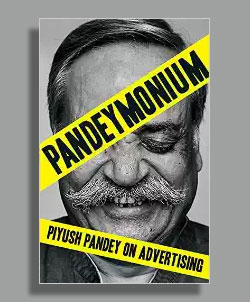
    On Wednesday, Piyush Pandey’s memoirs ‘Pandeymonium’ was released in Mumbai with much fanfare with Amitabh Bachchan releasing the book and several dignitaries, family and friends in the audience. It was tough pulling out an extract from the book, but here’s one that we though we thought would interest MxMIndia readers…


    By Piyush Pandey


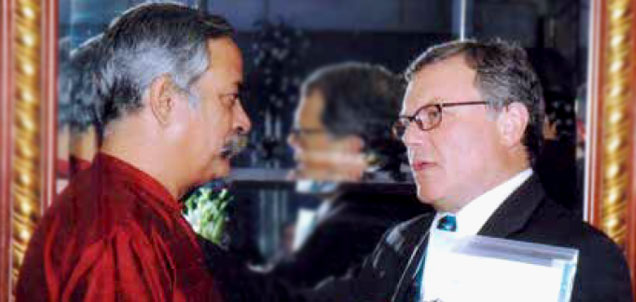
    People would like to believe that Martin is a control freak—nothing could be further from the truth. Martin’s name is misused by his managers in the operating companies so as to help them achieve their own ends. Martin would not even be aware of many of the things that his managers claim that he has an opinion on. His interest is in communication, in the health of his companies, in the finances, in corporate-governance issues, in the stock price and in WPP’s shareholders. Martin does not interfere in the running of the companies and has little interest in decisions that ought to be taken by his local managers-which is perhaps why WPP does so well globally. The fact that India is so important to WPP now, and yet the Indian operations are run totally by Indian managers underlines his belief that global businesses are best run by managers who know the lay of the land.

     

    If cigarettes helped me spend more time with David* than was warranted by my designation, it was cricket that helped build my relationship with Martin. Martin is a huge cricket fan, following the game from wherever he may be in the world. In London, he watches matches at Lord’s whenever he gets the opportunity. He plays as well, taking part in charity matches for causes that he believes in.


    Review in 164 words. Unputdownable


    By Pradyuman Maheshwari


    Why a hundred and sixty four words? Piyush Pandey’s Pandeymonium can be reviewed in just one. Unputdownable.


    It’s a breezy read. The way Piyush speaks. And the way his ‘curator’ Anant Rangaswami writes. You can read it in one post-dinner sitting.


    The first part of the book is great fun. Depending on how much other people’s experiences move you, you can possibly have tears rolling a few times. I cried a bit.


    The second part of the book gets him into talking specifics about Ogilvy. To those not into advertising and Oglivy, in particular, this could be a stretch, but Piyush ensures that he doesn’t get too much into details.


    I was hoping to read some juicy comments and comments on people and issues, one has heard Piyush feels very strongly about. But there’s none of that.


    Pandeymonium is a must-read for all those whose lives have been touched by Piyush or his advertising. It’s a mustest-read for those wanting to get into advertising.


    Planning for one of his earlier trips to India, he mentioned to Ranjan Kapur that he wanted to play a cricket match in India. He asked him to get me to sort it out (he was aware that I had played first-class cricket). He wanted the teams to be formed from employees of the three larger agencies WPP had in India those days: Hindustan Thompson Associates (HTA); Contract (which was considered a separate company, though it was 100 per cent owned by HTA); and O&M. Martin also wanted a couple of former India cricketers to play so as to add some flavour to the match.


    I did the maths and decided that each of the three agencies would contribute six players, making it eighteen players. Martin would make it nineteen. That would leave us three players short. I requested Bapu Nadkarni, Eknath Solkar and Ashok Mankad to play, and they all agreed.


    We now had twenty-two players, and the next challenge was the composition of the two teams. I had some thoughts on that. I wrote to the managers of HTA and Contract asking each of them to send me the names of their six players—and their heights. They wrote back and asked me why I wanted to know about their heights. I told them that it was for the cricket whites that we needed to play in.


    Martin was to captain one team, while I would captain the other. I divided the remaining twenty players into two teams.


    Martin came to the ground and discovered that his team was called Short Legs XI and that mine was Long Legs XI. I had created the teams based on the heights of the players. Martin came up to me and said, ‘You cheeky bastard.’


    For me, Martin is a human being and no more.


    That match set the tone for my relationship with Martin. It allowed us to be relaxed, frank, trusting and honest with each other—and that makes for a profitable working relationship.


    During another of Martin’s visit, I planned something else. When you entered the office, from far you could see a poster outside my room with ‘WPP’ written on it. WPP did not have an office at Ogilvy. So when Martin came, he saw the signage and walked to my room. From close, you could see the small letters between WPP. It said, ‘Worldwide Office of Piyush Pandey’. ‘Cheeky bastard’ is what he said to me again, as he laughed.


    ‘Cheeky bastard’ is a phrase that Martin loves to use, and I’ve been described as one by Martin on more than two occasions. In 2000, I was flying to judge the Cleo Awards at Aspen, Colorado. The perks of being a juror meant that I flew first class on British Airways. First class was a rarity as WPP’s policy did not allow it. I was in the first-class lounge in London, waiting for my connecting flight to the US, when I bumped into Martin. I walked up to him and said, ‘Hi, Martin, Cleo is paying for this trip. Just in case you call up Rane (my colleague and then Finance Head of Ogilvy in India) and ask him who is paying for this.’ ‘You cheeky bastard, did I ask you?’ He said. ‘No, you didn’t, but you would have called up Rane; I just saved you a couple of pounds on the phone call,’ I replied.


    When we meet now, conversations are relaxed and direct. Martin discusses larger issues with me, such as the company’s reputation and corporate governance, two areas where he spends considerable time and energy. We hardly ever talk about work or revenues. Indeed, sometimes we have to contrive devices which get him to look at recent work that has been done; I do not think that he has ever asked for a formal review.


    I’ve learnt so much from Martin-perhaps because I saw him as a human being and no more. Approach Martin with fear or trepidation or guile, as many do, and what you have achieved is to ensure that Martin doesn’t relax. That’s your loss.


    * reference made to David Ogilvy whom he refers to earlier in the chapter


    Pandeymonium
    Piyush Pandey on Advertising
    By Piyush Pandey
    Penguin Books India (Portfolio)
    Hardback, Pages 244
    Rs 799
    (Rs 556 on Flipkart)


    ​Excerpted with permission from the publisher​


  • A long story short: Rise of the 100+ seconder


    By Meghna Sharma


    Long copy became synonymous with David Ogilvy after he espoused its cause in his book Confessions of an Advertising Man (1963): “There is a universal belief in lay circles that people won’t read long copy. Nothing could be farther from the truth.”


    While one may not see too much long copy in print these days, television commercial writers seem to be following the great man’s adage, if recent TVCs are anything to go by.


    Dove’s Real Beauty Sketch campaign on the digital platform and the latest Tata Sky commercial, which made waves for being all of three minutes long, are proof enough. But in today’s fast-paced world where the 30-seconder rules, do such ads really work?


    MxMIndia asks adwallahs what are the characteristics of a lengthy ad or campaign, and why some work – and some don’t.


    Raghu Bhat, Founder Director, Scarecrow Communications Ltd & Founder, Fungus Designs

    The biggest challenge any advertiser faces is how to make one watch his/her advertisement. For instance, if we take a movie, people make an effort to go and watch the film; the same isn’t the case of advertising world. How many log on or switch on their television sets to watch a particular ad? Hence, it is difficult to find a programme which has a captive audience as well as has a two- or three-minute window to showcase an ad. People are watching IPL, but spots are sold for 10-seconders.


    For a mass brand, to launch a lengthy campaign, it cannot depend on the digital platform alone. It has to use television as a medium to reach its TG. And has to go beyond traditional content to catch people’s attention. For example, the Dove campaign turned out to be more of a social commentary and hence, caught people’s eye.


    Ramanuj Shastry, Co-Founder and Director, Infectious Advertising

    I would call such long-duration campaigns as branded content rather than advertisements, because people watch them more on the digital platform. A lot of such lengthy content is launched online, especially internationally, to go viral. However, it should have an ongoing story which will make one ask ‘what happens next?’. Apart from the story, other elements like music, acting, direction too are important. For such content to be played on air means that a channel has enough air space to fill; otherwise it doesn’t make sense to run them on TV.


    Arun Iyer, National Creative Director, Lowe Lintas & Partners

    I don’t think such lengthy advertisements or campaigns always work. The Dove real beauty sketch campaign worked because it was intriguing. It was almost like an experiment captured, which clicked with the people. But personally speaking, I think the Tata Sky is a bit too long, which wasn’t necessarily required. To run such ads on TV isn’t feasible for anyone and everyone. Maybe Tata Sky can afford to do so because they have their own channel.


    Agnello DiasAgnello Dias, Chairman and Co-founder, TapRoot India

    The Tata Sky TVC is one in a million. Today the biggest barrier the advertising agencies face is duration. Therefore, it is impossible to create something creative. TVCs today are just a reminder of a brand. What used to be known as edits are now the actual advertisement shown on television.


    Kartik Smetacek, Group Creative Director, Dratfcb + Ulka

    I think each piece of communication has its own ideal length (which isn’t always a pre-defined 30 seconds). A long-format ad has the advantage of drawing you into the story and building a much richer experience before the brand message is delivered. What you lose in frequency, you more than make up for in impact. Apple’s 1984 spot being a case in point. The key to a successful long-format ad is a compelling storyline that resolves to a relevant, well integrated brand message. The narrative must demand an extended build-up, so that every extra second adds to the intrigue. Apart from that, impeccable execution – whether it’s cinematography, casting or music – greatly helps the cause.


    Last year, Chipotle released a two-minute film online that was totally worth the time. It was an animated film that told the story of a farmer who dismantles his high-tech, mechanized farm to re-embrace a simpler, free-range approach. Set to an epic track (Willie Nelson covering Coldplay’s ‘The Scientist’), the film kept you riveted till the final second. The ad made its TV debut at the Grammies, by which time it had already travelled virally around the world, redefining Chipotle for a whole generation of customers.