Tag: Dance India Dance

  • High Fives for DID

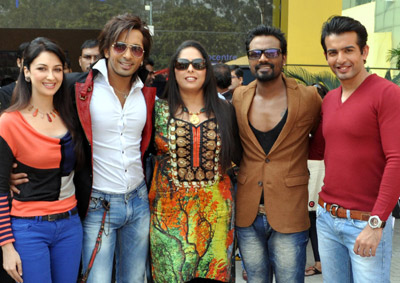
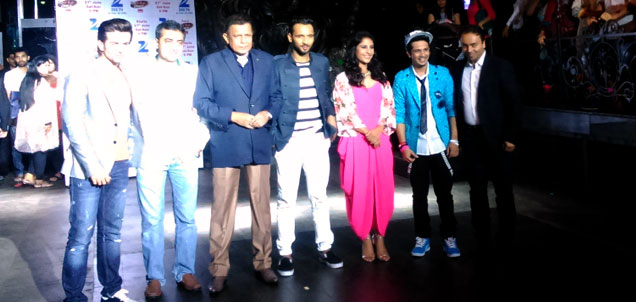
    Megastar ​Mithun Chakravarty and Zee TV Business Head Pradeep Hejmadi (extreme right) at a DID unveiling event in Mumbai


    By Dyanne Coelho


    The popular dance reality show on Zee TV, ‘Dance India Dance (DID)’is back after two long years with Season Five. The acclaimed show promises a brand new format featuring a fresh line-up of masters. “The new season will see new challenges and head to head combating between contestants. Besides, the masters are also of the younger generation who can choreograph, motivate and push talent into the industry,” Pradeep Hejmadi, Zee Business Head said.


    The panel of masters includes Mudassar Khan, the man behind the dance hits, HumkaPeeni Hai (Dabangg), Dhinka Chika (Ready) and Party All Night (Boss), Gaiti Siddiqui from the choreographer duo of Uma-Gaiti, known especially for the Sunny Leone hit Baby Doll, and Punit Pathak, who was first seen as a contestant on Season Two, then progressed to being a choreographer on the next season and now has returned as master on Season Five.


    The masters will mentor a group of contestants in this 15-week season of Dance India Dance, where they will run the contestants through rigorous training, workshops and choreography. Megastar Mithun Chakravarty will play Grandmaster and will act as a guide to the contestants. Jay Bhanushali returns on Season Five as host.


    The scout for talent began earlier this year across 17 cities in India, including Mumbai, Delhi, Indore, Ranchi, Guwahati, Raipur, Siliguri, Chandigarh, Dehradun, Bhubaneshwar, Jaipur, Patna, Lucknow, Kolkata, Bengaluru, Nagpur and Vadodara. “Dance is like a form of prayer. And we like to give new talent a try always,” Chakravarty said.


    Akash Chawla, Business Head, Zee’s Creative and Production Studio, Essel Vision Productions Ltd said, “Season Five brings along with it a host of different dance styles and explores a new format, where contestants challenge each other on a battleground of dance.”


    While DID is an iconic show for not just Zee TV but Indian entertainment television as a whole, the question about what happens once it comes to an end looms high. “At Zee our consumers range from little toddlers to retired people. DID speaks to the demographic between 15 to 34 years of age. We also have DID Super Moms that reaches out to the older generation. There are other non-fiction formats which we have which connect with different segments. So we will create a new celebration of talent, a new texture of programming, and that’s how we will celebrate the brand,” Hejmadi says.


    From the marketing standpoint, Sorbojeet Chatterjee, Senior VP Marketing, Hindi GEC, ZEEL says, “DID gets a very high youth audience onto the channel, and we evolve as they evolve. So we focus on digital marketing a great deal. We have a 360-degree marketing strategy, but we have a lot of focus on digital. Our spends on digital are between 15 to 20 percent of the total marketing budget.”


    While a lot of other reality shows focus on the celeb star judges, DID is a show whose focus is on making a star. That’s the critical difference between DID and other shows, Chawla explains.


    The much-awaited Season Five of DID goes on air on Saturday, June 27 at 9pm on Zee TV.


  • Channels step up the battle on the dance floor


    By Meghna Sharma


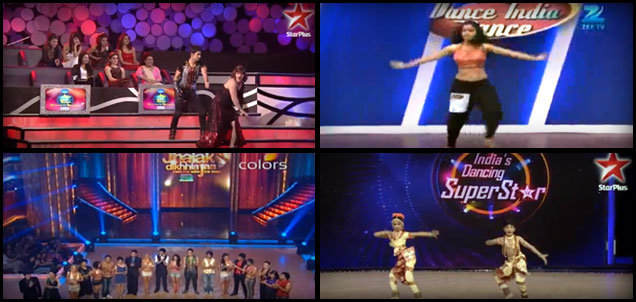
    For a nation that thrives on jigging and jiving in filmland, it is not surprising that dance shows are a hit. Starting with the longest running, Boogie Woogie, a number of other dance reality shows have made their mark on Indian television, and their popularity seems undiminished.


    Priti Murthy

    Although most shows are Indian versions of successful Western formats, they have been able to garner a strong following. What is about these shows that make them click with people? Priti Murthy, National Director – Insights at Maxus, tips her hat to the film industry. “Thanks to Bollywood, there is a big dance and music consumption in the country. And as a genre too, it has done well – nationally and internationally. Also, as a format it appeals to the whole family. Thus, such shows are bound to do well.”


    Ajay Bhalwankar

    “Dance spreads joy. It’s a beautiful medium of expression. People emotionally connect with the contestants as they become stories of common man becoming a superstar,” says Ajay Bhalwankar, Content Head, Hindi GEC, ZEEL.


    Zenith Optimedia’s managing partner Sanjoy Chakrabarty says, “There is a high level of involvement and engagement value is high too as people start liking a certain participant, vote of him/her. Also, they are on TV for a short period of time unlike daily soaps which go on and on. Hence, people like to watch them, no matter if celebrity or non-celebrity are participating.”


    Sanjoy Chakrabarty

    Color’s flagship show Jhalak Dikhhla Jaa has always improved the channel’s ratings among the GECs. “Viewers always look out for something fresh and entertaining and dance reality shows provide them the same. The kind of experiment one does with dance forms and shows make them really exciting and refreshing. Like on our show Jhalak Dikhlaa Jaa, viewers get to see a different side of celebrities that appeals to them. It is a show where dancers and non-dancers perform and entertain audiences on the same platform,” says Manisha Sharma, Weekend Programming Head, Colors.


    Manisha Sharma

    Star’s Nach Baliye finished its fifth season early this year and the channel has launched another show – India’s Dancing Superstar. While Nach Baliye has celebrity couples, the latest entry onto the bandwagon provides platform to dancers wherein there is no barrier of age, dance form or style. “We are extremely happy that within its launch week, India’s Dancing Superstar has emerged as the number one non-fiction show on television,” says Nikhil Madhok, VP marketing, Star Plus.


    Nikhil Madhok

    Same style, new twist

    Season after season, shows have been received well by the audiences, making channels very happy to reinvent their offerings every year to stay ahead of one another. “We will retain the format of original DID and instead of having just extraordinary dancers, this edition of DID will have extraordinary moms showing off their extraordinary dancing prowess which will shock and surprise the viewers. The biggest USP of DID SuperMoms is that it’s for the mothers. It’s for those women who don’t believe that marriage and kids are a barrier between them and their dreams. It will be the mother of all dance shows,” says Mr Bhalwankar when asked what will be the USP of DID this year.


    Jhalak Dikhhla Jaa has a new theme this year – Dance Ka Maza Ab Hum Chakhaenge. “Every year we try to do something different with our flagship dance reality show Jhalak Dikhhla Jaa. We have had a different line up of celebrities every season from all walks of life which adds a new flavour to the show. Like last season we had a sportsperson like Sanath Jayasuriya to a comedian Bharti Singh and this year we are bringing in Bollywood actors like Aarti Chhabria to singer Shaan,” says Ms Sharma.


    With the show the channel attempts to remain engaged with the audiences with new elements and constant innovation every season. This new season will also see an interesting line of up rounds as the season progresses and wild card entries with new twists and turns. “We have upped the challenge and raised the bar this year. It will definitely be bigger and better this year,” Ms Sharma adds.


    However, the question remains – is it necessary for such shows to invent themselves? According to Ms Murthy, dance and music shows have become a staple diet for Indians and reinventing shows by focusing on moms or kids in a particular season only adds to it as they target the whole family. “If a format has clicked with the people then such reinventions only add more value to them.”


    Similarly, Mr Chakrabarty feels it is important for such shows to reinvent themselves as the element of surprise is always good. “One has to keep taking it to the next level,” he adds.


    Dance to the marketing mix

    Although the shows are popular and get a lot of eyeballs to the channels, the channels don’t leave any stone unturned in marketing them to stay ahead of each other.


    For IDS’s launch Star’s marketing highlight was a massive on ground engagement during the audition phase. According to the channel, it helped in building traction for the show even before the first episode was shot. “We will be using digital in a big way through the show. Already the Chavat Boyz who featured in our first episode have started creating a cult following on digital for their innovative dance style,” says Mr Madhok.


    Colors on the other hand plans to go all out with a mix of TV (Home Channel + Cross channel), Radio, Print, Outdoor, Cinema and Digital for JDJ.


  • Zee TV wins gold for DID mobile app at Smarties 2012

    By A Correspondent


    The Mobile Marketing Association (MMA) presented the first ever Smarties India 2012 Awards, which is a global awards programme dedicated exclusively to mobile marketing and recognizes local, regional and international campaigns in a global contest that showcases the ‘best of the best’ in the industry, across 15 categories in Delhi on September 21.


    The first edition of Smarties India 2012 awards winners were adjudged by a global jury of senior brand marketers and advertising executives.


    ZEE TV was the only broadcast client along with the agency, Mobilox, which won awards in two categories:-

    · Smarties 2012 Gold for the best mobile APP – DID

    · Smarties 2012 Bronze for the DID – missed call voting innovation


    The DID App aimed to provide an expression platform for the audience of Dance India Dance and enable a bi-lateral interaction between the audience and the show. The intention was to engage DID audiences on mobile and extend the 1 hour show format on TV to a 7 day format on Mobile. Till date there has been more than 5.6 lakh downloads of the app. The app also served as a common access point to popular social media Platforms. Live voting through the app was in sync with the show, thus helping boost the number of votes.


    Akash Chawla, Marketing Head, National Channels, ZEEL said, “It was very gratifying to know that at a time when ‘on-demand’ entertainment was the order of the day, we were able to provide our viewers with content that kept them engrossed and engaged. Reaching over 5.6 lakh downloads on four mobile platforms strengthens our conviction that technology engages consumers in ways that are addictive.”


  • DID creator Ashish Golwalkar to leave Zee

    By Ananya Saha


    A journey that began in April 2001 for Ashish Golwalkar is drawing to a close. The head of non-fiction at Zee TV put in his papers recently. He is currently serving out his notice period, and August 24 will be his last day at the channel.


    He is credited with the creation of Dance India Dance, the popular property at the channel. Mr Golwalkar said, “It has been 12 years at Zee. I have worked at various roles and positions at Zee. I have worked as a sales person, programming head, brand manager. It was a great learning experience. I was responsible for DID. Nothing can be as big as DID. Zee was acted as a university for me.


    “Once you do something, it becomes difficult to outdo yourself at the same place. One needs to look for challenges and the challenges need to change constantly,” he said.


    Mr Golwalkar has not decided on his next destination yet. “I will be on leave and will evaluate things after a month.”


  • Digital is the way forward for Zee

    By Rishi Vora


    The future is definitely Digital, and Zee Group has its sights set firmly on it. In addition to its recent launch of Ditto TV, the broadcast major has been fairly active in the digital space to promote properties such as Dance India Dance 3 (DID) and Punar Vivah.


    The channel has also taken a new and different step to enhance consumer interaction. It has introduced ‘free voting’ for contestants (where the viewer is asked to give a ‘missed call’ to his favourite contestant) as against the industry norm of pay-per-message.


    To further intensify its focus on Digital, Zee has now unveiled a WAP site and a mobile application that connect with DID fans on the go.


    The WAP site has interactive features which enable fans to interact with the contestants and judges and allows them to vote by a click of a button apart from a few other interactive features.


    MxM India spoke to Marketing Head Akash Chawla about these and other digital initiatives.


    Q: This whole focus on Digital… is this something that will take Zee a step ahead of competition?

    That is what we expect to do. We hope to be ahead of the competition with regard to this particular thing. From our perspective we’re not looking at how competition is doing on this front, because our entire objective is to be very close to the consumer. There are times when we do it by being on the ground and there are times when we do it by actually going to their homes. In the age of interactivity it is apt that we use digital media to the best. And that is exactly what we’re looking to do.


    Q: Does this take away anything from the way you use traditional media?

    The one mantra which we’re going after is driving conversations with the customers. So, even when we’re using the traditional media – a print ad for example – the attempt is to make it more interactive. Any my belief is that you can also use traditional media to drive a lot of audience on your social network.

    I’m not saying that traditional media is something we won’t do, but our attempt will be to drive more conversations through our communication.


    Q: You’ve been fairly active on social media and that seems to be a big thrust going forward as well. But there is a saying that social media is a double-edge sword and that it could well turn out to be harmful to a brand like yours.

    It is too soon to say that. In the case of iconic brands or sectors such as automobiles you can see a sizeable community. In the GEC space we’re just beginning to do that. So our first objective is to build a sizeable community. Once you get a sizeable community then how to use that is the second objective. Traditional media will irrespectively be required as social media in India is growing.


    Q: This missed-call concept which you’ve introduced for DID is something very different altogether. How did you come up with a concept like that?

    At Zee, we’ve been doing talent hunts such as Sa Re Ga Ma and DID. When we started this interactivity thing in 2005 with Sa Re Ga Ma Pa Challenge, we used to get a lot of votes. If we sit down and draw a trend, votes have actually gone down over a period of five to seven years. Most of the formats today are interactive in terms of asking for votes. Second, the credibility aspect. Consumers have come up to us and said that it is just a revenue making mechanism because the SMSes are charged higher than the normal SMSes. Frankly, as a broadcaster, for us, at this particular time, it is more about building the brand salience than the small amount of revenue that’ gets generated through votes.


    Q: That revenue – is it that small enough to be left out?

    It’s a tradeoff. Tomorrow we may not be able to do it for all our reality shows, but at the end of the day if it is about a brand like DID – from the consumer’s perspective, credibility is of primary essence. And whatever brings us that credibility is something we would want to go in for.


    Q: Is this a beginning of a new trend in broadcast?

    You cannot do this for everything. It is not a model that can be followed by all brands. There are certain attributes of DID in terms of how many people were connecting with it, in terms of it being a brand which is already known and the kind of credibility it has at this juncture…


    So I don’t think it’s a concept that’ll fit all brands. How many more people will start following us on that? We don’t know. But we did try this again for another show, Punar Vivah. We decided to apply that to the show because as a concept it applies to a segment where we could afford to be more interactive and it gave us phenomenal results.


    Q: Does a show like Punar Vivah attract a lot of traction on social media?

    Actually if you go to our Facebook fanpage, Punar Vivah is one of the topics that is heavily discussed. You’re right that you cannot do things on social media blindly. And I’m worried about that. If something is successful people will start using it as a formula. The aspect we’re following for Punar Vivah is very different. We’re doing Punar Vivah symposiums across 18 cities of India, where every week we have a couple of symposiums which includes a psychotherapist, a marriage counsellor and one reputed NGO of that particular city or state. We also have people on the panel who have gone through the remarriage process, our viewers and media.


    Our attempt is to bring this so-called taboo topic out of the closet. You may do with social media with a particular level. But, we feel for Punar Vivah that is the one that is actually more relevant than just social media. So yes, you’re right. Social media has to be used keeping the segment that you’re chasing in mind.


    Q: You’re at No 3. Neck-and-neck with your nearest competitor. Where next?

    No 1 next. It was a matter of 1 GRP with Sony last week.


    How long for No 1?

    (Smiles) I told you three months ago that we will be No 2 in three months. We’ve become No 2 in three months.


  • We’re a one-stop shop for broadcasters: Santosh Nair, UTV

    UTV Television, known to be a pioneer in the TV content business in India, was started by Ronnie Screwvala in the early nineties. Though the group has expanded its wings to being a broadcast major, its television business, which has now, in a way, been overshadowed by the international companies’ foray into India, is slowly but surely taking bigger strides in becoming a significant player in the business.


    as put by Chief Operating Officer Santosh Nair, the content house’s biggest USP is the fact that it offers fiction and non-fiction shows, plus the company’s wide experience in the regional space. In a freewheeling interview with MxM India’s Rishi Vora, Nair speaks about the content business in India, UTV’s role in that, company’s plans and much more. Excerpts:


    Q: So how was 2011 for UTV Television?

    The year 2011 was very good for us. Saubhagyavati Bhava, which was launched at the end of the year, is doing well. Dor, which aired on Star Plus, was launched early in 2011 too performed fairly well. The non-fiction shows, especially on UTV Bindass, such as Big Switch and Emotional atyachar too have delivered.


    Q: Is it tough competing with the likes of Endemol, Freemantle, Balaji and a host of other content houses?

    all businesses are tough in that sense. My sense is that there is space for everybody. Yes, there are international format companies, but we’ve been successful in doing home-grown formats. The first season of Dance India Dance was done by us. and that’s the first and the best example of a successful home-grown format. Ek Khiladi Ek Hasina -India’s first cricket format show too is a great example of a great home-grown format. and not to forget Emotional atyachar – that too is a home-grown reality show.


    Q: But not all home-grown formats have been successful.

    Most of them have done fairly well. Dance India Dance is doing well season after season. The show is now in its fourth season. These are tried and tested formulas. and that’s one reason I feel there is space for everyone in the industry.


    Q: While there are home-grown formats done by Zee and various other channels, international formats like KBC, KKK, Bigg Boss and others are more popular. Why is that so?

    International formats are formats which have worked internationally – they have worked well in many countries and hence are successful formats. There is a big market for international formats in India and that’s one of the main reasons why international production houses like Endemol, Freemantle and others have entered India.

    Look at KBC for example. That’s a show that has seen a lot of success. Some have worked, some have not. But broadcasters will always look to do international formats more as these are the shows that have seen some success in overseas markets.


    Q: are you also doing an international format show?

    Yes, there is one in the pipeline.


    Q: For a content house like yours, are non-fiction shows profitable?

    Non-fiction shows are seasonal and each season lasts for about 13 to 26 weeks. So often they turn out to be more profitable because fiction shows usually takes about 200-250 episodes to break even. It takes that much time to understand how your fiction is doing on the ratings front, whether it is a good call to continue or not.


    Q: UTV Bindass is a sister company, so if I may ask: How do reality shows like Emotional atyachar and Big Switch benefit you and the channel from a cost perspective?

    These shows target the youth. So from a cost perspective, it is working out well for the channel and for us, too. That’s the reason why we’re doing them every year. So I’m pretty certain that the channel makes a fair amount of profit on these shows.

    To be very clear about how we deal with Bindass: We treat the channel as any other broadcaster, the way we work with Star or Sony or Imagine, it’s the same way we work with Bindass. We pitch to them – and if in case they don’t like it – we take the project to someone else.


    Q: So Bindass also works with an Endemol for example?

    Yes, Bindass works with Endemol.


    Q: Which means UTV Television is not much inclined with Bindass.

    No-no, it’s not that way. What I’m saying is we are one of the content houses for Bindass.


    Q: There is a buzz that some of the non-scripted shows are not really non-scripted in the true sense.

    No-no. The kind of shows we have done, we have never done any doctoring, purely in terms of making a non-scripted show a scripted one. I can’t comment about other shows, but my fair sense is that nothing is scripted in non-scripted shows, apart from anchor lines.


    Q: What is it that makes UTV Television stand out in the clutter?

    Look at any content house right now in the Hindi space vis-a-vis UTV, which is the only content house that delivers both scripted and non-scripted content. That for us is our USP. We are doing some work in the southern market. We are doing shows languages such as Tamil, Kannada, Malayalam or Telugu. apart from being present in the Southern market, we’re also doing shows in Marathi. We recently did two fiction shows in Marathi, so the kind of programming we do – we are into six or seven languages.


    Q: So where do you focus more: fiction or non-fiction?

    We’re strong on both – fiction and non-fiction so we focus on both the formats. We’re a one-stop-shop for any broadcaster to look at fiction as well as non-fiction.


    Q: a lot of content is being produced in regional languages, so is it a beginning of a trend in the content space?

    apart from UTV, I don’t think many players have made a foray into the regional space. The reason why I’m saying this is because we have a decade old relationship with the network and we have been doing quite a bit of work down south. apart from the local players, I don’t see many of the Hindi players getting into the regional space.


    Q: What is your view on the issue of IPR, where the broadcaster owns it when it is the content house that is producing the show…?

    The broadcaster owns the IPR because he commissions the content house to produce the show. There is a budget which is rolled out, the content house keeps its margins and that price is fixed. That’s the model which is operational in the industry now minus Sun Network. With Sun Network, we spend the money on producing a show, we pay them slot fees and the IPR lies with us. So that’s a slot model.


    We are doing Shubh Vivaah on Sony, a remake of a Tamil show; Saubhagyavati Bhava too is a remake of a Telugu show…


    Q: So for all these shows, the IPRs lie with you?

    Yes. In fact, there are two other shows in the pipeline which are remakes of south shows (we are currently in talks with broadcasters) and we own the IPRs.


    Q: What is your view on broadcasters’ interference in terms of storylines or tweaks?

    It’s team work. Broadcasters respect our expertise in terms of creative formats that we bring to the table. While we respect them in terms of their understanding about the business, so it’s a mutual thing.


    Q: What are we going to see from UTV television this year?

    We’re doing Shubh Vivaah on Sony, an international format show with one of the GECs. Two more fiction shows are lined up with top broadcasters and we will be launching a few fiction shows in the south. So a lot happening this year.
     

  • Dance India Dance 3 premieres on December 24 at 8.30 pm

    By A Correspondent


    The serpentine queue that had gathered outside the audition venue was evidence enough to prove how eagerly the youth ofDelhiand entire Northern regions ofIndiawere waiting forIndia’s No 1 dance reality show, Dance India Dance to return.


    The masters, Geeta Kapoor, Terence Lewis and Remo D Souza,  recognized every contestant’s dedication and passion to win the ‘Taqdeer ka Topi’. What touched the masters was not how they performed, but their sincerity towards dance as an art form.


    A nondescript Furkhan hailing from a family of autorickshawallahs mesmerised the judges with his excellent robotics act. Physically-challenged Sunny Kumar brought tears to the eyes of the Masters. Remo DSouza’s duplicates – Vinod Kumar and Afsar Ansari – kept everyone in splits.


    Another NRI contestant, Anastasia, born and brought up inBelarus, a landlocked country inEastern Europegot hooked on to the show by watching Dance India Dance episodes on the internet. The turning point in her life came when she met her Indian parents who adopted her and she decided to settle inIndia. She also changed her name to Mansi and started taking lessons from a renowned Kathak exponent inDelhi. She was already adept at contemporary dance style and picked up the traditional Indian dance form quickly.


    On getting an opportunity to audition inDelhi, she was overwhelmed with emotions after performing in front of Remo, Geeta and Terence.


    The highlight of the auditions was Raghav Juyal who takes pride in calling himself ‘Crockroach’, explaining “I like the power of a crocodile and the creepiness of a coackroach!” His popping act was one that has never been seen on television before!


    To watch their journey, tune into Dance India Dance Season 3, premiering this Saturday, December 24,  at 8:30pm on Zee TV.