By Suman Layak
Signals from Cyrus
Ok guys, it’s time for business: Mistry needs a few of those glamorous multi-billion acquisitions to deliver. Takes the call to abort Indian Hotels’ much-attempted bid for Orient Express.
Wings for aviation: It was Ratan Tata’s dream, but it was Mistry who was at the forefront of the joint ventures with AirAsia and Singapore Airlines (with Tata’s support).
Find some friends: Mistry has some 25 years ahead of him as chairman and needs people to grow old with him in the office. Much of the first year was spent in building his A team.
Manage retirements: Tata Steel managing director HM Nerurkar retired in October. Choosing a successor in TV Narendran was one of Mistry’s key decisions this year.
Get more women on board: Tata Sons is still a gentlemen’s club. But Mistry is signalling a change in attitude by inducting women on the Tata boards.
Playing Mr Fix-it: Has identified the problem companies – Tata Motors, Tata Steel Europe, Tata Power – and their problem areas.
Not yet ready for banking: Took the strategic call to withdraw Tata Sons’ application for a banking licence – for now.
|
The Aviator’s Busy Flight Path
For Ratan Tata, retirement may not necessarily have translated into less work and for sure has resulted in more than usual travel. A person familiar with his schedule indicates that Tata has been travelling a lot more since he retired. For starters, Tata serves on the Prime Minister’s Council on Trade and Industry, which means he continues to advise the top political leadership of the country.
That apart he is also the president of the Court of the Indian Institute of Science and chairman of the Council of Management of the Tata Institute of Fundamental Research. He also serves on the board of trustees of Cornell University and the University of Southern California. Tata had graduated as a trained architect from Cornell. However, retiring from Tata Group companies - he is now chairman emeritus — is not the end of the corporate innings. For example, even now he continues to serve on the board of American aluminium major Alcoa. He is also on the international advisory boards of Mitsubishi Corporation, JP Morgan Chase, Rolls-Royce, Temasek Holdings and the Monetary Authority of Singapore.
In September Tata also joined the board of trustees of Carnegie Endowment for International Peace. This trust is considered a premier American think tank. However, at the same time Tata has kept himself available to the Tata Group and in the beginning he had committed himself to fortnightly lunch meetings with Cyrus Mistry. Apart from that he is closely involved with the aviation joint ventures of the Tata Group, one with AirAsia and the other with Singapore Airlines. Tata himself had piloted a flight with the AirAsia team on board to Delhi.
It is likely that some of the Tata companies may still consult him for his expertise, in specific areas like automobiles and aviation. He also heads the Tata Trusts which control a two-thirds majority of shareholding at Tata Sons and this must be taking up a lot of his time. He had also registered his own company RNT Associates with RK Krishna Kumar. But not much else is known about its activities. Not yet.
|
Back in the ’70s, the families of construction magnate Pallonji Mistry and well-known legal luminary Iqbal Chagla were neighbours in Cuffe Parade. A happy consequence was that in 1992 Pallonji’s younger son Cyrus married Chagla’s daughter Rohiqa. On the wedding day, the father of the bride, Chagla raised a toast, starting with these words: “I was determined to dislike anyone who decided to marry my daughter.”
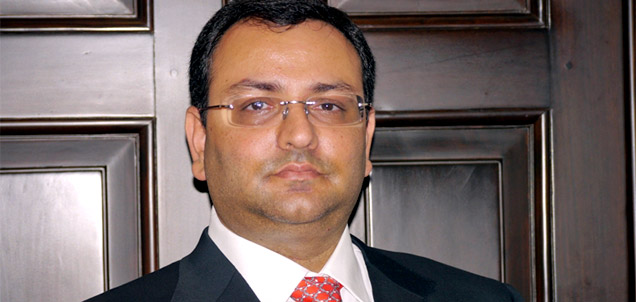
Then he added a truism: “However, once you meet Cyrus, it is impossible to dislike him.” It still holds two decades later; everybody seems to like the 45-year-old Cyrus Mistry. Mr Mistry took over as chairman of Tata Sons on December 28, 2012. Since then, he has made all the right moves. “He has not taken any giant leaps, neither has he shaken the foundations of the group,” says Harsh Goenka, industrialist and chairman of RPG Enterprises.
As Mr Mistry begins his 12th month as chairman of India’s largest conglomerate, in which his family led by father Pallonji Mistry owns an 18.5% stake, it’s time for him and his core team to prepare a rough and ready blueprint for the second year. That plan may call for a few larger leaps, and may indeed shake some parts of the foundation.
Making the multibillion acquisition of Corus (now Tata Steel Europe) viable, for instance is one of them. Downsizing the business by mothballing some of its capacities, reckon analysts, may be the way to go. Back home Tata Motors – excluding the money-spinning Jaguar Land Rover ( JLR) – needs a refreshed portfolio to find its way back amongst India’s top 5 automakers. And the power, telecom and hospitality businesses too are in need of an overhaul.
It’s a daunting task; more so for a man who’s still coming to grips with a 92-company group across 28 diverse sectors, even as it strategizes to enter newer businesses, like aviation. Ashok Basu, former bureaucrat and an independent director on the board of Tata Power, says: “I think he has the most formidable job in the country. But this mantle sits very lightly on his shoulders.”
“Luckily, his health has held up. He has taken on a punishing schedule, whirlwind travel across the world, day trips to the Gulf countries and stuff like that,” says a person who knows Mr Mistry well. And Mr Goenka adds: “He doesn’t look stressed. But I asked him about his work-life balance and he admitted that’s gone for a six.”
First, a Team
One of Mr Mistry’s immediate priorities after taking over at the helm was to build a team of people who will, like him, be around for some time. Although Mr Mistry was appointed as executive deputychairman of the group in 2011 for five years, and was elevated in 2012, it is likely that Mr Mistry will have this job for more than a quarter of a century.
Before retiring, predecessor Ratan Tata – who had the job for 21 years – had left a clean slate for Mr Mistry, even lowering the retiring age for non-executive directors, to ensure that the old guard goes away in two to three years. Tata’s first few years at the helm were spent consolidating his own position as the undisputed leader of the group and pushing out the veterans. He did not want such distractions for Mr Mistry (after all, Mr Tata had plenty of them when he took over and had to spend at least six of his initial years taking on – successfully – the group’s satraps).
In Madhusudan Kannan, 39, Mr Mistry found his head of business development. Mr Kannan was the first member of team Mistry and joined the group in May 2012, seven months before Mr Mistry finally took over the reins. Mr Kannan is considered closest to Mr Mistry today. Mukund Rajan, 45 – younger brother of Reserve Bank governor Raghuram Rajan – was moved in from Tata Capital as custodian of brands and chief spokesperson as well as chief ethics officer. Mistry also brought in academic Nirmalya Kumar from the London School of Business to help with strategizing and NS Rajan from Ernst & Young as head of human resources. “In many ways it is like Rahul Gandhi’s team” says one uncharitable onlooker from corporate India.
“It has more theoreticians than business managers,” he says. That may be unfair to both Mr Mistry and Mr Gandhi, but one cannot deny that Tata’s own lieutenants were either seasoned veterans from within the group (Syamal Gupta, NA Soonawala, Ishaat Hussain, to name three) or from other large companies (like R Gopalakrishnan from Unilever’s Indian subsidiary). Mistry has chosen his own horses, for surely he has to run on a different course.
The Tata group did not participate in this feature. Also setting himself apart from the Ratan Tata-era is how Mr Mistry has sought to induct more women on the boards of Tata Sons. Vishakha Mulye, managing director of ICICI Venture, was the first woman inducted by Mr Mistry in February. She joined the board of Tata Power.
He followed this up by bringing in Falguni Nayar on Tata Motors’ board and Ireena Vittal, a former McKinsey partner, on the boards of Indian Hotels and Tata Global Beverages (see Diversity Drive). With Vittal, Tata Global now has three women on its board (the other two being Mallika Srinivasan and Ranjana Kumar).</p>
Ms Nayar, who now runs her own e-commerce venture Nykaa.com and a former managing director at Kotak Investment Banking is married to private equity fund KKR’s India chief Sanjay. Mr Mistry  asked Falguni to drop by for an interview and spent considerable time discussing her current venture before requesting her to join the Tata Motors board and bring her I-banking experience to the table.
In May 2012, before he became Tata Sons chairman, Mr Mistry had joined the board of Tata Steel along with another lady, Mallika Srinivasan, chairman and CEO of tractormaker TAFE.
However, these moves are only a beginning in creating gender-diversity at the house of Tatas, whose boards have traditionally been male bastions; for instance, the jewel in the Tata’s crown, TCS, has an all-male board; and even the Mr Mistry-created four-member general executive council is all male.
There was one more quick response by Mr Mistry that pleasantly surprised many people. When a former executive of Tata Steel committed suicide and there were allegations of harassment by former colleagues, a committee was immediately set up with executive and non-executive directors of group companies to probe the allegations
Plumbing the Numbers
The Tata group today is virtually basking in the glory of a single outperformer – TCS, which accounts for roughly 60% of market value of all listed Tata entities and 80% of profits. To that extent, TCS managing director N Chandrasekaran, 50, stands tall – some observers say nearly as tall as Mr Mistry -in the top tier of leadership in Bombay House, the headquarters of the Tata group.
Tata Sons owns almost 74% of TCS; and since Mr Mistry took over in end-2012, TCS’s market capitalisation has gone up by 58% adding Rs 1.4 lakh crore to the group’s market combined capitalization. The other clear outperformer is JLR, the $2.3-billion acquisition that more than makes up for Tata Motors’ dismal show domestically.
JLR’s revenues in 2012-13 were 2.5 times that of the local operations, profits stood at Rs 10,406 crore as against Tata Motors’ domestic profit of Rs 302 crore, and, for good measure, the UK operation headed by Ralf Speth paid Tata Motors Rs 1,420 crore in dividend in June. Together Tata Motors and TCS account for roughly 80% of the group’s combined market value. The rest of the 26 listed group companies taken together have actually shrunk in combined market capitalization.
The Indian operations of Tata Motors and European operations of Tata Steel may be the larger problems, but Mistry has more fires to douse. Mr Basu, for example, feels the biggest problem is at Tata Power. The company has posted a loss of Rs 39 crore for the first half of 2013-14 after a loss of Rs 85 crore for 2012-13.
“Tata Power is probably his greatest headache – a problem created for no fault of the company. Take Mundra ultra mega power plant, for instance, which is suffering because the price of Indonesian coal has suddenly shot up and the state government cannot buy power at this price.”
Then there is Indian Hotels, which was in the red to the tune of Rs 452 crore for the first half of 2013-14 on revenues of Rs 1,804 crore. The loss in this half year has exceeded the loss of Rs 430.24 crore of the entire previous year. The Tata Group is not a six-course meal but more like a tasting menu and there’s a lot more on Mr Mistry’s plate. The telecom business needs some decisions – especially as Tata Sons may need to buy back the 26% stake of Japanese partner DoCoMo in March 2014.
Vatican Redux
Clearly, taking charge of an illustrious company incorporated back in 1917 is not easy. In many ways Tata Sons reminds one of the Vatican. If you go through its archives and treasures, you come up with surprises. Like for instance, at Tata Sons, the equity capital with voting rights adds up to only Rs 40.41 crore.
However, there are preference shares without voting rights that account for 100 times the amount at Rs 4,148 crore. These attract dividends at a fixed rate of 7.5% and the subscribers to the preference shares are mostly directors of the company and former directors and sometimes even unrelated professionals. In May 2013, Cyrus Mistry subscribed to preference shares worth Rs 1 crore (10,000 shares). R Gopalakrishnan, non-executive director invested Rs 6 crore in preference shares of Tata Sons in June 2013.
In July Ratan Tata acquired Rs 8 crore worth of preference shares while NA Soonawala (also a former director) picked up Rs 1.5 crore worth of preference shares in July. Let us take the analogy of the Vatican of this day a little forward. The Catholic Christian church has a new Pope today, but the old Pope is not dead – and in fact is living in the vicinity. Mr Mistry heads Tata Sons, but Mr Tata is not very far away. He is available – as he was in the run-up to the aviation joint ventures with AirAsia and Singapore Airlines.
Also, don’t forget that Mr Tata, now chairman emeritus, heads the Tata trusts that control around 65% of the equity shares of Tata Sons and by virtue of that holding controls the group while remaining in the background. Mr Mistry may well be the proverbial chip off the old block. Mr Basu says that while he brings in “youthful energy” to meetings he is very much similar to Tata in his manner, listening carefully and giving his opinion in the end. He has, for instance, suggested strong belt-tightening measures for the group and has also suggested that Tata Power seek a global footprint for itself.
Nayar adds: “It seems right now he is listening and absorbing. I find Mistry to be very open and inclusive. He is also a very good listener and carefully evaluates everything before taking decisions. He also has a vision which he explains.” That is what Tata was known to do. And Mulye points to other similarities with Tata: “He has a unique capability in combining breadth of vision at one end and granularity of detail at the other. The other big quality he has is his sense of humility.” It would then appear that Mr Mistry has moulded himself in the cast of Tata, what with both of them evidently also sharing an aviation dream.
A former senior executive at one of the Tata companies who did not want to be quoted says that the Tata influence on the group is still very strong – along with the influence of RK Krishna Kumar who retired in July 2013. Many of the CEOs of today are former executive assistants of the two senior pros, both of whom are trustees on the Tata Trusts (Mukund Rajan in the GEC and N Srinath, MD, Tata Teleservices aided Ratan Tata, while Avani Saglani Davda, CEO, Tata Starbucks and Govind Sankarnarayanan, CFO, Tata Capital were EAs to RK Krishna Kumar).
But herein may lie the rub, point out analysts. The tough decisions that await Mr Mistry may be construed as going against Mr Tata’s legacy. For instance, what’s the future for the ultra low-cost car, the Nano, which was Mr Tata’s dream (although a few days ago he did clarify that his ambition was not to build a ‘cheap’ car but one that would be a logical step up for the country’s millions of twowheeler riders)? Similarly, the options for Tata Steel Europe – an acquisition that a section of analysts believe was overpriced but which Tata believes had to be made – are grim, with some analysts advocating sales of substantial parts of the business, if not all of it.
Mr Mistry and Mr Tata have been on the same page – even before the former took charge as chairman. For instance, Mr Mistry bought a Nano as soon as it was launched, and apparently said: “It is a damn good car.” The question, of course, is for how long can Mr Mistry be on that same page. At some point he will have to differentiate himself in style and substance from Tata in key strategic decision-making. Mr Mistry has shown he is capable of those tough decisions.
The $1.6-billion write-down of  Corus’ goodwill on Tata Steel books earlier this year – that contributed in a big way to the losses – the recent withdrawal from the race for a banking licence and the recent call to abort Indian Hotels’ bid for Orient Express are three instances. Expect a few more in the second year which, for Cyrus Mistry, will be more important than his first.
Source:The Economic Times
Copyright © 2013, Bennett, Coleman & Co. Ltd. All Rights Reserved
Licensed to republish

 I do not believe in coincidences, but last Sunday evening, I had stumbled upon a report by the Ministry of Transport on road accidents in India for the year 2020. As I was glancing through the same, my phone flashed the news of the tragic death of Cyrus Mistry in a road accident, near Mumbai.
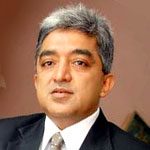 The brand Tata has a rather deep equity and a change in the Chairman or a change of a Director does not hurt the image of Brand Tata as much fundamentally because it is all about the fact that the equity of brand Tata. It’s a Rs 100bn+ company and is in operations in 100+ countries and in the corporate world these kind of things are accepted. People get excited about it and then they forget. It will be seen as a corporate activity.
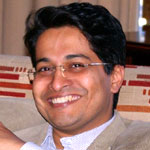 The Tata brand has been a benchmark for business propriety, professionalism and patience. But it seems the old guard got rattled by Cyrus’ plans of restructuring the organisation. His direct, no-nonsense style questioned a lot of deadwood, emotional baggage and personal ego-trips. The group went through a same phase of restructuring when RNT had taken over around 25 years back, but nobody objected then and obediently went through the slash and chop. Guess an ‘outsider’ did not help matters. And this episode does not help the Tata brand either. Bombay House is back to incandescent lightbulbs from LEDs. And its corridors shall be a bit darker now!
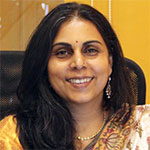 There is widespread consternation about this move. The belief- right or wrong – is with the establishment as correcting  a trajectory that was at odds with its value system. The true equity of the brand has not been so much its size or success- which apart from TCS and JLR – seems to be in question. The real reason for the Tata equity has rested on its value system. Both as a corporate citizen and as an employer.
 Clearly this is a dramatic move for a heritage- and values-driven firm. We have seen such high profile ousters in companies like HP or even Apple, driven from a divergence in the beliefs of the CEO/Chairman and the Board.