
Tag: Cyber Lions

  • Glory eludes India @Cannes Lions 2012


    By A Correspondent


    1992 is not a year on which I shall look back with undiluted pleasure. In the words of one of my more sympathetic correspondents, it has turned out to be an Annus Horribilis. Thus spoke Queen Elizabeth II describing the year that was quite horrible for the British royal family. Now as the world celebrates 60 years of her Accession, the Latin phrase could be used for India’s performance at the Cannes Lions.


    Now that the 7-day grand creative festival has come to a close in the south of France, agencies that have emerged tall and triumphant from across the globe will be heading back to their respective continents to kick off celebrations.


    And that we guess India will miss out on, as the contingent make its way back home. Some have done so already as you read this. The boardrooms, bars and smokers’ areas will be busy as a new week commences with agencies trying to figure out what exactly went wrong. Or perhaps what didn’t go right. Some obvious questions that’ll come up for scrutiny are whether agencies have become too complacent and are taking their creative skills for granted or whether other countries have simply outsmarted India in the game of creative one upmanship.


    Few doubt the creative aptitude India possesses, having given a tough time to most agencies in the past but 2012 could easily be billed as the worst year thus far – just 14 metals in kitty when the number of entries that were sent were the highest at 1,182.


    Even in a dry year like 2008 where India had sent only 982 entries, the total metal count stood at 23. The only bad year was 2007 where India bagged just 12 metals but then one expects performances to see an upward spike year-on-year and not the other way round. It will be interesting to see the kind of reactions that emerge from the entrant companies in the ensuing days.


    Though it was a forgettable year for India , there were some agencies that shone bright and whose entries managed to win a few metals. Those that were hopeful of a win did just that and came back lapping up either Gold, Silver or Bronze in the respective categories. Mentos Sour Marbles by Ogilvy & Mather continued its winning spree across festivals as it bagged a bronze in the Press Lions category.


    Another sureshot that bagged India its metal was an entry by Leo Burnett for its client Bajaj Electricals for their exhaust fans. The team of KV Sridhar and Nitesh Tiwari carried on with their winning spree bagging Silver in the Press Lions category.


    In fact, the team of Leo Burnett carried on with their rich display by picking up a Media Lion Silver for its Doorstep School campaign in the Best Localised Campaign category.  Another entry from India that was sure of a win was Cheil Worldwide’s campaign for Samsung Printers. The work bagged a Media Lion Silver in Best Use of Integrated Media in Media Lions. BBDO India’s You Shave, I shave campaign for Gillette continued with its winning streak as it bagged a Bronze in the Media Lions category.


    While those that were touted to win did just that, it was the Gold winners that were the talk among the delegates at the Cannes Lions festival. The tally was opened by McCann Worldgroup which won an Outdoor Lions Gold for its client Western Union.


    An elated Prasoon collected the coveted prize on the dais. DDB Mudra’s ‘The Hinglish Project’ for Ministry of Tourism, Government of India was another Gold winner as it bagged the metal in the Design Lions category. The same project also won a bronze in the same category.
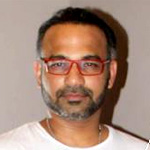
     

    Abhinay Deo

    The third Gold winner was the entry ‘I am Mumbai’ that was entered by Ramesh Deo Productions and the advertising agency for which was Taproot India . Abhinay Deo, on bagging the award, said: “There is no thumb rule for success. All I can say is that one has to be honest to his craft. Never make a film to win an award be it Cannes or any other, because then you surely won’t.”


    Failures Unlimited

    While that was about the winners, the conversation that dominated the festival during the latter half was the lack of wins by India across categories. The discussion was compounded by India failing to make the shortlist across categories too. India would definitely want to forget its showing in the Mobile Lions & Cyber Lions category where it didn’t manage a single shortlist.


    Even categories like Film Craft, Creative Effectiveness, Branded Content & Entertainment put up a poor show by bagging just a handful of nominations. In comparison, categories like Radio and PR performed better with the shortlisted entries in either of them going on to win metals.


    In fact, the categories where India had the maximum number of shortlisted entries like Press and Outdoor too were failures as the conversion rate averaged about 10 per cent or so for each of them. Titanium & Integrated continued to elude the Indian contingent of bagging any metal.

     

    KV Sridhar

    The overall grim mood at the festival was highlighted by KV Sridhar, NCD, Leo Burnett India : “We are extremely satisfied with Leo Burnett’s performance at Cannes this year; getting three Lions is not an everyday event. The only disheartening thing being that India’s overall performance this year wasn’t gratifying. I think we need to push ourselves a little more to do well in such awards, because at the end of the day it’s not about how good your work is, but about how much better the world is performing than you.”


    Said Pratap Bose, COO, DDB Mudra Group, whose agency did win some big awards but not as many as they had hoped: “At the end of the day, as DDB Mudra, we were more hopeful as we did get 21 shortlists. Though this is an extended India problem as well. We did bag a Gold and that compensated a little. The standard to which the world has risen surpasses India to a very great extent hence India has got a lot of catching up to do. To sum it all, we are quite disheartened with the overall performance.”

     

    Pratap Bose

    Mr Bose’s comments on the creative standard of other agencies around the world rising to surpass India may all but be true. Why else would entries that stood a high chance of bagging a metal miss out on winning one? DDB Mudra’s work for Stedfast, Volkswagen and GeeBees Beverages were all assured of a win but sadly missed up winning any.


    Chaplin Chapters & Google Chrome by BBH India , Keeping the Legend Alive by McCann Worldgroup, Parle Agro by Creativeland Asia and A Day in the Life of India by Taproot were other worthy entrants too but were skipped for the sake of others that were found to be more deserving.

     

    Manish Bhatt

    Manish Bhatt, Founder-Director, Scarecrow and a jury member for Cannes, 2012, said, “I would say that winning at Cannes has a lot to do with probability, so many factors can work for or against a piece of work during the judging process. Also with my interactions with other jury members, I got a feel that many felt that while there is no disputing Indian creativity but the viability of that idea on various medium is restricted. As creativity is being redefined, there is a need to bring on an idea that can work on multiple platform. There is also a need to bring in more interactivity in our entries as thats what the judges are looking for.”


    Perhaps, it’s time for India to stop being looked upon as the ‘favourite’ one and for more creative ideas to spawn if we have to make a rousing comeback in 2013.


    We could then look forward to a wonderful year… Annus Mirabilis may be


    With inputs from Shubhangi Mehta, Tuhina Anand and Meghna Sharma


    Cannes Lions 2012 Winning Entrant

    Gold

    Silver

    Bronze

    Bacardi India

    1

    BBDO India

    2

    Cheil Worldwide

    1

    DDB Mudra

    1

    1

    Leo Burnett

    2

    1

    McCann Worldgroup

    1

    Ogilvy India

    3

    Ramesh Deo Productions

    1

    In alphabetical order of agency names


    Imaging: Rafiq

    Photograph of Abhinay Deo: Fotocorp

     

  • Are we Duhs in Digital Media?


    By Tuhina Anand and Shruti Pushkarna


    India has once again drawn a blank in the Cyber Lions category at Cannes 2012. From the 27 entries from India in this category, none made it to the shortlist. Considering that digital is the talk at all industry forum and the future, or is it actually the present, of advertising, its dismal performance at Cannes makes one realize that India is still miles behind on this medium.


    Nagesh Alai

    Nagesh Alai, Executive Director – India Operations at DraftFCB Group, pointed out: “It is not surprising not seeing a shortlist in the Cyber Lions from our shores. Most in our industry continue to see and use Digital as a ‘medium of messaging’ instead of seeing and using Digital as a ‘medium to engage with and start a conversation about the brand’. It is a classic case of getting stuck in hoary mindsets of a 30-second TV commercial. The day our digital specialists get out of this mindset, I reckon one will see a sea change in the digital executions and becoming award worthy. I am sure we will see that happen in the not too distant a future.”


    Talking about the digital in India, Carlton D’Silva, Chief Creative Officer, Hungama Digital Services Pvt. Ltd, said: “As I have mentioned in the past, the standard of good digital work in India to compete at the Cannes can only be made possible if the playing fields are even.”


    He listed the factors that go against good digital creative work, which remain remains the same – the inability to acquire the requisite budget for a digital campaign, the lack of time and the lack of risk taking (both from the client as well as agency side) the digital medium is still used more for its effectiveness than creativity.


    A senior mobility and digital media executive with a leading media agency felt that India’s performance in Cannes Digital categories should at least have some positive side-effects. “Why this happened? If I have to sum up in short, it is because of lack of respect for the Digital medium, which comes from ignorance about the medium and its possibilities; lack of budgets, which comes from lack of respect for the medium; lack of creative talent, which stems from lack of budgets,” she added.


    The executive explained that there is a need for a reality check on how evolved the consumers, marketers and agencies are, as compared to Cannes shortlisted entries or winners. “Look at the short-listed entries for Cyber Lions, they come from countries which have more than 75% internet penetration, while we are celebrating our 10% mark. Of course, one can argue that the population of these countries is lesser than some of our states but one also needs to understand that their consumers are also much more evolved. Again, take a look at the Mobile Lions winners, what do you see? Smart phones and Tablets! In our country Voice is the most penetrated medium on Mobile and we have 21 million smartphones in a mobile subscriber base of 900 million plus. If rich media creatives are the tickets to Lions, I would rather design mobile campaigns that work in Indian eco-system and bring value to advertisers in terms of media effectiveness,” she said.


    Vikas Tandon

    Giving his take on India’s performance in this category, Vikas Tandon, Founder and Managing Director, Indigo Consulting said: “To start with, I think we should recognise that Cannes is as big as it gets, the competition is really tough with hundreds of entries from all over the world, so there is no shame in not winning. We must keep learning from the experiences and pegging away at it. Let’s not write off the Indian team because we lost one tournament. But, definitely it must serve as a reminder that we need to commit ourselves a lot more to Digital than we are now. Among Indian marketers, it is still not as important/critical a piece in the marketing game plan as it is in many other countries and hence, while it seems to get some attention, it just does not get the time or budgets. One of the most frustrating challenges that digital agency invariably have to encounter in India is lack of execution time. Once you have an idea/construct, and even detailing it takes time. Execution is, of course, equally critical for success, and the time constraints often do not allow an idea to reach its full potential.


    So one thing has clearly come out from this, is that for Indian marketers, digital is an after-thought and not still a critical medium.


    Naresh Gupta

    Naresh Gupta, Managing Partner, Bang in the Middle when asked on what ails Indian digital advertising said that he would rather look from the perspective of why the Indian digital advertising is not growing up. Giving his take, he pointed out four aspects: “The digital advertising in India is stuck in a time wrap. The traditional method of advertising is about creating awareness, to generate Interest that creates desires that leads to action. More often than not, digital campaigns are built around the same parameter. Digital behaviour is really about search and share, and that is a paradigm that marketers haven’t been able to factor in. This is part of the reason why campaigns neither aid search, nor motivate share.”


    Mr Gupta also mentioned that Digital engagement has been reduced to a Facebook page and a Twitter handle: “I am not saying they are not important, they are, but they are just the tools. For a lot of brands getting the followers or number of likes becomes the strategy. Now that’s not really smart. The brands have to have a strategy for social media.”


    His third points is that the TV-led thinking for brands where an idea is crafted for TV and then adapted to digital is actually the biggest problem. Consider this, all marketing theories were written before the advent of Internet. The need to position, the need to leverage a singular attribute and build on one are all fine with TV-centric thinking, but not so for ‘word of mouse’-centric thinking. The digital medium has its own dynamics and needs a different take. The strategic thinking that leads to ATL idea needs to be interpreted keeping digital dynamics in mind.


    And lastly: “Most importantly, the brand owners need to recognize the importance of digital and craft the entire strategy accordingly. The brand owners too fret to get their TV brief right, but rarely debate to get their digital idea right.”


  • India@Cannes: It’s zilch again for Cyber


    By A Correspondent


    India will continue its dry run at the Cyber Lions category this year too as none of its entries have been shortlisted. With zero shortlists, it will be the fourth straight year that India will go without any metals in this category. It last won a single metal in this category in 2008.


    India had sent a total of 27 entries in 2012 compared to last year’s number of 33. This is way too small compared to what other countries have sent including USA that has sent 609 entries, UK which has sent 186 entries, Germany that has sent 163 entries and Japan that has sent 161 entries. Overall, there have been 2,458 entries from 59 countries, a decrease of 13 per cent compared to last year. But the drop is being attributed due to the introduction of Mobile Lions, entries of which were previously submitted into the Cyber Lions category.


    Representing India at the Jury will be Anita Varma, Director, Digital Driftwood. The Awards Ceremony will take place on 20 June, in the Grand Auditorium, Palais des Festivals.


  • Being on Cannes jury is no mean task


    By Tuhina Anand


    Being on the jury of Cannes Lions means serious business – being shut in a room for endless hours and going through thousands of entries to make a case for the piece you like. Undeniably, despite the work involved, the experience of being a jury at Cannes is a learning experience in many ways.


    Ryan Menezes

    As Ryan Menezes who was invited to be on the Cyber Lions jury in 2011 puts: “I thought, cool, after winning India’s first ever gold lion in 1996, I now get to judge the most cutting edge category of all. I was looking forward to a week of sun, sand and schmoozing. Yeah, right! It was cyber boot camp from start to finish.”


    Giving a peek into the work, Mr Menezes explained that first there’s a preliminary voting to determine the shortlist, which takes place online. This is even before you set foot in Cannes. He added: “Once you’re there, barely recovered from the seven course welcome dinner, you plunge into this seemingly bottomless pit of entries where you see some of the world’s best work, and some of the world’s best case studies for mediocre work. You quickly learn to check out the work first and skim through the somewhat exaggerated case studies, but with around 500 entries to be judged over 6 days, you’re looking at around 9 hours a day of sitting in front of a computer, with headphones. By the end of the day, you’re too drained to do anything more than crawl back to your fantastic Hollywood themed suite at the Palais Stephanie and pass out.”


    But wait, there are good parts too: “You get to hobnob with some of the best minds in the world, you get a peek into what’s going to happen in the future in the digital category in India, as we are light years behind. You learn stuff that can help you win pitches when you return (I have used this to great effect in two successful pitches this year) and you learn that craft is not dead, it has been resurrected and is alive and kicking serious butt in cyberspace. You get VIP entrances to the gala functions, reserved seats at the award ceremony, invites to the hottest parties, but you’re too dead so you take off to Paris or Amsterdam or Monte Carlo for some peace and quiet. And to sum up, what made the experience really worthwhile was the flawless orchestration of everything by the organizers from start to finish. And, of course, the jury members were fair – there was no lobbying, no camps and no crab mentality. Just a desire to give great work it’s due. And that’s what makes Cannes, well, Cannes.”


    Amer Jaleel

    Amer Jaleel, NCD, LoweLintas who was invited to judge the Press Lions in 2011 agreed with Mr Menezes. It was his first experience of judging at any festival and after his experience he feels that coming out with great creative work is difficult but judging so many good works is even more difficult: “While people come and congratulate you on being on the jury and then take off to enjoy the French Riviera, you have to get back to some serious work looking at endless entries. However, besides seeing the best works, what I enjoyed was interacting with the mindset behind those works.”


    “The debating that goes behind each piece of work and when you knock your head against somebody else’s work is the enjoyable part of being on the jury. The questioning, the conviction behind the works helps in validating your beliefs, assurance and creative thinking. It also gives you a peek into human behaviour as you see few pushing for some works with vested interest,” Mr Jaleel added.


    Shashi Sinha

    Shashi Sinha, CEO, Lodestar UM, who judged media Lions in 2008 feels that the experience at Cannes was of superior quality: “The screening process is intense and it’s time consuming. What I remember is that one got to see an amalgamation of digital and activation at Cannes which one is now beginning to see in India. This was four years back!”


    Being actively involved in the organizing of advertising industry awards in India, Mr Sinha pointed that a large jury at Cannes for each category works in favour of minimizing the biases. He also points that the entire process being digitized adds to making it a tighter procedure of judging.


    Priti Nair

    For the experience of being on the jury, Priti Nair of Curry-Nation who had judged the print category said: “It was a fascinating experience. First and foremost you feel enormously good and they make you feel enormously important as a judge! I was judging print and there were some 7000 entries. You get to meet and interact and have lunch with people whose names you have only read and whose work you have truly admired. What strikes is the smoothness with which the whole thing moves. It is thought through to the last detail in terms of how do you divide, how you score and how you make sure it does not feel unfair. Apart from this, you actually get to see work that you would never ever see anywhere. It is work sent from all over the world.”


    These could be lessons that Indian awards committee could also emulate here.


    While everyone praises the well-oiled jury process, the chance to see works from across the world and even interact with great minds in advertising, some are also of the view that being on such a platform makes you realize the drawbacks in Indian advertising and people practicing advertising itself.


    KV Sridhar

    KV Sridhar aka Pops, who was on 2010 Press Lions jury, pointed that the Cannes jury is different from any other international fest as there is representation from different countries. If there are 22 jury members they will be from 22 different countries. He said:, “There would be silent Japanese who will make an apt observation and there will be vocal Indians or South American jury. However, the Indian jury becomes a lone member as representation from South Asia is not so strong. So they fail to gang up and explain the nuances of advertising coming from their part of the world as compared to those from Latin American countries who do make a case of work coming from their part of the world.”


    He added: “I have seen is that jury members from other countries are well versed with works not just coming from their agency but also from their country. So they really put a strong case for their works. It’s like putting their country first and then the network. One is not saying that be blindly patriotic but one must stand and fight for a good piece of work from their country and explain the various cultural nuances which will help the jury in better understanding of the work. Also, the jury should share their inputs with the industry so that for the next time one is prepared well when sending entries for festivals like Cannes. There should be a platform created to share their learnings.”


    Pops categorically said that one should be familiar with the works coming from their own country: “Fight for the creative you like, it doesn’t matter which country it belongs to. Double tick if you like a work, as in Cannes if you blink you will miss the entries!  Ensure that the works you like makes to the next level and that will only happen if you fight for that work and lastly be honest to yourself.”


    Ravi Kiran

    Ravi Kiran, who judged the media Lions in 2010, makes a valid point when he says that while Cannes is for celebrating work, there should be focus on learning too. While few make it to Cannes, there should be means to make the entries available to people who work behind these entries, but are not at Cannes. He also noted that when it came to countries, jury came with a certain mindset, like in the case of India one would always look at scale, given its vast population. So anything on a small scale in certain categories where it applies would not impress juries for Indian works: “While we have heard that how you package the work matters at Cannes, I did feel that many entries coming from our country lacked substance. Packaging is important, but you can’t bluff the jury with poor substance in the garb of good packaging. Also there were many videos that went with the entries and I particularly felt that one should ensure that these videos are not too long, as no jury has the patience when going through 70-80 entries. In fact, the videos should be similar to 30 second ads that we make.”